Panzyga
Ukraine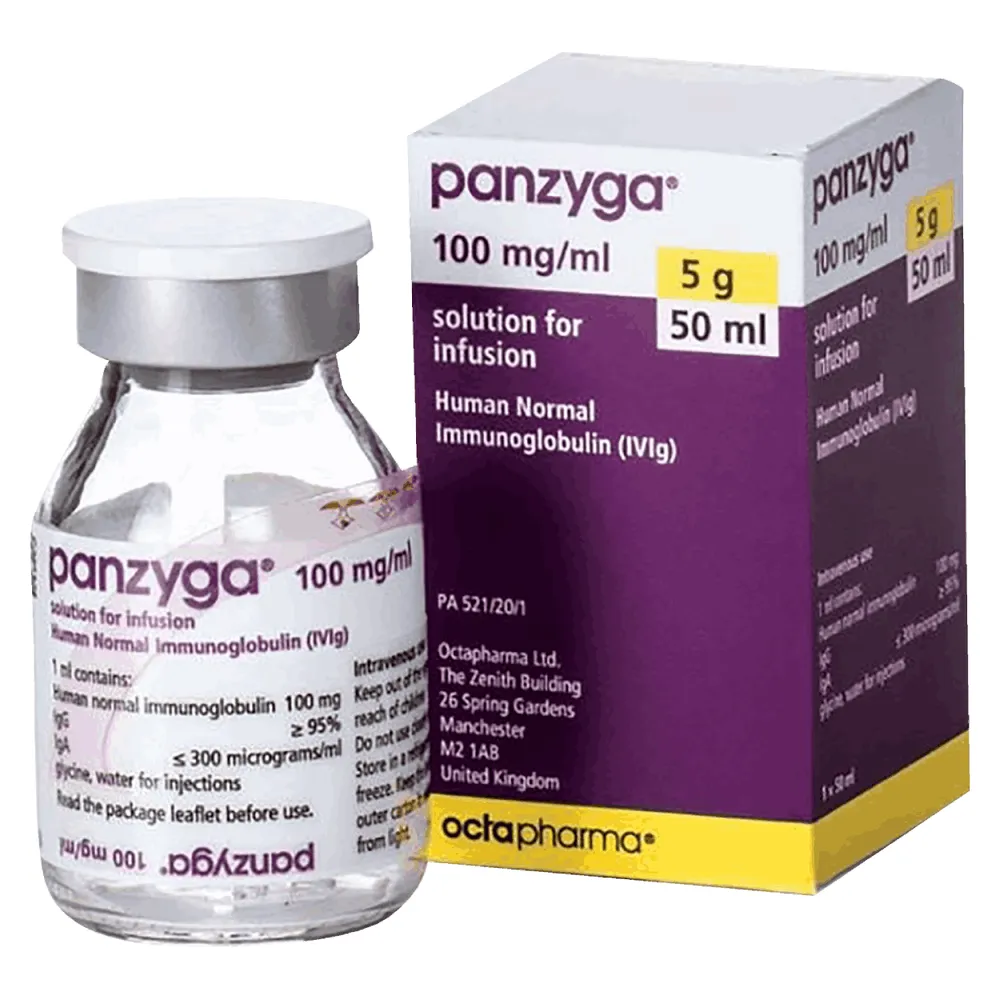
Table of Contents
INSTRUCTIONS FOR MEDICAL USE OF THE MEDICINAL PRODUCT Panzyga (Panzyga®)
Composition:
Active substance: human normal immunoglobulin;
1 ml of infusion solution contains 100 mg of total protein, of which ≥ 95 % is human immunoglobulin G;
Excipients: glycine, water for injections.
Distribution of IgG subclasses (approximate values): IgG1 - 65 %, IgG2 - 28 %, IgG3 - 3 %,
IgG4 - 4 %. Maximum IgA content 300 μg/ml.
Pharmaceutical form. Solution for infusion.
Main physicochemical properties: clear or slightly opalescent solution, colorless or pale yellow.
Pharmacotherapeutic group. Antimicrobial agents for systemic use. Immune sera and immunoglobulins. Immunoglobulins. Normal human immunoglobulin for intravenous use. ATC code J06BA02.
Pharmacological properties.
Pharmacodynamics.
Normal human immunoglobulin contains predominantly immunoglobulin G (IgG) with a broad spectrum of antibodies against infectious pathogens.
Normal human immunoglobulin contains IgG antibodies present in the healthy population. It is typically prepared from a pool of plasma obtained from at least 1000 donors. The distribution of IgG subclasses is nearly proportional to that found in natural human plasma. Adequate doses of this medicinal product can restore pathologically low IgG levels to the normal range.
The mechanism of action in indications other than its use as replacement therapy has not been fully established.
Clinical studies
A prospective, open-label, uncontrolled study was conducted in 51 patients with primary immunodeficiency syndrome. Patients were divided into 3 age groups (≥ 2 and < 12 years, ≥ 12 and < 16 years, and ≥ 16 and < 75 years). The primary endpoint of the study was the rate of serious bacterial infections per patient-year of treatment. Patients received a total of 17 or 13 infusions of Panzyga during the study period, depending on regular treatment intervals every 3 or 4 weeks, respectively. The dose ranged from 0.2 to 0.8 g/kg and was administered with gradually increasing infusion rates up to a maximum of 0.08 ml/kg/min. Two patients experienced 4 serious bacterial infections. Based on a total of 50.2 patient-years of treatment, the primary endpoint result was 0.08 serious bacterial infections per patient-year of treatment, with an upper limit of the 99% confidence interval of 0.5. Other efficacy parameters calculated per patient-year, such as other infections, days of antibiotic use, and hospitalization due to infection, were consistent with published data for other previously developed normal human immunoglobulin (IVIg) products.
Another study was conducted to evaluate the tolerability of Panzyga administered at higher infusion rates (increasing from 0.08 ml/kg/min to 0.14 ml/kg/min). This study included 21 patients. The product was well tolerated, and all patients completed the study as planned. Adverse reactions to the investigational product were reported in 2 children and 2 adults; the most frequently reported reactions were nausea and headache.
A further prospective, open-label, uncontrolled study was conducted in 40 patients with immune thrombocytopenic purpura for at least 12 months. Patients received a daily dose of 1 g/kg for 2 consecutive days. An alternative response, as defined by European Medicines Agency guidelines, was considered as an increase in platelet count to ≥ 30 × 10^9/l and at least twice the baseline platelet count, confirmed by no fewer than 2 separate measurements at least 7 days apart, and absence of bleeding. An alternative response was observed in 24 patients (66.7%).
A complete response, as defined by European Medicines Agency guidelines, was considered as achieving a platelet count ≥ 100 × 10^9/l on at least 2 separate visits with a minimum interval of 7 days, without new bleeding episodes. A complete response was observed in 18 patients (50.0%).
Loss of alternative response/complete response was defined as meeting the criteria for alternative/complete response initially, followed by a subsequent decrease in platelet count to < 30 × 10^9/l (for alternative response) or < 100 × 10^9/l (for complete response), or a decrease in platelet count by less than two-fold compared to baseline, or occurrence of bleeding. Regarding loss of alternative response, 11 out of 24 patients (45.8%) who met the criteria for alternative response experienced loss of response. Loss of complete response occurred in 14 out of 18 patients (77.8%) who met the criteria for complete response.
Children
There were no notable differences in the frequency of adverse reactions between children and adults. Adverse reactions categorized as "Infections and infestations" were the most commonly reported. These were reported in all age groups but more frequently in children. The same difference was observed for adverse reactions categorized as "Gastrointestinal disorders." A higher percentage of pediatric patients also experienced adverse reactions belonging to the category "Skin and subcutaneous tissue disorders."
Pharmacokinetics.
After intravenous administration, normal human immunoglobulin becomes immediately and completely bioavailable in the patient's bloodstream. The product distributes rapidly between plasma and extravascular fluid, reaching equilibrium concentrations in intravascular and extravascular compartments approximately within 3–5 days.
The elimination half-life of Panzyga is 26–39 days. The half-life may vary among individual patients, particularly in cases of primary immunodeficiency.
IgG immunoglobulins and their complexes are degraded by cells of the reticuloendothelial system.
Children
Results of pharmacokinetic studies in different pediatric age groups compared to adults are presented in Table 1.
Table 1
Overview of pharmacokinetic characteristics of total IgG for Panzyga in different age groups (medians)
| Parameter |
Unit |
Children |
Adults |
All age groups |
||
| from ≥ 2 to < 12 years |
from ≥ 12 to < 16 years |
|||||
| from ≥ 16 to ≤ 75 years |
||||||
| N = 13 |
N = 12 |
N = 26 |
N = 51 |
|||
| Cmax |
g/L |
18.6 |
19.3 |
17.1 |
18.2 |
|
| Cmin |
g/L |
10.7 |
9.3 |
10.1 |
9.9 |
|
| [range] |
[7.2–16.8] |
[7.4–20.4] |
[6.8–20.6] |
[6.8–20.6] |
||
| AUC0-tau |
h•g/L |
6957 |
6826 |
7224 |
7182 |
|
| t1/2 |
days |
36 |
33 |
37 |
36 |
|
Preclinical safety data
Immunoglobulins are normal components of the human body.
The safety of Panzyga administration has been demonstrated in several preclinical safety pharmacology studies (cardiovascular, respiratory, and bronchospastic effects, thrombogenic potential) and toxicological studies (acute toxicity, local tolerance). Preclinical data revealed no specific risk for humans based on conventional safety pharmacology and toxicity studies. Studies on repeated-dose toxicity, genotoxicity, and reproductive toxicity in animals are not considered relevant due to induction and interference during the production of antibodies against heterologous proteins. Since clinical experience provides no evidence of a carcinogenic potential of immunoglobulins, no experimental studies on genotoxicity/carcinogenicity have been conducted in heterologous species.
Clinical characteristics.
Indications.
Replacement therapy in adults and children (0–18 years of age) for:
- Primary immunodeficiency syndrome (PID) with impaired antibody production.
- Secondary immunodeficiencies (SID) in patients with severe or recurrent infections, ineffective antimicrobial treatment, and established specific antibody deficiency (SAD)*, or serum IgG levels ˂ 4 g/L.
*SAD – inability to achieve at least a 2-fold increase in IgG antibody titers against pneumococcal polysaccharide vaccine and polypeptide antigen.
Immunomodulation in adults and children (0–18 years of age) for:
- Primary immune thrombocytopenia (ITP) in patients with a high risk of bleeding or prior to surgery for platelet level correction.
- Guillain–Barré syndrome.
- Kawasaki disease (in combination with acetylsalicylic acid; see section "Method of administration and dosage").
- Chronic inflammatory demyelinating polyradiculoneuropathy (CIDP). Experience with intravenous immunoglobulins in pediatric patients with CIDP is limited.
- Multifocal motor neuropathy (MMN).
Contraindications.
Hypersensitivity to the active substance (human immunoglobulins) or to any of the excipients of the medicinal product (see section "Special precautions").
In patients with isolated IgA deficiency who have developed antibodies against IgA, anaphylactic reactions may occur following administration of a product containing IgA.
Special safety precautions.
Special safety measures for handling unused medicinal product or medicinal waste
The product should be warmed to room temperature or body temperature before administration.
The solution should be clear or slightly opalescent, colorless or pale yellow.
Turbid solutions or those containing precipitate must not be used.
Any unused medicinal product or packaging should be disposed of in accordance with local requirements.
Due to the risk of bacterial contamination, any unused portion of the product must be discarded.
Interaction with other medicinal products and other types of interactions.
Live attenuated viral vaccines
Administration of immunoglobulin may temporarily reduce the efficacy of live attenuated viral vaccines, such as measles, mumps, rubella, and varicella vaccines, for a period of 6 weeks to 3 months. A 3-month interval should elapse after administration of this product before live attenuated viral vaccines are administered. For measles vaccine, this interaction may last up to one year. Therefore, patients receiving measles vaccination should have their antibody levels checked.
Loop diuretics
Concomitant use of loop diuretics should be avoided.
Children
The above-mentioned interactions apply to both adults and children.
Special precautions for use.
To improve the traceability of biological medicinal products, the name and batch number of the administered product should be clearly recorded.
Precautions
Complications can be avoided if:
- it is ensured that the patient does not exhibit allergic reactions to normal human immunoglobulin by initially administering the product very slowly (0.6–1.2 mL/kg/hour);
- the patient is carefully monitored throughout the entire infusion period for signs of adverse reactions. Particular attention should be paid to patients who have not previously received normal human immunoglobulin, patients switched from an alternative IVIg product, or patients with a long interval since the last infusion, during the first infusion and for the first hour thereafter to detect possible adverse events. All other patients should remain under observation for at least 20 minutes after infusion.
If an adverse reaction occurs, the infusion rate should be reduced or the infusion stopped. Required treatment depends on the nature and severity of the adverse reactions.
In the event of shock, current guidelines for anti-shock therapy should be followed.
For all patients receiving IVIg, the following are required:
- adequate hydration prior to the start of IVIg infusion;
- monitoring of urine output;
- monitoring of serum creatinine levels;
- avoidance of concomitant diuretic use (see section "Interaction with other medicinal products and other forms of interaction").
Infusion reactions
Certain adverse reactions (e.g., headache, flushing, chills, myalgia/muscle pain, wheezing, tachycardia, back pain, nausea, and hypotension) may be associated with the infusion rate. The recommended infusion rate as specified in the section "Method of administration and dosage" must be strictly followed. Patients should be closely monitored and carefully observed for any symptoms throughout the entire infusion period.
Adverse reactions may occur more frequently:
- in patients receiving normal human immunoglobulin for the first time, or rarely when switching to a normal human immunoglobulin product or after a prolonged interval since the last infusion;
- in patients with untreated infection or underlying chronic inflammation.
Hypersensitivity
Hypersensitivity reactions are rare.
Anaphylaxis may develop in patients:
- with undetectable IgA who have antibodies to IgA;
- who previously tolerated immunoglobulin treatment well.
In case of shock, standard medical treatment for shock should be administered.
Thromboembolism
There is clinical evidence linking IVIg administration to thromboembolic complications such as myocardial infarction, acute cerebrovascular events (including stroke), pulmonary embolism, and deep vein thrombosis, which are believed to be related to relative increases in blood viscosity due to high immunoglobulin influx in at-risk patients. IVIg should be prescribed and administered with caution in obese patients and in patients with existing risk factors for thromboembolic complications (advanced age, hypertension, diabetes mellitus, history of vascular disease or thrombotic events, inherited or acquired thrombophilic disorders, prolonged immobilization, severe hypovolemia, and conditions increasing blood viscosity).
Patients at risk of thromboembolic adverse reactions should receive IVIg products at the lowest possible infusion rate and at the minimal effective dose.
Acute renal failure
Cases of acute renal failure have been reported in patients receiving IVIg therapy. In most cases, risk factors were identified, such as pre-existing renal insufficiency, diabetes mellitus, hypovolemia, obesity, concomitant use of nephrotoxic medicinal products, or age over 65 years.
Renal function parameters should be assessed before initiating IVIg infusion, especially in patients at increased risk of developing acute renal failure. IVIg products should be administered at the lowest possible infusion rate and at the minimal effective dose in patients at risk of acute renal failure. IVIg administration should be reconsidered in case of renal impairment.
Reports of renal dysfunction and acute renal failure have been associated with the use of many licensed IVIg products containing excipients such as sucrose, glucose, and maltose. It has been observed that products containing sucrose as a stabilizer disproportionately accounted for a large number of such cases. For patients at risk, consideration may be given to using IVIg products that do not contain these excipients. Panzyga does not contain sucrose, maltose, or glucose.
Aseptic Meningitis Syndrome (AMS)
Cases of aseptic meningitis syndrome associated with IVIg therapy have been reported. The syndrome typically occurs from several hours to 2 days after initiation of IVIg treatment. Cerebrospinal fluid (CSF) analysis often reveals pleocytosis with several thousand cells per mm³, predominantly granulocytes, and elevated protein levels reaching several hundred mg/dL.
AMS may occur more frequently with high-dose IVIg therapy (2 g/kg).
Patients presenting symptoms and signs of AMS should undergo thorough neurological evaluation, including cerebrospinal fluid (CSF) analysis, to exclude other causes of meningitis.
Discontinuation of IVIg therapy has resulted in resolution of AMS within several days without sequelae.
Hemolytic anemia
IVIg products contain blood group antibodies that may act as hemolysins and cause in vivo immunoglobulin-mediated erythrocyte agglutination, leading to a positive direct antiglobulin test (Coombs test) and, rarely, hemolysis. Hemolytic anemia may develop after IVIg therapy due to enhanced erythrocyte sequestration. Patients receiving IVIg should be monitored for clinical signs of hemolysis (see section "Adverse reactions").
Neutropenia/leukopenia
Transient decreases in neutrophil count and/or cases of neutropenia, sometimes severe, have been reported after IVIg therapy. This typically occurs within several hours or days after IVIg administration and resolves spontaneously within 7–14 days.
Transfusion-Related Acute Lung Injury (TRALI)
Non-cardiogenic pulmonary edema [Transfusion-Related Acute Lung Injury (TRALI)] has occasionally been reported in patients receiving IVIg. TRALI is characterized by severe hypoxia, dyspnea, tachypnea, cyanosis, fever, and hypotension. TRALI symptoms typically develop during or within 6 hours after infusion, often within 1–2 hours. Therefore, patients receiving IVIg must be monitored, and IVIg infusion should be stopped immediately in case of pulmonary adverse reactions. TRALI is a potentially life-threatening condition requiring immediate treatment in an intensive care or resuscitation unit.
Changes in serological tests
Following immunoglobulin administration, transient increases in various passively transferred antibodies in the patient's blood may lead to false-positive results in serological tests.
Passive transfer of erythrocyte antigen antibodies (e.g., A, B, D) may interfere with certain serological tests for anti-erythrocyte antibodies, such as the direct antiglobulin test (direct Coombs test).
Infectious agents
Standard measures to prevent infections associated with medicinal products derived from human blood or plasma include donor selection, screening of donor blood and plasma for specific infectious markers, and implementation of effective manufacturing steps for virus inactivation/removal. Despite these measures, it is not possible to completely eliminate the risk of transmission of infection when using products derived from human blood or plasma. This applies to unknown or emerging viruses and other pathogens.
The measures taken are considered effective against enveloped viruses such as HIV, hepatitis B virus, hepatitis C virus, and against non-enveloped viruses such as hepatitis A virus and parvovirus B19.
Clinical experience confirms the absence of transmission of hepatitis A or parvovirus B19 with immunoglobulins, and it is also confirmed that antibody content plays an important role in viral safety.
Important information about some ingredients of Panzyga
This medicinal product contains 69 mg of sodium per 100 mL vial, equivalent to 3.45% of the WHO recommended maximum daily intake of sodium – 2 g for adults.
Caution should be exercised when administering this product to patients on a sodium-controlled diet.
Children
The above precautions apply to both adults and children.
Use during pregnancy or breastfeeding.
Pregnancy
The safety of this medicinal product during pregnancy has not been established in controlled clinical trials; therefore, the product should be used in pregnant women and breastfeeding women only with caution.
It has been established that IVIg products cross the placental barrier, particularly intensively during the third trimester of pregnancy. Clinical experience with immunoglobulins indicates that harmful effects on the course of pregnancy or on the fetus or newborn are not expected.
Breastfeeding
Immunoglobulins are excreted in breast milk. No negative effects on newborns/infants are anticipated.
Fertility
Clinical experience with immunoglobulins indicates that harmful effects on fertility are not expected.
Ability to influence reaction rate while driving or operating machinery.
Panzyga has no effect or has a negligible effect on the ability to drive or operate machinery. However, patients experiencing adverse reactions during treatment should wait until such reactions have subsided before driving or operating machinery.
Administration and Dosage
Replacement therapy should be initiated and administered under the supervision of a physician experienced in the treatment of immunodeficiency.
Doses
An individual dose adjustment may be required for each patient depending on the clinical response. The dose based on body weight may need to be adjusted for patients who are underweight or overweight. For patients with overweight, the dose should be based on physiological standard body weight.
Replacement therapy in primary immunodeficiency syndromes
The dosing regimen should ensure achievement of a steady-state IgG level (measured immediately before each subsequent infusion) of at least 6 g/L or within the reference range appropriate for the patient's age. To reach equilibrium (steady-state IgG levels), treatment should be continued for three to six months from the start of therapy. The recommended initial dose is 0.4–0.8 g/kg body weight, depending on the clinical condition, followed by at least 0.2 g/kg every three to four weeks.
The dose required to achieve a steady-state immunoglobulin concentration of 6 g/L ranges from 0.2 to 0.8 g/kg per month. The interval between administrations after achieving a stable level varies from 3 to 4 weeks.
IgG levels should be measured and evaluated in relation to the frequency of infections. Dose increases and higher steady-state levels may be necessary to reduce the rate of bacterial infection.
Secondary immunodeficiencies
The recommended dose is 0.2–0.4 g/kg body weight every 3–4 weeks.
Minimum IgG levels should be monitored and evaluated together with the frequency of infections. The dose should be adjusted as needed to achieve optimal protection against infections: dose increases may be required for patients with persistent infections; dose reduction may be considered when the patient is free of infections.
Primary immune thrombocytopenia (PIT)
Two alternative treatment regimens are available:
- 0.8–1 g/kg on Day 1, with possible single repeat administration within the following three days;
- 0.4 g/kg daily for 2–5 days.
Treatment may be repeated in case of relapse.
Guillain-Barré syndrome
0.4 g/kg per day for 5 days (the treatment may be repeated in case of relapse).
Kawasaki disease
2.0 g/kg should be administered as a single dose. Patients should simultaneously receive acetylsalicylic acid.
Chronic inflammatory demyelinating polyradiculoneuropathy (CIDP)
Initial dose: 2 g/kg administered over 2–5 consecutive days.
Maintenance dose: 1 g/kg every 2–4 weeks or 2 g/kg every 4–8 weeks.
Therapeutic response should be evaluated after each treatment course; if no improvement is observed within 6 months, treatment should be discontinued.
If treatment is effective, long-term therapy should be continued at the discretion of the treating physician based on the patient's response to maintenance doses. Doses and intervals between infusions may be adjusted according to the individual course of the disease.
Multifocal motor neuropathy (MMN)
Initial dose: 2 g/kg administered over 2–5 consecutive days.
Maintenance dose: 1 g/kg every 2–4 weeks or 2 g/kg every 4–8 weeks.
Therapeutic response should be evaluated after each treatment course; if no improvement is observed within 6 months, treatment should be discontinued.
If treatment is effective, long-term therapy should be continued at the discretion of the treating physician based on the patient's response to maintenance doses. Doses and intervals between infusions may be adjusted according to the individual course of the disease.
Dosage recommendations are provided in Table 2.
Table 2
| Indications |
Dose |
Frequency of injections |
| Replacement therapy |
||
| Primary immunodeficiency syndrome |
initial dose 0.4–0.8 g/kg maintenance dose 0.2–0.8 g/kg |
every 3–4 weeks |
| Secondary immunodeficiency |
0.2–0.4 g/kg |
every 3–4 weeks |
| Immunomodulation |
||
| Primary immune thrombocytopenia |
0.8–1 g/kg or 0.4 g/kg/day |
on day 1, may be repeated once over 3 days for 2–5 days |
| Guillain-Barré syndrome |
0.4 g/kg/day |
for 5 days |
| Kawasaki disease |
2 g/kg |
single dose administered concurrently with acetylsalicylic acid |
| Chronic inflammatory demyelinating polyneuropathy (CIDP) |
initial dose 2 g/kg maintenance dose 1 g/kg |
divided over 2–5 days of administration every 3 weeks for 1–2 days |
| Multifocal motor neuropathy (MMN) |
initial dose 2 g/kg maintenance dose 1 g/kg or 2 g/kg |
for 2–5 consecutive days every 2–4 weeks or every 4–8 weeks for 2–5 days |
Method of administration
For intravenous use.
Human normal immunoglobulin should be administered intravenously at an initial rate of 0.6 ml/kg body weight/hour for 30 minutes (see section "Special instructions").
If an adverse reaction occurs, the infusion rate should be either reduced or the infusion stopped. If well tolerated, the infusion rate may be gradually increased up to a maximum of 4.8 ml/kg/h.
For patients with primary immunodeficiency syndrome who tolerate an infusion rate of 4.8 ml/kg/h well, the infusion rate may be further gradually increased up to a maximum of 8.4 ml/kg/h.
At the end of the infusion, if any residue of the product remains in the infusion system, the system may be flushed with 0.9% saline solution or 5% dextrose solution.
Children
The dosage for children (0–18 years of age) does not differ from that for adults, since the dosage for each indication is based on body weight and adjusted according to clinical response in the aforementioned conditions.
Hepatic impairment
There is no evidence requiring dose adjustment.
Renal impairment
Dose adjustment is not necessary unless clinically indicated; see section "Special instructions".
Elderly patients
Dose adjustment is not necessary unless clinically indicated; see section "Special instructions".
Overdose.
Overdose may cause hypervolemia and increased blood viscosity, particularly in patients at risk, including elderly patients or those with cardiac or renal insufficiency (see section "Special instructions").
Adverse reactions.
Summary of safety profile
The following adverse reactions associated with normal human immunoglobulins may occur (listed in decreasing order of frequency) (see also section "Special warnings and precautions for use"):
- chills, headache, dizziness, fever, vomiting, allergic reactions, nausea, arthralgia (joint pain), low blood pressure, and mild back pain;
- reversible hemolytic reactions, especially in patients with blood groups A, B, and AB, and (rarely) hemolytic anemia requiring transfusion;
- (rarely) sudden drop in blood pressure and, in individual cases, anaphylactic shock, even when the patient has not previously shown hypersensitivity to the product;
- (rarely) transient skin reactions (including cutaneous lupus erythematosus (frequency unknown));
- (very rare) thromboembolic events, such as myocardial infarction, stroke, pulmonary artery embolism, deep vein thrombosis;
- cases of reversible aseptic meningitis;
- cases of increased serum creatinine levels and/or acute renal failure;
- cases of transfusion-related acute lung injury (TRALI).
List of adverse reactions in tabular form
The table below is organized according to System Organ Class (SOC) and preferred terms of the Medical Dictionary for Regulatory Activities (MedDRA).
Frequency per patient was estimated according to the following conventional categories: very common (≥ 1/10); common (≥ 1/100 to < 1/10); uncommon (≥ 1/1000 to < 1/100); rare (≥ 1/10000 to < 1/1000); very rare (< 1/10000); not known (cannot be estimated from available data).
Within each organ system class, adverse effects are listed in decreasing order of severity.
Table 3
Adverse reactions observed in clinical studies of Panzyga product
| MedDRA System Organ Classes |
Adverse reaction |
Frequency per infusion |
Frequency per patient |
| Blood and lymphatic system disorders |
Hemolysis†, anemia, leukopenia |
Uncommon |
Common |
| Nervous system disorders |
Headache |
Common |
Very common |
| Aseptic meningitis, hypoesthesia, dizziness |
Uncommon |
Common |
|
| Eye disorders |
Itching of eyes |
Uncommon |
Common |
| Ear and labyrinth disorders |
Ear pain |
Uncommon |
Common |
| Cardiac disorders |
Tachycardia |
Uncommon |
Common |
| Vascular disorders |
Hypertension |
Uncommon |
Common |
| Respiratory, thoracic and mediastinal disorders |
Cough |
Uncommon |
Common |
| Gastrointestinal disorders |
Nausea |
Common |
Very common |
| Vomiting, abdominal pain, abdominal discomfort |
Uncommon |
Common |
|
| Skin and subcutaneous tissue disorders |
Rash |
Uncommon |
Common |
| Musculoskeletal and connective tissue disorders |
Arthralgia, myalgia, musculoskeletal pain/stiffness |
Uncommon |
Common |
| General disorders and administration site conditions |
Increased temperature |
Common |
Very common |
| Chills, chest pain, pain, feeling cold, asthenia, fatigue, itching at infusion site |
Uncommon |
Common |
|
| Investigations |
Increased liver enzyme levels |
Uncommon |
Common |
| † Subclinical case. |
|||
Table 4
Adverse reactions reported during post-marketing use of Panziga (the frequency of reported post-marketing reactions cannot be estimated from the available data)
| MedDRA system organ classes |
Adverse reaction |
Frequency |
| Immune system disorders |
Anaphylactic reaction, hypersensitivity |
Unknown |
| Psychiatric disorders |
Anxiety |
Unknown |
| Nervous system disorders |
Hypoaesthesia, paraesthesia, tremor |
Unknown |
| Cardiac disorders |
Tachycardia |
Unknown |
| Vascular disorders |
Hypertension |
Unknown |
| Respiratory, thoracic and mediastinal disorders |
Cough, dyspnoea |
Unknown |
| Gastrointestinal disorders |
Abdominal pain, diarrhoea |
Unknown |
| Skin and subcutaneous tissue disorders |
Erythema, pruritus, rash, urticaria |
Unknown |
| Musculoskeletal and connective tissue disorders |
Muscle spasms, neck pain, limb pain |
Unknown |
| General disorders and administration site conditions |
Asthenia, chest discomfort, chest pain, fatigue, hot flushes, malaise |
Unknown |
Table 5
Adverse reactions occurring during IVIg treatment and which may occur after administration of Panzyga
| MedDRA System Organ Classes |
Adverse Reactions |
| Blood and lymphatic system disorders |
Pancytopenia |
| Immune system disorders |
Anaphylactoid reaction, angioneurotic edema, facial swelling |
| Metabolism and nutrition disorders |
Hyperhydration, (pseudo)hyponatremia |
| Psychiatric disorders |
Agitation, confusion, nervousness |
| Nervous system disorders |
Stroke, coma, loss of consciousness, seizures, encephalopathy, migraine, speech disorders, photophobia |
| Cardiac disorders |
Cardiac arrest, angina pectoris, bradycardia, tachycardia, cyanosis |
| Vascular disorders |
Peripheral circulatory failure or collapse, phlebitis, pallor |
| Respiratory, thoracic and mediastinal disorders |
Respiratory distress, apnea, acute respiratory distress syndrome, pulmonary edema, bronchospasm, hypoxia, wheezing |
| Hepatobiliary disorders |
Hepatic dysfunction |
| Skin and subcutaneous tissue disorders |
Stevens-Johnson syndrome, epidermal necrolysis, skin exfoliation, eczema, (bullous) dermatitis, alopecia |
| Renal and urinary disorders |
Kidney pain |
| General disorders and administration site conditions |
Injection site reaction, hot flushes, influenza-like illness, flushing, edema, lethargy, burning sensation, sweating |
| Investigations |
Positive direct Coombs test, falsely elevated ESR, decreased blood oxygen saturation |
Description of selected adverse reactions
Individual adverse effects (hypersensitivity reactions, thromboembolic events, acute renal failure, aseptic meningitis syndrome, and hemolytic anemia) are described in the section "Special precautions".
Children
The frequency, type, and severity of adverse reactions in children are the same as in adults.
Reporting suspected adverse reactions
Reporting suspected adverse reactions after drug registration is important. It allows ongoing monitoring of the benefit-risk balance of the drug. Healthcare and pharmaceutical professionals, as well as patients or their legal representatives, should report all suspected adverse reactions and lack of drug efficacy via the Automated Pharmacovigilance Information System at the following link: https://aisf.dec.gov.ua.
Shelf life.
3 years.
Storage conditions.
Store at a temperature of 2 to 8 °C. Do not freeze.
Keep the vial in the outer cardboard packaging to protect from light.
Keep out of reach and sight of children.
The product may be stored at temperatures above +8 °C and below +25 °C for a period of up to 12 months without the need for re-refrigeration during this period; after this time, any unused product must be disposed of according to regulatory requirements.
Incompatibilities.
Due to the lack of compatibility studies, this product must not be mixed with other medicinal products or with any other IVIg products.
Packaging.
10 ml or 25 ml of infusion solution in a vial; 50 ml or 100 ml of infusion solution in a bottle. One vial or one bottle per cardboard box.
Prescription status.
Prescription only.
Manufacturers.
- Octapharma Pharmazeutika Produktionsges.m.b.H.
- Octapharma.
Manufacturers' addresses and locations of their operations.
- Oberlaaer Strasse 235, 1100 Vienna, Austria.
- 72 rue du Maréchal Foch, 67380 Lingolsheim, France.