Pantekrem®
Ukraine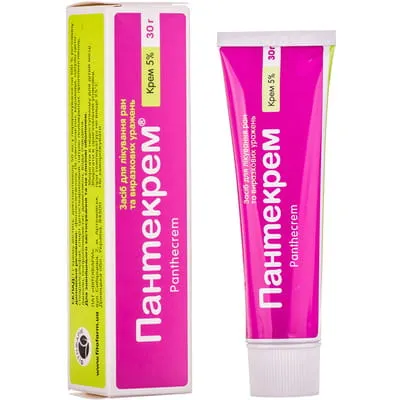
Table of Contents
- INSTRUCTION FOR MEDICAL USE OF THE MEDICINAL PRODUCT PANTECREAM®
- Composition:
- Pharmacological properties.
- Clinical characteristics.
- Special precautions for use.
- Method of Administration and Dosage
- Side effects.
- Composition:
- Pharmacological properties.
- Clinical characteristics.
- Special precautions for use.
- Method of Administration and Dosage.
- Side effects.
INSTRUCTION FOR MEDICAL USE OF THE MEDICINAL PRODUCT PANTECREAM®
Composition:
Active substance: dexpanthenol;
1 g of cream contains 50 mg of dexpanthenol calculated as 100% substance;
Excipients: phenoxyethanol, DL-pantolactone, ceramides, sodium cetostearyl sulfate, cetostearyl alcohol, sodium polyacrylate, propylene glycol, lanolin, isopropyl myristate, dimethicone, purified water.
Pharmaceutical form. Cream.
Main physicochemical properties: cream of white or white with a slightly yellowish tint color.
Pharmacotherapeutic group.
Agents for treatment of wounds and ulcerative lesions. Wound healing promoting agents. Other wound healing promoters. Dexpanthenol.
ATC code D03A X03.
Pharmacological properties.
Pharmacodynamics.
The active substance of the drug is dexpanthenol – a provitamin B5. In skin cells, dexpanthenol is rapidly converted into pantothenic acid and acts as a vitamin. Dexpanthenol is absorbed more rapidly than pantothenic acid after topical application.
Pantothenic acid is a component of coenzyme A (CoA). In this form, acetyl-coenzyme A (CoA) plays a central role in the metabolism of every cell. Thus, pantothenic acid is essential for the formation and healing of damaged skin and mucous membranes.
Pharmacokinetics.
After topical application, dexpanthenol is rapidly absorbed through the skin. In skin cells, dexpanthenol is immediately converted into pantothenic acid and incorporated into the endogenous pool of this vitamin.
In the blood, pantothenic acid binds to β-globulin and plasma albumins. In healthy adults, the concentration is approximately 500–1000 mg/L and 100 mg/L in whole blood and serum, respectively.
Pantothenic acid does not undergo biotransformation. It is excreted unchanged. 60–70% is excreted in urine, the remainder in feces. In adults, 2–7 mg of pantothenic acid is excreted daily in urine; in children, 2–3 mg.
Clinical characteristics.
Indications.
Pantekrem®, cream, is indicated in the following cases:
- prophylactic treatment of dry, reddened skin or skin with cracks;
- acceleration of healing and epithelialization of skin in minor injuries (minor burns and scratches); in skin irritations (resulting from radiotherapy, phototherapy, or ultraviolet light irradiation); diaper dermatitis; chronic skin ulcers and pressure sores; anal fissures; cervical erosion and after skin grafting;
- skin care in patients during and after topical application of corticosteroids;
- prophylactic care of mammary glands in breastfeeding women, and for treatment of nipple irritation and cracks.
Contraindications.
Known hypersensitivity to any component of the product.
Interaction with other medicinal products and other forms of interaction.
Cases of interaction with other drugs are unknown.
Special precautions for use.
The medicinal product has a hydrophilic cream base, due to which it is rapidly absorbed through the skin, making it suitable for treating weeping wounds, exposed skin areas (e.g., facial skin), and hairy skin areas.
When using the medicinal product, contact with the eyes should be avoided.
Cetylstearyl alcohol and lanolin may cause local skin reactions (e.g., contact dermatitis). Propylene glycol may cause skin irritation.
Use during pregnancy or breastfeeding.
There is no evidence that the use of the medicinal product during pregnancy or breastfeeding may lead to any risk.
During pregnancy, the medicinal product should be used only as prescribed by a physician. When used to treat nipple fissures during breastfeeding, the medicinal product should be washed off before each feeding.
Ability to influence reaction rate when driving or operating machinery.
No influence.
Method of Administration and Dosage
Accelerating healing and epithelialization, routine prophylactic skin care:
apply the product once or several times daily, depending on need.
Care of breasts in breastfeeding women: apply the cream to the nipples after each breastfeeding session.
Treatment of cervical mucosa defects: apply the cream once or several times daily, depending on need.
Prophylactic care in infants: apply the cream with each diaper change.
The duration of treatment is determined individually by a physician, depending on the presence of clinical signs of skin damage.
The cream rapidly penetrates the skin and is therefore suitable for caring for weeping wounds, unprotected skin surfaces (face), and hairy skin. It spreads easily over the surface, making it suitable for treating painful sunburns and other mild burns.
Children.
The product may be used in children of all age groups, including infants.
Overdose.
No reports of accidental overdose are available.
The active ingredient of the cream, dexpanthenol, is well tolerated and considered non-toxic in the literature.
Hypervitaminosis has not been described.
Side effects.
Immune system, skin and subcutaneous tissue disorders. Allergic reactions have been reported, including skin reactions: contact dermatitis, allergic dermatitis, pruritus, erythema, eczema, rash, urticaria, skin irritation and blisters.
Shelf life.
3 years.
Storage conditions.
Store in the original packaging at a temperature not exceeding 25 °C.
Keep out of reach of children. Do not freeze.
Packaging.
30 g in tubes; 1 tube per carton.
Availability category. Over-the-counter.
Manufacturer.
PJSC "FITOFARM".
Manufacturer's address and place of business.
7, Sibirtseva St., Bakhmut, Donetsk region, 84500, Ukraine.
Marketing authorization holder. PJSC "FITOFARM".
Address of the marketing authorization holder.
18, 3rd floor, 7, Verkhovnoi Rady Ave., Kyiv, 02100, Ukraine.
INSTRUCTION
for medical use of the medicinal product
PANTECREAM®
Composition:
Active substance: dexpanthenol;
1 g of cream contains 50 mg of dexpanthenol calculated as 100% substance;
Excipients: phenoxyethanol, DL-pantolactone, ceramides, sodium cetostearyl sulfate, cetylstearyl alcohol, sodium polyacrylate, propylene glycol, lanolin, isopropyl myristate, dimethicone, purified water.
Pharmaceutical form. Cream.
Main physicochemical properties: white cream or white cream with a slight yellowish tint.
Pharmacotherapeutic group.
Agents for treatment of wounds and ulcerative lesions. Wound healing promoting agents. Other wound healing agents. Dexpanthenol.
ATC code D03A X03.
Pharmacological properties.
Pharmacodynamics.
The active substance of the medicinal product is dexpanthenol – a provitamin B5. In skin cells, dexpanthenol is rapidly converted into pantothenic acid and acts as a vitamin. Dexpanthenol is absorbed more rapidly than pantothenic acid after topical application.
Pantothenic acid is a component of coenzyme A (CoA). In this form, acetyl-coenzyme A (CoA) plays a central role in the metabolism of every cell. Thus, pantothenic acid is essential for the formation and healing of damaged skin and mucous membranes.
Pharmacokinetics.
After topical application, dexpanthenol is rapidly absorbed through the skin. In skin cells, dexpanthenol is immediately converted into pantothenic acid and added to the endogenous pool of this vitamin.
In blood, pantothenic acid binds to β-globulin and plasma albumins. In healthy adults, the concentration is approximately 500–1000 mg/L and 100 mg/L in whole blood and serum, respectively.
Pantothenic acid does not undergo biotransformation. It is excreted unchanged. 60–70% is excreted in urine, the remainder in feces. In adults, 2–7 mg of pantothenic acid is excreted daily in urine; in children, 2–3 mg.
Clinical characteristics.
Indications.
Pantekrem®, cream, should be used in the following cases:
- prophylactic treatment of dry, reddened skin or skin with cracks;
- acceleration of healing and epithelialization of the skin in micro-injuries (minor burns and scratches); in skin irritations (resulting from radiotherapy, phototherapy, or ultraviolet light irradiation); diaper dermatitis; chronic skin ulcers and pressure sores; anal fissures; cervical erosion and after skin grafting;
- skin care in patients during and after topical application of corticosteroids;
- prophylactic care of mammary glands in breastfeeding women, and for treatment of nipple irritation and cracks.
Contraindications.
Known hypersensitivity to any component of the product.
Interaction with other medicinal products and other forms of interaction.
Cases of interaction with other drugs are unknown.
Special precautions for use.
The medicinal product has a hydrophilic cream base, which allows for rapid skin absorption, making it suitable for treating weeping wounds, exposed skin areas (e.g., facial skin), and hairy skin areas.
When using the medicinal product, contact with the eyes should be avoided.
Cetyl stearyl alcohol and lanolin may cause local skin reactions (e.g., contact dermatitis). Propylene glycol may cause skin irritation.
Use during pregnancy or breastfeeding.
There is no evidence that using the medicinal product during pregnancy or breastfeeding may lead to any risk.
During pregnancy, the medicinal product should be used only as prescribed by a physician. When used to treat nipple fissures during breastfeeding, the product should be washed off before each feeding.
Ability to influence reaction rate while driving or operating machinery.
No effect.
Method of Administration and Dosage.
Accelerating healing and epithelialization, regular preventive skin care:
apply the product once or several times daily, depending on the need.
Care of breasts in breastfeeding women: apply the cream to the nipples after each breastfeeding session.
Treatment of cervical mucosa defects: apply the cream once or several times daily, depending on the need.
Prophylactic care in infants: apply the cream at each diaper change.
The duration of treatment is determined individually by a physician, depending on the presence of clinical signs of skin damage.
The cream rapidly penetrates the skin, making it suitable for the care of weeping wounds, unprotected skin surfaces (face), and hairy skin. It spreads easily over the surface, thus being suitable for the treatment of painful sunburns and other mild burns.
Children.
The product can be used in children of all age groups, including infants.
Overdose.
There have been no reports of accidental overdose.
The active ingredient of the cream, dexpanthenol, is well tolerated and considered non-toxic in the literature.
Hypervitaminosis has not been described.
Side effects.
Immune system, skin and subcutaneous tissue disorders. Allergic reactions have been reported, including skin reactions: contact dermatitis, allergic dermatitis, pruritus, erythema, eczema, rash, urticaria, skin irritation and blisters.
Shelf life.
3 years.
Storage conditions.
Store in the original packaging at a temperature not exceeding 25 °C.
Keep out of reach of children. Do not freeze.
Packaging.
30 g in tubes; 1 tube per carton.
Availability. Over-the-counter.
Manufacturer. JSC "FITOPHARM" (responsible for batch release, excluding batch control/testing).
Manufacturer's address and place of business.
17 Chumatska Street, Boryspil, Kyiv region, 08303, Ukraine.
Marketing Authorization Holder. JSC "FITOPHARM".
Address of the Marketing Authorization Holder.
7, Verkhovnoi Rady Avenue, premises 18, 3rd floor, Kyiv, 02100, Ukraine.