Palset
Ukraine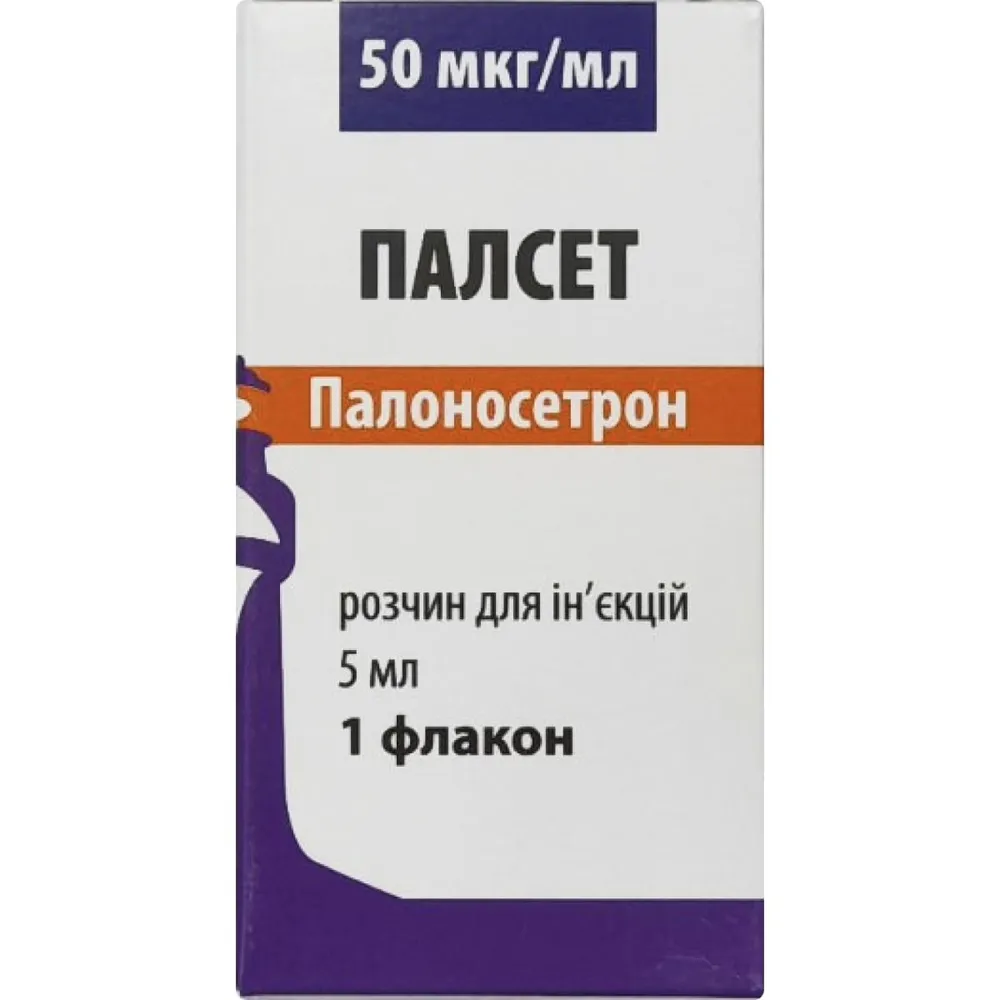
Table of Contents
INSTRUCTION FOR MEDICAL USE OF THE MEDICINAL PRODUCT PALSET (PALSET)
Composition:
Active substance: palonosetron hydrochloride;
1 ml of solution contains 56.2 mcg of palonosetron hydrochloride, equivalent to 50 mcg of palonosetron;
Excipients: mannitol (E 421); disodium edetate; sodium citrate; citric acid monohydrate; sodium hydroxide (NaOH) 1N; hydrochloric acid concentrated (HCl) 1N; water for injections.
Pharmaceutical form. Solution for injection.
Main physicochemical properties: clear, colorless solution, practically free from particles.
Pharmacotherapeutic group.
Antiemetics and drugs against nausea. Serotonin receptor antagonists (5-HT3). ATC code A04AA05.
Pharmacological Properties
Pharmacodynamics
Palset is a selective, high-affinity antagonist of 5-HT3 receptors. Its mechanism of action is associated with inhibition of the vomiting reflex by blocking serotonin 5-HT3 receptors at the level of neurons in the central nervous system.
Pharmacokinetics
Absorption
The mean half-life after intravenous administration is approximately 40 hours. The mean values of maximum plasma concentration (Cmax) and area under the concentration-time curve (AUC0–∞) are generally dose-proportional over the dose range of 0.3–90 mcg/kg in healthy volunteers and in patients with cancer.
After single intravenous administration of 0.75 mg palonosetron once daily in 11 patients with testicular cancer, the mean (± standard deviation [SD]) increase in plasma concentrations from day 1 to day 5 was 42 ± 34%. After intravenous administration of 0.25 mg palonosetron once daily for 3 consecutive days in 12 healthy volunteers, the mean (± SD) increase in plasma concentrations of palonosetron from day 1 to day 3 was 110 ± 45%.
Studies have shown that total exposure (AUC0–∞) following intravenous administration of 0.25 mg palonosetron once daily for 3 consecutive days is similar to total exposure following a single intravenous dose of 0.75 mg; however, Cmax values are higher after the single 0.75 mg dose.
Distribution
After administration at recommended doses, palonosetron is widely distributed throughout the body, with a volume of distribution of approximately 6.9–7.9 L/kg. Approximately 62% of the palonosetron dose binds to plasma proteins.
Biotransformation
Elimination of palonosetron occurs via two pathways: approximately 40% of the dose is excreted by the kidneys, and approximately 50% is metabolized, forming two major metabolites that have less than 1% of the antagonistic activity of palonosetron at 5-HT3 receptors. In vitro metabolism studies have shown that the isoenzymes CYP2D6, and to a lesser extent CYP3A4 and CYP1A2, are involved in the metabolism of palonosetron. However, there are no clinically significant pharmacokinetic differences observed between patients who are poor and extensive metabolizers of CYP2D6 substrates. Palonosetron does not inhibit or induce cytochrome P450 isoenzymes at clinically relevant concentrations.
Elimination
After a single intravenous dose of 10 mcg/kg of [14C]-palonosetron, approximately 80% of the administered dose was recovered in urine over 144 hours, with unchanged palonosetron accounting for approximately 40% of the administered dose. After a single intravenous bolus dose in healthy volunteers, total systemic clearance of palonosetron was 173 ± 73 mL/min, and renal clearance was 53 ± 29 mL/min. The low systemic clearance rate and large volume of distribution result in a terminal half-life of approximately 40 hours. In 10% of patients, the mean terminal half-life exceeds 100 hours.
Pharmacokinetics in Specific Populations
Elderly Patients
Patient age does not affect the pharmacokinetics of palonosetron. Dose adjustment in elderly patients is not required.
Gender
Patient gender does not affect the pharmacokinetics of palonosetron. Dose adjustment based on gender is not required.
Pediatric Population
Pharmacokinetic data following a single intravenous administration of palonosetron hydrochloride were obtained in a subgroup of pediatric patients with cancer (n = 280) who received the drug at doses of 10 mcg/kg or 20 mcg/kg. A dose-proportional increase in mean AUC was observed when the dose was increased from 10 mcg/kg to 20 mcg/kg. After a single 15-minute intravenous infusion of 20 mcg/kg, peak plasma concentrations (CT) at the end of infusion showed high variability across all age groups, with a tendency toward lower levels in patients under 6 years of age compared to older pediatric patients. The mean elimination half-life was 29.5 hours across all age groups (range approximately 20 to 30 hours) after administration of 20 mcg/kg. Total systemic clearance (L/h/kg) in patients aged 12 to 17 years was similar to that observed in healthy adult volunteers. There is no apparent difference in volume of distribution expressed per kg of body weight.
Renal Impairment
Dose adjustment is not required in patients with renal impairment. Pharmacokinetic data in patients undergoing hemodialysis are not available.
Hepatic Impairment
Patients with severe hepatic impairment do not require dose adjustment of palonosetron.
Clinical characteristics.
Indications.
Prevention of acute nausea and vomiting associated with highly emetogenic or moderately emetogenic chemotherapy in oncology.
Contraindications.
Hypersensitivity to the active substance or to any of the excipients of the medicinal product.
Interaction with other medicinal products and other forms of interaction.
Palonosetron is metabolized mainly by the CYP2D6 isoenzyme; CYP3A4 and CYP1A2 isoenzymes play a less significant role in its metabolism. According to in vitro study data, palonosetron does not inhibit or induce cytochrome P450 isoenzymes at clinically significant concentrations.
Chemotherapeutic medicinal agents.
Preclinical studies have shown that palonosetron does not inhibit the antitumor effects of five chemotherapeutic agents studied (cisplatin, cyclophosphamide, cytarabine, doxorubicin, and mitomycin C).
Metoclopramide.
In a clinical study, no significant pharmacokinetic interaction was observed between palonosetron administered as a single intravenous dose and metoclopramide administered orally at a steady-state concentration (a CYP2D6 inhibitor).
CYP2D6 inducers and inhibitors.
Population pharmacokinetic analysis demonstrated no significant effect on palonosetron clearance when administered concomitantly with CYP2D6 inducers (dexamethasone and rifampicin) or CYP2D6 inhibitors (including amiodarone, celecoxib, chlorpromazine, cimetidine, doxorubicin, fluoxetine, haloperidol, paroxetine, quinidine, ranitidine, ritonavir, sertraline, or terbinafine). Corticosteroids.
Palonosetron has been safely used concomitantly with corticosteroids. Serotonergic agents (selective serotonin reuptake inhibitors (SSRIs) and serotonin-norepinephrine reuptake inhibitors (SNRIs)).
Cases of serotonin syndrome have been reported with concomitant use of 5-HT3 antagonists and other serotonergic drugs (including SSRIs and SNRIs).
Other medicinal products.
Palonosetron has been safely used with analgesics, antiemetics/medicinal agents against nausea, spasmolytics, and anticholinergic medicinal agents.
Special precautions for use
Since palonosetron may increase the transit time of content through the large intestine, patients with a history of constipation or signs of subacute intestinal obstruction should be closely monitored after administration of the drug. There have been two reported cases of constipation complicated by fecal impaction requiring hospitalization following administration of palonosetron at a dose of 750 mcg.
All studied doses of palonosetron did not lead to clinically significant prolongation of the heart rate-corrected QT interval (QTc).
However, like other 5-hydroxytryptamine 3 (5-HT3) antagonists, this medicinal product should be used with caution in patients who have QT interval prolongation or are predisposed to its development. Such patients include those with personal or family history of QT prolongation, electrolyte imbalances, congestive heart failure, bradyarrhythmias, conduction system disorders, as well as individuals receiving antiarrhythmic drugs or other medicinal agents that may prolong the QT interval or cause electrolyte imbalances. Hypokalemia and hypomagnesemia should be corrected prior to administration of a 5-HT3 antagonist.
Cases of serotonin syndrome have been reported during treatment with 5-HT3 antagonists, either as monotherapy or in combination with other serotonergic medicinal products (including SSRIs and SNRIs). Appropriate monitoring of patients is recommended to promptly identify symptoms suggestive of serotonin syndrome.
The medicinal product Palset should not be used for prevention or treatment of nausea and vomiting on days following chemotherapy, except when such use precedes another chemotherapy session.
Important information about excipients
This medicinal product contains less than 1 mmol (23 mg)/dose of sodium, i.e. essentially "sodium-free".
Use during pregnancy or breastfeeding
Pregnancy
Clinical data on the use of palonosetron during pregnancy are lacking. Animal studies do not indicate any direct or indirect harmful effects of this medicinal product on pregnancy, embryonic/fetal development, parturition, or postnatal development of offspring. Human experience with palonosetron use during pregnancy is absent; therefore, palonosetron should not be used in pregnant women unless, in the opinion of the physician, the benefit to the mother outweighs the potential risk to the fetus/child.
Breastfeeding period
Since data on the ability of palonosetron to pass into breast milk are lacking, breastfeeding should be discontinued during treatment with this medicinal product.
Fertility
Data on the effect of palonosetron on fertility are lacking.
Ability to influence reaction speed when driving or operating machinery
No studies have been conducted on the effect of the medicinal product on the ability to drive or operate machinery.
Since palonosetron may cause dizziness, somnolence, or fatigue, patients should be advised to avoid activities requiring rapid psychomotor responses.
Administration and Dosage
The medicinal product Palset should be administered only prior to chemotherapy. This medicinal product must be administered by a healthcare professional under appropriate medical supervision.
Dosage
Adults
250 mcg of palonosetron should be administered as a single intravenous bolus injection over 30 seconds, approximately 30 minutes before the start of chemotherapy. The efficacy of Palset in preventing nausea and vomiting induced by highly emetogenic chemotherapy may be enhanced by additionally administering a corticosteroid prior to chemotherapy.
Elderly Patients
Dose adjustment is not required in elderly patients.
Pediatric Patients (from 1 month to 17 years of age)
Palonosetron at a dose of 20 mcg/kg (maximum total dose should not exceed 1500 mcg) should be administered as a single 15-minute intravenous infusion, beginning approximately 30 minutes before the start of chemotherapy.
The safety and efficacy of Palset in children under 1 month of age have not been established. Data are lacking. Limited data are available on the use of the medicinal product for the prevention of nausea and vomiting in children under 2 years of age.
Hepatic Impairment
Dose adjustment is not required in patients with hepatic impairment.
Renal Impairment
Dose adjustment is not required in patients with renal impairment.
There are currently no data available on the use of this medicinal product in patients with end-stage renal disease undergoing hemodialysis.
Administration Method
For intravenous use.
Pediatric Patients
The medicinal product is administered to pediatric patients aged from 1 month to 17 years.
Overdose
There have been no reports of overdose to date.
In clinical trials, doses up to 6 mg were administered. In the group receiving the highest dose, the incidence of adverse reactions was similar to that observed in other groups; no dose-dependent reactions were observed. In the unlikely event of overdose, supportive therapy is recommended. Studies on the utility of dialysis have not been conducted; however, given the large volume of distribution of the drug, dialysis is unlikely to be effective in treating overdose.
Pediatric Population
No cases of overdose were reported during clinical trials involving the pediatric population.
Adverse reactions
During clinical trials using a 250 mcg dose (total number of participants – 633), the most commonly observed adverse reactions, which were at least possibly related to palonosetron hydrochloride, were headache (9%) and constipation (5%). The adverse reactions listed below were observed during clinical trials and were considered possibly or probably related to the use of palonosetron hydrochloride. They were classified by frequency as follows: frequently (from ≥1/100 to <1/10) or infrequently (from ≥1/1000 to <1/100). Reactions observed very rarely (<1/10,000) have been reported during the post-marketing surveillance period. Within each frequency group, adverse reactions are listed in order of decreasing severity.
Table 1
| System Organ Classes |
Common |
Uncommon |
Very rare |
| Immune system disorders |
Hypersensitivity, anaphylaxis, anaphylactic/anaphylactoid reactions and shock |
||
| Metabolism and nutrition disorders |
Hyperkalemia, metabolic disturbances, hypocalcemia, hypokalemia, loss of appetite, hyperglycemia, decreased appetite |
||
| Psychiatric disorders |
Anxiety, euphoric mood |
||
| Nervous system disorders |
Headache, dizziness |
Somnolence, insomnia, paresthesia, hypersomnia, peripheral sensory neuropathy |
|
| Eye disorders |
Eye irritation, amblyopia |
||
| Ear and labyrinth disorders |
Nausea due to motion sickness, tinnitus |
||
| Cardiac disorders |
Tachycardia, bradycardia, extrasystoles, myocardial ischemia, sinus tachycardia, sinus arrhythmia, supraventricular extrasystoles |
||
| Vascular disorders |
Arterial hypotension, arterial hypertension, change in vein color, vein distention |
||
| Respiratory, thoracic and mediastinal disorders |
Hiccough |
||
| Gastrointestinal disorders |
Constipation, diarrhea |
Dyspepsia, abdominal pain, upper abdominal pain, dry mouth, flatulence |
|
| Hepatobiliary disorders |
Hyperbilirubinemia |
||
| Skin and subcutaneous tissue disorders |
Allergic dermatitis, pruritic rash |
||
| Musculoskeletal and connective tissue disorders |
Arthralgia |
||
| Renal and urinary disorders |
Urinary retention, glucosuria |
||
| General disorders and administration site conditions |
Generalized weakness, pyrexia, fatigue, hot flush, influenza-like illness |
Injection site reaction* |
|
| Investigations |
Increased transaminase levels, QT interval prolongation on ECG |
° Data obtained during post-marketing surveillance.
* Including burning sensation, skin induration, discomfort, and pain.
Pediatric population.
In clinical trials involving pediatric patients for the prevention of nausea and vomiting caused by moderately emetogenic and highly emetogenic chemotherapy, 402 patients received a single dose of palonosetron (3, 10, or 20 mcg/kg). The adverse reactions reported with palonosetron are listed in Table 2 below. The incidence of any reported adverse reaction did not exceed 1%.
Table 2
| System organ classes |
Common |
Uncommon |
| From the nervous system |
Headache |
Dizziness, dyskinesia |
| From the cardiovascular system |
Conduction disorders with QT interval prolongation on ECG, sinus tachycardia |
|
| From the respiratory system, thoracic organs and mediastinum |
Cough, dyspnea, epistaxis |
|
| From the skin and subcutaneous tissue |
Allergic dermatitis, pruritus, skin lesions, urticaria |
|
| General disorders and administration site reactions |
Pyrexia, infusion site pain, infusion site reaction, pain |
Adverse reactions were evaluated in pediatric patients who received palonosetron prior to chemotherapy with up to 4 cycles.
Reporting of suspected adverse reactions.
Reporting of suspected adverse reactions after authorization of the medicinal product is an important procedure. It allows continuous monitoring of the benefit-risk balance of the medicinal product. Healthcare professionals are required to report any suspected adverse reactions through the national reporting system.
Shelf life. 5 years.
After opening the vial, the solution should be used immediately, and any unused solution should be discarded.
Storage conditions.
No special storage conditions are required for this medicinal product. Keep out of reach and sight of children.
Packaging.
5 ml of solution in a vial; 1 vial per cardboard box.
Prescription status. Prescription only.
Manufacturer.
RAFARM SA
Manufacturer's address and location of operations.
Thessi Psixi-Ksatsi Agio Louka, Paiannia Attikis, TK 19002, TO 37, Greece