Pabal
Ukraine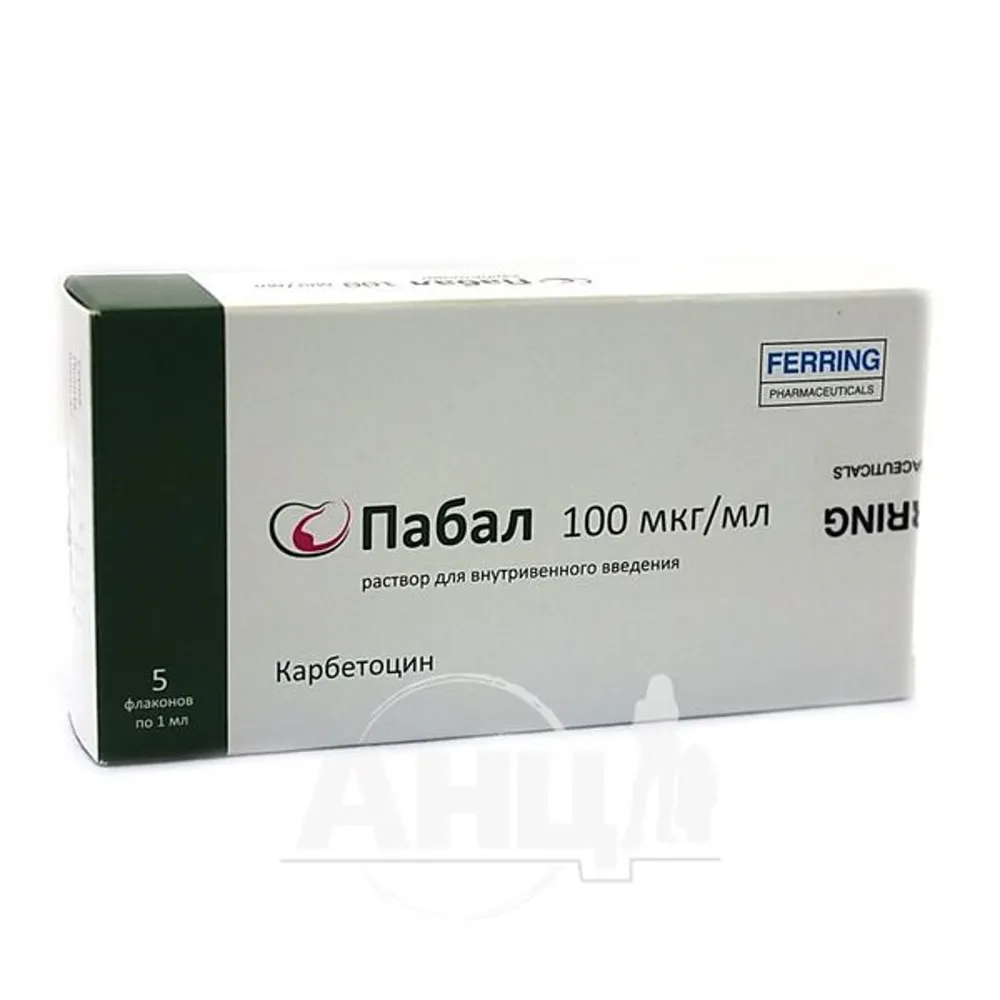
Table of Contents
INSTRUCTION FOR MEDICAL USE OF THE MEDICINAL PRODUCT PABAL (PABAL®)
Composition:
Active substance: carbetocin;
1 ml of solution contains 100 mcg of carbetocin;
Excipients: L-methionine, succinic acid, mannitol, sodium hydroxide 2M, water for injections.
Pharmaceutical form. Solution for injection.
Main physicochemical properties: clear, colourless solution, practically free from visible particles, except for gas bubbles.
Pharmacotherapeutic group. Hormones for systemic use (excluding sex hormones and insulin). Pituitary, hypothalamic hormones and their analogues. Posterior pituitary hormones. Oxytocin and its derivatives. ATC code H01BB03.
Pharmacological Properties
Pharmacodynamics
Carbetocin is a long-acting agonist of oxytocin.
Like oxytocin, carbetocin selectively binds to oxytocin receptors on the smooth muscle cells of the myometrium, stimulating rhythmic contractions of the uterus, increasing the frequency of contractions already initiated, and enhancing uterine muscle tone.
In the postnatal period, carbetocin is capable of increasing the frequency and strength of spontaneous uterine contractions. After administration, an intense onset of contractile activity with powerful contractions is achieved within 2 minutes.
A single intravenous dose of 100 mcg carbetocin administered after delivery of the baby is sufficient to maintain adequate uterine contractility, thereby preventing uterine atony and excessive blood loss, compared to oxytocin infusion over several hours.
Pharmacokinetics
Carbetocin exhibits a biphasic elimination pattern after intravenous administration, with linear pharmacokinetics over the dose range of 400 to 800 mcg. The elimination half-life is approximately 40 minutes. Renal clearance of the unchanged form is low, with less than 1% of the administered dose excreted unchanged in the urine.
In 5 healthy breastfeeding mothers, carbetocin plasma concentrations were detectable within 15 minutes, reaching a maximum level of 1035±218 pg/mL within 60 minutes. After 120 minutes, the maximum concentration in breast milk was approximately 56 times lower than in plasma.
Clinical characteristics.
Indications.
For the prevention of uterine atony following cesarean section performed under spinal or epidural anesthesia.
Contraindications.
- Pregnancy and labor period prior to delivery of the baby.
- Should not be used to stimulate labor.
- Hypersensitivity to carbetocin or oxytocin, or to any excipient contained in the medicinal product.
- Liver or kidney disease.
- History of pre-eclampsia or eclampsia.
- Severe cardiovascular disorders.
- Epilepsy.
Special precautions.
Carbetocin should be administered only in well-equipped obstetric units with trained and qualified personnel continuously available.
Pabal is intended for intravenous use only. Only a clear solution free from particulate matter should be used.
Any unused medicinal product should be disposed of in accordance with local waste disposal regulations.
Interaction with other medicinal products and other forms of interaction.
No evidence of any drug interaction has been observed when carbetocin was used concomitantly with various analgesics, spasmolytics, or agents used for spinal and epidural anesthesia.
Since carbetocin is chemically related to oxytocin, interactions similar to those of oxytocin cannot be excluded.
Severe hypertension has been observed after oxytocin administration within 3–4 hours following prophylactic use of vasoconstrictors for spinal anesthesia.
Oxytocin and carbetocin, when used concomitantly with ergot alkaloids such as methylergometrine, may increase blood pressure, thereby potentiating the effects of these agents. The risk of cumulative effects increases if oxytocin or methylergometrine is administered after carbetocin.
Since prostaglandins are known to potentiate the effect of oxytocin, a similar effect may be expected with carbetocin. Therefore, concomitant use of prostaglandins and carbetocin is not recommended. If these agents are administered simultaneously, careful patient monitoring is required.
Certain inhalation anesthetics, such as halothane and cyclopropane, may enhance the hypotensive effect and reduce the uterine response to carbetocin. Cases of arrhythmia have been reported with concomitant use of oxytocin.
Special precautions for use.
Carbetocin should not be used at any stage of labor, as its uterotonic effect lasts for several hours. This property represents a significant difference compared to the rapid cessation of oxytocin's effect after discontinuation of infusion.
If uterine bleeding persists after administration of carbetocin, the underlying cause should be identified. Possible causes include incomplete placental separation, inadequate uterine curettage or suturing, and coagulopathy.
In cases of persistent uterine hypotonia or atony and, consequently, prolonged uterine bleeding, the additional use of another uterotonic agent should be considered.
Currently, there are no data on repeat administration of carbetocin or on its use following oxytocin in cases of persistent uterine atony.
Animal experimental studies have shown that carbetocin has minimal antidiuretic activity (vasopressin activity < 25 IU/vial); therefore, hyponatremia cannot be excluded, particularly in patients receiving intensive intravenous fluid therapy. To prevent the development of convulsive syndrome and coma, early signs such as drowsiness, lethargy, and headache should be closely monitored.
Carbetocin is generally used with caution in patients with a history of migraine, bronchial asthma, or cardiovascular diseases, as well as in any conditions where a rapid increase in extracellular fluid volume may occur, potentially affecting an already overloaded cardiovascular system. In such special cases, the decision to administer carbetocin should be made by a physician after careful assessment of the potential benefits.
Studies on the use of carbetocin in patients with eclampsia are lacking.
There are currently no studies on the use of the drug during pregnancy in patients with diabetes mellitus. The efficacy of carbetocin in normal labor has not been studied.
Use during pregnancy or breastfeeding.
Pregnancy.
Carbetocin is contraindicated during pregnancy and should not be used to stimulate labor.
Breastfeeding period.
Clinical studies have not shown a significant effect on lactation.
It has been found that a small amount of carbetocin is excreted in breast milk.
It is assumed that after a single injection, a negligible amount of carbetocin passes into the infant’s body through colostrum or breast milk and is subsequently destroyed by enzymes in the infant’s gastrointestinal tract.
Breastfeeding does not need to be restricted after administration of carbetocin.
Ability to affect reaction speed when driving or operating machinery.
The effect on the ability to drive or operate machinery has not been evaluated due to the inapplicability of the clinical situation.
Method of Administration and Dosage
Pabal is administered intravenously only under appropriate medical supervision in a hospital setting.
The drug is administered at a dose of 1 ml as a single slow injection over 1 minute, only after cesarean section and delivery of the baby. Pabal should be administered immediately after delivery, preferably before placental separation. Further administration of the drug is not recommended.
Children
Not applicable to children.
Overdose
Exceeding the dose of carbetocin may lead to increased uterine activity.
Hyperactivity, characterized by strong (tonic) or prolonged (tetanic) contractions due to oxytocin overdose, may result in uterine rupture and postpartum hemorrhage.
In severe cases, oxytocin overdose may cause hyponatremia and water intoxication, especially when associated with simultaneous administration of excessive amounts of fluid. Since carbetocin is an analogue of oxytocin, similar adverse effects cannot be excluded.
Treatment: symptomatic and supportive therapy. If symptoms of overdose occur, oxygen therapy should be initiated in the patient. In cases of water intoxication, restriction of fluid intake, stimulation of diuresis, correction of electrolyte imbalances, and control of possible seizures are essential.
Adverse reactions.
During clinical trials, the frequency and nature of adverse effects of carbetocin were consistent with those observed with oxytocin use.
| Organs and organ systems |
Very common (≥ 1/10) |
Common (≥ 1/100 and < 1/10) |
Frequency unknown |
| Blood and lymphatic system disorders |
Anaemia |
||
| Immune system disorders |
Hypersensitivity (including anaphylactic reactions) |
||
| Gastrointestinal disorders |
Nausea, abdominal pain |
Metalllic taste, vomiting |
|
| General disorders and administration site reactions |
Feeling of warmth |
Chills, pain |
|
| Musculoskeletal and connective tissue disorders |
Back pain |
||
| Nervous system disorders |
Headache, tremor |
Dizziness |
|
| Respiratory system disorders |
Chest pain, dyspnoea |
||
| Skin and subcutaneous tissue disorders |
Itching |
||
| Cardiac disorders |
Tachycardia, bradycardia*, which may lead to cardiac arrest, arrhythmia*, myocardial ischaemia*, and QT interval prolongation* |
||
| Vascular disorders |
Arterial hypotension, facial flushing |
* Refers to adverse reactions reported during the use of oxytocin (structurally closely related to carbetocin).
During clinical trials, isolated cases of increased sweating were observed.
Shelf life. 3 years.
Do not use the medicinal product after the expiry date stated on the packaging.
Storage conditions.
Store in the original cardboard packaging to protect the medicinal product from light. Store at a temperature not exceeding 30 °C. Do not freeze. Keep out of reach and sight of children.
Incompatibility.
In view of the absence of compatibility studies, this medicinal product should not be mixed with other medicinal products.
Packaging. 1 ml solution in a vial; 5 vials in a cardboard pack.
Prescription status. Prescription only.
Manufacturer.
Ferring GmbH, Germany.
Manufacturer's address and place of business.
Wittland 11, 24109 Kiel, Germany.