Ozurdex®
Ukraine
Table of Contents
INSTRUCTIONS FOR MEDICAL USE OF THE MEDICINAL PRODUCT OZURDEX® (OZURDEX®)
Composition:
Active substance: dexamethasone;
1 implant contains 700 mcg of dexamethasone;
Excipients: copolymer of lactic acid and glycolic acid 50:50 (Resomer® RG 502), copolymer of lactic acid and glycolic acid 50:50 (Resomer® RG 502H).
Pharmaceutical form. Implant for intravitreal administration.
Main physicochemical properties: single-use injection device containing an implant in the form of a rod, which is invisible. The implant has a diameter of approximately 0.46 mm and a length of 6 mm.
Pharmacotherapeutic group. Ophthalmological anti-inflammatory agents.
ATC code S01B A01.
Pharmacological properties.
Pharmacodynamics.
Dexamethasone is known to be a potent corticosteroid that exerts a pronounced anti-inflammatory effect and suppresses edema by reducing fibrin deposition, capillary permeability, and phagocytic infiltration in response to inflammation. Vascular endothelial growth factor (VEGF) is a cytokine produced in elevated concentrations in the regulation of macular edema. It is a potent stimulator of vascular permeability. It has been demonstrated that corticosteroids inhibit the expression of vascular endothelial growth factor. In addition, corticosteroids prevent the release of prostaglandins, some of which have been identified as mediators of cystoid macular edema.
Diabetic macular edema
The efficacy of Ozurdex® implant was evaluated in two 3-year, multicenter, double-masked, randomized, placebo-controlled studies with identical designs conducted in parallel groups, which together included 1048 patients (studies 206207-010 and 206207-011). Overall, 351 patients were randomized to the Ozurdex® group, 347 to the dexamethasone 350 mcg group, and 350 patients to the placebo group.
Patients were scheduled to undergo repeat implantation based on central retinal thickness >175 microns measured by optical coherence tomography (OCT), or if OCT findings, in the investigator's opinion, indicated residual retinal edema consisting of multiple intraretinal cysts or multiple areas of increased retinal thickness within or outside the central subfield. Patients received up to 7 implants with intervals of no more than once every 6 months.
Alternative therapy was permitted at the investigator's discretion at any stage of the study, but this led to exclusion from the study.
Overall, 36% of patients receiving Ozurdex® discontinued from the study for any reason, compared with 57% of patients in the placebo group. The proportion of participants who discontinued due to adverse reactions was very similar in both the Ozurdex® group and the placebo group (13% vs. 11%). The proportion of participants who discontinued due to lack of efficacy was lower in the Ozurdex® group than in the placebo group (7% vs. 24%).
Primary and key secondary endpoints in studies 206207-010 and 011 are presented in Table 1. Visual improvement in the dexamethasone group (DEX 700) declined due to cataract formation. Visual improvement was reassessed after cataract removal.
Table 1. Efficacy in studies 206207-010 and 206207-011 (ITT [intention-to-treat population])
| Endpoint |
Study 206207-010 |
Study 206207-011 |
Pooled data from studies 206207-010 and 206207-011 |
|||
| DEX 700, number of participants – 163 |
Placebo, number of participants – 165 |
DEX 700, number of participants – 188 |
Placebo, number of participants – 185 |
DEX 700, number of participants – 351 |
Placebo, number of participants – 350 |
|
| Mean change in BCVA score* over 3 years based on AUC** (letters) |
4.1 |
1.9 |
2.9 |
2.0 |
3.5 |
2.0 |
| P-value |
0.016 |
0.366 |
0.023 |
|||
| BCVA ≥ 15 letters improvement from baseline at Year 3/post-dose/last visit (%) |
22.1 |
13.3 |
22.3 |
10.8 |
22.2 |
12.0 |
| P-value |
0.038 |
0.003 |
< 0.001 |
|||
| Mean change in BCVA score from baseline at Year 3/post-dose/last visit (letters) |
4.1 |
0.8 |
1.3 |
|
2.6 |
0.4 |
| P-value |
0.020 |
0.505 |
0.054 |
|||
| Mean change in retinal thickness measured by optical coherence tomography (OCT) in the central subfield over 3 years based on AUC (µm) |
|
|
|
|
|
|
| P-value |
<0.001 |
< 0.001 |
< 0.001 |
|||
* Best-corrected visual acuity (BCVA)
** Area under the curve (AUC)
The primary and key secondary endpoints based on the pooled analysis of pseudophakic patients are presented in Table 2.
Table 2. Efficacy in pseudophakic patients (pooled studies 206207-010 and 206207-011)
| Endpoint |
DEX 700, |
Placebo, number of participants – 101 |
P-value |
| Mean change in BCVA score over 3 years adjusted for AUC (letters) |
6.5 |
1.7 |
< 0.001 |
| BCVA ≥ 15 letters improvement from baseline at Year 3/post-dose/last visit (%) |
23.3 |
10.9 |
0.024 |
| Mean change in BCVA score from baseline at Year 3/post-dose/last visit |
6.1 |
1.1 |
0.004 |
| Mean change in retinal thickness measured by optical coherence tomography (OCT) in the central subfield over 3 years adjusted for AUC (µm) |
|
|
< 0.001 |
Primary and key secondary endpoints from the pooled analysis for previously treated patients are presented in Table 3.
Table 3. Efficacy in previously treated patients (pooled studies 206207-010 and 206207-011)
| Endpoint |
DEX 700, number of participants – 247 |
Placebo, number of participants – 261 |
P-value |
| Mean change in BCVA score over 3 years based on AUC (letters) |
3.2 |
1.5 |
0.024 |
| BCVA ≥ 15 letters improvement from baseline at Year 3 post-injection/last visit (%) |
21.5 |
11.1 |
0.002 |
| Mean change in BCVA score from baseline at Year 3 post-injection/last visit |
2.7 |
0.1 |
0.055 |
| Mean change in retinal thickness measured by optical coherence tomography (OCT) in the central subfield over 3 years based on AUC (µm) |
|
|
< 0.001 |
Central retinal vein occlusion / branch retinal vein occlusion
The efficacy of the Ozurdex**®** implant was evaluated in two multicenter, double-blind, randomized, placebo-controlled, parallel-group studies of identical design involving 1267 patients who were randomized and treated with dexamethasone 350 μg or 700 μg, or placebo (studies 206207-008 and 206207-009). Overall, 427 patients were randomized to the Ozurdex**®** treatment group, 414 to the dexamethasone 350 μg group, and 426 patients to the placebo group.
Based on the results of the pooled studies, treatment with Ozurdex**®** implants demonstrated a statistically significantly greater proportion of patients achieving an improvement in best-corrected visual acuity (BCVA) of ≥15 letters from baseline at Day 90 after administration of a single implant, compared to the placebo group (p < 0.001).
The percentage of patients achieving the primary efficacy outcome of ≥15-letter improvement in best-corrected visual acuity from baseline after administration of a single implant is shown in Table 4.
The therapeutic effect was observed at the first assessment time point on Day 30. The maximum treatment effect was observed on Day 60, and the difference in the proportion of patients achieving improvement was statistically significant in the Ozurdex**®** group compared to the placebo group throughout the follow-up period up to Day 90 after injection. A trend toward improvement in best-corrected visual acuity of ≥15 letters from baseline continued to be observed in a significantly higher percentage of patients treated with the Ozurdex**®** implant compared to the placebo group at Day 180.
Table 4. Proportion of patients with improvement in best-corrected visual acuity of ≥15 letters from baseline in the study eye (pooled ITT population results)
| Day of examination |
Ozurdex® number of patients – 427 |
Placebo number of patients – 426 |
| Day 30 Day 60 Day 90 Day 180 |
21.3 % a 29.3 % a 21.8 % a 21.5 % |
7.5 % 11.3 % 13.1 % 17.6 % |
a The coefficient in the Ozurdex**®** group was significantly higher compared to the placebo group (p < 0.001).
The mean change in best-corrected visual acuity from baseline was significantly greater in the Ozurdex**®** group compared to the placebo group throughout all observations.
In each Phase III study and in the pooled analysis, the time required to achieve an improvement in best-corrected visual acuity of ≥ 15 letters (3 lines) on cumulative response curves significantly differed in the Ozurdex**®** group compared to the placebo group (p < 0.001); patients receiving the Ozurdex**®** implant achieved a 3-line improvement in best-corrected visual acuity earlier than patients in the placebo group.
Numerically, the Ozurdex**®** implant was significantly more effective than placebo in preventing vision loss, as demonstrated by a lower percentage of patients experiencing a decline in vision of ≥ 15 letters in the Ozurdex**®** group during the 6-month evaluation period.
In each Phase III study and in the pooled analysis, the mean retinal thickness was significantly lower, and the mean reduction from baseline was significantly greater in the Ozurdex**®** group (–207.9 microns) compared to the placebo group (–95.0 microns) on Day 90 (p < 0.001, pooled data).
The therapeutic effect, as confirmed by best-corrected visual acuity assessment on Day 90, was supported by this anatomical finding. The mean reduction (–119.3 microns) in retinal thickness by Day 180 compared to the placebo group was not statistically significant.
Patients with a best-corrected visual acuity score < 84 or a central retinal thickness > 250 microns, measured by optical coherence tomography, and who, in the investigator’s opinion, were not at risk, could be selected for treatment with the Ozurdex**®** implant in the open-label phase of the study. 98% of patients treated in the open-label phase received the Ozurdex**®** implant at 5–7 months after initial treatment.
Maximum response was observed on Day 60 of the open-label phase. Cumulative response rates were higher during the open-label phase in patients who received two consecutive Ozurdex**®** implant injections compared to those who did not receive an Ozurdex**®** implant injection during the initial phase.
The percentage of responders at each time point was consistently higher after the second injection compared to the first injection. However, a 6-month delay in administration resulted in a lower percentage of responders at all time points compared to those who received the second Ozurdex**®** injection during the open-label phase.
Uveitis
The clinical efficacy of the Ozurdex**®** implant was evaluated in a single, multicenter, double-masked, randomized study of treatment for non-infectious posterior segment inflammation in patients with uveitis.
A total of 229 patients were randomized to receive either 350 mcg or 700 mcg dexamethasone implants or placebo. Of these, 77 patients received the Ozurdex**®** implant, 76 received 350 mcg dexamethasone, and 76 received placebo. Overall, 95% of patients completed the 26-week study.
The proportion of patients with vitreous haze score of 0 in the study eye at Week 8 (primary endpoint) was four times higher (46.8%) compared to the placebo group (11.8%), p < 0.001. Statistical superiority was maintained through Week 26 (p ≤ 0.014), as shown in Table 5.
Cumulative response rate curves (time to achieving vitreous haze score of 0) significantly differed between patients treated with the Ozurdex**®** implant and those in the placebo group (p < 0.001). Improvement occurred earlier and treatment efficacy was greater.
Reduction in vitreous haze was accompanied by improvement in visual acuity. The proportion of patients achieving an improvement in best-corrected visual acuity of at least ≥ 15 letters from baseline in the study eye at Week 8 was six times higher in the Ozurdex**®** group (42.9%) compared to the placebo group (6.6%), p < 0.001. Statistical superiority was achieved at Week 3 and maintained through Week 26 (p < 0.001), as shown in Table 5.
The proportion of patients requiring alternative treatment by Week 8 was three times lower in the Ozurdex**®** group (7.8%) than in the placebo group (22.4%), p = 0.012, compared to baseline.
Table 5. Proportion of patients with vitreous haze score of 0 and improvement in best-corrected visual acuity of ≥ 15 letters from baseline in the study eye (ITT population)
| Review date |
Vitreous opacity grade 0 |
Improvement in best-corrected visual acuity of ≥ 15 letters from baseline |
||
| Dexamethasone 700 Number of patients – 77 |
Placebo Number of patients – 76 |
Dexamethasone 700 Number of patients – 77 |
Placebo Number of patients – 76 |
|
| Week 3 |
23.4 % |
11.8 % |
32.5 %a |
3.9 % |
| Week 6 |
42.9 %a |
9.2 % |
41.6 %a |
7.9 % |
| Week 8 |
46.8 %a |
11.8 % |
42.9 %a |
6.6 % |
| Week 12 |
45.5 %a |
13.2 % |
41.6 %a |
13.2 % |
| Week 16 |
40.3 %b |
21.1 % |
39.0 %a |
13.2 % |
| Week 20 |
39.0 %c |
19.7 % |
40.3 %a |
13.2 % |
| Week 26 |
31.2 %d |
14.5 % |
37.7 %a |
13.2 % |
a p< 0.001; b p = 0.010; c p = 0.009; d p = 0.014
Children
The European Medicines Agency has waived the obligation to submit results of studies on the use of Ozurdex® implant in all pediatric subpopulations with respect to retinal vein occlusion, as well as diabetic macular edema.
Pharmacokinetics
Plasma concentration data were obtained in a subgroup of 21 patients during two 6-month efficacy studies, before administration and on day 7, 30, 60, and 90 after injection of a single-use intravitreal implant containing 350 mcg or 700 mcg of dexamethasone. 95% of dexamethasone plasma concentrations after administration of 350 mcg and 86% after administration of 700 mcg were below the lower limit of quantification (0.05 ng/mL). The maximum plasma concentration of 0.094 ng/mL was observed in one patient from the 700 mcg treatment group. Dexamethasone plasma concentrations were found to be independent of patient age, body weight, or sex.
Plasma concentration data were also obtained in a subgroup of patients in two pivotal studies of diabetic macular edema before dose administration and on day 1, day 7, day 21, and at 1.5 and 3 months after intravitreal injection of a single-use intravitreal implant containing 350 mcg or 700 mcg of dexamethasone. 100% of dexamethasone plasma concentrations after administration of 350 mcg and 90% after administration of 700 mcg were below the lower limit of quantification (0.05 ng/mL). The maximum plasma concentration of 0.102 ng/mL was observed in one patient from the 700 mcg treatment group. Dexamethasone plasma concentrations were found to be independent of patient age, body weight, or sex.
In a 6-month study in monkeys, after a single intravitreal injection of Ozurdex® implant, the maximum concentration (Cmax) of dexamethasone in the vitreous humor was 100 ng/mL on day 42 and 5.57 ng/mL on day 91 after injection. Dexamethasone was still detectable in the vitreous humor 6 months after injection. The order of dexamethasone concentration distribution was: retina > iris > ciliary body > vitreous humor > aqueous humor > plasma.
In an in vitro metabolism study, after 18 hours of incubation of C14-dexamethasone with human cornea, iris, ciliary body, choroid, retina, vitreous humor, and scleral tissues, no metabolites of the drug were observed. These results are consistent with animal ocular tissue metabolism studies.
Dexamethasone is metabolized into final lipid- and water-soluble metabolites, which are excreted via bile and urine.
The matrix of Ozurdex® slowly degrades into lactic acid and glycolic acid through simple hydrolysis, and subsequently into carbon dioxide and water.
Clinical characteristics.
Indications.
Treatment of adult patients:
- with macular edema secondary to central retinal vein occlusion or branch retinal vein occlusion;
- with posterior segment intraocular inflammation in the form of non-infectious uveitis;
- with vision impairment due to diabetic macular edema, in whom the eye is pseudophakic or for whom non-corticosteroid therapy is ineffective or inappropriate.
Contraindications.
- Hypersensitivity to the active substance or to any of the excipients of the medicinal product.
- Active or potential ocular or periocular infections, including most viral diseases of the cornea and conjunctiva, particularly active herpetic epithelial keratitis (dendritic keratitis), vaccinia, varicella, mycobacterial infections, and fungal diseases.
- Advanced glaucoma (with insufficient response to medical therapy).
- Aphakia with posterior lens capsule rupture.
- Presence of implanted anterior chamber intraocular lenses, iris-claw intraocular lenses, or posterior chamber intraocular lenses with transscleral fixation in combination with posterior lens capsule rupture.
Special safety precautions.
Any intravitreal injection (including injections of Ozurdex**®**) may be associated with endophthalmitis, intraocular inflammation, increased intraocular pressure, and retinal detachment. Appropriate aseptic injection techniques must always be used. In addition, patients should be examined after injection to ensure early treatment in case of infection or elevated intraocular pressure. The examination may include assessment of optic nerve head perfusion immediately after injection, measurement of intraocular pressure within 30 minutes after injection, and slit-lamp biomicroscopy between days 2 and 7 after injection.
Patients should be instructed to immediately report any symptoms that may indicate endophthalmitis or any of the aforementioned conditions, such as eye pain or blurred vision.
All patients with posterior lens capsule rupture, including patients with a posterior chamber lens (e.g., following cataract surgery), and/or patients with iris prolapse into the vitreous cavity (e.g., following iridectomy), with or without vitrectomy, are at risk of implant migration into the anterior chamber of the eye. Implant migration into the anterior chamber may lead to corneal edema. In cases of persistent severe corneal edema, corneal transplantation may become necessary.
Ozurdex**®** implant should be used with caution in patient groups other than those contraindicated (see section "Contraindications"), and only after careful risk-benefit assessment. These patients should be closely monitored for any signs of implant migration.
The use of corticosteroids, including Ozurdex**®**, may lead to the development of cataracts (including posterior subcapsular cataracts), elevated intraocular pressure (IOP), steroid-induced glaucoma, and secondary ocular infection.
In three-year clinical trials of diabetic macular edema, 59% of phakic patients treated with Ozurdex**®** underwent cataract surgery during the study period.
The incidence of cataract development is higher in patients with non-infectious posterior segment uveitis after the first injection compared to patients with branch retinal vein occlusion or central retinal vein occlusion. In clinical trials of branch retinal vein occlusion/central retinal vein occlusion, cataracts were reported more frequently in phakic patients after the second injection (see section "Adverse reactions").
Only 1 out of 368 patients required cataract surgery after the first administration, and 3 out of 302 after the second treatment course. In the non-infectious uveitis study, 1 out of 62 phakic patients underwent cataract surgery after a single administration.
Conjunctival hemorrhage occurs more frequently in patients with non-infectious posterior segment uveitis compared to patients with branch retinal vein occlusion or central retinal vein occlusion and diabetic macular edema. This may be directly related to the intravitreal injection procedure or concomitant use of topical and/or systemic corticosteroids or non-steroidal anti-inflammatory agents. Medical intervention is not required, as symptoms resolve spontaneously.
As expected, administration of ocular corticosteroids and intravitreal injections may lead to increased intraocular pressure (IOP). Elevated IOP can usually be managed with medications for IOP reduction. In patients with IOP increase ≥10 mmHg from baseline, peak IOP was observed between days 45 and 60 after injection. Therefore, regular monitoring of IOP is required, and any elevation should be promptly treated following injection.
Increased intraocular pressure (IOP) is more frequently observed in patients under 45 years of age with macular edema secondary to retinal vein occlusion or with posterior segment inflammation in the form of non-infectious uveitis.
For single use only.
Each applicator may be used to treat only one eye.
If the protective film of the foil pouch containing the applicator is damaged, the applicator must not be used. Once the foil pouch is opened, the applicator should be used immediately.
Any unused medicinal product or waste material must be disposed of in accordance with local requirements.
Visual disturbances
Visual disturbances may occur with the use of systemic or local corticosteroids. If a patient develops symptoms such as worsening of vision or other visual disturbances, possible causes should be evaluated, including cataract, glaucoma, or rare conditions such as central serous chorioretinopathy (CSCR), which have been reported following systemic or local corticosteroid use.
Interaction with other medicinal products and other forms of interaction.
No specific drug interaction studies have been conducted. However, systemic absorption is minimal, and no interactions are expected.
Special precautions for use
The safety and efficacy of administering Ozurdex® implants in both eyes simultaneously have not been studied. Therefore, simultaneous administration of the drug in both eyes is not recommended.
Corticosteroids should be used with caution in patients with a history of ocular viral infections (herpes simplex) and should not be used in cases of active ocular herpes simplex. The use of Ozurdex® implant for the treatment of patients with secondary macular edema following retinal vein occlusion with significant retinal ischemia has not been studied; therefore, use of the drug is not recommended in this patient group.
Phase III clinical trials included a limited number of patients with type 1 diabetes, and the response to Ozurdex® treatment in these patients did not differ significantly from that in patients with type 2 diabetes.
In retinal vein occlusion studies, anticoagulant therapy was used in 2% of patients receiving Ozurdex® implant; there were no reports of hemorrhagic adverse reactions in this patient group.
In diabetic macular edema, anticoagulant therapy was used in 8% of patients. Among patients receiving anticoagulant medications, the frequency of hemorrhagic adverse reactions was similar between the Ozurdex® group and the placebo group (29% vs. 32%). Among patients not receiving anticoagulant medications, hemorrhagic adverse reactions were observed in 27% of patients receiving Ozurdex® compared to 20% in the placebo group. Vitreous hemorrhage in patients receiving Ozurdex® occurred more frequently in those using anticoagulant medications (11%) compared to those not using anticoagulants (6%).
Antiplatelet agents such as clopidogrel were used at various stages during clinical trials in more than 56% of patients. Among patients receiving concomitant medications together with antiplatelet agents, hemorrhagic adverse reactions were observed more frequently in patients receiving Ozurdex® (up to 29%) compared to the placebo group (up to 23%), regardless of indication or number of injections. The most commonly observed hemorrhagic adverse reaction was conjunctival hemorrhage (up to 24%).
Ozurdex® implant should be used with caution when treating patients taking anticoagulants or antiplatelet agents.
Use during pregnancy or breastfeeding
Animal studies have revealed teratogenic effects following topical ophthalmic administration.
There are no reliable data on the use of intravitreal dexamethasone injections in pregnant women. Prolonged systemic glucocorticoid treatment during pregnancy increases the risk of intrauterine growth retardation and neonatal adrenal insufficiency. Therefore, although systemic exposure to dexamethasone is considered very low following local intraocular administration, use of Ozurdex® implant during pregnancy is not recommended except when the expected benefit to the pregnant woman outweighs the potential risk to the fetus.
Dexamethasone is excreted in breast milk. Given the route of administration of Ozurdex® implant and its low systemic concentration, no effect on the infant is expected. However, use of Ozurdex® implant is not recommended during breastfeeding unless clearly necessary.
There are no data on the effect on female fertility.
Ability to influence reaction speed when driving or operating machinery
Ozurdex® may have a minor influence on reaction speed when driving or operating machinery.
After intravitreal injection of Ozurdex® implant, patients may experience temporary visual disturbances (see section "Adverse reactions"). In such cases, patients should refrain from driving or operating machinery until visual function returns to normal.
Method of Administration and Dosage
Ozurdex® must be administered only by a qualified ophthalmologist experienced in performing intravitreal injections.
Recommended dose: one Ozurdex® implant administered intravitreally into the affected eye. Simultaneous administration in both eyes is not recommended.
Diabetic Macular Edema
Repeat doses should be administered when the patient shows an initial response and, in the physician’s opinion, re-treatment would improve the condition without substantial risk to the patient.
In diabetic macular edema, repeat injection may be performed approximately every 6 months if the patient experiences worsening of vision and/or increased retinal thickness due to recurrence or progression of diabetic macular edema.
There are no data on the efficacy and safety of administering more than 7 injections in diabetic macular edema.
Retinal Vein Occlusion and Uveitis
Re-administration is necessary if the patient shows a response to the drug during progressive loss of visual acuity and, in the physician’s opinion, the benefit of repeat injection outweighs the significant risk.
Patients whose vision has improved and remains stable should not receive repeat treatment. Patients whose vision continues to deteriorate despite treatment with Ozurdex® implant should not be re-treated.
Limited information is available regarding repeat administration at intervals shorter than 6 months. For information on experience with repeat administration of more than 2 implants in non-infectious posterior segment uveitis or retinal vein occlusion, see section "Adverse Reactions".
Patients should remain under observation after injection to allow timely management of infection or elevated intraocular pressure.
Elderly patients (≥ 65 years of age): dose adjustment is not required for elderly patients.
Use of Ozurdex® implant in patients with renal or hepatic impairment has not been studied; however, no special precautions are required for such patients.
The Ozurdex® implant for intravitreal administration in a single-use applicator is intended exclusively for intravitreal use.
Each applicator may be used to treat only one eye.
The intravitreal injection procedure must be performed under aseptic conditions, including use of sterile gloves, sterile drapes, and a sterile eyelid speculum (or equivalent).
A topical broad-spectrum antibacterial agent should be administered daily for three days before and after the procedure. Prior to injection, disinfection of the skin around the eye, eyelids, and ocular surface must be performed (as in clinical trials with Ozurdex® implant, for example, using 5% povidone-iodine solution applied to the conjunctiva), and appropriate local anesthesia should be applied. Remove the foil pouch from the cardboard packaging and inspect it for damage (see section "Packaging"). Then, under sterile conditions, open the foil pouch and carefully place the applicator onto a sterile tray. Carefully remove the cap from the applicator.
Use the applicator immediately after opening the foil pouch.
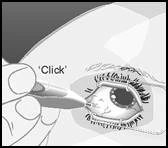
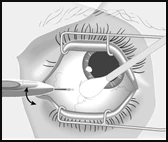
Hold the applicator in one hand and remove the safety guard from the applicator. Do not twist or bend the safety guard. Position the tip of the applicator needle directly onto the sclera and insert the needle approximately 1 mm into the sclera. Then redirect the applicator toward the center of the eye into the vitreous cavity until the silicone sleeve is flush with the conjunctiva. Slowly press the activation button until a distinct click is heard. Before removing the applicator from the eye, ensure that the activation button is fully depressed and locked to prevent fluid leakage from the applicator surface. Withdraw the needle from the vitreous cavity in the reverse direction to that used for insertion.
Administration of OZURDEX®
| |
Keep the longitudinal axis of the applicator parallel to the limbus. |
|
| |
Bring the applicator close to the sclera at an acute angle with the bevel of the needle facing upward, away from the sclera. Insert the needle tip approximately 1 mm into the sclera, keeping it parallel to the limbus. |
|
| |
Redirect the applicator toward the center of the eye into the vitreous cavity. This will create a beveled scleral tunnel. Insert the needle until you enter the vitreous cavity. Stop advancing the needle once the applicator hub touches the conjunctiva. |
|
| |
Slowly press the drive button until a distinct click is heard. Before removing the applicator from the eye, ensure that the drive button is fully depressed and has locked, preventing fluid drainage from the applicator surface. |
|
| |
Remove the applicator from the vitreous cavity by reversing the insertion path. |
|
| |
Safely dispose of the applicator immediately after use. The OZURDEX® applicator is intended for single use only. |
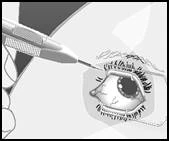
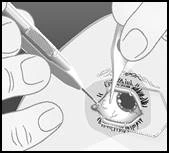
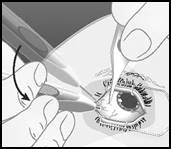
Immediately after implantation of Ozurdex**®**, perform indirect ophthalmoscopy in the injection sector to confirm successful implantation. Visualization is possible in the vast majority of cases. If the implant cannot be visualized, use a sterile cotton swab to gently press over the injection site to make the implant visible.
After intravitreal injection, patients should continue treatment with a broad-spectrum antibacterial agent.
Children
There are no relevant data on the use of Ozurdex**®** implant in children with
- diabetic macular edema;
- macular edema secondary to central retinal vein occlusion or branch retinal vein occlusion.
The safety and efficacy of Ozurdex**®** in pediatric patients with uveitis have not been established. Data are lacking.
Overdose.
Information on overdose is not available.
In case of overdose, intraocular pressure should be monitored and normalized if the physician considers it necessary.
Adverse Reactions
Summary of Safety Profile
The most commonly reported adverse reactions are those frequently observed with corticosteroid therapy or associated with the intravitreal injection procedure (elevated intraocular pressure, cataract formation, and subconjunctival or intravitreal haemorrhage, respectively).
Less frequent but more serious adverse reactions included: endophthalmitis, necrotizing retinitis, corneal perforation, and corneal tear.
Apart from headache and migraine, no systemic adverse reactions have been identified following administration of Ozurdex**®**.
List of adverse reactions is presented in Table 6.
Adverse reactions considered to be related to the use of Ozurdex**®** implant, based on results from Phase III clinical trials (diabetic macular oedema, central retinal vein occlusion/branch retinal vein occlusion, and uveitis) and spontaneous reports, are listed in Table 6 according to MedDRA organ system classification.
The frequency of adverse reactions is defined as follows:
very common (≥ 1/10); common (≥ 1/100 to < 1/10); uncommon (≥ 1/1000 to < 1/100); rare (≥ 1/10000 to < 1/1000); very rare (< 1/10000). Within each frequency category, adverse reactions are listed in order of decreasing clinical significance.
Table 6. Adverse Reactions
| System Organ Class |
Frequency |
Adverse Reaction |
| Nervous system disorders |
Common |
Headache |
| Uncommon |
Migraine |
|
| Eye disorders |
Very common |
Increased intraocular pressure**, cataract**, conjunctival haemorrhage* |
| Common |
Ocular hypertension, subcapsular cataract, vitreous haemorrhage**, decreased visual acuity*, worsening of vision, vitreous detachment*, floaters*, vitreous opacity*, blepharitis, eye pain*, photopsia*, conjunctival oedema*, conjunctival hyperaemia* |
|
| Uncommon |
Necrotizing retinitis, endophthalmitis*, glaucoma, retinal detachment*, retinal tear*, ocular hypotony*, anterior chamber inflammation*, anterior chamber cell flare*, abnormal sensation in eye*, eyelid pruritus, scleral hyperaemia* |
|
| General disorders and administration site conditions |
Uncommon |
Device displacement* (implant migration) with or without corneal oedema (see section "Safety information"), complications during device administration resulting in ocular tissue damage* (incorrect placement of implant) |
* These adverse reactions are considered to be related to the intravitreal injection procedure (the frequency of these adverse reactions is proportional to the number of administered injections).
** During a 24-month real-world observational study of treatment for macular edema following retinal vein occlusion and non-infectious posterior segment uveitis, these adverse reactions were reported more frequently in patients who received >2 injections compared to those who received ≤2 injections: cataract formation (24.7% vs. 17.7%), cataract development (32.0% vs. 13.1%), vitreous hemorrhage (6.0% vs. 2.0%), and intraocular pressure (IOP) elevation (24.0% vs. 16.6%).
Diabetic Macular Edema
The clinical safety of Ozurdex**®** implant in patients with diabetic macular edema was evaluated in two double-blind, randomized, placebo-controlled phase III studies. Overall, 347 patients were enrolled in the Ozurdex**®** implant treatment group and 350 patients received placebo across both studies.
The most common adverse reactions observed in clinical trials among patients receiving Ozurdex**®** were cataract and elevated IOP (see below).
During a three-year clinical study of diabetic macular edema, 87% of phakic patients who received the Ozurdex**®** implant showed some degree of lens opacity/early stage cataract at baseline. The incidence of such events during the three-year study among all examined patients with various types of cataract (cortical, diabetic, nuclear, subcapsular, lenticular, and senile cataract) was 68% in phakic patients receiving Ozurdex**®**. 59% of phakic patients who received the implant required surgical cataract removal by the final visit of the 3-year study, with most surgeries occurring in the second and third years of the study.
At baseline, mean IOP values in the study eye were similar in both treatment groups (15.3 mmHg). The mean increase in IOP from baseline did not exceed 3.2 mmHg at any visit in the Ozurdex**®** group, with peak IOP observed 1.5 months after injection. IOP returned to baseline levels by 6 months after each injection. The frequency and magnitude of IOP elevation following Ozurdex**®** implant administration did not increase with repeated injections.
Elevated IOP (≥10 mmHg from baseline) was observed in 28% of patients receiving Ozurdex**®** at one or more visits during the study. At baseline, 3% of patients required medication to lower IOP. Overall, 42% of patients required IOP-lowering medication in the study eye at some point during the 3-year study, with most patients requiring more than one additional agent. The maximum use of IOP-lowering medications (33%) occurred during the first 12 months and remained at this level thereafter.
Overall, 4 patients (1%) who received Ozurdex**®** required surgical procedures to reduce IOP in the study eye. One patient receiving Ozurdex**®** required surgery (trabeculectomy) for steroid-induced IOP elevation; one patient underwent trabeculectomy due to fibrin blockage of aqueous outflow in the anterior chamber leading to elevated IOP; one patient underwent iridectomy due to angle-closure glaucoma; and another patient underwent iridectomy following cataract surgery. No patient required implant removal via vitrectomy to reduce IOP.
Central Retinal Vein Occlusion / Branch Retinal Vein Occlusion
The clinical safety of the Ozurdex**®** implant was evaluated in two randomized, double-blind, placebo-controlled phase III studies in patients with macular edema due to central retinal vein occlusion or branch retinal vein occlusion. Overall, 427 patients were randomized to receive Ozurdex**®** and 426 patients received placebo across the two phase III studies. Overall, 401 patients (94%) in the Ozurdex**®** group completed the initial treatment period (up to day 180).
Overall, 47.3% of patients experienced at least one adverse reaction.
The most commonly reported adverse reactions following administration of the Ozurdex**®** implant were increased intraocular pressure (24%) and conjunctival hemorrhage (14.7%).
The nature of adverse reactions in patients with branch retinal vein occlusion was similar to that observed in patients with central retinal vein occlusion, although overall the number of adverse reactions was higher in the subgroup of patients with central retinal vein occlusion.
Increased intraocular pressure (IOP) following Ozurdex**®** implant administration peaked on day 60 and returned to baseline levels by day 180. Elevated IOP either required no therapeutic intervention or was managed with temporary use of IOP-lowering medications. During the initial treatment period, 0.7% (3/421) of patients receiving Ozurdex**®** required laser therapy or surgical intervention to reduce elevated IOP, compared to 0.2% in the placebo group (1/423).
The nature of adverse reactions following the second injection (341 patients) of Ozurdex**®** was similar to that following the first injection. At least one adverse reaction was observed in 54% of patients. The frequency of IOP elevation (24.9%) was similar to that observed after the first injection and returned to baseline levels by day 180. The overall incidence of cataract was higher at 1 year compared to the first 6 months.
Uveitis
The clinical safety of the Ozurdex**®** implant in patients with non-infectious posterior segment uveitis was evaluated in a single multicenter, blinded, randomized study.
Overall, 77 patients were randomized to the Ozurdex**®** implant group and 76 to the placebo group. 73 patients (95%) randomized to the Ozurdex**®** implant group completed the 26-week study.
The most commonly reported adverse reactions following Ozurdex**®** implant administration during clinical trials were conjunctival hemorrhage (30.3%), increased intraocular pressure (25%), and cataract (11.8%).
Suspected adverse reaction reporting
Reporting of suspected adverse reactions is important. It allows continued monitoring of the benefit/risk balance of the medicinal product. Healthcare professionals are requested to report any suspected adverse reactions.
Shelf life.
3 years.
Storage conditions.
No special storage conditions required.
Keep out of the reach of children.
Incompatibilities.
Incompatibilities are not known.
Packaging.
1 package contains:
1 sterile rod-shaped implant containing 700 mcg of dexamethasone, located in the needle (stainless steel) of the applicator.
The applicator consists of a needle-mounted rod (stainless steel), with the implant positioned using a sleeve (silicone). The rod is controlled by a safety lock located on the applicator. The needle is protected by a cap, and the safety lock is protected by a stopper.
The applicator containing the implant, together with a moisture-absorbing packet, is sealed in a foil pouch. The foil pouch is packaged in a cardboard box.
Prescription status.
Prescription only.
Manufacturer.
Allergan Pharmaceuticals Ireland.
Manufacturer's address and location of operations.
Castlebar Road, Westport, Co. Mayo, F28 AW83, Ireland.