Oseltamivir
Ukraine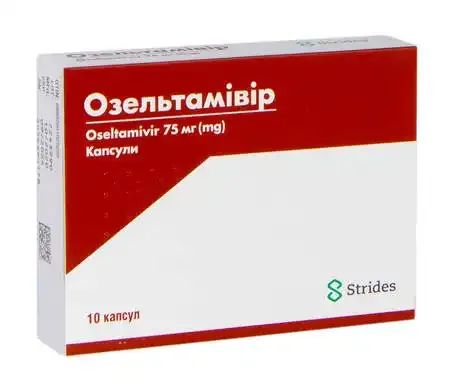
Table of Contents
INSTRUCTIONS FOR MEDICAL USE OF THE MEDICINAL PRODUCT Oseltamivir (Oseltamivir)
Composition:
Active substance: oseltamivir;
1 capsule contains oseltamivir 75.00 mg in the form of oseltamivir phosphate 98.50 mg;
Excipients: pregelatinized starch, talc, povidone K30, sodium croscarmellose, sodium stearyl fumarate;
Capsule shell:
titanium dioxide (E 171), yellow iron oxide (E 172), red iron oxide (E 172), gelatin, sodium lauryl sulfate.
Dosage form. Capsules.
Main physicochemical properties: hard gelatin capsules size № 2 with brown body and cream-colored cap, marked with "OP" on the cap and "75" on the body in black ink. The capsule contents are a powder ranging from white to almost white.
Pharmacotherapeutic group.
Antiviral agents for systemic use. Direct-acting antiviral agents. Neuraminidase inhibitors. Oseltamivir.
ATC code J05A H02.
Pharmacological properties.
Pharmacodynamics.
Oseltamivir phosphate is a prodrug of the active metabolite (oseltamivir carboxylate). The active metabolite is a selective inhibitor of the neuraminidase enzyme of influenza viruses, which is a glycoprotein on the surface of the virion. The activity of the viral neuraminidase enzyme is important for viral penetration into uninfected cells, release of newly formed viral particles from infected cells, and further spread of the virus in the body.
Oseltamivir carboxylate inhibits neuraminidase of influenza viruses types A and B in vitro. Oseltamivir phosphate suppresses viral replication and pathogenicity in vitro. Oseltamivir, when administered orally, inhibits replication and pathogenicity of influenza viruses types A and B in animal models of influenza infection in vivo under antiviral exposure levels achieved in humans receiving a dose of 75 mg twice daily.
Antiviral activity of oseltamivir has been confirmed against influenza viruses types A and B in experimental studies in healthy volunteers.
The IC50 values of oseltamivir for neuraminidase enzyme of clinical isolates of influenza virus A ranged from 0.1 nmol to 1.3 nmol, and for influenza virus B were 2.6 nmol. Published study data reported higher IC50 values for influenza virus B with a median of 8.5 nmol.
Resistance to oseltamivir
Clinical studies. The risk of emergence of influenza viruses with reduced susceptibility or marked resistance to oseltamivir was studied during clinical trials. Development of resistance to oseltamivir during treatment was observed more frequently in children than in adults, ranging from less than 1% in adults to 18% in infants under 1 year of age. Children carrying oseltamivir-resistant virus generally shed the virus for a longer period compared to those with non-resistant virus. However, treatment-emergent resistance to oseltamivir did not affect treatment response and did not lead to prolonged influenza symptoms.
Overall, a higher frequency of resistance to oseltamivir was observed in immunocompromised adults and adolescents receiving standard or double dose of oseltamivir for 10 days [14.5% (10/69) in the standard dose group and 2.7% (2/74) in the double dose group], compared to data from studies involving otherwise healthy adults and adolescents receiving oseltamivir treatment. Most adult patients who developed resistance were transplant recipients (8/10 patients in the standard dose group and 2/2 patients in the double dose group). Most patients with oseltamivir-resistant virus were infected with influenza virus type A and shed the virus for a longer duration.
The frequency of resistance to oseltamivir in immunocompromised children (≤12 years) receiving oseltamivir in two studies was 20.7% (6/29). Of the six immunocompromised children who developed oseltamivir resistance during treatment, 3 patients received the standard dose and 3 patients received a high (double or triple) dose. Most of them had acute lymphoblastic leukemia and were ≤ 5 years of age.
Frequency of development of resistance to oseltamivir in clinical studies
| Patient population |
Patients with resistance mutations (%) |
|
| Phenotyping* |
Geno- and phenotyping* |
|
| Adults and adolescents |
0.88% (21/2382) |
1.13% (27/2396) |
| Children (1–12 years) |
4.11% (71/1726) |
4.52% (78/1727) |
| Infants (<1 year) |
18.31% (13/71) |
18.31% (13/71) |
Full genotyping was not performed in all studies.
Influenza Prophylaxis
To date, no evidence of drug resistance associated with the use of oseltamivir has been observed in clinical studies of post-exposure influenza prophylaxis (7 days), household post-exposure prophylaxis (10 days), or seasonal influenza prophylaxis (42 days) in immunocompromised patients. Resistance was not observed during a 12-week prophylaxis study in immunocompromised patients.
Clinical and Surveillance Data. Natural mutations associated with reduced susceptibility to oseltamivir have been identified in vitro in influenza viruses A and B isolated from patients not exposed to oseltamivir. Resistant strains selected during oseltamivir treatment have been isolated from patients with both normal and impaired immunity. The risk of developing resistance to oseltamivir during treatment is higher in immunocompromised patients and in younger children.
Resistant influenza viruses isolated from patients receiving oseltamivir treatment, as well as resistant laboratory strains of influenza virus, have been found to contain mutations in neuraminidases N1 and N2. Resistance mutations tended to be subtype-specific. Since 2007, sporadic naturally occurring resistance associated with the H275Y mutation has been detected in seasonal H1N1 strains. Susceptibility to oseltamivir and the prevalence of such viruses have been shown to vary seasonally and geographically. In 2008, the H275Y mutation was detected in >99% of circulating H1N1 influenza isolates in Europe. In 2009, the H1N1 influenza virus ("swine flu") was almost uniformly susceptible to oseltamivir, although sporadic reports of resistance during treatment and prophylaxis were received.
Pharmacokinetics.
Absorption
After oral administration, oseltamivir phosphate (prodrug) is readily absorbed from the gastrointestinal tract and is extensively converted to the active metabolite (oseltamivir carboxylate) by hepatic esterases. At least 75% of the orally administered dose reaches the systemic circulation as the active metabolite, and less than 5% as the parent drug. Plasma concentrations of both the prodrug and the active metabolite are dose-proportional and are not affected by concomitant food intake.
Distribution
In humans, the mean volume of distribution of the active metabolite at steady state is approximately 23 L, a volume equivalent to that of extracellular fluid in the body. Since neuraminidase activity is extracellular, oseltamivir carboxylate reaches all major sites of influenza infection.
Plasma protein binding of the active metabolite is low (approximately 3%).
Metabolism
Oseltamivir is extensively converted to oseltamivir carboxylate by esterases, primarily located in the liver. Neither oseltamivir phosphate nor the active metabolite are substrates or inhibitors of the major cytochrome P450 isoenzymes in in vitro studies. No phase 2 conjugates of either compound have been identified in vivo.
Excretion
Absorbed oseltamivir is eliminated primarily (>90%) by conversion to oseltamivir carboxylate, which undergoes no further transformation and is excreted in urine. In most patients, the maximum plasma concentration of the active metabolite declines with a half-life of 6–10 hours. The fully active metabolite is eliminated entirely by the kidneys. Renal clearance (18.8 L/h) exceeds glomerular filtration rate (7.5 L/h), indicating that the drug is additionally eliminated via tubular secretion. Less than 20% of the orally administered radiolabeled drug is excreted in feces.
Pharmacokinetics in Special Populations.
Children aged 1 year and older
The pharmacokinetics of oseltamivir were studied in children aged 1 to 16 years in a single-dose pharmacokinetic study. Multiple-dose pharmacokinetics were studied in a small number of children in a clinical efficacy trial. In younger children, elimination of the prodrug and active metabolite occurred more rapidly than in adults, resulting in lower exposure expressed as mg/kg dose. A dose of 2 mg/kg provides the same exposure of oseltamivir carboxylate as achieved in adults after a single 75 mg dose (approximately 1 mg/kg). The pharmacokinetics of oseltamivir in children and adolescents aged 12 years and older are similar to those in adults.
Geriatric patients
In elderly patients (65–78 years), steady-state exposure to the active metabolite is 25–35% higher than in younger patients (<65 years) when similar doses of oseltamivir are administered. The elimination half-life in elderly patients is similar to that in younger patients. Based on drug exposure and tolerability, dose adjustment is not necessary for elderly patients, except for those with moderate or severe renal impairment (creatinine clearance <60 mL/min) (see section "Dosage and Administration").
Patients with renal impairment
Administration of oseltamivir phosphate 100 mg twice daily for 5 days to patients with varying degrees of renal impairment demonstrated that exposure to oseltamivir carboxylate is inversely proportional to the degree of renal function decline. For dosing recommendations, see section "Dosage and Administration".
Patients with hepatic impairment
Based on in vitro studies, no significant increase in oseltamivir exposure or significant decrease in exposure to the active metabolite is expected in patients with impaired liver function (see section "Dosage and Administration").
Pregnant women
A pooled population pharmacokinetic analysis indicates that the dosing regimen of oseltamivir described in the section "Dosage and Administration" results in lower exposure (on average 30% across all trimesters) to the active metabolite in pregnant women compared to non-pregnant individuals. However, the reduced predicted exposure remains above inhibitory concentrations (IC95 values) and within the range effective against influenza virus strains at therapeutic levels. Additionally, observational study data support the benefit of the current dosing regimen in this patient population. Therefore, dose adjustment in pregnant women for the treatment or prophylaxis of influenza is not recommended (see section "Use during Pregnancy or Breastfeeding").
Immunocompromised patients
Population pharmacokinetic analyses have demonstrated that administration of oseltamivir to immunocompromised adults and children (<18 years) (as specified in the section "Dosage and Administration") results in increased predicted exposure (approximately 5–50%) to the active metabolite compared to immunocompetent patients with comparable creatinine clearance. Due to the wide safety margin of the active metabolite, dose adjustment is not required for immunocompromised patients. However, for immunocompromised patients with impaired renal function, the dose should be adjusted according to the recommendations in the section "Dosage and Administration".
An analysis of pharmacokinetic and pharmacodynamic data from two studies involving immunocompromised patients demonstrated no significant additional benefit from doses exceeding the standard dose.
Clinical characteristics.
Indications.
Influenza treatment
Oseltamivir is indicated for adults and children aged 1 year and older who have influenza symptoms during influenza virus circulation. Efficacy has been demonstrated when treatment was initiated within 2 days of symptom onset.
Influenza prophylaxis:
- prevention of influenza in adults and children aged 1 year and older following close contact with a person diagnosed with clinical influenza during influenza virus circulation;
- appropriate use of oseltamivir for influenza prophylaxis should be determined on a case-by-case basis, considering the circumstances and the patient population requiring protection. In exceptional situations (e.g., in case of a mismatch between the circulating influenza virus and the virus strain included in the vaccine, or during a pandemic), seasonal prophylaxis may be considered in individuals aged 1 year and older.
Oseltamivir should not be used as a substitute for influenza vaccination.
The use of antiviral agents for the treatment and prevention of influenza should be based on official recommendations. Decisions regarding the use of oseltamivir for treatment and prophylaxis should take into account the characteristics of circulating influenza viruses, available data on influenza virus susceptibility to antiviral drugs each season, the impact of the disease in different geographical regions, and patient population characteristics.
Contraindications.
Hypersensitivity to oseltamivir phosphate or to any component of the medicinal product.
Interaction with other medicinal products and other forms of interaction.
The pharmacokinetic properties of oseltamivir, such as low protein binding and metabolism independent of the CYP450 and glucuronidation systems (see section "Pharmacokinetics"), suggest that clinically significant interactions with other medicinal products are unlikely.
Probenecid
No dose adjustment is required for oseltamivir when co-administered with probenecid in patients with normal renal function. Concomitant administration of probenecid, a potent inhibitor of the anionic pathway of renal tubular secretion, results in approximately a twofold increase in exposure to the active metabolite of oseltamivir.
Amoxicillin
Oseltamivir does not exhibit kinetic interaction with amoxicillin, which is eliminated via the same pathway as oseltamivir, indicating minimal interaction via this route.
Renal excretion
Clinically significant interaction with other medicinal products involving competition for renal tubular secretion is unlikely due to the known safety margins of most such agents, characteristics of elimination of active metabolites (glomerular filtration and anionic tubular secretion), and the volume of excretion via these pathways. However, caution should be exercised when prescribing oseltamivir to patients taking medicinal products with a similar excretion pathway and a narrow therapeutic index (e.g., chlorpropamide, methotrexate, phenylbutazone).
Additional information
No pharmacokinetic interactions between oseltamivir and its major metabolite were observed when co-administered with paracetamol, acetylsalicylic acid, cimetidine, antacids (magnesium hydroxide and aluminium hydroxide, calcium carbonate), rimantadine, or warfarin (in patients on stable warfarin doses and not suffering from influenza).
In phase III clinical trials of oseltamivir for the treatment and prevention of influenza, oseltamivir was administered concomitantly with commonly used medicinal products such as angiotensin-converting enzyme (ACE) inhibitors (enalapril, captopril), thiazide diuretics (bendroflumethiazide), antibiotics (penicillin, cephalosporins, azithromycin, erythromycin, and doxycycline), H2-receptor antagonists (ranitidine, cimetidine), beta-blockers (propranolol), xanthines (theophylline), sympathomimetics (pseudoephedrine), opioids (codeine), corticosteroids, inhaled bronchodilators, and analgesics (acetylsalicylic acid, ibuprofen, and paracetamol). No changes in the safety profile or frequency of adverse reactions were observed when oseltamivir was used concomitantly with these agents.
No interaction mechanism with oral contraceptives has been identified.
Special precautions for use.
Oseltamivir is effective only against diseases caused by influenza viruses. There is no data on the efficacy of oseltamivir for any conditions caused by pathogens other than influenza viruses.
Oseltamivir should not be used as a substitute for influenza vaccination. The use of oseltamivir should not interfere with annual influenza vaccination programs. Protection against influenza lasts only during the period of oseltamivir administration. Oseltamivir should be used for the treatment and prevention of influenza only when reliable epidemiological data indicate the circulation of the virus. The susceptibility of circulating influenza virus strains to oseltamivir has been shown to be highly variable; therefore, physicians should consider the most up-to-date information on the susceptibility of currently circulating viruses to oseltamivir before deciding to prescribe the drug.
Severe skin reactions and hypersensitivity reactions
During post-marketing use of oseltamivir, cases of anaphylaxis and severe skin reactions, including toxic epidermal necrolysis, Stevens-Johnson syndrome, and erythema multiforme, have been reported. Oseltamivir should be discontinued and appropriate treatment initiated if such reactions occur or are suspected.
Severe underlying conditions
There is no information on the safety and efficacy of oseltamivir in patients with severe or unstable medical conditions associated with an inevitable risk of hospitalization.
Immunocompromised patients
The safety and efficacy of oseltamivir for the treatment and prevention of influenza in immunocompromised patients have not been established.
Cardiac/respiratory diseases
The efficacy of oseltamivir in treating individuals with chronic cardiac and/or respiratory diseases has not been established. In such patients, no difference in complication rates was observed between treatment and placebo groups.
Severe renal impairment
Dose adjustment of oseltamivir is recommended for adults and adolescents (13–17 years) with severe renal impairment when used for treatment and prophylaxis. There is insufficient clinical data on the use of oseltamivir in children aged 1 year and older with renal impairment to provide dosing recommendations (see sections "Dosage and administration", "Pharmacokinetics").
Neuropsychiatric disorders
Neuropsychiatric disorders have been reported in patients with influenza (predominantly in children and adolescents) receiving oseltamivir. Such disorders have also been reported in influenza patients who did not receive this medication. Patients should be closely monitored for behavioral changes, and the benefit and risk of continuing treatment should be carefully evaluated for each patient (see section "Adverse reactions").
Disposal of unused or expired medication. Environmental contamination by pharmaceuticals should be minimized. The medication must not be disposed of via wastewater or household waste. Disposal should be carried out through a designated waste collection system, if available.
Use during pregnancy or breastfeeding.
Pregnancy
Influenza is associated with adverse effects on pregnancy outcomes, fetal development, and an increased risk of major congenital malformations, including congenital heart defects. A large amount of post-marketing and observational study data on oseltamivir use during pregnancy (over 1000 first-trimester exposures) indicate no teratogenic or fetal/neonatal toxicity associated with oseltamivir.
However, in one observational study, although no increased overall risk of congenital malformations was observed, results regarding major congenital heart defects diagnosed within 12 months after birth were inconclusive. In this study, the incidence of major congenital heart defects following first-trimester exposure to oseltamivir was 1.76% (7 infants out of 397 pregnancies), compared to 1.01% in pregnancies without oseltamivir exposure in the general population (risk ratio 1.75, 95% confidence interval 0.51 to 5.98). The clinical significance of these findings is unclear due to the study's limited sample size. Additionally, the study was not sufficiently powered to reliably assess individual types of major congenital malformations, and complete comparison between women exposed and unexposed to oseltamivir was not possible, particularly regarding whether they had influenza.
Animal studies do not indicate reproductive toxicity.
If necessary, oseltamivir may be considered during pregnancy, taking into account the available safety and efficacy data, as well as the pathogenicity of the circulating influenza virus strain.
Breastfeeding
Oseltamivir and its active metabolite pass into breast milk in lactating rats. There is very limited information on infants whose mothers received oseltamivir during lactation and on the excretion of oseltamivir into human breast milk. Limited data show that oseltamivir and its active metabolite were detected in breast milk, but at low levels, likely resulting in a subtherapeutic dose in the infant. Considering these data, along with the pathogenicity of the circulating influenza virus strain and the mother's clinical condition, oseltamivir may be considered if the potential benefit to the breastfeeding woman is clearly evident.
Fertility
Based on preclinical data, there is no evidence of an effect of oseltamivir on fertility in men or women.
Ability to affect reaction speed when driving or operating machinery.
Oseltamivir has no influence on the ability to drive or operate machinery.
Administration and Dosage
Administration
For oral use.
Patients who cannot swallow capsules may receive appropriate doses of oseltamivir as an oral suspension powder.
Dosage
Oseltamivir in capsule form and oseltamivir oral suspension are bioequivalent dosage forms.
For children and adult patients who have difficulty swallowing capsules or require a lower dose of the drug, oseltamivir oral suspension powder (6 mg/mL) is recommended.
Adults and adolescents aged 13 years and older
Treatment. The recommended dosage regimen of oseltamivir is one 75 mg capsule taken orally twice daily for 5 days in adults and adolescents (13–17 years) with body weight over 40 kg.
For immunocompromised patients (adults and adolescents aged 13–17 years with body weight over 40 kg), the recommended dosage regimen of oseltamivir is one 75 mg capsule taken orally twice daily for 10 days (see section "Dosage in special situations. Immunocompromised patients").
Treatment should be initiated as soon as possible, within the first two days of onset of influenza symptoms.
Post-exposure prophylaxis. The recommended dose of oseltamivir for prevention of influenza after close contact with an infected individual is 75 mg once daily orally for 10 days in adults and adolescents (13–17 years) with body weight over 40 kg, including immunocompromised patients (adults and adolescents aged 13–17 years with body weight over 40 kg). Treatment should be initiated as soon as possible, within two days after contact with an infected individual.
Prophylaxis during seasonal influenza epidemic. The recommended dose for prophylaxis during an outbreak of seasonal influenza is 75 mg once daily for 6 weeks (or up to 12 weeks for immunocompromised patients; see sections "Special precautions", "Adverse reactions").
Children aged 1 to 12 years
Treatment. The recommended dosage regimen of oseltamivir is one 75 mg capsule taken orally twice daily for 5 days in children aged 1 year and older with body weight over 40 kg who are able to swallow capsules.
For immunocompromised children aged 1 year and older with body weight over 40 kg who are able to swallow capsules, the recommended dosage regimen of oseltamivir is one 75 mg capsule taken orally twice daily for 10 days (see section "Dosage in special situations. Immunocompromised patients").
If patients have difficulty swallowing capsules or require a lower dose, oseltamivir oral suspension (6 mg/mL) is recommended.
Treatment should be initiated as soon as possible, within the first two days of onset of influenza symptoms.
Post-exposure prophylaxis. The recommended dosage regimen of oseltamivir is one 75 mg capsule once daily orally for 10 days in children aged 1 year and older with body weight over 40 kg (including immunocompromised children) who are able to swallow capsules, for prevention after contact with an influenza-infected person. If patients have difficulty swallowing capsules or require a lower dose, oseltamivir oral suspension (6 mg/mL) is recommended.
Prophylaxis during seasonal influenza epidemic. Prophylaxis during seasonal influenza epidemic in children under 12 years of age has not been studied.
Dosage in special situations
Patients with hepatic impairment
Dosage adjustment is not required for treatment or prophylaxis in patients with hepatic impairment. The safety and pharmacokinetics of oseltamivir in children with hepatic impairment have not been studied.
Patients with renal impairment
Treatment of influenza. Dose adjustment of oseltamivir is required for adults and adolescents (13–17 years) with moderate or severe renal impairment (see Table 1).
Table 1
| Creatinine clearance |
Recommended treatment dose |
| > 60 mL/min |
75 mg twice daily |
| from > 30 to 60 mL/min |
30 mg (suspension) twice daily |
| from > 10 to 30 mL/min |
30 mg (suspension) once daily |
| ≤ 10 mL/min |
not recommended (data unavailable) |
| patients on hemodialysis |
30 mg (suspension) after each hemodialysis session |
| patients on peritoneal dialysis* |
30 mg (suspension) single dose |
* Data obtained from studies in patients undergoing continuous ambulatory peritoneal dialysis (CAPD); clearance of oseltamivir carboxylate is expected to be higher with automated peritoneal dialysis (APD). The treatment regimen may be changed from APD to CAPD if deemed necessary by the nephrologist.
Influenza prophylaxis. Dose adjustment of oseltamivir is required in adults and adolescents (13–17 years) with moderate or severe renal impairment (see Table 2).
Table 2
| Creatinine clearance |
Recommended prophylactic dose |
| > 60 mL/min |
75 mg once daily |
| from > 30 to 60 mL/min |
30 mg (suspension) once daily |
| from > 10 to 30 mL/min |
30 mg (suspension) every other day |
| ≤ 10 mL/min |
not recommended (data unavailable) |
| patients on hemodialysis |
30 mg (suspension) after every other hemodialysis session |
| patients on peritoneal dialysis* |
30 mg (suspension) once weekly |
* Data obtained from studies in patients undergoing continuous ambulatory peritoneal dialysis (CAPD); clearance of oseltamivir carboxylate is expected to be higher with automated continuous cycling peritoneal dialysis (CCPD). The treatment regimen may be changed from CCPD to CAPD if the nephrologist considers it necessary.
There are insufficient clinical data to provide dosing recommendations for children under 12 years of age with impaired renal function.
Elderly patients
Dose adjustment is not required, except in cases of moderate or severe renal impairment.
Immunocompromised patients
Treatment. The recommended duration of influenza treatment in immunocompromised patients is 10 days (see sections "Special instructions", "Adverse reactions"). Dose adjustment is not required. Treatment should be initiated as soon as possible within the first two days of symptom onset.
Seasonal prophylaxis. Longer durations (up to 12 weeks) of seasonal prophylaxis have been studied in immunocompromised patients (see sections "Special instructions", "Adverse reactions").
Children
Safety data on the use of oseltamivir for influenza treatment in children aged 1 year and older, obtained from prospective and retrospective observational studies, as well as from epidemiological databases and post-marketing experience, indicate that the safety profile in children aged 1 year and older is comparable to the established safety profile in adults.
Administered to children aged 1 year and older with body weight above 40 kg who are able to swallow capsules.
Overdose.
Reports of overdose with oseltamivir have been received during clinical trials and post-marketing use. In most cases, no adverse reactions were reported.
Adverse reactions reported in cases of overdose were similar in nature and distribution to those observed with therapeutic doses of oseltamivir (see section "Adverse reactions").
No specific antidote is known.
Children
Overdose was reported more frequently in children than in adults and adolescents. Caution should be exercised when administering oseltamivir to children.
Adverse Reactions
The overall safety profile of the medicinal product Oseltamivir is based on data from treatment of influenza in 6049 adults/adolescents and 1473 children who received Oseltamivir or placebo, and on prophylaxis data from 3990 adults/adolescents and 253 children who received Oseltamivir or placebo in clinical trials. Additionally, 245 patients with compromised immunity (including 7 adolescents and 39 children) received Oseltamivir for treatment of influenza, and 475 immunocompromised patients (including 18 children, 10 in the Oseltamivir group and 8 in the placebo group) received Oseltamivir or placebo for influenza prophylaxis.
In adults/adolescents, the most commonly reported adverse events during Oseltamivir treatment in influenza treatment studies were nausea and vomiting, and in influenza prophylaxis studies – nausea. Most of these adverse reactions occurred within the first or second day of treatment, were transient in nature, and resolved spontaneously within 1–2 days. In children, the most common adverse event was vomiting. In most cases, these adverse reactions did not lead to discontinuation of Oseltamivir.
During post-marketing use of oseltamivir, the following serious adverse reactions have been reported rarely: anaphylactic and anaphylactoid reactions, hepatic disorders (fulminant hepatitis, liver function abnormalities, and jaundice), angioedema, Stevens-Johnson syndrome and toxic epidermal necrolysis, gastrointestinal hemorrhage, and neuropsychiatric disorders (for neuropsychiatric disorders, see section "Special Warnings and Precautions for Use").
The following categories were used to describe the frequency of adverse reactions: very common (≥ 1/10), common (≥ 1/100, < 1/10), uncommon (≥ 1/1000, < 1/100), rare (≥ 1/10,000, < 1/1000), very rare (< 1/10,000). Adverse reactions were assigned to specific categories based on pooled analysis of clinical trial data.
Treatment and Prophylaxis of Influenza in Adults and Adolescents
The most frequently reported adverse reactions observed in clinical studies and post-marketing experience with Oseltamivir for treatment and prophylaxis of influenza in adults and adolescents at the recommended dose (75 mg twice daily for 5 days for treatment and 75 mg once daily for up to 6 weeks for prophylaxis) are listed below.
The safety profile reported in patients receiving Oseltamivir at recommended prophylactic doses (75 mg once daily for up to 6 weeks) was similar to that observed in treatment studies, despite the longer duration of prophylactic studies:
Infections and infestations: common – bronchitis, herpes simplex, upper respiratory tract infections, nasopharyngitis, sinusitis;
Blood and lymphatic system disorders: rare – thrombocytopenia;
Immune system disorders: uncommon – hypersensitivity reaction; rare – anaphylactic and anaphylactoid reactions;
Psychiatric disorders: rare – agitation, abnormal behavior, anxiety, confusion, delusions, delirium, hallucinations, nightmares, self-injury;
Nervous system disorders: very common – headache; common – insomnia; uncommon – disturbance in consciousness, convulsions;
Eye disorders: rare – vision disorders;
Cardiac disorders: uncommon – cardiac arrhythmias;
Respiratory, thoracic and mediastinal disorders: common – cough, rhinorrhea, sore throat;
Gastrointestinal disorders: very common – nausea; common – vomiting, abdominal pain (including upper abdominal pain), dyspepsia; rare – gastrointestinal hemorrhage, hemorrhagic colitis;
Hepatobiliary disorders: uncommon – increased liver enzyme levels; rare – fulminant hepatitis, hepatic failure, hepatitis;
Skin and subcutaneous tissue disorders: uncommon – dermatitis, rash, eczema, urticaria; rare – angioedema, erythema multiforme, Stevens-Johnson syndrome, toxic epidermal necrolysis; frequency not known – allergy, facial swelling;
General disorders and administration site conditions: common – dizziness (including vertigo), weakness, pain, hyperthermia, limb pain.
Treatment and Prophylaxis of Influenza in Children
Overall, 1473 children (including healthy children aged 1–12 years and children with asthma aged 6–12 years) participated in clinical trials of oseltamivir for treatment of influenza. Among them, 851 children received oseltamivir suspension for treatment. A total of 158 children received the recommended dose of Oseltamivir once daily in prophylaxis studies: in household transmission studies (n = 99), in 6-week seasonal prophylaxis studies (n = 49), and in 12-week seasonal prophylaxis studies in immunocompromised children (n = 10).
The most frequently reported adverse reactions observed in studies of Oseltamivir for treatment and prophylaxis of influenza in children (using age-based dosing from 30 mg to 75 mg once daily) are listed below:
Infections and infestations: common – otitis media; frequency not known – bronchitis, pneumonia, sinusitis;
Nervous system disorders: common – headache;
Blood and lymphatic system disorders: frequency not known – lymphadenopathy;
Eye disorders: common – conjunctivitis (including eye redness, eye discharge, and eye pain);
Ear and labyrinth disorders: common – ear pain; uncommon – tympanic membrane disorders;
Respiratory, thoracic and mediastinal disorders: very common – cough, nasal congestion; common – rhinorrhea; frequency not known – asthma (including exacerbations), epistaxis;
Gastrointestinal disorders: very common – vomiting; common – nausea, abdominal pain (including upper abdominal pain), dyspepsia; frequency not known – diarrhea;
Skin and subcutaneous tissue disorders: uncommon – dermatitis (including allergic and atopic dermatitis).
Description of Selected Adverse Reactions
Psychiatric and Neurological Disorders
Influenza may be associated with various neurological and behavioral symptoms, which may include hallucinations, delirium, and abnormal behavior, sometimes resulting in fatal outcomes. These events may occur as manifestations of encephalitis or encephalopathy, but may also occur without apparent severe illness.
In patients with influenza treated with Oseltamivir, post-marketing cases of convulsions and delirium (including symptoms such as altered level of consciousness, confusion, abnormal behavior, delusions, hallucinations, agitation, anxiety, and nightmares) have been reported, which in rare cases led to accidental self-harm or fatal outcomes. These events were primarily observed in children and adolescents and often had sudden onset and rapid resolution. It is unknown whether these neuropsychiatric events are related to Oseltamivir use, as similar neuropsychiatric disorders have also been reported in influenza patients not treated with this medicinal product.
Hepatobiliary Disorders
Hepatobiliary disorders, including cases of hepatitis and elevated liver enzymes, have been observed in patients with influenza-like illness. These cases included fatal fulminant hepatitis/hepatic failure.
Additional Information on Specific Patient Groups
Elderly Patients and Patients with Chronic Cardiac and/or Respiratory Diseases
The studied population for influenza treatment included healthy adults/adolescents and patients with risk factors (e.g., elderly patients and patients with chronic cardiac or respiratory diseases who are at increased risk of influenza-related complications). Overall, the safety profile in adolescents and adults with chronic cardiac and/or respiratory diseases was qualitatively comparable to that in healthy adolescent/adult volunteers.
Immunocompromised Patients
Influenza treatment in immunocompromised patients was evaluated in two studies using standard or high (double or triple) doses of Oseltamivir. The safety profile of Oseltamivir observed in these studies was consistent with that observed in previous clinical trials of Oseltamivir for treatment of influenza in non-immunocompromised patients of all age groups (patients without comorbidities or patients with risk factors [underlying cardiac and/or respiratory diseases]). The most common adverse reaction in immunocompromised children was vomiting (28%).
In a 12-week prophylaxis study involving 475 immunocompromised individuals, including 18 children aged 1–12 years, the safety profile in 238 patients who received oseltamivir was comparable to that observed in clinical trials of Oseltamivir for prophylaxis.
Children with Bronchial Asthma
Overall, the adverse reaction profile in children with bronchial asthma was qualitatively similar to that in otherwise healthy children.
Shelf Life.
5 years.
Storage Conditions.
Keep out of the reach and sight of children. Store at temperatures not exceeding 25 °C.
Packaging.
10 capsules of 75 mg in a blister pack. 1 blister pack in a cardboard box.
Prescription Status.
Prescription only.
Manufacturer.
Strides Pharma Sciences Limited.
Manufacturer's Address and Place of Business.
No. 36/7, Suragadrahalli, Indlavadi Cross, Anekal Taluk, Bangalore, Karnataka 562106, India.