Orcipol
Ukraine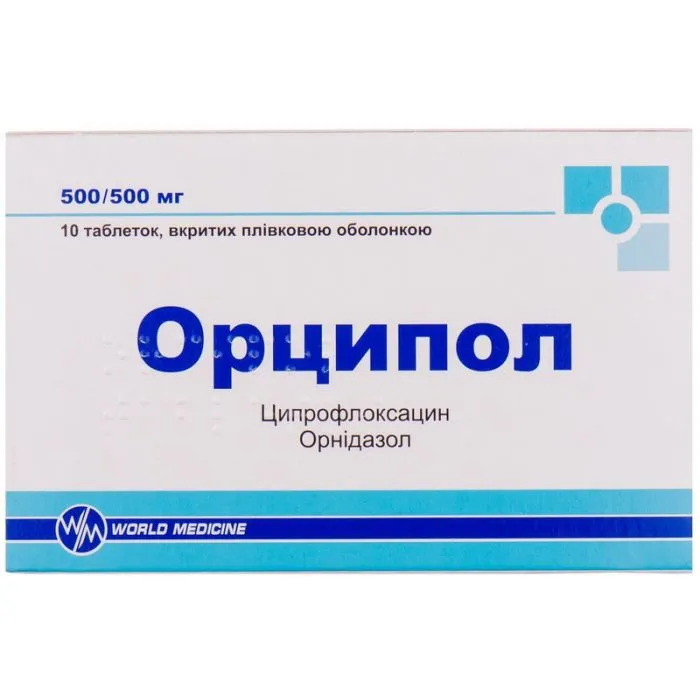
Table of Contents
INSTRUCTIONS FOR MEDICAL USE OF THE MEDICINAL PRODUCT ORCIPOL (ORCIPOL)
Composition:
Active substances: ciprofloxacin, ornidazole;
One film-coated tablet contains ciprofloxacin (as ciprofloxacin hydrochloride) 500 mg and ornidazole 500 mg;
Excipients: maize starch, sodium starch glycolate, povidone (K30), sodium croscarmellose, magnesium stearate, colloidal anhydrous silicon dioxide, talc;
Coating composition: hypromellose (E 15), titanium dioxide (E 171), iron oxide yellow (E 172), propylene glycol, talc.
Pharmaceutical form. Film-coated tablets.
Main physicochemical characteristics: capsule-shaped, film-coated tablets of pale yellow to yellow color, with "ORCP" embossed on one side and a score line on the other.
Pharmacotherapeutic group.
Combined antibacterial agents. Ciprofloxacin, ornidazole. ATC code J01RA12.
Pharmacological Properties
Pharmacodynamics
Ortsipol is a combined antimicrobial and antiprotozoal medicinal product, whose pharmacological effect is determined by the properties of its active ingredients: ciprofloxacin (a second-generation fluoroquinolone derivative) and ornidazole (a 5-nitroimidazole derivative).
Ciprofloxacin inhibits bacterial DNA gyrase and suppresses bacterial DNA synthesis. It causes morphological changes in the bacterial membrane and cell wall, leading to rapid cell death. It is effective against microorganisms both in the growth and resting phases. It has a broad spectrum of antimicrobial activity and is active against a range of aerobic and anaerobic gram-positive and gram-negative microorganisms: Staphylococcus spp. (including penicillinase-producing and non-producing strains, methicillin-resistant strains), Streptococcus spp. (including S. pneumoniae and S. pyogenes), Enterococcus spp., Listeria monocytogenes; Enterobacter spp., Haemophilus influenzae, Klebsiella spp., Legionella spp., Moraxella catarrhalis, Morganella morganii, Neisseria spp., Proteus spp., Pseudomonas aeruginosa, Salmonella spp., Shigella spp., Vibrio cholerae, Campylobacter spp., Citrobacter spp., Yersinia enterocolitica, E. coli, and others – Mycobacterium tuberculosis, Chlamydia trachomatis, and Mycoplasma hominis. Resistant to ciprofloxacin are Ureaplasma urealyticum, Clostridium difficile, Nocardia asteroids, and Treponema pallidum.
The mechanism of action of ornidazole is associated with disruption of DNA structure in susceptible microorganisms. It is active against Trichomonas vaginalis, Giardia lamblia, Entamoeba histolytica, as well as certain anaerobic bacteria (including Bacteroides spp., Clostridium spp., Fusobacterium spp., and anaerobic cocci).
Pharmacokinetics
Ciprofloxacin
Absorption
After oral administration, ciprofloxacin is rapidly and well absorbed, primarily from the upper part of the small intestine. Bioavailability is 70–80%. Maximum plasma concentration (Cmax) is reached within 1–2 hours.
Distribution
Plasma protein binding of ciprofloxacin is low (20–30%), and the substance remains predominantly in non-ionized form in plasma. Ciprofloxacin freely diffuses into the extravascular space. A high volume of distribution at steady state, reaching 2–3 L/kg body weight, confirms that ciprofloxacin penetrates tissues at concentrations that may exceed plasma levels many times over.
Metabolism
Low concentrations of four ciprofloxacin metabolites have been detected: desethylciprofloxacin (M1), sulfociprofloxacin (M2), oxociprofloxacin (M3), and formylciprofloxacin (M4). Metabolites M1–M3 exhibit in vitro antimicrobial activity similar to or lower than that of nalidixic acid. M4, present in the smallest amount, is equivalent to norfloxacin in terms of in vitro antimicrobial activity.
Excretion
Ciprofloxacin is excreted predominantly unchanged both renally and via the gastrointestinal tract.
Ornidazole
Absorption
After oral administration, ornidazole is rapidly absorbed in the gastrointestinal tract. Bioavailability is approximately 90%. Cmax is achieved within 3 hours.
Distribution
Plasma protein binding of ornidazole is approximately 13%. It penetrates into cerebrospinal fluid and other body fluids and tissues. Plasma concentrations of ornidazole range between 6–36 mg/L.
Metabolism
Ornidazole is metabolized in the liver, primarily forming 2-hydroxymethyl and α-hydroxymethyl metabolites. Both metabolites are less active against Trichomonas vaginalis and anaerobic bacteria than unchanged ornidazole.
Excretion
The elimination half-life of ornidazole is approximately 13 hours. Within the first 5 days after a single dose, 85% of the administered dose is excreted, mainly as metabolites. Approximately 4% of the administered dose is excreted unchanged in the urine.
Special Patient Populations
Children
The pharmacokinetics of ciprofloxacin and ornidazole in children are similar to those in adults.
Clinical characteristics.
Indications.
Treatment of mixed infections caused by pathogens (microorganisms and protozoa) sensitive to the components of the medicinal product.
Adults.
Urinary tract infections:
- uncomplicated acute cystitis*;
- acute pyelonephritis;
- complicated urinary tract infections;
- bacterial prostatitis.
Genital system infections:
- epididymitis.
Sexually transmitted infections.
Children.
Urinary tract infections:
- complicated urinary tract infections;
- acute pyelonephritis.
* Only when it has been determined that the use of other antibacterial agents typically prescribed for treatment of such infection is ineffective or inappropriate.
Contraindications.
- Hypersensitivity to the active substances, derivatives of fluoroquinolones, derivatives of nitroimidazoles, and/or excipients of the medicinal product.
- Epilepsy, multiple sclerosis.
- Central nervous system disorders with reduced seizure threshold (following head trauma, stroke, inflammatory processes in the brain and meninges).
- Prolonged QT interval, uncorrected hypokalemia, concomitant use with class IA (quinidine, procainamide) or class III (amiodarone, sotalol) antiarrhythmic agents.
- Pathological blood disorders or other hematological abnormalities.
- Concomitant use with tizanidine.
Interaction with other medicinal products and other forms of interaction.
Ciprofloxacin.
Agents prolonging QT interval. Concomitant use with ciprofloxacin may lead to QT interval prolongation. Concomitant use with agents that prolong the QT interval (e.g., class IA and III antiarrhythmics, tricyclic antidepressants, macrolides, antipsychotics) should be performed with caution (see section "Special precautions for use").
Chelate complex formation. Concomitant administration of ciprofloxacin (orally) with medicinal products containing multivalent cations and mineral supplements (such as calcium, magnesium, aluminum, iron), phosphate-binding polymers (e.g., sevelamer or lanthanum carbonate), sucralfate, or antacids, as well as formulations with high buffering capacity (such as didanosine tablets) containing magnesium, aluminum, or calcium, reduces ciprofloxacin absorption. Therefore, ciprofloxacin should be taken either 1–2 hours before or at least 4 hours after administration of these products. This restriction does not apply to antacids belonging to the class of H2-receptor blockers.
Food and dairy products. Dietary calcium slightly reduces ciprofloxacin absorption. However, simultaneous intake of ciprofloxacin with dairy or mineral-enriched products (such as milk, yogurt, calcium-fortified orange juice) should be avoided.
Probenecid. Concomitant use with ciprofloxacin may increase ciprofloxacin plasma levels.
Metoclopramide. Concomitant use with ciprofloxacin may accelerate its absorption, resulting in a faster achievement of maximum plasma concentration. No effect on ciprofloxacin bioavailability has been observed.
Omeprazole. Concomitant use with ciprofloxacin may cause a slight reduction in Cmax and AUC of the latter.
Tizanidine. In a clinical study involving healthy volunteers, concomitant administration of ciprofloxacin and tizanidine resulted in increased tizanidine plasma levels (increase in Cmax by 7-fold, range 4–21-fold; increase in AUC by 10-fold, range 6–24-fold). Elevated tizanidine plasma concentrations are associated with hypotensive and sedative adverse reactions. Concomitant use of these agents is contraindicated (see section "Contraindications").
Methotrexate. Concomitant use with ciprofloxacin may increase methotrexate plasma levels, increasing the risk of methotrexate-induced toxic adverse reactions. Concomitant use of these agents is not recommended (see section "Special precautions for use").
Theophylline. Concomitant use with ciprofloxacin may increase theophylline plasma levels, potentially leading to adverse reactions. In isolated cases, such adverse reactions may be life-threatening or fatal. When these agents are used concomitantly, monitoring of theophylline plasma levels is recommended, with dose adjustment if necessary (see section "Special precautions for use").
Other xanthine derivatives. Increased plasma levels of xanthine derivatives such as caffeine or pentoxifylline (oxpentifylline) have been reported after concomitant administration with ciprofloxacin.
Non-steroidal anti-inflammatory drugs (NSAIDs). Animal studies have shown that the combination of very high doses of quinolones (gyrase inhibitors) and certain NSAIDs (except acetylsalicylic acid) may provoke seizures.
Cyclosporine. Transient increase in plasma creatinine levels has been observed with concomitant use of ciprofloxacin and cyclosporine-containing medicinal products. Frequent monitoring (twice weekly) of plasma creatinine concentration is recommended when these agents are used concomitantly.
Phenytoin. Concomitant use with ciprofloxacin may increase phenytoin plasma levels. Monitoring of phenytoin plasma levels is recommended when these agents are used concomitantly.
Vitamin K antagonists. Concomitant use with ciprofloxacin may enhance anticoagulant effects. The degree of risk may vary depending on the underlying infection, age, and general condition of the patient, making it difficult to accurately assess the impact of ciprofloxacin on the increase in international normalized ratio (INR). Frequent monitoring of INR is recommended during and immediately after concomitant use of ciprofloxacin and vitamin K antagonists (e.g., warfarin, acenocoumarol, phenprocoumon, fluindione).
Duloxetine. Clinical studies have shown that concomitant use of duloxetine with strong CYP450 1A2 inhibitors such as fluvoxamine may lead to increased AUC and Cmax of duloxetine. Although there are no clinical data on potential interaction with ciprofloxacin, similar effects may be expected when these agents are used concomitantly (see section "Special precautions for use").
Clozapine. After concomitant administration of 250 mg ciprofloxacin with clozapine for 7 days, plasma concentrations of clozapine and N-desmethylclozapine increased by 29% and 31%, respectively. Clinical monitoring and appropriate dose adjustment of clozapine are recommended during and immediately after concomitant use with ciprofloxacin (see section "Special precautions for use").
Lidocaine. In healthy subjects, concomitant use of ciprofloxacin (a moderate inhibitor of cytochrome P450 1A2 isoenzymes) and lidocaine-containing medicinal products has been shown to reduce the clearance of intravenous lidocaine by 22%. Despite normal tolerability of lidocaine treatment, interaction with ciprofloxacin associated with adverse reactions upon concomitant use is possible.
Ropinirole. Clinical studies have shown that concomitant use of ropinirole with ciprofloxacin (a moderate inhibitor of CYP450 1A2 isoenzyme) increases Cmax and AUC of ropinirole by 60% and 84%, respectively. Monitoring for ropinirole side effects and appropriate dose adjustment are recommended during and immediately after concomitant use with ciprofloxacin (see section "Special precautions for use").
Sildenafil. After concomitant administration of 50 mg sildenafil and 500 mg ciprofloxacin, Cmax and AUC of sildenafil approximately doubled in healthy volunteers. Caution is advised when using these agents concomitantly, and the risk/benefit ratio should be considered.
Zolpidem. Concomitant use with ciprofloxacin may increase zolpidem plasma levels. Concomitant use of these agents is not recommended.
Agomelatine. Clinical studies have shown that fluvoxamine (a strong inhibitor of CYP450 1A2 isoenzyme) significantly inhibits agomelatine metabolism, increasing its exposure by 60-fold. Although there are no clinical data on potential interaction with ciprofloxacin (a moderate inhibitor of CYP450 1A2 isoenzyme), similar effects may be expected when these agents are used concomitantly (see section "Special precautions for use").
Ornidazole.
5-Fluorouracil, phenobarbital, and other hepatic enzyme inducers. The plasma circulation half-life of ornidazole is reduced. Enhanced monitoring of the patient is recommended when these agents are used concomitantly with ornidazole.
Cimetidine and other enzyme inhibitors. The plasma circulation half-life of ornidazole is increased.
Oral anticoagulants. The effect of coumarin-type oral anticoagulants is enhanced. Enhanced monitoring of the patient and dose adjustment of oral anticoagulants are recommended when used concomitantly with ornidazole.
Vecuronium bromide. The muscle-relaxant effect of vecuronium bromide is prolonged.
Alcohol-containing products and beverages. Although ornidazole (unlike metronidazole) does not inhibit aldehyde dehydrogenase, a disulfiram-like reaction after alcohol consumption cannot be completely ruled out. Consumption of alcoholic beverages should be avoided during treatment and for at least 3 days after discontinuation of the medicinal product.
Special precautions for use.
Ciprofloxacin.
Ciprofloxacin should be avoided in patients with a history of serious adverse reactions to quinolones or fluoroquinolone-containing agents (see section "Side effects"). Treatment in such patients should only be initiated if no alternative therapy is available and after careful assessment of the benefit/risk ratio (see also section "Contraindications").
Use in severe infections and/or mixed infections caused by gram-positive or anaerobic bacteria.
Ciprofloxacin should not be used as monotherapy for the treatment of severe infections or infections caused by gram-positive or anaerobic bacteria. For treatment of such infections, ciprofloxacin should be used in combination with appropriate antibacterial agents.
Use in streptococcal infections (including Streptococcus pneumoniae).
Ciprofloxacin is not recommended for the treatment of streptococcal infections due to insufficient efficacy.
Use in genital tract infections.
Fluoroquinolone-resistant strains of Neisseria gonorrhoeae may cause gonococcal urethritis, cervicitis, orchiepididymitis, and pelvic inflammatory disease.
Therefore, ciprofloxacin should be used for the treatment of gonococcal urethritis or cervicitis only if resistance of Neisseria gonorrhoeae to ciprofloxacin has been ruled out.
Empirical therapy with ciprofloxacin for orchiepididymitis and pelvic inflammatory disease may be used only in combination with other appropriate antibacterial agents (e.g., cephalosporins), except in clinical situations where ciprofloxacin-resistant strains of Neisseria gonorrhoeae have been excluded. If no clinical improvement occurs within 3 days, the therapy should be re-evaluated.
Use in urinary tract infections.
In European Union countries, variable resistance of Escherichia coli, the most common pathogen causing urinary tract infections, to fluoroquinolones has been observed. Prescribers are advised to consider local prevalence of Escherichia coli resistance to fluoroquinolones when selecting therapy.
Single-dose ciprofloxacin regimens, which may be used for uncomplicated cystitis in premenopausal women, are considered less effective than longer-term ciprofloxacin therapy. This should be taken into account given the increasing resistance of Escherichia coli to quinolones.
Use in complicated urinary tract infections and pyelonephritis.
Treatment of urinary tract infections with ciprofloxacin should be considered only when alternative therapies are not feasible. Treatment should be based on microbiological test results.
Other specific severe infections.
Ciprofloxacin use may be justified based on microbiological test results in other severe infections according to official recommendations or after careful assessment of the benefit/risk ratio when alternative treatments are not possible or standard therapy has proven ineffective.
Ciprofloxacin use in specific severe infections other than those mentioned above has not been evaluated in clinical trials, and clinical experience is limited. Therefore, caution is recommended when treating patients with such infections.
Risk of hypersensitivity reactions.
Hypersensitivity and allergic reactions, including anaphylactic/anaphylactoid reactions, may occur after administration of a single dose of ciprofloxacin (see section "Side effects") and may be life-threatening. In such cases, the drug should be discontinued immediately, and appropriate medical treatment should be initiated if necessary.
Prolonged, disabling, and potentially irreversible serious adverse reactions.
Very rarely, in patients receiving quinolones and fluoroquinolones, regardless of age and existing risk factors, prolonged (lasting months or years), disabling, and potentially irreversible adverse reactions affecting various, and sometimes multiple, organ systems (including musculoskeletal, nervous system, psychiatric, and sensory organs) have been reported. The drug should be discontinued immediately upon the first signs or symptoms of any adverse reaction, and medical advice should be sought.
Risk of tendinitis and tendon rupture.
In general, the drug should not be used in patients with a history of tendon disorders associated with quinolone use. Nevertheless, in rare cases, after microbiological testing and benefit/risk assessment, ciprofloxacin may be prescribed to such patients for the treatment of specific severe infections, particularly when standard therapy is ineffective or bacterial resistance exists, and microbiological test results justify ciprofloxacin use.
Tendinitis and tendon rupture (not limited to the Achilles tendon, sometimes bilateral) may occur within 48 hours of starting quinolone or fluoroquinolone therapy and, as reported, even several months after discontinuation of treatment (see section "Side effects"). The risk of tendinitis and tendon rupture is increased in elderly patients, patients with impaired renal function, patients with organ transplants, and patients receiving concomitant corticosteroids. Therefore, concomitant use of corticosteroids should be avoided.
If signs of tendinitis (e.g., painful swelling, inflammation) occur, the drug should be discontinued, and alternative therapy should be considered. Corticosteroids should not be used if signs of tendinopathy develop.
Use in patients with myasthenia gravis.
The drug should be used with caution in patients with myasthenia gravis due to the potential for exacerbation of symptoms of this condition (see section "Side effects").
Aneurysm/dissection of the aorta and valvular regurgitation/insufficiency.
Epidemiological studies have reported an increased risk of aortic aneurysm and dissection, particularly in elderly patients, and regurgitation of the aortic and mitral valves following fluoroquinolone use. Cases of aortic aneurysm and dissection, sometimes complicated by rupture (including fatal cases), and regurgitation/insufficiency of any heart valve have been reported in patients receiving fluoroquinolones (see section "Side effects").
Therefore, fluoroquinolones should be used only after careful assessment of the benefit/risk ratio and consideration of alternative therapeutic options in patients with a positive family history of aneurysm or congenital heart valve defect, existing diagnosis of aneurysm and/or aortic dissection, heart valve disease, or presence of other risk factors or predisposing conditions:
- for aortic aneurysm and dissection, as well as valvular regurgitation/insufficiency (e.g., connective tissue disorders such as Marfan syndrome or Ehlers-Danlos syndrome, Turner syndrome, Behçet's disease, hypertension, rheumatoid arthritis);
- for aortic aneurysm and dissection (e.g., vascular disorders such as Takayasu arteritis or giant cell arteritis, known atherosclerosis, or Sjögren's syndrome);
- for valvular regurgitation/insufficiency (e.g., infective endocarditis).
The risk of aortic aneurysm, dissection, and rupture may be increased in patients receiving systemic corticosteroids concomitantly.
Patients should seek immediate medical attention in emergency departments if they experience sudden abdominal, chest, or back pain.
Patients should be advised to seek immediate medical help if they develop acute shortness of breath, new onset of palpitations, or development of abdominal or lower limb edema.
Risk of visual disturbances.
Visual disturbances have been reported with ciprofloxacin use. If vision deteriorates or other visual effects develop, patients should seek immediate medical advice.
Risk of photosensitivity reactions.
Ciprofloxacin has been shown to cause photosensitivity reactions. Patients should be advised to avoid direct sunlight or UV radiation during treatment (see section "Side effects").
Risk of seizures.
Ciprofloxacin, like other quinolones, may cause seizures or lower the seizure threshold. Cases of epileptic status have been reported. The drug should be used with caution in patients with central nervous system disorders predisposing to seizures. If seizures occur, the drug should be discontinued (see section "Side effects").
Risk of peripheral neuropathy.
Cases of sensory or sensorimotor polyneuropathy, leading to paresthesia, hypoesthesia, dysesthesia, or weakness, have been reported with quinolone use, including ciprofloxacin. To prevent potentially irreversible damage, patients should consult a physician if symptoms of neuropathy such as pain, burning, tingling, numbness, or weakness develop (see section "Side effects").
Risk of psychotic reactions.
Psychotic reactions may occur even after the first dose of ciprofloxacin. In isolated cases, depression or psychosis may progress to suicidal thoughts and actions, including suicide or suicide attempts. In such cases, the drug should be discontinued.
Risk of cardiac disturbances.
The drug should be used with caution in patients with known risk factors for QT interval prolongation, such as:
- congenital long QT syndrome;
- concomitant use of agents that may prolong the QT interval (e.g., class IA and III antiarrhythmics, tricyclic antidepressants, macrolides, neuroleptics);
- uncorrected electrolyte imbalances (e.g., hypokalemia, hypomagnesemia);
- presence of heart disease (e.g., heart failure, myocardial infarction, bradycardia).
Elderly patients and women may be more sensitive to drugs that prolong QTc. The drug should be used with caution in such patients (see sections: "Interaction with other medicinal products and other forms of interaction", "Method of administration and dosage", "Side effects").
Risk of dysglycemia.
Alterations in blood glucose levels (including both hyperglycemia and hypoglycemia) have been reported with quinolone use, particularly in diabetic patients receiving concomitant oral hypoglycemic agents (e.g., glyburide) or insulin (see section "Side effects"). Cases of hypoglycemic coma have been documented. Diabetic patients should closely monitor plasma glucose levels.
Effect on the gastrointestinal tract.
The development of severe and persistent diarrhea during or after ciprofloxacin use (even weeks after treatment) may indicate antibiotic-associated colitis (which may be life-threatening and potentially fatal) and requires immediate treatment (see section "Side effects"). In such cases, the drug should be discontinued and appropriate therapy initiated. Medicinal products that inhibit peristalsis are contraindicated in this clinical situation.
Effect on kidneys and urinary system.
Crystalluria has been reported with ciprofloxacin use (see section "Side effects"). Patients should receive adequate fluid intake during treatment. Excessive alkalinity of urine should be avoided.
Effect on the hepatobiliary system.
Cases of hepatic necrosis and life-threatening hepatic failure have been reported with ciprofloxacin use (see section "Side effects"). If any signs or symptoms of liver disease (such as anorexia, jaundice, dark urine, pruritus, or abdominal wall tension) occur, the drug should be discontinued.
Use in patients with impaired renal function.
Since ciprofloxacin is primarily excreted unchanged by the kidneys, dosage adjustment should be performed in patients with impaired renal function according to the information provided in the section "Method of administration and dosage" to avoid increased frequency of adverse reactions due to ciprofloxacin accumulation.
Use in patients with glucose-6-phosphate dehydrogenase deficiency.
Hemolytic reactions have been reported with ciprofloxacin use in such patients. The drug should be avoided in these patients unless the expected benefit outweighs the potential risk. In such cases, patients should be monitored for possible hemolysis.
Risk of resistance development.
Resistant bacteria may be isolated during or after ciprofloxacin therapy, with or without clinically evident superinfection. There is a potential risk of isolation of ciprofloxacin-resistant bacteria during prolonged treatment courses and in the treatment of hospital-acquired infections and/or infections caused by Staphylococcus and Pseudomonas species.
Concomitant use with agents metabolized by cytochrome P450 enzyme.
Ciprofloxacin inhibits CYP1A2 and may therefore increase plasma levels of concomitantly administered agents metabolized by this enzyme (e.g., theophylline, clozapine, olanzapine, ropinirole, tizanidine, duloxetine). Patients should be closely monitored for possible clinical signs of overdose when these agents are used concomitantly with ciprofloxacin. It may also be necessary to determine their plasma levels (particularly theophylline) (see section "Interaction with other medicinal products and other forms of interaction"). Concomitant use of ciprofloxacin and tizanidine is contraindicated.
Concomitant use with methotrexate.
Concomitant use of the drug with methotrexate is not recommended (see section "Interaction with other medicinal products and other forms of interaction").
Effect on laboratory test results.
Ciprofloxacin may in vitro affect Mycobacterium tuberculosis culture results by inhibiting mycobacterial growth, potentially leading to false-negative culture results in patients taking ciprofloxacin.
Ornidazole.
When high doses of the drug are used or treatment exceeds 10 days, clinical and laboratory monitoring is recommended.
During drug use in patients with a history of blood disorders, monitoring of leukocytes is recommended, especially during repeated treatment courses.
Exacerbation of central or peripheral nervous system disorders may occur during ornidazole use. If peripheral neuropathy, coordination disturbances (ataxia), dizziness, or confusion occur, the drug should be discontinued.
Exacerbation of candidiasis may occur during ornidazole use and may require appropriate treatment.
When used concomitantly with lithium, monitoring of lithium, creatinine, and plasma electrolyte concentrations is recommended.
The effects of other medicinal products may be enhanced or diminished during ornidazole treatment.
The drug should be used with caution in patients with impaired liver function.
Use during pregnancy or breastfeeding.
Pregnancy.
Data on ciprofloxacin use in pregnant women show no evidence of malformations or fetal/neonatal toxicity. Animal studies do not indicate direct or indirect toxic effects on reproductive function. However, effects on immature cartilage have been observed in young animals and animals exposed to quinolones before birth; therefore, the possibility that ciprofloxacin may be harmful to the joint cartilage of newborns/fetus cannot be excluded.
Controlled studies on ornidazole use in pregnant women have not been conducted. Animal studies have not revealed direct or indirect harmful effects on reproductive function.
The drug is contraindicated during pregnancy.
Period of breastfeeding.
Ciprofloxacin passes into breast milk. It is unknown whether ornidazole passes into breast milk. Due to the potential risk of joint cartilage damage in newborns, the drug is contraindicated during breastfeeding.
Ability to affect reaction speed when driving or operating machinery.
Ciprofloxacin.
Ciprofloxacin may affect a patient's ability to drive or operate machinery due to nervous system reactions. Therefore, the ability to drive or operate machinery may be impaired.
Ornidazole.
Ornidazole may affect the ability to drive and operate machinery. During ornidazole use, symptoms such as vertigo, somnolence, rigidity, dizziness, tremor, seizures, impaired coordination, or transient loss of consciousness may occur. Patients should be aware of the possibility of such symptoms and refrain from driving or operating machinery if they occur.
Method of Administration and Dosage.
Method of Administration.
The medicinal product is intended for oral administration.
Tablets should be swallowed whole, without dividing or chewing, either before meals or 2 hours after eating.
Dosage.
The dosage of the medicinal product and duration of treatment depend on the sensitivity of microorganisms, severity and type of the infectious process. The treatment course for acute infections is 5–7 days.
Adults and children aged 15 years and older.
The medicinal product is usually administered at a dose of 1 tablet twice daily for 5 days, followed by continued administration of ciprofloxacin for another 2–5 days. Treatment should continue for at least 3 days after the disappearance of clinical symptoms of the disease.
If not otherwise prescribed, the following daily doses are recommended for the conditions listed below:
- Uncomplicated acute urinary tract infections − 1 tablet twice daily for 3 days;
- Uncomplicated acute cystitis in women (premenopausal) − a single dose of 1 tablet;
- Complicated urinary tract infections − 1 tablet twice daily for 7 days;
- Uncomplicated gonorrhea (including extragenital infection sites) − a single dose of 1 tablet;
- Adnexitis, bacterial prostatitis, orchioepididymitis − 1 tablet twice daily. The duration of treatment is determined by the pathogen's sensitivity to the medicinal product and the clinical presentation. Treatment should continue for at least 3 more days after symptom resolution and until complete normalization of body temperature.
Elderly Patients (> 65 years of age).
Elderly patients should receive the lowest possible doses, depending on the severity of the disease and renal and hepatic function.
Patients with Hepatic Impairment.
Dosage adjustment of ciprofloxacin is not required in these patients. However, patients with severe hepatic insufficiency should have the dosing interval doubled.
Patients with Renal Impairment.
Recommended initial and maintenance doses for patients with impaired renal function:
| Creatinine clearance [ml/min/1.73 m²] |
Plasma creatinine [µmol/L] |
Oral dose [mg] |
| > 60 |
< 124 |
See usual dosage |
| 30–60 |
124–168 |
500 mg every 12 hours |
| < 30 |
> 169 |
500 mg every 24 hours |
| Patients on hemodialysis |
> 169 |
500 mg every 24 hours (after dialysis) |
| Patients on peritoneal dialysis |
> 169 |
500 mg every 24 hours |
Patients with renal and hepatic impairment.
Dosage adjustment is recommended for patients with renal and hepatic impairment according to renal function (see section "Patients with renal impairment, including patients undergoing haemodialysis").
Studies on ciprofloxacin dosing in children with renal and/or hepatic impairment have not been conducted.
Children.
The medicinal product should be used in children aged 15 years and older.
Administration of the medicinal product in children should be carried out in accordance with current official recommendations.
Ciprofloxacin may be used in children as a second- or third-line agent for the treatment of complicated urinary tract infections and acute pyelonephritis caused by Escherichia coli.
Treatment in children should be initiated only after careful assessment of the risk-benefit ratio due to the potential for developing adverse reactions affecting joints and/or adjacent tissues.
Clinical experience with the use of ciprofloxacin in children for other indications is limited.
Overdose.
Ciprofloxacin.
Overdose following ingestion of 12 g of ciprofloxacin has been reported to result in symptoms of moderate toxicity. Acute overdose with a dose of 16 g led to the development of acute renal failure.
Symptoms of overdose included dizziness, tremor, headache, increased fatigue, seizures, hallucinations, confusion, abdominal discomfort, renal and hepatic failure, as well as crystalluria and haematuria. Reversible renal toxicity has also been reported.
In case of overdose, symptomatic treatment should be administered. Due to the potential for QT interval prolongation, ECG monitoring is also advisable. In addition to standard emergency measures taken in overdose, monitoring of renal function is recommended, including determination of urine pH, and if necessary, acidification of urine to prevent crystalluria. Patients should receive adequate fluid intake. Antacids containing calcium or magnesium may theoretically reduce ciprofloxacin absorption in overdose. Only a small amount of ciprofloxacin (< 10%) is removed by haemodialysis or peritoneal dialysis.
Ornidazole.
In case of overdose, symptoms mentioned in the section "Adverse reactions" may occur, but in a more pronounced form. Treatment is symptomatic; no specific antidote is known. In case of seizures, intravenous administration of diazepam is recommended.
Adverse Reactions.
Ciprofloxacin.
During ciprofloxacin use, the most frequently reported adverse reactions were nausea and diarrhea.
Adverse reactions are classified by frequency of occurrence as follows: common (≥ 1/100 and < 1/10), uncommon (≥ 1/1000 and < 1/100), rare (≥ 1/10000 and < 1/1000), very rare (< 1/10000), and not known (frequency cannot be estimated from available data).
Infections and infestations:
uncommon – fungal superinfections; not known – oral mucosal candidiasis, vaginal candidiasis.
Blood and lymphatic system disorders:
uncommon – eosinophilia; rare – leukopenia, anemia, neutropenia, leukocytosis, thrombocytopenia, thrombocytosis; very rare – hemolytic anemia, agranulocytosis, pancytopenia (life-threatening), bone marrow suppression (life-threatening); not known – altered prothrombin levels, petechiae (intermediate skin hemorrhage).
Immune system disorders:
rare – allergic reactions, allergic/angioneurotic edema; very rare – anaphylactic reactions, anaphylactic shock (life-threatening) (see section "Special warnings and precautions for use"), serum sickness-like reactions.
Endocrine system disorders:
not known – syndrome of inappropriate antidiuretic hormone secretion (SIADH).
Metabolism and nutrition disorders:
uncommon – decreased appetite and food intake; rare – hyperglycemia, hypoglycemia (see section "Special warnings and precautions for use"); not known – hypoglycemic coma (see section "Special warnings and precautions for use"), anorexia.
Psychiatric disorders*:
uncommon – psychomotor agitation/anxiety; rare – confusion, disorientation, restlessness, pathological dreams, depression (with possible suicidal thoughts/ideation or suicide attempts/acts) (see section "Special warnings and precautions for use"), hallucinations; very rare – psychotic reactions (with possible suicidal thoughts/ideation or suicide attempts/acts) (see section "Special warnings and precautions for use"); not known – mania, including hypomania.
Nervous system disorders*:
uncommon – headache, dizziness, sleep disturbances, taste disturbances; rare – paresthesia,
dysesthesia, hypesthesia, tremor, seizures (including epileptic status) (see section "Special warnings and precautions for use"), vertigo; very rare – migraine, coordination disturbances, gait disturbances, smell disturbances, intracranial hypertension, pseudotumor cerebri; not known – peripheral neuropathy, polyneuropathy (see section "Special warnings and precautions for use"), loss of taste sensation (taste disturbance), parosmia (smell disturbance), loss of smell (usually reversible upon discontinuation of ciprofloxacin), severe large muscle spasms, unsteady gait, ataxia, twitching, psychosis.
Eye disorders*:
rare – visual disturbances (e.g., diplopia); very rare – color vision disturbances; not known – achromatopsia.
Ear and labyrinth disorders:
rare – tinnitus, hearing loss/hearing impairment.
Cardiac disorders**:
rare – tachycardia; not known – ventricular arrhythmia, torsades de pointes (observed primarily in patients with risk factors for QT interval prolongation), QT interval prolongation (see sections: "Special warnings and precautions for use", "Overdose").
Vascular disorders**:
rare – vasodilation (flushing), arterial hypotension, syncope; very rare – vasculitis; not known – vascular thrombosis, syncope.
Respiratory, thoracic and mediastinal disorders:
rare – dyspnea (including asthmatic conditions); not known – laryngeal edema.
Gastrointestinal disorders:
common – nausea, diarrhea; uncommon – vomiting, stomach and intestinal pain, abdominal pain, dyspepsia, flatulence; rare – antibiotic-associated colitis (very rare – potentially fatal) (see section "Special warnings and precautions for use"); very rare – pancreatitis; not known – pseudomembranous colitis.
Hepatobiliary disorders:
uncommon – increased plasma transaminase levels (ALT, AST, alkaline phosphatase) and bilirubin; rare – liver function disturbances, jaundice, including cholestatic jaundice, hepatitis; very rare – hepatic necrosis (rarely progressing to life-threatening liver failure) (see section "Special warnings and precautions for use"); not known – abnormal liver function test results.
Skin and subcutaneous tissue disorders:
uncommon – rash, pruritus, urticaria; rare – photosensitivity reactions (see section "Special warnings and precautions for use"); very rare – petechiae, erythema multiforme, nodular erythema, Stevens-Johnson syndrome (life-threatening), toxic epidermal necrolysis (life-threatening); not known – acute generalized exanthematous pustulosis, drug reaction with eosinophilia and systemic symptoms (DRESS).
Musculoskeletal and connective tissue disorders*:
uncommon – musculoskeletal pain (e.g., limb pain, back pain, chest pain), arthralgia; rare – myalgia, arthritis, increased muscle tone, muscle cramps; very rare – muscle weakness, tendinitis, tendon rupture (predominantly Achilles tendons), exacerbation of symptoms of myasthenia gravis (see section "Special warnings and precautions for use"); not known – joint swelling.
Renal and urinary disorders:
uncommon – renal function disturbances; rare – renal failure, hematuria, crystalluria (see section "Special warnings and precautions for use"), tubulointerstitial nephritis; not known – hyperkalemia.
General disorders and administration site conditions*:
uncommon – asthenia, fever; rare – edema (peripheral, vascular, facial), increased sweating (hyperhidrosis).
Investigations:
rare – increased alkaline phosphatase, amylase, and lipase plasma activity; not known – increased INR (in patients concurrently taking vitamin K antagonists), increased creatinine and blood urea nitrogen levels.
*Very rare cases of long-term (months or years), disabling, and potentially irreversible serious adverse reactions involving multiple, sometimes several organ systems (tendinitis, tendon rupture, arthralgia, limb pain, gait disturbances, neuropathies with paresthesia, depression, fatigue, memory impairment, sleep disturbances, and disturbances of hearing, vision, smell, and taste) have been reported, associated with the use of quinolones and fluoroquinolones, in some cases independent of pre-existing risk factors (see section "Special warnings and precautions for use").
**In patients receiving fluoroquinolones, cases of aortic aneurysm and dissection, sometimes complicated by rupture (including fatal cases), and regurgitation/insufficiency of any cardiac valve have been reported (see section "Special warnings and precautions for use").
Additionally, during post-marketing use of ciprofloxacin, the following adverse reactions have been reported: allergic edema, behavioral disturbances, hyperesthesia, blisters, malaise, pain, palpitations, atrial flutter, ventricular ectopy, arterial hypertension, angina pectoris, phlebitis, insomnia, somnolence, weakness, phobia, depersonalization, oral mucosal pain, dysphagia, lymphadenopathy, increased lipase levels, joint disorders, gout flare-up, nephritis, polyuria, micturition disorders, urethral bleeding, vaginitis, acidosis, breast pain, epistaxis, pulmonary edema, hiccups, hemoptysis, bronchospasm, pulmonary embolism, flushing, chills, facial, neck, lip, conjunctival, hand swelling, hyperpigmentation, decreased visual acuity, diplopia, eye pain, agitation, exfoliative dermatitis, erythema, methemoglobinemia, nystagmus, increased blood gamma-glutamyltransferase levels, increased uric acid levels, decreased hemoglobin levels, hemorrhagic diathesis, increased monocyte levels, cylindruria.
Use in children.
The frequency of arthropathy mentioned above is based on data obtained from studies in adult patients. Arthropathy occurs more frequently in children.
Ornidazole.
Adverse reactions are classified by frequency of occurrence as follows: common (≥ 1/100 and < 1/10), uncommon (≥ 1/1000 and < 1/100), rare (≥ 1/10000 and < 1/1000), very rare (< 1/10000), and not known (frequency cannot be estimated from available data).
Infections and infestations:
not known – vaginal superinfection caused by Candida albicans, exacerbation of candidomycosis.
Blood and lymphatic system disorders:
very rare – leukopenia, agranulocytosis, aplastic anemia, thrombocytopenia; not known – neutropenia and other signs of bone marrow effects, including bone marrow suppression.
Immune system disorders:
hypersensitivity reactions, including very rare – angioneurotic edema, anaphylactic shock.
Nervous system disorders:
rare – signs of sensory or mixed peripheral neuropathy; not known – vertigo, dizziness, somnolence, headache, asthenia, ataxia, tremor, muscle rigidity, coordination disturbances, syncope, seizures, confusion, excitement, spatial disorientation, mood disturbances, transient loss of consciousness.
Respiratory, thoracic and mediastinal disorders:
very rare – bronchospasm.
Gastrointestinal disorders:
not known – nausea, vomiting, diarrhea, taste disturbances, metallic taste in mouth, coated tongue, dry mouth, epigastric pain, dyspepsia, loss of appetite.
Hepatobiliary disorders:
not known – jaundice, hepatotoxicity, including hepatitis, changes in liver function tests (elevated liver enzyme levels), disturbances in liver biochemical parameters.
Skin and subcutaneous tissue disorders:
not known – hypersensitivity reactions, including skin rashes, urticaria; pruritus, skin hyperemia, fixed drug eruptions.
Musculoskeletal and connective tissue disorders:
very rare – arthralgia.
General disorders and administration site conditions:
not known – increased body temperature, chills, general weakness, increased fatigue, dyspnea.
Other:
not known – darkening of urine color, cardiovascular disorders, including decreased blood pressure.
Reporting suspected adverse reactions.
Reporting suspected adverse reactions after marketing authorization is very important. It allows continuous monitoring of the benefit-risk balance of the medicinal product. Healthcare professionals should report any suspected adverse reactions through the national pharmacovigilance system.
Shelf life.
3 years.
Storage conditions.
Store at temperatures not exceeding 25 °C in a dry place, out of reach of children.
Packaging.
10 tablets in a blister; 1 blister in a cardboard box.
Prescription status.
Prescription only.
Manufacturer.
LABORATOIRE BAILLY-CREAT, France /
LABORATOIRE BAILLY-CREAT, France.
Manufacturer's address and place of business.
Chemin de Nuisement, Lieu-dit les 150 Arpents, VERNOUILLET, 28500, France /
Chemin de Nuisement, Lieu-dit les 150 Arpents, VERNOUILLET, 28500, France.
Marketing Authorization Holder.
WORLD MEDICINE, LLC, Ukraine /
WORLD MEDICINE, LLC, Ukraine.