Orgalutran
Ukraine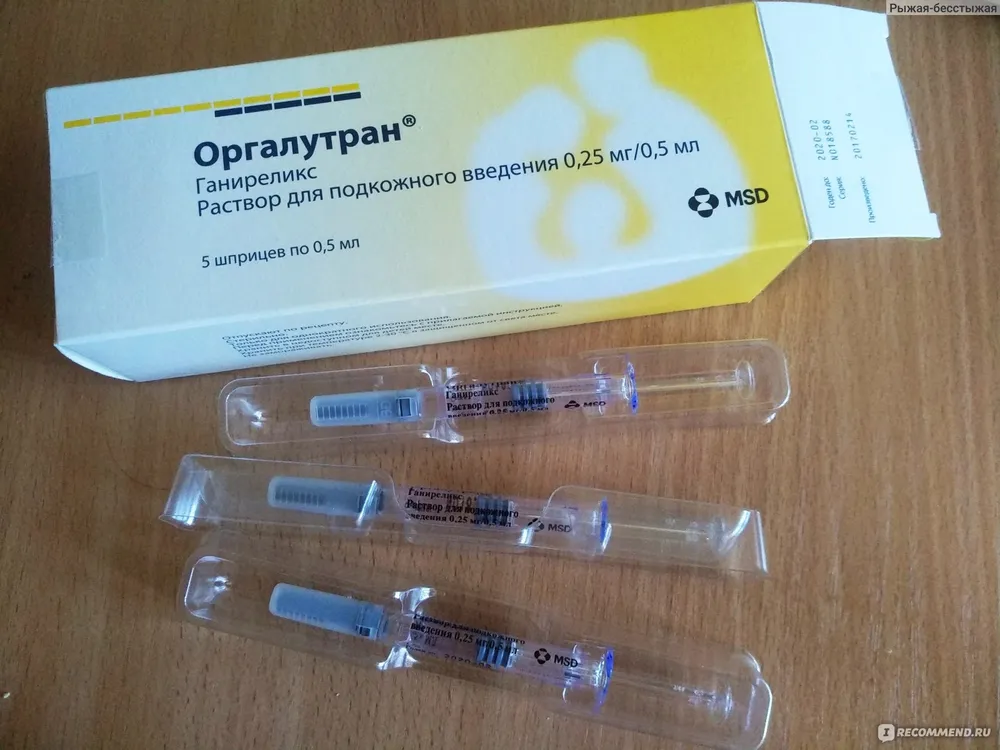
Table of Contents
INSTRUCTION FOR MEDICAL USE OF THE MEDICINAL PRODUCT ORGALUTRAN® (ORGALUTRAN®)
Composition:
Active substance: ganirelix;
1 pre-filled syringe contains 0.5 mL of aqueous solution of 0.5 mg/mL ganirelix acetate (expressed as free base);
Excipients: mannitol (E 421), glacial acetic acid, sodium hydroxide, water for injections.
Pharmaceutical form. Solution for injection.
Main physicochemical properties: clear, colorless aqueous solution.
Pharmacotherapeutic group. Gonadotropin-releasing hormone antagonist.
ATC Code: H01CC01.
Pharmacological Properties.
Pharmacodynamics.
Mechanism of action.
Orgalutran® is a gonadotropin-releasing hormone (GnRH) antagonist that modulates the hypothalamic-pituitary-gonadal system by competitively binding to GnRH receptors in the pituitary gland. As a result, there is a rapid, complete, and reversible suppression of endogenous gonadotropin release without prior stimulation, as observed with GnRH agonists. After repeated administration of 0.25 mg Orgalutran® to women, serum concentrations of LH (luteinizing hormone), FSH (follicle-stimulating hormone), and E2 (estradiol) were maximally reduced by 74%, 32%, and 25% at 4, 16, and 16 hours after injection, respectively. Hormone levels returned to baseline values within 2 days after the last injection.
Pharmacodynamic effects.
The average duration of treatment with Orgalutran® at a dose of 0.25 mg daily in patients undergoing controlled ovarian stimulation is 5 days. During treatment with Orgalutran®, the average incidence of LH increase (> 10 IU/L) with a concomitant rise in progesterone concentration (> 1 ng/mL) was 0.3–1.2%, which is comparable to that observed with GnRH agonists (0.8%). A trend toward increased incidence of elevated LH and progesterone levels was observed in women with higher body weight (> 80 kg), although this did not affect clinical outcomes. However, based on the limited number of patients treated to date, such an effect cannot be excluded.
In cases of high ovarian response resulting from high gonadotropin exposure or high ovarian sensitivity, premature LH rise may occur earlier than day 6 of stimulation. Initiating treatment with Orgalutran® on day 5 of stimulation may prevent such premature LH rise without adversely affecting clinical outcomes.
Clinical efficacy and safety.
In controlled studies comparing Orgalutran® plus FSH with the long protocol using a GnRH agonist as reference, treatment with the Orgalutran® regimen resulted in faster follicular growth during the initial days of stimulation, although the final number of developing follicles was slightly lower and produced, on average, less estradiol. This difference in follicular growth pattern necessitates that FSH dose adjustments be based on the number and size of developing follicles rather than on circulating estradiol concentrations. Comparative studies of corifollitropin alfa using a GnRH antagonist or a long GnRH agonist protocol have not been conducted.
Pharmacokinetics.
Pharmacokinetic parameters after repeated subcutaneous administration of Orgalutran® (one injection daily) are similar to those after single subcutaneous administration. After repeated daily doses of 0.25 mg, a steady-state concentration of approximately 0.6 ng/mL is achieved within 2–3 days.
Pharmacokinetic analysis indicates an inverse relationship between body weight and serum concentrations of Orgalutran®.
Absorption.
Within the first 1–2 hours (tmax) after a single subcutaneous dose of 0.25 mg Orgalutran®, ganirelix serum concentrations rise rapidly, reaching a maximum (Cmax) of approximately 15 ng/mL. The bioavailability of Orgalutran® after subcutaneous administration is approximately 91%.
Metabolic profile.
The main component, the compound present in plasma, is ganirelix. Ganirelix is also the primary compound excreted in urine. Only metabolites are excreted in feces. The metabolites are small peptide fragments formed by enzymatic hydrolysis of ganirelix at limited sites. The metabolic profile of Orgalutran® in humans is similar to that observed in animals.
Elimination.
The elimination half-life (t½) is approximately 13 hours, and clearance is about 2.4 L/h. The drug is excreted in feces (approximately 75%) and urine (approximately 22%).
Preclinical safety data.
Preclinical data indicate no specific risk to humans based on findings from studies on pharmacological safety, toxicity after repeated-dose administration, and genotoxicity.
Reproductive function studies conducted with ganirelix at doses of 0.1 to 10 µg/kg/day (subcutaneously) in rats and 0.1 to 50 µg/kg/day (subcutaneously) in rabbits demonstrated an increased frequency of fetal resorption in the highest-dose groups. No teratogenic effects were observed.
Clinical characteristics.
Indications.
Prevention of premature rise in luteinizing hormone (LH) levels in women undergoing controlled ovarian hyperstimulation (COH) as part of assisted reproductive technology (ART) procedures.
In clinical studies, Orgalutran® was administered in combination with recombinant human follicle-stimulating hormone (rFSH) or corifollitropin alfa, a long-acting follicle-stimulating agent.
Contraindications.
- Hypersensitivity to the active substance or to any of the excipients listed in the section "Composition".
- Hypersensitivity to GnRH or to other GnRH analogues.
- Moderate or severe renal or hepatic impairment.
- Pregnancy or breastfeeding.
Interaction with other medicinal products and other forms of interaction.
Interaction studies between Orgalutran® and other medicinal products have not been conducted. Interactions with concomitantly administered medicinal products, including those capable of histamine release, cannot be excluded.
Special precautions for use.
Hypersensitivity reactions
Particular caution is required when using the medicinal product in women with signs and symptoms of active allergic conditions.
Cases of hypersensitivity reactions (both generalized and local) have been reported during post-marketing surveillance with the use of Orgalutran® already after the first dose. These cases included anaphylaxis (including anaphylactic shock), angioedema, and urticaria (see section "Adverse reactions"). If a hypersensitivity reaction is suspected, administration of Orgalutran® should be discontinued and appropriate treatment initiated.
Due to the lack of clinical experience with Orgalutran®, the administration to women with severe allergic disorders is not recommended.
Latex allergy
The needle protective cap of this medicinal product contains dry natural rubber/latex, which comes into contact with the product and may cause allergic reactions (see section "Packaging").
Ovarian hyperstimulation syndrome (OHSS)
Ovarian hyperstimulation syndrome (OHSS) may occur during or after ovarian stimulation. The risk of this complication should be considered when gonadotropins are used for stimulation. Symptomatic treatment is required in cases of OHSS (bed rest, intravenous administration of electrolyte or colloidal solutions, heparin).
Ectopic pregnancy
Infertile women undergoing assisted reproductive procedures, particularly in vitro fertilization (IVF), often have impaired fallopian tube function, which may increase the risk of ectopic pregnancy. It is important to perform an ultrasound examination as early as possible to confirm intrauterine pregnancy.
Congenital abnormalities
The risk of congenital abnormalities after assisted reproductive technology (ART) may be slightly higher than after spontaneous conception. This is believed to be related to certain parental factors (e.g., maternal age, sperm characteristics) and the increased likelihood of multiple pregnancies following ART. In clinical studies involving over 1000 newborns, the rate of congenital abnormalities in children born after controlled ovarian stimulation (COS) with Orgalutran® was comparable to the rates reported after COS with GnRH antagonists.
Women with body weight less than 50 kg or more than 90 kg
The safety and efficacy of Orgalutran® have not been established in women with body weight less than 50 kg or more than 90 kg (see sections "Pharmacodynamics", "Pharmacokinetics").
Use during pregnancy or breastfeeding.
Pregnancy
There are no adequate data on the use of the medicinal product during pregnancy.
In animal studies, administration of ganirelix during implantation resulted in fetal resorption (see section "Preclinical safety data"). The relevance of these findings to humans is unknown.
Breastfeeding
It is unknown whether ganirelix is excreted in human breast milk.
The use of Orgalutran® is contraindicated during pregnancy and breastfeeding (see section "Contraindications").
Effect on ability to drive and use machines.
The effect of Orgalutran® on the ability to drive or operate machinery has not been studied.
Method of Administration and Dosage
Orgalutran® should be prescribed only by a specialist experienced in the treatment of infertility.
Dosing
Orgalutran® is used to prevent premature LH surge in women undergoing controlled ovarian stimulation with FSH or corifollitropin alfa. FSH or corifollitropin alfa administration may be initiated on day 2 or 3 of the menstrual cycle. Orgalutran® (0.25 mg) should be administered subcutaneously once daily, starting on day 5 or 6 of corifollitropin alfa administration. The initiation of Orgalutran® treatment depends on ovarian response, including the number and size of developing follicles and/or circulating estradiol levels. Initiation of Orgalutran® may be delayed in the absence of follicular growth, although clinical experience is based on starting treatment on day 5 or 6 of stimulation.
Orgalutran® and FSH should be administered approximately at the same time. The two products must not be mixed in the same syringe and should be injected at different body sites.
The dose of FSH should be adjusted based on the number and size of developing follicles, rather than on serum estradiol concentration (see section "Pharmacological Properties").
Daily administration of Orgalutran® should be continued until a sufficient number of follicles of appropriate size have developed. Final follicular maturation can be induced by administration of human chorionic gonadotropin (hCG).
Timing of the last injection
Considering the half-life of ganirelix, the interval between two injections of Orgalutran®, as well as the interval between the last injection of Orgalutran® and the hCG injection, should not exceed 30 hours, since exceeding this interval may lead to a premature LH surge. Therefore, if the Orgalutran® solution is administered in the morning, this regimen should be continued throughout the entire gonadotropin treatment period, including the day of ovulation induction. If Orgalutran® injections are administered in the afternoon, the last dose of Orgalutran® should be given in the afternoon, one day before ovulation induction.
Orgalutran® is safe and effective in patients who have undergone multiple treatment cycles.
The need for luteal phase support in treatment cycles involving Orgalutran® has not been studied. In clinical trials, luteal phase support was provided according to the practice of the investigational centers or in accordance with the clinical protocol.
Special patient groups
Renal and hepatic impairment
There is no experience with the use of Orgalutran® in patients with renal or hepatic impairment, as such patients were excluded from clinical studies. Therefore, Orgalutran® is contraindicated in patients with moderate to severe renal impairment and in patients with hepatic impairment.
Children
Orgalutran® is not indicated for use in children.
Route of administration
Orgalutran® must be administered subcutaneously, preferably in the thigh. The injection site should be rotated to prevent lipodystrophy. The patient or her partner may self-administer Orgalutran® provided that a healthcare professional has given detailed instructions and the patient has access to expert advice.
Air bubbles may be visible in the pre-filled syringe. This is expected, and there is no need to remove the air bubbles.
Instructions for administration
Before administration, inspect the solution. Use only a clear solution that is free from foreign particles. Unused solution and waste material must be disposed of according to local requirements.
Preparing the injection site
Wash hands thoroughly with soap and water. To reduce bacteria on the skin surface, clean the injection site with an alcohol swab.
Inserting the needle
Remove the cap from the needle. Pinch the skin between the thumb and index finger. Insert the needle at a 45° angle into the base of the pinched skin. The injection site should be changed with each injection.
Checking correct needle placement
Gently pull back the plunger to check correct needle placement. If blood appears in the syringe, this indicates that the needle has entered a blood vessel and the drug must not be injected. The needle and syringe should be withdrawn and an antiseptic swab should be applied to the injection site for 1–2 minutes.
Begin administration using a new syringe.
If the needle has been correctly inserted, slowly and evenly press the plunger to administer the solution subcutaneously without causing tissue damage.
Quickly withdraw the syringe with the needle and apply an antiseptic swab to the injection site. The syringe may be used only once.
Actions to take if a dose has been missed
Do not administer a double dose to compensate for a missed injection. If a patient misses a dose, it should be administered as soon as she remembers. If the delay in administration exceeds 6 hours (i.e., the interval between two doses exceeds 30 hours), the patient should administer the missed dose and consult her physician for advice.
Children. The drug is not indicated for use in children.
Overdose
Overdose may prolong the duration of the drug's effect. In case of overdose, administration of Orgalutran® should be (temporarily) discontinued.
There are insufficient data on acute toxicity of Orgalutran® in humans. Clinical studies with single subcutaneous doses of Orgalutran® up to 12 mg did not reveal systemic adverse reactions. In acute toxicity studies in rats and monkeys, signs of non-specific toxicity were observed only after intravenous administration of ganirelix at doses exceeding 1 mg/kg and 3 mg/kg, respectively.
Adverse reactions.
General description of the safety profile.
The table below lists all adverse reactions observed in women treated with Orgalutran® during clinical trials involving the use of r-hFSH for ovarian stimulation. Similar reactions are expected when Orgalutran® is used in combination with corifollitropin alfa.
Table of adverse reactions.
Adverse reactions are classified by system organ classes and frequency: very common (≥ 1/10), common (≥ 1/100 to < 1/10), uncommon (≥ 1/1000 to < 1/100). The frequency of hypersensitivity reactions (very rare, < 1/10000) was determined from post-marketing surveillance.
| System organ class |
Frequency |
Adverse reaction |
| Immune system disorders |
Very rare |
hypersensitivity reactions (including rash, facial swelling, dyspnea, anaphylaxis (including anaphylactic shock), angioedema and urticaria)1 Worsening of eczema2 |
| Nervous system disorders |
Uncommon |
Headache |
| Gastrointestinal disorders |
Uncommon |
Nausea |
| General disorders and administration site conditions |
Very common |
Local skin reactions at injection site (mainly erythema, with or without swelling)3 |
| Uncommon |
Malaise |
1Such cases were reported after administration of the first dose in patients who received Orgalutran®.
2One case was reported in a patient after administration of the first dose of Orgalutran®.
3In clinical studies (one hour after injection), the incidence of at least one local skin reaction (of moderate or severe intensity) was 12% in patients receiving Orgalutran® and 25% in patients receiving subcutaneous GnRH agonist. These local reactions usually disappeared within 4 hours after administration of the drug.
Individual adverse reactions
Other adverse reactions were associated with controlled ovarian hyperstimulation in ART and included pelvic pain, abdominal distension, ovarian hyperstimulation syndrome (see section "Special precautions"), ectopic pregnancy, and spontaneous abortion.
Shelf life. 3 years.
Storage conditions.
Store at 2–30 °C in the original packaging. Do not freeze. Keep out of reach of children.
Incompatibilities.
Due to lack of compatibility studies, this medicinal product should not be mixed with other medicinal products.
Packaging.
Single-use pre-filled syringe made of siliconized type I glass, containing 0.5 mL of sterile ready-to-use aqueous solution, closed with a latex-free rubber stopper. Each pre-filled syringe is fitted with a needle protected by a protective cap made of natural dry rubber/latex, which is in contact with the drug (see section "Special precautions").
Each pre-filled syringe with needle is placed into an open plastic tray; 5 trays per cardboard box.
Prescription status. Prescription only.
Manufacturer.
N.V. Organon, the Netherlands.
Manufacturer's location and address of the site of activity.
Kloosterstraat 6, 5349 AB Oss, the Netherlands (legal address).
Molenstraat 110, 5342 CC Oss, the Netherlands (site of activity address).