Opipram
Ukraine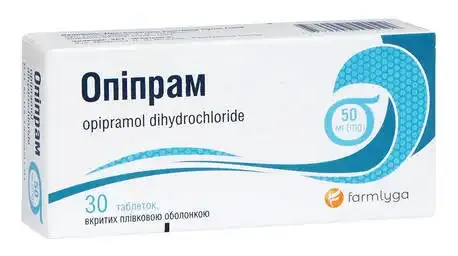
Table of Contents
INSTRUCTION for medical use of the medicinal product Opipram (Opipram)
Composition:
Active substance: opipramol dihydrochloride;
One film-coated tablet contains 50 mg of opipramol dihydrochloride;
Excipients: pregelatinized starch, microcrystalline cellulose, colloidal anhydrous silicon dioxide, magnesium stearate, polyethylene glycol 6000, hypromellose, talc, titanium dioxide (E 171), yellow iron oxide (E 172).
Pharmaceutical form. Film-coated tablets.
Main physicochemical properties: round-shaped film-coated tablets, yellow-brown in color.
Pharmacotherapeutic group. Agents acting on the nervous system. Non-selective inhibitors of monoamine reuptake. ATC code N06A A05.
Pharmacological Properties
Pharmacodynamics
Mechanism of action
Opipramol is a sigma-ligand with high affinity for sigma-receptor binding sites (type 1 and type 2) and acts as an antagonist at histamine H1 receptors. Its affinity for 5-HT2A serotonergic receptors, D2 dopaminergic receptors, and α-adrenergic receptors is negligible. Unlike structurally related tricyclic antidepressants, opipramol has minimal anticholinergic activity and does not inhibit the reuptake of serotonin or noradrenaline. It enhances dopamine restoration.
Opipramol demonstrates a modulating effect on the NMDA receptor system via sigma-receptors and has demonstrated neuroprotective effects against ischemia-induced hippocampal neuronal loss in experimental models.
Modulatory effects of sigma-ligands have also been described regarding serotonergic and noradrenergic systems. Like more selective sigma-ligands, opipramol shows efficacy in behavioral pharmacological models indicating anxiolytic activity, but exhibits relatively low activity in the rat swim test, a method used to screen potential antidepressants.
In humans, opipramol exerts a calming, anxiolytic, and moderately activating (thymoanaleptic) effect.
Pharmacokinetics
Absorption
After oral administration, opipramol is rapidly and completely absorbed. During its first pass through the liver, partial metabolism occurs, forming deshydroxyethyl-opipramol. Plasma protein binding is approximately 91%, and the volume of distribution is about 10 L/kg. The elimination half-life (T½) is approximately 11 hours.
After a single 50 mg oral dose of opipramol, peak plasma concentration is reached at 3.3 hours and amounts to 15.6 ng/mL.
After a single 100 mg oral dose of opipramol, peak plasma concentration is reached at 3 hours and amounts to 33.2 ng/mL.
Metabolism
Opipramol is primarily metabolized by the CYP2D6 isoenzyme. In patients with CYP2D6 deficiency ("poor metabolizers"), the maximum plasma concentration of opipramol may be up to 2.5 times higher than in individuals with normal metabolism. The T½ of opipramol does not increase with prolonged administration; therefore, accumulation is not expected, even in "poor metabolizers."
Elimination
More than 70% of the active substance is excreted via the kidneys, of which up to 10% is excreted unchanged. The remainder is excreted in feces.
In patients with impaired renal function, dose reduction may be necessary.
Clinical characteristics.
Indications.
- Generalized anxiety disorder.
- Somatoform disorders.
Contraindications.
- Hypersensitivity to the active substance or to other components of the medicinal product;
- Acute alcohol, sedative, analgesic or psychotropic intoxication;
- Acute urinary retention;
- Acute delirium;
- Untreated closed-angle glaucoma;
- Benign prostatic hyperplasia with residual urine;
- Paralytic ileus;
- Previous higher-degree atrioventricular block or diffuse supraventricular or ventricular conduction disorders;
- Concomitant use with monoamine oxidase inhibitors (MAOIs).
Interaction with other medicinal products and other types of interactions.
Caution should be exercised when using concomitantly with neuroleptics, sedatives and tranquilizers (e.g., barbiturates, benzodiazepines), as combined use may enhance central nervous system depressant effects. The same applies to sedation following administration of systemic anesthetics.
The effect of strong anticholinergic agents such as antiparkinsonian drugs and phenothiazines may be potentiated.
Concomitant use of serotonin reuptake inhibitors and opipramol may result in additive effects on the serotonergic system. Fluoxetine and fluvoxamine may increase plasma concentrations of tricyclic psychotropic agents, potentially enhancing adverse reactions. If necessary, the dose of opipramol should be reduced.
Combination with alcohol may cause drowsiness.
Opipramol is contraindicated with MAO inhibitors. Treatment with MAO inhibitors should be discontinued at least 14 days before starting opipramol therapy. Opipramol should be discontinued at least 14 days before starting treatment with MAO inhibitors.
Concomitant use of beta-adrenoblockers (e.g., propranolol), class IС antiarrhythmic agents, tricyclic antidepressants, and drugs affecting the hepatic microsomal enzyme system (monooxygenases) may lead to altered plasma concentrations of these medicinal products and opipramol. Barbiturates and anticonvulsants may reduce plasma concentrations of opipramol, thereby weakening its therapeutic effect. Concomitant use of neuroleptics (e.g., haloperidol, risperidone) may increase plasma concentrations of opipramol. If necessary, the dose should be adjusted accordingly.
Tricyclic antidepressants should not be used in combination with antiarrhythmic agents of the quinidine type.
Cimetidine may increase plasma concentrations of tricyclic agents; therefore, their dose should be reduced.
Special precautions for use.
Opipramol must not be used in cases of prostatic hypertrophy, severe liver or kidney disease, increased seizure susceptibility (e.g., cerebral disorders of various etiologies, epilepsy, alcoholism), cerebrovascular insufficiency, or cardiac disorders, particularly conduction disturbances. Treatment of patients with pre-existing first-degree atrioventricular block or other conduction disorders should be conducted with ECG monitoring (for higher-degree atrioventricular blocks, see section "Contraindications").
Hematological changes (neutropenia, agranulocytosis) may occur very rarely; therefore, blood counts should be checked during opipramol treatment, particularly if fever, flu-like symptoms, or sore throat develop.
Due to the potential for adverse cardiovascular effects, particular caution is required in patients with hyperthyroidism or those taking medications affecting thyroid function (see section "Adverse reactions").
Children and adolescents
The efficacy and safety of opipramol in children and adolescents have not been established; therefore, the use of Opipram in patients under 18 years of age is not recommended.
In clinical studies evaluating treatment of depressive disorders in this age group, tricyclic antidepressants—including opipramol—did not demonstrate therapeutic benefit. Studies with other antidepressants (selective serotonin reuptake inhibitors [SSRI], serotonin-norepinephrine reuptake inhibitors [SNRI]) have shown an increased risk of suicidal behavior, self-harm, and hostility associated with the use of these agents. Therefore, such risks cannot be excluded for opipramol.
Moreover, opipramol is associated with a risk of cardiovascular adverse effects across all age groups. In addition, there are no data on the long-term safety of the drug in children and adolescents regarding its effects on growth, maturation, and cognitive and behavioral development.
Suicide risk
Depressive disorders are associated with a risk of suicide, which may persist until significant remission occurs. Suicide attempts, some with fatal outcomes, have been reported during opipramol treatment. Patients with depressive disorders (both adults and children/adolescents) may experience worsening of depression and/or increased suicide risk or other psychiatric symptoms, regardless of whether they are taking antidepressants.
Other psychiatric disorders may also be associated with an increased risk of suicide or depressive episodes (major depressive episodes). Therefore, all patients receiving opipramol, regardless of indication, require close monitoring for clinical worsening, suicide risk, and other psychiatric symptoms, particularly at the beginning of treatment or after dosage adjustments. Changes in treatment regimen, including possible discontinuation of the drug, should be considered in such patients. This is especially important when these changes are severe, sudden, or not part of the patient’s prior symptomatology.
Family members and healthcare providers caring for adult and pediatric patients receiving antidepressants for psychiatric or non-psychiatric disorders should be advised to monitor patients for emergence of suicide risk and other psychological symptoms. Such symptoms should be reported to the physician immediately.
If allergic reactions occur, opipramol should be discontinued.
Liver function tests are recommended during prolonged treatment.
Use during pregnancy or breastfeeding.
There are no clinical data on the use of opipramol in pregnant women.
Animal studies are insufficient to conclude on direct or indirect harmful effects on embryonal development or fertility.
Opipramol should be used with caution during pregnancy. It should only be prescribed during pregnancy, particularly in the first trimester, if the expected benefit outweighs the potential risk.
Opipramol should not be used during breastfeeding, as it passes into breast milk in small amounts. If opipramol treatment is necessary, breastfeeding should be discontinued.
Effect on ability to drive or operate machinery.
Opipramol has a slight to moderate effect on the ability to drive or operate machinery, particularly at the beginning of treatment and when used concomitantly with other centrally acting agents (analgesics, sedatives, psychotropic drugs) or alcohol.
Dosage and Administration
Treatment must always be carried out under medical supervision.
Dosage
For adults, the usual dose of opipramol is 50 mg in the morning and at midday (1 tablet each time), and 100 mg in the evening (2 tablets).
Depending on efficacy and tolerability, the dose may be reduced to 50–100 mg of opipramol once daily (preferably in the evening), or increased to 100 mg of opipramol three times daily.
Administration
The tablets should be taken during or after meals, without chewing, and swallowed with water.
Duration of treatment
The drug should be taken regularly for at least 2 weeks, as the effect of opipramol does not occur immediately, and improvement in mood develops gradually.
The recommended average duration of treatment is 1–2 months.
Opipramol treatment should not be discontinued abruptly, as sudden withdrawal after prolonged high-dose therapy may lead to anxiety, increased sweating, and sleep disturbances.
Children
Do not use in children under 18 years of age.
Overdose
Symptoms
Somnolence, insomnia, restlessness, coma, stupor, temporary confusion, increased anxiety, ataxia, seizures, oliguria, anuria, tachycardia/arrhythmia, atrioventricular block, hypotension, shock, respiratory depression, and rarely cardiac arrest.
Treatment
There is no specific antidote. Elimination of the drug from the body should be achieved by inducing vomiting and/or gastric lavage. Clinical management recommendations include maintenance of vital functions. Continuous monitoring of the cardiovascular system is required for at least 48 hours.
In case of overdose, take the following measures:
- Respiratory insufficiency: intubation and artificial ventilation of the lungs;
- Severe hypotension: proper positioning of the body, intravenous administration of plasma substitutes, and intravenous infusion of dopamine or dobutamine;
- Arrhythmias: individualized treatment; use of a cardiac pacemaker, correction of low potassium levels, and possible acidosis;
- Seizures: intravenous administration of diazepam or another anticonvulsant, such as phenobarbital or paraldehyde (with caution due to the potential worsening of pre-existing respiratory insufficiency, hypotension, or coma caused by these agents);
- Dialysis and hemodialysis are ineffective for removing opipramol from the body.
Since children are more sensitive to acute overdose with tricyclic antidepressants/anxiolytics than adults, and considering the reported serious incidents, all possible measures should be taken to prevent overdose; if overdose does occur, the symptoms should be taken seriously and special caution should be exercised in treatment.
Adverse Reactions
Adverse effects are grouped by frequency of occurrence: very common (≥1/10), common (≥1/100 to <1/10), uncommon (≥1/1000 to <1/100), rare (≥1/10,000 to <1/1000), very rare (<1/10,000).
Blood and lymphatic system disorders:
Rare – blood count changes, including leukopenia; very rare – agranulocytosis.
Nervous system disorders:
Common – fatigue (especially at the beginning of treatment); uncommon – dizziness, somnolence, micturition disorders, accommodation disorders, tremor, weight gain, thirst; rare – headache, paresthesia (especially in elderly patients), confusion and delirium (particularly after abrupt discontinuation of long-term high-dose therapy), restlessness, increased sweating, sleep disturbances; very rare – cerebral seizures, motor disturbances (akathisia, dyskinesia), ataxia, polyneuropathies, cases of glaucoma, anxiety states.
Eye disorders:
Uncommon – inadequate refraction; very rare – glaucoma attacks.
Cardiac and vascular disorders:
Common – hypotension and orthostatic dysregulation (especially at the beginning of treatment); uncommon – tachycardia, palpitations; rare – collapse, conduction disturbances, worsening of pre-existing heart failure.
Respiratory, thoracic and mediastinal disorders:
Common – nasal congestion.
Gastrointestinal disorders:
Common – dry mouth; uncommon – constipation; rare – gastric discomfort, taste disturbances, paralytic ileus (especially after abrupt discontinuation of long-term high-dose therapy), nausea and vomiting.
Hepatobiliary disorders:
Uncommon – transient elevation of liver enzymes (see section "Special precautions"); very rare – severe liver function disturbances, jaundice, and chronic liver damage after long-term therapy (see section "Special precautions").
Skin and subcutaneous tissue disorders:
Uncommon – skin allergic reactions (exanthema, urticaria) (see section "Special precautions"); rare – edema; very rare – hair loss.
Renal and urinary disorders:
Uncommon – difficulty in micturition; rare – urinary retention.
Reproductive system and breast disorders:
Uncommon – ejaculation disorders, erectile dysfunction; rare – galactorrhea.
Bone fractures
Epidemiological studies, conducted predominantly in patients aged 50 years and older, show an increased risk of bone fractures in patients treated with SSRIs and tricyclic antidepressants. The mechanism underlying this risk is currently unknown.
Shelf life. 5 years.
Storage conditions.
The medicinal product does not require special storage conditions. Keep out of reach of children.
Packaging.
10 tablets in a blister; 3 blisters in a cardboard box.
Prescription status. Prescription only.
Manufacturer.
Dregenopharm Apotheker Pueschl GmbH.
Manufacturer's address and place of business.
Goellstrasse 1, Tittmoning, Bayern, 84529, Germany.