Omnadren® 250
Ukraine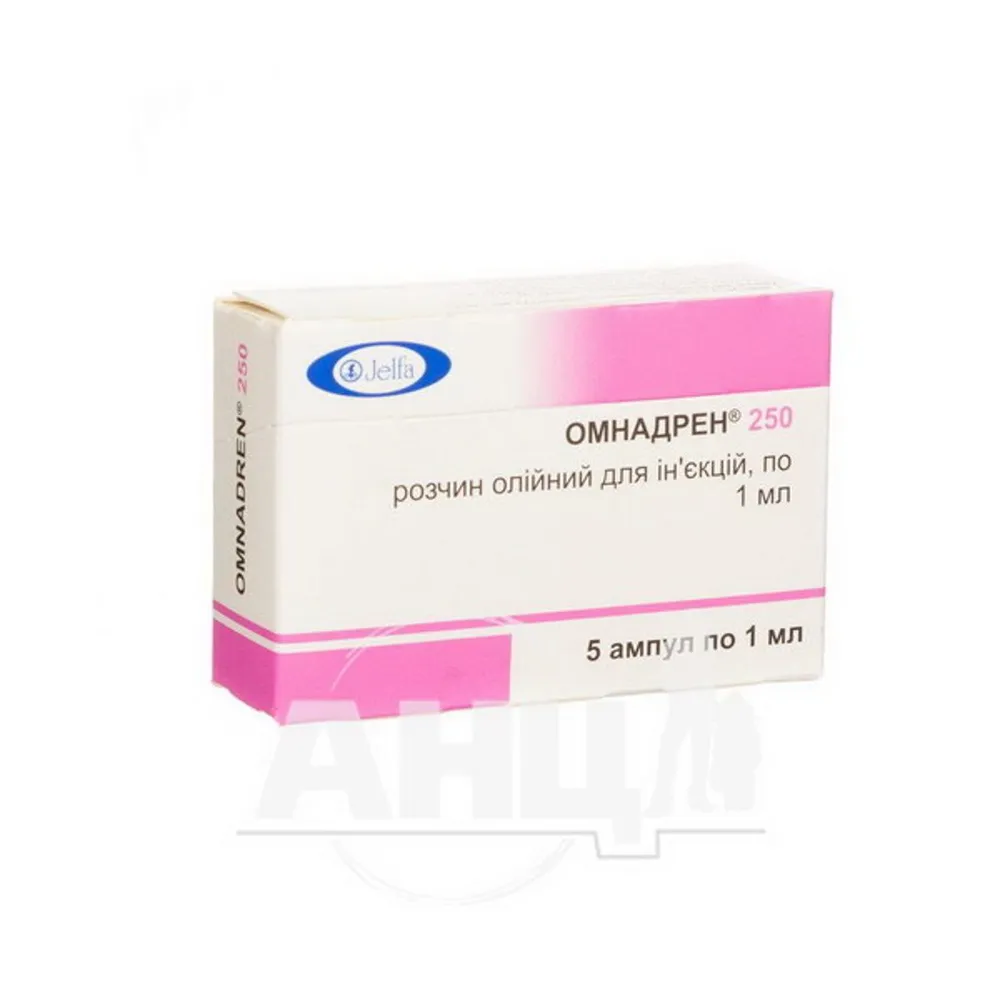
Table of Contents
INSTRUCTION FOR MEDICAL USE OF THE MEDICINAL PRODUCT Omnadren ® 250
Composition:
Active substances: testosterone propionate, testosterone phenylpropionate, testosterone isocaproate, testosterone caproate;
1 ml of solution contains: testosterone propionate 30.0 mg; testosterone phenylpropionate 60.0 mg; testosterone isocaproate 60.0 mg; testosterone caproate 100.0 mg;
Excipients: benzyl alcohol, peanut oil.
Pharmaceutical form. Oil solution for injection.
Main physicochemical properties: clear, light yellow, oily transparent liquid.
Pharmacotherapeutic group. Androgens. ATC code G03B A03.
Pharmacological properties.
Pharmacodynamics.
Omnadren® 250 is a hormonal agent.
Mechanism of action
Omnadren® 250 is a mixture of the following testosterone esters: propionate, phenylpropionate, isocaproate, and caproate.
Testosterone is a natural androgenic hormone produced in men by Leydig cells of the testes. It plays a key role in stimulating and maintaining male sexual functions. Testosterone promotes the growth of the testes, prostate gland, and seminal vesicles, affects spermatogenesis, and initiates the development of secondary and tertiary sexual characteristics.
Pharmacological activity
Testosterone exhibits anabolic activity, promoting skeletal muscle growth, increasing bone mineral density, stimulating erythropoietin production in the kidneys, and elevating hemoglobin concentration.
Clinical efficacy and safety
When administered exogenously to healthy men, testosterone suppresses endogenous testosterone production by inhibiting the secretion of luteinizing hormone (LH). At high doses, testosterone reversibly suppresses spermatogenesis by inhibiting follicle-stimulating hormone (FSH) secretion.
In men with hypopituitarism, testosterone alleviates symptoms of hypogonadism. However, it is not effective in treating impotence caused by hypogonadism.
Pharmacokinetics.
Omnadren® 250 is a mixture of testosterone esters which, after intramuscular injection, are slowly absorbed at different rates, allowing maintenance of a relatively constant level of testosterone in the blood. In the bloodstream, approximately 98% of testosterone is bound to a specific fraction of globulins that bind testosterone and estradiol. Biotransformation occurs in the liver into various 17-ketosteroids, about 90% of which are conjugated with glucuronic or sulfuric acid and excreted in urine. Approximately 6% of the absorbed dose is excreted in feces.
Clinical characteristics.
Indications.
Testosterone replacement therapy in male hypogonadism, confirmed by clinical and laboratory findings.
In males — hypogonadism, delayed sexual maturation, post-castration syndrome, impotence due to testosterone deficiency, disorders of spermatogenesis.
Contraindications.
- Hypersensitivity to the active substance (testosterone propionate, testosterone phenylpropionate, testosterone isocaproate, testosterone caproate) or to any other excipient. Allergy to peanut oil, peanuts, or soy.
- Nephrotic syndrome.
- In males: breast cancer, suspected or diagnosed prostate cancer.
- Not for use in women.
- Hepatic tumors.
Interaction with other medicinal products and other forms of interaction.
Oral anticoagulants
It has been reported that testosterone and its derivatives may enhance the activity of oral anticoagulants, potentially requiring dose adjustment. Regardless of this, intramuscular injections should always be administered cautiously in patients with acquired or hereditary coagulation disorders. In patients receiving oral anticoagulants, coagulation parameters should be closely monitored during androgen therapy, especially at the initiation or discontinuation of treatment.
Insulin
Androgens may reduce levels of thyroxine-binding globulin, resulting in decreased serum T4 concentrations and increased uptake of T3 and T4.
In patients receiving insulin, androgens may reduce glucose levels and insulin requirements.
Adrenocorticotropic hormone (ACTH), corticosteroids
Concomitant use of androgens with ACTH or corticosteroids increases the risk of edema, particularly in patients with liver or heart disease.
Oxyphenbutazone
Androgens increase serum concentrations of concurrently administered oxyphenbutazone.
Enzyme inducers
Certain drugs that induce hepatic enzymes, such as rifampicin, barbiturates, carbamazepine, salicylates, phenytoin, and primidone, may reduce testosterone efficacy. Therefore, dose adjustments and/or changes in injection intervals may be necessary.
Androgens potentiate the effects of anabolic agents, vitamins, calcium- and phosphorus-containing preparations, and slow the elimination of cyclosporine. Resistance to neuromuscular blocking agents has also been observed.
Special precautions for use.
Testosterone should only be used if hypogonadism (hyper- and hypogonadotropic) has been confirmed and if other possible causes of symptoms have been excluded prior to initiating treatment. Testosterone deficiency must be clearly demonstrated by clinical signs (regression of secondary sexual characteristics, changes in body composition, asthenia, decreased libido, erectile dysfunction, etc.) and confirmed by two separate measurements of serum testosterone levels.
The medicinal product is intended for intramuscular injection.
Patients receiving Omnadren® 250 require appropriate monitoring: prior to initiating testosterone therapy, all patients should be thoroughly evaluated to exclude benign prostatic hyperplasia and to determine prostate-specific antigen (PSA) levels to rule out subclinical prostate cancer. Patients receiving testosterone therapy should undergo regular, thorough examinations of the prostate and breasts using recommended methods (digital rectal examination, measurement of plasma prostate-specific antigen) at least once a year; in elderly patients and those at high risk (clinical or hereditary factors), monitoring should be performed twice a year.
Medical supervision during treatment is required for patients, especially elderly individuals, with the following conditions: breast cancer, hypernephroma, bronchial carcinoma, and skeletal metastases. Hypercalcemia or hypercalciuria may develop spontaneously in these patients and during androgen therapy. Hypercalcemia or hypercalciuria may indicate a positive tumor response to hormonal treatment. However, appropriate treatment for hypercalcemia or hypercalciuria should be initiated. Hormonal therapy may be resumed after normalization of calcium levels.
Patients with a history of myocardial infarction, cardiac, hepatic, or renal insufficiency, arterial hypertension, epilepsy, or migraine should be under medical supervision due to the risk of worsening of their condition or disease exacerbation. In such cases, treatment should be discontinued immediately.
Note: if ischemic priapism occurs, the use of the medicinal product should be discontinued.
Laboratory tests
Testosterone concentrations should be monitored at the beginning of treatment and regularly during therapy at consistent intervals. Physicians should continue individual dose adjustments to maintain eugonadal testosterone levels. In patients receiving long-term androgen therapy, the following laboratory parameters should also be monitored regularly:
- Hemoglobin levels;
- Hematocrit;
- Liver function tests;
- Lipid profile.
Tumors
Androgens may accelerate the progression of asymptomatic prostate cancer and benign prostatic hyperplasia.
In patients with breast cancer, androgen therapy may cause hypercalcemia due to stimulation of osteolysis, which may exacerbate bone metastases. The development of hypercalcemia may necessitate discontinuation of the medicinal product.
Liver
Prolonged administration of high doses may lead to hepatic peliosis or hepatic tumor formation. If liver inflammation occurs, androgen therapy should be discontinued and the etiology of the changes investigated. Liver function should be monitored (see section "Adverse reactions").
Androgens may cause hypercalcemia in patients with heart disease, renal dysfunction, arterial hypertension, epilepsy, or migraine (or with a history of these conditions). Patients with epilepsy or migraine (even in history) should be under medical supervision, as androgens may occasionally cause fluid and sodium retention.
Cardiac, hepatic, or renal insufficiency, ischemic heart disease
In patients with severe cardiac, hepatic, or renal insufficiency or ischemic heart disease, testosterone therapy may lead to serious complications characterized by edema, with or without congestive heart failure. In such cases, treatment should be discontinued immediately (see section "Adverse reactions").
Arterial hypertension
Testosterone may increase blood pressure; therefore, Omnadren® 250 should be used with caution in patients with arterial hypertension.
Coagulation disorders
Testosterone should be used with caution in patients with thrombophilia or risk factors for venous thromboembolism (VTE), as thrombotic events (e.g., deep vein thrombosis, pulmonary embolism, retinal vein thrombosis) have been reported during post-marketing surveillance of testosterone in such patients. Cases of VTE have been reported even in patients receiving anticoagulant therapy; therefore, if a thrombotic event occurs, the appropriateness of continuing testosterone therapy should be carefully evaluated. If therapy is continued, measures should be taken to minimize the patient's risk of VTE.
The product should be prescribed with caution in men with sleep apnea. Testosterone has been reported to cause or worsen sleep apnea. A well-justified clinical decision should be made, and caution should be exercised in patients with risk factors such as obesity and chronic lung diseases.
Insulin sensitivity
In patients receiving insulin, androgens may reduce glucose levels and insulin requirements. In patients in whom plasma testosterone levels normalize after androgen replacement therapy, insulin sensitivity may improve.
Delayed puberty
Androgens should be administered with caution in patients with delayed puberty. Treatment should be monitored by assessing pubertal development and bone age every 6 months to prevent premature epiphyseal closure and premature puberty.
Doping agent
Androgens should not be used to accelerate muscle growth or enhance physical performance in healthy individuals. Athletes receiving testosterone replacement therapy due to male hypogonadism should be informed that the medicinal product contains an active substance that may lead to positive results in doping tests. The use of testosterone as a doping agent may result in dangerous adverse effects.
Elderly patients
Elderly patients have an increased risk of developing prostatic hyperplasia or prostate cancer. The prostate should be examined before and after treatment, and PSA levels should be monitored.
Experience regarding the safety and efficacy of Omnadren® 250 in patients aged 65 years and older is limited. Currently, there is no consensus on age-related reference values for testosterone concentration. However, it should be noted that physiological plasma testosterone concentration decreases with age.
Sudden discontinuation of the drug
No life-threatening or health-threatening symptoms have been reported following sudden discontinuation of long-acting testosterone-containing medicinal products. However, rare cases of gradual return of hypogonadism symptoms, ADAM syndrome (androgen deficiency in the aging male), or PADAM syndrome (partial androgen deficiency in the aging male) may occur.
Drug abuse and dependence
Testosterone has been abused, typically in doses exceeding those recommended for approved indications and in combination with other anabolic androgenic steroids. Abuse of testosterone and other anabolic androgenic steroids may lead to serious adverse reactions, including cardiovascular complications (some fatal), hepatic and/or psychiatric complications. Testosterone abuse may lead to dependence and withdrawal symptoms following significant dose reduction or abrupt discontinuation. Abuse of testosterone and other anabolic androgenic steroids poses serious health risks and should be prohibited.
Excipients
The medicinal product contains peanut oil. If the patient is allergic to peanuts or soy, the product should not be used.
The medicinal product contains benzyl alcohol (50 mg/ml). Consult your doctor before starting Omnadren 250 if you have liver or kidney disease. This is because large amounts of benzyl alcohol may accumulate in the body and cause adverse effects (so-called "metabolic acidosis").
Use during pregnancy or breastfeeding.
Pregnancy, breastfeeding
The medicinal product is not intended for use in women and is contraindicated in pregnant women or women who are breastfeeding (see section "Contraindications").
Fertility
The use of testosterone in men, particularly at high doses, may lead to impairment of fertility, including oligospermia.
Ability to influence reaction speed when driving or operating machinery.
No effects on the ability to drive or operate machinery have been observed.
Method of Administration and Dosage
Omnadren® 250 should be administered by deep intramuscular injection into the gluteal muscle.
The dosage of Omnadren® 250 and treatment regimens are individually determined by a physician, taking into account the indications and the patient's condition.
Generally, total monthly doses exceeding 400 mg are not required due to the prolonged action of the drug. Injections administered more frequently than every two weeks are rarely indicated.
The standard recommended treatment regimen is 1 ampoule (1 mL) administered intramuscularly every 4 weeks.
If painful sensations occur during erection, treatment should be discontinued.
Primary male hypogonadism (anorchism, Klinefelter's syndrome, post-castration syndrome, testicular atrophy)
Depending on the degree of gonadal insufficiency (based on clinical evaluation and laboratory test results), the drug is administered as injections every 7–14–21 days.
Other indications
For certain forms of male infertility (azoospermia, oligospermia), two injections of Omnadren® 250 are administered at a two-week interval.
A decrease in the clarity of the oily solution and the appearance of flaky formations does not indicate expiration of the drug's shelf life. The solution becomes clear again after warming the ampoule in warm water.
Children
Safety and efficacy of the drug in children and adolescents have not been sufficiently studied; therefore, it is not recommended for use in these patient groups.
Overdose
Overdose is unlikely when the drug is used at the recommended dosage.
Signs of overdose resulting from excessive dosing or administration more frequently than once a week include painful erections in men. Priapism in men may be a symptom of chronic overdose.
In such cases, administration of the drug should be discontinued.
Adverse Reactions
Adverse reactions generally observed during the use of the medicinal product:
- In prepubertal boys: premature sexual development, increased frequency of erections, penile enlargement, and premature epiphyseal closure;
- Priapism and other types of sexual stimulation;
- Fluid and sodium retention;
- Oligospermia and reduced ejaculate volume.
If adverse reactions occur, treatment should be discontinued until symptoms resolve, after which the drug may be resumed at reduced doses. Hoarseness may be the first sign of voice changes that could lead to irreversible lowering of voice pitch. Treatment should be discontinued upon signs of virilization or significant voice changes.
Benign, malignant and unspecified neoplasms (including cysts and polyps)
Hepatic tumors.
Gastrointestinal disorders
Nausea, increased appetite, diarrhea.
Hepatobiliary disorders
Jaundice, obstructive jaundice, liver function abnormalities, hepatic purpura.
Blood and lymphatic system disorders
Suppression of blood clotting factors II, V, VII, and X; bleeding in patients receiving oral anticoagulants, polycythemia, increased hematocrit, increased red blood cell count, increased hemoglobin levels.
Nervous system disorders
Headache, paresthesia, increased nervous excitability, mood changes, migraine, tremor, aggression, irritability, depression, dizziness, anxiety.
Metabolism and nutrition disorders
Increased blood cholesterol concentration. Retention of sodium, chloride, fluid, potassium, calcium, and inorganic phosphates; weight gain; increased glycated hemoglobin levels; hypercholesterolemia; increased blood cholesterol levels; impaired glucose tolerance.
General disorders and administration site conditions
Pain, itching, and hyperemia at injection site. Increased fatigue, weakness, hyperhidrosis, night sweats.
Cardiovascular system disorders
Hot flushes, cardiovascular disorders, arterial hypertension, deep vein thrombosis.
Respiratory system disorders
Bronchitis, sinusitis, cough, dyspnea, snoring, dysphonia, pulmonary embolism.
Skin and subcutaneous tissue disorders
Acne, alopecia, erythema, rash, papular and acneiform eruptions, itching, dry skin, hirsutism, male-pattern hair growth.
Musculoskeletal and connective tissue disorders
Arthralgia, myalgia, limb pain, muscle spasms, muscle tension, musculoskeletal rigidity, increased blood creatine phosphokinase levels.
Renal and urinary disorders
Decreased urine output, urinary retention, urinary tract disorders, nocturia, dysuria.
Psychiatric disorders
Libido disorder.
Reproductive system and breast disorders
Benign prostatic hyperplasia, prostatic intraepithelial neoplasia, prostatic induration, prostatitis, prostatic disorders, testicular pain, breast induration, breast pain, gynecomastia, increased estradiol levels, increased free testosterone levels in blood, increased testosterone levels in blood, masculinization.
Men:
Gynecomastia, priapism, oligospermia when high doses are used.
Laboratory findings
Liver function abnormalities, decreased concentrations of HDL (high-density lipoproteins), LDL (low-density lipoproteins), and serum triglycerides, increased PSA (prostate-specific antigen) levels, hypercalcemia.
Adverse effects may persist for some time after discontinuation of the drug.
In isolated cases, pulmonary microembolism of oily solutions may lead to symptoms such as cough, dyspnea, malaise, hyperhidrosis, chest pain, dizziness, paresthesia, or syncope. These reactions may occur during or immediately after injection and are reversible. States of nervousness, hostility, sleep apnea, various skin reactions including seborrhea, increased frequency of erections may also occur; jaundice has been observed rarely during treatment with testosterone-containing preparations.
High-dose testosterone therapy often causes reversible interruption or suppression of spermatogenesis, leading to reduced testicular size. Testosterone therapy may rarely result in persistent painful erections (priapism).
Large doses or long-term administration of testosterone may rarely cause fluid retention and edema.
Shelf life. 3 years.
Storage conditions. Store at temperatures not exceeding 25 °C, protected from light.
Keep out of reach of children.
Incompatibility.
Omnadren® 250 solution must not be mixed in the same syringe with other medicinal products.
Packaging. 1 ml in ampoules. 5 ampoules per cardboard box.
Prescription status. Prescription only.
Manufacturer. Jelfa Pharmaceutical Plant A.T., Poland.
Manufacturer's address and location of its business operations.
58-500 Jelenia Góra, ul. Wincentego Paula 21, Poland