Ometren
Ukraine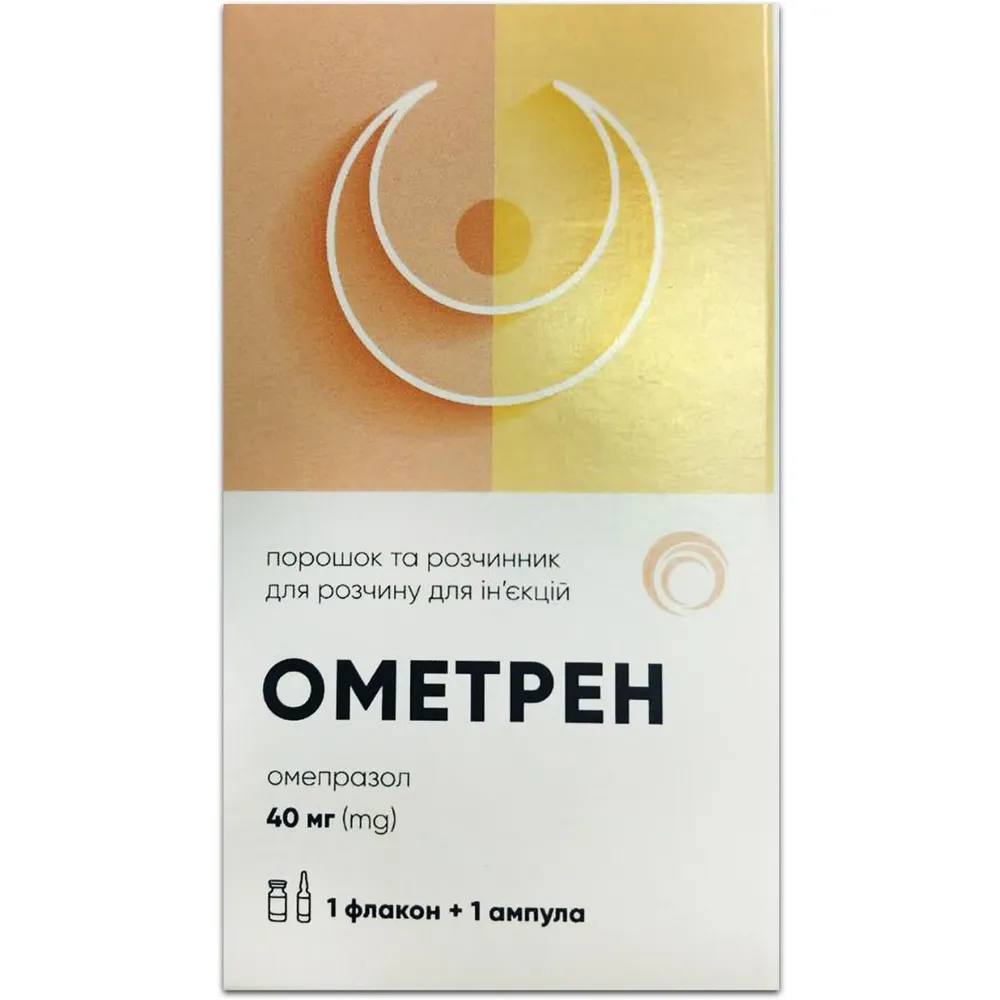
Table of Contents
INSTRUCTIONS FOR MEDICAL USE OF THE MEDICINAL PRODUCT OMETREN (OMETREN)
Composition:
Active substance: omeprazole;
1 vial contains 42.6 mg of sodium omeprazole, equivalent to 40 mg of omeprazole;
Excipient: sodium hydroxide;
1 solvent ampoule contains: macrogol 400, citric acid monohydrate, water for injections.
Pharmaceutical form. Powder and solvent for solution for injection.
Main physicochemical properties: white or almost white "cake" in a colorless vial. After reconstitution: clear liquid, colorless to pale yellowish, free from particles.
Solvent ampoule: colorless glass ampoule containing 10 ml of colorless, clear solution for injection.
Pharmacotherapeutic group.
Agents for treatment of peptic ulcer and gastroesophageal reflux disease. Proton pump inhibitors. ATC code A02BC01.
Pharmacological Properties.
Pharmacodynamics.
Mechanism of Action
Omeprazole is a racemic mixture of two enantiomers that reduces gastric acid secretion via a targeted mechanism of action. Omeprazole is a specific inhibitor of the gastric proton pump (PPI) in parietal cells. When administered once daily, the drug acts rapidly and provides control through reversible inhibition of gastric acid secretion.
Omeprazole is a weak base that accumulates and is converted into its active form in the highly acidic environment of the intracellular canaliculi of parietal cells, where it inhibits the enzyme H+, K+-ATPase (proton pump). This effect on the final step of hydrochloric acid formation in gastric juice is dose-dependent and provides highly effective suppression of both basal and stimulated acid secretion, regardless of the type of stimulation.
Pharmacodynamic Effects
All pharmacodynamic effects can be explained by the effect of omeprazole on hydrochloric acid secretion.
Effect on Gastric Acid Secretion
Intravenous administration of omeprazole results in dose-dependent inhibition of gastric acid secretion in humans. To achieve an immediate reduction in intragastric acidity equivalent to that achieved with repeated oral doses of 20 mg, an initial intravenous dose of 40 mg is recommended. This leads to an immediate reduction in intragastric acidity and sustained suppression, on average by 90%, over 24 hours, both after intravenous injection and after intravenous infusion.
Inhibition of hydrochloric acid secretion correlates with the area under the concentration-time curve (AUC) of omeprazole and does not depend on the current plasma concentration of omeprazole.
No signs of tachyphylaxis have been observed during omeprazole treatment.
Effect on Helicobacter pylori
Helicobacter pylori is associated with the development of peptic ulcer disease, including duodenal and gastric ulcers. Helicobacter pylori is a major factor in the development of atrophic gastritis, which is associated with an increased risk of gastric cancer.
Eradication of Helicobacter pylori using omeprazole in combination with antimicrobial agents is associated with a high rate of ulcer healing and prolonged remission of peptic ulcer disease.
Other Effects Related to Inhibition of Gastric Acid Secretion
During long-term treatment, an increased frequency of gastric glandular cyst formation has been reported. These changes are the result of pronounced inhibition of hydrochloric acid secretion and are benign and reversible in nature.
During treatment with antisecretory drugs, serum gastrin levels increase in response to reduced acid secretion. Chromogranin A (CgA) levels also increase due to reduced gastric acidity. Elevated CgA levels may interfere with neuroendocrine tumor diagnostics. To prevent this effect, proton pump inhibitor (PPI) therapy should be discontinued 5 days before CgA level testing. If chromogranin A and gastrin levels have not returned to reference values after initial measurements, testing should be repeated 14 days after discontinuation of omeprazole treatment.
An increase in ECL-cell numbers, possibly related to elevated serum gastrin levels, has been observed in both children and adults during long-term omeprazole treatment. These findings are considered to have no clinical significance.
Reduction of gastric juice acidity by any means, including PPIs, increases the number of bacteria normally present in the gastrointestinal tract. Treatment with acid-reducing agents may lead to a slightly increased risk of gastrointestinal infections caused by Salmonella and Campylobacter.
Pharmacokinetics.
Distribution
The apparent volume of distribution in healthy volunteers is approximately 0.3 L/kg body weight. Omeprazole is approximately 97% bound to plasma proteins.
Metabolism
Omeprazole is completely metabolized by the cytochrome P450 (CYP) system. The majority of its metabolism depends on the polymorphically expressed CYP2C19, responsible for the formation of hydroxyomeprazole, the main metabolite in plasma. The remainder depends on another specific isoenzyme (CYP3A4), responsible for the formation of omeprazole sulfone. Due to omeprazole's high affinity for CYP2C19, there is a potential for competitive inhibition and metabolic drug-drug interactions with other CYP2C19 substrates. However, due to its low affinity for CYP3A4, omeprazole does not have the ability to inhibit the metabolism of other CYP3A4 substrates. Furthermore, omeprazole does not inhibit major CYP enzymes.
Approximately 3% of individuals of Caucasian descent and 15–20% of individuals of Mongoloid descent lack functional CYP2C19 enzyme; they are referred to as "poor metabolizers." In these individuals, omeprazole metabolism may be primarily catalyzed by the CYP3A4 enzyme. After repeated administration of omeprazole at a dose of 20 mg once daily, the mean area under the concentration-time curve (AUC) in "poor metabolizers" is 5–10 times higher than in individuals with functional CYP2C19 enzyme ("extensive metabolizers"). Mean maximum plasma concentrations were also higher—by 3–5 times. However, these findings do not affect omeprazole dosing.
Elimination
Total plasma clearance is approximately 30–40 L/h after single-dose administration. The plasma half-life of omeprazole is typically less than 1 hour, both after single and repeated once-daily dosing. Omeprazole is completely eliminated from plasma between doses, with no tendency for accumulation when administered once daily. Nearly 80% of the omeprazole dose is excreted in urine as metabolites, and the remainder is excreted in feces, primarily via biliary secretion.
The AUC of omeprazole increases with repeated administration. This increase is dose-dependent and results in a non-linear relationship between AUC and dose after repeated dosing. This time- and dose-dependent relationship is due to reduced first-pass metabolism and systemic clearance, likely caused by inhibition of the CYP2C19 enzyme by omeprazole and/or its metabolites (e.g., sulfone). No metabolite has been shown to affect gastric acid secretion.
Special Patient Populations
Patients with Hepatic Impairment
Omeprazole metabolism is slowed in patients with impaired liver function, leading to increased AUC. With once-daily omeprazole administration, no tendency toward drug accumulation has been observed.
Patients with Renal Impairment
The pharmacokinetics of omeprazole, including systemic bioavailability and elimination rate, are unchanged in patients with impaired renal function.
Elderly Patients
The rate of omeprazole metabolism is slightly reduced in elderly patients (75–79 years of age).
Clinical characteristics.
Indications.
Ometren for intravenous administration is indicated as an alternative to oral therapy in the following cases.
Adults:
- treatment of duodenal ulcers;
- prevention of recurrence of duodenal ulcers;
- treatment of gastric ulcers;
- prevention of recurrence of gastric ulcers;
- in combination with appropriate antibiotics for eradication of Helicobacter pylori (H. pylori) in peptic ulcer disease;
- treatment of NSAID-associated gastric and duodenal ulcers;
- prevention of NSAID-associated gastric and duodenal ulcers in patients at risk;
- treatment of reflux esophagitis;
- long-term treatment of patients with inactive reflux esophagitis;
- treatment of symptomatic gastroesophageal reflux disease;
- treatment of Zollinger–Ellison syndrome.
Contraindications.
Hypersensitivity to omeprazole, substituted benzimidazoles, or to any of the excipients of this medicinal product.
Omeprazole, like other PPIs, should not be used concomitantly with nelfinavir (see section "Interaction with other medicinal products and other types of interactions").
Interaction with other medicinal products and other types of interactions.
Effect of omeprazole on the pharmacokinetics of other medicinal products
Medicinal products whose absorption depends on gastric pH
Inhibition of gastric secretion during treatment with omeprazole and other PPIs may reduce or increase the absorption of medicinal products whose absorption is pH-dependent. As with other medicinal products that reduce gastric acidity, absorption of drugs such as ketoconazole, itraconazole, and erlotinib may be decreased, whereas absorption of drugs such as digoxin may be increased during omeprazole treatment. Concomitant administration of omeprazole (20 mg once daily) and digoxin in healthy volunteers increased digoxin bioavailability by 10% (in two out of ten subjects – up to 30%).
Nelfinavir, atazanavir
Plasma levels of nelfinavir and atazanavir are reduced when administered concomitantly with omeprazole.
Concomitant use of omeprazole and nelfinavir is contraindicated. Concomitant administration of omeprazole (40 mg once daily) reduced the average exposure to nelfinavir by approximately 40%, and the average exposure to its pharmacologically active metabolite M8 decreased by approximately 75–90%. The interaction may also be due to inhibition of CYP2C19 activity.
Concomitant use of omeprazole with atazanavir is not recommended. Concomitant administration of omeprazole (40 mg once daily) with atazanavir 300 mg/ritonavir 100 mg in healthy volunteers resulted in a 75% reduction in atazanavir exposure. Increasing the atazanavir dose to 400 mg did not compensate for the effect of omeprazole on atazanavir exposure. Concomitant administration of omeprazole (20 mg once daily) with atazanavir 400 mg/ritonavir 100 mg in healthy volunteers resulted in approximately a 30% reduction in atazanavir exposure compared to atazanavir 300 mg/ritonavir 100 mg once daily.
Digoxin
Concomitant treatment with omeprazole (20 mg once daily) and digoxin in healthy volunteers increased digoxin bioavailability by 10%. Rare cases of digoxin-induced toxicity have been reported. However, caution should be exercised when prescribing high doses of omeprazole to elderly patients. Therapeutic drug monitoring of digoxin should be intensified. Patients receiving concomitant digoxin should be closely monitored by a physician.
Clopidogrel
In a study, clopidogrel (loading dose 300 mg, followed by 75 mg once daily) was administered alone and together with omeprazole (80 mg administered simultaneously with clopidogrel) for 5 days. When clopidogrel and omeprazole were administered concomitantly, exposure to the active metabolite of clopidogrel decreased by 46% (day 1) and by 42% (day 5). The mean inhibition of platelet aggregation decreased by 47% (after 24 hours) and by 30% (day 5) when clopidogrel and omeprazole were administered together. In another study, administration of clopidogrel and omeprazole at different times did not prevent their interaction, likely due to the inhibitory effect of omeprazole on CYP2C19. Conflicting data on the clinical significance of the pharmacokinetic/pharmacodynamic interaction regarding major cardiovascular events have been reported in observational and clinical studies. Therefore, concomitant use of omeprazole and clopidogrel should be avoided.
Other medicinal products
Absorption of posaconazole, erlotinib, ketoconazole, and itraconazole is significantly reduced; therefore, clinical efficacy may be diminished. Concomitant use of this medicinal product with posaconazole and erlotinib should be avoided.
Medicinal products metabolized by CYP2C19
Omeprazole is a moderate inhibitor of CYP2C19, the main enzyme responsible for omeprazole metabolism. Thus, metabolism of concomitantly administered medicinal products that are also metabolized by CYP2C19 may be reduced, and systemic exposure to these medicinal products may be increased. Examples include R-warfarin and other vitamin K antagonists, cilostazol, diazepam, and phenytoin.
Cilostazol
In healthy volunteers, administration of omeprazole 40 mg increased the maximum plasma concentration (Cmax) and AUC of cilostazol by 18% and 26%, respectively, and of one of its active metabolites by 29% and 69%, respectively.
Phenytoin
Plasma concentration monitoring of phenytoin is recommended during the first two weeks after initiation of omeprazole treatment. If phenytoin dose adjustment has been performed, monitoring and further dose adjustments should be conducted after discontinuation of omeprazole treatment.
Unknown mechanism of interaction
Saquinavir
Concomitant administration of omeprazole with saquinavir/ritonavir resulted in an increase in saquinavir plasma levels by approximately 70%, which was associated with acceptable tolerability in HIV-infected patients.
Tacrolimus
Increased tacrolimus serum levels have been reported with concomitant use of omeprazole. Intensified monitoring of tacrolimus concentration and renal function (creatinine clearance) is required, and dose adjustment of tacrolimus may be necessary.
Metotrexate
Elevated methotrexate levels have been observed in some patients when administered concomitantly with PPIs. In cases where high-dose methotrexate is required, temporary discontinuation of omeprazole should be considered.
Effect of other medicinal products on the pharmacokinetics of omeprazole
Inhibitors of CYP2C19 and/or CYP3A4
Since omeprazole is metabolized by CYP2C19 and CYP3A4 enzymes, medicinal products known to inhibit the activity of CYP2C19 or CYP3A4, or both enzymes (e.g., clarithromycin and voriconazole), may lead to increased omeprazole serum levels due to slowed metabolism. Concomitant administration of voriconazole resulted in more than a two-fold increase in omeprazole exposure. Since high doses of omeprazole have been well tolerated, dose adjustment of omeprazole is generally not required. However, dose adjustment should be considered in patients with severe hepatic impairment and in cases of long-term treatment.
Omeprazole is partially metabolized by CYP3A4 as well, but does not inhibit this enzyme. Therefore, omeprazole does not affect the metabolism of medicinal products metabolized by CYP3A4, such as cyclosporine, lidocaine, quinidine, estradiol, erythromycin, and budesonide.
Inducers of CYP2C19 and/or CYP3A4
Medicinal products known to induce the activity of CYP2C19 or CYP3A4, or both enzymes (e.g., rifampicin and St. John's wort), may lead to decreased omeprazole serum levels due to accelerated metabolism.
Special precautions for use.
In the presence of any alarming symptom (e.g., significant unintentional weight loss, frequent vomiting, dysphagia, hematemesis, or melena) or in patients with diagnosed or suspected gastric ulcer, malignancy must be excluded, as the drug may mask symptoms and delay correct diagnosis.
Concomitant use of atazanavir with omeprazole is not recommended. If co-administration of atazanavir with omeprazole cannot be avoided, careful clinical monitoring (e.g., viral load) is recommended, along with an increased dose of atazanavir to 400 mg with 100 mg ritonavir; the omeprazole dose should not exceed 20 mg.
Omeprazole, like other acid-inhibiting agents, may reduce absorption of vitamin B12 (cyanocobalamin) due to hypo- or achlorhydria. This should be considered in patients with low body weight or risk factors for reduced vitamin B12 absorption during long-term therapy.
Omeprazole is an inhibitor of CYP2C19. Potential interactions with drugs metabolized by CYP2C19 should be considered when initiating or discontinuing omeprazole therapy. An interaction has been observed between clopidogrel and omeprazole. The clinical significance of this interaction remains unclear. As a precautionary measure, concomitant use of omeprazole and clopidogrel should be avoided.
Omeprazole use may slightly increase the risk of gastrointestinal infections such as Salmonella and Campylobacter.
Severe hypomagnesemia may occur in patients treated with PPIs, including omeprazole, for at least 3 months (in most cases, hypomagnesemia developed after approximately 1 year of treatment). Hypomagnesemia may present with serious symptoms such as fatigue, tetany, delirium, seizures, dizziness, and ventricular arrhythmias. Hypomagnesemia may also be asymptomatic and may not be promptly diagnosed. In most patients, symptoms resolve and magnesium levels normalize after magnesium supplementation and discontinuation of omeprazole.
In patients planned for long-term omeprazole therapy or concomitant use of digoxin or other drugs that may reduce magnesium levels (e.g., diuretics), serum magnesium concentration should be measured before starting omeprazole and periodically during treatment.
Omeprazole, particularly when used at high doses and for prolonged periods (>1 year), slightly increases the risk of fractures of the spine, wrist, and hip, especially in elderly patients and those with risk factors. According to data from observational studies, omeprazole may increase the overall risk of fractures by 10–40%. This increased risk may partly be related to other factors. Patients at risk of osteoporosis should receive appropriate management according to current clinical guidelines and should take vitamin D and calcium supplements.
Serious skin adverse reactions, including Stevens-Johnson syndrome, toxic epidermal necrolysis, drug reaction with eosinophilia and systemic symptoms (DRESS), and acute generalized exanthematous pustulosis, have been reported very rarely and rarely, respectively, in association with omeprazole treatment, and may be life-threatening or fatal.
Subacute cutaneous lupus erythematosus (SCLE)
Omeprazole use has occasionally been associated with the development of SCLE. If skin manifestations appear, particularly in sun-exposed areas and accompanied by arthralgia, patients should seek immediate medical advice and discontinuation of omeprazole should be considered. A history of SCLE following omeprazole use may increase the risk of SCLE with other PPIs.
Renal function
Acute tubulointerstitial nephritis (ATIN) has been observed in patients taking omeprazole and may occur at any time during omeprazole therapy (see section "Adverse reactions"). Acute tubulointerstitial nephritis may progress to renal failure.
If ATIN is suspected, omeprazole should be discontinued and appropriate treatment initiated immediately.
Effect on diagnostic test results
During treatment with antisecretory drugs, plasma gastrin concentration increases due to reduced hydrochloric acid secretion. As a result of decreased acid secretion, chromogranin A (CgA) levels increase. Elevated CgA levels may interfere with diagnostic tests for neuroendocrine tumors. To prevent this interference, omeprazole should be discontinued at least 5 days before CgA measurement. If CgA and gastrin levels have not returned to reference values after initial measurements, testing should be repeated 14 days after discontinuation of Ometren.
Patients receiving long-term omeprazole therapy (especially for more than 1 year) should be under regular medical supervision.
This medicinal product contains less than 1 mmol (23 mg)/dose of sodium, i.e., essentially "sodium-free".
Use during pregnancy or breastfeeding.
Pregnancy
Data from prospective epidemiological studies indicate no adverse effects of omeprazole on pregnancy or fetal/neonatal health. Omeprazole may be used during pregnancy.
Breastfeeding period
Omeprazole passes into breast milk, but the likelihood of effects on the infant is low when used at therapeutic doses.
Fertility
Studies in animals with the racemic mixture of omeprazole indicate no effect of omeprazole on fertility.
Ability to affect reaction speed when driving or operating machinery.
It is unlikely that the medicinal product Ometren affects the ability to drive or operate machinery. Adverse reactions such as dizziness and visual disturbances may occur. If such disorders occur, patients should not drive or operate machinery.
Method of Administration and Dosage
Dosage
Alternative to Oral Therapy
For patients for whom oral administration of the drug is unsuitable, intravenous administration of Ometren 40 mg once daily is recommended. For patients with Zollinger–Ellison syndrome, the recommended initial dose of omeprazole administered intravenously is 60 mg per day. Higher daily doses may be required; therefore, the dose should be individually adjusted. If the daily dose exceeds 60 mg, it should be divided equally into two parts and administered twice daily. The drug must be administered intravenously as an infusion over 20–30 minutes.
Reconstitution of the Drug Prior to Administration
Prior to intravenous bolus injection, the lyophilized powder contained in the vial should be dissolved in 10 mL of solvent (the ampoule with solvent is supplied). The solution should be administered slowly, over not less than 2 minutes. Ometren must be reconstituted immediately before use. The resulting solution is stable for 4 hours at room temperature (not above 25°C).
Prior to intravenous infusion, the drug should be dissolved in 0.9% sodium chloride solution or 5% glucose solution. The contents of one vial should be dissolved in approximately 5 mL of diluent and then immediately diluted to a final volume of 100 mL. Omeprazole stability depends on the pH of the solution. Ensure that the entire drug is completely dissolved. The resulting solution should be used for intravenous infusion within 20–30 minutes.
For prevention of gastric content aspiration prior to general anesthesia, Ometren 40 mg should be administered intravenously 1 hour before surgery.
Any unused product or waste material must be disposed of in accordance with local requirements.
Special Patient Populations
Renal Impairment
Dosage adjustment is not required in patients with renal impairment.
Hepatic Impairment
In patients with hepatic impairment, a daily dose of 10–20 mg may be sufficient.
Elderly Patients (> 65 years)
Dosage adjustment is not required in elderly patients.
Children
Experience with intravenous omeprazole administration in pediatric practice is limited; therefore, omeprazole should not be administered to this patient population.
Overdose
Human data on omeprazole overdose effects are very limited. Cases of omeprazole administration up to 560 mg have been reported, along with single reports of oral doses of 2400 mg omeprazole (120 times higher than the usual recommended clinical dose). Symptoms reported include nausea, vomiting, dizziness, abdominal pain, diarrhea, and headache. In isolated cases, lethargy, depression, and confusion have also been reported.
The described symptoms are transient. Elimination kinetics remain unchanged (first-order kinetics) with increasing dose.
Treatment. There is no specific antidote. Omeprazole is poorly removed by dialysis. Gastric lavage, symptomatic, and supportive therapy are indicated.
Adverse Reactions
The most common adverse reactions (in 1–10% of patients) are headache, abdominal pain, constipation, diarrhea, flatulence, and nausea/vomiting.
The following criteria are used to assess the frequency of adverse reactions: very common (≥ 1/10), common (≥ 1/100, < 1/10), uncommon (≥ 1/1000, < 1/100), rare (≥ 1/10,000, < 1/1000), very rare (< 1/10,000), frequency not known (cannot be estimated from available data).
Eye disorders: rare – blurred vision.
Ear and labyrinth disorders: uncommon – vertigo.
Respiratory, thoracic and mediastinal disorders: rare – bronchospasm.
Gastrointestinal disorders: common – abdominal pain, constipation, diarrhea, flatulence, nausea/vomiting, fundic gland polyps (benign); rare – dry mouth, stomatitis, gastrointestinal candidiasis; frequency not known – microscopic colitis.
Hepatobiliary disorders: uncommon – increased liver enzymes; rare – hepatitis with or without jaundice; very rare – hepatic failure, encephalopathy in patients with pre-existing liver disease.
Renal and urinary disorders: rare – tubulointerstitial nephritis (with possible progression to renal failure).
Metabolism and nutrition disorders: rare – hyponatremia; frequency not known – hypomagnesemia; severe hypomagnesemia may lead to hypocalcemia; hypomagnesemia may also cause hypokalemia.
Nervous system disorders: common – headache; uncommon – dizziness, paraesthesia, somnolence; rare – taste disturbance.
Psychiatric disorders: uncommon – insomnia; rare – agitation, confusion, depression; very rare – aggression, hallucinations.
Blood and lymphatic system disorders: rare – leukopenia, thrombocytopenia; very rare – agranulocytosis, pancytopenia.
Immune system disorders: rare – hypersensitivity reactions such as fever, angioneurotic edema, and anaphylactic reaction/shock.
Skin and subcutaneous tissue disorders: uncommon – dermatitis, pruritus, rash, urticaria; rare – alopecia, photosensitivity, acute generalized exanthematous pustulosis, drug reaction with eosinophilia and systemic symptoms (DRESS); very rare – Stevens-Johnson syndrome, toxic epidermal necrolysis, erythema multiforme; frequency not known – subacute cutaneous lupus erythematosus.
Musculoskeletal and connective tissue disorders: uncommon – fracture of femur, wrist, or spine; rare – arthralgia, myalgia; very rare – muscle weakness.
Reproductive system and breast disorders: very rare – gynecomastia.
General disorders and administration site conditions: uncommon – malaise, peripheral edema; rare – increased sweating.
In isolated cases, irreversible visual disturbances have been reported in critically ill patients receiving intravenous omeprazole, particularly at high doses; however, a causal relationship has not been established.
Reporting of suspected adverse reactions
Reporting suspected adverse reactions after a medicinal product is authorized is important. It allows continued monitoring of the benefit/risk balance of the medicinal product. Healthcare professionals and patients, as well as their legal representatives, are encouraged to report any suspected adverse reactions and lack of efficacy to the State Expert Center of the Ministry of Health of Ukraine via the following link: https://aisf.dec.gov.ua
Shelf life. 2 years.
Storage conditions.
Store in the original packaging to protect from light.
Store at a temperature not exceeding 25°C. Keep out of reach of children.
Incompatibilities.
This medicinal product must not be mixed with other solvents except those specified in the section "Instructions for use and dosage".
Packaging.
1 vial of powder and 1 ampoule of solvent. One vial of powder with one ampoule of solvent (10 ml) in a cardboard box.
Prescription status. Prescription only.
Manufacturer. ANFARM HELLAS S.A.
Manufacturer's address and place of business.
61st km National Road Athens-Lamia, Schimatari Viotia, 32009, Greece.