Olimel n9e
Ukraine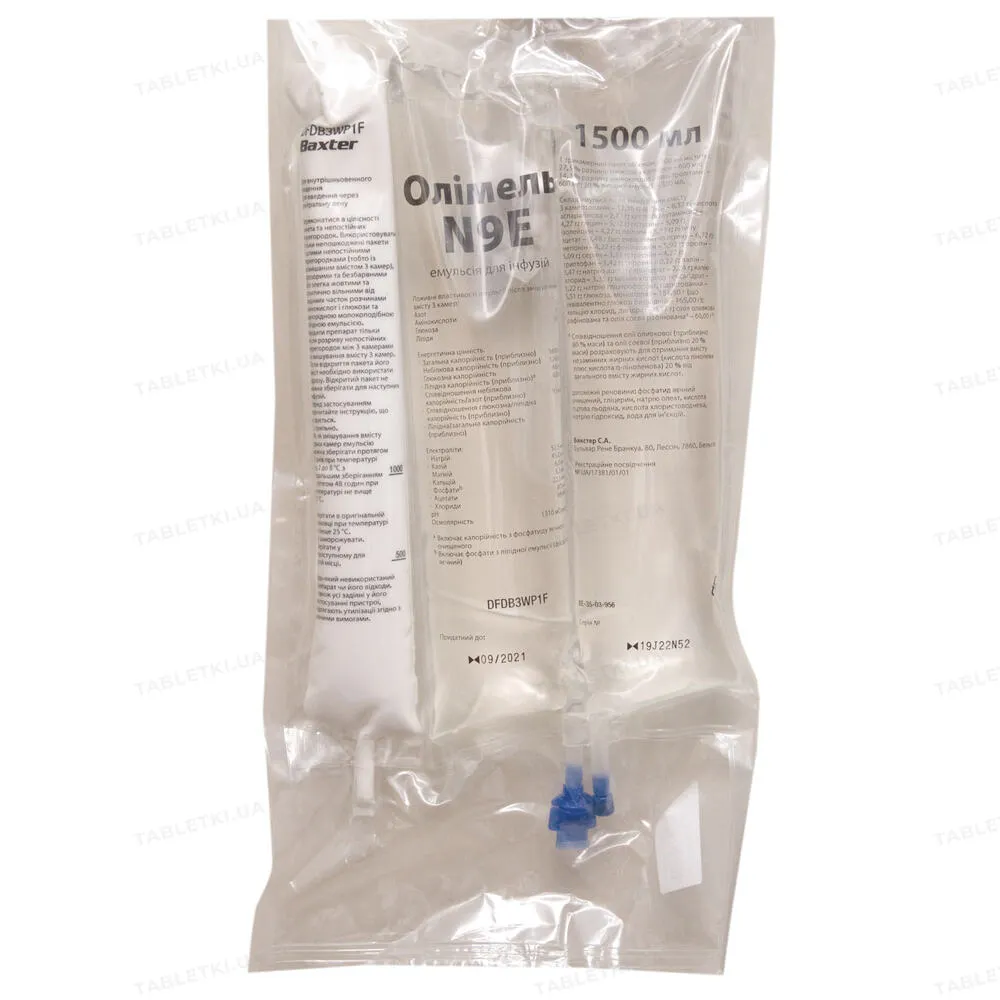
Table of Contents
INSTRUCTIONS FOR MEDICAL USE OF THE MEDICINAL PRODUCT Olimel N9E (OlimelN9E)
Composition:
Active substances: alanine; arginine; aspartic acid; glutamic acid; glycine; histidine; isoleucine; leucine; lysine acetate (equivalent to lysine); methionine; phenylalanine; proline; serine; threonine; tryptophan; tyrosine; valine; sodium acetate trihydrate; potassium chloride; magnesium chloride hexahydrate; sodium glycerophosphate, hydrated; glucose monohydrate (equivalent to anhydrous glucose); calcium chloride dihydrate; refined olive oil; refined soybean oil.
One three-chamber bag contains:
| Components |
Volume |
||
| 1000 ml |
1500 ml |
2000 ml |
|
| 27.5% glucose solution with calcium |
400 ml |
600 ml |
800 ml |
| 14.2% amino acid solution with electrolytes |
400 ml |
600 ml |
800 ml |
| 20% lipid emulsion |
200 ml |
300 ml |
400 ml |
Composition of the emulsion after mixing the contents of 3 chambers:
| Components |
Amount |
||
| per 1 bag 1000 ml |
per 1 bag 1500 ml |
per 1 bag 2000 ml |
|
| Active substances: |
|||
| Alanine |
8.24 g |
12.36 g |
16.48 g |
| Arginine |
5.58 g |
8.37 g |
11.16 g |
| Aspartic acid |
1.65 g |
2.47 g |
3.30 g |
| Glutamic acid |
2.84 g |
4.27 g |
5.69 g |
| Glycine |
3.95 g |
5.92 g |
7.90 g |
| Histidine |
3.40 g |
5.09 g |
6.79 g |
| Isoleucine |
2.84 g |
4.27 g |
5.69 g |
| Leucine |
3.95 g |
5.92 g |
7.90 g |
| Lysine acetate (equivalent to lysine) |
6.32 g 4.48 g |
9.48 g 6.72 g |
12.64 g 8.96 g |
| Methionine |
2.84 g |
4.27 g |
5.69 g |
| Phenylalanine |
3.95 g |
5.92 g |
7.90 g |
| Proline |
3.40 g |
5.09 g |
6.79 g |
| Serine |
2.25 g |
3.37 g |
4.50 g |
| Threonine |
2.84 g |
4.27 g |
5.69 g |
| Tryptophan |
0.95 g |
1.42 g |
1.90 g |
| Tyrosine |
0.15 g |
0.22 g |
0.30 g |
| Valine |
3.64 g |
5.47 g |
7.29 g |
| Sodium acetate trihydrate |
1.50 g |
2.24 g |
2.99 g |
| Potassium chloride |
2.24 g |
3.35 g |
4.47 g |
| Magnesium chloride hexahydrate |
0.81 g |
1.22 g |
1.62 g |
| Sodium glycerophosphate, hydrated |
3.67 g |
5.51 g |
7.34 g |
| Glucose monohydrate (equivalent to anhydrous glucose) |
121.00 g 110.00 g |
181.50 g 165.00 g |
242.00 g 220.00 g |
| Calcium chloride dihydrate |
0.52 g |
0.77 g |
1.03 g |
| Refined olive oil and refined soybean oil |
40.00 g |
60.00 g |
80.00 g |
| Excipients: egg phospholipids for injection, glycerol, sodium oleate, glacial acetic acid, hydrochloric acid, sodium hydroxide, water for injection. |
|||
The ratio of olive oil (approximately 80% by mass) to soybean oil (approximately 20% by mass) is calculated to achieve a content of essential fatty acids (linoleic acid plus α-linolenic acid) amounting to 20% of the total fatty acid content.
Nutritional properties of the emulsion after mixing the contents of 3 chambers:
| Indicators |
Volume |
||
| 1000 ml |
1500 ml |
2000 ml |
|
| Nitrogen |
9.0 g |
13.5 g |
18.0 g |
| Amino acids |
56.9 g |
85.4 g |
113.9 g |
| Glucose |
110.0 g |
165.0 g |
220.0 g |
| Lipids |
40 g |
60 g |
80 g |
| Energy value: |
|||
|
1070 kcal |
1600 kcal |
2140 kcal |
|
840 kcal |
1260 kcal |
1680 kcal |
|
440 kcal |
660 kcal |
880 kcal |
|
400 kcal |
600 kcal |
800 kcal |
|
93 kcal/g |
93 kcal/g |
93 kcal/g |
|
52/48 |
52/48 |
52/48 |
|
37 % |
37 % |
37 % |
| Electrolytes: |
|||
|
35.0 mmol |
52.5 mmol |
70.0 mmol |
|
30.0 mmol |
45.0 mmol |
60.0 mmol |
|
4.0 mmol |
6.0 mmol |
8.0 mmol |
|
3.5 mmol |
5.3 mmol |
7.0 mmol |
|
15.0 mmol |
22.5 mmol |
30.0 mmol |
|
54 mmol |
80 mmol |
107 mmol |
|
45 mmol |
68 mmol |
90 mmol |
| pH |
6.4 |
6.4 |
6.4 |
| Osmolarity |
1310 mOsmol/l |
1310 mOsmol/l |
1310 mOsmol/l |
a Includes calories from egg phospholipids for injection
b Includes phosphates from the lipid emulsion (egg phospholipids)
Pharmaceutical form. Infusion emulsion.
Main physicochemical properties:
glucose solution with calcium and amino acid solution with electrolytes: clear, colourless or slightly yellow, practically free from particles;
lipid emulsion: homogeneous, milk-like liquid.
Pharmacotherapeutic group. Parenteral nutrition solutions. Combinations.
ATC code B05B A10.
Pharmacological properties.
Pharmacodynamics.
The nitrogen content (L-amino acid series) and caloric content (glucose and triglycerides) in Olimel N9E allow for maintaining an adequate nitrogen/calorie ratio.
The product also contains electrolytes.
The lipid (fat) emulsion component of Olimel N9E consists of refined olive oil and refined soybean oil (ratio 80/20) with the following approximate fatty acid distribution:
- 15% saturated fatty acids (SFA);
- 65% monounsaturated fatty acids (MUFA);
- 20% polyunsaturated essential fatty acids (PUFA).
The phospholipid/triglyceride ratio is 0.06.
Olive oil contains significant amounts of alpha-tocopherol, which, combined with moderate PUFA intake, contributes to improved vitamin E status and reduced lipid peroxidation.
The amino acid solution contains 17 L-amino acids (including 8 essential amino acids), necessary for protein synthesis.
Amino acids also serve as an energy source. Their oxidation leads to nitrogen excretion in the form of urea.
Amino acid profile:
- essential amino acids/total amino acids − 44.8%;
- essential amino acids (g)/total nitrogen (g) − 2.8;
- branched-chain amino acids/total amino acids − 18.3%.
Glucose is the source of carbohydrates.
Pharmacokinetics.
The components of Olimel N9E (amino acids, electrolytes, glucose, and fats) are distributed, metabolized, and eliminated via the same pathways as when the individual components are administered separately.
Clinical characteristics.
Indications.
For parenteral nutrition in adults and children aged 2 years and older when oral or enteral nutrition is impossible, inadequate, or contraindicated.
Contraindications.
Children under 2 years of age.
Hypersensitivity to egg or soy proteins, peanuts, or corn/corn products (see section "Special precautions"), or to any of the active substances or excipients.
Inborn errors of amino acid metabolism.
Severe hyperlipidemia or severe disorders of fat metabolism characterized by hypertriglyceridemia.
Severe hyperglycemia.
Pathologically elevated plasma concentrations of sodium, potassium, magnesium, calcium, and/or phosphorus.
Interaction with other medicinal products and other forms of interaction.
Interaction studies have not been conducted.
Olimel N9E must not be administered simultaneously with blood through the same infusion system due to the risk of pseudoagglutination.
The lipids contained in this emulsion may interfere with certain laboratory test results (e.g., bilirubin, lactate dehydrogenase, oxygen saturation, hemoglobin levels) if blood samples are taken before clearance of lipids (typically cleared within 5–6 hours provided no further lipid infusion is administered).
Precipitation of ceftriaxone and calcium may occur if ceftriaxone is mixed with calcium-containing solutions in the same infusion system. Ceftriaxone must not be mixed or co-administered with calcium-containing intravenous solutions, including Olimel N9E, through the same infusion system (e.g., via a Y-connector). However, ceftriaxone and calcium-containing solutions may be administered sequentially if the infusion system is thoroughly flushed with a compatible fluid between infusions (see sections "Special precautions" and "Incompatibilities").
Olimel N9E contains vitamin K, naturally present in lipid emulsions. The amount of vitamin K in the recommended doses of Olimel N9E is considered not to affect coumarin derivatives.
Due to the potassium content in Olimel N9E, particular caution is required when administering the product to patients receiving potassium-sparing diuretics (e.g., amiloride, spironolactone, triamterene), angiotensin-converting enzyme (ACE) inhibitors, angiotensin II receptor antagonists, or immunosuppressants such as tacrolimus or cyclosporine, due to the risk of hyperkalemia.
Certain medicinal products, such as insulin, may affect the body's lipase system. However, this type of interaction has limited clinical significance.
Heparin, when administered at clinical doses, causes a transient release of lipoprotein lipase into the circulation. This may initially enhance plasma lipolysis followed by a temporary reduction in triglyceride clearance.
Special precautions for use.
Rapid infusion of any solution for total parenteral nutrition (TPN) may lead to severe or fatal consequences.
Infusion should be stopped immediately if any symptoms of an allergic reaction occur (such as sweating, fever, chills, headache, skin rash, or dyspnea). This medicinal product contains soybean oil and egg phospholipids. Soy and egg proteins may cause hypersensitivity reactions. Cross-allergic reactions between soy proteins and peanuts have been observed.
Olimel N9E contains glucose derived from corn, which may cause hypersensitivity reactions in patients allergic to corn or corn products (see section "Contraindications").
Ceftriaxone must not be mixed or co-administered with any calcium-containing intravenous solutions, even if different infusion systems or different infusion sites are used. Ceftriaxone and calcium-containing solutions may be administered sequentially one after another, provided that different infusion systems connected at different sites are used, or if the infusion system is replaced or thoroughly flushed with physiological saline solution between infusions to prevent precipitation. If a patient requires continuous infusion of calcium-containing solutions for total parenteral nutrition, healthcare professionals may consider using alternative antibacterial agents not associated with the same precipitation risk. If ceftriaxone administration is considered necessary for a patient also requiring continuous parenteral nutrition, the solutions for total parenteral nutrition and ceftriaxone may be administered simultaneously, but through separate infusion systems connected at different sites. Alternatively, the infusion of the total parenteral nutrition solution may be interrupted during ceftriaxone administration, following recommendations for flushing the infusion system between administrations (see sections "Interaction with other medicinal products and other forms of interaction" and "Incompatibilities").
Cases of precipitate formation in pulmonary vessels leading to pulmonary embolism and respiratory distress have been reported in patients receiving parenteral nutrition. Some cases were fatal. Excessive addition of calcium and phosphate increases the risk of calcium phosphate precipitate formation (see section "Incompatibilities").
Precipitate formation in the bloodstream has also been reported.
In addition to checking the solution, the infusion system and catheter should be periodically inspected for precipitate formation.
If signs of respiratory distress occur, infusion should be stopped and medical evaluation initiated.
Other medicinal products or substances should not be added to any component of the bag or to the reconstituted emulsion unless their compatibility and stability in the resulting solution have been confirmed (including the stability of the lipid emulsion).
Precipitate formation or destabilization of the lipid emulsion may lead to vascular occlusion (see sections "Method of administration and dosage" and "Incompatibilities").
Severe fluid and electrolyte imbalances, severe fluid overload states, and severe metabolic disorders must be corrected before initiating infusion.
Special clinical monitoring is required at the beginning of intravenous infusion.
Catheter-related infection and sepsis are complications that may occur in patients receiving parenteral nutrition, particularly due to inadequate catheter care or immunosuppressive effects of disease or medications. Careful monitoring of signs of infection and laboratory results for fever/chills, leukocytosis, device-related technical complications, and hyperglycemia may help detect infections early. Patients requiring parenteral nutrition are often predisposed to infectious complications due to malnutrition and/or underlying disease. The incidence of septic complications can be reduced by strict adherence to aseptic techniques during catheter insertion and care, as well as by using aseptic preparation techniques for the parenteral nutrition mixture.
Throughout the treatment period, monitoring of fluid and electrolyte balance, serum osmolarity, serum triglyceride levels, acid-base balance, blood glucose levels, liver and kidney function tests, coagulation tests, and complete blood count, including platelet count, is required.
Elevated liver enzyme levels and cholestasis have been reported during administration of similar medicinal products. If hepatic insufficiency is suspected, serum ammonium levels should be monitored.
Metabolic complications may develop if nutrient intake is not adapted to patient needs or if the metabolic capacity of any component of the drug is inaccurately assessed. Undesirable metabolic effects may result from insufficient or excessive administration of nutrients or from an inappropriate mixture composition relative to the specific patient's requirements.
Administration of amino acid solutions may promote acute folate deficiency; therefore, daily folic acid supplementation is recommended.
Extravasation
The catheter insertion site should be regularly inspected for signs of extravasation.
In case of extravasation, infusion should be stopped immediately, leaving the inserted catheter or cannula in place for emergency treatment. If possible, aspiration through the inserted catheter/cannula should be performed to reduce the volume of fluid in tissues before removing the catheter/cannula.
Depending on the extravasated drug (including any drug(s) mixed with Olimel N9E, if applicable) and the stage/extent of tissue damage, appropriate specific measures should be taken. Treatment may include non-pharmacological, pharmacological, and/or surgical interventions. In cases of significant extravasation, consultation with a plastic surgeon within the first 72 hours is recommended.
The extravasation site should be monitored at least every 4 hours during the first 24 hours, and then daily.
Infusion into the same central vein should not be resumed.
Hepatic insufficiency
The product should be used with caution in patients with hepatic insufficiency due to the risk of developing or worsening neurological disorders associated with hyperammonemia. Regular clinical and laboratory examinations, including assessment of liver function, blood glucose, electrolytes, and triglycerides, are required.
Renal insufficiency
The product should be used with caution in patients with renal insufficiency, particularly those with hyperkalemia, due to the risk of developing or worsening metabolic acidosis and hyperazotemia if metabolic products are not eliminated via extrarenal pathways. In such patients, fluid status, triglycerides, and electrolytes should be closely monitored.
Blood
The product should be used with caution in patients with coagulation disorders and anemia. Complete blood count and coagulation parameters should be closely monitored.
Endocrine and metabolic disorders
This product should be used with caution in patients with the following conditions:
- Metabolic acidosis; carbohydrate administration is not recommended in the presence of lactic acidosis. Regular clinical and laboratory examinations are required;
- Diabetes mellitus. Monitoring of glucose concentrations, glucosuria, ketonuria, and, if applicable, appropriate insulin dose adjustments must be ensured;
- Hyperlipidemia caused by the fat content of the infusion emulsion. Regular clinical and laboratory examinations are required;
- Amino acid metabolism disorders.
Hepatobiliary disorders
Liver disorders, including cholestasis, steatosis, fibrosis, and cirrhosis, which may lead to hepatic insufficiency, as well as cholecystitis and gallstone disease, are known to develop during parenteral nutrition in some patients. The etiology of these disorders is considered multifactorial and may vary among patients. Patients with abnormal laboratory parameters or other signs of hepatobiliary disorders should be referred to a physician specialized in such conditions to identify potential causative factors and necessary therapeutic and preventive interventions.
Serum triglyceride concentrations and the body's ability to clear fats should be regularly monitored.
Serum triglyceride concentrations should not exceed 3 mmol/L during infusion.
In suspected fat metabolism disorders, serum triglyceride levels should be measured daily after a 5–6-hour fat-free period. In adults, serum should become clear within less than 6 hours after discontinuation of lipid emulsion infusion. The next infusion should only be administered after serum triglyceride concentrations return to baseline levels.
Cases of fat overload syndrome have been reported during administration of similar medicinal products. Reduced or limited capacity to metabolize fats contained in Olimel N9E may lead to fat overload syndrome, which may result from overdosing; however, signs of this syndrome may also occur during administration according to instructions (see also section "Adverse reactions").
In case of hyperglycemia, the infusion rate of Olimel N9E should be adjusted and/or insulin administered.
Do not administer the product into a peripheral vein.
Despite the natural content of trace elements and vitamins, their levels in the product are insufficient to meet the body's requirements. Trace elements and vitamins should be added in adequate amounts to meet individual patient needs and prevent deficiency. See instructions for adding other substances to this product.
Olimel N9E should be used with caution in patients with increased osmolarity, adrenal insufficiency, heart failure, or impaired lung function.
In patients with malnutrition, initiation of parenteral nutrition may cause fluid retention, leading to pulmonary edema and congestive heart failure, as well as decreased serum concentrations of potassium, phosphorus, magnesium, or water-soluble vitamins. These changes may occur within 24–48 hours; therefore, parenteral nutrition should be initiated cautiously and gradually, with careful monitoring and appropriate correction of fluid, electrolyte, trace element, and vitamin levels.
Do not connect bags in series, as this may lead to potential air embolism from residual gas in the previous bag.
To prevent risks associated with excessively rapid infusion, continuous and controlled infusion techniques are recommended.
Olimel N9E should be administered with caution to patients predisposed to electrolyte accumulation.
Intravenous administration of amino acids is associated with increased urinary excretion of trace elements, particularly copper and zinc. This should be considered when determining trace element doses, especially during prolonged intravenous nutrition.
Effect on laboratory tests
Lipids contained in this emulsion may affect the results of certain laboratory tests (see section "Interaction with other medicinal products and other forms of interaction").
Special precautions for use in children
When administering the product to children aged 2 years and older, it is essential to use a bag whose volume corresponds to the daily dosage.
Olimel N9E is not suitable for use in children under 2 years of age because:
- Glucose intake is too low, leading to a reduced glucose/fat ratio;
- The absence of cysteine makes the amino acid profile inadequate;
- Calcium content is too low;
- Bag volumes are inappropriate.
Maximum infusion rates are 3.3 mL/kg/hour for children aged 2 to 11 years and 2.1 mL/kg/hour for children aged 12 to 18 years.
Vitamins and trace elements must always be added. Pediatric formulations should be used.
Elderly patients
Dosage selection for elderly patients should generally be cautious, taking into account the higher frequency of decreased hepatic, renal, or cardiac function, as well as concomitant diseases or other medicinal therapies.
Use during pregnancy or breastfeeding.
Pregnancy
Clinical data on the use of Olimel N9E in pregnant women are lacking. Reproductive studies in animals have not been conducted. Given the route of administration and indications for Olimel N9E, the product may be used during pregnancy if necessary. It should be prescribed to pregnant women only after careful evaluation.
Breastfeeding
There is insufficient information on the passage of the product's components or its metabolites into human breast milk. Parenteral nutrition may be necessary during breastfeeding. It should be prescribed to women during breastfeeding only after careful evaluation.
Fertility
Adequate data are not available.
Ability to affect reaction speed when driving or operating machinery.
Not applicable.
Administration and Dosage
Dosage
Olimel N9E is contraindicated for use in children under 2 years of age due to its unsuitable composition and volume (see sections "Pharmacodynamics", "Pharmacokinetics" and "Special Warnings and Precautions for Use").
The maximum daily dose specified below should not be exceeded. Because of the fixed composition of the multi-chamber bag, it is not always possible to meet all of a patient's nutritional requirements. There may be clinical situations in which a patient's nutritional needs differ from those provided in the bag. Any adjustment in volume (dose) will affect the dosage of all other nutrients contained in Olimel N9E, and this must be taken into account.
Adults
Dosage depends on the patient's energy expenditure, clinical condition, body weight, and ability to metabolize the components of Olimel N9E, as well as on the additional amount of calories or protein received orally/enterally; therefore, the appropriate bag size should be selected accordingly.
Average daily requirements for patients are:
- 0.16 to 0.35 g nitrogen/kg body weight (1 to 2 g amino acids/kg), depending on the patient's nutritional status and degree of catabolic stress;
- 20 to 40 kcal/kg;
- 20 to 40 mL fluid/kg or 1 to 1.5 mL per kcal expended.
The maximum daily dose of Olimel N9E is 35 mL/kg, determined by amino acid intake, corresponding to 2.0 g/kg amino acids, 3.9 g/kg glucose, 1.4 g/kg lipids, 1.2 mmol/kg sodium, and 1.1 mmol/kg potassium. For a patient weighing 70 kg, this equals 2450 mL of Olimel N9E per day, providing 140 g amino acids, 270 g glucose, and 98 g lipids (e.g., 2058 non-protein kcal and a total of 2622 kcal).
The infusion rate should usually be gradually increased during the first hour, then adjusted according to the dose administered, total daily volume, and duration of infusion.
The maximum infusion rate of Olimel N9E is 1.8 mL/kg/hour, corresponding to 0.10 g/kg/hour amino acids, 0.19 g/kg/hour glucose, and 0.07 g/kg/hour lipids.
Children aged 2 years and older
Clinical studies in pediatric patients have not been conducted.
Dosage depends on the patient's energy expenditure, clinical condition, body weight, and ability to metabolize the components of Olimel N9E, as well as on the additional amount of calories or protein received orally/enterally; therefore, the appropriate bag size should be selected accordingly.
In addition, daily requirements for fluid, nitrogen, and calories continuously increase with age. Two pediatric age groups are considered: 2 to 11 years and 12 to 18 years.
Limiting factors for the use of Olimel N9E in the age group 2 to 11 years are the concentration of magnesium in the daily dose and the concentration of glucose in the hourly dose. Limiting factors for the use of Olimel N9E in the age group 12 to 18 years are the concentrations of amino acids and magnesium in the daily dose and the concentration of amino acids in the hourly dose. The resulting data are presented in Table 1.
Table 1
| Component |
From 2 to 11 years |
From 12 to 18 years |
||
| Recommended |
Max. volume of Olimel N9E |
Recommended |
Max. volume of Olimel N9E |
|
| Maximum daily dose |
||||
| Liquids (ml/kg/day) |
60–120 |
25 |
50–80 |
35 |
| Amino acids (g/kg/day) |
1–2 (up to 2.5) |
1.4 |
1–2 |
2.0 |
| Glucose (g/kg/day) |
1.4–8.6 |
2.8 |
0.7–5.8 |
3.9 |
| Fats (g/kg/day) |
0.5–3 |
1.0 |
0.5–2 (up to 3) |
1.4 |
| Total calories (kcal/kg/day) |
30–75 |
26.8 |
20–55 |
37.5 |
| Maximum hourly rate |
||||
| Olimel N9E (ml/kg/hour) |
3.3 |
2.1 |
||
| Amino acids (g/kg/hour) |
0.20 |
0.19 |
0.12 |
0.12 |
| Glucose (g/kg/hour) |
0.36 |
0.36 |
0.24 |
0.23 |
| Fats (g/kg/hour) |
0.13 |
0.13 |
0.13 |
0.08 |
a Recommended values according to the 2018 guidelines of the European Society for Paediatric Gastroenterology, Hepatology and Nutrition (ESPGHAN)/European Society for Clinical Nutrition and Metabolism (ESPEN)/European Society for Research in Paediatrics (ESRP).
The infusion rate should usually be gradually increased during the first hour, then adjusted according to the dose administered, daily intake volume, and duration of infusion.
In general, it is recommended to start infusion in younger children with a low daily dose and gradually increase it to the maximum dosing level (see above).
Method and duration of administration
For single use only.
It is recommended to use the contents immediately after opening the bag and not to reuse for subsequent infusions.
After reconstitution, the mixture should appear homogeneous and milk-like.
Instructions for preparation and administration of the infusion emulsion are provided below.
Due to its high osmolarity, Olimel N9E must be administered only through a central vein.
The recommended duration of infusion using the parenteral nutrition bag is 12–24 hours.
Parenteral nutrition therapy may be continued as long as clinically indicated.
Preparation of the medicinal product for infusion
Opening
Tear the outer wrapper at the top to open the system.
Pull the upper edge of the outer wrapper to release the Olimel N9E bag. Remove the outer protective packaging. Discard the sachet containing the oxygen absorber.
Check the integrity of the bag and the frangible partitions. Use only undamaged bags with intact frangible partitions (i.e., with unmixed contents of the 3 compartments), containing clear, colorless or slightly yellow solutions of amino acids and glucose, practically free from visible particles, and a homogeneous, milk-like lipid emulsion.
Place the bag on a clean, horizontal surface in front of you.
Mixing of solutions and emulsion
Ensure the product has reached room temperature before breaking the frangible partitions.
Manually roll the bag starting from the top (from the end used for hanging). The frangible partitions will begin to break from the side near the opening. Continue rolling the bag until the partitions are opened along approximately half of their length.
Mix the contents by inverting the bag at least 3 times.
After reconstitution, the mixture should appear as a homogeneous, milk-like emulsion.
Addition of other substances
The bag has sufficient capacity for addition of substances such as vitamins, electrolytes, and trace elements.
Any medicinal products (including vitamins) may be added to the reconstituted mixture (after opening the frangible partitions and mixing the contents of the 3 compartments).
Vitamins may also be added to the glucose compartment before reconstitution (prior to opening the frangible partitions and mixing the contents of the 3 compartments).
When adding electrolytes to the product, the amount of electrolytes already present in the bag must be taken into account.
Addition must be performed by a qualified specialist under aseptic conditions.
The following electrolytes listed in Table 2 may be added to Olimel N9E.
Table 2
| Per 1000 ml |
|||
| Electrolytes |
Included level |
Maximum additional addition |
Maximum total level |
| Sodium |
35 mmol |
115 mmol |
150 mmol |
| Potassium |
30 mmol |
120 mmol |
150 mmol |
| Magnesium |
4.0 mmol |
1.6 mmol |
5.6 mmol |
| Calcium |
3.5 mmol |
1.5 (0.0a) mmol |
5.0 (3.5a) mmol |
| Inorganic phosphate |
0 mmol |
3.0 mmol |
3.0 mmol |
| Organic phosphate |
15 mmolb |
10 mmol |
25 mmolb |
a Values corresponding to the addition of inorganic phosphate.
b Phosphate contained in the lipid emulsion has been accounted for.
Trace elements and vitamins: stability has been demonstrated when using commercially available preparations of vitamins and trace elements (containing up to 1 mg of iron).
If other substances are added to the preparation, the final osmolarity of the mixture must be checked before administration.
To perform additions:
- Aseptic technique must be followed.
- Prepare the injection port of the bag.
- Pierce the injection port and add additives using a syringe needle or reconstitution device.
- Mix the contents of the bag and the additives.
Preparation of the infusion set
Aseptic technique must be followed.
Hang the bag.
Remove the plastic protective cap from the inlet port.
Firmly insert the infusion set needle into the inlet port.
Precautions for use
For single use only.
Administer the preparation only after breaking the frangible seals between the 3 chambers and mixing the contents of the 3 chambers.
The final infused emulsion should be inspected visually to ensure there are no signs of phase separation.
After opening, the contents of the bag must be used immediately. An opened bag must not be stored for subsequent infusions. Do not use a partially used bag.
Do not connect bags in series, in order to avoid possible air embolism caused by residual gas from the previous bag.
Any unused medicinal product or waste material, as well as all devices used during administration, must be disposed of in accordance with current regulations.
Children.
The preparation may be administered to children aged 2 years and older as specified in the section "Dosage and administration".
Overdose.
In case of incorrect use (overdose and/or exceeding the recommended infusion rate), symptoms of hypervolemia and acidosis may occur.
Too rapid infusion or administration of an inappropriately large volume of the preparation may cause nausea, vomiting, chills, headache, hot flushes, hyperhidrosis, and electrolyte imbalance. In such cases, infusion must be stopped immediately.
If the glucose infusion rate exceeds clearance, hyperglycemia, glucosuria, and hyperosmolar syndrome may develop.
Reduced or limited ability to metabolize fats may lead to fat overload syndrome, the effects of which are usually reversible and resolve after discontinuation of fat infusion (see also section "Adverse reactions").
In severe cases, hemodialysis, hemofiltration, or hemodiafiltration may be indicated.
Adverse reactions
Potential adverse effects may occur as a result of improper use (e.g., overdose, infusion rate too high) (see sections "Special precautions" and "Overdose").
At the beginning of the infusion, any of the listed pathological signs (sweating, increased body temperature, tremor, headache, skin rash, dyspnea) should be considered as a reason for immediate discontinuation of the infusion.
The adverse drug reactions listed in Table 3 were observed during administration of Olimel N9-840 in a randomized, double-blind, active-controlled study on efficacy and safety. Twenty-eight patients with various medical conditions (e.g., postoperative fasting, severe malnutrition, inadequate or impossible enteral nutrition) participated in the study and received treatment; patients in the Olimel group received up to 40 mL/kg/day of the product for 5 days.
Based on combined data from clinical trials and post-marketing use, the following adverse reactions associated with the use of Olimel have been identified.
Table 3
| System-organ-class |
MedDRA preferred term |
Frequencya |
| Immune system disorders |
Hypersensitivity reactions, including hyperhidrosis, pyrexia, chills, headache, skin rashes (erythematous, papular, pustular, macular, generalized), pruritus, hot flushes, dyspnea |
Frequency not knownb |
| Cardiac disorders |
Tachycardia |
Commona |
| Metabolism and nutrition disorders |
Decreased appetite |
Commona |
| Hypertriglyceridemia |
Commona |
|
| Gastrointestinal disorders |
Abdominal pain |
Commona |
| Diarrhea |
Commona |
|
| Nausea |
Commona |
|
| Vomiting |
Frequency not knownb |
|
| Vascular disorders |
Arterial hypertension |
Commona |
| General disorders and administration site conditions |
Extravasation, which may lead to the following infusion site symptoms: pain, irritation, swelling/edema, erythema/localized increased temperature, skin necrosis, blistering/vesiculation, inflammation, induration, skin hardening |
Frequency not knownb |
a The frequency of reactions was defined as follows: very common (≥ 1/10), common (≥ 1/100 to < 1/10), uncommon (≥ 1/1000 to < 1/100), rare (≥ 1/10,000 to < 1/1000), very rare (< 1/10,000), or frequency not known (cannot be estimated based on available data).
b Adverse drug reactions reported during post-marketing use of Olimel.
Adverse drug reactions typical of the class of drugs, described in other sources in connection with parenteral nutrition preparations, and for which the frequency is unknown:
- Blood and lymphatic system disorders: thrombocytopenia.
- Hepatobiliary and biliary tract disorders: cholestasis, hepatomegaly, jaundice.
- Immune system disorders: hypersensitivity.
- Injuries, poisonings, and procedural complications: parenteral nutrition-associated liver disease (see section "Special precautions for use").
- Investigations: increased blood alkaline phosphatase, increased transaminase levels, increased blood bilirubin, increased liver enzyme levels.
- Renal and urinary disorders: azotemia.
- Vascular disorders: precipitates in pulmonary vessels (pulmonary embolism and respiratory distress) (see section "Special precautions for use").
Fat overload syndrome (very rare)
Cases of fat overload syndrome have been reported with the use of similar medicinal products. This syndrome may result from improper administration (e.g., overdose and/or exceeding the recommended infusion rate; see section "Overdose"); however, symptoms of this syndrome may also appear at the beginning of infusion administered according to instructions. Reduced or limited capacity to metabolize the fats contained in Olimel N9E is associated with prolonged plasma clearance, which may lead to the development of fat overload syndrome. This syndrome is associated with a sudden deterioration in the patient's clinical condition and is characterized by symptoms such as fever, anemia, leukopenia, thrombocytopenia, coagulation disorders, hyperlipidemia, fatty infiltration of the liver (hepatomegaly), impaired liver function, and central nervous system manifestations (e.g., coma). The syndrome usually resolves after discontinuation of the fat emulsion.
Reporting suspected adverse reactions
Reporting suspected adverse reactions after marketing authorization is important. It allows continued monitoring of the benefit-risk balance of the medicinal product. Healthcare professionals and patients, as well as their legal representatives, are encouraged to report all suspected adverse reactions and lack of efficacy via the Automated Pharmacovigilance Information System at the following link: https://aisf.dec.gov.ua.
Shelf life.
2 years.
It is recommended to use the product immediately after breaking the seals between the three chambers of the bag. However, after mixing the contents of the three chambers, the emulsion may be stored for up to 7 days at 2–8 °C, followed by storage for up to 48 hours at a temperature not exceeding 25 °C.
Storage conditions.
Store in the original packaging at a temperature not exceeding 25 °C. Do not freeze. Keep out of reach of children.
Incompatibilities.
Do not add other medicinal products or substances to any of the bag chambers or to the reconstituted emulsion without first confirming their compatibility and the stability of the resulting solution (including the stability of the fat emulsion).
Incompatibility may be caused, for example, by excessive acidity (low pH) or inappropriate levels of divalent cations (Ca²⁺ and Mg²⁺), which may destabilize the fat emulsion.
As with any other parenteral nutrition mixture, the calcium-to-phosphate ratio must be considered. Excessive addition of calcium and phosphate, especially in the form of mineral salts, may lead to the formation of calcium phosphate precipitates.
Olimel N9E contains calcium ions, which pose an additional risk of precipitated coagulation in citrate anticoagulated/preserved blood or blood components.
Ceftriaxone must not be mixed or administered simultaneously with calcium-containing intravenous solutions, including Olimel N9E, through the same infusion system (e.g., via a Y-connector) due to the risk of precipitation of calcium-ceftriaxone salt (see sections "Interaction with other medicinal products and other types of interactions" and "Special precautions for use").
Due to the risk of precipitate formation, Olimel N9E must not be administered through the same infusion system or mixed with ampicillin or fosphenytoin.
Compatibility with solutions administered simultaneously through the same infusion system, catheter, or cannula should be verified.
Do not administer Olimel N9E before, during, or after blood transfusion through the same equipment due to the risk of pseudoagglutination.
Packaging.
1000 ml (27.5% glucose solution with calcium – 400 ml; 14.2% amino acid solution with electrolytes – 400 ml; 20% lipid emulsion – 200 ml) in a three-chamber plastic bag with an oxygen-absorbing protective overwrap; 6 bags per cardboard box.
1500 ml (27.5% glucose solution with calcium – 600 ml; 14.2% amino acid solution with electrolytes – 600 ml; 20% lipid emulsion – 300 ml) in a three-chamber plastic bag with an oxygen-absorbing protective overwrap; 4 bags per cardboard box.
2000 ml (27.5% glucose solution with calcium – 800 ml; 14.2% amino acid solution with electrolytes – 800 ml; 20% lipid emulsion – 400 ml) in a three-chamber plastic bag with an oxygen-absorbing protective overwrap; 4 bags per cardboard box.
Prescription status.
Prescription only.
Manufacturer.
Baxter S.A. / Baxter SA.
Manufacturer's address and location of operations.
Boulevard Rene Branquart 80, Lessines, 7860, Belgium.