Oxaliplatin-aar
Ukraine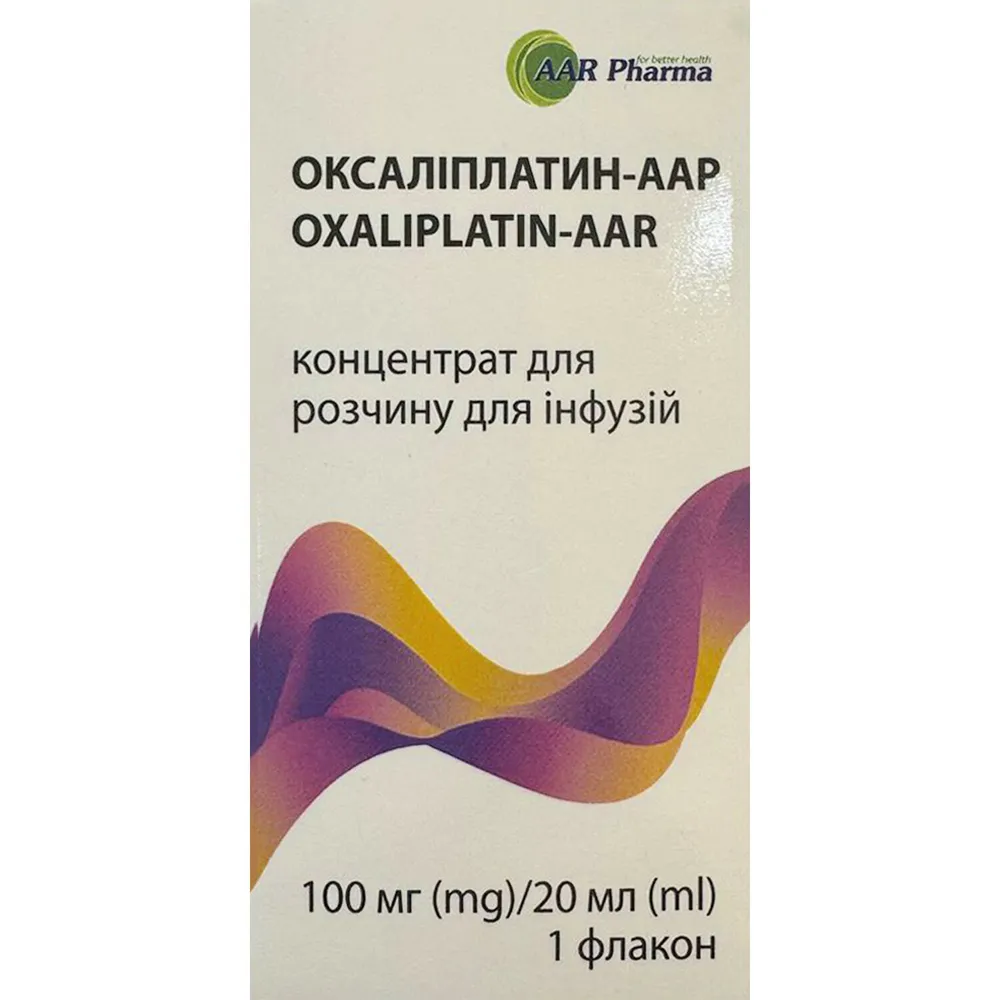
Table of Contents
INSTRUCTIONS FOR MEDICAL USE OF THE MEDICINAL PRODUCT OXALIPLATIN-AAR (OXALIPLATIN-AAR)
Composition:
Active substance: oxaliplatin;
1 ml of concentrate for infusion solution contains 5 mg of oxaliplatin;
Excipient: water for injections.
Pharmaceutical form. Concentrate for solution for infusion.
Main physicochemical properties: clear, colorless solution without visible particles.
Pharmacotherapeutic group. Antineoplastic agents. Platinum compounds. Oxaliplatin. ATC code L01XA03.
Pharmacological Properties
Pharmacodynamics
Oxaliplatin is an antineoplastic agent belonging to a new class of platinum compounds in which the platinum atom forms a complex with 1,2-diaminocyclohexane (DACH) and oxalate.
Oxaliplatin is a single enantiomer: (cis-[(1R,2R)-1,2-diaminocyclohexane-N,N′] oxalato(2-)-O,O′) platinum.
Oxaliplatin demonstrates a broad spectrum of cytotoxicity in vitro and antitumor activity in vivo in various tumor models, including human colorectal cancer models. Oxaliplatin also shows in vitro and in vivo activity against various cell lines resistant to cisplatin.
Synergistic cytotoxic effects have been observed in vitro and in vivo when oxaliplatin is combined with 5-fluorouracil (5-FU).
Although the mechanism of action is not fully understood, studies suggest that aqueous derivatives formed during the biotransformation of oxaliplatin interact with DNA by forming intra- and inter-strand cross-links. This disrupts DNA synthesis, leading to cytotoxic and antitumor effects.
The efficacy of oxaliplatin (85 mg/m² every 2 weeks) in combination with 5-FU/folinic acid (FA) in patients with metastatic colorectal cancer has been demonstrated in three clinical trials:
- In the EFCT2962 study, a comparative phase III trial of first-line therapy randomized 420 patients into two groups: those receiving 5-fluorouracil/folinic acid (5-FU/FA) alone (LV5FU2, N=210) and those receiving the combination of oxaliplatin with 5-FU/FA (FOLFOX4, N=210);
- In the EFCT4584 study, a phase III randomized trial involving 821 patients previously treated with and refractory to irinotecan (CPT-11) in combination with 5-FU/FA, patients were randomized into three groups: 5-FU/FA alone (LV5FU2, N=275), oxaliplatin alone (N=275), and the combination of oxaliplatin with 5-FU/FA (FOLFOX4, N=271);
- In the EFCT2964 study, a phase II single-arm trial without a control group, patients previously treated with and refractory to 5-FU/FA alone received combination therapy with oxaliplatin and 5-FU/FA (FOLFOX4, N=57).
Two randomized clinical trials—EFCT2962 in first-line treatment and EFCT4584 in previously treated patients—demonstrated significantly higher response rates and prolonged progression-free survival (PFS) or time to progression (TTP) compared to monotherapy with 5-FU/FA.
In the EFCT4584 trial, which included previously treated and refractory patients, the difference in median overall survival (OS) between the oxaliplatin plus 5-FU/FA combination and the control arms did not reach statistical significance.
Table 1
Response rates with FOLFOX4 versus LV5FU2 regimens
| Frequency of occurrence of therapeutic response % (CI = 95%) Independent radiological review Analysis of data from all patients enrolled in the study (ITT analysis) |
LV5FU2 |
FOLFOX4 |
Monotherapy with oxaliplatin |
| First-line therapy EFC2962 |
22 (16–27) |
49 (42−56) |
NA* |
| Response was assessed every 8 weeks |
Criterion P = 0.0001 |
||
| Patients previously treated with anticancer therapy EFC4584 (resistant to CPT-11 + 5-FU/FA) |
0.7 (0.0–2.7) |
11.1 (7.6–15.5) |
1.1 (0.2–3.2) |
| Response was assessed every 6 weeks |
Criterion P < 0.0001 |
||
| Patients previously treated with anticancer therapy EFC2964 (resistant to 5-FU/FA) Response was assessed every 12 weeks |
NA* |
23 (13–36) |
NA* |
- NA – not applicable.
Table 2
Median progression-free survival (PFS) / median time to progression (TTP): FOLFOX4 regimen compared with LV5FU2 regimen
| Median PFS/TTD (months) (CI = 95 %) Independent radiological review Intent-to-treat (ITT) analysis |
LV5FU2 |
FOLFOX4 |
Monotherapy with oxaliplatin |
| First-line therapy EFC2962 (PFS) |
6.0 (5.5–6.5) |
8.2 (7.2–8.8) |
NA* |
| Log-rank test p = 0.0003 |
|||
| Patients previously treated with anticancer therapy EFC4584 (TTP) (resistant to CPT-11 + 5-FU/FA) |
2.6 (1.8–2.9) |
5.3 (4.7–6.1) |
2.1 (1.6–2.7) |
| Log-rank test p < 0.0001 |
|||
| Patients previously treated with anticancer therapy EFC2964 (resistant to 5-FU/FA) |
NA* |
5.1 (3.1–5.7) |
NA* |
- NA – not applicable.
Table 3
Median overall survival (OS): comparison of FOLFOX4 regimen with LV5FU2 regimen
| Median OS, months (95 % CI) Analysis of data from all patients enrolled in the study (ITT analysis) |
LV5FU2 |
FOLFOX4 |
Oxaliplatin monotherapy |
| First-line therapy EFC2962 |
14.7 (13.0–18.2) |
16.2 (14.7–18.2) |
NA* |
| Log-rank test P = 0.12 |
|||
| Patients previously treated with anticancer therapy EFC4584 (CPT-11 + 5-FU/FA refractory) |
8.8 (7.3–9.3) |
9.9 (9.1–10.5) |
8.1 (7.2–8.7) |
| Log-rank test P = 0.09 |
|||
| Patients previously treated with anticancer therapy EFC2964 |
NA* |
10.8 (9.3–12.8) |
NA* |
* NA – not applicable.
Among patients who had disease symptoms at baseline and who had previously received anticancer therapy (EF04584), a statistically significant improvement in symptoms was observed to a greater extent in the group receiving oxaliplatin with 5-FU/FA than in the group receiving 5-FU/FA alone (27.7% vs. 14.6%, p≤0.0033).
In patients who had not received prior treatment (EFC2962), no statistically significant differences between the two groups were observed for any of the quality-of-life parameters.
However, quality-of-life measures related to general health status and presence or absence of pain were generally better in the control group and worse in the oxaliplatin group due to nausea and vomiting.
In the adjuvant setting of the phase III comparative MOSAIC study (EFC3313), 2246 patients were randomized into treatment groups (899 patients with stage II disease (Duke’s B2) and 1347 patients with stage III disease (Duke’s C)) following complete resection of primary colorectal cancer tumor, to receive either 5-FU/FA (LV5FU2, N=1123 (B2/C = 448/675)) or combination therapy with oxaliplatin and 5-FU/FA (FOLFOX4, N=1123 (B2/C) = 451/672).
Table 4
EFC3313: 3-year disease-free survival (ITT analysis)* for the overall patient population
| Therapeutic group |
LV5FU2 |
FOLFOX4 |
| Percentage of patients with 3-year disease-free survival (CI = 95%) |
73.3 (70.6–75.9) |
78.7 (76.2–81.1) |
| Hazard ratio (CI = 95%) |
0.76 (0.64–0.89) |
|
| Stratified log-rank test |
P = 0.0008 |
|
* The median follow-up after completion of treatment was 44.2 months (all patients were observed for at least 3 years after completion of treatment).
The study demonstrated a significant overall benefit in 3-year disease-free survival with the combination therapy of oxaliplatin and 5-FU/FA (FOLFOX4) compared to 5-FU/FA (LV5FU2) therapy.
Table 5
EFC3313: 3-year disease-free survival (ITT analysis)* by disease stage
| Stage of disease |
Stage II (Stage B2 according to Duke’s classification) |
Stage III (Stage C according to Duke’s classification) |
||
| Treatment group |
LV5FU2 |
FOLFOX4 |
LV5FU2 |
FOLFOX4 |
| Percentage of patients with 3-year recurrence-free survival (CI = 95%) |
84.3 (80.9–87.7) |
87.4 (84.3–90.5) |
65.8 (62.2–69.5) |
72.8 (69.4–76.2) |
| Hazard ratio (CI = 95%) |
0.79 (0.57–1.09) |
0.75 (0.62–0.90) |
||
| Log-rank test |
P=0.151 |
P=0.002 |
||
* The median follow-up after completion of treatment was 44.2 months (all patients were observed for at least 3 years after completion of treatment).
Overall survival (ITT analysis). At the time of analysis for 3-year disease-free survival, which was the primary endpoint of the MOSAIC study, 85.1% of patients remained alive in the FOLFOX4 treatment group compared to 83.8% in the LV5FU2 treatment group. This indicated a 10% overall reduction in the risk of death in favor of FOLFOX4, although this difference did not reach statistical significance (hazard ratio − 0.90).
Numerical values were 92.2% versus 92.4% in the subgroup of patients with stage II disease (Duke’s B2) (hazard ratio = 1.01) and 80.4% versus 78.1% in the subgroup of patients with stage III disease (Duke’s C) (hazard ratio – 0.87) for the FOLFOX4 and LV5FU2 treatment regimens, respectively.
Monotherapy with oxaliplatin was evaluated in children during two phase I studies (69 patients) and two phase II studies (166 patients). A total of 235 children (aged from 7 months to 22 years) with solid tumors received treatment. The efficacy of oxaliplatin monotherapy in treated children was not established. Enrollment in both phase II studies was discontinued due to lack of tumor response.
Pharmacokinetics.
The pharmacokinetics of individual active metabolites has not been defined. The pharmacokinetics of ultrafiltered platinum, i.e., the mixture of all forms of non-conjugated active and inactive platinum in blood plasma, after 2-hour infusions of oxaliplatin at a dose of 130 mg/m² body surface area every 3 weeks for 1–5 cycles and oxaliplatin at a dose of 85 mg/m² every 2 weeks for 1–3 cycles is presented in Table 6.
Table 6
Summary of results from the assessment of pharmacokinetic parameters of platinum in plasma ultrafiltrate following repeated administration of oxaliplatin at a dose of 85 mg/m² every 2 weeks or at a dose of 130 mg/m² every 3 weeks
| Dose |
Cmax |
AUC0-48 |
AUC |
t1/2α |
t1/2β |
t1/2γ |
Vss |
Clearance |
| μg/mL |
μg·h/mL |
μg·h/mL |
hours |
hours |
hours |
liters |
L/h |
|
| 85 mg/m² (mean standard deviation) |
0.814 0.193 |
4.19 0.647 |
4.68 1.40 |
0.43 0.35 |
16.8 5.74 |
391 406 |
440 199 |
17.4 6.35 |
| 130 mg/m² (mean standard deviation) |
1.21 0.10 |
8.20 2.40 |
11.9 4.60 |
0.28 0.06 |
16.3 2.90 |
273 19.0 |
582 261 |
10.1 3.07 |
Mean AUC 0–48 and Cmax values were determined during cycle 3 (85 mg/m²) or cycle 5 (130 mg/m²).
Mean values of AUC, Vss, and clearance were determined during cycle 1.
Cmax, AUC, AUC 0–48, Vss, and CL values were determined by non-compartmental analysis; t1/2α, t1/2β, t1/2γ were determined by compartmental analysis (combined cycles 1–3).
At the end of the 2-hour infusion, 15% of the administered platinum remains in the systemic circulation, while the remaining 85% is rapidly distributed into tissues or excreted in urine.
Irreversible binding to erythrocytes and plasma proteins results in half-lives of these matrices being close to the natural lifespan of erythrocytes and serum albumin. The mean terminal elimination half-life from blood and blood cells was also evaluated in these two studies (85 mg/m² every 2 weeks or 130 mg/m² every 3 weeks) and amounted to 771 hours and 589 to 1296 hours, respectively. No drug accumulation was observed in plasma ultrafiltrate when administered either at 85 mg/m² every 2 weeks or 130 mg/m² every 3 weeks, with steady-state being achieved in this matrix during the first treatment cycle. Parameters generally showed minor inter- and intra-patient variability.
In vitro biotransformation results from non-enzymatic degradation, and no evidence of metabolism of the diaminocyclohexane (DACH) ring by cytochrome P450 has been observed. Oxaliplatin undergoes extensive biotransformation and is not detected in its unchanged form in plasma ultrafiltrate at the end of the 2-hour infusion. Later, individual cytotoxic metabolites were detected in systemic circulation, including monochloro-, dichloro-, and diaqua-DACH-platinum derivatives, along with some inactive conjugates.
Platinum is primarily excreted via urine within the first 48 hours after administration. By day 5, approximately 54% of the total dose is recovered in urine and less than 3% in feces.
Renal impairment
In patients with renal impairment, a statistically significant decrease in clearance was observed, from 17.6 ± 2.18 L/h to 9.95 ± 1.91 L/h, together with a statistically significant reduction in volume of distribution from 330 ± 40.9 to 241 ± 36.1 L. The impact of severe renal impairment on platinum clearance has not been adequately assessed.
The effect of renal impairment on oxaliplatin disposition was studied in patients with varying degrees of renal dysfunction. Oxaliplatin was administered at a dose of 85 mg/m² to control patients with normal renal function (CLcr > 80 mL/min, n=12), and to patients with mild (CLcr 50–80 mL/min, n=13) and moderate (CLcr 30–49 mL/min, n=11) renal impairment, and at a dose of 65 mg/m² to patients with severe renal impairment (CLcr < 30 mL/min, n=5). Median exposure to the drug was 9, 4, 6, and 3 cycles, respectively, and pharmacokinetic data during cycle 1 were obtained from 11, 13, 10, and 4 patients, respectively.
An increase in AUC of platinum in plasma ultrafiltrate (PUF) and a decrease in total and renal clearance (CL) and Vss were observed with increasing severity of renal impairment, particularly in the small group of patients with severe renal impairment: the point estimate (90% CI) of the calculated mean ratio relative to renal function, compared to normal renal function, for AUC was 1.36 (1.08; 1.71), 2.34 (1.82; 3.01), and 4.81 (3.49; 6.64) in patients with mild, moderate, and severe renal impairment, respectively.
Oxaliplatin elimination is strongly correlated with creatinine clearance. The total clearance of platinum in PUF was 0.74 (0.59; 0.92), 0.43 (0.33; 0.55), and 0.21 (0.15; 0.29), and Vss was 0.52 (0.41; 0.65), 0.73 (0.59; 0.91), and 0.27 (0.20; 0.36) in patients with mild, moderate, and severe renal impairment, respectively. Thus, total systemic clearance of platinum in PUF decreased by 26%, 57%, and 79% in mild, moderate, and severe renal impairment, respectively, compared to patients with normal renal function.
Renal clearance of platinum in PUF decreased by 30% in mild, 65% in moderate, and 84% in severe renal impairment compared to patients with normal renal function.
An increase in the beta-phase elimination half-life of platinum in PUF was observed with increasing severity of renal impairment, predominantly in the group of patients with severe renal impairment. Although the number of patients with severe renal dysfunction was small, these data raise concerns regarding patients with severe renal impairment and should be carefully considered when prescribing oxaliplatin to patients with renal impairment (see sections «Contraindications», «Special precautions», and «Dosage and administration»).
Clinical characteristics.
Indications.
To be used in combination with 5-fluorouracil (5-FU) and folinic acid for:
- adjuvant treatment of stage III colorectal cancer (stage C according to Duke’s classification), after complete resection of the primary tumor;
- treatment of metastatic colorectal cancer.
Contraindications.
The drug is contraindicated in patients:
- with hypersensitivity to oxaliplatin;
- during breastfeeding;
- with myelosuppression (neutrophil count < 2 × 10⁹/l and/or platelet count < 100 × 109/l) prior to the start of the first treatment cycle;
- with peripheral sensory neuropathy associated with functional impairments prior to the start of the first treatment course;
- with severe renal impairment (creatinine clearance < 30 ml/min) (see section "Pharmacological properties. Pharmacodynamics").
Interaction with other medicinal products and other types of interactions.
In patients who received a single dose of oxaliplatin 85 mg/m2 immediately before administration of 5-FU, no changes in the pharmacological effect of 5-fluorouracil were observed.
In vitro studies showed no significant displacement of plasma protein-bound oxaliplatin by the following medicinal products: erythromycin, salicylates, granisetron, paclitaxel, and sodium valproate.
Caution is required and careful monitoring of the QT interval is necessary when oxaliplatin is used concomitantly with other medicinal products known to prolong the QT interval (see section "Special precautions"). When oxaliplatin is used concomitantly with other medicinal products that may be associated with the risk of rhabdomyolysis, caution is recommended (see section "Special precautions").
Live or live attenuated vaccines should be avoided in patients receiving oxaliplatin (see section "Special precautions").
Special precautions for use.
| Oxaliplatin should only be administered in specialized oncology departments and under the supervision of an experienced oncologist. |
Renal impairment
Patients with mild to moderate renal impairment should be closely monitored for adverse reactions, and dosage adjustments should be made according to the level of toxicity (see section "Pharmacological properties. Pharmacodynamics").
Hypersensitivity reactions
Particular care should be taken in monitoring patients with a history of allergic reactions to other platinum-containing drugs. If anaphylactic reactions occur during infusion, administration of the drug should be immediately discontinued and appropriate symptomatic treatment initiated. Re-administration of oxaliplatin to such patients is contraindicated. Cases of cross-reactions with all platinum compounds have been reported, sometimes resulting in fatal outcomes.
In the event of extravasation of the drug, infusion should be immediately stopped and standard local symptomatic treatment initiated.
Neurological symptoms
Neurological toxicity of oxaliplatin should be carefully monitored, especially when used in combination with medicinal products known for specific neurotoxicity. A neurological examination of the patient should be performed before each administration and periodically thereafter.
In patients who develop laryngopharyngeal dysesthesia during or within several hours after the 2-hour oxaliplatin infusion (see section "Adverse reactions"), the next dose should not be administered earlier than 6 hours after the previous one. To prevent such dysesthesia, patients should be informed about the necessity to avoid cold exposure and swallowing fresh/cold food and/or drinks for several hours after drug administration.
Peripheral neuropathy
If neurological symptoms (paresthesia, dysesthesia) occur, dose adjustments of oxaliplatin should be based on the duration and severity of these symptoms:
- If symptoms persist for more than 7 days and are bothersome to the patient, the next dose of oxaliplatin should be reduced by 25%;
- If paresthesia without functional impairment persists until the next treatment cycle, the next dose of oxaliplatin should be reduced by 25%;
- If paresthesia with functional impairment persists until the next cycle, oxaliplatin treatment should be discontinued;
- If these symptoms resolve after discontinuation of oxaliplatin, re-initiation of treatment may be considered.
Patients should be informed that symptoms of peripheral sensory neuropathy may persist after discontinuation of treatment. Moderate localized paresthesia or paresthesia interfering with functional activity may be observed for more than 3 years after completion of adjuvant therapy.
Reversible posterior leukoencephalopathy syndrome (RPLS)
Cases of reversible posterior leukoencephalopathy syndrome (RPLS), also known as posterior reversible encephalopathy syndrome (PRES), have been reported in patients receiving oxaliplatin as part of combination chemotherapy. RPLS is a rare, rapidly developing, reversible neurological disorder that may present with seizures, arterial hypertension, headache, confusion, blindness, and other visual and neurological disturbances (see section "Adverse reactions"). The diagnosis of RPLS is confirmed by brain imaging techniques, preferably MRI (magnetic resonance imaging).
Nausea, vomiting, diarrhea, dehydration, and hematological changes
Gastrointestinal toxicity of oxaliplatin, manifested as nausea and vomiting, requires the use of antiemetic agents for prophylactic and/or therapeutic purposes (see section "Adverse reactions").
Severe diarrhea and/or vomiting may lead to dehydration, paralytic ileus, intestinal obstruction, hypokalemia, metabolic acidosis, and renal impairment, especially when oxaliplatin is used in combination with 5-FU.
Cases of intestinal ischemia, including fatal outcomes, have been reported with the use of oxaliplatin. In case of intestinal ischemia, oxaliplatin should be discontinued and appropriate treatment initiated (see section "Adverse reactions").
If hematological toxicity develops (neutrophil count <1.5x10⁹/L or platelet count <50x109/L), the next treatment cycle should be delayed until acceptable hematological parameters are restored. A complete blood count with differential leukocyte count should be performed before the start of oxaliplatin therapy and prior to each subsequent cycle. Myelosuppressive effects of the drug may be additive to those of concurrently administered chemotherapeutic agents. Patients with severe and persistent myelosuppression are at high risk of infectious diseases. Cases of sepsis, neutropenic sepsis, and septic shock, including fatal outcomes, have been observed in patients receiving oxaliplatin (see section "Adverse reactions"). In case of any of these events, oxaliplatin should be discontinued.
Patients should be informed to seek immediate medical attention if diarrhea/vomiting, mucositis/stomatitis, or neutropenia occur after administration of oxaliplatin and 5-fluorouracil, to receive appropriate treatment for these symptoms.
If mucositis/stomatitis develops, with or without neutropenia, the next administration of the drug should be postponed until signs of mucositis/stomatitis subside to Grade 1 severity or lower and/or until neutrophil count reaches >1.5x10⁹/L. When oxaliplatin is combined with 5-fluorouracil (with or without folinic acid), dose adjustments of 5-fluorouracil are usually recommended due to its toxicity.
In case of Grade 4 diarrhea (WHO classification), Grade 3–4 neutropenia (neutrophil count <1x10⁹/L), febrile neutropenia (elevated body temperature of unknown origin without clinically or microbiologically documented infection with absolute neutrophil count <1.0x10⁹/L), single episode of body temperature >38.3°C or sustained temperature >38°C for more than 1 hour, or Grade 3–4 thrombocytopenia (platelet count <50x109/L), the dose of oxaliplatin should also be reduced by 25% along with dose reduction of 5-fluorouracil.
Pulmonary manifestations
In case of respiratory symptoms of unknown etiology, such as non-productive cough, dyspnea, crackles, or pulmonary infiltrates on chest X-ray, treatment with oxaliplatin should be discontinued until interstitial pneumonitis or pulmonary fibrosis is ruled out by additional lung examinations (see section "Adverse reactions").
Blood system disorders
Hemolytic-uremic syndrome (HUS) is a life-threatening adverse reaction (frequency not known). Administration of oxaliplatin should be discontinued at the first signs of microangiopathic hemolytic anemia, as well as sudden drop in hemoglobin levels accompanied by thrombocytopenia, elevated bilirubin, creatinine, blood urea nitrogen, and serum lactate dehydrogenase (LDH). Renal failure may be irreversible after discontinuation of the drug and may require dialysis.
Cases of disseminated intravascular coagulation (DIC), including fatal cases, have been reported in patients receiving oxaliplatin. In case of DIC, oxaliplatin should be discontinued and appropriate treatment initiated (see section "Adverse reactions"). Particular attention should be paid to patients with conditions associated with DIC, such as infections, sepsis, etc.
QT interval prolongation
Prolongation of the QT interval may increase the risk of ventricular arrhythmias, including torsade de pointes, including polymorphic ventricular tachycardia (torsade de pointes), which may be fatal (see section "Adverse reactions"). Careful periodic monitoring of the QT interval before and after administration of oxaliplatin is required. Special monitoring is indicated for patients with a history of QT interval prolongation or predisposition to QT prolongation, patients taking medicinal products known to prolong the QT interval, and patients with electrolyte imbalances such as hypokalemia, hypocalcemia, or hypomagnesemia.
Rhabdomyolysis
Cases of rhabdomyolysis, including fatal cases, have been reported in patients receiving oxaliplatin. If muscle pain and swelling occur in combination with weakness, elevated body temperature, or darkening of urine, oxaliplatin should be discontinued. In confirmed cases of rhabdomyolysis, appropriate treatment should be initiated. When oxaliplatin is used concomitantly with medicinal products associated with rhabdomyolysis, close monitoring of the patient is recommended (see sections "Interaction with other medicinal products and other forms of interaction" and "Adverse reactions").
Gastrointestinal ulceration / gastrointestinal bleeding and perforation of gastrointestinal ulcers
Oxaliplatin treatment may lead to gastrointestinal ulceration and potential complications such as gastrointestinal bleeding and perforation, which may be fatal. In case of gastrointestinal ulceration, oxaliplatin should be discontinued and appropriate treatment initiated (see section "Adverse reactions").
Immunosuppressive effect/increased susceptibility to infections
Administration of live or live-attenuated vaccines to patients whose immune system is weakened by chemotherapy may lead to serious or fatal infections. Patients receiving oxaliplatin should avoid vaccination with live vaccines.
Inactivated or killed vaccines may be administered; however, the response to such vaccines may be reduced.
Hepatic manifestations
In case of liver function abnormalities in laboratory tests, splenomegaly, or portal hypertension not caused by liver metastases, the possibility of very rare cases of drug-induced hepatic vascular disorders should be considered.
Contraception in men and women of reproductive age
Due to the potential genotoxic effects of oxaliplatin, appropriate contraceptive measures should be taken during and after discontinuation of therapy. Considering the prolonged elimination of the drug (see section "Pharmacological properties. Pharmacodynamics"), as a precautionary measure, women of childbearing age are advised to use contraception for 15 months after discontinuation of treatment and men for 12 months after discontinuation of treatment (see section "Use during pregnancy or breastfeeding").
Fertility in men and women
Male patients are advised to preserve sperm before starting treatment, as oxaliplatin may have an antifertility effect, which may be irreversible (see section "Use during pregnancy or breastfeeding").
Other warnings
Peritoneal hemorrhage may occur if oxaliplatin is administered intraperitoneally (which is not a recommended route of administration).
Use during pregnancy or breastfeeding.
Contraception in men and women of reproductive age
Due to the potential genotoxic effects of oxaliplatin during and after completion of therapy, appropriate contraceptive measures should be taken.
Considering the prolonged elimination of the active substance (see section "Pharmacological properties"), as a precautionary measure, women of childbearing age are advised to use contraception for 15 months after discontinuation of treatment and men for 12 months after discontinuation of treatment.
Pregnancy. Currently, there are no data on the safety of oxaliplatin use for treatment in pregnant women. Reproductive toxicity was observed in animal studies. Therefore, oxaliplatin should not be administered to pregnant women or women of childbearing potential who are not using contraception. Oxaliplatin should be considered only after proper assessment by the patient of the risk to the fetus and with patient consent.
Lactation period. Excretion of oxaliplatin into breast milk has not been studied. Breastfeeding is contraindicated during treatment with oxaliplatin.
Fertility in male and female patients. Oxaliplatin may negatively affect fertility.
Men should be advised before the start of treatment to consult regarding sperm cryopreservation, as oxaliplatin may negatively affect fertility, and the consequences of such effects may be irreversible (see section "Special precautions for use").
After treatment with oxaliplatin, patients planning pregnancy are advised to seek genetic counseling.
Ability to affect reaction speed when driving or operating machinery.
The effect on the ability to drive has not been studied. However, since administration of oxaliplatin increases the risk of dizziness, nausea, vomiting, and other neurological symptoms affecting gait and balance, treatment may have a minor or moderate effect on the ability to drive.
Visual disturbances, including temporary loss of vision (which resolves after discontinuation of therapy), may affect patients' ability to drive vehicles and operate machinery. Therefore, patients should be warned about the possible impact of these manifestations on their ability to drive vehicles and operate machinery.
Method of Administration and Dosage
The medication is intended only for the treatment of adults
The recommended dose of oxaliplatin for adjuvant therapy is 85 mg/m² body surface area, administered as an intravenous infusion every 2 weeks, for a total of 12 cycles (overall treatment duration: 6 months).
The recommended dose of oxaliplatin for the treatment of metastatic colorectal cancer is 85 mg/m² body surface area, administered as an intravenous infusion every 2 weeks until disease progression or until signs of intolerable toxicity occur.
Dosage should be adjusted according to individual tolerance to the drug (see section "Special Instructions").
Oxaliplatin should always be administered before fluoropyrimidines, for example before 5-FU
Oxaliplatin should be administered as a 2–6 hour intravenous infusion, diluted in 250–500 mL of 5 % glucose solution (50 mg/mL), to achieve a concentration between 0.2 mg/mL and 0.7 mg/mL; the concentration of 0.7 mg/mL is the highest used in clinical practice for the 85 mg/m² dose of oxaliplatin.
Oxaliplatin is generally used in combination with 5-fluorouracil, which is administered as a prolonged infusion. For a regimen repeated every two weeks, a combination of bolus administration and continuous infusion of 5-FU is recommended.
Special Patient Categories
Patients with renal impairment. Oxaliplatin is contraindicated in patients with severe renal impairment (see sections "Pharmacological Properties. Pharmacodynamics" and "Contraindications").
For patients with mild to moderate renal dysfunction, the recommended dose of oxaliplatin is 85 mg/m² (see sections "Pharmacological Properties" and "Special Instructions").
Hepatic impairment. In a phase I study involving patients with various degrees of hepatic impairment, the frequency and severity of hepatobiliary disorders were associated with disease progression and liver function abnormalities.
During clinical trials, no specific dose adjustments were made for patients with hepatic dysfunction.
Elderly patients. No increased toxicity of oxaliplatin was observed when administered as monotherapy or in combination with 5-FU in patients aged 65 years and older. Therefore, no special dose adjustment is required for elderly patients.
Children. There are no established indications for the use of oxaliplatin in children. The efficacy of oxaliplatin as monotherapy in children with solid tumors has not been established (see section "Pharmacological Properties").
Method of Administration
Oxaliplatin must be diluted before administration. Only the recommended diluent—5 % glucose solution—should be used to reconstitute the concentrate for infusion solution.
Oxaliplatin should be administered as an intravenous infusion. Administration of the drug does not require hyperhydration.
Oxaliplatin, diluted in 250–500 mL of 5 % glucose solution (50 mg/mL) to achieve a concentration of at least 0.2 mg/mL, should be infused over 2–6 hours into a central or peripheral vein.
Oxaliplatin infusion must always precede 5-FU infusion.
If hematoma develops at the injection site, administration must be stopped immediately.
Instructions for Use and Disposal
Preparation of oxaliplatin solutions requires adherence to safety precautions, as with all potentially toxic substances.
Handling this cytotoxic agent requires healthcare personnel to follow all safety precautions to ensure protection of the worker and the surrounding environment.
Preparation of injectable solutions of cytotoxic agents should be performed by an experienced specialist familiar with the handling of such medications, under conditions ensuring environmental protection and, above all, protection of personnel handling these drugs. A specially designated area must be available for preparation procedures. Smoking, eating, or drinking are prohibited in the designated area.
Personnel must be provided with appropriate materials for handling the drug, including medical gowns with long sleeves, protective masks, head covers, protective goggles, sterile disposable gloves, protective covering for the work surface, and containers and bags for waste collection.
Particular caution is required when handling patient excreta and vomitus.
Pregnant women should be advised to avoid handling cytotoxic agents.
Any damaged packaging must be handled with these safety precautions and considered contaminated waste. Contaminated waste must be incinerated in rigid, sealed containers with appropriate labeling (see "Disposal").
If the oxaliplatin concentrate, reconstituted solution, or infusion solution comes into contact with the skin, the affected area should be immediately and thoroughly rinsed with water.
If the oxaliplatin concentrate, reconstituted solution, or infusion solution comes into contact with mucous membranes, the affected area should be immediately and thoroughly rinsed with water.
Special Precautions for Administration
- Never administer the drug in undiluted form.
- Use only the recommended diluent.
Instructions for Administration of Oxaliplatin with Folinic Acid (Disodium Folinate or Calcium Folinate)
Intravenous infusion of oxaliplatin 85 mg/m² in 250–500 mL of 5 % glucose solution is administered simultaneously with intravenous infusion of folinic acid in 5 % glucose solution. The infusion lasts 2 to 6 hours and is delivered via a Y-type infusion system with a side port immediately before the infusion site.
These two drugs must not be mixed in the same infusion bag. Folinic acid must not contain tromethamine as an excipient. It should be diluted only with 5 % glucose solution and never with alkaline solutions, sodium chloride, or chloride-containing solutions.
Instructions for Administration with 5-FU
Oxaliplatin should always be administered before fluoropyrimidines, for example before 5-FU.
After oxaliplatin infusion, the infusion system should be flushed before administering 5-FU.
For additional information on drugs that can be combined with oxaliplatin, refer to the instructions for medical use provided by the respective manufacturer.
Visual inspection of the concentrate for infusion solution should be performed before administration. Only clear solutions without particles should be used.
The medication in the vial is intended for single use only. Any unused solution must be discarded.
Dilution prior to Infusion
Withdraw the required amount of concentrate from the vial and dilute it in 250–500 mL of 5 % glucose solution to achieve an oxaliplatin concentration between 0.2 mg/mL and 0.7 mg/mL. The physical and chemical stability of oxaliplatin has been demonstrated at concentrations between 0.2 mg/mL and 2 mg/mL. Administer as an intravenous infusion.
After dilution with 5 % glucose solution, the physicochemical stability of the solution is maintained for 48 hours at 2–8 °C or 24 hours at 25 °C.
However, from a microbiological standpoint, the prepared solution should be used immediately.
If the solution is not administered immediately after preparation, responsibility for adherence to storage conditions and duration lies solely with the healthcare professional using the solution. The storage period must not exceed 24 hours at 2–8 °C, provided dilution was performed under aseptic conditions in controlled and standardized settings.
Visual inspection of the solution should be performed before administration. Only clear solutions without mechanical inclusions should be used.
Never use chloride-containing solutions or sodium chloride solution for dilution.
Compatibility of the oxaliplatin infusion solution has been tested with standard PVC infusion systems.
Infusion
Oxaliplatin administration does not require prehydration. Oxaliplatin, diluted in 250–500 mL of 5 % glucose solution to achieve a concentration of at least 0.2 mg/mL, should be infused into a peripheral or central vein over 2–6 hours. When oxaliplatin is used in combination with 5-FU, the oxaliplatin infusion must precede 5-FU administration.
Disposal
Any unused medication and all materials used for dissolving and administering oxaliplatin must be destroyed according to standard procedures for disposal of cytotoxic waste, in compliance with current regulations on toxic waste disposal.
Children. The medication is intended for use in adults only. There are no established indications for the use of oxaliplatin in children. The efficacy of oxaliplatin as monotherapy in children with solid tumors has not been established (see section "Pharmacological Properties").
Overdose.
There is no specific antidote for oxaliplatin. In case of overdose, an increase in the severity of adverse effects may be expected. Regular monitoring of hematological parameters is required. Treatment of other manifestations of intoxication is symptomatic.
Adverse reactions.
During combined therapy with oxaliplatin and 5-FU/FA, adverse reactions most commonly affect the gastrointestinal tract (diarrhea, nausea, vomiting, and mucositis), the hematopoietic system (neutropenia, thrombocytopenia), and the nervous system (acute and dose-dependent, cumulative peripheral sensory neuropathy). Overall, the frequency and severity of adverse reactions during combined oxaliplatin and 5-FU/FA therapy are higher than with 5-FU/FA therapy alone.
The adverse reactions listed below were observed during clinical studies and reported from post-marketing experience.
Adverse reactions are classified by organ systems and frequency: very common (≥1/10), common (≥1/100 to <1/10), uncommon (≥1/1000 to <1/100), rare (≥1/10000 to <1/1/1000), very rare (<1/10000), and frequency not known (cannot be estimated from available data).
| System organ classes |
Adverse reactions by frequency |
|||
| Very common |
Common |
Uncommon |
Rare |
|
| Infections and infestations* |
Infections |
Rhinitis, upper respiratory tract infections, neutropenic sepsis |
Sepsis+ |
|
| Blood and lymphatic system disorders* |
Anemia, neutropenia, thrombocytopenia, leukopenia, lymphopenia |
Febrile neutropenia |
Immunoallergic thrombocytopenia, hemolytic anemia*** |
|
| Immune system disorders* |
Allergy/allergic reaction++ |
|||
| Metabolism and nutrition disorders |
Anorexia, hyperglycemia, hypokalemia, hypernatremia |
Dehydration, hypocalcemia |
Metabolic acidosis |
|
| Psychiatric disorders |
Depression, insomnia |
Nervousness |
||
| Nervous system disorders* |
Peripheral sensory neuropathy, sensory disturbances, taste disturbances, headache |
Dizziness, motor neuritis, meningism |
Dysarthria; reversible posterior leukoencephalopathy syndrome (PRES) (see section "Special precautions") |
|
| Eye disorders |
Conjunctivitis, vision disorders |
Transient decrease in visual acuity, visual field defects, optic neuritis; transient loss of vision, which resolves after discontinuation of therapy |
||
| Ear and labyrinth disorders |
Ototoxicity |
Deafness |
||
| Vascular disorders |
Bleeding, flushing, deep vein thrombophlebitis, arterial hypertension, thromboembolism |
|||
| Respiratory, thoracic and mediastinal disorders |
Dyspnea, cough, nosebleeds |
Hiccups, pulmonary artery embolism |
Acute interstitial lung diseases, sometimes fatal; pulmonary fibrosis** |
|
| Gastrointestinal disorders* |
Nausea, diarrhea, vomiting, stomatitis/mucositis, abdominal pain, constipation |
Dyspepsia, gastroesophageal reflux, gastrointestinal hemorrhage, rectal hemorrhage |
Intestinal paresis, intestinal obstruction |
Colitis, including Clostridium difficile-induced diarrhea; diarrhea, pancreatitis |
| Skin and subcutaneous tissue disorders |
Skin disorders, alopecia, |
Skin desquamation (e.g., palmar-plantar syndrome), erythematous rashes, rash, hyperhidrosis, nail disorders |
||
| Musculoskeletal and connective tissue disorders |
Back pain |
Arthralgia, bone pain |
||
| Renal and urinary disorders |
Hematuria, dysuria, urination frequency disturbances |
|||
| General disorders and administration site conditions |
Weakness, pyrexia+++, asthenia, pain, injection site reaction++++ |
|||
| Investigations |
Elevated liver enzymes; elevated alkaline phosphatase in blood; elevated bilirubin in blood; elevated LDH in blood; weight gain (in adjuvant therapy) |
Elevated creatinine; weight loss (in treatment of metastatic cancer) |
||
| Injury, poisoning and procedural complications |
Fall |
|||
* See detailed information in the section provided below.
** See section "Special precautions".
***Microangiopathic hemolytic anemia associated with hemolytic-uremic syndrome (HUS), or hemolytic anemia with a positive Coombs test (see section "Special precautions").
- Septic neutropenia is frequently observed, including cases with fatal outcome.
++ Very common allergic/allergic-type reactions, predominantly occurring during infusion and sometimes resulting in death. Common allergic reactions include skin rashes (particularly urticaria), conjunctivitis, and rhinitis. Anaphylactic reactions, including bronchospasm, angioneurotic edema, arterial hypotension, chest pain, and anaphylactic shock, or anaphylactoid reactions, have been reported. Hypersensitivity reactions of delayed type have also been reported, occurring several hours or even days after infusion.
+++ Very commonly observed elevation of body temperature and chills (shivering), either of infectious origin (with or without febrile neutropenia) or possibly of immunological origin.
++++ Reactions at the injection site have been observed, including localized pain, erythema, swelling, and thrombosis. Extravasation may also cause local pain and inflammation, which can be severe and lead to complications, including necrosis, especially when oxaliplatin is administered intravenously into a peripheral vein (see section "Special precautions").
Description of selected adverse reactions
Blood and lymphatic system disorders
Frequency of adverse reactions in patients (%), by severity grade
| Oxaliplatin in combination with 5-FU/FA 85 mg/m2 every 2 weeks |
Treatment of metastases |
Adjuvant therapy |
||||
| All grades |
Grade 3 |
Grade 4 |
All grades |
Grade 3 |
Grade 4 |
|
| Anemia |
82.2 |
3 |
< 1 |
75.6 |
0.7 |
0.1 |
| Neutropenia |
71.4 |
28 |
14 |
78.9 |
28.8 |
12.3 |
| Thrombocytopenia |
71.6 |
4 |
< 1 |
77.4 |
1.5 |
0.2 |
| Febrile neutropenia |
5.0 |
3.6 |
1.4 |
0.7 |
0.7 |
0.0 |
Rare (from ≥1/10,000 to <1/1,000): disseminated intravascular coagulation (DIC syndrome), including fatal cases (see section "Special precautions").
Adverse reactions observed during the post-marketing period (frequency unknown): hemolytic uremic syndrome, autoimmune pancytopenia, pancytopenia, secondary leukemia.
Infectious and parasitic diseases.
Frequency of adverse reactions in patients (%)
| Oxaliplatin in combination with 5-FU/FA 85 mg/m2 every 2 weeks |
Treatment of metastases (all grades) |
Adjuvant therapy (all grades) |
| Sepsis (including sepsis and neutropenic sepsis) |
1.5 |
1.7 |
Adverse reactions observed in the post-marketing period (frequency unknown): septic shock, including fatal outcomes.
Immune system disorders
| Oxaliplatin in combination with 5-FU/FA 85 mg/m2 every 2 weeks |
Treatment of metastases |
Adjuvant therapy |
||||
| All grades |
Grade 3 |
Grade 4 |
All grades |
Grade 3 |
Grade 4 |
|
| Allergic reactions/allergy |
9.1 |
1 |
< 1 |
10.3 |
2.3 |
0.6 |
Adverse reactions observed during the post-marketing period (frequency unknown): delayed-type hypersensitivity reactions.
Central and peripheral nervous system
It is known that the neurotoxicity of oxaliplatin is dose-dependent. It mainly manifests as sensory peripheral neuropathies characterized by dysesthesia and/or paresthesia of the extremities, with or without associated cramps, often triggered by cold. These symptoms are observed in approximately 95 % of patients receiving treatment. The duration of these symptoms, which usually regress between treatment cycles, increases with the number of treatment cycles administered.
Depending on the duration of symptoms such as pain and/or functional impairment (see section "Special instructions for use"), dose adjustment or even discontinuation of treatment may be necessary. Functional impairment, such as difficulty performing fine motor tasks, may result from sensory dysfunction. The risk of developing persistent symptoms at a cumulative dose of approximately 850 mg/m² (i.e., 10 cycles) is about 10 %, and at a cumulative dose of 1020 mg/m² (i.e., 12 cycles) is about 20 %.
In most cases, a positive evolution of neurological symptoms or complete symptom resolution is observed at the time of treatment discontinuation.
Six months after the end of adjuvant therapy for colorectal cancer, 87 % of patients showed no symptoms or only mild symptoms. After 3 years or more, approximately 3 % of patients had either persistent localized moderate paresthesia (2.3 %) or paresthesia that may interfere with functional activity (0.5 %).
Acute neurosensory disturbances have been reported. These symptoms begin within a few hours after drug administration and are often triggered by exposure to cold. They are characterized by transient paresthesia, dysesthesia, and hypoesthesia. This acute pharyngolaryngeal dysesthesia syndrome, estimated to occur in 1 to 2 % of patients, is characterized by subjective sensations of dysphagia or dyspnea/choking without objective signs of respiratory distress syndrome (not accompanied by cyanosis or hypoxia); or laryngospasm, or bronchospasm (without stridor or wheezing).
Although antihistamines and bronchodilators have been administered in such cases, these symptoms resolve rapidly even without treatment. Prolonging the infusion duration in subsequent cycles reduces the frequency of this syndrome (see section "Special instructions for use").
Other observed symptoms include jaw spasms, muscle spasms, involuntary muscle contractions, myoclonus, coordination disorders, gait disturbances, ataxia, balance disorders, throat or chest tightness, depression, discomfort, and pain. Cranial nerve involvement may also occur, either simultaneously or separately, presenting as ptosis, diplopia, aphonia, dysphonia, hoarseness (sometimes referred to as vocal cord paralysis), tongue dysesthesia, or dysarthria (sometimes referred to as aphasia), trigeminal neuralgia, facial or ocular pain, decreased visual acuity, or visual field disturbances.
Other neurological symptoms such as dysarthria, loss of deep tendon reflexes, and Lhermitte's sign have been observed during oxaliplatin treatment. Isolated cases of optic neuritis have also been reported.
Adverse reactions observed during the post-marketing period (frequency unknown): seizures, ischemic and hemorrhagic cerebrovascular events, falls.
Cardiac disorders
Adverse reactions observed during the post-marketing period (frequency unknown): QT interval prolongation, which may lead to ventricular arrhythmias, including polymorphic ventricular tachycardia (torsade de pointes), potentially fatal (see section "Special instructions for use"), acute coronary syndrome, including myocardial infarction, coronary arteriospasm, and angina in patients receiving oxaliplatin in combination with 5-FU or bevacizumab.
Respiratory, thoracic and mediastinal disorders
Adverse reactions observed during the post-marketing period (frequency unknown): laryngospasm; pneumonia and bronchopneumonia, including fatal cases.
Gastrointestinal disorders
Frequency of adverse reactions in patients (%), by severity grade:
| Oxaliplatin in combination with 5-FU/FA 85 mg/m2 every 2 weeks |
Treatment of metastases |
Adjuvant therapy |
||||
| All grades |
Grade 3 |
Grade 4 |
All grades |
Grade 3 |
Grade 4 |
|
| Nausea |
69.9 |
8 |
< 1 |
73.7 |
4.8 |
0.3 |
| Diarrhea |
60.8 |
9 |
2 |
56.3 |
8.3 |
2.5 |
| Vomiting |
49 |
6 |
1 |
47.2 |
5.3 |
0.5 |
| Mucositis/stomatitis |
39.9 |
4 |
< 1 |
42.1 |
2.8 |
0.1 |
Treatment or prophylactic administration of potent antiemetic agents is indicated.
Severe diarrhoea/vomiting may lead to dehydration, paralytic ileus, intestinal obstruction, hypokalaemia, metabolic acidosis and renal failure, especially when oxaliplatin is used in combination with 5-FU (see section "Special precautions for use").
Adverse reactions observed in the post-marketing period (frequency unknown): intestinal ischaemia, including fatal cases (see section "Special precautions for use"), oesophagitis.
Gastrointestinal ulcers and perforations, which may be fatal (see section "Special precautions for use").
Hepatobiliary disorders
Very rare (< 1/10,000): sinusoidal obstruction syndrome of the liver, also known as veno-occlusive liver disease, or related pathological conditions, including peliosis hepatis, nodular regenerative hyperplasia and perisinusoidal fibrosis. Clinical manifestations may include portal hypertension and/or elevated transaminase levels.
Musculoskeletal and connective tissue disorders
Adverse reactions observed in the post-marketing period (frequency unknown): rhabdomyolysis, including fatal cases (see section "Special precautions for use").
Renal and urinary disorders
Very rare (< 1/10,000): acute tubular necrosis, acute interstitial nephritis and acute renal failure.
Skin and subcutaneous tissue disorders
Adverse reactions observed in the post-marketing period (frequency unknown): leukocytoclastic vasculitis.
Shelf life. 2 years.
Storage conditions. Store in the original packaging in a light-protected place at a temperature not exceeding 30 °C. Keep out of reach of children. Do not freeze.
Incompatibilities.
Never mix the diluted preparation with other medicinal products in the same vial or infusion system unless specified in the instructions for medical use.
Do not administer simultaneously with alkaline medicinal products or solutions (especially with 5-FU, alkaline solutions, tromethamine, and medicinal products containing folic acid and tromethamine as excipients).
Alkaline solutions and products negatively affect the stability of oxaliplatin.
Do not dilute with saline solutions containing chlorides (including Ca, K and Na chlorides).
Do not mix with other medicinal products in the same infusion vial or intravenous infusion system.
Do not use injectable preparations containing aluminium.
Packaging.
10 ml (50 mg) or 20 ml (100 mg) in a vial; 1 or 10 vials with the instructions for medical use in a cardboard box.
Prescription status. Prescription only.
Manufacturer.
VENUS REMEDIES LIMITED.
Manufacturer's address and location of its operations.
Hill Top Industrial Estate, Jharmajri, EPIP Phase-I (Extn), Bhatoli Kalan, Baddi, Distt. Solan, Himachal Pradesh, 173205, India.
Marketing Authorisation Holder.
AAR PHARMA FZ-LLC.
Address of the Marketing Authorisation Holder.
Premises 702, 7th Floor, Building: DSC Tower, P.O. Box - 478837, Dubai, United Arab Emirates.