Ocrevus
Ukraine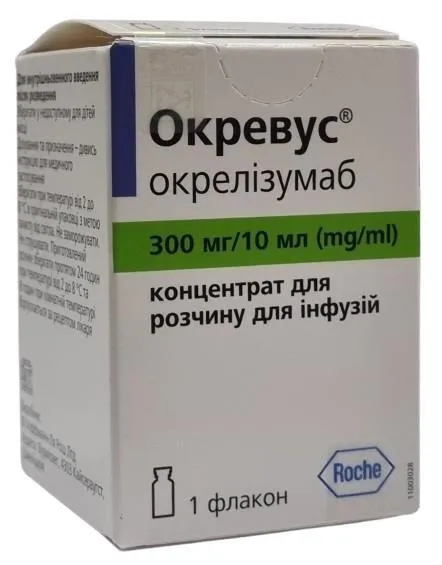
Table of Contents
INSTRUCTIONS FOR MEDICAL USE OF THE MEDICINAL PRODUCT OCREVUS® (OCREVUS®)
Composition:
Active substance: ocrelizumab;
One vial (10 ml concentrate for solution for infusion) contains 300 mg (30 mg/ml) of ocrelizumab;
Excipients: sodium acetate trihydrate; glacial acetic acid; α,α-trehalose dihydrate; polysorbate 20; water for injections.
Pharmaceutical form. Concentrate for solution for infusion.
Main physicochemical properties: the preparation is a clear or slightly opalescent liquid, ranging in color from colorless to slightly brown.
Pharmacotherapeutic group. Antineoplastic and immunomodulating agents. Immunosuppressants. Monoclonal antibodies.
ATC code L04A G08.
Pharmacological properties.
Pharmacodynamics.
Mechanism of action
Ocrelizumab is a recombinant humanized monoclonal antibody targeting B-cells expressing CD20. Ocrelizumab is a glycosylated immunoglobulin G1 (IgG1) with a molecular weight of approximately 145 kDa.
The exact mechanism by which ocrelizumab exerts its therapeutic effect in multiple sclerosis is unknown; however, it is believed that its mechanism of action involves binding to CD20, a receptor present on the surface of pre-B and mature B-lymphocytes.
Following binding to this receptor on the surface of B-lymphocytes, ocrelizumab leads to antibody-dependent cellular cytotoxicity and complement-mediated lysis.
CD19+ B-cell counts are used to determine B-cell numbers, as the presence of Ocrevus® affects CD20 assay results. Treatment with Ocrevus® results in a reduction of CD19+ B-cell counts in blood by 14 days after infusion. In clinical trials, B-cell counts increased above the lower limit of normal (LLN) or above baseline at least once between Ocrevus® infusions in 0.3–4.1% of patients. In a clinical study involving 51 patients, the median time to return of B-cell counts to baseline or LLN was 72 weeks (range: 27–175 weeks) after the last Ocrevus® infusion. Within 2.5 years after the last infusion, B-cell counts returned to baseline or LLN in 90% of patients.
Pharmacokinetics.
The pharmacokinetics (PK) of Ocrevus® in clinical trials of multiple sclerosis followed a two-compartment model with time-dependent clearance. The total steady-state exposure (AUC over 24-week dosing intervals) for Ocrevus® was 3,510 µg/mL·day. In clinical trials involving patients with multiple sclerosis, maintenance doses of ocrelizumab were 600 mg every 6 months (patients with relapsing forms of multiple sclerosis) or two infusions of 300 mg separated by 14 days every 6 months (patients with primary progressive multiple sclerosis). The mean maximum concentration was 212 µg/mL in patients with relapsing multiple sclerosis (600 mg infusion over 3.5 hours) and 141 µg/mL in patients with primary progressive multiple sclerosis (two 300 mg infusions over 2.5 hours, 2 weeks apart). The mean peak concentration (Cmax) of ocrelizumab observed in patients with relapsing-remitting multiple sclerosis after 3.5-hour and 2-hour infusions was 202 ± 42 (mean ± standard deviation) and 200 ± 46 µg/mL, respectively, compared to the previously reported Cmax of 212 µg/mL. The pharmacokinetics of ocrelizumab were linear and dose-proportional over the dose range of 400–2000 mg.
Distribution
According to population PK modeling, the central volume of distribution was 2.78 L. The peripheral volume and intercompartmental clearance were 2.68 L and 0.29 L/day, respectively.
Elimination
The terminal clearance was 0.17 L/day, and the initial time-dependent clearance was 0.05 L/day, with a half-life of 33 weeks. The terminal elimination half-life was 26 days.
Metabolism
The metabolism of Ocrevus® has not been directly studied, as antibody clearance occurs primarily via catabolism.
Special patient populations
Renal impairment
Patients with mild renal impairment were included in clinical trials. No clinically significant changes in the pharmacokinetics of Ocrevus® were observed in these patients.
Hepatic impairment
Patients with mild hepatic impairment were included in clinical trials. No clinically significant changes in the pharmacokinetics of Ocrevus® were observed in these patients.
Clinical characteristics.
Indications.
Treatment of adult patients with:
- relapsing forms of multiple sclerosis, including clinically isolated syndrome, relapsing-remitting disease, and active secondary progressive disease;
- primary progressive multiple sclerosis.
Contraindications.
Active infection caused by hepatitis B virus (HBV) (see sections "Method of administration and dosage" and "Special precautions").
Life-threatening infusion reactions to Ocrevus® in medical history (see section "Special precautions").
Interaction with other medicinal products and other types of interactions.
Immunosuppressive or immunomodulatory therapy
Concomitant use of Ocrevus® and other immunomodulatory or immunosuppressive medicinal products, including immunosuppressive doses of corticosteroids, is expected to result in immunosuppression. The risk of additive immune system effects should be considered when administering immunosuppressive agents concomitantly with Ocrevus®. When switching from therapies with prolonged immune effects, such as daclizumab, fingolimod, natalizumab, teriflunomide, or mitoxantrone, to treatment with Ocrevus®, the duration and mechanism of action of these agents should be taken into account due to potential additive immunosuppressive effects (see section "Special precautions").
Vaccination
A randomized open-label phase 3b study evaluated concomitant use of Ocrevus® and several non-live vaccines in adults aged 18–55 years with relapsing forms of multiple sclerosis (68 patients received Ocrevus® treatment during vaccination and 34 patients did not receive Ocrevus® during vaccination). Concomitant use of Ocrevus® reduced the humoral immune response to vaccines containing tetanus toxoid, pneumococcal polysaccharide, conjugated pneumococcal vaccines, and seasonal live attenuated influenza vaccines.
The impact of the observed reduction in vaccine effectiveness in this patient population is unknown. The safety and efficacy of live or live attenuated vaccines administered concomitantly with Ocrevus® have not been studied (see section "Special precautions").
Special precautions for use.
Traceability
To improve traceability of the biological medicinal product, the trade name and batch number of the administered product should be clearly documented.
Ocrevus® infusion reactions
Ocrevus® may cause infusion reactions, which may include pruritus, rash, urticaria, erythema, bronchospasm, throat irritation, oropharyngeal pain, dyspnea, pharyngeal or laryngeal edema, flushing, hypotension, pyrexia, asthenia, headache, dizziness, nausea, tachycardia, and anaphylaxis. In clinical trials of multiple sclerosis, the incidence of infusion reactions in patients receiving Ocrevus® [who received methylprednisolone (or equivalent corticosteroid) and possibly other premedications to reduce the risk of infusion reactions prior to each infusion] ranged from 34% to 40%, with the highest incidence observed during the first infusion. Fatal infusion reactions were not observed; however, 0.3% of multiple sclerosis patients receiving Ocrevus® experienced serious infusion reactions, some of which required hospitalization.
Patients receiving Ocrevus® should be monitored for infusion reactions during and for at least one hour after completion of the infusion. Patients should be informed that infusion reactions may occur up to 24 hours after infusion.
Measures to reduce the risk of infusion reactions and treatment of infusion reactions
Premedication (methylprednisolone or equivalent corticosteroid and an antihistamine) should be administered to reduce the frequency and severity of infusion reactions. Additional antipyretics (e.g., acetaminophen) may also be considered (see section "Dosage and administration").
Recommendations for managing infusion reactions depend on the type and severity of the reaction (see section "Dosage and administration"). For life-threatening infusion reactions, Ocrevus® should be immediately and permanently discontinued, and appropriate supportive treatment initiated. For less severe infusion reactions, management may include temporary interruption of the infusion, reduction in infusion rate, and/or administration of symptomatic treatment.
Infections
Serious, including life-threatening or fatal, bacterial, viral, parasitic, and fungal infections have been reported in patients receiving Ocrevus®. An increased risk of infections (including serious and fatal bacterial, fungal, and new or reactivated viral infections) has been observed in patients during and after treatment with anti-CD20 agents that cause B-cell depletion.
A higher number of patients receiving Ocrevus® developed infections compared to those receiving Rebif or placebo. In relapsing multiple sclerosis trials, 58% of patients receiving Ocrevus® developed one or more infections compared to 52% of patients receiving Rebif. In a primary progressive multiple sclerosis trial, 70% of patients receiving Ocrevus® developed one or more infections compared to 68% of patients receiving placebo. Ocrevus® increases the risk of upper respiratory tract infections, lower respiratory tract infections, skin infections, and herpes virus-related infections (see section "Adverse reactions"). In controlled trials, Ocrevus® was not associated with an increased risk of serious infections in patients with multiple sclerosis.
Administration of Ocrevus® should be delayed in patients with active infection until the infection is resolved.
Respiratory tract infections
A higher incidence of respiratory tract infections was observed in patients receiving Ocrevus® compared to those receiving Rebif or placebo. In relapsing multiple sclerosis trials, upper respiratory tract infections occurred in 40% of patients receiving Ocrevus® compared to 33% of patients receiving Rebif, and lower respiratory tract infections occurred in 8% of patients receiving Ocrevus® compared to 5% of patients receiving Rebif. In primary progressive multiple sclerosis trials, upper respiratory tract infections occurred in 49% of patients receiving Ocrevus® compared to 43% of patients receiving placebo, and lower respiratory tract infections occurred in 10% of patients receiving Ocrevus® compared to 9% of patients receiving placebo. Most infections were mild to moderate in severity and primarily involved upper respiratory tract infections and bronchitis.
Herpes
In active-controlled clinical trials (relapsing multiple sclerosis), herpes infections were reported more frequently in patients receiving Ocrevus® than in those receiving Rebif, including herpes zoster (2.1% vs. 1%), herpes simplex (0.7% vs. 0.1%), oral herpes (3% vs. 2.2%), genital herpes (0.1% vs. 0%), and herpesvirus infection (0.1% vs. 0%). Most infections were mild to moderate in severity.
In a placebo-controlled clinical trial (primary progressive multiple sclerosis), oral herpes was reported more frequently in patients receiving Ocrevus® than in those receiving placebo (2.7% vs. 0.8%).
In the post-marketing period, serious cases of herpes simplex virus and varicella-zoster virus infections, including central nervous system infections (encephalitis and meningitis), intraocular infections, and disseminated skin and soft tissue infections, have been reported in patients receiving Ocrevus®. Serious herpes infections may occur at any time during Ocrevus® treatment. Some cases were life-threatening.
If a serious herpes infection occurs, Ocrevus® should be discontinued or delayed until resolution of the infection, and appropriate treatment initiated.
Progressive multifocal leukoencephalopathy (PML)
Cases of PML have been reported in patients with multiple sclerosis receiving Ocrevus® in the post-marketing period.
PML is an opportunistic viral infection of the brain caused by the John Cunningham (JC) virus, which typically affects only immunocompromised patients and usually leads to death or severe disability. PML has occurred in patients treated with Ocrevus® who had not previously received natalizumab (known to be associated with PML), had not received any immunosuppressive or immunomodulatory medications associated with PML risk before or concomitantly with Ocrevus® treatment, and had no known current systemic disorders that could lead to impaired immune function.
JC virus infection leading to PML has also been observed in patients receiving other anti-CD20 antibodies and other multiple sclerosis treatments.
Ocrevus® should be discontinued and appropriate investigations initiated if initial signs or symptoms suggestive of PML occur. Typical symptoms associated with PML are diverse, progress over days/weeks, and include progressive weakness on one side of the body or clumsiness of limbs, visual and cognitive disturbances, memory and orientation deficits leading to confusion and personality changes.
MRI abnormalities may be observed before clinical signs or symptoms appear. Cases of PML diagnosed based on MRI abnormalities and detection of JC virus DNA in cerebrospinal fluid in the absence of PML-specific clinical signs and symptoms have been reported in patients receiving other multiple sclerosis therapies known to be associated with PML. In many of these patients, PML symptoms subsequently developed. Therefore, MRI monitoring may be useful if signs suggestive of PML are present, and any suspicious abnormalities should prompt further investigation to establish a PML diagnosis as early as possible. After discontinuation of multiple sclerosis therapy with other agents associated with PML, lower rates of PML-related mortality and morbidity have been reported in initially asymptomatic patients at diagnosis compared to patients who had characteristic clinical signs and symptoms at diagnosis.
It is unknown whether these differences are related to earlier detection of PML and discontinuation of multiple sclerosis therapy or due to differences in disease course in these patients.
Ocrevus® treatment must be discontinued if PML is confirmed.
Hepatitis B virus (HBV) reactivation
HBV reactivation has been reported in patients with multiple sclerosis receiving Ocrevus® in the post-marketing period. Cases of fulminant hepatitis, liver failure, and death due to HBV reactivation have occurred in patients receiving anti-CD20 antibodies. Screening for HBV should be performed in all patients before initiating Ocrevus® treatment. Ocrevus® should not be used in patients with active HBV, confirmed by positive HBsAg and anti-HBV test results. Patients with negative hepatitis B surface antigen [HBsAg] and positive hepatitis B core antibody [HBcAb+] or patients who are HBV carriers [HBsAg+] should consult with specialists experienced in liver disease before and during treatment.
Potential enhancement of immunosuppressive effect when combined with other immunosuppressants
When using Ocrevus® after immunosuppressive therapy or initiating immunosuppressive therapy after Ocrevus® treatment, the potential for enhanced immunosuppressive effects should be considered (see section "Interaction with other medicinal products and other forms of interaction"). The use of Ocrevus® in combination with other multiple sclerosis treatments has not been studied.
Vaccination
All immunizations should be administered in accordance with vaccination recommendations and at least 6 weeks prior to initiation of Ocrevus® treatment.
Ocrevus® may affect the efficacy of non-live vaccines (see section "Interaction with other medicinal products and other forms of interaction").
The safety of immunization with live or live-attenuated vaccines after Ocrevus® therapy has not been studied, and vaccination with live-attenuated or live vaccines is not recommended during treatment and until B-cell counts have recovered.
Vaccination of infants whose mothers received Ocrevus® during pregnancy
Live or live-attenuated vaccines should not be administered to infants whose mothers received Ocrevus® during pregnancy until recovery of B-cell counts is confirmed by CD19+ B-cell count. B-cell depletion in such infants may increase risks associated with live or live-attenuated vaccines.
Non-live vaccines may be considered before B-cell recovery, as clinically indicated. Consideration should be given to assessing immune response to vaccination, including consultation with a qualified specialist, to determine whether protective immunity has been achieved (see section "Use during pregnancy or breastfeeding").
Reduction in immunoglobulin levels
As expected with any anti-B-cell therapy, treatment with Ocrevus® results in reduced immunoglobulin levels. Pooled data from Ocrevus® clinical trials (relapsing forms of multiple sclerosis and primary progressive multiple sclerosis) and their open-label extensions (exposure up to approximately 7 years) showed an association between reduced immunoglobulin G levels (IgG < lower limit of normal) and increased frequency of serious infections. Monitoring of quantitative serum immunoglobulin levels is required during and after Ocrevus® treatment until B-cell recovery, particularly in patients with recurrent serious infections. Consideration should be given to early discontinuation of Ocrevus® therapy in patients with serious opportunistic or recurrent serious infections and in cases of prolonged hypogammaglobulinemia requiring intravenous immunoglobulin replacement (see section "Adverse reactions").
Malignancies
A potential increased risk of malignancies may occur with Ocrevus® use. In controlled trials, malignancies, including breast cancer, occurred more frequently in patients receiving Ocrevus®. Breast cancer occurred in 6 of 781 women receiving Ocrevus® and in none of 668 women receiving Rebif or placebo. Patients should follow standard screening recommendations for breast cancer detection.
Immune-mediated colitis
In the post-marketing period, cases of immune-mediated colitis, including severe acute-onset colitis, have been reported in patients receiving Ocrevus®. Some colitis cases were serious, required hospitalization, and some patients required surgical intervention. Many of these patients required systemic corticosteroids. Time from treatment initiation to symptom onset ranged from several weeks to years. Patients should be monitored for immune-mediated colitis during Ocrevus® treatment, and any signs or symptoms suggestive of immune-mediated colitis, such as new or persistent diarrhea or other gastrointestinal signs and symptoms, should be promptly evaluated.
Sodium content
This medicinal product contains less than 1 mmol (23 mg)/dose, i.e., essentially sodium-free.
Use during pregnancy or breastfeeding.
Pregnancy
Women of childbearing potential should use effective contraception during treatment with Ocrevus® and for 6 months after the last infusion of Ocrevus®.
Ocrevus® is a humanized monoclonal antibody (immunoglobulin, subclass G1), and immunoglobulins are known to cross the placental barrier. There are no adequate data on the risk to fetal development associated with Ocrevus® use in pregnant women. However, transient depletion of peripheral B-cells and lymphopenia have been reported in infants whose mothers received other anti-CD20 antibodies during pregnancy. B-cell counts in infants after maternal Ocrevus® use have not been studied in clinical trials. The potential duration of B-cell depletion in such infants and the impact of B-cell depletion on vaccine efficacy and safety are unknown (see section "Special precautions for use").
After administration of ocrelizumab to pregnant monkeys at doses similar to or higher than those used clinically, increased perinatal mortality, depletion of B-cell populations, kidney toxicity, bone marrow toxicity, and testicular toxicity were observed in offspring, while no maternal toxicity was observed.
In the general US population, the estimated background risk of major birth defects and spontaneous abortions in clinically recognized pregnancies is 2–4% and 15–20%, respectively. The background risk of major birth defects and spontaneous abortions in this population is unknown.
After intravenous infusion of Ocrevus® to monkeys during organogenesis (loading doses of 15 or 75 mg/kg on gestation days 20, 21, and 22, followed by weekly doses of 20 or 100 mg/kg), B-lymphocyte depletion in lymphoid tissues (spleen and lymph nodes) was observed in fetuses at both dose levels. Intravenous administration of Ocrevus® (three daily loading doses of 15 or 75 mg/kg followed by weekly doses of 20 or 100 mg/kg) to pregnant monkeys during organogenesis and the neonatal period resulted in perinatal death (in some cases associated with bacterial infections), kidney toxicity (glomerulopathy and inflammation), formation of lymphoid follicles in bone marrow, and marked reduction in circulating B-lymphocytes in newborns. The cause of neonatal deaths is unclear; however, bacterial infection was detected in both newborns. Reduced testicular weight was observed in newborns at the high dose.
No dose without adverse effects on fetal development was identified; the doses studied in monkeys were 2 and 10 times higher than the recommended human dose (600 mg) on a mg/kg basis.
Breastfeeding
There are no data on the presence of ocrelizumab in human milk, its effects on breastfed infants, or its effects on milk production. Ocrelizumab was excreted in the milk of monkeys receiving ocrelizumab. Human IgG is excreted in human breast milk. It is unknown whether absorption of ocrelizumab may lead to B-cell depletion in infants. The benefits of breastfeeding for infant development and health, the clinical need for Ocrevus® treatment in the mother, and the risk of adverse effects in the infant due to breastfeeding following Ocrevus® use or due to the mother's underlying condition should be considered.
Ability to drive and use machines.
Ocrevus® has no effect or a negligible effect on the ability to drive and use machines.
Method of Administration and Dosage
Examinations prior to the first dose of Ocrevus®
Hepatitis B virus screening
Screening for hepatitis B virus (HBV) should be performed before initiating Ocrevus®. Ocrevus® is contraindicated in patients with active HBV confirmed by positive HBsAg and anti-HBc test results. Patients who are HBsAg-negative but have positive antibodies to hepatitis B core antigen [HBcAb+], or patients who are HBV carriers [HBsAg+], should consult with specialists experienced in managing liver disease prior to and during treatment (see section "Special Warnings and Precautions").
Serum immunoglobulins
Quantitative determination of serum immunoglobulins should be performed before initiating treatment with Ocrevus® (see section "Special Warnings and Precautions"). Patients with low levels of serum immunoglobulins should consult an immunology specialist prior to starting Ocrevus® treatment.
Vaccination
Since vaccination with live attenuated or live vaccines is not recommended during and after treatment until B-cell recovery, all vaccinations should be administered in accordance with immunization guidelines and at least 6 weeks prior to initiation of Ocrevus® if using live or live attenuated vaccines, and, if possible, at least 2 weeks prior to starting Ocrevus® if using inactivated vaccines (see section "Special Warnings and Precautions").
Preparation prior to each infusion
Infection screening
Prior to each Ocrevus® infusion, patients should be evaluated for active infections. If an active infection is present, administration of Ocrevus® should be delayed until the infection has resolved (see section "Special Warnings and Precautions").
Recommended premedication
Premedication with 100 mg of methylprednisolone (or equivalent corticosteroid) administered intravenously approximately 30 minutes before each Ocrevus® infusion is recommended to reduce the frequency and severity of infusion reactions (see section "Special Warnings and Precautions"). Premedication with antihistamines (e.g., diphenhydramine) should be administered approximately 30–60 minutes before each Ocrevus® infusion to further reduce the frequency and severity of infusion reactions. Administration of antipyretics (e.g., acetaminophen) may also be considered.
Dosage and administration recommendations
Ocrevus® should be administered under the supervision of experienced medical personnel with immediate access to appropriate medical support in case of severe reactions, such as serious infusion reactions.
- Initial dose – 300 mg as an intravenous infusion. A second dose of 300 mg as an intravenous infusion should be administered 2 weeks later.
- Subsequent doses – 600 mg as an intravenous infusion every 6 months.
- Patients should be monitored for at least one hour after completion of the infusion (see section "Special Warnings and Precautions").
If a patient has not experienced a serious infusion reaction during any prior Ocrevus® infusion, the duration of subsequent infusions may be shortened (to 2 hours) (see Table 1, Option 2) (see section "Adverse Reactions").
Table 1
Recommended doses, infusion rates, and infusion durations for patients with relapsing-remitting and primary progressive multiple sclerosis
| Dose | Infusion Rate | Infusion Duration |
|------|---------------|-------------------|
| 300 mg (first dose) | Step 1: 30 mg/h for 30 min
Step 2: 60 mg/h for 30 min
Step 3: 120 mg/h until completion | Up to 3.5 hours |
| 300 mg (second dose) | Step 1: 60 mg/h for 30 min
Step 2: 120 mg/h until completion | Up to 3.5 hours |
| 600 mg (subsequent doses) | Step 1: 60 mg/h for 30 min
Step 2: 120 mg/h for 90 min
Step 3: 240 mg/h until completion | Up to 3.5 hours |
| 600 mg (subsequent doses, if no prior serious infusion reaction) | Step 1: 120 mg/h for 30 min
Step 2: 240 mg/h until completion | Up to 2 hours |
| Doses |
Infusions |
Amount and volume1 |
Infusion rate and duration3 |
| Initial dose (two infusions) |
Infusion 1 |
300 mg in 250 mL |
|
| Infusion 2 (after 2 weeks) |
300 mg in 250 mL |
||
| Subsequent doses (one infusion every 6 months2) |
Option 1 Infusion lasting approximately 3.5 hours3 |
600 mg in 500 mL |
|
| OR |
|||
| Option 2 (only if no prior infusion reaction occurred during any previous Ocrevus® infusion)4 Infusion lasting approximately 2 hours3 |
600 mg in 500 mL |
|
|
1 The Ocrevus® infusion solution for intravenous administration is prepared by diluting the medicinal product in an infusion bag containing 0.9% sodium chloride solution for injection to achieve a drug concentration of approximately 1.2 mg/mL.
2 The first subsequent dose should be administered 6 months after the first initial infusion.
3 The duration of infusion may be prolonged in case of interruption or slowing of the infusion (see section "Dosage and administration").
4 See section "Adverse reactions".
Delayed or missed doses
If a scheduled Ocrevus® infusion is missed, the Ocrevus® infusion should be administered as soon as possible, without waiting for the time of the next scheduled dose. The dosing schedule should be revised, and the next dose should be administered 6 months after the missed dose. Ocrevus® doses should be administered at intervals of at least 5 months (see "Dosage and administration").
Dose modification due to infusion reactions
Dose modification due to infusion reactions depends on their severity.
Life-threatening infusion reactions
Infusion should be stopped immediately and Ocrevus® treatment should be permanently discontinued in case of signs of life-threatening infusion reactions or reactions leading to loss of functional capacity (see section "Special precautions"). Appropriate supportive treatment should be initiated.
Severe infusion reactions
Infusion should be stopped immediately, and appropriate supportive treatment should be administered if necessary (see "Special precautions"). Infusion may be resumed only after all symptoms have resolved. When resuming infusion, it should be restarted at half the rate used at the time of the infusion reaction. If this rate is well tolerated, the infusion rate should be increased as described in Table 1. This change in infusion rate will prolong the total infusion duration but will not alter the total dose.
Mild or moderate infusion reactions
The infusion rate should be reduced to half the rate at which the infusion reaction occurred and continued at this reduced rate for at least 30 minutes (see section "Special precautions"). If this rate is well tolerated, the infusion rate should be increased as indicated in Table 1. This change in infusion rate will prolong the total infusion duration but will not alter the total dose.
Preparation and storage of the diluted infusion solution
Preparation
Ocrevus® should be diluted by a healthcare professional following aseptic techniques. Sterile needles and syringes should be used for preparing the diluted infusion solution.
The solution should be inspected visually for particulate matter and discoloration prior to administration. Do not use solutions that are discolored or contain visible particles. Do not shake.
Withdraw the required dose and further dilute it in an infusion bag containing 0.9% sodium chloride solution for injection to a drug concentration of approximately 1.2 mg/mL.
- Withdraw 10 mL (300 mg) of Ocrevus® and add to 250 mL.
- Withdraw 20 mL (600 mg) of Ocrevus® and add to 500 mL.
Other diluents should not be used for dilution of Ocrevus® as their use has not been studied. The product in the vial does not contain preservatives and is intended for single use only.
Storage of the infusion solution
Prior to starting intravenous infusion, the contents of the infusion bag should be at room temperature.
The prepared infusion solution should be used immediately. If the prepared infusion solution is not used immediately, it can be stored for up to 24 hours in a refrigerator at 2–8 °C and for up to 8 hours at room temperature up to 25 °C, including the infusion time. If intravenous infusion cannot be completed on the same day, any remaining solution should be discarded.
Any unused medicinal product or waste material should be disposed of in accordance with local requirements.
No incompatibility has been observed between Ocrevus® and polyvinyl chloride (PVC) or polyolefin (PO) bags, or with intravenous infusion sets.
Administration
The diluted infusion solution should be administered through a dedicated infusion set with an in-line filter of 0.2 or 0.22 microns.
Disposal of unused medicinal product/expired medicinal product
Environmental contamination by medicinal products should be minimized. Medicinal products should not be disposed of via wastewater, and disposal with household waste should be avoided.
Established collection systems should be used (if available).
For the use and disposal of syringes and other medical sharp objects, the following recommendations should be strictly followed:
- Needles and syringes should never be reused.
- All used needles and syringes should be placed in a sharps container (single-use, puncture-resistant container).
Local requirements for the disposal of unused medicinal products/expired medicinal products should be followed.
Use in elderly patients
Clinical studies of Ocrevus® did not include a sufficient number of patients aged 65 years and older to determine whether they respond differently from younger patients.
Children
The safety and efficacy of Ocrevus® in children have not been established.
Overdose
There is limited clinical experience with doses exceeding the approved intravenous doses of Ocrevus®. The highest dose studied in patients with multiple sclerosis was 2000 mg, administered as two separate 1000 mg intravenous infusions given 2 weeks apart (Phase II dose-finding study in relapsing multiple sclerosis). Adverse reactions were consistent with the safety profile of Ocrevus® in the core studies. There is no specific antidote for overdose. In case of overdose, infusion should be stopped immediately and the patient should be monitored for infusion reactions (see section "Special precautions").
Adverse reactions
The following adverse reactions are discussed in more detail in the section "Special warnings and precautions for use":
- Infusion reactions
- Infections
- Progressive multifocal leukoencephalopathy
- Decreased immunoglobulin levels
- Malignancies
- Immune-mediated colitis
Because clinical trials are conducted under different conditions, the frequency of adverse reactions observed in the clinical trials of a drug cannot be directly compared with the frequency in clinical trials of another drug, and may not reflect the frequency observed in clinical practice.
The safety of Kesimpta® has been evaluated in 1311 patients in clinical trials of multiple sclerosis: 825 patients with relapsing forms of multiple sclerosis participated in active-controlled clinical trials, and 486 patients with primary progressive multiple sclerosis participated in a placebo-controlled trial.
Adverse reactions in patients with relapsing forms of multiple sclerosis
In the active-controlled clinical trials (Studies 1 and 2), 825 patients with relapsing-remitting multiple sclerosis received Kesimpta® 600 mg intravenously every 24 weeks (initial treatment was administered as two separate 300 mg infusions at weeks 0 and 2). The total exposure during the 96-week controlled treatment periods was 1448 patient-years. The most common adverse reactions in the relapsing multiple sclerosis studies (frequency ≥ 10%) were upper respiratory tract infections and infusion reactions. Table 2 provides a summary of adverse reactions occurring in the relapsing multiple sclerosis studies (Studies 1 and 2).
Table 2
Adverse reactions in adult patients with relapsing-remitting multiple sclerosis occurring at a frequency of at least 5% and higher than with Rebif®
Adverse reactions |
Studies 1 and 2 |
|
| Ocrevus® 600 mg intravenous every 24 weeks1 (n = 825), % |
Rebif 44 mcg subcutaneous 3 times weekly (n = 826), % |
|
| Upper respiratory tract infections |
40 |
33 |
| Infusion reactions |
34 |
10 |
| Depression |
8 |
7 |
| Lower respiratory tract infections |
8 |
5 |
| Back pain |
6 |
5 |
| Herpes virus infections |
6 |
4 |
| Limb pain |
5 |
4 |
1 The first dose was administered as two separate infusions of 300 mg at weeks 0 and 2.
Adverse reactions in patients with primary progressive multiple sclerosis
In a placebo-controlled clinical study (Study 3), 486 patients with primary progressive multiple sclerosis received one course of Ocrevus® (600 mg of Ocrevus® as two separate 300 mg infusions given 2 weeks apart) intravenously every 24 weeks, and 239 patients received placebo intravenously. The total exposure during the controlled treatment period was 1416 patient-years, with a mean treatment duration of 3 years.
The most common adverse reactions in the primary progressive multiple sclerosis study (frequency ≥ 10%) were upper respiratory tract infections, infusion reactions, skin infections, and lower respiratory tract infections. Table 3 provides a summary of adverse reactions that occurred in the primary progressive multiple sclerosis study (Study 3).
Table 3
Adverse reactions occurring in adult patients with primary progressive multiple sclerosis at a frequency of at least 5% and higher than with placebo
Adverse reactions |
Study 3 |
|
| Ocrevus® 600 mg intravenous every 24 weeks1 (n = 486), % |
Placebo (n = 239), % |
|
| Upper respiratory tract infections |
49 |
43 |
| Infusion reactions |
40 |
26 |
| Skin infection |
14 |
11 |
| Lower respiratory tract infections |
10 |
9 |
| Cough |
7 |
3 |
| Diarrhea |
6 |
5 |
| Peripheral edema |
6 |
5 |
| Herpes virus-associated infections |
5 |
4 |
1 One dose of Ocrevus® (600 mg administered as two 300 mg infusions given 2 weeks apart).
Adverse reactions in patients who received 2-hour infusions
Study 4 was designed to determine the safety profile of shorter (2-hour) infusions of Ocrevus® in patients with relapsing-remitting multiple sclerosis who had not experienced serious infusion reactions during a previous Ocrevus® infusion. In this study, the frequency, intensity, and symptoms of infusion reactions were consistent with those observed with 3.5-hour infusions.
Laboratory abnormalities
Reduction in immunoglobulin levels
Ocrevus® reduced total immunoglobulin levels, with the most pronounced decrease observed in IgM levels. Decreased IgG levels were associated with an increased risk of serious infections.
In the active-controlled (relapsing multiple sclerosis) studies (Studies 1 and 2), baseline IgG, IgA, and IgM levels below the lower limit of normal (LLN) were observed in 0.5%, 1.5%, and 0.1% of patients receiving Ocrevus®, respectively. After treatment, the frequency of IgG, IgA, and IgM levels below LLN at 96 weeks was 1.5%, 2.4%, and 16.5%, respectively.
In the placebo-controlled (primary progressive multiple sclerosis) study (Study 3), baseline IgG, IgA, and IgM levels below LLN were observed in 0.0%, 0.2%, and 0.2% of patients receiving Ocrevus®, respectively. After treatment, the frequency of IgG, IgA, and IgM levels below LLN at 120 weeks was 1.1%, 0.5%, and 15.5%, respectively.
Pooled data from Ocrevus® clinical studies (relapsing forms of multiple sclerosis and primary progressive multiple sclerosis) and their open-label extensions (exposure of approximately 7 years) demonstrated an association between reduced IgG levels and increased frequency of serious infections. The type, severity, time to onset, duration, and outcome of serious infections observed during episodes of immunoglobulin levels below LLN were consistent with those of serious infections overall observed in patients treated with Ocrevus®.
Decrease in neutrophil count
In the clinical study of primary progressive multiple sclerosis (Study 3), decreased neutrophil count was observed in 13% of patients treated with Ocrevus®, compared to 10% in the placebo group. Decreased neutrophil count was mostly observed only once in individual patients receiving Ocrevus® and was within the range between LLN – 1.5 × 10⁹/L and 1 × 10⁹/L.
Overall, in 1% of patients in the Ocrevus® treatment group, neutrophil count was less than 1 × 10⁹/L, and this was not associated with infections.
Immunogenicity
As with all therapeutic proteins, there is a potential for immunogenicity. Immunogenicity data are highly dependent on the sensitivity and specificity of the assays used. Additionally, several factors may influence the frequency of positive test results, such as sample handling, timing of sample collection, medicinal interference, concomitant use of other drugs, and underlying disease. Therefore, comparing the frequency of antibody formation to Ocrevus® with that of other drugs may lead to misinterpretation.
Patients in multiple sclerosis studies (Studies 1, 2, 3) were tested at various times (at baseline and every 6 months after treatment during the study) for antibodies to the drug (ATA). Of the 1311 patients who received Ocrevus®, approximately 12 (~1%) tested positive for ATA, of whom 2 patients tested positive for neutralizing antibodies. These data are insufficient to assess the impact of ATA on the safety and efficacy of Ocrevus®.
Post-marketing experience
The following adverse reactions have been identified during post-marketing use of Ocrevus®. Because these reactions are reported voluntarily from a population of uncertain size, it is not always possible to reliably estimate their frequency or establish a causal relationship to drug exposure.
Gastrointestinal disorders: immune-mediated colitis (see section "Special precautions").
Infections and infestations: serious herpesvirus infection, progressive multifocal leukoencephalopathy (see section "Special precautions"), babesiosis.
Skin disorders: pyoderma gangrenosum.
Reporting of adverse reactions after drug registration is important. It allows continuous monitoring of the benefit-risk ratio of the medicinal product. Healthcare professionals, as well as patients or their legal representatives, should report all suspected adverse reactions and lack of efficacy through the automated pharmacovigilance information system at the following link: https://aisf.dec.gov.ua.
Shelf life.
24 months.
Storage conditions.
Store at 2 to 8°C in the original packaging to protect from light. Do not freeze. Do not shake. Keep out of reach of children.
The prepared solution should be stored for up to 24 hours at 2 to 8°C and for up to 8 hours at room temperature.
Packaging.
10 mL of concentrate for infusion solution in a vial. One vial in a cardboard box.
Prescription status.
By prescription only.
Manufacturer.
F. Hoffmann-La Roche Ltd
Manufacturer's address and location of operations.
Wurmisweg, 4303 Kaiseraugst, Switzerland