Okomiks
Ukraine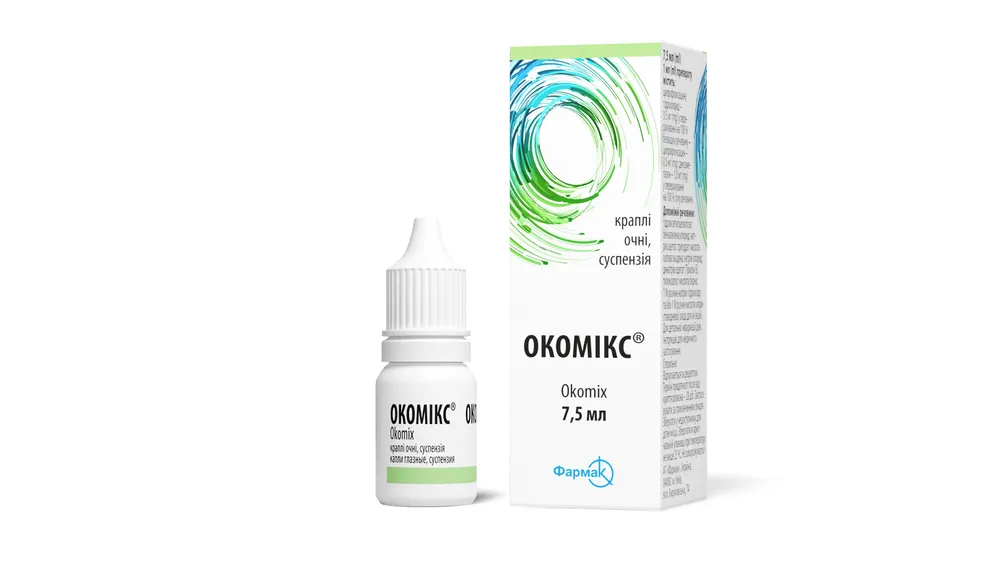
Table of Contents
INSTRUCTIONS FOR MEDICAL USE OF THE MEDICINAL PRODUCT OKOMIX® (OKOMIX)
Composition:
Active substances: ciprofloxacin hydrochloride, dexamethasone;
1 ml of the preparation contains: ciprofloxacin hydrochloride — 3.5 mg, equivalent to 100 % anhydrous substance — ciprofloxacin — 3 mg; dexamethasone — 1 mg, equivalent to 100 % dry substance;
Excipients: hydroxyethylcellulose; benzalkonium chloride; sodium acetate, trihydrate; glacial acetic acid; sodium chloride; disodium edetate (Trilon B); tyloxapol; boric acid; 1 M sodium hydroxide solution and/or 1 M hydrochloric acid solution; water for injections.
Pharmaceutical form. Eye drops, suspension.
Main physicochemical properties: liquid containing white or almost white particles which readily suspend upon shaking.
Pharmacotherapeutic group. Medicinal products used in ophthalmology. Anti-inflammatory agents in combination with antimicrobial agents. Corticosteroids in combination with antimicrobial agents. Dexamethasone in combination with antimicrobial agents.
ATC code S01CA01.
Pharmacological Properties.
Pharmacodynamics.
Ciprofloxacin
Ocomix® contains ciprofloxacin hydrochloride, a member of the quinolone class. The bactericidal action of quinolones results from inhibition of DNA gyrase, leading to disruption of bacterial DNA synthesis.
Ciprofloxacin demonstrates high in vitro activity against most Gram-negative microorganisms, including Pseudomonas aeruginosa. It is also effective against aerobic Gram-positive microorganisms such as staphylococci and streptococci.
Susceptibility of Microorganisms
Both in vitro studies and clinical use in ocular infections have demonstrated that ciprofloxacin is active against most strains of the following organisms.
Aerobic Gram-Positive Microorganisms
Staphylococcus aureus (including both methicillin-susceptible and methicillin-resistant strains); Staphylococcus epidermidis; Staphylococcus spp., other coagulase-negative Staphylococcus spp., including S. haemolyticus and S. hominis; Corynebacterium spp.; Streptococcus pneumoniae; Streptococcus group Viridans.
Aerobic Gram-Negative Microorganisms
Acinetobacter spp.; Haemophilus influenzae; Pseudomonas aeruginosa; Moraxella spp. (including M. catarrhalis).
Breakpoint Values for Microbial Growth Inhibition Zone Diameters
Ciprofloxacin has shown in vitro activity against most strains of the following microorganisms; however, the clinical significance of these data in ophthalmic infections is unknown. The safety and efficacy of ciprofloxacin in treating corneal ulcers or conjunctivitis caused by these microorganisms have not been established in adequate and well-controlled clinical trials.
The bacteria listed below are considered susceptible when tested using systemic breakpoint values for microbial growth inhibition zone diameters. However, the correlation between systemic in vitro microbial growth inhibition zone diameter values and ophthalmic efficacy has not been established. In vitro, ciprofloxacin demonstrates minimum inhibitory concentrations (MIC) of 1 µg/mL or less (systemic susceptibility breakpoint values for microbial growth inhibition zones) against most (90%) strains of the following ocular pathogenic microorganisms.
Aerobic Gram-Positive Microorganisms
Species of Bacillus.
Aerobic Gram-Negative Microorganisms
Acinetobacter calcoaceticus; Enterobacter aerogenes; Escherichia coli; Haemophilus parainfluenzae; Klebsiella pneumoniae; Neisseria gonorrhoeae; Proteus mirabilis; Proteus vulgaris; Serratia marcescens.
Others
Peptococcus spp., Peptostreptococcus spp., Propionibacterium acnes, and Clostridium perfringens are susceptible organisms.
Resistant Organisms
Some strains of Burkholderia cepacia and Stenotrophomonas maltophilia are resistant to ciprofloxacin, as are some anaerobic bacteria, particularly Bacteroides fragilis.
Additional Information
The minimum bactericidal concentration (MBC) generally does not exceed the minimum inhibitory concentration (MIC) by more than two-fold.
Dexamethasone
Corticosteroids exert anti-inflammatory effects by inhibiting endothelial cell adhesion molecules, cyclooxygenase I or II, and cytokine release. As a result, the formation of inflammatory mediators is reduced and leukocyte adhesion to vascular endothelium is suppressed, thereby preventing their migration into inflamed ocular tissues. Dexamethasone has potent anti-inflammatory activity with reduced mineralocorticoid effects compared to some other steroids and is one of the most potent corticosteroids. Its high potency results from the addition of a methyl group and fluorine to the prednisolone molecule. This synthetic glucocorticoid suppresses inflammatory responses to mechanical, chemical, or immunological stimuli.
The precise mechanism of dexamethasone’s anti-inflammatory action is not fully understood. It inhibits numerous inflammatory cytokines and exerts multiple glucocorticoid and mineralocorticoid effects.
Dexamethasone is one of the most potent corticosteroids: its activity is 5–10 times greater than that of prednisolone and 25 times greater than that of cortisone and hydrocortisone.
Systemic toxicity of dexamethasone is well documented. Its systemic effects may be associated with glucocorticoid imbalance.
Pharmacokinetics.
Ciprofloxacin
After topical ocular administration in humans, ciprofloxacin is well absorbed. Concentrations detected in the tear film, cornea, and anterior chamber of the eye exceed the MIC90 for susceptible ocular pathogenic microorganisms by 10–100 times.
Systemic absorption of ciprofloxacin after topical ocular application is low. Plasma levels of ciprofloxacin after seven days of topical administration ranged from undetectable levels (< 1.25 ng/mL) to 4.7 ng/mL. The mean maximum plasma concentration after topical ocular administration was approximately 450 times lower than that observed after oral administration of a single 250 mg dose of ciprofloxacin.
Systemic pharmacokinetic properties of ciprofloxacin are well characterized.
Ciprofloxacin penetrates well into body tissues, where its concentrations generally exceed those in plasma. The steady-state volume of distribution is 1.7–2.71 L/kg; plasma protein binding ranges from 16% to 43%. The serum half-life of ciprofloxacin is 3–5 hours. After a single oral dose of 250–750 mg in adults with normal renal function, 15–50% of the dose is excreted unchanged in urine and 10–15% as metabolites within 24 hours. Both ciprofloxacin and its four primary metabolites are eliminated via urine and feces. Renal clearance of ciprofloxacin typically ranges from 300 to 479 mL/min. Approximately 20–40% of the dose is excreted in feces unchanged or as metabolites over 5 days.
Dexamethasone
Ophthalmic bioavailability of dexamethasone after topical ocular administration of dexamethasone eye drops was evaluated in patients undergoing cataract surgery. The maximum concentration of dexamethasone in intraocular fluid, approximately 31 ng/mL, was reached within 90–120 minutes. Subsequently, concentration declined with a half-life of 3 hours. Systemic absorption after topical administration is low.
Distribution
After intravenous administration, the observed volume of distribution was 0.58 L/kg. In vitro, no changes in plasma protein binding were observed at dexamethasone concentrations ranging from 0.04 to 4 µg/mL; the average plasma protein binding was 77.4%.
Biological Transformation
Dexamethasone is primarily metabolized in the liver, predominantly by CYP3A4.
After topical application, low concentrations were detected in intraocular fluid after 12 hours, indicating that dexamethasone is stable against metabolism after penetration into intraocular fluid.
Elimination
After intravenous administration, 2.6% of the unchanged parent compound was found in urine. Following oral administration (≤ 4 mg/day) over several weeks, 60% of the dose was excreted as 6β-hydroxydexamethasone and 5–10% as an additional metabolite, 6β-hydroxy-20-dihydrodexamethasone. Unchanged dexamethasone was not detected in urine. The systemic plasma half-life is relatively short—3–4 hours—but may be slightly longer in males. This difference was not related to changes in systemic clearance but rather to differences in volume of distribution and body mass. Dexamethasone is approximately 77–84% bound to serum albumin. Clearance ranges from 0.10 to 0.25 L/h/kg, and volume of distribution ranges from 0.576 to 1.15 L/kg. Oral bioavailability of dexamethasone is approximately 70%.
Linearity/Non-linearity
AUC after oral administration of dexamethasone increased linearly within the dose range of 0.5–1.5 mg.
Special Patient Populations
The pharmacokinetics of systemic dexamethasone do not differ significantly in patients with impaired renal function compared to healthy subjects.
Preclinical Safety Data
Ciprofloxacin
Ciprofloxacin and other quinolones have been shown to cause arthropathy in young animals of most species studied after oral administration. In a study in young dogs (beagles), topical ocular administration of ciprofloxacin eye drops did not result in any joint lesions. There was also no evidence that topical administration affects joints in any way. Additionally, in 634 children who received oral ciprofloxacin, clinical and radiological examinations revealed no skeletal toxicity.
Reproductive studies in rats and mice using doses 50 times higher than the maximum recommended ophthalmic daily dose for humans showed no evidence of impaired fertility or adverse effects on the fetus related to ciprofloxacin.
Oral administration of ciprofloxacin at doses of 30 and 100 mg/kg did not cause teratogenic effects in rabbits, although significant maternal toxicity was observed at both doses. Intravenous administration at doses up to 20 mg/kg did not result in maternal toxicity, embryotoxicity, or teratogenic effects.
Dexamethasone
Dexamethasone showed clastogenic properties in an in vitro chromosomal aberration test in human lymphocytes and in an in vivo micronucleus test in mice.
Standard carcinogenicity and fertility studies with dexamethasone have not been conducted.
It has been established that dexamethasone is teratogenic in animals when administered orally: dexamethasone causes congenital malformations, including cleft palate, intrauterine growth retardation, retrognathia, umbilical hernia, thymic hypoplasia, skeletal deformities (including impaired development of long bones), and effects on brain growth and development.
Clinical characteristics.
Indications.
Inflammatory eye diseases in patients sensitive to steroids, where corticosteroid therapy is indicated and a superficial bacterial infection caused by bacterial strains sensitive to ciprofloxacin is present, including inflammatory reactions in the postoperative period.
Contraindications.
-
Hypersensitivity to dexamethasone, ciprofloxacin, to other quinolones, or to any of the excipients of the medicinal product.
-
Cowpox and smallpox, as well as other viral infections of the cornea and conjunctiva (except keratitis caused by Herpes zoster).
-
Fungal diseases of ocular structures or untreated parasitic eye infections.
-
Mycobacterial infections of the eye.
-
Acute epithelial keratitis caused by Herpes simplex.
-
Acute untreated bacterial infections.
-
The medicinal product Ocomix® should not be used after removal of a corneal foreign body without complications.
Interaction with other medicinal products and other forms of interaction.
Interaction with other medicinal products related to ciprofloxacin
Since ciprofloxacin has low systemic concentration when administered topically in ophthalmology, interaction with other medicinal products is unlikely.
Interaction with other medicinal products related to dexamethasone
Concomitant administration of locally applied steroids and non-steroidal anti-inflammatory drugs (NSAIDs) for local use increases the risk of corneal wound healing complications.
CYP3A4 inhibitors (including ritonavir and cobicistat) may reduce dexamethasone clearance, leading to more severe adverse events and suppression of adrenal cortex function / Cushing's syndrome. Such combination should be avoided unless the benefit outweighs the increased risk of systemic corticosteroid side effects, and in such cases, systemic corticosteroid adverse effects should be monitored in patients.
When using ophthalmic solutions that affect accommodation or dilate the pupil (e.g., atropine and other anticholinergic agents), which may increase intraocular pressure, concomitant use of Ocomix® may result in additional elevation of intraocular pressure (especially in patients predisposed to closed-angle glaucoma).
Since corticosteroids may increase blood glucose levels, dosage adjustment of antidiabetic agents may be required.
Dexamethasone should not be combined with medicinal products used for glaucoma; particularly, such combination should not be used for prolonged periods or in high doses, as this may lead to increased intraocular pressure.
Contact lens use increases the risk of infection.
When used concomitantly with ophthalmic medicinal products containing phosphates, the risk of corneal deposits or corneal clouding increases, especially in patients with compromised corneas.
If multiple ophthalmic medicinal products for local use are administered simultaneously, at least 5 minutes should elapse between administrations. Ophthalmic ointments should be applied last.
Special precautions.
For ophthalmic use only. The medicinal product is not intended for injection or oral administration.
Precautions related to ciprofloxacin
Severe and occasionally fatal (anaphylactic) hypersensitivity reactions have been reported in patients receiving quinolone therapy, some occurring after the first dose. These reactions have sometimes been accompanied by cardiovascular collapse, loss of consciousness, tinnitus, swelling of the throat or face, dyspnea, urticaria, and pruritus.
Severe cases of acute hypersensitivity to ciprofloxacin may require emergency treatment. Oxygen therapy and measures to restore airway patency should be administered as clinically indicated.
Treatment with Ocomix® should be discontinued at the first signs of skin rash or any other signs of hypersensitivity reaction.
With prolonged use of all antibacterial agents, including ciprofloxacin, overgrowth of antibiotic-resistant bacterial strains or fungi may occur. If superinfection develops, appropriate therapy should be instituted.
Tendon inflammation and rupture may occur with systemic therapy with fluoroquinolones, including ciprofloxacin, particularly in elderly patients and in patients receiving concomitant corticosteroids. Therefore, treatment with Ocomix® eye drops should be discontinued at the first signs of tendon inflammation.
When using Ocomix® eye drops, the risk of the drug entering the nasopharynx should be considered, as this may promote the development and spread of bacterial resistance.
Photosensitivity and moderate to severe phototoxic reactions may occur during treatment with quinolone-class drugs, manifesting as severe sunburn in patients exposed to direct sunlight. Since a portion of the drug may enter systemic circulation after administration and cause similar effects, excessive exposure to sunlight should be avoided. If phototoxicity occurs, the drug should be discontinued.
Precautions related to dexamethasone
Do not use without medical examination. The medicinal product should only be prescribed after biomicroscopic examination using a slit lamp and fluorescein testing.
This product is not effective for the treatment of Sjögren’s keratoconjunctivitis.
Excessive and/or prolonged use of ophthalmic corticosteroids increases the risk of ocular complications and may lead to systemic adverse effects. If inflammation does not subside within a reasonable period during treatment, alternative therapies should be considered to reduce these risks.
Prolonged treatment with locally applied ophthalmic corticosteroids may lead to ocular hypertension and/or glaucoma, resulting in optic nerve damage, decreased visual acuity, and visual field constriction, as well as posterior subcapsular cataract formation. During prolonged local ocular corticosteroid therapy, intraocular pressure should be monitored regularly and frequently (particularly in patients with a history of steroid-induced elevated intraocular pressure, patients with high baseline intraocular pressure before starting steroids, and patients with glaucoma). This is especially important in children, as the risk of corticosteroid-induced ocular hypertension is higher in children and may occur earlier than in adults. The medicinal product Ocomix® is not indicated for use in children. In patients with glaucoma, monitoring should be performed weekly.
The risk of corticosteroid-induced intraocular pressure elevation and/or corticosteroid-induced cataract formation increases in predisposed patients (e.g., patients with diabetes mellitus).
Visual disturbances may occur with both systemic and local corticosteroid use. If a patient experiences symptoms such as blurred vision or other visual disturbances, an ophthalmologic examination should be performed to evaluate possible causes. These may include cataract, glaucoma, or rare conditions such as central serous chorioretinopathy (CSCR), which have been reported after systemic and local corticosteroid use.
Cushing’s syndrome and/or adrenal cortex suppression, associated with systemic absorption of ophthalmic dexamethasone formulations, may occur after intensive or long-term continuous therapy in susceptible patients, including children and patients receiving CYP3A4 inhibitors (e.g., ritonavir and cobicistat). In such cases, treatment should be gradually discontinued.
Corticosteroids may reduce resistance to bacterial, viral, fungal, or parasitic infections and may mask clinical signs of infection, thereby interfering with the detection of antibiotic inefficacy. In cases of persistent corneal ulceration, fungal infection should be ruled out in patients who are being or have been treated with corticosteroids. Treatment should be discontinued if a fungal infection occurs.
Ophthalmic corticosteroids may delay corneal wound healing. It is also known that topically applied NSAIDs delay or impair wound healing. Concomitant use of topical NSAIDs and topical corticosteroids increases the risk of wound healing complications (see section "Interaction with other medicinal products and other forms of interaction").
It is known that local corticosteroid use may lead to perforations in patients with conditions causing thinning of the cornea or sclera.
Treatment should not be prematurely discontinued due to the possibility of inflammatory recurrence following abrupt discontinuation of high-dose corticosteroids.
The product should be used with special caution and only in combination with antiviral therapy when treating stromal keratitis or uveitis caused by herpes simplex; periodic slit-lamp microscopy should be performed.
During prolonged dexamethasone treatment, corneal status should be evaluated using fluorescein testing and intraocular pressure should be monitored. If fluorescein testing is positive or intraocular pressure is elevated, treatment with the product should be discontinued.
Ocomix® eye drops contain benzalkonium chloride. This substance may cause eye irritation, particularly in patients with dry eye symptoms or corneal disease (the transparent front layer of the eye). Benzalkonium chloride may also discolor soft contact lenses; therefore, contact with the lenses should be avoided. However, if, in the physician’s opinion, contact lens use is acceptable, patients should be advised to remove contact lenses before instilling the eye drops and to wait 15 minutes after instillation before reinserting the lenses.
After instillation of eye drops, the following measures are recommended to reduce systemic absorption:
- Keep eyelids closed for 2 minutes;
- Press a finger against the tear duct for 2 minutes.
Use during pregnancy or breastfeeding.
Pregnancy
Ocomix® should not be used during pregnancy.
Ciprofloxacin
There are no adequate data on the use of ciprofloxacin in eye drops in pregnant women. Animal studies have not shown direct harmful effects on reproductive function.
Dexamethasone
Adequate controlled studies on the effects of Ocomix® in pregnant women have not been conducted. An increased risk of intrauterine growth retardation associated with prolonged or repeated corticosteroid use during pregnancy is known. Reproductive toxicity has been demonstrated in animal studies after systemic administration. Ophthalmic use of 0.1% dexamethasone solution resulted in fetal abnormalities in rabbits.
Breastfeeding
Ciprofloxacin has been detected in human breast milk after oral administration. It is unknown whether ciprofloxacin passes into breast milk after topical ocular administration. Systemic administration of corticosteroids results in their presence in human breast milk in amounts that may affect the breastfed infant. However, systemic effects after topical corticosteroid use are minimal. It is unlikely that dexamethasone will appear in breast milk or cause clinical effects in infants after maternal use of the drug. Nevertheless, a risk to the breastfed infant cannot be excluded. The possibility of temporarily discontinuing breastfeeding during treatment with Ocomix® or discontinuing/withholding treatment should be considered, taking into account the potential benefit of the drug for the mother and the benefits of breastfeeding for the infant.
Reproductive function
No studies have been conducted to evaluate the effects of topical Ocomix® on reproductive function. There are some clinical data on the effects of dexamethasone on reproductive function in men and women. In rat models under the influence of chorionic gonadotropin, no adverse effects of dexamethasone on reproductive function were observed. There are no data on the effects of topical ciprofloxacin/dexamethasone combination on reproductive function in men and women.
Ability to affect reaction speed when driving or operating machinery.
This medicinal product does not affect or has a negligible effect on the ability to drive or operate machinery. Transient blurred vision or other visual disturbances may affect the ability to drive or operate machinery. If blurred vision occurs during instillation, patients should wait until vision clears before driving or operating machinery.
Dosage and Administration
The standard dose is 1–2 drops into the conjunctival sac of the affected eye 4 times daily. During the first 24–48 hours, the dose may be increased to 2 drops every 2 hours.
The usual duration of treatment is 7 days.
After achieving a sustained effect, the dose and frequency of administration should be gradually reduced. Therapy should not be discontinued prematurely (see section "Special Warnings and Precautions for Use").
Regular monitoring of intraocular pressure is recommended.
After instillation, firm closure of the eyelids or nasolacrimal occlusion is recommended. This reduces systemic absorption of ophthalmic medications, thereby decreasing the likelihood of systemic adverse effects.
Use in hepatic and renal impairment
Ocomix® has not been studied in patients with renal or hepatic disease. However, due to the low systemic absorption of dexamethasone following topical ophthalmic administration, dose adjustment is not considered necessary.
When concomitant therapy with other topical ophthalmic agents is required, an interval of 5–10 minutes should be maintained between administrations. Ophthalmic ointments should be administered last.
Administration method
The bottle should be shaken well before use.
To prevent contamination of the dropper tip and the solution, care should be taken not to touch the eyelids, surrounding areas, or any other surfaces with the tip of the dropper bottle.
Children
The efficacy and safety of the medicinal product in children have not been established.
Overdose
Due to the characteristics of this medicinal product intended for topical use, no toxic effects are expected either when used in ophthalmology at recommended doses or in case of accidental ingestion of the bottle contents. Clinical signs and symptoms of overdose may resemble adverse effects observed in some patients: punctate keratitis, erythema, increased lacrimation, eyelid edema, and itching.
In case of overdose with Ocomix® administered topically, rinse the excess medication from the eye(s) with warm water.
In case of accidental ingestion of eye drops, symptomatic and supportive therapy should be administered.
Adverse Reactions
Since the medicinal product contains two active substances — ciprofloxacin and dexamethasone — adverse reactions characteristic of these components may occur.
The frequency of the adverse reactions listed below is classified as follows: very common (≥1/10), common (≥1/100 to <1/10), uncommon (≥1/1000 to <1/100), rare (≥1/10000 to <1/1000), very rare (<1/10000), or not known (cannot be estimated from the available data). Within each frequency group, adverse reactions are listed in order of decreasing severity.
Data on adverse effects were obtained from clinical studies and from the post-marketing period of use.
Adverse reactions caused by ciprofloxacin
| Body Systems |
Adverse reactions according to the MedDRA [Medical Dictionary for Regulatory Activities] classification |
| Infections and infestations |
Isolated: hordeolum, rhinitis |
| Immune system disorders |
Isolated: hypersensitivity |
| Nervous system disorders |
Common: dysgeusia Uncommon: headache Isolated: dizziness |
| Ophthalmic disorders |
Common: corneal deposits, eye discomfort, ocular hyperemia Uncommon: keratopathy, corneal infiltrates, corneal pigmentation, photophobia, decreased visual acuity, eyelid edema, blurred vision, eye pain, dry eye, eye swelling, eye pruritus, foreign body sensation in the eye, increased lacrimation, eye discharge, scaling of eyelid margins, eyelid desquamation, conjunctival edema, eyelid erythema Isolated: ocular toxicity, punctate keratitis, keratitis, conjunctivitis, corneal function disorder, corneal epithelial defect, diplopia, ocular hypoesthesia, asthenopia, eye irritation, eye inflammation, conjunctival hyperemia, color vision abnormalities |
| Ear and labyrinth disorders |
Isolated: ear pain |
| Respiratory, thoracic and mediastinal disorders |
Isolated: nasal sinus hypersecretion |
| Gastrointestinal disorders |
Uncommon: nausea, dysgeusia Isolated: diarrhea, abdominal pain |
| Skin and subcutaneous tissue disorders |
Isolated: dermatitis |
| General disorders and administration site conditions |
Isolated: drug intolerance |
| Investigations |
Isolated: laboratory test abnormal |
| Musculoskeletal system disorders |
Frequency unknown: tendon rupture |
Description of individual adverse reactions
Very rare systemic reactions such as (generalized) rash, toxic epidermal necrolysis, exfoliative dermatitis, Stevens-Johnson syndrome, and urticaria have been reported following topical application of fluoroquinolones.
Individual cases of visual blurring, decreased visual acuity, and signs of drug residue have been observed with ocular administration of ciprofloxacin.
Serious, and in some cases fatal (anaphylactic) hypersensitivity reactions, sometimes after the first dose, have been reported in patients treated with systemic quinolones. Some of these reactions were accompanied by cardiovascular collapse, loss of consciousness, paresthesia, throat or facial swelling, dyspnea, urticaria, and pruritus.
Tendon ruptures of the shoulder, hand, Achilles tendon, or other tendons requiring surgical repair or leading to prolonged disability have been observed in patients receiving systemic fluoroquinolones. Clinical studies and post-marketing experience with systemic fluoroquinolones indicate that the risk of such tendon ruptures is higher in patients receiving corticosteroids, particularly elderly patients, and in those with high tendon stress, including the Achilles tendon. To date, clinical and post-marketing data have not demonstrated a clear association between the use of ciprofloxacin in the form of eye drops and adverse reactions affecting the musculoskeletal system or connective tissue.
In patients with corneal ulceration, frequent use of ciprofloxacin eye drops has been associated with the appearance of a white ocular precipitate (drug residue), which disappeared upon continued use. The presence of precipitate does not necessitate discontinuation of the medicinal product Okomix® and has no negative impact on the clinical course of recovery.
Adverse reactions caused by dexamethasone
The most common adverse effect observed during clinical trials was a sensation of ocular discomfort.
| Organ systems |
Adverse reactions according to MedDRA classification |
| Infections and infestations |
Isolated: eye infection (exacerbation or secondary) |
| Immune system disorders |
Frequency unknown: hypersensitivity |
| Endocrine disorders |
Frequency unknown: Cushing's syndrome, adrenal suppression |
| Nervous system disorders |
Uncommon: dysgeusia Frequency unknown: dizziness, headache |
| Ophthalmic disorders |
Common: eye discomfort Uncommon: keratitis, conjunctivitis, dry eye, corneal staining, photophobia, blurred vision, eye itching, foreign body sensation in the eye, increased lacrimation, unusual eye sensation, scaling along eyelid margins, eye irritation, eye hyperemia Isolated: subcapsular cataract, glaucoma, visual field defects Frequency unknown: ulcerative keratitis, increased intraocular pressure, decreased visual acuity, corneal erosion, eyelid ptosis, eye pain, mydriasis |
| Injury, poisoning and procedural complications |
Rare: corneal perforation |
Description of individual adverse reactions
Prolonged treatment with corticosteroids for local ophthalmic use may lead to ocular hypertension and/or glaucoma with subsequent optic nerve damage, decreased visual acuity, and visual field constriction, as well as formation of posterior subcapsular cataract (see section "Special precautions").
Since the medicinal product contains a corticosteroid, the risk of perforation increases in the presence of diseases causing thinning of the cornea or sclera, especially after prolonged use.
Corticosteroids may reduce resistance to infections (see section "Special precautions").
Reporting suspected adverse reactions
Reporting of suspected adverse reactions after marketing authorization is of great importance. It allows continuous monitoring of the benefit-risk balance of the medicinal product. Healthcare professionals and patients or their legal representatives are encouraged to report all suspected adverse reactions and lack of efficacy via the automated pharmacovigilance information system at the following link: https://aisf.dec.gov.ua.
Shelf life. 2 years.
Shelf life after opening the bottle — 28 days.
Do not use the medicinal product after the expiry date stated on the packaging.
Storage conditions. Store in the original packaging at a temperature not exceeding 25 ℃.
Do not freeze! Keep out of reach of children.
Packaging. 7.5 ml in a bottle, 1 bottle in a cardboard box.
Prescription status. Prescription only.
Manufacturer. JSC "Farmak".
Manufacturer's address and place of business.
74, Kyrylivska Street, Kyiv, 04080, Ukraine.