Nurofen® express ultracap
Ukraine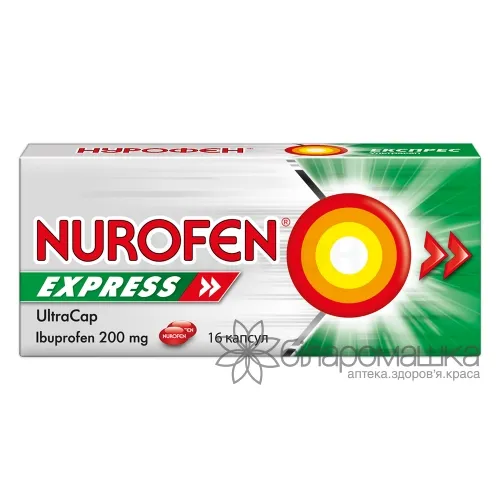
Table of Contents
INSTRUCTIONS FOR MEDICAL USE OF THE MEDICINAL PRODUCT NUROFEN® EXPRESS ULTRACAP (NUROFEN® EXPRESS ULTRACAP)
Composition:
Active substance: ibuprofen; 1 capsule contains 200 mg of ibuprofen;
Excipients: macrogol 600, potassium hydroxide, gelatin, sorbitol (E 420), Ponceau 4R (E 124), Opacod WB white NS-78-18011, purified water.
Pharmaceutical form. Soft capsules.
Main physicochemical properties: red, oval, transparent soft gelatin capsules with the logo "NUROFEN" printed in white ink.
Pharmacotherapeutic group. Non-steroidal anti-inflammatory and antirheumatic agents. Propionic acid derivatives. ATC code M01A E01.
Pharmacological properties.
Pharmacodynamics.
Exerts analgesic, antipyretic, and anti-inflammatory effects. The mechanism of action is based on inhibition of prostaglandin synthesis — mediators of pain, inflammation, and temperature response.
Experimental data indicate that ibuprofen may competitively inhibit the effect of low-dose acetylsalicylic acid on platelet aggregation when these drugs are used concomitantly. Some pharmacodynamic studies have shown that administration of single 400 mg doses of ibuprofen within 8 hours before or within 30 minutes after immediate-release acetylsalicylic acid (81 mg) was associated with reduced effects of aspirin (acetylsalicylic acid) on thromboxane formation or platelet aggregation. Although there is uncertainty regarding extrapolation of these data to clinical settings, the possibility cannot be excluded that regular long-term use of ibuprofen may diminish the cardioprotective effect of low-dose acetylsalicylic acid. With occasional, non-regular use of ibuprofen, such a clinically significant interaction is considered unlikely.
Pharmacokinetics.
After oral administration, ibuprofen is rapidly absorbed from the gastrointestinal tract. Maximum plasma concentration of the active substance is reached within 1–2 hours after intake. Ibuprofen is metabolized in the liver and excreted by the kidneys (90%) both unchanged and as metabolites, as well as in bile. The elimination half-life in healthy individuals is approximately 1.8 hours; in patients with hepatic or renal impairment, it ranges from 1.8 to 3.5 hours. Ibuprofen is highly bound (99%) to plasma proteins and slowly penetrates into synovial cavities, where its concentration may remain high even as plasma concentrations decline.
In two pharmacokinetic studies, the time to reach maximum plasma concentration (Tmax) for ibuprofen in tablets was 60 and 90 minutes, compared to 35 and 40 minutes, respectively, for Nurofen® Express Ultrakap, soft capsules. The average Cmax is achieved twice as fast with Nurofen® Express Ultrakap compared to the conventional immediate-release formulation (Nurofen tablets). Ibuprofen remains detectable in plasma for more than 8 hours after administration of Nurofen® Express Ultrakap.
Clinical characteristics.
Indications. Symptomatic treatment of headache, dental pain, and menstrual pain. Fever and muscle pain associated with colds.
Contraindications.
- Hypersensitivity to ibuprofen or to any of the excipients of the medicinal product.
- Patients with a history of bronchospasm, asthma, rhinitis, angioedema, or skin rash associated with the use of acetylsalicylic acid or other non-steroidal anti-inflammatory drugs (NSAIDs).
- Concomitant use of Nurofen® Express Ultracap with other NSAIDs, including selective cyclooxygenase-2 (COX-2) inhibitors, should be avoided.
- Patients with a history of gastrointestinal bleeding or perforation related to previous NSAID therapy.
- Active peptic ulcer/gastrointestinal bleeding or history thereof (two or more distinct episodes of peptic ulcer or bleeding).
- Patients with severe renal, hepatic, or cardiac insufficiency (NYHA class IV).
- Children with body weight less than 20 kg.
- Patients with cerebrovascular or other active bleeding disorders.
- Patients with unexplained etiology of blood dyscrasias.
- Patients with dehydration caused by vomiting, diarrhea, or insufficient fluid intake.
- Third trimester of pregnancy.
Interaction with other medicinal products and other forms of interaction.
Ibuprofen (like other NSAIDs) should be used with caution when administered concomitantly with the following agents:
- Other NSAIDs, including salicylates: increased risk of gastrointestinal ulcers and bleeding;
- Digoxin: increased plasma levels of both drugs;
- Corticosteroids: increased risk of gastrointestinal bleeding or ulceration;
- Antithrombotic agents: increased risk of gastrointestinal bleeding;
- Anticoagulants: NSAIDs may enhance the effect of anticoagulants, such as warfarin;
- Antiplatelet agents and selective serotonin reuptake inhibitors (SSRIs): may increase the risk of gastrointestinal bleeding;
- Acetylsalicylic acid or other NSAIDs and glucocorticosteroids: may increase the risk of gastrointestinal adverse effects associated with these medicinal products.
Experimental data indicate that concomitant use of ibuprofen may inhibit the effect of low-dose acetylsalicylic acid (aspirin) on platelet aggregation. However, limitations regarding extrapolation of these data to clinical settings do not allow definitive conclusions about whether regular long-term use of ibuprofen may reduce the cardioprotective effect of low-dose acetylsalicylic acid. With occasional use of ibuprofen, such clinically significant effects are considered unlikely;
- Antihypertensive and diuretic agents: NSAIDs may reduce the therapeutic effect of these drugs; in patients with impaired renal function, concomitant use of angiotensin-converting enzyme (ACE) inhibitors, beta-blockers, angiotensin II receptor antagonists, and cyclooxygenase inhibitors may lead to further deterioration of renal function. Therefore, such combinations should be used with caution, especially in elderly patients;
- Lithium and methotrexate: evidence suggests a potential increase in plasma levels of lithium and methotrexate;
- Probenecid and sulfinpyrazone: may delay elimination of ibuprofen;
- Potassium-sparing diuretics: may lead to hyperkalemia (plasma potassium levels should be monitored);
- Cyclosporine and tacrolimus: increased risk of nephrotoxicity;
- Zidovudine: evidence suggests increased risk of hemarthrosis and hematoma in HIV-infected patients receiving concomitant treatment with zidovudine and ibuprofen;
- Sulfonylureas: blood glucose levels should be monitored;
- Quinolone antibiotics: may increase the risk of seizures.
- Cytochrome CYP2C9 inhibitors: may increase the effect of ibuprofen, such as voriconazole or fluconazole.
Special precautions for use.
Adverse effects can be minimized by using the lowest effective dose required to treat symptoms for the shortest necessary duration.
The drug should be used with caution in patients with:
- systemic lupus erythematosus and systemic connective tissue diseases;
- inherited disorders of porphyrin metabolism (e.g., acute intermittent porphyria);
- arterial hypertension and/or heart failure in medical history, associated with fluid retention and edema during NSAID use;
- impaired renal and/or hepatic function;
- immediately following surgery.
This medicinal product contains sorbitol. It is not recommended for use in patients with hereditary fructose intolerance.
Allergic reactions related to the presence of Ponceau 4R in the formulation are possible.
Elderly individuals have an increased risk of adverse reactions when using NSAIDs, particularly gastrointestinal bleeding and perforation, which may be fatal.
Gastrointestinal bleeding, ulceration, or perforation, potentially fatal, have been reported with the use of all NSAIDs, both with and without serious gastrointestinal complications in medical history, and independently of treatment duration.
Increased NSAID dosage, advanced age, and history of peptic ulcer disease are risk factors for gastrointestinal adverse reactions. The lowest effective doses are recommended during treatment in these cases.
Concomitant therapy with protective agents (e.g., misoprostol or proton pump inhibitors) should be considered, especially in patients requiring long-term low-dose acetylsalicylic acid or other medicinal products that may increase the risk of gastrointestinal adverse effects.
Clinical study data suggest that the use of ibuprofen, especially at high doses (2400 mg per day), may be associated with an increased risk of arterial thrombotic events (e.g., myocardial infarction or stroke). Overall, epidemiological data do not indicate that low-dose ibuprofen (e.g., ≤1200 mg per day) is associated with an increased risk of arterial thrombotic complications.
Patients with uncontrolled arterial hypertension, congestive heart failure (NYHA class II–III), diagnosed ischemic heart disease, peripheral arterial disease, and/or cerebrovascular disease should be treated with ibuprofen only after careful assessment of the clinical condition. High doses (2400 mg per day) should be avoided.
Careful evaluation of the clinical condition is also required before initiating long-term treatment in patients with cardiovascular risk factors (e.g., arterial hypertension, hyperlipidemia, diabetes mellitus, smoking), especially if high-dose ibuprofen (2400 mg per day) is required.
Cases of Kounis syndrome have been reported in patients receiving ibuprofen treatment. Kounis syndrome is defined as cardiovascular symptoms caused by an allergic or hypersensitivity reaction associated with coronary artery spasm, which may potentially lead to myocardial infarction.
Patients who experience gastrointestinal disturbances, particularly elderly individuals, should discontinue treatment and consult a physician if any adverse symptoms occur (especially gastrointestinal bleeding).
The drug should be used with caution in patients receiving concomitant therapy with medicinal products that may increase the risk of peptic ulceration or bleeding, including oral corticosteroids, anticoagulants (e.g., warfarin), selective serotonin reuptake inhibitors, or antiplatelet agents such as acetylsalicylic acid.
NSAIDs should be used cautiously in patients with a history of ulcerative colitis or Crohn’s disease, as their condition may worsen.
Serious skin adverse reactions
Serious skin adverse reactions (SSARs), including exfoliative dermatitis, erythema multiforme, Stevens–Johnson syndrome (SJS), toxic epidermal necrolysis (TEN), drug reaction with eosinophilia and systemic symptoms (DRESS syndrome), and acute generalized exanthematous pustulosis (AGEP), which may be life-threatening or fatal, have been reported during ibuprofen use (see section "Adverse reactions"). Most such reactions occurred within the first month of treatment.
If signs or symptoms suggestive of these reactions appear, ibuprofen should be discontinued immediately and alternative treatment considered (if necessary).
Masking symptoms of underlying infections
Nurofen® Express Ultracap may mask symptoms of infectious diseases, potentially delaying the initiation of appropriate treatment and thereby complicating the course of illness. This has been observed in community-acquired bacterial pneumonia and bacterial complications of varicella. When Nurofen® Express Ultracap is used for fever or pain relief associated with infection, monitoring for infection is recommended. In outpatient settings, patients should consult a physician if symptoms persist or worsen.
Bronchospasm may occur in patients with or who have had bronchial asthma or allergic diseases.
Prolonged use of analgesics at high doses may lead to headache that cannot be treated by increasing the drug dose.
Long-term and uncontrolled use of analgesics, particularly combinations of different analgesic active substances, may lead to chronic kidney damage with risk of renal failure (analgesic nephropathy).
There is some evidence that medicinal products inhibiting cyclooxygenase/prostaglandin synthesis may impair female fertility by affecting ovulation. This effect is reversible upon discontinuation of the drug.
Ibuprofen may temporarily suppress blood/coagulation function (platelet aggregation). Therefore, special monitoring is recommended in patients with coagulation disorders.
With prolonged use of the drug, regular monitoring of liver function, kidney function, and blood cell counts is necessary.
The use of the drug should be avoided in cases of varicella.
Concomitant alcohol consumption may enhance adverse effects, particularly those affecting the gastrointestinal tract or central nervous system, after NSAID administration.
NSAIDs may mask symptoms of infection and fever.
There is a risk of renal failure in dehydrated children and adolescents.
Use during pregnancy or breastfeeding
Pregnancy. Inhibitors of prostaglandin synthesis may adversely affect pregnant women and/or embryonic/fetal development. Epidemiological data indicate an increased risk of pregnancy loss and congenital heart defects following use of prostaglandin synthesis inhibitors in early pregnancy. The risk is believed to increase with higher doses and longer duration of treatment.
From the 20th week of pregnancy, ibuprofen use may cause oligohydramnios due to fetal renal dysfunction. This may occur soon after starting treatment and is usually reversible upon discontinuation. Additionally, there have been reports of arterial duct constriction after treatment in the second trimester, most of which resolved after stopping treatment. Therefore, ibuprofen should not be prescribed during the first and second trimesters unless clearly necessary. If ibuprofen is used by women attempting to conceive or during the first and second trimesters of pregnancy, the dose should be as low as possible and the duration of treatment as short as possible. Fetal monitoring for oligohydramn游戏副本 and arterial duct constriction should be considered after several days of ibuprofen exposure starting from the 20th gestational week. Nurofen® Express Ultracap should be discontinued if oligohydramnios or arterial duct constriction is detected.
During the third trimester of pregnancy, all prostaglandin synthesis inhibitors may pose risks:
Risks to the fetus:
- cardiopulmonary toxicity (premature closure/constriction of the arterial duct and pulmonary hypertension);
- renal dysfunction (see above);
Risks to the mother at the end of pregnancy and to the newborn:
- possible prolongation of bleeding time, anti-aggregatory effect, which may occur even at very low doses;
- inhibition of uterine contractions, leading to delayed or prolonged labor.
Therefore, Nurofen® Express Ultracap is contraindicated during the third trimester of pregnancy (see section "Contraindications").
Breastfeeding period. Ibuprofen and its metabolites may pass into breast milk in low concentrations. To date, no harmful effects on infants have been reported; therefore, in general, breastfeeding need not be discontinued during short-term treatment of pain and fever at recommended doses.
Ability to influence reaction rate when driving or operating machinery
When used short-term, Nurofen® Express Ultracap does not affect or has negligible effect on the ability to drive vehicles or operate machinery. However, with prolonged use, adverse effects on the central nervous system such as increased fatigue and dizziness may occur.
Method of Administration and Dosage
The lowest effective dose should be used for the shortest duration necessary to relieve symptoms (see section "Special Precautions for Use").
The drug is recommended for adults and children with body weight ≥ 40 kg: the recommended initial dose is 1–2 capsules, followed, if necessary, by 1–2 capsules (200–400 mg of ibuprofen) every 4–6 hours. Do not exceed 6 capsules (1200 mg) within 24 hours.
Children with body weight ≤ 39 kg. The drug may be used in children with body weight of at least 20 kg. The maximum daily dose of ibuprofen is 20–30 mg per kilogram of body weight, divided into 3–4 doses administered at intervals of 6–8 hours. Do not exceed the maximum recommended daily dose.
Children with body weight 20–29 kg: the recommended initial dose is 1 capsule (equivalent to 200 mg of ibuprofen). The maximum daily dose is 3 capsules (equivalent to 600 mg of ibuprofen).
Children with body weight 30–39 kg: the recommended initial dose is 1 capsule (equivalent to 200 mg of ibuprofen). The maximum daily dose is 4 capsules (equivalent to 800 mg of ibuprofen).
Capsules should generally be taken during meals, without chewing, with water.
Elderly patients do not require special dose adjustment.
If symptoms persist for more than 3 days, or more than 4 days when used for pain relief, a physician should be consulted for diagnosis clarification and treatment adjustment. Adverse effects can be minimized by using the lowest effective dose for the shortest duration necessary to control symptoms.
Children. The drug is contraindicated in children with body weight less than 20 kg.
Overdose. In acute overdose, symptoms depend on the amount ingested and the time elapsed since ingestion. Initial symptoms commonly observed include nausea, vomiting, headache, dizziness, epigastric pain, or less frequently, diarrhea, drowsiness, nystagmus, blurred vision, tinnitus, gastrointestinal bleeding. In cases of overdose, coma, arterial hypotension, hyperkalemia with cardiac rhythm disturbances, metabolic acidosis, elevated body temperature, respiratory system disorders and cyanosis, renal function impairment, and liver damage may occur. Occasionally, agitation and disorientation, seizures may be observed. After prolonged use, hemolytic anemia, granulocytopenia, and thrombocytopenia may rarely occur. Long-term use at doses higher than recommended or overdose may lead to renal tubular acidosis and hypokalemia.
If less than 1 hour has passed after acute overdose, induction of vomiting, gastric lavage, or administration of activated charcoal is recommended.
There is no specific antidote or specific treatment for ibuprofen overdose. Symptomatic treatment is based on monitoring vital functions, measuring arterial pressure, performing ECG, and interpreting symptoms indicating possible gastrointestinal bleeding, development of metabolic acidosis, and central nervous system disturbances.
Adverse reactions.
Listed below are adverse reactions observed in individuals who used ibuprofen for short-term treatment of mild to moderate pain and fever, as well as those observed during long-term, high-dose therapy in patients with rheumatic diseases.
Clinical trial data indicate that the use of ibuprofen, particularly at high doses of 2400 mg per day, may be associated with a slightly increased risk of arterial thrombotic events (e.g., myocardial infarction or stroke).
Frequency of adverse effects is defined as follows:
Very common: ≥1/10; common: ≥1/100, <1/10; uncommon: ≥1/1000, <1/100; rare: ≥1/10000, <1/1000;
very rare: <1/10000, including isolated case reports.
General disorders.
Uncommon: hypersensitivity reactions such as urticaria and pruritus, increased sweating.
Very rare: severe hypersensitivity reactions including facial, lingual, and laryngeal edema, dyspnea, tachycardia, hypotension, anaphylactoid reactions (anaphylaxis, Quincke's edema up to shock). Asthma exacerbation, bronchospasm or dyspnea, allergic rhinitis, eosinophilia.
Sensory organs.
Rare: hearing disturbances (hearing loss, tinnitus).
Uncommon: visual disturbances (toxic optic neuropathy, blurred vision or diplopia, scotoma, dryness and irritation of eyes, allergic conjunctival and eyelid edema).
Gastrointestinal tract.
Uncommon: abdominal pain, melena, hematemesis, dyspepsia, nausea.
Rare: diarrhea, flatulence, constipation, vomiting.
Very rare: heartburn, ulcerative stomatitis, gastritis, gastrointestinal perforation or hemorrhage (which may lead to anemia), which in some cases may be fatal, particularly in elderly patients. Exacerbation of ulcerative colitis and Crohn’s disease, esophagitis, formation of intestinal diaphragm-like strictures. Irritation or dryness of oral mucosa, gingival mucosal ulcers, aphthous stomatitis, pancreatitis.
Neurological disorders.
Uncommon: headache, dizziness, insomnia, anxiety, depression, nervousness and irritability, fatigue, psychomotor agitation, somnolence, confusion, hallucinations.
Rare: aseptic meningitis (more frequently in patients with autoimmune disorders).
Cardiovascular system.
Very rare: heart failure, tachycardia, increased blood pressure, vasculitis, myocardial infarction.
Unknown: Coats’ syndrome.
Urinary system.
Very rare: decreased urea excretion and edema. Acute renal failure, allergic nephritis, glomerulonephritis, oliguria, polyuria, cystitis, hematuria. Papillary necrosis, particularly with prolonged use. Increased serum urea levels.
Hepatobiliary system.
Very rare: liver function abnormalities, particularly with prolonged use. Hepatitis, pancreatitis, duodenitis, esophagitis.
Blood and lymphatic system.
Very rare: blood formation disorders (anemia, leukopenia, thrombocytopenia, pancytopenia, agranulocytosis). Initial symptoms include high fever, sore throat, oral ulcers, flu-like symptoms, severe exhaustion, epistaxis, and bruising.
Skin and subcutaneous tissue.
Very rare: severe skin adverse reactions (SSARs) (including erythema multiforme, exfoliative dermatitis, Stevens-Johnson syndrome, and toxic epidermal necrolysis), alopecia.
Unknown: drug-induced eosinophilia with systemic symptoms (DRESS syndrome); acute generalized exanthematous pustulosis; photosensitivity reactions.
Immune system.
Uncommon: in patients with autoimmune disorders (systemic lupus erythematosus, connective tissue diseases), isolated cases of aseptic meningitis symptoms have been observed during ibuprofen therapy (nuchal rigidity, headache, nausea, vomiting, high fever, or disorientation), facial, lingual, and laryngeal edema, dyspnea, tachycardia. Allergic reactions manifesting as skin rash, pruritus, bronchial asthma attack, hypotension.
Infections and parasitic diseases.
Very rare: exacerbation of infection-related inflammation.
Laboratory investigations.
Rare: decreased hemoglobin levels.
Shelf life. 2 years.
Storage conditions.
Keep out of reach of children at a temperature not exceeding 25 °C.
Packaging.
4 or 10 capsules in a blister; 1 blister per cardboard box.
8 capsules in a blister; 2 blisters per cardboard box.
Prescription status. Over-the-counter.
Manufacturer. Reckitt Benckiser Healthcare International Limited.
Manufacturer’s address and place of business. Nottingham site, Taymount Road, Nottingham, NG90 2DB, United Kingdom