Norfloxacin-zdorovya
Ukraine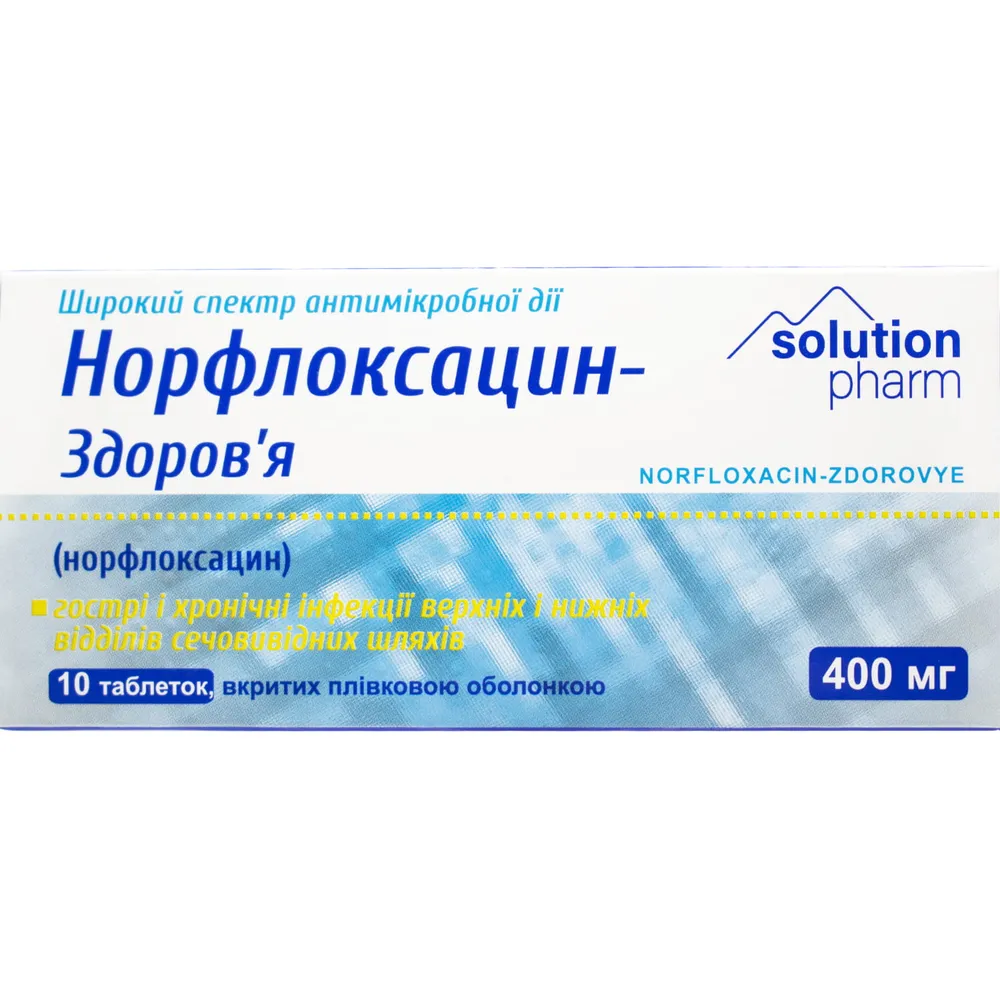
Table of Contents
INSTRUCTION FOR MEDICAL USE OF THE MEDICINAL PRODUCT NORFLOXACIN-ZDOROVYE (NORFLOXACIN-ZDOROVYE)
Composition:
Active substance: norfloxacin;
1 tablet contains 400 mg of norfloxacin;
Excipients: microcrystalline cellulose; sodium croscarmellose; potato starch; crospovidone; calcium hydrogen phosphate; talc; calcium stearate; hypromellose; copovidone; lactose monohydrate; polyethylene glycol 4000; titanium dioxide (E 171).
Dosage form. Film-coated tablets.
Main physico-chemical properties: film-coated tablets of white to white with a yellowish tint. In cross-section, two layers are visible.
Pharmacotherapeutic group. Antimicrobial agents for systemic use. Antibacterial agents of the quinolone group. Norfloxacin. ATC code J01MA06.
Pharmacological properties.
Pharmacodynamics.
A synthetic fluoroquinolone antibacterial agent with a broad spectrum of antimicrobial activity.
The mechanism of action is due to inhibition of bacterial deoxyribonucleic acid (DNA) synthesis by affecting the DNA gyrase enzyme.
The primary spectrum of norfloxacin activity includes activity against Neisseria gonorrhoeae (including penicillinase-producing strains).
Norfloxacin is usually effective against pathogenic microorganisms causing urinary tract infections, such as Escherichia coli, Enterobacter spp., Klebsiella, Proteus spp., Pseudomonas aeruginosa, and *Serrat游戏副本
Clinical characteristics.
Indications.
- Uncomplicated acute cystitis — only if other antibacterial agents typically used for treatment of this infection have been considered ineffective or inappropriate.
- Urethritis, particularly caused by susceptible strains of Neisseria gonorrhoeae.
- Complicated urinary tract infections (excluding complicated pyelonephritis).
- Complicated acute cystitis.
- Uncomplicated acute pyelonephritis.
- Prophylaxis of bacterial infections in patients with neutropenia.
Official recommendations on appropriate use of antibacterial agents should be taken into account.
Contraindications.
Hypersensitivity to the components of the drug or to quinolone derivatives.
History of tendinitis or tendon rupture associated with treatment with quinolone derivatives.
Interaction with other medicinal products and other forms of interaction.
Norfloxacin inhibits the CYP1A2 isoenzyme, which may lead to interactions with other medicinal products metabolized by this isoenzyme.
Nitrofurantoin. Antagonism between norfloxacin and nitrofurantoin has been demonstrated in vitro; therefore, concomitant use of these agents should be avoided.
Probenecid. Probenecid reduces urinary excretion of norfloxacin but does not affect its normal serum concentration.
Theophylline. Concurrent administration of norfloxacin with theophylline may increase the plasma levels of theophylline and enhance the development of adverse effects caused by norfloxacin. Therefore, when norfloxacin and theophylline are used concomitantly, plasma theophylline concentrations should be monitored and dosage adjusted if necessary.
Caffeine. Norfloxacin, like other quinolones, inhibits caffeine demethylation, which may lead to reduced elimination and increased half-life (T½) of caffeine in plasma. This should be taken into account when consuming coffee, as well as when using medicinal products containing caffeine (e.g., analgesics).
Cyclosporine. Concomitant use with norfloxacin may increase cyclosporine concentration in serum. Therefore, serum cyclosporine levels should be monitored and dosage adjusted accordingly if necessary.
Warfarin. Norfloxacin, like other quinolones, may potentiate the effect of the oral anticoagulant warfarin or its derivatives (e.g., phenprocoumon, acenocoumarol). Therefore, when these medicinal products are used concomitantly, prothrombin time or other coagulation parameters should be closely monitored.
Hormonal contraceptives. In isolated cases, the contraceptive efficacy of oral contraceptives may be compromised during antibiotic therapy. Therefore, when norfloxacin is used concomitantly with oral contraceptives, additional use of non-hormonal contraceptive methods is recommended.
Phenylbutazone. Experimental evidence has shown that concomitant use of quinolones with phenylbutazone may cause epileptic seizures; therefore, concomitant use of quinolones with phenylbutazone should be avoided.
Clozapine, ropinirole. Dose adjustment of clozapine or ropinirole may be required when initiating or discontinuing norfloxacin in patients already receiving these agents.
Tizanidine. Concomitant use of tizanidine and norfloxacin is not recommended.
Glibenclamide. Concomitant administration of quinolones, including norfloxacin, with glibenclamide (a sulfonylurea derivative) may cause severe hypoglycemia. Therefore, blood glucose monitoring is recommended when these agents are used together.
Didanosine. Medicinal products containing didanosine should not be taken together with norfloxacin or within 2 hours after administration of norfloxacin, as these agents may interfere with each other's absorption, leading to reduced serum and urinary concentrations of norfloxacin.
Non-steroidal anti-inflammatory drugs (NSAIDs). Concomitant use of NSAIDs with quinolones, including norfloxacin, may increase the risk of central nervous system stimulation and convulsive seizures. Therefore, norfloxacin should be administered with caution in patients receiving NSAIDs simultaneously.
Various medicinal products (iron preparations, antacids, and preparations containing magnesium, aluminium, calcium, or zinc). Calcium-containing preparations and multivitamin preparations containing calcium should not be administered concomitantly with norfloxacin, as this may result in reduced absorption of norfloxacin, leading to decreased serum and urinary concentrations. This also applies to enteral nutritional solutions and most dairy products (milk or natural dairy products such as yoghurt).
Special precautions for use.
Norfloxacin should be avoided in patients who have previously experienced serious adverse reactions to quinolones or fluoroquinolones. Treatment with norfloxacin in such patients should be initiated only if no alternative treatment options are available and after careful benefit-risk assessment.
As with other quinolone drugs, treatment with this medicinal product may increase photosensitivity. Therefore, during therapy, prolonged and intense exposure to sunlight should be avoided. Use of tanning beds is also contraindicated. If signs of photosensitization occur, treatment should be discontinued.
Tendonitis and tendon rupture. Tendonitis and/or tendon rupture (particularly, but not limited to, Achilles tendon) may occur during treatment with norfloxacin, as with other quinolones. Cases may be bilateral and can occur as early as within 48 hours after initiation of quinolone or fluoroquinolone therapy. Tendon ruptures have also been reported to occur several months after discontinuation of treatment. The risk of tendonitis and tendon rupture is increased in elderly patients, patients with impaired renal function, transplant recipients, and patients receiving concomitant corticosteroid therapy. Therefore, concomitant use of corticosteroids should be avoided. If signs of tendonitis (e.g., painful swelling, inflammation) occur, treatment with norfloxacin should be discontinued and alternative therapy considered. Appropriate management of the affected extremity (e.g., immobilization) and medical consultation are required.
This medicinal product should be used only when there is a strong clinical need in patients with known epilepsy or conditions that lower the seizure threshold. Seizures have been reported rarely in patients receiving norfloxacin. Norfloxacin may exacerbate or worsen symptoms in patients with known or suspected psychiatric disorders, hallucinations, and/or confusion. If seizures occur, treatment with norfloxacin should be discontinued.
Treatment with norfloxacin may unmask malignant myasthenia gravis (undiagnosed prior to initiation of therapy), which may lead to life-threatening respiratory muscle insufficiency.
In case of dyspnea during treatment with norfloxacin, appropriate emergency measures should be taken immediately.
Hemolytic reactions may occur during treatment with norfloxacin, as with other quinolones, in patients with latent or manifest glucose-6-phosphate dehydrogenase deficiency.
Very rarely, some quinolones may prolong the QT interval on electrocardiogram and lead to infrequent cases of arrhythmias (including extremely rare cases of ventricular fibrillation/torsades de pointes). As with other drugs capable of prolonging the QT interval, norfloxacin should be used with caution in patients with uncorrected electrolyte imbalances (e.g., hypokalemia, hypomagnesemia), cardiac diseases (e.g., heart failure, myocardial infarction, bradycardia), congenital long QT syndrome, or in patients receiving concomitant therapy with class Ia or III antiarrhythmic agents.
Quinolones, including norfloxacin, should be used with caution in patients taking cisapride, macrolides, antipsychotics, tricyclic antidepressants, or in patients with personal or family history of QT interval prolongation.
Elderly patients and women may be more susceptible to drugs that prolong the QT interval. Therefore, caution should be exercised in these populations when using fluoroquinolones, including norfloxacin.
In patients with severe renal impairment, the risk-benefit ratio of norfloxacin use should be carefully considered. Urinary concentrations of norfloxacin may be reduced in patients with severe renal dysfunction, as the drug is primarily excreted by the kidneys.
During prolonged treatment, crystalluria should be monitored. Although crystalluria is not expected under normal conditions with a dosage regimen of 400 mg twice daily, the recommended daily dose should not be exceeded as a precautionary measure. Adequate fluid intake should be ensured to maintain proper hydration and adequate urinary excretion.
The development of severe and persistent diarrhea during or after therapy may indicate pseudomembranous colitis, which is very rare. In such cases, the drug should be discontinued immediately and appropriate therapy initiated (e.g., vancomycin 4 × 250 mg orally). Antiperistaltic medicinal products are contraindicated.
Cholestatic hepatitis has been reported during treatment with norfloxacin. Patients should be advised to discontinue treatment and consult a physician if signs or symptoms of liver disease develop, such as anorexia, jaundice, dark urine, pruritus, or abdominal pain on palpation.
Aortic aneurysm and dissection, and cardiac valve regurgitation/insufficiency. Data suggest an increased risk of aortic aneurysm and dissection, particularly in elderly patients, as well as aortic and mitral valve regurgitation following fluoroquinolone use. Cases of aortic aneurysm and dissection, sometimes complicated by rupture (including fatal cases), and regurgitation/insufficiency of any cardiac valve have been reported in patients receiving fluoroquinolones (see section "Adverse reactions").
Therefore, fluoroquinolones should be used only after careful benefit-risk assessment and consideration of alternative therapies in patients with a family history of aortic aneurysm or congenital heart valve defects, or in patients diagnosed with aortic aneurysm and/or aortic dissection, or with cardiac valve disease, or in the presence of other risk factors or predisposing conditions:
- for both aortic aneurysm and dissection, and cardiac valve regurgitation/insufficiency (e.g., connective tissue disorders such as Marfan syndrome or Ehlers-Danlos syndrome, Turner syndrome, Behçet’s disease, arterial hypertension, rheumatoid arthritis), or additionally
- for aortic aneurysm and dissection (e.g., vascular disorders such as Takayasu arteritis or giant cell arteritis, known atherosclerosis, or Sjögren’s syndrome), or additionally
- for cardiac valve regurgitation/insufficiency (e.g., infective endocarditis). The risk of aortic aneurysm, dissection, and rupture may be increased in patients receiving concomitant systemic corticosteroids.
Patients should seek immediate medical attention at an emergency department if sudden abdominal, chest, or back pain occurs.
Patients should be advised to seek immediate medical help if acute dyspnea, new-onset palpitations, or development of abdominal or lower limb edema occurs.
The product contains lactose. If a patient has been diagnosed with intolerance to certain sugars, consultation with a physician is recommended before taking this medicinal product.
Norfloxacin should be taken 2 hours before or 4 hours after administration of calcium-containing products, multivitamin preparations containing calcium, enteral nutritional formulations, and dairy products.
Prolonged, disabling, and potentially irreversible serious adverse reactions. Very rare cases of prolonged (months or years), disabling, and potentially irreversible serious adverse reactions affecting various, sometimes multiple organ systems (musculoskeletal, nervous system, psychiatric, and sensory organs) have been reported in patients receiving quinolones and fluoroquinolones, regardless of age or presence of risk factors.
Treatment with norfloxacin should be discontinued immediately at the first signs or symptoms of any serious adverse reaction, and patients should be advised to consult a physician.
Peripheral neuropathy. Cases of sensory or sensorimotor polyneuropathy, leading to paresthesia, hyposthesia, dysesthesia, or weakness, have been reported in patients receiving quinolones and fluoroquinolones. Patients taking norfloxacin should inform their physician before continuing treatment if symptoms of neuropathy develop, such as pain, burning, tingling, numbness, or weakness, to prevent progression to potentially irreversible conditions.
Use during pregnancy or breastfeeding.
The product is contraindicated during pregnancy. Norfloxacin, like other quinolones, is excreted in breast milk; therefore, if treatment is necessary, breastfeeding should be discontinued.
Ability to influence reaction speed when driving or operating machinery.
Patients should refrain from driving or operating machinery during treatment with this medicinal product.
Administration and dosage.
Administer to adults on an empty stomach, with water, or during meals. The drug is best taken twice daily (in the morning and evening), but may also be taken once daily (at the same time each day).
Dosage depends on the sensitivity of the pathogenic microorganisms and the severity of the disease; therefore, prior to initiating treatment, the sensitivity of the causative microorganism to norfloxacin should be determined. However, treatment may be started before the sensitivity test results are available. In such cases, specimens for laboratory diagnosis must be collected before starting planned therapy to allow for modification of treatment in case of pathogen resistance to norfloxacin.
Dosing
| Diagnosis |
Dosage |
Duration of use |
| Uncomplicated acute cystitis |
1 tablet (400 mg) twice daily |
3 days |
| Urethritis, including that caused by susceptible strains of Neisseria gonorrhoeae. |
1 tablet (400 mg) twice daily |
7–10 days* |
| Complicated urinary tract infections (except complicated pyelonephritis). |
1 tablet (400 mg) twice daily |
2–3 weeks* |
| Prophylaxis of bacterial infections in patients with neutropenia. |
1 tablet (400 mg) 2–3 times daily |
Entire period of neutropenia** |
*Some symptoms of urinary tract infection (dysuria, fever, pain) are relieved within 1–2 days; however, treatment should be continued according to recommendations.
**Data on treatment duration beyond 8 weeks are currently unavailable.
Dosing in patients with renal impairment. The drug can be used in patients with renal impairment. When creatinine clearance is ≤30 mL/min, the recommended dose should not exceed 1 tablet (400 mg) daily.
Dosing in elderly patients. Dose adjustment is not required in elderly patients in the absence of renal impairment.
Children.
The drug is contraindicated for use in children.
Overdose.
Symptoms: elevated body temperature, dyspnea, fever, leukopenia, thrombocytopenia, acute hemolytic anemia, allergic reactions, gastrointestinal disturbances, renal failure.
Treatment: in case of acute overdose, the patient should immediately take a calcium-containing solution to form a calcium-norfloxacin complex, which is absorbed from the gastrointestinal tract in minimal amounts. The patient must be carefully examined and, if necessary, receive supportive symptomatic therapy. Adequate fluid replacement should be ensured.
Adverse Reactions.
Cardiovascular system**: tachycardia, arrhythmia; very rarely with administration of some quinolone group drugs, including norfloxacin, QT interval prolongation and ventricular arrhythmia (including torsade de pointes) may occur; decreased blood pressure, fainting, vasculitis.
Blood and lymphatic system: leukopenia, eosinophilia, neutropenia, decreased hematocrit, hemolytic anemia, thrombocytopenia.
Nervous system*: headache, drowsiness, hallucinations, increased fatigue, mood changes, paresthesia, disorientation, polyneuropathy, including Guillain-Barré syndrome, epileptiform seizures, hypoesthesia, tremor, myoclonus.
Psychiatric disorders*: insomnia, depression, anxiety, irritability, euphoria, confusion, psychotic reactions.
Gastrointestinal tract: anorexia, bitter taste in the mouth, nausea, vomiting, abdominal pain, diarrhea, pseudomembranous enterocolitis (with prolonged use), mild gastralgia, heartburn, pancreatitis.
Urinary system: crystalluria, glomerulonephritis, interstitial nephritis, dysuria, polyuria, albuminuria, urethral hemorrhage, hypercreatininemia.
Skin and subcutaneous tissue: pruritus, rash, edema, exanthema, petechiae, hemorrhagic bullae and papules with crusting as manifestations of vascular involvement (vasculitis).
Musculoskeletal and connective tissue*: arthralgia, tendinitis, tenosynovitis, tendon rupture, myalgia, arthritis. Very rarely – inflammation of the Achilles tendon which may lead to rupture of the Achilles tendon.
Immune system: hypersensitivity reactions, urticaria, anaphylaxis, angioedema; in isolated cases – exfoliative dermatitis, Stevens-Johnson syndrome, Lyell's syndrome, exudative polymorphic erythema, photosensitization.
Hepatobiliary system: hepatitis, increased liver transaminase activity, jaundice.
Eye organs*: diplopia, increased lacrimation.
Ear and labyrinth organs*: dizziness, tinnitus, hearing loss.
Laboratory test changes: increased levels of glutamate-oxaloacetate transaminase, glutamate-pyruvate transaminase, and serum alkaline phosphatase.
Other: vaginal candidiasis, dyspnea, dysgeusia.
* With use of quinolones and fluoroquinolones, regardless of the presence of risk factors, very rare cases of prolonged (lasting for several months or years) disability and potentially irreversible serious adverse reactions affecting various, sometimes multiple, organ systems have been observed (including such reactions as tendinitis, tendon rupture, arthralgia, limb pain, gait disturbance, neuropathies associated with paresthesia and neuralgia, depression, fatigue, anxiety, panic attacks, suicidal thoughts, memory and concentration impairment, sleep disturbances, hearing, vision, taste and smell disorders).
** In patients receiving fluoroquinolones, cases of aortic aneurysm and aortic dissection, sometimes complicated by rupture (including fatal cases), and regurgitation/insufficiency of any cardiac valve have been reported (see section "Special precautions for use").
Pseudomembranous colitis. If pseudomembranous colitis occurs, the physician should consider discontinuing norfloxacin treatment and immediately initiate appropriate therapy for the adverse reaction (e.g., administration of antibiotics/chemotherapeutic agents with clinically proven efficacy). Drugs that inhibit peristalsis should not be used.
Severe hypersensitivity reactions (e.g., anaphylaxis). If such reactions occur, norfloxacin treatment should be discontinued immediately and appropriate emergency measures taken (e.g., administration of antihistamines, corticosteroids, sympathomimetics, and, if necessary, artificial ventilation of the lungs).
Occurrence of epileptiform seizures. In such cases, standard appropriate emergency measures should be taken (e.g., maintaining airway patency, administration of anticonvulsants, particularly diazepam or barbiturates).
Shelf life. 3 years.
Storage conditions. Store in original packaging at a temperature not exceeding 25 °C.
Keep out of reach of children.
Packaging. Tablets №10 in a blister pack in a box.
Prescription status. Prescription only.
Manufacturer. LIMITED LIABILITY COMPANY "CORPORATION "ZDOROVIYA".
Limited Liability Company "FARMEKS GROUP".
Manufacturer's address and place of business. Ukraine, 61013, Kharkiv region, city of Kharkiv, Shevchenka Street, 22.
(LIMITED LIABILITY COMPANY "CORPORATION "ZDOROVIYA")
Ukraine, 08301, Kyiv region, city of Boryspil, Shevchenka Street, 100.
(Limited Liability Company "FARMEKS GROUP")