Nopain-n
Ukraine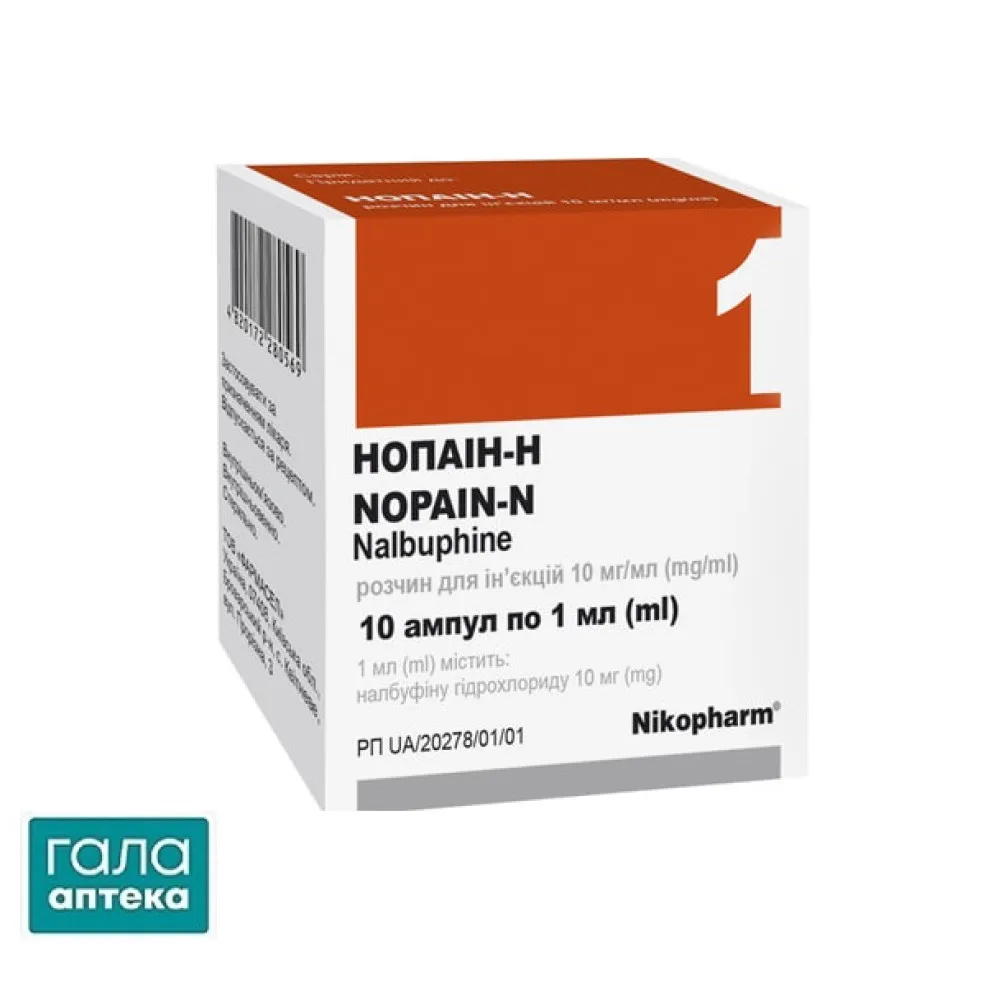
Table of Contents
INSTRUCTIONS for medical use of the medicinal product NOPAIN-N (NOPAIN-N)
Composition:
Active substance: nalbupine hydrochloride;
1 ml of solution contains nalbupine hydrochloride 10 mg;
Excipients: sodium citrate, citric acid monohydrate, sodium chloride, water for injections.
Pharmaceutical form. Injection solution.
Main physicochemical properties: a clear, colorless or almost colorless liquid.
Pharmacotherapeutic group. Analgesics. Opioids. Morphinan derivatives.
ATC code N02AF02.
Pharmacological Properties
Pharmacodynamics
Nalbupine hydrochloride is a potent analgesic. Its analgesic strength is essentially equivalent to that of morphine on a milligram basis. Receptor studies show that nalbupine hydrochloride binds to μ (mu), δ (delta), and κ (kappa) receptors, but not to σ (sigma) receptors. Nalbupine hydrochloride is a kappa-receptor agonist and a mu-receptor antagonist.
Nalbupine hydrochloride may produce a degree of respiratory depression similar to that of an equianalgesic dose of morphine. However, nalbupine hydrochloride injection exhibits a "ceiling effect," meaning that increasing the dose beyond 30 mg does not lead to further respiratory depression in the absence of other central nervous system (CNS) depressants that affect respiration.
Nalbupine hydrochloride itself has potent opioid antagonist activity at doses equal to or lower than its analgesic dose. The opioid antagonist activity of nalbupine hydrochloride is one-quarter greater than that of nalorphine and 10 times greater than that of pentazocine.
When administered after or concurrently with μ-agonist opioid analgesics (e.g., morphine, oxymorphone, fentanyl), nalbupine hydrochloride may partially reverse or block the opioid-induced respiratory depression caused by μ-agonist analgesics. Nalbupine hydrochloride injections may precipitate withdrawal symptoms in patients dependent on opioid drugs. Nalbupine hydrochloride injections should be used with caution in patients who are regularly receiving μ-opioid analgesics.
Effects on the Endocrine System
Chronic use of opioids may affect the hypothalamic-pituitary-gonadal axis, leading to androgen deficiency, which may manifest as low libido, impotence, erectile dysfunction, amenorrhea, or infertility. The causal role of opioids in the clinical syndrome of hypogonadism is not known, as various medical, physical, lifestyle, and psychological stress factors that may influence sex hormone levels have not been adequately controlled in studies conducted to date.
Pharmacokinetics
The effect of nalbupine hydrochloride begins within 2–3 minutes after intravenous administration and within less than 15 minutes after subcutaneous or intramuscular injection. The plasma elimination half-life of nalbupine is 5 hours, and in clinical studies, the duration of analgesic activity ranged from 3 to 6 hours.
Clinical Characteristics
Indications.
The medicinal product Nopain-N is indicated for the treatment of moderate to severe pain requiring opioid analgesics and for which alternative treatment options are inadequate. Nopain-N may also be used as an adjunct to balanced anesthesia, for pre- and postoperative analgesia, and in obstetrics for pain relief during labor and delivery.
Warnings
Due to the risks of dependence, abuse, and misuse of opioids, even at recommended dosages, Nopain-N should be prescribed only for patients for whom alternative treatment options (e.g., non-opioid analgesics):
- do not provide adequate analgesia or are expected not to provide adequate analgesia;
- are contraindicated or are expected to be poorly tolerated.
Contraindications
The medicinal product is contraindicated in patients with:
- significant respiratory depression;
- acute or severe bronchial asthma in the absence of monitoring or resuscitation equipment;
- known or suspected gastrointestinal obstruction, including paralytic ileus;
- hypersensitivity to nalbuphine hydrochloride or to any component of the medicinal product.
Interaction with Other Medicinal Products and Other Forms of Interaction
Benzodiazepines and Other CNS Depressants
Although injectable nalbuphine hydrochloride antagonizes the effects of opioids, data indicate that in patients not dependent on opioids, it may not block the effects of opioid analgesics administered immediately before, concurrently with, or right after nalbuphine hydrochloride injection. Therefore, due to additive pharmacological effects, concomitant use of other opioid analgesics, benzodiazepines, or other central nervous system (CNS) depressants—such as alcohol, other sedatives/hypnotics, anxiolytics, tranquilizers, muscle relaxants, general anesthetics, antipsychotics, and other opioids—should be avoided, as this may increase the risk of respiratory depression, profound sedation, coma, and death. Such concomitant medications should be available only when alternative treatment options are insufficient. Doses and duration of treatment should be limited to the minimum required, and patients should be closely monitored for signs of respiratory depression and sedation.
Serotonergic Agents
Concomitant use of opioids with other medicinal products affecting the serotonergic neurotransmitter system, such as selective serotonin reuptake inhibitors (SSRIs), serotonin-norepinephrine reuptake inhibitors (SNRIs), tricyclic antidepressants (TCAs), triptans, 5-HT3 receptor antagonists, other serotonergic agents (e.g., mirtazapine, trazodone, tramadol), and monoamine oxidase inhibitors (MAOIs) (used for psychiatric disorders, as well as others such as linezolid and intravenous methylene blue), has resulted in serotonin syndrome (see section "Special Precautions").
If concomitant use is warranted, patients should be closely monitored, particularly during treatment initiation and dose adjustment. If serotonin syndrome is suspected, nalbuphine hydrochloride injection should be discontinued immediately.
Monoamine Oxidase Inhibitors (MAOIs)
The interaction between monoamine oxidase inhibitors (e.g., phenelzine, tranylcypromine, linezolid) and opioids may manifest as serotonin syndrome or opioid toxicity (e.g., respiratory depression, coma).
The use of Nopain-N is not recommended in patients taking MAOIs and within 14 days following discontinuation of MAOI therapy.
If urgent opioid administration is necessary, test doses with frequent titration of small doses should be used to control pain, with careful monitoring of blood pressure and signs and symptoms of CNS and respiratory depression.
Special precautions for use
Life-threatening respiratory depression
Serious, life-threatening, or even fatal respiratory depression has been reported with opioid use, even when administered as recommended. If not promptly recognized and treated, respiratory depression can lead to respiratory arrest and death. Management of respiratory depression may include close monitoring and the use of opioid antagonists, depending on the patient's clinical condition (see section "Overdose").
Retention of carbon dioxide (CO2) due to opioid-induced respiratory depression can exacerbate the sedative effects of opioids. Although serious, life-threatening, or fatal respiratory depression may occur at any time during treatment with injectable nalbuphine hydrochloride, the greatest risk occurs at the beginning of therapy and after dose increases. Patients should be closely monitored for respiratory depression, particularly during the first 24–72 hours after initiation of therapy and following any dose increase of injectable nalbuphine hydrochloride.
Proper dosing and titration of injectable nalbuphine hydrochloride are essential to reduce the risk of respiratory depression. Exceeding the recommended nalbuphine hydrochloride dose when converting patients from another opioid may result in fatal overdose upon administration of the first dose.
Concomitant use with benzodiazepines and other CNS depressants
Profound sedation, respiratory depression, coma, and death may occur when injectable nalbuphine hydrochloride is used concomitantly with benzodiazepines or other central nervous system (CNS) depressants (e.g., non-benzodiazepine sedatives/hypnotics, anxiolytics, tranquilizers, muscle relaxants, general anesthetics, antipsychotics, other opioids, alcohol). Due to these risks, concomitant use of these drugs should be reserved for patients for whom alternative treatment options are inadequate.
Observational studies have demonstrated that concomitant use of opioid analgesics and benzodiazepines increases the risk of drug-related mortality compared to use of opioid analgesics alone. Because of similar pharmacological properties, a similar risk is expected with concomitant use of other CNS depressants with opioid analgesics.
If a decision is made to prescribe benzodiazepines or other CNS depressants together with an opioid analgesic, the lowest effective doses and shortest duration of concomitant use should be prescribed. For patients already receiving an opioid analgesic, a lower initial dose of the benzodiazepine or other CNS depressant should be prescribed than indicated in the absence of an opioid, and titrated according to clinical response. For patients already receiving a benzodiazepine or other CNS depressant who are starting an opioid analgesic, a lower initial dose of the opioid analgesic should be prescribed and titrated according to clinical response. Patients should be closely monitored for signs and symptoms of respiratory depression and sedation.
When injectable nalbuphine hydrochloride is used concomitantly with benzodiazepines or other CNS depressants (including alcohol and illicit drugs), both patients and caregivers should be informed of the risk of respiratory depression and sedation. Patients should be advised not to drive or operate machinery until the effects of concomitant use with benzodiazepines or other CNS depressants are known. Patients should be evaluated for substance use disorders, including opioid misuse and abuse, and warned about the risks of overdose and death associated with the use of additional CNS depressants, including alcohol and illicit drugs.
Life-threatening respiratory depression in patients with chronic pulmonary disease or in elderly, cachectic, or debilitated patients
The use of nalbuphine hydrochloride in patients with acute or severe bronchial asthma in the absence of appropriate monitoring or resuscitation equipment is contraindicated.
Patients with chronic pulmonary disease
Patients receiving injectable nalbuphine hydrochloride who have severe chronic obstructive pulmonary disease or cor pulmonale, or those with substantially decreased respiratory reserve, hypoxia, hypercapnia, or a history of respiratory depression, are at increased risk of respiratory depression, including apnea, even when receiving recommended doses.
Elderly, cachectic, or debilitated patients
Life-threatening respiratory depression is more likely to occur in elderly, cachectic, or debilitated patients, as they may have altered pharmacokinetics or clearance compared to younger, healthier patients. These patients require close monitoring, especially during initiation and titration of injectable nalbuphine hydrochloride and when used concomitantly with other respiratory depressants. Consideration should be given to using non-opioid analgesics as an alternative for these patients.
Adrenal insufficiency
Cases of adrenal insufficiency have been reported with opioid use, more commonly after use for more than one month. Adrenal insufficiency may present with non-specific symptoms and signs, including nausea, vomiting, anorexia, fatigue, weakness, dizziness, and hypotension. If adrenal insufficiency is suspected, prompt diagnosis is essential. If adrenal insufficiency is diagnosed, physiologic replacement doses of corticosteroids should be initiated and opioid use discontinued to allow recovery of adrenal function. Corticosteroid therapy should be continued until adrenal function recovers. Other opioids may be considered, as there have been reports of successful use of other opioids without recurrence of adrenal insufficiency. Available data do not indicate that any specific opioid is more likely to be associated with adrenal insufficiency.
Use in patients with increased intracranial pressure or head injury
The effects of respiratory depression and the ability of analgesics to increase intracranial pressure (due to vasodilation following CO2 retention) may be markedly increased in the presence of head trauma, intracranial lesions, or a history of increased intracranial pressure. In addition, potent analgesics may produce effects that could mask clinical signs in patients with head injuries. Therefore, injectable nalbuphine hydrochloride should be used only if clearly necessary and with extreme caution under these conditions.
Dependence, abuse, and misuse
Abuse
Nalbuphine has potential for abuse, misuse, addiction, and illegal distribution.
All patients receiving opioids should be closely monitored for signs of abuse and dependence, as the use of opioid analgesics carries a risk of dependence, even when used appropriately for medical purposes.
Nalbuphine, like other opioids, may be diverted for non-medical use in illegal distribution channels.
Measures to reduce opioid abuse include appropriate patient assessment, proper prescribing practices, and periodic re-evaluation of therapy.
Specific risks associated with nalbuphine hydrochloride abuse
Abuse of nalbuphine hydrochloride carries the risk of overdose and death. The risk is increased when nalbuphine hydrochloride is abused with alcohol or other CNS depressants.
Parenteral drug abuse is commonly associated with transmission of infectious diseases such as hepatitis and HIV.
Dependence
With prolonged therapy using opioid analgesics, both tolerance and physical dependence may develop. Tolerance is the need for increasing doses of opioids to maintain a defined effect such as pain relief (in the absence of disease progression or other external factors). Tolerance may develop to both desired and adverse effects of drugs, and develops at different rates for different effects.
Physical dependence leads to withdrawal symptoms following abrupt discontinuation or a significant dose reduction of the drug. Withdrawal symptoms may be mitigated with opioid receptor antagonists (e.g., naloxone, nalmefene), opioid receptor agonist-antagonists (e.g., pentazocine, butorphanol, nalbuphine), or partial agonists (e.g., buprenorphine). Clinically significant physical dependence may not manifest until several days or even weeks of continuous opioid analgesic use.
Abrupt discontinuation of nalbuphine hydrochloride is not recommended (see section "Dosage and administration"). If a patient physically dependent on opioids abruptly stops taking Nopain-N, withdrawal symptoms may occur. These may include restlessness, lacrimation, rhinorrhea, yawning, sweating, chills, muscle pain, and miosis. Other signs and symptoms may also develop, including irritability, anxiety, back pain, joint pain, weakness, abdominal cramps, insomnia, nausea, anorexia, vomiting, diarrhea, or elevated blood pressure, respiratory rate, or pulse.
Infants born to women physically dependent on opioid analgesics will also be physically dependent and may experience respiratory complications and withdrawal symptoms.
Withdrawal (abstinence syndrome)
The use of nalbuphine hydrochloride, a mixed opioid receptor agonist-antagonist, in patients receiving opioid receptor agonists may reduce analgesic efficacy and/or precipitate withdrawal symptoms. Concomitant use of nalbuphine hydrochloride with opioid receptor agonists should be avoided.
Discontinuation of nalbuphine hydrochloride in dependent patients should be achieved by gradual dose reduction (see section "Dosage and administration"). Abrupt discontinuation of nalbuphine hydrochloride is not recommended in such patients.
Renal or hepatic impairment
Since nalbuphine is metabolized in the liver and excreted by the kidneys, injectable nalbuphine hydrochloride should be used with caution in patients with renal or hepatic impairment and administered in reduced doses.
Myocardial infarction
Like all potent analgesics, nalbuphine hydrochloride should be used with caution in patients with myocardial infarction who have nausea or vomiting.
Biliary tract surgery
Like all opioid analgesics, nalbuphine hydrochloride should be used with caution in patients undergoing biliary tract surgery, as it may cause spasm of the sphincter of Oddi.
Cardiovascular system
A high incidence of bradycardia has been observed during anesthesia with nalbuphine hydrochloride in patients who did not receive atropine prior to surgery.
Information for patients
Serotonin syndrome
Opioids may cause a rare but potentially life-threatening condition when used concomitantly with serotonergic drugs. Patients should be warned about the symptoms of serotonin syndrome and advised to seek immediate medical attention if such symptoms occur. Patients should also be instructed to inform their physician if they are taking or plan to take serotonergic drugs (see section "Interaction with other medicinal products and other forms of interaction").
- Nalbuphine hydrochloride is associated with sedation and may impair physical and mental abilities required for potentially hazardous activities, such as driving a car or operating machinery.
- Nalbuphine hydrochloride should be used only as prescribed by a physician. Dosage and frequency should not be increased without prior consultation with a physician, as the drug may cause psychological or physical dependence.
- Concomitant use of nalbuphine hydrochloride with other opioids and abrupt discontinuation of nalbuphine hydrochloride after prolonged use may cause withdrawal signs and symptoms.
Laboratory tests
Injectable nalbuphine hydrochloride may affect the results of enzymatic tests for opioids, depending on the specificity/sensitivity of the test. It is recommended to consult the test manufacturer for more detailed information.
Elderly patients
Elderly patients (aged 65 years and older) may have increased sensitivity to injectable nalbuphine hydrochloride due to a higher prevalence of decreased hepatic, renal, or cardiac function, concomitant diseases, or other medications. Dose selection for elderly patients should be cautious, starting at the lower end of the dosing range.
Respiratory depression is the primary risk for elderly patients treated with opioids, occurring after administration of high initial doses in opioid-naïve patients or when opioids are used concomitantly with other respiratory depressants. The dose of injectable nalbuphine hydrochloride should be titrated slowly in elderly patients.
Carcinogenesis
Long-term carcinogenicity studies were conducted in rats and mice with oral administration at doses up to 200 mg/kg (1180 mg/m²) and 200 mg/kg (600 mg/m²) per day, respectively. No evidence of increased tumor incidence was observed in the tested animals. The maximum recommended human daily dose is 160 mg subcutaneously, intramuscularly, or intravenously, or approximately 100 mg/m²/day for a 60 kg patient.
Mutagenesis
Injectable nalbuphine hydrochloride did not show mutagenic activity in the Ames test with four bacterial strains, the HGPRT test in Chinese hamster ovary cells, or the sister chromatid exchange assay. However, injectable nalbuphine hydrochloride induced an increased frequency of mutations in the mouse lymphoma assay. Clastogenic activity was not observed in the micronucleus test in mice or the bone marrow cytogenetic assay in rats.
Use during pregnancy or breastfeeding
Pregnancy
Teratogenic effects: Reproductive studies were conducted in rats with subcutaneous nalbuphine administration up to 100 mg/kg/day or 590 mg/m²/day, approximately 6 times the maximum recommended human dose (MRHD), and in rabbits with intravenous nalbuphine administration up to 32 mg/kg/day or 378 mg/m²/day, approximately 4 times the MRHD. No evidence of developmental toxicity, including teratogenicity or fetal harm, was observed. However, adequate and well-controlled studies in pregnant women have not been conducted. Since animal reproductive studies do not always predict human response, the drug should be used during pregnancy only if clearly needed.
Non-teratogenic effects: Studies in rats showed reduced birth weight and postnatal survival in offspring when nalbuphine hydrochloride was administered subcutaneously to male and female rats prior to mating, during gestation and lactation, or to pregnant rats during the last third of gestation and lactation at doses approximately 4 times the maximum recommended human dose.
Adverse effects in fetus/newborn
Severe fetal bradycardia has been reported with the use of nalbuphine hydrochloride during labor. These effects can be reversed with naloxone. There are no reports of fetal bradycardia in early pregnancy, but the possibility cannot be excluded. The drug should be used during pregnancy only when necessary, when the potential benefit to the mother outweighs the risks to the fetus, and with fetal monitoring for any adverse effects.
Labour and delivery
Adverse effects reported in the fetus and newborn after maternal administration of nalbuphine during labor include fetal bradycardia, respiratory depression at birth, apnea, cyanosis, and hypotension. Some of these effects have been life-threatening. Administration of naloxone to the mother during labor has sometimes reversed these effects. Severe and prolonged fetal bradycardia has been reported. Cases of persistent neurological injury associated with fetal bradycardia have occurred. Persistent neurological damage related to fetal bradycardia has been observed. Sinusoidal fetal heart rate patterns have also been reported with nalbuphine hydrochloride use. The drug should be used during labor only if clearly necessary and when the potential benefit outweighs the risks to the child. Newborns should be monitored for respiratory depression, apnea, bradycardia, and arrhythmias if nalbuphine hydrochloride is used.
Opioids cross the placenta and may cause respiratory depression and psychophysiological effects in newborns. Nalbuphine hydrochloride crosses the placenta significantly, rapidly, and variably, with maternal-to-fetal concentration ratios ranging from 1:0.37 to 1:6. An opioid antagonist, naloxone, may be required to reverse opioid-induced respiratory depression in the newborn. If alternative pain relief methods are available, nalbuphine hydrochloride is not recommended for use in pregnant women during or immediately before labor. Opioid analgesics, including nalbuphine hydrochloride, may prolong labor by temporarily reducing the strength, duration, and frequency of uterine contractions. However, this effect is not consistent and may be offset by an increased rate of cervical dilation, shortening labor duration. Newborns exposed to opioid analgesics during labor should be monitored for signs of excessive sedation and respiratory depression.
Breastfeeding
Some data indicate that nalbuphine hydrochloride is excreted in breast milk, but only in small amounts (less than 1% of the administered dose) and with clinically insignificant effects.
Infants exposed to nalbuphine hydrochloride through breast milk should be monitored for excessive sedation and respiratory depression. Withdrawal symptoms may occur in breastfed infants when the mother discontinues opioid analgesic use or stops breastfeeding.
Fertility
Animal studies with subcutaneous administration of doses up to 56 mg/kg/day or 330 mg/m²/day showed no adverse effects on male or female fertility.
Ability to affect reaction speed when driving or operating machinery. The medicinal product may impair mental or physical abilities required for potentially hazardous activities; therefore, during treatment, outpatients are advised to refrain from driving vehicles and operating machinery.
After emergency medical care, patients should remain under observation until the effects of nalbuphine hydrochloride that may affect the ability to drive or operate machinery have completely subsided.
Administration and Dosage
Important Instructions Regarding Dosage and Method of Administration
The medicinal product should be administered only by healthcare professionals who have completed specialized training in the use of intravenous anesthetics and in the management of respiratory effects of potent opioids. Naloxone, appropriate resuscitation and intubation equipment, and oxygen must be immediately available.
Dosage for each patient must be individualized, taking into account the severity of pain, the patient's response to the drug, prior experience with analgesic treatment, and risk factors for dependence, abuse, and misuse.
Dosage is based on patient weight. Exercise caution to avoid dosage errors due to confusion between milligrams (mg) and milliliters (mL), which may lead to accidental overdose (see Dosage Table 1 below).
Patients must be closely monitored for respiratory depression, especially during the first 24–72 hours after initiation of therapy and following any dose increase, and dosage should be adjusted accordingly.
Before administration, parenteral solutions should be inspected visually for particulate matter and discoloration.
Initial Dose
The usual recommended dose for adults is 10–20 mg of nalbupine hydrochloride for patients weighing 70 kg, equivalent to 0.1–0.3 mg/kg body weight, administered subcutaneously, intramuscularly, or intravenously; if necessary, this dose may be repeated every 3–6 hours. The dose should be adjusted according to the severity of pain, the patient's physical condition, and concomitant use of other medicinal products (see section "Special Warnings and Precautions for Use"). For patients not tolerant to nalbupine hydrochloride, the maximum recommended single dose should not exceed 20 mg, and the maximum total daily dose should not exceed 160 mg.
Table 1: Dosage Table for Adult Patients:
| Dose per administration |
Maximum single dose |
Maximum volume per administration |
Maximum daily dose |
Maximum daily volume |
| 0.1 – 0.3 mg/kg |
20 mg |
2 ml |
160 mg |
16 ml |
The use of the medicinal product Nopain-N as an adjunctive agent for balanced anesthesia requires higher doses than those recommended for analgesia. Induction doses of nalbupine hydrochloride range from 0.3 mg/kg to 3 mg/kg intravenously, administered over 10–15 minutes, and maintenance doses are 0.25–0.5 mg/kg as a single intravenous injection when needed. The use of nalbupine hydrochloride may be associated with respiratory depression, which can be reversed with the opioid antagonist naloxone hydrochloride.
Gradual dose escalation and maintenance therapy
The dose of nalbupine hydrochloride should be gradually increased individually until reaching a dose that provides adequate analgesia and minimizes adverse reactions. Patients receiving nalbupine hydrochloride must be continuously monitored to assess pain intensity and the relative frequency of adverse reactions, as well as to monitor for the development of dependence, abuse, or misuse. Frequent communication among the physician, other healthcare providers, the patient, and the caregiver is essential during periods of changing analgesic requirements, including initial titration.
If pain intensity increases after dose stabilization, the source of pain should be determined before increasing the dose of nalbupine hydrochloride. If adverse opioid-related reactions occur, dose reduction should be considered. Dose adjustments should be made to achieve an appropriate balance between pain relief and opioid-related side effects.
Discontinuation of Nopain-N
When a patient who has been regularly taking nalbupine hydrochloride and has physical dependence no longer requires therapy with nalbupine hydrochloride, it is recommended to gradually reduce the dose by 25–50% every 2–4 days, with careful monitoring for signs and symptoms of withdrawal. If such signs or symptoms appear, the dose should first be increased to the previous level, then gradually decreased by increasing the interval between doses, reducing the dose amount, or both. Abrupt discontinuation of nalbupine hydrochloride in physically dependent patients is not recommended (see section "Special precautions").
Children. Safety and efficacy in pediatric patients (under 18 years of age) have not been established.
Overdose
Clinical presentation
Acute overdose of the medicinal product may manifest as respiratory depression and dysphoria.
Acute overdose with concomitant use of nalbupine hydrochloride and other opioids or CNS depressants may present as respiratory depression, drowsiness progressing to stupor or coma, skeletal muscle weakness, cold and clammy skin, pinpoint pupils, and in some cases, pulmonary edema, bradycardia, hypotension, partial or complete airway obstruction, atypical snoring, and death. In cases of overdose associated with hypoxia, marked mydriasis rather than miosis may be observed.
Treatment of overdose
In case of overdose, immediate measures include restoration and maintenance of airway patency, and if necessary, assisted or controlled ventilation. Additional supportive measures (including oxygen and vasopressors) should be applied as indicated for circulatory shock and pulmonary edema. Cardiac arrest or arrhythmia requires advanced life support.
Opioid antagonists, naloxone or nalmefene, are specific antidotes for respiratory depression caused by opioid overdose. In cases of clinically significant respiratory or circulatory depression due to nalbupine hydrochloride overdose, an opioid antagonist should be administered. Opioid antagonists should not be used in the absence of clinically significant respiratory or circulatory depression caused by nalbupine hydrochloride overdose.
Since the duration of action of opioid antagonists is expected to be shorter than the duration of nalbupine, the patient should be carefully monitored until spontaneous respiration is restored. If the response to an opioid antagonist is suboptimal or transient, additional doses of the antagonist should be administered according to the instructions for medical use of the product.
In patients physically dependent on opioids, administration of the usual recommended dose of an antagonist may precipitate acute withdrawal syndrome. The severity of withdrawal symptoms will depend on the degree of physical dependence and the dose of the antagonist administered. If treatment of severe respiratory depression in a physically dependent patient is required, administration of the antagonist should begin cautiously, using smaller than usual doses titrated gradually.
Adverse Reactions
The most common adverse reaction in patients receiving nalbuphine hydrochloride injection in clinical trials was sedation (36%).
Less frequent reactions included: sweating/stickiness (9%), nausea/vomiting (6%), dizziness/vertigo (5%), dry mouth (4%), and headache (3%).
Other adverse reactions occurring at a frequency of 1% or less were as follows.
Nervous system disorders: anxiety, depression, restlessness, crying, euphoria, clouding of consciousness, hostility, unusual dreams, confusion, syncope, hallucinations, dysphoria, feeling of heaviness, numbness, tingling, unreality. The incidence of psychotomimetic effects such as unreality, depersonalization, delirium, dysphoria, and hallucinations was lower than with pentazocine.
Cardiac disorders: hypertension, hypotension, bradycardia, tachycardia.
Respiratory, thoracic and mediastinal disorders: respiratory depression, dyspnea, asthma.
Gastrointestinal disorders: abdominal cramps, bitter taste in mouth, dyspepsia.
Skin and subcutaneous tissue disorders: pruritus, burning, urticaria.
Immune system disorders: anaphylactic/anaphylactoid and other serious hypersensitivity reactions, which may require immediate supportive medical treatment. These reactions may include shock, respiratory distress syndrome, respiratory arrest, bradycardia, cardiac arrest, hypotension, and laryngeal edema. Some of these allergic reactions may be life-threatening. Other reports of allergic-type reactions include stridor, bronchospasm, wheezing, edema, rash, pruritus, nausea, vomiting, increased sweating, weakness, and tremor.
Other: dysarthria, urinary urgency, blurred vision, flushing, feeling of warmth.
Post-marketing experience
Due to the nature and limitations of spontaneous reporting, a causal relationship has not been established for the following adverse events observed during post-marketing use of nalbuphine hydrochloride injection: abdominal pain, pyrexia, depression or loss of consciousness, somnolence, tremor, agitation, pulmonary edema, excitement, seizures, and injection site reactions such as pain, swelling, redness, burning, and feeling of warmth. Fatal cases due to severe allergic reactions to nalbuphine hydrochloride injection have been reported.
Cases of fetal death have been reported when mothers received nalbuphine hydrochloride injection during labor.
Serotonin syndrome: cases of serotonin syndrome, a potentially life-threatening condition, have been reported with concomitant use of opioids and serotonergic agents.
Adrenal insufficiency: cases of adrenal insufficiency have been reported with opioid use, more commonly after more than 1 month of treatment.
Reporting of suspected adverse reactions
Reporting of adverse reactions after marketing authorization of a medicinal product is of great importance. It allows continuous monitoring of the benefit-risk profile of the medicinal product. Healthcare professionals, pharmacists, patients, or their legal representatives are encouraged to report all suspected adverse reactions and lack of efficacy through the Automated Pharmacovigilance Information System at: https://aisf.dec.gov.ua.
Shelf life. 2 years.
Do not use the medicinal product after the expiry date stated on the packaging.
Storage conditions. Store in the original packaging at a temperature not exceeding 25 °C.
Keep out of reach of children.
Incompatibilities. The medicinal product should not be mixed with other injectable solutions in the same syringe.
Packaging.
1 mL in a polyethylene ampoule. 10 ampoules per cardboard pack.
2 mL in a polyethylene ampoule. 5 or 10 ampoules per cardboard pack.
Prescription status. Prescription only.
Manufacturer. LLC "PHARMASEL".
Address of manufacturer and location of its business activity.
3, Vul. Prorizna, S. Kvitneve, Brovarskyi district, Kyiv region, 07408, Ukraine.