Nomigran bosnalék®
Ukraine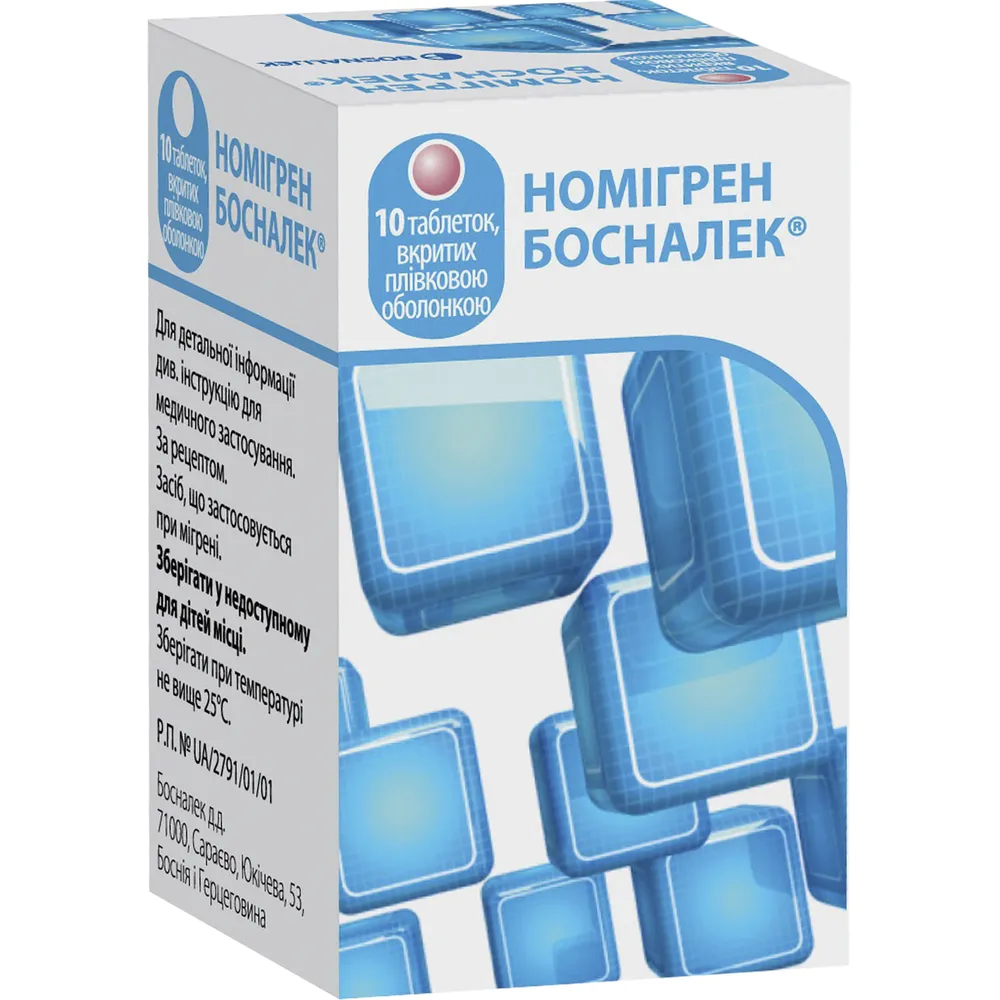
Table of Contents
INSTRUCTIONS FOR MEDICAL USE OF THE MEDICINAL PRODUCT NOMIGREN BOSNALIJEKÒ (NOMIGREN BOSNALIJEKÒ)
Composition:
Active substances: ergotamine tartrate, mecloxamine citrate, camylofin hydrochloride, caffeine, propyphenazone;
One film-coated tablet contains: ergotamine tartrate 0.75 mg, mecloxamine citrate 20 mg, camylofin hydrochloride 25 mg, caffeine 80 mg, propyphenazone 200 mg;
Excipients: maize starch, lactose monohydrate, crospovidone, talc, magnesium stearate, gelatin, colloidal anhydrous silicon dioxide, tartaric acid, iron oxide red (E 172), titanium dioxide (E 171), macrogol 6000, 30% polyacrylate dispersion, polysorbate 80, sodium carmellose.
Pharmaceutical form. Film-coated tablets.
Main physicochemical properties: round, biconvex, dark pink film-coated tablets.
Pharmacotherapeutic group.
Medicinal products used in migraine. Ergot alkaloids. Ergotamine, combinations without psychotropic agents.
ATC code N02CA52.
Pharmacological properties.
Pharmacodynamics.
The active ingredients of the medicinal product Nomigran Bosnaliek® act synergistically and comprehensively on migraine pain and accompanying symptoms.
Ergotamine tartrate – an alkaloid of ergot, stimulates smooth muscle and causes vasoconstriction of cerebral and peripheral blood vessels, thereby reducing cerebral edema.
Mecloxyamine citrate exerts mild sedative, antiemetic, and antihistaminic effects.
Camilophine hydrochloride acts as a spasmolytic, eliminating the initial vasospasm in the prodromal phase of a migraine attack.
Propyphenazone exerts an analgesic effect.
Caffeine enhances the absorption of ergotamine and potentiates its therapeutic effect.
After oral administration, the active ingredients of Nomigran Bosnaliek® are rapidly and completely absorbed from the gastrointestinal tract.
Pharmacokinetics.
Absorption.
After oral administration, the active components of the drug are rapidly and well absorbed from the gastrointestinal tract. Following administration of ergotamine at a dose of 2 mg, its maximum plasma concentration reaches 20 µg/mL within 70 minutes.
Distribution.
Ergotamine is poorly distributed into cerebrospinal fluid. The distribution half-life is 2.7 hours, and the volume of distribution is 1.85 L/kg. Camilophine, as an ester compound, is rapidly hydrolyzed, so its effect appears quickly but declines just as rapidly. Mecloxyamine citrate has high bioavailability. Its plasma half-life is 1.5–2 hours. Caffeine is distributed into cerebrospinal fluid and other tissues. The volume of distribution is 0.53–0.56 L/kg. Propyphenazone is approximately 10% bound to plasma proteins. The volume of distribution is 0.4 L/kg.
Metabolism.
Biological transformation of the active components of the drug occurs in the liver.
Ergotamine is metabolized via hydroxylation of the A-ring of the molecule. Camilophine and propyphenazone undergo rapid metabolic hydrolysis, and mecloxyamine citrate undergoes the first-pass metabolism. Caffeine is metabolized relatively quickly through demethylation, hydroxylation, and acetylation, producing more than 25 metabolites.
Elimination.
Ergotamine is eliminated from the body via bile and feces. The elimination half-life is 1.5–2.5 hours. Propyphenazone, caffeine, camilophine, mecloxyamine citrate, and their metabolites are excreted in urine.
Clinical characteristics.
Indications.
Prevention or termination of vascular headache (migraine, cluster headache), namely:
- Migraine: termination of pain attacks;
- Cluster headache: termination and short-term prevention.
Contraindications.
- Hypersensitivity to any component of the drug;
- Leukopenia;
- Prostate adenoma;
- Peptic ulcer;
- Mechanical gastrointestinal tract stenosis;
- Megacolon;
- Tachyarrhythmias;
- Severe cerebral sclerosis;
- Vascular stenosis;
- Angina pectoris;
- Ischemic heart disease;
- Arterial hypertension;
- Peripheral circulation disorders;
- Temporal arteritis;
- Stroke;
- State of increased excitation;
- Sleep disorders;
- Closed-angle glaucoma;
- Genetically determined glucose-6-phosphate dehydrogenase deficiency (manifested as hemolytic anemia);
- Acute hepatic porphyria;
- Kidney and liver diseases;
- Sepsis;
- Hyperthyroidism;
- Malnutrition or nutritional deficiency;
- Hemiplegic or basilar migraine;
- Concomitant treatment with CYP3A4 inhibitors, including macrolides, HIV protease inhibitors or reverse transcriptase inhibitors, and antifungal agents;
- Concomitant treatment with vasoconstrictors, including ergot alkaloids, sumatriptan, and other 5HT1-receptor agonists;
- Age over 65 years.
Interaction with other medicinal products and other forms of interactions.
Potential interactions with other medicinal products are primarily related to ergotamine, which is a component of the drug. The amount of caffeine is such that its interaction effects will be significantly weaker than those of ergotamine.
Ergotamine.
Amantadine, quinidine, and tricyclic antidepressants enhance the drug's effect.
Some antidepressants, such as fluoxetine, fluvoxamine, or nefazodone, increase the levels of ergotamine derivatives. Concurrent use of ergotamine with serotonin reuptake inhibitors may lead to serotonin syndrome. Therefore, such concomitant use requires caution.
Potent CYP3A4 inhibitors, including macrolide antibiotics. Macrolide antibiotics are potent CYP3A4 inhibitors; therefore, concomitant use with Nomigren Bosnalék® may lead to increased plasma concentrations of ergotamine. Inhibition of ergotamine metabolism increases the risk of cerebral ischemia, which can be fatal.
Concomitant use with tetracyclines increases the risk of ergotism.
HIV protease inhibitors or reverse transcriptase inhibitors (e.g., ritonavir, indinavir, nelfinavir, delavirdine) or azole antifungal agents (e.g., ketoconazole, itraconazole, voriconazole): concomitant use with Nomigren Bosnalék® should be avoided. Such combinations may cause manifestations of increased toxicity (vasospasm and ischemia of limbs and other tissues). Ergot alkaloids are known to be both inhibitors and substrates of CYP3A.
Moderate/weak CYP3A4 inhibitors. Moderate and weak CYP3A4 inhibitors, such as cimetidine, fluconazole, and grapefruit juice, may also enhance the effect of ergotamine; therefore, caution is required when used concomitantly.
Pharmacokinetic interactions between ergotamine and cytochrome P450 isoenzymes are unknown.
Vasoconstrictive agents. Concomitant use with vasoconstrictive drugs is not recommended, as it may lead to life-threatening arterial hypertension.
Propranolol may enhance the vasoconstrictive effect of Nomigren Bosnalék®.
Serotonin (5-HT1) receptor agonists (e.g., sumatriptan). Ergotamine must not be used within 6 hours after administration of almotriptan, sumatriptan, rizatriptan, or zolmitriptan. Almotriptan, eletriptan, sumatriptan, and rizatriptan should not be used within 24 hours, and zolmitriptan within 6 hours, after ergotamine administration.
Alcohol. Concomitant use of Nomigren Bosnalék® with other sedatives or alcohol may lead to enhanced sedative effects.
Nicotine. Vasoconstriction may occur, increasing the risk of ischemia.
Concomitant use with tetracyclines increases the risk of ergotism.
Caffeine:
- With phenytoin, caffeine clearance increases during concomitant use;
- With fluvoxamine, caffeine clearance decreases during concomitant use;
- With analgesic-antipyretic agents, the effect of caffeine is enhanced;
- With alpha- and beta-adrenergic agonists, xanthine derivatives, and psychostimulants, the effects of these medicinal products are enhanced; thyroid effects of thyrotropic agents are increased;
- With opioid analgesics, anxiolytics, hypnotics, and sedatives, the effects of these medicinal products are reduced;
- Regarding anesthetic agents, CNS depressants, and adenosine-containing drugs, caffeine acts as an antagonist;
- Lithium preparations: caffeine reduces blood lithium concentration;
- With medicinal products that stimulate the central nervous system, caffeine excessively stimulates the CNS;
- With MAO inhibitors – may lead to dangerous cardiac arrhythmia or increased blood pressure;
- May affect laboratory test results for blood glucose and uric acid levels.
Special precautions for use.
The drug is not intended for migraine prophylaxis.
Patients suffering from bronchial asthma, chronic respiratory diseases or allergic rhinitis, or those who have any manifestations of hypersensitivity to anti-rheumatic or analgesic drugs, should consult a physician.
The drug is used symptomatically and may affect the ability to drive vehicles and operate other machinery, especially when combined with alcohol. If the first signs of adverse effects occur or pregnancy is suspected, immediate medical advice must be sought. There is no data regarding potential dependence on the drug.
Patients with such rare hereditary conditions as galactose intolerance, Lapp lactase deficiency, or glucose-galactose malabsorption should not take this drug.
Cardiovascular effects. Vasospasm may develop with daily use of the drug or when used in doses exceeding the recommended ones.
Due to its vasoconstrictive properties, ergotamine may cause myocardial ischemia and, in individual cases, even myocardial infarction in patients with undiagnosed ischemic heart disease. If chest pain occurs, treatment should be discontinued immediately.
Ergotism. To avoid the risk of ergotism, patients receiving this medicinal product should be informed about the maximum allowable dose and the first symptoms of overdose: hypoesthesia, paresthesia, including numbness and tingling in fingers of hands and feet; nausea and vomiting unrelated to migraine; and symptoms of myocardial ischemia such as chest pain. If such symptoms occur, the drug should be discontinued immediately and urgent medical advice sought.
Caffeinism. The amount of caffeine in the drug is such that its effects will be significantly weaker than those of ergotamine. To avoid undesirable consequences (overdose, excessive stimulation, caffeinism), consumption of excessive coffee, strong tea, and other (including carbonated) tonic beverages containing caffeine should be avoided during treatment. Caffeine stimulates diuresis (increases frequency of urination). Although current data are lacking, development of dependence or drug addiction with prolonged use of this medicinal product cannot be ruled out.
Fibrotic complications. If ergotamine-containing drugs are used excessively and for prolonged periods contrary to recommendations, they may cause fibrotic changes, particularly in the pleura and retroperitoneal space. Isolated reports of fibrotic changes in heart valves have been documented.
Hepatic impairment. Patients with mild to moderate liver dysfunction, especially those diagnosed with cholestasis, should use the drug under medical supervision.
Medication-overuse headache. Cases of headache caused by prolonged and continuous use of ergotamine-containing drugs have been reported.
Visual disturbances. During the post-marketing period, cases of sudden transient vision loss have been reported. This adverse event may be related to vasospasm and ischemia. In such cases, the drug must be discontinued immediately and medical help sought urgently.
Use during pregnancy or breastfeeding.
Pregnancy.
There is a risk of fetal exposure. The drug is contraindicated in pregnant women and in women planning pregnancy.
Breastfeeding.
Ergotamine and caffeine pass into breast milk. Use of the drug during breastfeeding is contraindicated.
Ability to affect reaction speed while driving vehicles or operating machinery.
The drug may affect reaction speed while driving vehicles or operating machinery. If dizziness or drowsiness occurs after taking the drug, patients should refrain from any activities requiring heightened attention and rapid reaction until these symptoms resolve.
Method of Administration and Dosage.
The drug is recommended for oral use at the initial (prodromal) stages of an attack. If the physician has not prescribed otherwise, the drug should be used as follows:
- for termination of migraine attack (depending on the severity of symptoms):
Severe migraine.
1–2 tablets at the onset of headache; if necessary, an additional 1 tablet 30 minutes after the first dose, and every half hour thereafter as needed, up to a maximum of 4 tablets per day. It is recommended to use the drug no more than 2 times per week, with at least a 4-day interval between administrations. The maximum weekly dose should not exceed 10 tablets. No more than 2 therapeutic courses are recommended within 1 month.
Moderate migraine.
1 tablet at the onset of an attack. Maximum daily dose – 4 tablets. Total weekly dose should not exceed 10 tablets.
- termination and short-term prophylaxis of cluster headache.
For termination and short-term prophylaxis of attacks in patients with regular episodes.
4–5 tablets (3–4 mg calculated as ergotamine) per day in divided doses over 3 weeks. Take 30–60 minutes before the expected attack.
For short-term prophylaxis in patients with nocturnal attacks.
1–2 tablets (1–2 mg calculated as ergotamine) before bedtime.
To prevent unwanted adverse reactions, it is necessary to avoid taking excessive doses. Therefore, the recommended maximum weekly dose of no more than 10 tablets must not be exceeded.
Elderly patients.
There are no data regarding the need for dose adjustment in elderly patients. However, since conditions such as ischemic heart disease, renal and hepatic disorders, and severe arterial hypertension—commonly found in elderly patients—are contraindications, this medicinal product should be used with caution in this age group. The drug is not administered to patients aged 65 years and older.
Children.
Do not use.
Overdose.
Symptoms: nausea, vomiting, diarrhea, weakness, cold sensation, pain, tingling or cyanosis of extremities; seizures; muscle numbness, tinnitus, severe headache, dizziness, chest pain, arterial hypertension or hypotension, tachycardia, dyspnea, drowsiness, confusion, stupor, seizures, shock, weak pulse.
In case of chronic (systematic) overdose, symptoms and complications related to the effects of the drug components—namely ergotamine (ergotism) and/or caffeine (caffeinism)—may occur.
Ergotism is defined as intense arterial vasoconstriction with signs and symptoms of peripheral limb ischemia, such as numbness, tingling, and pain in the limbs, cyanosis, and absence of peripheral pulse. If treatment is not initiated promptly, this may lead to gangrene. Additionally, ergotism may also include signs and symptoms of vascular ischemia in other tissues (renal or cerebral vasospasm). In most cases, ergotism is associated with chronic intoxication and/or overdose. The toxic effect of a 15 mg dose of ergotamine lasts 24 hours, while a 40 mg dose may persist for several days.
Caffeinism may occur with high doses of caffeine (250–700 mg). It manifests as excitation or depression, restlessness, anxiety progressing to panic, sleep disturbances, dilated pupils, impaired coordination, skin flushing and dryness, intense thirst, muscle twitching, nausea, gastrointestinal disturbances, arrhythmia, and increased diuresis. Rarely, poisoning may lead to psychosis resembling delirium tremens (delirium). Recovery from intoxication is often accompanied by pulsating headache, dizziness, chest pain, tinnitus, blurred vision, and insomnia. Like other sympathomimetics, caffeine may potentially cause drug-induced hyperthermia.
Treatment: gastric lavage within 4 hours after drug intake, using activated charcoal and magnesium sulfate.
If vasoconstriction persists, vasodilators should be administered, but with caution to avoid worsening existing arterial hypotension. To reduce the risk of thrombosis, intravenous heparin or dextran may be administered. If necessary, the patient should be warmed, but not excessively. Adequate lung ventilation must be ensured, arterial hypotension corrected, and seizures controlled.
If symptoms of caffeine intoxication are present, intake of products, beverages, and medicinal products containing methylxanthines should be restricted. Regular coffee and carbonated drinks should be replaced with decaffeinated alternatives. Patients should be informed about which products, beverages, and medicinal products contain methylxanthines (caffeine). Gradual withdrawal of caffeine helps avoid pronounced withdrawal syndrome; analgesics may be prescribed for headache. Adequate rest is recommended.
Adverse Reactions
Adverse reactions mainly occur during prolonged treatment and use of high doses of the drug.
Immune system disorders: hypersensitivity reactions such as urticaria or redness of the skin, conjunctiva, and mucous membranes of the eyes and nasopharynx. If such adverse effects occur, the drug should be discontinued immediately and medical advice should be sought.
Occasionally, the following severe hypersensitivity reactions may occur: anaphylactic shock or agranulocytosis.
Anaphylactic shock is characterized by the following symptoms: cold sweat, dizziness, nausea, pallor, dyspnea, facial swelling, pruritus, cardiac failure, weak pulse, and cold sensation. These adverse effects may occur immediately after taking the drug or within 1 hour. If any of these symptoms occur, emergency first aid should be administered: ensure the patient can breathe deeply, clear the airways, place the patient in a horizontal position, and call a physician immediately.
Agranulocytosis is characterized by fever, chills, sore throat, difficulty swallowing, and inflammation of the mucous membranes of the mouth, nose, throat, and genital organs. Erythrocyte sedimentation rate is elevated, granulocyte count is low or absent, and hemoglobin, red blood cell, and platelet counts may be increased. If agranulocytosis is suspected, a blood test should be performed and, if necessary, the drug should be discontinued.
Central nervous system disorders: paresthesia (tingling sensation), hypoesthesia (numbness), weakness, dizziness, impaired consciousness, insomnia, restricted movement, medication-overuse headache, somnolence, hallucinations, seizures.
Eye disorders: blurred vision due to impaired accommodation; appearance of mobile green spots ("floaters") in the visual field, which may indicate the development of glaucoma.
Ear and labyrinth disorders: vertigo, tinnitus.
Respiratory, thoracic, and mediastinal disorders: dyspnea. Cases of pleuropulmonary fibrosis have been reported.
Cardiovascular system disorders: myocardial ischemia, cyanosis, cold extremities, gangrene, weak pulse, chest pain, ECG changes, transient tachycardia or bradycardia, arterial hypertension, peripheral vasoconstriction; in isolated cases – ear noise, infarction, endocardial fibrosis.
Gastrointestinal disorders: nausea and vomiting (not related to migraine), epigastric pain, dry mouth, abdominal pain, diarrhea. Cases of retroperitoneal fibrosis and intestinal ischemia have been reported.
Skin and subcutaneous tissue disorders: localized edema, pruritus, rash, skin redness, facial swelling.
Musculoskeletal and connective tissue disorders: back and limb muscle pain, myalgia, lower limb muscle cramps.
General disorders: muscle weakness.
Investigations: absence of pulse; may affect laboratory test results for blood glucose and uric acid levels; possible increase in creatinine clearance, increased excretion of sodium and calcium, slight increase in urinary concentration of 5-hydroxyindoleacetic acid, vanillylmandelic acid, and catecholamines.
Injury, poisoning, and procedural complications: ergotism, caffeinism.
Ergotism manifests as intense arterial vasoconstriction with signs and symptoms of peripheral vascular ischemia in limbs and other tissues. With uncontrolled, excessive, and prolonged use of drugs containing ergotamine, fibrotic changes may occur, particularly in the pleura and retroperitoneal space. Rare cases of fibrotic changes in heart valves have been reported. With prolonged and continuous treatment, medication-overuse headache may develop. High-dose caffeine intake (250–700 mg/day) may lead to caffeinism. Caffeinism syndrome is characterized by anxiety, sleep disturbances (similar to anxiety states), depression, tachypnea; upon sudden discontinuation – increased central nervous system depression with increased fatigue, somnolence, muscle tension, depression; palpitations, chest tightness; arrhythmia, increased gastric secretion.
Reporting suspected adverse reactions.
Reporting suspected adverse reactions associated with the use of this medicinal product is important for establishing a comprehensive safety profile and for refining the benefit-risk assessment of the drug. Such reporting supports ongoing monitoring of the benefit-risk balance and enables an adequate evaluation of the drug's safety profile.
Healthcare professionals, patients, and pharmacists are encouraged to report any suspected adverse reactions or lack of therapeutic effect to the Bosnalijek d.d. representative at the following email address: [email protected]
Shelf life.
2 years.
Storage conditions.
Store in a place inaccessible to children, at a temperature not exceeding 25 °C.
Packaging.
10 film-coated tablets in a tube, 1 tube in a cardboard box.
Prescription status.
Prescription only.
Manufacturer/Marketing Authorization Holder.
Bosnalijek d.d.
Manufacturer's address and place of business.
Yukicheva 53, 71000 Sarajevo, Bosnia and Herzegovina.