Nolicyn
Ukraine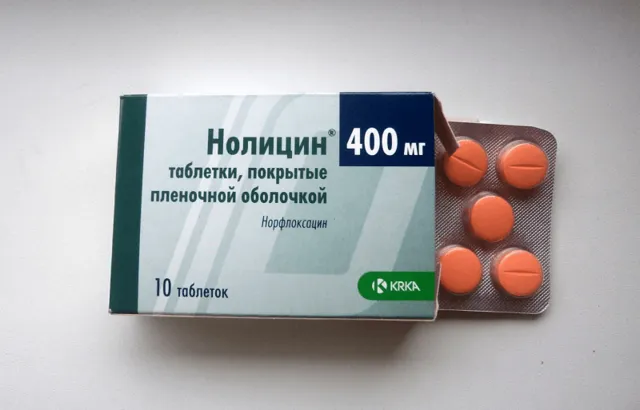
Table of Contents
INSTRUCTIONS FOR MEDICAL USE OF THE MEDICINAL PRODUCT NOLICIN (Nolicin®)
Composition:
Active substance: norfloxacin;
One film-coated tablet contains 400 mg of norfloxacin;
Excipients: povidone, sodium starch glycolate (type A), microcrystalline cellulose, colloidal anhydrous silicon dioxide, magnesium stearate, purified water;
Coating: hypromellose, talc, titanium dioxide (E 171), yellow azo dye FCF (E 110), propylene glycol.
Medicinal form. Film-coated tablets.
Main physico-chemical characteristics: orange-colored, slightly biconvex, round film-coated tablets with a score line on one side.
Pharmacotherapeutic group. Antibacterial agents of the quinolone group. Fluoroquinolones. ATC code J01MA06.
Pharmacological properties.
Pharmacodynamics.
The mechanism of norfloxacin's bactericidal action is due to inhibition of bacterial deoxyribonucleic acid (DNA) synthesis. At the molecular level, three main effects have been attributed to the action of norfloxacin in Escherichia coli cells:
-
inhibition of bacterial DNA synthesis through interference with the enzyme DNA gyrase;
-
prevention of DNA strand supercoiling;
-
fragmentation of DNA into smaller pieces.
Norfloxacin has a broad spectrum of antibacterial activity against Gram-positive and Gram-negative aerobic pathogenic microorganisms.
Pharmacokinetic/pharmacodynamic relationship
The degree of bactericologic activity of norfloxacin depends on the ratio between the maximum serum concentration (Cmax) or the area under the pharmacokinetic curve (AUC) and the minimum inhibitory concentration (MIC).
Mechanism of resistance
The primary mechanism of resistance development to quinolones, including norfloxacin, involves mutations in genes encoding DNA gyrase and topoisomerase IV, the targets of quinolone action. Additional resistance mechanisms include mutations in cell membrane proteins.
There is no cross-resistance with structurally unrelated agents such as penicillins, cephalosporins, tetracyclines, macrolide antibiotics, aminoglycosides, sulfonamides, 2,4-diaminopyrimidines, or combinations of these substances (e.g., co-trimoxazole).
Clinical breakpoints
MIC breakpoints for distinguishing susceptible (S) from resistant (R) pathogenic microorganisms, as defined by EUCAST (European Committee on Antimicrobial Susceptibility Testing):
Enterobacteriaceae: S < 0.5 µg/mL, R > 1 µg/mL.
For Neisseria gonorrhoeae and other strains, MIC breakpoints have not been established.
Susceptibility
The prevalence of resistance may vary geographically; therefore, local resistance data should be taken into account, especially when treating severe infections.
The following data provide information on the likely susceptibility of microorganisms to norfloxacin.
| Strains usually susceptible: |
| Gram-negative aerobic microorganisms: |
| Aeromonas hydrophilia |
| Proteus vulgaris |
| Providencia rettgeri |
| Salmonella spp. |
| Shigella spp. |
| Strains that may develop resistance: |
| Gram-positive aerobic microorganisms: |
| Enterococcus faecalis |
| Staphylococcus aureus (including penicillinase-producing strains) |
| Staphylococcus epidermidis |
| Staphylococcus saprophyticus |
| Streptococcus agalactiae |
| Gram-negative aerobic microorganisms: |
| Citrobacter freundii |
| Enterobacter aerogenes |
| Enterobacter cloacae |
| Escherichia coli |
| Klebsiella oxytoca |
| Klebsiella pneumoniae |
| Morganella morganii |
| Proteus mirabilis |
| Providencia stuartii |
| Pseudomonas aeruginosa |
| Serratia marcescens |
Pharmacokinetics.
Absorption
Norfloxacin is rapidly absorbed after oral administration. In healthy volunteers, absorption from the gastrointestinal tract amounted to 30–40% of the oral dose. This resulted in a plasma concentration of 1.5 µg/mL within 1 hour after oral administration of a 400 mg dose. The mean elimination half-life ranged from 3 to 4 hours and was independent of dose.
Distribution
The following are average concentrations of norfloxacin in various body fluids and tissues measured 1–4 hours after administration of two 400 mg doses, unless otherwise specified:
Tissue or fluid Concentration
Renal parenchyma 7.3 µg/g
Prostate 2.5 µg/g
Semen 2.7 µg/mL
Testes 1.6 µg/g
Uterus/cervix 3.0 µg/g
Fallopian tubes 1.9 µg/g
Vagina 4.3 µg/g
Bile 6.9 µg/mL (after 2×200 mg)
Protein binding is less than 15%.
Metabolism and Excretion
Norfloxacin is eliminated via metabolism, biliary excretion, and renal excretion. After a single 400 mg dose of norfloxacin, mean values of antimicrobial activity corresponding to 278, 773, and 82 µg of norfloxacin/g of feces were obtained at 12, 24, and 48 hours, respectively.
Renal excretion occurs both by glomerular filtration and tubular secretion, as evidenced by the high renal clearance rate (approximately 275 mL/min). After a single 400 mg dose, urinary concentrations reach levels of 200 µg/mL or higher in healthy volunteers and remain above 30 µg/mL for at least 12 hours. Within the first 24 hours, 33–48% of the administered dose is recovered in urine.
Norfloxacin is present in urine as norfloxacin and six active metabolites with lower antimicrobial activity. The parent compound accounts for more than 70% of total excreted drug. The bactericidal activity of norfloxacin is independent of urine pH.
Clinical Characteristics.
Indications.
Norfloxacin is a bactericidal quinolone agent with a broad spectrum of activity and should be used only when other antibacterial agents have been found ineffective or inappropriate. It is indicated for the treatment of the following conditions: uncomplicated acute infections of the upper and lower urinary tract:
- Uncomplicated and chronic cystitis;
- Acute cystitis;
- Uncomplicated acute pyelonephritis;
- Bacterial prostatitis;
- Epididymoorchitis, particularly caused by susceptible strains of Neisseria gonorrhoeae;
- Urethritis, particularly caused by susceptible strains of Neisseria gonorrhoeae;
- Complicated infections of the urinary tract (excluding pyelonephritis).
Official guidelines on the appropriate use of antibacterial agents should be taken into account.
Contraindications.
Hypersensitivity to norfloxacin, to any other component of this medicinal product, or to other quinolone derivatives. History of tendinitis or tendon rupture associated with quinolone therapy. Pregnancy and lactation.
The drug is also contraindicated in children due to insufficient experience with use in this age group and the potential for joint cartilage damage during periods of growth.
Interaction with other medicinal products and other forms of interaction.
Concomitant administration of probenecid does not affect the serum concentration of norfloxacin but reduces its urinary excretion.
In vitro studies have shown that quinolones, including norfloxacin, are inhibitors of the CYP1A2 isoenzyme. Concomitant administration of norfloxacin with drugs metabolized by the CYP1A2 isoenzyme (e.g., caffeine, clozapine, ropinirole, theophylline, tizanidine) may lead to increased levels of these drugs and pose a potential risk of increased toxicity. Patients receiving any concomitant medications metabolized by CYP1A2 should be closely monitored, and measurement of their serum concentrations is recommended.
Norfloxacin, when administered concomitantly with theophylline or cyclosporine, increases their serum levels; therefore, monitoring of serum concentrations is recommended.
Initiation or discontinuation of norfloxacin therapy may require dose adjustment of clozapine or ropinirole in patients already receiving these agents.
Concomitant use of tizanidine and norfloxacin is not recommended.
Quinolones, including norfloxacin, may enhance the effect of the anticoagulant warfarin and its derivatives by displacing significant amounts of the anticoagulant from serum albumin binding sites. During treatment with norfloxacin, blood coagulation time may be prolonged; therefore, when concomitant use of these drugs cannot be avoided, measurement of prothrombin time or other appropriate coagulation tests should be performed.
Milk, yogurt (liquid dairy products), antacids, and sucralfate reduce the absorption of Noroxin. Patients should take Noroxin at least 1 hour before or 2 hours after consuming dairy products.
Concomitant administration of norfloxacin with iron, aluminum, bismuth, magnesium, calcium, or zinc-containing products leads to the formation of large, poorly absorbed complexes (quinolone-metal). Patients should take antacids, sucralfate, and products containing these elements at least 2 hours after taking Noroxin.
Concomitant use of quinolones and corticosteroids may increase the risk of tendinitis or tendon rupture.
Enhanced effects of antidiabetic agents (sulfonylureas) have also been reported when administered concomitantly with norfloxacin. Therefore, if these agents must be used together, blood glucose levels should be monitored.
Concomitant administration of norfloxacin and nitrofurantoin results in reduced efficacy of both agents.
Medicinal products containing didanosine should not be taken together with norfloxacin or within 2 hours after its administration, as they may interfere with each other's absorption, leading to reduced serum and urinary concentrations of norfloxacin.
Concomitant use of a non-steroidal anti-inflammatory drug (NSAID) with a quinolone, including norfloxacin, increases the risk of central nervous system (CNS) stimulation and convulsive seizures. Therefore, norfloxacin should be used with caution when administered concomitantly with NSAIDs.
Animal studies have shown that quinolones in combination with fenbufen may induce convulsions. Therefore, concomitant use of quinolones and fenbufen should be avoided.
Norfloxacin, like other fluoroquinolones, should be used with caution in patients receiving medicinal products capable of prolonging the QT interval (e.g., Class Ia or III antiarrhythmics, tricyclic antidepressants, macrolides, antipsychotics) (see section "Special precautions for use").
Caffeine. Norfloxacin, like other quinolones, inhibits caffeine metabolism, which may result in decreased elimination and increased plasma half-life (T½) of caffeine. This should be considered when consuming coffee or using caffeine-containing medications (e.g., certain analgesics).
Hormonal contraceptives. The contraceptive efficacy of oral contraceptives may be compromised in individual cases during antibiotic therapy. Therefore, when norfloxacin is used concomitantly with oral contraceptives, additional use of non-hormonal contraceptive methods is recommended.
Special precautions for use.
Norfloxacin should be avoided in patients who have previously experienced serious adverse reactions to quinolones or fluoroquinolones (see section "Adverse reactions"). Treatment with norfloxacin in such patients should be initiated only if no alternative treatment options are available and after careful benefit/risk assessment (see section "Contraindications").
Hypersensitivity reactions
Norfloxacin may cause serious, potentially life-threatening hypersensitivity reactions (anaphylactic and anaphylactoid reactions), sometimes even after the first dose (see section "Adverse reactions").
Patients should be advised to discontinue treatment immediately if such reactions occur and to seek immediate medical attention; appropriate emergency measures should be initiated.
Use in patients with epilepsy or other CNS disorders
Nolicin should be used with caution in patients with CNS disorders (especially epilepsy or other conditions predisposing to seizures), as seizures have been reported rarely during norfloxacin therapy. The drug should be prescribed to patients with epilepsy or conditions lowering the seizure threshold only when there is a clear clinical need. Norfloxacin may exacerbate or intensify symptoms in patients with known or suspected psychiatric disorders, hallucinations, and/or anxiety. If seizures occur, treatment with norfloxacin should be discontinued.
Prolonged, disabling, and potentially irreversible serious adverse reactions
Very rare cases of prolonged (several months or years), disabling, and potentially irreversible serious adverse reactions affecting multiple body systems (musculoskeletal, nervous system, psyche, and sensory organs) have been reported in patients receiving quinolones and fluoroquinolones, regardless of age or presence of risk factors.
Treatment with norfloxacin should be discontinued immediately upon the first signs or symptoms of any serious adverse reaction, and patients should consult their physician.
Peripheral neuropathy
Rare cases of sensory or sensorimotor axonal polyneuropathy affecting small and/or large axons have been reported in patients receiving quinolones and fluoroquinolones, leading to paresthesia, hypaesthesia, dysesthesia, or weakness. If a patient receiving norfloxacin develops symptoms of neuropathy such as pain, burning, tingling, numbness, and/or weakness, or if impaired perception of light touch, pain, temperature, position sense, vibration sense, and/or motor strength is detected, the patient should inform their physician before continuing treatment to prevent potentially irreversible damage (see section "Adverse reactions").
Photosensitivity
Photosensitivity reactions have been observed in patients exposed to excessive sunlight while taking certain drugs of this class.
Patients are advised to avoid sun exposure during treatment. If photosensitivity reactions occur, treatment should be discontinued.
Visual disturbances
If any visual disturbances occur, immediate consultation with an ophthalmologist is required.
Tendinitis and tendon rupture
Norfloxacin should not be used in patients with current or past injury, inflammation, or rupture of the Achilles tendon. Tendinitis and/or tendon rupture (especially of the Achilles tendon), sometimes bilateral, may occur during treatment with norfloxacin, as with other quinolones, within 48 hours of starting therapy or even several months after discontinuation. The risk of tendinitis and tendon rupture is higher in elderly patients, patients with renal impairment, transplant recipients, and patients receiving corticosteroid therapy. If signs of tendinitis (e.g., painful swelling, inflammation) appear, norfloxacin treatment should be discontinued and alternative therapy considered. Appropriate management of the affected limb (e.g., immobilization) and medical consultation are required.
If tendinitis or tendon rupture cannot be ruled out, treatment with norfloxacin must be discontinued.
Heavy physical exertion should be avoided during and immediately after treatment with norfloxacin.
Use in patients with myasthenia gravis
Quinolones, including norfloxacin, may exacerbate symptoms of myasthenia gravis and cause life-threatening respiratory muscle weakness. Therefore, quinolones, including norfloxacin, should be used with caution in patients with myasthenia gravis (see section "Adverse reactions").
Blood glucose alterations
Alterations in blood glucose levels, including both hypoglycemia and hyperglycemia, have been reported with all quinolones, typically in diabetic patients receiving concomitant therapy with oral hypoglycemic agents (e.g., glibenclamide) or insulin. Cases of hypoglycemic coma have been reported. Close monitoring of blood glucose levels is recommended in diabetic patients (see section "Adverse reactions").
Glucose-6-phosphate dehydrogenase deficiency
In rare cases, hemolytic reactions have occurred in patients with latent or known deficiency in glucose-6-phosphate dehydrogenase activity who were treated with quinolone antibacterial agents, including norfloxacin (see section "Adverse reactions").
Cardiac disorders
Caution should be exercised when using fluoroquinolones, including norfloxacin, in patients with risk factors for QT interval prolongation, such as:
- Congenital long QT syndrome;
- Concomitant use of drugs that prolong the QT interval (e.g., class Ia and III antiarrhythmics, tricyclic antidepressants, macrolides, antipsychotics);
- Unresolved electrolyte imbalances (e.g., hypokalemia, hypomagnesemia);
- Cardiovascular diseases (e.g., heart failure, myocardial infarction, bradycardia).
Elderly patients and women are more sensitive to drugs that prolong the QT interval. Therefore, caution is advised when using fluoroquinolones, including norfloxacin, in these patient groups (see sections "Interaction with other medicinal products and other forms of interaction", "Method of administration and dosage", "Adverse reactions", and "Overdose").
Some quinolones, including norfloxacin, should be used with caution in patients taking cisapride, erythromycin, antipsychotics, tricyclic antidepressants, or in patients with a personal or family history of QT interval prolongation.
Aortic aneurysm and aortic dissection, and cardiac valve regurgitation/insufficiency
Epidemiological studies suggest an increased risk of aortic aneurysm and aortic dissection, as well as aortic and mitral valve regurgitation/insufficiency, particularly in elderly patients, following fluoroquinolone use. Cases of aortic aneurysm and aortic dissection, sometimes leading to aortic rupture (including fatal cases), and regurgitation/insufficiency of any cardiac valve have been reported in patients treated with fluoroquinolones (see section "Adverse reactions").
Therefore, fluoroquinolones should be used only after careful benefit/risk assessment and consideration of alternative therapies in patients with aortic aneurysm or a family history of congenital heart valve defects, patients previously diagnosed with aortic aneurysm and/or aortic dissection, patients with cardiac valve disease, or in the presence of other risk factors:
- Aortic aneurysm and/or aortic dissection and cardiac valve regurgitation/insufficiency: connective tissue disorders such as Marfan syndrome, vascular Ehlers-Danlos syndrome, Turner syndrome, Behçet’s disease, hypertension, rheumatoid arthritis, or additional conditions;
- Aneurysm and aortic dissection: vascular disorders such as Takayasu arteritis, giant cell arteritis, atherosclerosis, Sjögren’s syndrome;
- Cardiac valve regurgitation/insufficiency: infective endocarditis.
The risk of aortic aneurysm, aortic dissection, and rupture is increased in patients receiving concomitant systemic corticosteroid therapy.
Patients should be advised to seek immediate medical attention if they experience sudden abdominal, chest, or back pain.
Patients should be advised to seek immediate medical help if they develop acute shortness of breath, a new episode of rapid heartbeat, or develop abdominal or lower limb edema.
Use in renal impairment
The benefit and risk of using norfloxacin in patients with severe renal impairment should be carefully considered (see section "Method of administration and dosage"). Urinary concentrations of norfloxacin may be reduced in patients with severe renal dysfunction, as norfloxacin is primarily excreted by the kidneys. The dose should be adjusted accordingly in renal impairment.
Crystalluria
During prolonged treatment, patients should be monitored for crystalluria. Although crystalluria is not expected under normal conditions with a dosage regimen of 400 mg twice daily, the recommended dose should not be exceeded. Patients should consume sufficient fluids to ensure adequate hydration and proper urinary output.
Pseudomembranous colitis, ranging from mild to life-threatening, has been reported with nearly all antibacterial agents, including norfloxacin. It is important to consider this diagnosis in patients who develop diarrhea after antibiotic use. Evidence indicates that toxins produced by Clostridium difficile are responsible for antibiotic-associated colitis.
If antibiotic-associated diarrhea is suspected or confirmed, the antibiotic not directed against Clostridium difficile should be discontinued. Appropriate fluid, electrolyte, and protein replacement, treatment with Clostridium difficile-active antibiotics (e.g., oral vancomycin 4 × 250 mg), and surgical evaluation should be managed according to clinical need. Antiperistaltic agents are contraindicated.
Cholestatic hepatitis
Cases of cholestatic hepatitis have been reported during treatment with norfloxacin. Patients should be advised to discontinue treatment and consult a physician if signs or symptoms of liver disease develop, such as anorexia, jaundice, dark urine, pruritus, or abdominal tenderness.
Norfloxacin should be taken 2 hours before or 4 hours after administration of calcium-containing products, multivitamins containing calcium, enteral feeding solutions, and dairy products.
Special warnings regarding inactive ingredients
Nolicin contains the dye "Yellow Sunset FCF" (E 110), which may cause allergic reactions.
Sodium
This medicinal product contains less than 1 mmol sodium (23 mg) per tablet, i.e., essentially "sodium-free".
Use during pregnancy or breastfeeding
The drug is contraindicated during pregnancy.
Breastfeeding should be discontinued during treatment with this drug.
Ability to affect reaction speed when driving or operating machinery
Quinolones may, although rarely, cause seizures and therefore should not be used in patients with a history of seizures.
Adverse effects of Nolicin, such as headache and dizziness, are very rare but may impair alertness, especially when combined with alcohol consumption.
Patients should refrain from driving or operating machinery until their response to treatment is known.
Administration and Dosage.
Tablets can be taken before or after meals, with liquid.
| Indications |
Daily dose |
Duration of treatment |
| Uncomplicated lower urinary tract infections (e.g. cystitis)* |
400 mg twice daily |
3 days |
| Gonococcal urethritis and cervicitis caused by susceptible strains of Neisseria gonorrhoeae |
400 mg twice daily |
7–10 days |
| Chronic recurrent urinary tract infections** Bacterial prostatitis |
400 mg twice daily |
Up to 12 weeks |
* Efficacy and tolerability of norfloxacin after three-day treatment of uncomplicated urinary tract infections have been demonstrated in studies involving over 600 patients.
** If adequate infection suppression is achieved within the first 4 weeks of treatment, the dose of norfloxacin may be reduced to 400 mg daily.
During treatment, maintaining normal diuresis is necessary.
Patients with renal function impairment
If creatinine clearance is less than 30 ml/min, the dose should be reduced. This can be achieved either by halving the single dose or by doubling the dosing interval.
For patients undergoing hemodialysis, provided diuresis is maintained, the dose should also be halved compared to the usual dose.
Patients undergoing long-term ambulatory peritoneal dialysis with maintained diuresis may receive the same dose as patients with normal renal function.
Elderly patients
Pharmacokinetic studies have not shown significant changes compared to parameters obtained in younger patients, except for a slight increase in elimination half-life. In the absence of impaired liver function, the dose does not need to be adjusted. In some clinical studies, norfloxacin was well tolerated by these patients.
Children
The medicinal product is contraindicated for use in children.
Overdose
Symptoms: overdose may primarily cause nausea, vomiting, diarrhea, and in more severe cases—dizziness, fatigue, confusion, and seizures.
Treatment: in case of overdose, gastric lavage should be performed, careful patient monitoring should be carried out, and symptomatic treatment should be administered if necessary.
Active hydration is very important to ensure adequate diuresis.
In case of overdose, treatment should be symptomatic. ECG monitoring is recommended due to the potential for QT interval prolongation.
Adverse Reactions
The overall incidence rate of adverse effects associated with the use of the medicinal product reported during clinical trials was approximately 3%.
The most commonly reported adverse effects were neuropsychiatric, dermatological, and gastrointestinal reactions, including nausea, headache, dizziness, rash, heartburn, abdominal pain/spasms, and diarrhea.
Less frequently reported adverse effects included loss of appetite, sleep disturbances, depression, anxiety/nervousness, irritability, euphoria, disorientation, tinnitus, and epiphora.
The following adverse effects were observed during clinical trials: leukopenia, elevated levels of ALT (SGPT) and AST (SGOT), eosinophilia, neutropenia, and thrombocytopenia.
Additional adverse effects have been reported with broader clinical use.
Immune system disorders: Hypersensitivity reactions (e.g., urticaria), angioedema, dyspnea, vasculitis, arthritis, myalgia, arthralgia, interstitial nephritis, anaphylaxis.
Severe hypersensitivity reactions (e.g., anaphylaxis). In the event of such reactions, treatment with norfloxacin must be discontinued immediately and appropriate emergency measures initiated (e.g., administration of antihistamines, corticosteroids, sympathomimetics, and, if necessary, artificial ventilation).
Psychiatric disorders: Mood changes, confusion, fear (feeling of anxiety), hallucinations, depression, nervousness, irritability, euphoria, disorientation, psychiatric disorders, and psychotic reactions.
Metabolism and nutrition disorders: Hypoglycemic coma (see section "Special precautions for use").
Skin and subcutaneous tissue disorders: Skin reactions, toxic epidermal necrolysis (Lyell’s syndrome), exfoliative dermatitis, erythema multiforme (Stevens-Johnson syndrome), photosensitivity reactions (see section "Special precautions for use"), pruritus, exanthema, rash.
Gastrointestinal disorders: Anorexia, loss of appetite, vomiting, abdominal pain and spasms, heartburn, nausea, diarrhea, pseudomembranous colitis, pancreatitis.
In the event of pseudomembranous colitis, the physician should consider discontinuing norfloxacin therapy and immediately initiate appropriate treatment for this adverse reaction (e.g., administration of clinically proven effective antibiotics/chemotherapeutic agents). Drugs that inhibit gastrointestinal motility should not be used.
Hepatobiliary disorders: Cholestatic hepatitis, jaundice (including cholestatic jaundice), and elevated liver function tests.
Musculoskeletal and connective tissue disorders: Rhabdomyolysis, tendinitis (e.g., Achilles tendon inflammation), tenosynovitis, muscle and/or joint pain, joint inflammation, tendon rupture (e.g., Achilles tendon rupture), usually in combination with other risk factors; possible exacerbation of severe myasthenia gravis (see section "Special precautions for use"), elevated creatine kinase (CK) levels.
Nervous system disorders: Polyneuropathy, including Guillain-Barré syndrome, seizures, clouding of consciousness (epileptiform seizures), paresthesia, hypaesthesia, psychiatric disturbances including psychotic reactions, convulsions, tremor, myoclonia, loss of consciousness, somnolence, insomnia, sleep disturbances, mood changes, confusion, headache, dizziness.
Occurrence of epileptiform seizures. In such cases, standard emergency measures should be implemented (e.g., maintaining airway patency, administration of anticonvulsants such as diazepam or barbiturates).
Blood and lymphatic system disorders: Agranulocytosis, decreased hematocrit, neutropenia, thrombocytopenia, prolonged prothrombin time, hemolytic anemia*.
Renal and urinary system disorders: Renal failure, crystalluria, glomerulonephritis, dysuria, polyuria, albuminuria, urethral hemorrhage, hypercreatininemia.
Reproductive system and breast disorders: Vaginal candidiasis.
Eye disorders: Visual disturbances, increased lacrimation.
Ear and labyrinth disorders: Tinnitus, hearing loss.
General disorders and administration site conditions: Dysgeusia, increased fatigue.
Cardiac disorders: Tachycardia, hypotension, QT interval prolongation, and ventricular arrhythmia (including torsade de pointes) may occur with the use of certain quinolone-class drugs, including norfloxacin.
Ventricular arrhythmia and polymorphic ventricular tachycardia of the type torsade de pointes (predominantly in patients with risk factors for QT interval prolongation), QT interval prolongation on ECG (see sections "Special precautions for use" and "Overdose").
Vascular disorders: Petechiae, hemorrhagic bullae, crusted papules (vasculitis).
Investigations: Increased levels of alkaline phosphatase, transaminases, lactate dehydrogenase, creatinine in blood and urine; decreased hematocrit levels, leukopenia.
Fluoroquinolones may cause tendinitis or tendon rupture, although this is very rare and usually occurs in combination with other risk factors.
Prolonged diarrhea may lead to pseudomembranous colitis, although this is very rarely associated with norfloxacin therapy.
Photosensitivity has been observed in patients who spent prolonged time in sunlight or tanning beds during long-term therapy with quinolone-like drugs [phototoxic reactions, photosensitization with blistering, erythema, edema, and discoloration] (see section "Special precautions for use").
If serious adverse reactions occur, treatment should be discontinued.
Description of selected adverse reactions
* Hemolytic anemia occasionally associated with glucose-6-phosphate dehydrogenase deficiency.
** With the use of quinolones and fluoroquinolones, very rare cases of long-term (months or years), potentially irreversible, serious adverse reactions have been reported, sometimes affecting multiple organ systems and sensory organs (including reactions such as tendinitis, tendon rupture, arthralgia, limb pain, gait disturbance, neuropathy associated with paresthesia), fatigue, psychiatric symptoms (including sleep disorders, depression), memory impairment, and deterioration in hearing, vision, taste, and smell), regardless of the presence or absence of risk factors. Anxiety, suicidal thoughts, panic attacks, neuralgia, and difficulty concentrating are also considered potential features of long-term, disabling adverse reactions induced by fluoroquinolones (see section "Special precautions for use").
*** In patients taking fluoroquinolones, cases of aortic aneurysm and aortic dissection, sometimes leading to aortic rupture (including fatal cases), as well as valvular regurgitation/insufficiency of any cardiac valve have been observed (see section "Special precautions for use").
Reporting suspected adverse reactions
Reporting suspected adverse reactions after medicinal product authorization is important. It allows continuous monitoring of the benefit-risk balance of the medicinal product. Healthcare professionals, pharmacists, patients, and their legal representatives are encouraged to report all suspected adverse reactions and lack of efficacy via the Automated Pharmacovigilance Information System at: https://aisf.dec.gov.ua.
Shelf life. 5 years.
Storage conditions. Store at temperatures not exceeding 30°C. Keep out of reach of children.
Packaging. 10 tablets in a blister; 1 or 2 blisters per cardboard box.
Prescription status. Prescription only.
Manufacturer.
KRKA, d.d., Novo mesto / KRKA, d.d., Novo mesto.
Manufacturer's address and location of operations.
Šmarješka cesta 6, 8501 Novo mesto, Slovenia / Smarjeska cesta 6, 8501 Novo mesto, Slovenia.