Nobi gel®
Ukraine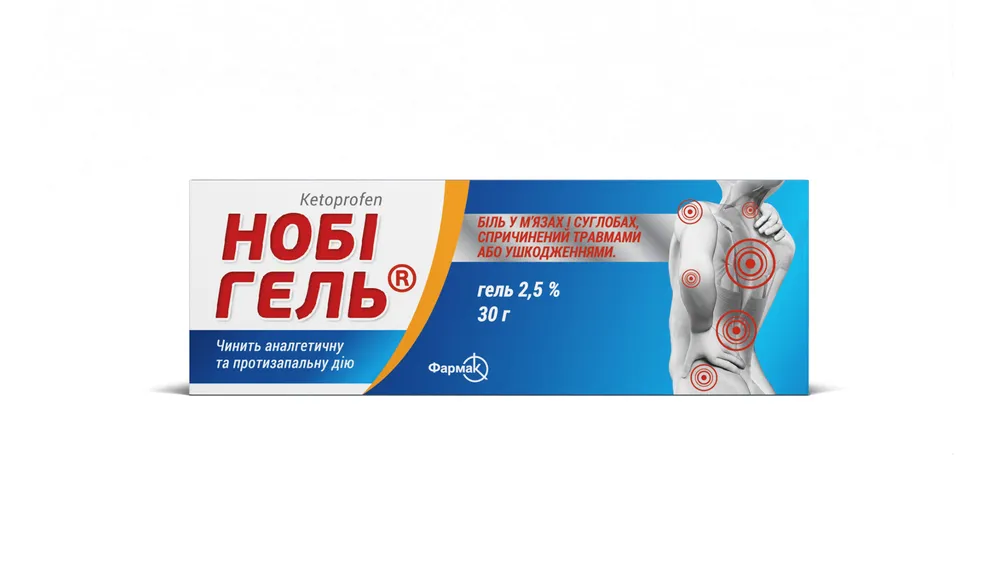
Table of Contents
INSTRUCTIONS FOR MEDICAL USE OF THE MEDICINAL PRODUCT NOBI GEL® (NOBI GEL)
Composition:
Active substance: ketoprofen;
1 g of gel contains ketoprofen, calculated as 100 % dry substance, 25 mg;
Excipients: ethanol 96 %, Carbopol® Ultrez 21 Polymer, triethanolamine, lavender oil, purified water.
Pharmaceutical form. Gel.
Main physicochemical properties: homogeneous transparent gel with a characteristic lavender oil odor.
Pharmacotherapeutic group. Agents used locally for joint and muscle pain. Topical non-steroidal anti-inflammatory agents.
ATC code M02A A10.
Pharmacological Properties.
Pharmacodynamics.
Ketoprofen belongs to the group of nonsteroidal anti-inflammatory drugs (NSAIDs), derivatives of arylpropionic acid, and is one of the inhibitors of cyclooxygenase. The drug exerts analgesic and anti-inflammatory effects by inhibiting the activity of lipoxygenase and bradykinin, stabilizing lysosomal membranes, and suppressing macrophage migration. Ketoprofen provides analgesic and anti-inflammatory action both at the early (vascular phase) and late stages (cellular phase) of the inflammatory response.
Pharmacokinetics.
When the gel is applied topically, ketoprofen is absorbed through the skin, reaches the site of inflammation, thereby enabling treatment of joint, tendon, ligament, and muscle injuries accompanied by pain. Systemic absorption is very low (only 5% of the applied dose). Plasma protein binding is 99%. The active substance is detected in synovial fluid at therapeutic concentrations, while plasma concentrations remain negligible.
Ketoprofen is metabolized in the liver to form conjugates, which are slowly excreted, primarily in the urine. The metabolism of ketoprofen is not altered in elderly patients, in severe renal insufficiency, or in hepatic cirrhosis.
Clinical characteristics.
Indications.
Muscle and joint pain caused by injuries or damage. Tendovaginitis.
Contraindications.
- Hypersensitivity to ketoprofen or to any of the excipients of the drug;
- history of photosensitization reactions;
- known hypersensitivity reactions, such as bronchial asthma, allergic rhinitis, or urticaria, occurring after administration of ketoprofen, fenofibrate, tiaprofenic acid, acetylsalicylic acid, or other NSAIDs;
- history of skin allergic reactions upon exposure to ketoprofen, tiaprofenic acid, fenofibrate, ultraviolet (UV) light blockers, or perfumes;
- exposure to sunlight (even diffused light) or UV irradiation in solarium during treatment with the gel and within 2 weeks after discontinuation of the gel;
- the gel must not be applied in the presence of pathological skin conditions such as weeping dermatoses, skin lesions, rashes, skin trauma, burns, eczema or acne, or skin infections and open wounds;
- third trimester of pregnancy.
Interaction with other medicinal products and other forms of interaction.
Systemic absorption of ketoprofen following topical application is very low. There have been no reports of interactions with other medicinal products during use of the gel; however, the following interactions have been observed with oral formulations of ketoprofen or other NSAIDs.
Ketoprofen may inhibit the elimination of methotrexate and lithium salts and reduce the efficacy of certain diuretics, such as thiazides and furosemide. Concomitant use with high-dose methotrexate is not recommended due to decreased methotrexate excretion, which significantly increases its toxicity.
Concomitant use of ketoprofen with acetylsalicylic acid or other NSAIDs may enhance their effects and increase the incidence of adverse reactions.
Concomitant administration of probenecid and ketoprofen leads to reduced plasma clearance of ketoprofen and decreased protein binding.
Concomitant use with anticoagulants, antiplatelet agents, and glucocorticoids enhances their effects.
Toxicity of cardiac glycosides and cyclosporine increases when used concomitantly with ketoprofen due to reduced excretion.
Ketoprofen may reduce the effect of diuretics and antihypertensive drugs, increase the effect of oral hypoglycemic agents—sulfonylurea derivatives—and certain anticonvulsants (phenytoin).
Ketoprofen may reduce the efficacy of mifepristone; therefore, at least 8 days should elapse between the end of mifepristone treatment and the initiation of ketoprofen therapy.
Regular monitoring is recommended for patients taking coumarin-derived anticoagulants.
Special precautions for use
The medication should be used externally only. If a dose of the gel is missed, do not double the dose at the next application.
Although systemic adverse effects of ketoprofen are practically absent with topical application, the gel should be used with caution in patients with impaired kidney, heart, or liver function, or with a history of peptic ulcer, inflammatory bowel disease, cerebrovascular hemorrhage, or hemorrhagic diathesis.
Nobі gel® should not be applied to mucous membranes, the anal or genital area, large areas of skin, under occlusive dressings, or to the skin around the eyes. Avoid contact of the gel with the eyes. Do not exceed the recommended dosage, and do not use the gel simultaneously with other topical agents containing ketoprofen or other NSAIDs on the same areas of skin.
Areas of skin treated with the medication should be protected from sunlight (including UV radiation in solariums) during treatment and for 2 weeks after treatment to minimize the risk of photosensitization. Discontinue the medication immediately if any skin reactions occur, including skin reactions associated with concomitant use of products containing octocrylene (octocrylene is added to certain cosmetic and hygiene products such as shampoos, after-shave gels, shower gels, lipsticks, creams—including anti-aging creams, makeup removers, hair sprays—to prevent their photodegradation).
Wash hands thoroughly after each application of the gel. If the gel needs to be rubbed into the skin for a prolonged period, surgical gloves should be used.
Topical application of large amounts of the gel may provoke systemic adverse effects, including bronchial asthma attacks and hypersensitivity reactions such as contact dermatitis, urticaria, and bronchospasm.
Patients with bronchial asthma in combination with chronic rhinitis, chronic sinusitis, and/or nasal polyps have a higher risk of developing allergy to acetylsalicylic acid and/or other NSAIDs compared to the general population.
Do not use the gel near open flames, as it contains ethanol.
Use during pregnancy or breastfeeding
There are no clinical data on the use of topical formulations of the medicinal product Nobі gel® during pregnancy. Even though systemic exposure is lower compared to oral administration, it is unknown whether systemic exposure to Nobі gel® achieved after topical use could be harmful to the embryo/fetus. During the first and second trimesters of pregnancy, the medicinal product Nobі gel® should not be used except in cases of extreme necessity. If used, the dose should be as low as possible and the duration of treatment as short as possible.
During the third trimester of pregnancy, systemic use of prostaglandin synthetase inhibitors, including Nobі gel®, may cause cardiopulmonary and renal toxicity in the fetus. Prolonged bleeding may occur in both mother and child towards the end of pregnancy, and labor may be prolonged. Therefore, Nobі gel® is contraindicated during the last trimester of pregnancy (see section "Contraindications").
Breastfeeding should be discontinued during treatment with ketoprofen.
Ability to influence reaction rate while driving or operating machinery
No data available.
Method of Administration and Dosage
For external use only.
Apply 3–5 cm of gel in a thin layer to the affected area of skin once or twice daily and gently rub in. The amount of gel depends on the size of the affected area: 5 cm of gel corresponds to 100 mg of ketoprofen, 10 cm corresponds to 200 mg of ketoprofen. The use of occlusive dressings is not recommended.
The duration of treatment is 7–10 days. Hands should be washed after applying the gel.
Nobі® gel can be used in combination with other dosage forms (capsules, tablets, suppositories). The total maximum daily dose should not exceed 200 mg of ketoprofen, regardless of the dosage form used.
Children.
Safety and efficacy of the drug have not been established in this age group.
Overdose.
Symptoms: irritation, erythema, itching, or worsening of other adverse reactions.
Since the amount of ketoprofen penetrating through the skin into the bloodstream is low, overdose with topical application is unlikely. However, systemic adverse reactions may occur with prolonged use, high doses, or application over large skin areas. If excessive amounts of gel have been applied, the skin should be washed with water.
Accidental oral ingestion of ketoprofen may cause drowsiness, dizziness, nausea, vomiting, and epigastric pain. These symptoms usually resolve with appropriate symptomatic treatment. High doses of ketoprofen with systemic use may lead to bradypnea, coma, seizures, gastrointestinal bleeding, acute renal failure, and increased or decreased blood pressure. There is no specific antidote for ketoprofen overdose; symptomatic treatment with supportive care to maintain vital functions is recommended. Gastric lavage and administration of activated charcoal (the first dose should be given with sorbitol) may be beneficial, especially if symptoms occur within 4 hours after overdose or if the ingested dose exceeds the recommended dose by 5–10 times.
Adverse reactions.
Systemic absorption of ketoprofen after topical application is low compared to plasma concentrations following oral administration. However, the possibility of systemic adverse reactions cannot be completely ruled out during prolonged use of the drug on relatively large skin areas.
Localized skin reactions are the most commonly observed, such as eczema, pruritus, and burning sensation.
Adverse reactions are categorized according to the following frequency: very common (≥1/10), common (≥1/100, <1/10), uncommon (≥1/1,000, <1/100), rare (≥1/10,000, <1/1,000), very rare (<1/10,000), frequency not known (cannot be estimated from available data).
Immune system disorders: Frequency not known – hypersensitivity reactions; anaphylactic reactions, including angioedema, and anaphylaxis have been reported with both systemic and topical use of ketoprofen; bronchospasm, asthma attacks.
Skin and subcutaneous tissue disorders: Uncommon – skin irritation, allergic skin reactions, hyperemia, pruritus, rash, burning sensation; rare – edema, erythema, eczema (including vesicular, bullous, and blistering forms), which may spread and become generalized; purpura-like, bullous rashes; increased sweating, urticaria, dermatitis (contact, exfoliative); photosensitivity, including severe skin reactions after sun exposure; purpura, Stevens-Johnson syndrome, lichenoid dermatitis, necrosis of the skin, erythema multiforme. There have been reports of local skin reactions that may extend beyond the area of application.
Gastrointestinal disorders: Very rare – nausea, vomiting, heartburn, constipation (with prolonged use), diarrhea, peptic ulcer, gastrointestinal bleeding.
Renal and urinary disorders: A case of worsening renal function has been described in a patient with chronic kidney insufficiency after topical application of ketoprofen. Interstitial nephritis may occur in isolated cases.
Depending on the permeability of the active substance, the amount of gel applied, the size of the treated area, the integrity of the skin, duration of treatment, and use of occlusive dressings, other hypersensitivity reactions, as well as adverse reactions affecting the gastrointestinal and urinary systems, are possible. Elderly patients are more susceptible to adverse reactions when using NSAIDs.
Ketoprofen may trigger asthma attacks in patients hypersensitive to acetylsalicylic acid or its derivatives.
Reporting suspected adverse reactions
Reporting of suspected adverse reactions after drug authorization is important. It allows continuous monitoring of the benefit-risk balance of the medicinal product. Healthcare professionals, pharmacists, patients, and their legal representatives should report all suspected adverse reactions and lack of drug efficacy via the Automated Pharmacovigilance Information System at the following link: https://aisf.dec.gov.ua.
Shelf life. 3 years.
Do not use the drug after the expiry date stated on the packaging.
Storage conditions. Store in the original packaging at a temperature not exceeding 25 °C.
Keep out of reach of children.
Packaging. 30 g in a tube. 1 tube per carton.
Prescription status. Prescription only.
Manufacturer. JSC "Farmak".
Manufacturer's name and address of the place of business.
74, Kyrylivska Street, Kyiv, 04080, Ukraine.