Nitrosorbide
Ukraine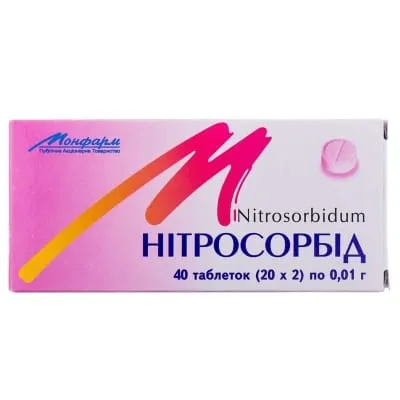
Table of Contents
INSTRUCTIONS FOR MEDICAL USE OF THE MEDICINAL PRODUCT NITROSORBID (NITROSORBID)
Composition:
Active substance: isosorbide dinitrate;
1 tablet contains isosorbide dinitrate in the form of diluted isosorbide dinitrate (calculated to 100% and dry substance) – 10 mg;
Excipients: lactose monohydrate, crospovidone, calcium stearate.
Pharmaceutical form. Tablets.
Main physicochemical characteristics: white, round, flat-surfaced tablets with beveled edges.
Pharmacotherapeutic group. Cardiological preparations. Vasodilators used in cardiology. Isosorbide dinitrate. ATC code C01DA08.
Pharmacological properties.
Pharmacodynamics.
Isosorbide dinitrate is one of the main antianginal agents from the group of organic nitrates and a peripheral vasodilator that predominantly affects venous vessels.
Like all organic nitrates, isosorbide dinitrate acts as a donor of nitric oxide (NO). NO causes relaxation of vascular smooth muscles (mainly veins and systemic arteries) by stimulating guanylate cyclase and subsequent increase in intracellular cyclic guanosine monophosphate (cGMP) concentration. This leads to activation of cGMP-dependent protein kinase and altered phosphorylation of various proteins in smooth muscle cells. This results in dephosphorylation of myosin light chains and reduced contractility.
The effect of isosorbide dinitrate is associated with decreased myocardial oxygen demand due to reduction of preload (by dilating peripheral veins and decreasing blood flow to the right atrium) and afterload (by decreasing total peripheral vascular resistance), as well as due to its direct coronary vasodilating action. Isosorbide dinitrate promotes redistribution of coronary blood flow to areas with impaired perfusion. It increases exercise tolerance in patients with ischemic heart disease and angina pectoris.
The use of isosorbide dinitrate improves coronary perfusion without development of the "coronary steal syndrome." It exhibits antihypertensive effects. In severe forms of heart failure, due to reduced tone of peripheral venous vessels, the drug reduces cardiac load, pressure in pulmonary circulation vessels, and dyspnea.
Pharmacokinetics.
Bioavailability after oral administration is 22% (first-pass effect in the liver). Onset of action occurs within 15–40 minutes, maximum effect develops within 1.5–2 hours, and total duration of action is 4–6 hours or longer. It is metabolized in the liver. Elimination half-life is 4 hours and may be prolonged during course treatment. It is excreted in urine almost completely in the form of metabolites.
Clinical characteristics.
Indications.
- Prophylaxis and treatment of angina attacks, including post-infarction angina.
- Treatment of chronic congestive heart failure in combination with cardiac glycosides and diuretics.
Contraindications.
- Hypersensitivity to isosorbide dinitrate, other nitrates, or to any component of the drug;
- increased intracranial pressure (including in cranial trauma, hemorrhagic stroke), since venodilation may lead to its further increase;
- severe arterial hypotension (systolic blood pressure below 90 mm Hg), hemorrhage, hypovolemia (isosorbide dinitrate, by reducing venous return, may provoke syncope);
- acute circulatory failure (shock, vascular collapse);
- cardiogenic shock (unless adequate end-diastolic pressure is maintained by appropriate measures);
- angina caused by hypertrophic obstructive cardiomyopathy;
- cardiac tamponade, aortic stenosis, mitral stenosis, constrictive pericarditis;
- acute myocardial infarction;
- primary pulmonary diseases (due to risk of hypoxemia caused by redistribution of blood flow to areas of hyperventilation), toxic pulmonary edema, cor pulmonale;
- severe anemia;
- closed-angle glaucoma;
- severe impairment of liver and/or kidney function, hyperthyroidism;
- concomitant use with phosphodiesterase inhibitors (e.g., sildenafil, tadalafil, vardenafil).
Interaction with other medicinal products and other types of interactions.
Phosphodiesterase inhibitors (sildenafil, tadalafil, vardenafil) − during treatment with isosorbide dinitrate, therapy with these agents for erectile dysfunction is contraindicated due to potential risk of uncontrolled hypotension and life-threatening cardiovascular complications. If necessary, phosphodiesterase inhibitors should not be administered earlier than 72 hours after nitrate administration.
Alcohol − severe disulfiram-alcohol type reactions are possible, including severe hypotension and collapse.
Antihypertensive agents (e.g., beta-blockers, ACE inhibitors, calcium antagonists, vasodilators), phenothiazines, other nitrates/nitrites, quinidine, procainamide, cyclic antidepressants, MAO inhibitors, narcotic analgesics − potentiation of the hypotensive effect of isosorbide dinitrate, possible development of orthostatic collapse.
Disopyramide − possible reduction in the effectiveness of isosorbide dinitrate.
Dihydroergotamine − concentration of dihydroergotamine in blood may increase, leading to enhancement of its hypertensive effect.
Noradrenaline, acetylcholine, histamine − attenuation of their effects when used with nitrates, as isosorbide dinitrate may act as their physiological antagonist.
Sympathomimetic agents (including adrenaline, ephedrine, noradrenaline, naphazoline, mesaton, isadrine) − possible reduction in the antianginal effect of nitrates.
Heparin − possible reduction in its anticoagulant effect.
Hydralazine − combined use with isosorbide dinitrate improves cardiac output in heart failure.
Miotics − isosorbide dinitrate reduces their effectiveness.
Atropine and other drugs with M-cholinolytic action (e.g., etacizine, etmozine) − possible reduction in vasodilating effect of isosorbide dinitrate and increase in intraocular pressure.
Sulfhydryl group donors (captopril, acetylcysteine, unithiol) restore reduced sensitivity to the drug.
Sapropterin (tetrahydrobiopterin, BH4) – a cofactor of nitric oxide synthase. Use with caution drugs containing sapropterin together with any medicinal products exerting vasodilatory action via nitric oxide metabolism or containing nitric oxide donors (e.g., nitroglycerin (GTN), isosorbide dinitrate (ISDN), isosorbide mononitrate).
Special precautions for use.
The drug should not be used to relieve angina attacks.
Cases of development of tolerance and cross-tolerance to other nitrates have been reported during administration of the drug. To prevent reduction or loss of effect, prolonged use of high doses should be avoided. In case of nitrate tolerance, it is recommended to discontinue Nitrosorbide for 24–48 hours or, after 3–6 weeks of regular use, to make a 3–5 day break, replacing Nitrosorbide during this period with other antianginal medications. Patients should be informed that the antianginal effect of isosorbide dinitrate is closely related to its dosing regimen, and therefore the proposed dosing schedule must be strictly followed.
The drug should be prescribed with caution to patients prone to orthostatic reactions, patients with hypothyroidism, hypothermia, malnutrition, and also to elderly patients due to age-related changes in liver, kidney, and heart function, concomitant diseases, and use of other medications.
During treatment, especially with gradual dose escalation, monitoring of blood pressure and heart rate is required.
Nitrosorbide should be discontinued gradually by tapering the dose.
To prevent arterial hypotension and nitrate-induced headache, treatment should be initiated with the lowest possible dose. Aspirin and/or acetaminophen may be used to reduce isosorbide dinitrate-induced headache without negatively affecting the antianginal effect of isosorbide dinitrate.
Treatment with the drug may cause orthostatic reactions, which occur more frequently when alcohol or other vasodilators are used concomitantly.
Alcohol consumption should be avoided during treatment with Nitrosorbide.
In patients with glucose-6-phosphate dehydrogenase deficiency, acute hemolysis (favism) may occur during administration of isosorbide dinitrate.
Isosorbide dinitrate may interfere with the results of colorimetric cholesterol determination.
Patients receiving maintenance therapy with the drug should be informed that they must not take medications containing phosphodiesterase inhibitors (e.g., sildenafil, tadalafil, vardenafil) due to the risk of developing uncontrolled hypotension.
In patients with closed-angle glaucoma, an increase in intraocular pressure is possible. The drug contains lactose and therefore should not be used in patients with rare hereditary conditions such as galactose intolerance, lactase deficiency, or glucose-galactose malabsorption syndrome.
Use during pregnancy or breastfeeding.
There is insufficient data regarding the safety of isosorbide dinitrate use during pregnancy. Use of Nitrosorbide is contraindicated during the first trimester of pregnancy. In the second and third trimesters, the drug should be used only if the potential benefit to the mother outweighs the potential risk to the fetus.
If use of the drug is necessary during breastfeeding, breastfeeding should be discontinued.
Ability to affect reaction speed when driving or operating machinery.
Until individual response to the drug is established, patients should refrain from driving or operating machinery, considering that treatment may cause reduced ability to concentrate, slowed psychomotor reactions, dizziness, and visual disturbances.
Method of Administration and Dosage.
The dosage and duration of therapy should be determined individually by a physician.
Administer orally to adults, 10–20 mg 3–4 times daily, 30 minutes before meals. Do not chew; swallow with sufficient amount of liquid. If the therapeutic response is inadequate, the dose may be gradually increased up to the maximum dose of 120 mg per day.
In patients with congestive heart failure, hemodynamic monitoring is essential for determining individual dosage.
The interval between drug administrations should be at least 4 hours.
Elderly patients: dosage may be reduced, especially in cases of impaired renal and/or hepatic function.
Children:
Experience with use in children is lacking.
Overdose.
Symptoms: decreased arterial pressure, pallor, increased sweating, weak pulse filling, dizziness, headache, orthostatic hypotension, weakness, reflex tachycardia, hyperthermia, nausea, vomiting, diarrhea. Since nitrite ions are released during biotransformation of isosorbide dinitrate, development of methemoglobinemia with cyanosis cannot be excluded, followed by tachypnea, sense of anxiety, loss of consciousness, and cardiac arrest.
With excessive doses, increased intracranial pressure with appearance of cerebral symptoms, including seizures, is possible.
Treatment: in case of arterial hypotension, the patient should be placed in a horizontal position with elevated lower limbs and provided with oxygen. If blood pressure does not normalize, circulating blood volume should be corrected; in severe cases, administration of dopamine and sympathomimetics is indicated. Epinephrine (adrenaline) is contraindicated. In case of methemoglobinemia, depending on severity, antidotes may be used: vitamin C (1 g orally), methylene blue (up to 50 ml of 1% solution intravenously), toluidine blue (initially 2–4 mg/kg body weight intravenously, then dosage depending on severity), as well as oxygen therapy, hemodialysis, and transfusion therapy. In case of signs of respiratory or circulatory arrest, immediate resuscitation measures should be initiated.
Adverse Reactions.
Immune system: allergic skin reactions (including pruritus, rash, urticaria, angioneurotic edema), skin vasodilation, including facial and upper body hyperemia, sensation of warmth, diaphoresis, hot flushes; exfoliative dermatitis/Stevens-Johnson syndrome, Quincke's edema.
Cardiovascular system: arterial hypotension and/or orthostatic hypotension with reflex tachycardia, symptomatic palpitations, and symptoms of cerebral ischemia (including drowsiness, dizziness, weakness, blurred vision), mostly at the beginning of treatment and during dose escalation; peripheral edema, usually in patients with left ventricular insufficiency; worsening or increased frequency of angina attacks associated with reduction in blood pressure, pallor of the skin; collapse associated with bradycardia, cardiac rhythm disturbances, and syncope; alveolar hypoventilation leading to subsequent hypoxemia and risk of hypoxia/myocardial infarction in patients with ischemic heart disease.
Gastrointestinal tract: nausea, vomiting, heartburn, constipation, sensation of mild burning of the tongue, dry mouth.
Nervous system: headache ("nitrate headache") at the beginning of treatment, which usually gradually decreases or disappears with continued use of the drug, but may be severe and persistent; hemorrhage into the pituitary gland in patients with undiagnosed pituitary tumor.
Blood and lymphatic system: hematological adverse reactions, including methemoglobinemia; a case of isosorbide dinitrate-induced hemolytic anemia in a patient with concomitant glucose-6-phosphate dehydrogenase deficiency.
Eye organs: blurred vision; closed-angle glaucoma; cases of visual hallucinations; narrowing of visual field.
Other: cases of development of tolerance to isosorbide dinitrate, as well as cross-tolerance to other nitrates have been reported. Prolonged use of high doses and/or shortening of the interval between doses may lead to reduction or even complete loss of the drug's effect. Cases of significant increase in plasma renin and aldosterone levels, associated with decreased glomerular filtration rate and osmotically free water clearance in patients with liver cirrhosis, especially with ascites, have been reported.
Shelf life. 3 years.
Storage conditions.
In the original packaging at a temperature not exceeding 25 °C, away from fire.
Keep out of reach of children.
Packaging.
10 tablets in a blister, 4 blisters in a carton.
Prescription category. Prescription only.
Manufacturer.
Public Joint-Stock Company "Scientific-Production Center "Borshchahivskiy Chemical-Pharmaceutical Plant".
Manufacturer's location and address of business activity.
17 Miru Street, Kyiv, 03134, Ukraine.