Nitromint®
Ukraine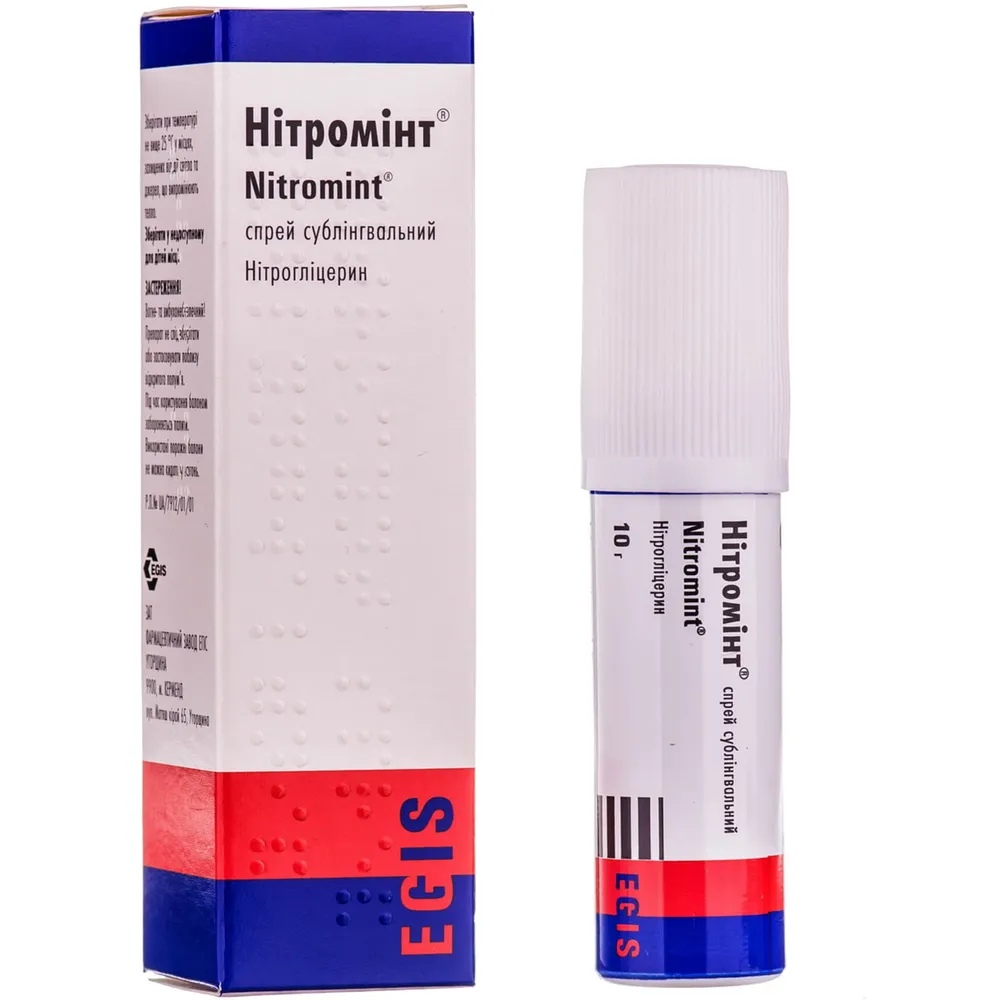
Table of Contents
INSTRUCTIONS FOR MEDICAL USE OF THE MEDICINAL PRODUCT NITROMINT® (NITROMINT®)
Composition:
Active substance: nitroglycerin;
1 bottle contains 8 g of a 1% solution of nitroglycerin in ethanol, corresponding to 0.08 g of nitroglycerin;
1 dose contains 0.4 mg of nitroglycerin;
Excipients: propylene glycol.
Pharmaceutical form. Sublingual spray.
Main physicochemical properties: colorless or almost colorless solution, free from foreign particles.
Pharmacotherapeutic group. Peripheral vasodilator. Antianginal agent.
ATC code C01DA02.
Pharmacological properties.
Pharmacodynamics.
Nitroglycerin is an organic nitrate compound that exerts a dilating effect on arteries and veins.
Postcapillary segments of peripheral vessels, large arteries, and particularly reactive areas of coronary vessels are more sensitive to nitroglycerin than resistant (precapillary) vessels.
Relaxation of vascular smooth muscle leads to vasodilation, which reduces venous return to the heart (preload) and systemic vascular resistance (afterload). This reduces cardiac workload and myocardial oxygen demand. Blood flow to the most ischemia-prone subendocardial layers of the cardiac walls improves, as well as regional wall motion and stroke volume. Dilation of large arteries near the heart reduces both systemic and pulmonary vascular resistance.
Nitroglycerin also exerts a smooth muscle relaxant effect on bronchi, bile and urinary tracts, gallbladder, small and large intestines, and sphincters.
It is believed that nitroglycerin produces these effects by binding to so-called nitrate receptors located on the membranes of vascular smooth muscle cells. Within smooth muscle cells, nitroglycerin undergoes enzymatic transformation to produce nitric oxide (NO), which stimulates soluble guanylate cyclase, leading to the formation of cyclic guanosine-3',5'-monophosphate (cGMP), the mediator responsible for smooth muscle relaxation.
Pharmacokinetics.
When administered sublingually, nitroglycerin is rapidly absorbed from the oral mucosa and enters directly into the systemic circulation (thus avoiding the first-pass hepatic metabolism). Bioavailability shows considerable inter- and intra-subject variability and averages approximately 39%. The onset of action is very rapid; effects develop within 1–1.5 minutes and last up to 30 minutes. Peak plasma concentrations are reached within 4 minutes. Following sublingual administration, the elimination half-life of nitroglycerin is approximately 2.5–4.4 minutes. Once in the bloodstream, nitroglycerin binds to erythrocytes and accumulates in vascular walls. Plasma protein binding is about 60%. The primary route of elimination is via urine as metabolites; less than 1% of the administered dose is excreted unchanged.
Clinical characteristics.
Indications.
- Treatment of angina attacks.
- Prevention of angina attacks; physical exertion or emotional stress that may provoke angina attacks.
- Adjunctive therapy in emergencies requiring urgent intervention in acute left ventricular failure (cardiac asthma).
- Reduction of blood pressure in acute myocardial infarction.
- Prevention of coronary vessel spasms induced by cardiac catheterization during coronary angiography.
Contraindications.
- Hypersensitivity to the active substance, other nitrate derivatives, or any component of the medicinal product.
- Acute circulatory failure (shock, collapse).
- Arterial hypotension (systolic blood pressure (BP) below 100 mm Hg, diastolic BP below 60 mm Hg).
- Cardiogenic shock.
- Acute myocardial infarction with low filling pressure.
- Left ventricular failure with low filling pressure.
- Angina caused by hypertrophic obstructive cardiomyopathy.
- Constrictive pericarditis.
- Pericardial tamponade.
- Aortic and mitral stenosis.
- Cerebral ischemia.
- Closed-angle glaucoma with high intraocular pressure.
- Bradycardia (less than 50 beats/min).
- Due to the effect of Nitromint® on the nitric oxide/cyclic guanosine monophosphate (cGMP) metabolic pathway, phosphodiesterase inhibitors (e.g., sildenafil, vardenafil, tadalafil) may potentiate the antihypertensive effects of nitrates; therefore, concomitant use of compounds generating nitric oxide and nitrates is contraindicated.
- Any condition associated with increased intracranial pressure (cerebral hemorrhage, head trauma).
- Primary pulmonary hypertension (since hyperemia of hypoventilated alveolar areas may lead to hypoxia). Patients with cardiovascular disorders and predisposition to orthostatic circulatory disturbances are at particular risk.
- Severe anemia.
- Concomitant use with riociguat and stimulators of soluble guanylate cyclase.
Interaction with other medicinal products and other forms of interaction.
Concomitant administration of Nitromint® with cGMP-specific phosphodiesterase type 5 inhibitors used for the treatment of erectile dysfunction (e.g., sildenafil, vardenafil, tadalafil) is contraindicated due to the potential for enhanced antihypertensive effects of Nitromint®.
Nitromint® should be used with caution in combination with:
- other vasodilators and antihypertensive agents (beta-blockers, calcium channel blockers), neuroleptics, tricyclic antidepressants (possible enhancement of nitroglycerin’s antihypertensive effect);
- dihydroergotamine (increased serum levels and effect of dihydroergotamine);
- heparin (reduced heparin effect).
Patients previously treated with nitrates (e.g., isosorbide dinitrate, isosorbide mononitrate) may require higher doses of nitroglycerin.
Nitromint® may be used together with other nitrate-containing medications, but caution should be exercised to avoid overdose. Sublingual nitroglycerin tablets should not be used as adjunctive therapy to Nitromint® for the treatment of angina attacks.
Phenobarbital enhances hepatic metabolism of nitrates. Alpha-adrenergic agonists, histamine, pituitary, corticosteroids, central nervous system (CNS) stimulants, bee and snake venom, and sunlight reduce the antianginal effect of nitroglycerin. Salicylates increase nitroglycerin blood levels, while barbiturates accelerate its metabolism. Sulfhydryl group donors (captopril, acetylcysteine, unithiol) restore reduced sensitivity to nitroglycerin.
Alcohol consumption during treatment with this medicinal product is strictly prohibited.
N-acetylcysteine may potentiate the vasodilatory effect of nitroglycerin.
Dihydroergotamine (may increase dihydroergotamine serum concentration and enhance its vasoconstrictive effect, potentially reducing nitroglycerin’s efficacy). This requires special attention in patients with ischemic heart disease, as concomitant use of dihydroergotamine and nitroglycerin may lead to coronary vasoconstriction.
Non-steroidal anti-inflammatory drugs (NSAIDs), except acetylsalicylic acid, may reduce the therapeutic effect of nitroglycerin.
Concomitant administration of nitroglycerin with amifostine and acetylsalicylic acid may increase arterial pressure and reduce nitroglycerin’s effect.
Tolerance to the effects of nitroglycerin should be considered when it is used concomitantly with long-acting nitrate preparations.
Concomitant use of nitroglycerin with riociguat and stimulators of soluble guanylate cyclase may cause hypotension.
Special precautions for use.
Particular caution and careful medical monitoring should be exercised in patients prone to postural hypotension and in patients with increased intracranial pressure.
The drug should be administered with caution to patients suffering from migraine.
Individual sensitivity of patients to nitrates may vary significantly; therefore, this should always be taken into account when determining the dosage.
Dose escalation may lead to tolerance.
Alcohol consumption during treatment with this drug is strictly prohibited.
Nitroglycerin enhances the urinary excretion of catecholamines and vanillylmandelic acid.
The drug contains 79.2% v/v ethanol (alcohol). Each spray dose contains 0.0396 g of alcohol. Its use may be hazardous in patients with liver disease, alcoholism, epilepsy, brain injury, and other CNS disorders, as well as in pregnant women and children. Nitroglycerin may alter or enhance the effects of other drugs.
The drug contains propylene glycol and may cause irritation of the mucous membranes.
The drug should be used with caution, taking into account the risk-benefit ratio, in the following conditions: primary pulmonary hypertension (with hyperemia of alveolar areas with reduced ventilation, which may lead to hypoxia); uncontrolled hypovolemia; heart failure patients with normal or low pulmonary arterial pressure; toxic pulmonary edema; severe anemia; hyperthyroidism; cerebral circulation disorders; severe renal insufficiency (risk of methemoglobinemia development). Patients with coronary artery disease are particularly at risk in this regard.
Caution should be exercised when administering the drug to patients with marked cerebral atherosclerosis, elderly patients, and patients with aortic or mitral stenosis.
During treatment, visits to saunas, baths, and hot showers are contraindicated.
Nitroglycerin should be used with caution in patients with severe hypotension (arterial systolic pressure below 90 mm Hg) and in patients with cardiogenic shock, except in cases where sufficiently high pressure is maintained in left ventricular failure by means of an intra-aortic balloon pump or positive inotropic agents.
Nitroglycerin should be used with caution in patients with cerebrovascular disease, as symptoms of these conditions may be induced by hypotension.
Arterial hypotension with bradycardia may occur in patients with myocardial infarction; this phenomenon is considered to be reflex-mediated.
Particular caution is required when administering nitroglycerin to patients with severe liver or kidney disease, hypothyroidism, mitral valve prolapse, hypothermia, malnutrition, or a recent history of myocardial infarction.
In cases of myocardial infarction or acute heart failure, treatment with nitroglycerin should be conducted cautiously, under strict medical supervision and/or hemodynamic monitoring.
Caution is required when treating patients with arterial hypoxia due to severe anemia (including G6PD deficiency-induced forms), as biotransformation of glyceryl trinitrate is reduced in such patients.
Patients with angina, myocardial infarction, or cerebral ischemia often suffer from lower respiratory tract abnormalities (particularly alveolar hypoxia). Caution is necessary when administering the drug to patients with hypoxemia and ventilation/perfusion disturbances due to lung disease. In patients with alveolar hypoventilation, vasoconstriction occurs in the lungs to redirect perfusion away from areas of alveolar hypoxia to better-ventilated lung regions (Euler-Liljestrand mechanism).
As a potent vasodilator, glyceryl trinitrate may interfere with this protective vasoconstriction, thereby increasing perfusion to poorly ventilated areas, worsening ventilation/perfusion imbalance, and further reducing arterial partial oxygen pressure.
Nitroglycerin may reduce blood oxygen levels in patients with pulmonary diseases or cor pulmonale.
If angina symptoms do not resolve after administration of three doses, emergency medical assistance should be sought immediately.
Use during pregnancy or breastfeeding.
Pregnancy.
The use of this drug during pregnancy is possible only if the expected benefit to the mother outweighs the potential risk to the fetus or child.
Breastfeeding.
It is unknown whether nitroglycerin metabolites are excreted in breast milk.
Therefore, the benefit and risk to both mother and child should be carefully weighed before initiating nitroglycerin therapy. If the risk outweighs the benefit, breastfeeding should be discontinued.
Fertility.
Animal studies do not indicate harmful effects of nitroglycerin on fertility. However, there are no human studies available.
Ability to affect reaction speed when driving or operating machinery.
At the beginning of treatment – during a period individually determined for each patient – driving vehicles or operating complex machinery is prohibited. Later, these restrictions may be reduced depending on the patient's individual response to the drug.
Glyceryl trinitrate, especially at the beginning of treatment or during dose adjustment, may impair reaction speed or, rarely, may cause orthostatic hypotension and dizziness (and, exceptionally, syncope may occur following overdose). Patients experiencing these effects should refrain from driving vehicles or operating other machinery.
Method of Administration and Dosage.
Treatment of angina attacks.
During an angina attack, administer 1 dose (1 spray = 400 micrograms) sublingually.
If symptoms do not resolve, the dose may be repeated every 5 minutes, but no more than 3 doses should be administered.
If the attack persists after this, immediate medical attention is required. The patient should be in a sitting position to prevent symptoms of postural hypotension.
Prevention of angina attacks.
To prevent angina attacks during exertion or other anticipated situations, it is recommended to administer 1 dose (1 spray) (400 micrograms) sublingually shortly before the anticipated exertion.
Acute left ventricular failure (cardiac asthma).
In the treatment of non-hypotensive patients with acute left ventricular failure (i.e., systolic arterial pressure > 100 mm Hg), 400 mcg of nitroglycerin (1 spray) is administered sublingually, with repeated administration every 5–10 minutes. The total number of sprays should not exceed three doses, with careful monitoring of the patient's clinical condition, including arterial pressure. Subsequently, the patient may be switched to intravenous therapy or another vasodilator depending on the clinical status.
Prior to coronary angiography: to prevent coronary artery spasm, a dose of 1–2 sprays (0.4–0.8 mg) is recommended.
Reduction of arterial pressure in acute myocardial infarction.
The recommended dose is 0.4–1.2 mg (i.e., 1–3 sprays), with hemodynamic monitoring (systolic arterial pressure must exceed 100 mm Hg).
According to available data, dose adjustment is not required in patients with renal or hepatic impairment.
Elderly patients.
Hypotension and dizziness may be particular concerns when using nitrates in elderly patients. Patients are advised to sit while administering the sublingual spray.
Method of Administration.
The canister should be held in an upright (vertical) position.
The canister does not need to be shaken before use.
Before first use, the canister's dosing mechanism must be primed. To do this, remove the protective cap and press the actuator several times until a spray appears. If the canister has not been used for a prolonged period, the priming process should be repeated.
When using Nitromint® spray, the metering valve should be held vertically and as close to the mouth as possible, and the dose should be sprayed under the tongue.
The spray must not be inhaled; therefore, breathing should be held during atomization.
After each spray, the mouth should be closed.
The patient should be sitting upright during administration.
The location of the actuator opening can be easily identified by touch, which facilitates use at night.
Children.
There is no experience with the use of this medication in pediatric practice; therefore, the drug is not administered to children (under 18 years of age).
Overdose.
Overdose may intensify known adverse reactions (headache, pronounced arterial hypotension, tachycardia, dizziness, flushing, vomiting, diarrhea). With very high doses, increased intracranial pressure with cerebral symptoms, methemoglobinemia, cyanosis, dyspnea, and tachypnea may occur. Additional gastrointestinal effects such as colic and diarrhea have also been reported.
Treatment of overdose.
In case of overdose, the patient's clinical status—including vital signs and mental status—should be assessed, and cardiovascular and respiratory support should be maintained. In cases of mild hypotension, lying down with elevated legs may be sufficient.
In cases of severe overdose, measures used in intoxication and shock should be implemented (administration of fluids, norepinephrine, and/or dopamine). The use of epinephrine (adrenaline) is contraindicated.
In the event of methemoglobinemia, the following antidotes and measures are indicated:
- Vitamin C: 1 g orally in tablet form or 1 g intravenously as a solution of sodium ascorbate.
- Methylene blue: 1–2 mg/kg body weight of a 1% solution, administered intravenously over 5 minutes, provided the patient does not have G-6-PD deficiency.
- Toluidine blue: initial dose 2–4 mg/kg intravenously, followed by a repeat dose of 2 mg/kg.
- Oxygen therapy, hemodialysis, blood transfusion.
Side effects.
Blood and lymphatic system disorders: methemoglobinemia.
Psychiatric disorders: may experience feelings of excitement, anxiety, and restlessness.
Central nervous system disorders: headache, dizziness, drowsiness, syncope, cerebral ischemia, blurred vision, psychotic reactions, lethargy, disorientation.
Cardiovascular system disorders:
Occasionally, the first dose—especially a high initial dose—may cause a decrease in blood pressure and/or postural hypotension with marked tachycardia, dizziness, or weakness.
With excessive lowering of blood pressure, treatment with Nitromint® may exacerbate symptoms of angina (paradoxical reaction to nitrates).
Occasionally, collapse accompanied by bradyarrhythmia and loss of consciousness may occur; sensations of warmth; cyanosis; pallor.
Respiratory system disorders: breathing difficulties.
Gastrointestinal disorders:
nausea, vomiting, dry mouth, abdominal pain, diarrhea, heartburn, halitosis.
Skin and subcutaneous tissue disorders: flushing, allergic skin reactions; hypersensitivity reactions; exfoliative dermatitis.
Immune system disorders: allergic reactions, including skin rash, itching; anaphylactic shock.
General disorders: mild, transient burning sensation in the throat; taste disturbances (metallic taste in the mouth); headache; progressive hypotension; flushing; palpitations; hypothermia; glaucoma exacerbation, asthenia. These symptoms are transient and disappear within a few minutes.
Shelf life. 3 years.
The product should not be used after the expiry date stated on the packaging.
Storage conditions.
Store at temperatures not exceeding 25 °C, in places protected from light and sources of heat. Keep out of reach of children.
Flammable and explosive!
The product must not be stored or used near open flames.
Smoking is prohibited during use of the spray canister.
Used empty canisters must not be thrown into fire.
Packaging.
10 g (180 doses) of spray solution in an aluminum canister with a metering device, spray nozzle, and protective cap, in a cardboard box.
Prescription status. Prescription only.
Manufacturer.
Egis Pharmaceuticals Ltd., Hungary.
Manufacturer's address and place of business.
65 Mátyás király str., 9900 Kermend, Hungary.