Nitro-mik®
Ukraine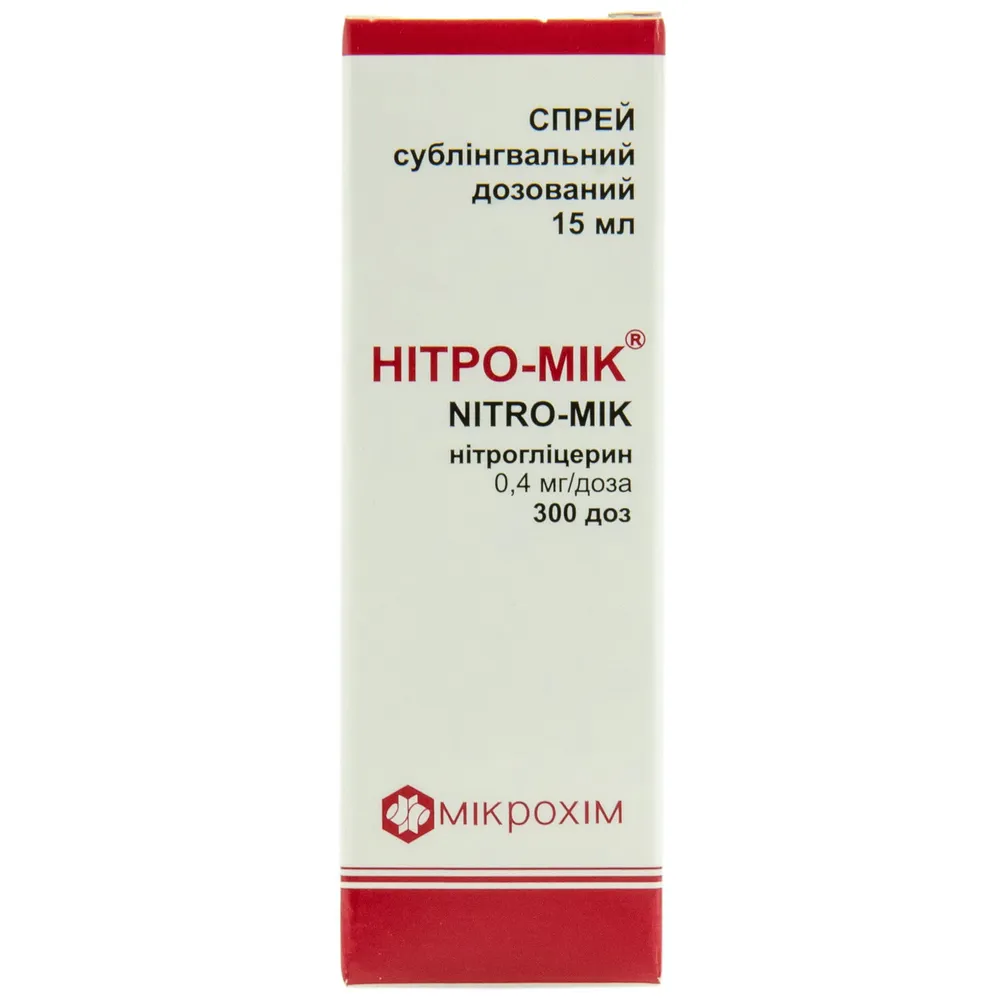
Table of Contents
INSTRUCTIONS FOR MEDICAL USE OF THE MEDICINAL PRODUCT NITRO-MIK® (NITRO-MIK)
Composition:
Active substance: glyceryl trinitrate;
1 ml of solution contains nitroglycerin 1 mg;
Excipients: sodium chloride, potassium dihydrogen phosphate, water for injections.
Pharmaceutical form.
Concentrate for solution for infusion.
Main physicochemical properties: clear, colorless liquid.
Pharmacotherapeutic group.
Medicinal products affecting the cardiovascular system. Cardiological agents. Vasodilators used in cardiology. Organic nitrates. Glyceryl trinitrate. ATC code C01DA02.
Pharmacological Properties
Pharmacodynamics
NITRO-MIK® is an antianginal agent belonging to the group of peripheral vasodilators with predominant action on venous vessels. Its mechanism of action is associated with the release of the active substance, nitric oxide (NO), in vascular smooth muscle. Nitric oxide induces activation of guanylate cyclase and increases the level of cyclic guanosine monophosphate (cGMP), promoting relaxation of smooth muscle cells in vessel walls. Under the influence of nitroglycerin, arterioles and precapillary sphincters dilate to a lesser extent than large arteries and veins.
The antianginal effect of nitroglycerin is primarily related to reduced myocardial oxygen demand due to decreased preload (venous dilation and reduced blood flow to the right atrium) and afterload (reduction in total peripheral vascular resistance). The drug promotes redistribution of coronary blood flow to ischemic areas of the myocardium. It increases tolerance to physical exertion in patients with ischemic heart disease and angina pectoris. In heart failure, it promotes myocardial unloading, primarily by reducing preload. It reduces pulmonary circulation pressure.
Pharmacokinetics
The effect begins within 1–2 minutes after starting nitroglycerin infusion and lasts 3–5 minutes.
The volume of distribution of nitroglycerin is 3.3 ± 1.2 L/kg. At serum concentrations of 50–500 mcg/L, 60% of nitroglycerin is protein-bound.
Nitroglycerin is metabolized primarily in the liver by glutathione-dependent reductase. Additionally, spontaneous hydrolysis and non-enzymatic degradation of nitroglycerin occur in serum. The metabolites, predominantly water-soluble and partially or completely denitrated, are further metabolized to glucuronides and excreted in urine or bile. Enterohepatic recirculation is not observed.
The pharmacokinetics of nitroglycerin are complex and depend on individual patient characteristics. Variability is influenced by factors such as first-pass metabolism in the liver, large volume of distribution, vascular wall concentrations, significant differences in concentrations between arteries and veins, serum hydrolysis, and unstable plasma concentrations. The plasma clearance of nitroglycerin during prolonged infusion is 230 ± 9 mL/min/kg.
Clinical characteristics.
Indications.
Severe and prolonged ischemic pain in the heart area associated with myocardial infarction or unstable angina.
Cardiac pump failure and pulmonary edema associated with acute myocardial infarction.
Arterial hypertension related to open-heart surgery and other surgical procedures.
For controlled arterial hypotension during surgical interventions.
Contraindications.
- Hypersensitivity to nitroglycerin and other nitro compounds;
- hypovolemia;
- severe arterial hypotension (systolic pressure < 90 mm Hg);
- acute myocardial infarction with right ventricular localization;
- increased intracranial pressure (due to head trauma or intracerebral hemorrhage);
- cardiac tamponade;
- hypertrophic obstructive cardiomyopathy;
- constrictive pericarditis;
- closed-angle glaucoma;
- toxic pulmonary edema;
- anemia;
- acute circulatory failure (shock, vascular collapse);
- concomitant use with phosphodiesterase-5 inhibitors (e.g., sildenafil, vardenafil, tadalafil), since they potentiate the hypotensive effect of nitrates (interval between administrations must be at least 48 hours);
- cardiogenic shock (if measures to maintain end-diastolic pressure are not performed);
- concomitant use with the soluble guanylate cyclase stimulator riociguat.
Interaction with other medicinal products and other forms of interaction.
Concomitant use with morphine and other vasodilators, angiotensin-converting enzyme inhibitors, calcium channel blockers ("slow-channel" blockers), β-adrenoblockers, diuretics, other antihypertensive agents, neuroleptics, tricyclic antidepressants, monoamine oxidase inhibitors, phosphodiesterase-5 inhibitors (e.g., sildenafil, vardenafil, tadalafil), opioid analgesics, ethanol, and ethanol-containing preparations enhances the hypotensive effect of nitroglycerin, whereas sympathomimetics (norepinephrine, mesaton) suppress the antianginal effect. Combination with dihydroergotamine may increase the bioavailability of the latter and increase the risk of dihydroergotamine-induced coronary spasm. Use of nitroglycerin in combination with quinidine or procainamide may cause orthostatic collapse. Concurrent use with heparin may reduce anticoagulant effect. Atropine and other drugs exhibiting M-cholinoblocking action (etacizine, etmozine) may reduce the effect of nitroglycerin due to decreased secretion and bioavailability of the drug. Phenobarbital activates hepatic metabolism of nitrates; sulfhydryl group donors (captopril, acetylcysteine, unithiol) restore reduced sensitivity to the drug.
Concomitant administration of the medicinal product NITRO-MIK® with the soluble guanylate cyclase stimulator riociguat may lead to the development of arterial hypotension.
Simultaneous intravenous administration of tissue plasminogen activator and nitroglycerin may accelerate the plasma clearance of tissue plasminogen activator due to enhanced hepatic blood flow.
Concomitant use of nitroglycerin and acetylsalicylic acid may enhance the antihypertensive effect of nitroglycerin.
Concomitant use of nitroglycerin and anti-inflammatory drugs, except acetylsalicylic acid, may lead to reduced therapeutic effect of nitroglycerin.
Sapropterin (tetrahydrobiopterin, BH4) — a cofactor of nitric oxide synthase. Medicinal products containing sapropterin should be used with caution in combination with any medicinal products exerting vasodilatory action via nitric oxide metabolism or containing nitric oxide donors in their composition (including nitroglycerin (GTN), isosorbide dinitrate (ISDN), isosorbide mononitrate).
Special precautions for use.
NITRO-MIC® should be used with particular caution and under close medical supervision in the following cases:
- Low left ventricular filling pressure, including in acute myocardial infarction (avoiding reduction of systolic arterial pressure below 90 mm Hg is essential).
- Impaired left ventricular function (e.g., in left ventricular failure).
- Tendency to orthostatic disturbances in vascular regulation.
- Severe renal and/or hepatic insufficiency (risk of methemoglobinemia).
- Thyrotoxicosis.
- Diabetes mellitus.
- Atherosclerosis.
In cases of acute myocardial infarction or acute heart failure, the drug should be administered only under strict clinical monitoring.
Special attention should be paid to patients with "pulmonary heart" disease, anemia, hypothyroidism, malnutrition, or hypothermia when prescribing the drug.
The drug should be prescribed to patients with epilepsy only for life-threatening indications. In such cases, the lowest possible dose should be used.
Alcoholic beverages should not be consumed during treatment.
To prevent increased frequency of angina attacks, abrupt discontinuation of the drug should be avoided. If it is known that a patient is taking phosphodiesterase-5 inhibitors, therapy with NITRO-MIC® is contraindicated. Patients receiving NITRO-MIC® must be warned against the use of phosphodiesterase-5 inhibitors (e.g., sildenafil, tadalafil, vardenafil).
During intravenous administration of the drug, a significant drop in arterial pressure and dizziness may occur when rapidly changing from a lying or sitting position to a standing position, especially in hot weather, as well as exacerbation of angina (due to a sharp drop in arterial pressure) and myocardial ischemia up to myocardial infarction and sudden death (paradoxical nitrate reactions). To prevent undesirable drops in arterial pressure, the infusion rate of NITRO-MIC® should be individually and carefully titrated. A decrease in arterial pressure may occur not only during dose titration but also later, even after stabilization of arterial pressure. Therefore, arterial pressure should be monitored at least 3–4 times per hour throughout the entire infusion period.
Tolerance and cross-tolerance to other nitrate drugs may develop during prolonged use, especially at high doses. Patients previously treated with organic nitrates (e.g., isosorbide dinitrate, isosorbide-5-mononitrate) may require higher doses.
If blurred vision persists or is severe, treatment should be discontinued.
Dose adjustment is required for patients with severe hepatic or severe renal insufficiency, depending on the severity of the disease (especially when high doses are used). Treatment should be initiated with the lowest possible dose. Close monitoring of the patient's condition is essential.
Hypoxemia
Caution is advised when administering the drug to patients with arterial hypoxemia due to severe anemia (including glucose-6-phosphate dehydrogenase (G6PD) deficiency-induced anemia), as nitroglycerin metabolism is reduced in such patients.
Caution is also required when administering the drug to patients with hypoxemia and ventilation/perfusion imbalance due to lung disease or heart failure, as well as to patients with angina, myocardial infarction, or cerebral ischemia who have respiratory tract disorders (especially with alveolar hypoxia). In these conditions, pulmonary vasoconstriction occurs to redirect perfusion from areas of alveolar hypoxia to better-ventilated lung regions (Euler-Liljestrand reflex). As a potent vasodilator, nitroglycerin may interfere with this protective vasoconstriction, leading to increased perfusion of poorly ventilated areas, worsening ventilation-perfusion mismatch, and reduced arterial partial pressure of oxygen.
Methemoglobinemia
Cases of methemoglobinemia have been reported following administration of the drug. Treatment of methemoglobinemia with methylene blue is contraindicated in patients with glucose-6-phosphate dehydrogenase deficiency or methemoglobin reductase deficiency.
Use during pregnancy or breastfeeding.
Information on the use of the drug during pregnancy is limited; therefore, it is not recommended for use in pregnant women. Adverse effects in infants of mothers treated with the drug are unlikely and mild. Breastfeeding should be discontinued during treatment. If use is necessary for life-threatening indications, the risk-benefit ratio should be carefully evaluated.
Ability to affect reaction rate while driving or operating machinery.
The drug is administered in a hospital setting.
Dosage and Administration.
The dosage regimen should be individually adjusted depending on the clinical response and systolic blood pressure.
An infusion solution containing 100 mcg/mL of nitroglycerin is usually used. This solution is prepared by diluting 4 ampoules of the medicinal product NITRO-MIK®, concentrate for infusion solution, 1 mg/mL (20 mg of nitroglycerin), in 200 mL of 0.9% sodium chloride solution, 5% glucose solution, or isotonic glucose-saline solution to obtain a solution concentration of 100 mcg/mL. Higher concentrations may be used, but not exceeding 400 mcg/mL.
Infusion systems should be made of polyethylene (PE), polypropylene (PP), polytetrafluoroethylene (PTFE), or glass. Nitroglycerin is absorbed by materials made of polyvinyl chloride (PVC) and polyurethane (PU), which may require dose adjustment.
Intravenous infusion may be initiated at a rate of 10–20 mcg/min. The rate may then be increased by 10–20 mcg/min every 5–10 minutes, depending on patient response. A good therapeutic effect is usually observed at an infusion rate of 50–100 mcg/min. With prolonged administration of high doses, tolerance may develop within 8–24 hours, possibly requiring an increase in dose. The maximum infusion rate is 400 mcg/min.
| Infusion rate when solution concentration exceeds 100 mcg/ml |
Infusion rate when solution concentration is 100 mcg/ml |
||
| mcg/min |
mg/hr |
mg/hr |
drops/min |
| 10 |
0.6 |
6 |
2 |
| 20 |
1.2 |
12 |
4 |
| 30 |
1.8 |
18 |
6 |
| 40 |
2.4 |
24 |
8 |
| 50 |
3.0 |
30 |
10 |
| 60 |
3.6 |
36 |
12 |
| 70 |
4.2 |
42 |
14 |
| 80 |
4.8 |
48 |
16 |
| 90 |
5.4 |
54 |
18 |
| 100 |
6.0 |
60 |
20 |
| 150 |
9.0 |
90 |
30 |
| 200 |
12.0 |
120 |
40 |
| 300 |
18.0 |
180 |
60 |
| 400 |
24.0 |
240 |
80 |
When nitroglycerin is administered intravenously, a pronounced hemodynamic effect is observed. Therefore, the drug should be used only under hospital conditions with continuous monitoring of cardiovascular functions. Systolic blood pressure should not decrease by more than 10–15 mm Hg in normotensive patients, and by no more than 5 mm Hg in patients with arterial hypotension or those predisposed to it. Pulse rate should not increase by more than 5 beats per minute, provided that the clinical picture clearly improves at the same time.
Children.
The efficacy and safety of the drug in children have not been established.
Overdose.
Symptoms. Arterial hypotension, tachycardia, sensation of warmth, hyperemia, headache, palpitations, syncope. Increased intracranial pressure, which may lead to confusion and neurological disturbances.
Treatment. Discontinue further administration of the drug. Excessive arterial hypotension can be corrected by reducing the infusion rate or by discontinuing the drug administration. In cases of severe arterial hypotension, the patient should be placed in a horizontal position on a bed with the head lowered. In arterial hypotension associated with bradycardia, atropine and dopamine are indicated. Hypoxia caused by methemoglobinemia may lead to cyanosis, metabolic acidosis, coma, seizures, and vascular collapse. In cases of methemoglobinemia, intravenous administration of methylene blue solution (1–2 mg/kg body weight) is indicated. Treatment of methemoglobinemia with methylene blue is contraindicated in patients with glucose-6-phosphate dehydrogenase deficiency or methemoglobin reductase deficiency.
Adverse Reactions.
In most cases, adverse effects of nitroglycerin are related to excessive reduction in arterial blood pressure.
The frequency of adverse reactions is defined as follows: very common — ≥ 1/10; common — ≥ 1/100, < 1/10; uncommon — ≥ 1/1000, < 1/100; rare — ≥ 1/10000, < 1/1000; very rare — < 1/10000; frequency not known — frequency cannot be estimated from available data.
Psychiatric disorders: rare — anxiety.
Nervous system disorders: common — headache, asthenia; uncommon — dizziness; rare — syncope.
Eye disorders: rare — visual disturbances.
Cardiovascular system disorders: common — tachycardia, arterial hypotension (especially orthostatic); uncommon — flushing, paradoxical increase in frequency of angina attacks, vascular collapse (sometimes accompanied by bradyarrhythmia and loss of consciousness), transient hypoxemia due to relative redistribution of blood flow to hypoventilated alveolar areas (in patients with ischemic heart disease may lead to myocardial hypoxia); rare — bradycardia, cyanosis; frequency not known — rapid heartbeat.
Gastrointestinal disorders: rare — nausea, vomiting; very rare — heartburn.
Skin and subcutaneous tissue disorders: rare — skin rashes, urticaria, application site reactions; frequency not known — facial flushing, skin itching, burning sensation, erythema, irritation, exfoliative dermatitis; uncommon — allergic contact dermatitis.
General disorders: respiratory disturbances, weakness.
There have also been isolated reports of the following adverse reactions: exacerbation of ischemic heart disease due to hypoxia, complete heart block, asystole, angioneurotic edema, hypersensitivity reactions.
With high infusion rates (> 290 mcg/min) or in patients with reduced drug clearance, methemoglobin concentration in blood may increase. Methemoglobinemia occurs rarely.
When using organic nitrates, cases of pronounced decrease in arterial pressure accompanied by nausea, vomiting, restlessness, pallor, and increased sweating have been observed.
Similar to other forms of nitrates, nitroglycerin frequently causes dose-dependent headaches due to cerebral vasodilation. Typically, headaches resolve spontaneously within several days, even with continued therapy with the medicinal product NITRO-MIK®. In case of persistent headache during intermittent nitroglycerin therapy, mild analgesics may be used. Headaches unresponsive to treatment are an indication for dose reduction of NITRO-MIK® or discontinuation of the drug. Slight reflex-induced increase in heart rate, if necessary, can be prevented by combination therapy with β-blockers.
Reporting of suspected adverse reactions.
Reporting suspected adverse reactions after marketing authorization is important. It allows continuous monitoring of the benefit-risk balance of the medicinal product. Healthcare professionals, pharmacists, as well as patients or their legal representatives should report all suspected adverse reactions and lack of efficacy of the medicinal product to the State Expert Center of the Ministry of Health of Ukraine via the following link: https://aisf.dec.gov.ua/.
Shelf life.
2 years.
Storage conditions.
Store in a dry, light-protected place, at temperatures not exceeding 30 °C, away from fire.
Keep out of reach of children.
Incompatibilities.
Only use the solvents specified in the section "Administration and dosage". Do not mix with other medicinal products in the same container.
Packaging.
5 ml in a vial, 10 vials in a cardboard pack.
Prescription status.
Prescription only.
Manufacturer.
Private Joint-Stock Company "Lekhim-Kharkiv".
Manufacturer's address and location of its operations.
36 Severina Pototskoho Street, Kharkiv, Kharkiv region, 61115, Ukraine.
Marketing Authorization Holder.
Microkhim LLC.
Address of the Marketing Authorization Holder.
5 Budynstustriyi Street, Kyiv, 01013, Ukraine.
You can report adverse events associated with the use of this medicinal product by calling +38 (050) 309-83-54 (24/7).