Nimodipine
Ukraine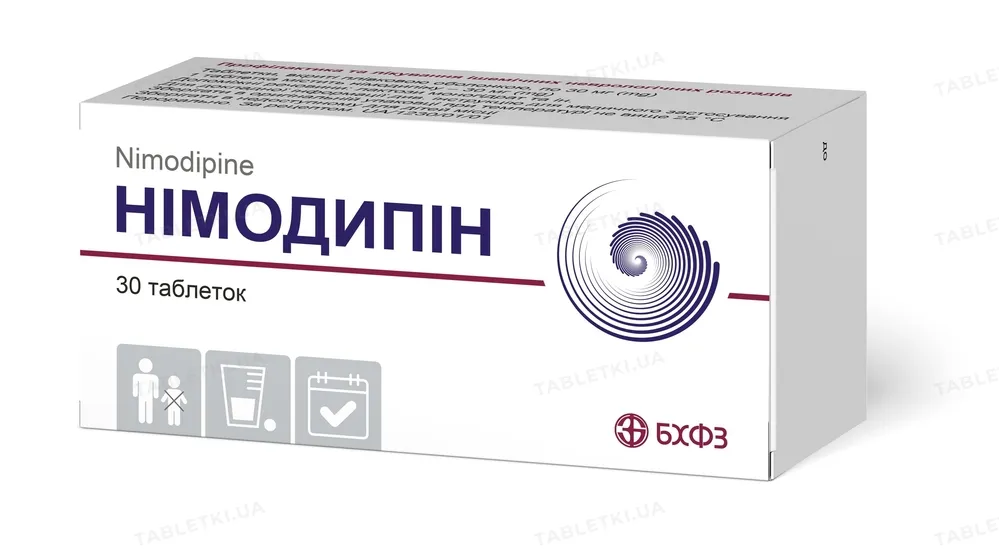
Table of Contents
INSTRUCTIONS FOR MEDICAL USE OF THE MEDICINAL PRODUCT NIMODIPINE (nimodipine)
Composition:
Active substance: nimodipine;
One tablet contains 30 mg of nimodipine (calculated as 100 % dry substance);
Excipients: povidone, microcrystalline cellulose, corn starch, lactose monohydrate, crospovidone, magnesium stearate; film coating (hydroxypropylmethylcellulose, copovidone, polyethylene glycol, medium-chain triglycerides, polydextrose, titanium dioxide (E171), red iron oxide (E172), yellow iron oxide (E172)).
Pharmaceutical form. Film-coated tablets.
Main physicochemical properties: film-coated tablets, yellow in color, with a biconvex surface.
Pharmacotherapeutic group. Selective calcium channel blockers with predominant action on blood vessels. ATC code C08CA06.
Pharmacological properties.
Pharmacodynamics.
Nimodipine is a selective L-type calcium channel blocker that restricts transmembrane influx of calcium ions. The drug exerts a vasodilatory effect predominantly on cerebral blood vessels. The spasmolytic effect results from its action on vascular smooth muscle. It prevents and relieves vascular spasms caused by vasoconstrictive effects of serotonin, prostaglandins, and histamine. Nimodipine increases perfusion in affected areas of the brain resulting from impaired blood supply, particularly after subarachnoid hemorrhage. The therapeutic effect of the drug manifests as a reduction in the severity of neurological symptoms caused by cerebral ischemia. The drug stabilizes the functional state of cerebral neurons. Nimodipine has no significant effect on systemic arterial pressure. Its anti-ischemic properties are due to dilating action on coronary vessels.
Pharmacokinetics.
After oral administration, 50% of nimodipine is absorbed from the gastrointestinal tract. Nimodipine and its metabolites can be detected in plasma within 10–15 minutes after administration. Maximum plasma concentration is reached within one hour and averages 31 mg/mL. The drug has low bioavailability, which is due to extensive first-pass metabolism in the liver. Nimodipine readily penetrates the blood-brain barrier (BBB) and is found in cerebrospinal fluid at concentrations approximately 0.5% of plasma levels. Nimodipine may cross the placenta and is excreted in breast milk.
Plasma protein binding of nimodipine ranges from 97% to 99%. The drug is eliminated as inactive metabolites (50% via kidneys, 30% via bile).
The initial elimination half-life of nimodipine is 1–2 hours, while the terminal half-life is 8–9 hours.
Clinical characteristics.
Indications.
Prevention and treatment of ischemic neurological disorders caused by cerebral vasospasm following subarachnoid hemorrhage due to aneurysm rupture.
Contraindications.
- Individual hypersensitivity to nimodipine and other components of the drug;
- use during and within one month after myocardial infarction and episodes of unstable angina;
- concomitant use with rifampicin, and antiepileptic drugs such as phenobarbital, phenytoin, and carbamazepine, since the efficacy of nimodipine is significantly reduced when used concurrently with these drugs.
Interaction with other medicinal products and other types of interactions.
Drugs affecting the metabolism or clearance of nimodipine
Nimodipine is metabolized by the CYP3A4 enzyme system located in the intestinal mucosa and liver. Therefore, drugs affecting this enzyme system may alter the first-pass metabolism or clearance of nimodipine (with oral administration).
When using oral nimodipine concomitantly with the following drugs, the extent and duration of interaction should be considered.
Fluoxetine (CYP3A4 inhibitor): increases plasma concentration of nimodipine at steady state by nearly 50% in elderly patients and causes a noticeable decrease in plasma levels of fluoxetine, while the plasma level of its active metabolite norfluoxetine remains unchanged.
Nortriptyline: long-term co-administration with nimodipine leads to a slight reduction in steady-state plasma concentration of nimodipine; nortriptyline concentration remains unchanged. The clinical significance of this interaction is not established.
Rifampicin: based on experience with other calcium channel antagonists, rifampicin, as an inducer of the CYP3A4 system, may enhance the metabolism of nimodipine, resulting in a significant reduction in its efficacy. The use of this combination is contraindicated (see section "Contraindications").
Inducers of the cytochrome P450 3A4 system (antiepileptic agents such as phenobarbital, phenytoin, or carbamazepine; St. John's wort preparations): prior prolonged use of these drugs markedly reduces the bioavailability and efficacy of oral nimodipine. Therefore, concomitant use of oral nimodipine with these drugs is contraindicated.
When co-administering the following inhibitors of the cytochrome P450 3A4 system, blood pressure should be monitored and dose adjustment of nimodipine considered if necessary.
Potent inhibitors of the CYP3A4 system: may cause a significant increase in plasma concentration of nimodipine. Such combinations should be avoided. If avoidance is not possible, blood pressure should be closely monitored and the dose of nimodipine reduced if necessary.
These include certain macrolide antibiotics (e.g., clarithromycin, telithromycin), HIV protease inhibitors (e.g., indinavir, nelfinavir, saquinavir, ritonavir), HCV protease inhibitors (e.g., boceprevir, telaprevir), azole antifungals (e.g., ketoconazole, itraconazole, posaconazole, voriconazole), conivaptan, delavirdine, nefazodone.
Azithromycin, although structurally belonging to the macrolide antibiotic class, does not inhibit CYP3A4.
Moderate and weak inhibitors of the CYP3A4 system: may increase plasma concentration of nimodipine and enhance its hypotensive effect. In such combinations, blood pressure should be monitored and the dose of nimodipine reduced if necessary. These include alprazolam, amprenavir, amiodarone, aprepitant, atazanavir, cimetidine, cyclosporine, diltiazem, erythromycin, fluconazole, isoniazid, oral contraceptives, quinupristin/dalfopristin, valproic acid, verapamil.
Although no official studies on the potential interaction between nimodipine and the above-mentioned drugs have been conducted, the possibility of pronounced and clinically significant elevation of nimodipine plasma concentration when used concomitantly with these drugs cannot be excluded (see section "Special precautions for use").
Effect of nimodipine on other drugs
Antihypertensive agents such as diuretics, beta-blockers, ACE inhibitors, angiotensin receptor blockers, other calcium channel blockers, alpha-adrenoblockers (including alpha1-adrenoreceptor antagonists), PDE-5 inhibitors, alpha-methyldopa: possible enhancement of their hypotensive effect. If such combination cannot be avoided, blood pressure should be closely monitored and doses of antihypertensive agents adjusted as necessary.
Zidovudine: studies in monkeys have shown that concomitant intravenous administration of nimodipine (as a bolus injection) and the anti-HIV drug zidovudine leads to a significant increase in plasma levels of zidovudine (AUC), with reduced volume of distribution and clearance. The clinical significance of this interaction is unknown, but since the adverse effect profile of zidovudine is dose-dependent, this interaction should be considered when a patient is receiving both nimodipine and zidovudine.
Interaction with food and beverages
Grapefruit juice: may increase plasma concentration of nimodipine due to inhibition of oxidative metabolism of dihydropyridines and enhance its hypotensive effect. This effect may persist for up to 4 days after the last intake of grapefruit juice/grapefruit. Concomitant consumption of grapefruit juice/grapefruit with nimodipine is not recommended.
Other types of interactions
No drug interaction between nimodipine and haloperidol has been observed in patients on long-term haloperidol therapy.
No interactions have been observed with concomitant use of nimodipine and diazepam, digoxin, glyburide, indomethacin, ranitidine, warfarin.
Potentially nephrotoxic drugs (aminoglycosides, cephalosporins, furosemide): renal function may deteriorate.
Special precautions for use
Nimodipine should not be used in patients with traumatic subarachnoid hemorrhage, as a positive benefit-risk ratio has not been established and specific recommendations for this patient group have not been defined.
Nimodipine should be used with caution in patients with cerebral edema or significantly increased intracranial pressure. Although it has not been proven that treatment with nimodipine may lead to increased intracranial pressure, special caution and careful monitoring of the patient's condition are recommended in such cases or in cases of generalized cerebral edema.
There is a risk of hypotension during treatment with this medicinal product. Arterial blood pressure must be continuously monitored during therapy. An enhanced blood pressure-lowering effect has been reported when antihypertensive agents are used concomitantly (see section "Interaction with other medicinal products and other forms of interaction").
Caution should be exercised when treating patients with arterial hypotension, particularly if systolic blood pressure is below 100 mm Hg, as a further reduction in blood pressure may lead to a decrease in cerebral perfusion pressure.
In patients with liver cirrhosis receiving nimodipine, a reduced clearance of the drug is possible; therefore, careful monitoring of blood pressure is recommended in these patients.
Dosage in elderly patients should generally be cautious, considering the higher frequency of impaired hepatic, renal, or cardiac function, as well as the presence of concomitant diseases or other concomitant medication.
In severe renal impairment, due to the lack of sufficient data, nimodipine should be used with caution: intensified clinical monitoring is recommended and dose reduction may be necessary.
When prescribing nimodipine, concomitant therapy should be taken into account, especially in patients with impaired renal and/or hepatic function, due to clinically significant drug interactions of this medicinal product.
Nimodipine is metabolized by the CYP3A4 enzyme system. Medicinal products affecting this enzyme system may alter the primary metabolism or clearance of nimodipine. Drugs known to inhibit the cytochrome P450 3A4 system may lead to increased plasma concentrations of nimodipine, for example:
- macrolides (including erythromycin);
- HIV protease inhibitors (including ritonavir);
- azole antifungals (including ketoconazole);
- antidepressants nefazodone and fluoxetine;
- quinupristin/dalfopristin;
- cimetidine;
- valproic acid.
When these drugs are used concomitantly, blood pressure should be monitored and, if necessary, a reduction in the dose of nimodipine should be considered (see section "Interaction with other medicinal products and other forms of interaction").
Patients with rare hereditary problems of galactose intolerance, lactase deficiency, or glucose-galactose malabsorption should not take nimodipine (lactose is included in the formulation).
Use during pregnancy or breastfeeding
Adequate and well-controlled studies on the effects of nimodipine in pregnant women have not been conducted. If use during pregnancy is necessary, the benefit to the mother and the potential risks to the fetus should be carefully weighed based on the severity of the clinical condition.
The concentration of nimodipine and its metabolites in breast milk corresponds to that in maternal plasma. If treatment with the drug is necessary in breastfeeding women, breastfeeding should be discontinued during the treatment period.
In isolated cases under in vitro fertilization conditions, calcium antagonists have been associated with reversible biochemical changes in the sperm head region, which may lead to impaired sperm function. It is unknown how significant these changes are during short-term treatment.
Ability to influence reaction speed when driving or operating machinery
The ability to influence reaction speed when driving or operating machinery may be impaired due to the possible occurrence of dizziness.
Dosage and Administration
The tablets should be taken orally, without chewing, with sufficient fluid, regardless of food intake, with an interval of at least 4 hours between doses. Grapefruit juice/grapefruit should be avoided during treatment with this medicinal product (see section "Interaction with other medicinal products and other forms of interaction").
Prophylaxis and treatment of ischemic neurological disorders caused by cerebral vasospasm following subarachnoid hemorrhage due to ruptured aneurysm.
After a 5-14 day course of intensive intravenous therapy, it is recommended to continue treatment with the drug for approximately another 7 days at a dose of 60 mg (2 tablets) 6 times daily (total daily dose – 360 mg). As an alternative, prophylactic treatment may be initiated immediately with oral tablets at the above-mentioned dosage regimen, no later than day 4 after subarachnoid hemorrhage.
Severe hepatic impairment, particularly in cirrhosis, may lead to increased bioavailability of nimodipine due to reduced first-pass metabolism and decreased metabolic clearance. In such cases, adverse reactions (e.g., reduction in arterial blood pressure) may be more pronounced.
If adverse reactions occur, the dose should be reduced; if necessary, treatment should be discontinued.
When co-administering the drug with inhibitors or inducers of CYP3A4, dose adjustment may be required (see section "Interaction with other medicinal products and other forms of interaction").
Children.
The safety and efficacy of nimodipine in children (under 18 years of age) have not been established. Experience with the use of nimodipine in children and adolescents is insufficient; therefore, the drug should not be administered to patients in this age group.
Overdose.
Symptoms: Acute overdose may result in marked arterial hypotension, tachycardia or bradycardia, and (in case of oral overdose) gastrointestinal disturbances, nausea.
Treatment: In case of acute overdose, the drug should be discontinued immediately and symptomatic therapy initiated. Gastric lavage followed by administration of activated charcoal is recommended as emergency measure. In cases of severe arterial hypotension, intravenous administration of dopamine or noradrenaline may be considered.
As no specific antidote is known, symptomatic treatment directed at the most prominent symptoms should be provided for other adverse reactions. Hemodialysis is ineffective.
Adverse reactions
Listed below are adverse reactions identified during clinical trials with nimodipine for the indication of subarachnoid hemorrhage due to aneurysm.
Gastrointestinal tract: nausea, symptoms of intestinal obstruction.
Hepatobiliary system: transient increase in liver transaminase activity.
Cardiovascular system: marked decrease in arterial blood pressure (especially when baseline pressure is initially elevated), tachycardia, bradycardia, vasodilation (including flushing, sweating, hot flushes).
Nervous system: headache. Dizziness has been reported; extrapyramidal syndrome has been reported rarely with some calcium channel blockers.
Blood and lymphatic system: thrombocytopenia.
Immune system: allergic reactions (including skin rash).
Respiratory, thoracic and mediastinal disorders: hypoxia.
Reporting suspected adverse reactions
Reporting suspected adverse reactions after medicinal product authorization is of great importance. It allows ongoing monitoring of the benefit-risk balance of the medicinal product. Healthcare professionals and patients or their legal representatives are encouraged to report all suspected adverse reactions and lack of efficacy via the Automated Pharmacovigilance Information System at the following link: https://aisf.dec.gov.ua.
Shelf life. 5 years. Do not use after the expiry date stated on the packaging.
Storage conditions. Store in the original packaging at a temperature not exceeding 25 °C. Keep out of reach of children.
Packaging. 10 tablets in a blister, 3 or 5 blisters per carton.
Prescription status. Prescription only.
Manufacturer. Public joint-stock company “Scientific and Production Center “Boryspil Chemical and Pharmaceutical Plant”.
Manufacturer’s name and address of the place of business.
17, Miru Street, Kyiv, 03134, Ukraine.
Date of latest review.
APPROVED
Order of the Ministry of
Healthcare of Ukraine
08.05.2019 № 1030
Registration certificate
№ UA/1230/01/01