Neuronox
Ukraine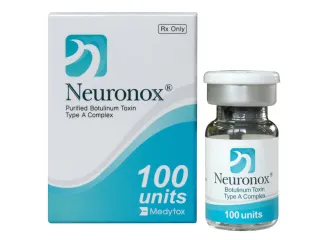
Table of Contents
INSTRUCTION FOR MEDICAL USE OF THE MEDICINAL PRODUCT NEURONOX
Composition:
Active substance: Clostridium botulinum toxin type A;
One vial of the medicinal product contains Clostridium botulinum toxin type A complex – 200* IU;
Excipients: 20% human albumin solution – 1 mg, sodium chloride – 1.8 mg;
* One unit of biological activity corresponds to the calculated median lethal dose LD50 (determined in mice).
Pharmaceutical form. Lyophilized powder for solution for injection.
Main physicochemical properties: Neuronox is a botulinum toxin type A complex derived from the culture of Clostridium botulinum strain Hall. A white lyophilized powder. One vial of Neuronox contains 200 units of botulinum toxin type A.
Pharmacotherapeutic group.
Muscle relaxants with peripheral mechanism of action. Botulinum toxin. ATC code M03AX01.
Pharmacological properties.
Pharmacodynamics.
Neuronox (botulinum toxin type A) is a neurotoxin administered directly into target muscles, where it selectively acts on peripheral cholinergic nerve endings, inhibiting the release of the neurotransmitter acetylcholine (ACh), thereby reducing muscle contraction. Like other botulinum toxins, Neuronox blocks neuromuscular transmission by binding to receptor sites at the terminals of motor nerve fibers, entering nerve cells, and inhibiting the release of the neurotransmitter acetylcholine. Botulinum toxin binds to the SNAP-25 protein, which plays a key role in acetylcholine release from vesicles at nerve endings, thereby inhibiting acetylcholine release. Intramuscular injection of therapeutic doses of Neuronox results in partial chemical denervation of the muscle, locally reducing muscle activity.
Botulinum toxin therapy involves direct clinical targeting of the affected muscle, i.e., local action of therapeutic doses of botulinum toxin type A on the muscle. Therefore, Neuronox (botulinum toxin type A) should be considered a locally acting medicinal product. When administered at therapeutic doses, botulinum toxin type A is not detectable in blood plasma at measurable levels.
Pharmacokinetics.
Botulinum toxin type A has not been detected at significant levels in peripheral blood following intramuscular injection at recommended doses. It was not expected that the recommended amount of neurotoxin administered during each treatment cycle would lead to systemic, clinically evident distant effects, such as muscle weakness in patients without other neuromuscular disorders. However, subclinical systemic effects have been detected by single-fiber electromyography following intramuscular injection of botulinum toxin doses that caused clinically observable local muscle weakness.
Clinical characteristics.
Indications.
Neuronox is indicated for the treatment of:
- benign essential blepharospasm in patients aged 18 years and older;
- upper limb muscle spasticity following stroke in patients aged 20 years and older.
Neuronox is indicated for the temporary improvement of moderate to severe glabellar lines associated with the activity of the glabellar muscles (corrugator and procerus muscles) in adults aged 20 to 65 years.
Contraindications.
Hypersensitivity to any component of the product;
active infection at the proposed injection site;
neuromuscular junction disorders (severe myasthenia gravis (Erba–Goldflam disease), Lambert–Eaton syndrome, amyotrophic lateral sclerosis), since the muscle-relaxing effect of this product may worsen the course of the disease;
severe respiratory disorders;
pregnancy or breastfeeding.
Special safety precautions.
Neuronox should be reconstituted only with standard sterile, preservative-free isotonic solution (0.9% sodium chloride injection). Draw up the appropriate volume of diluent (see dilution table below) into a syringe of suitable size and slowly, carefully inject the diluent into the vial.
Dilution table for Neuronox 200 Units
| Solvent supplied (0.9% sodium chloride injection solution) |
Dose (units in 0.1 ml) |
| 1.0 ml |
20.0 IU |
| 2.0 ml |
10.0 IU |
| 4.0 ml |
5.0 IU |
| 8.0 ml |
2.5 IU |
The solvent should be slowly injected into the vial, as denaturation of Neuronox may occur due to bubble formation and vigorous mixing. If the solvent does not enter the vial, such a preparation should not be used. Carefully mix Neuronox with the isotonic solution by gently rotating the vial.
The reconstituted Neuronox solution must be inspected for clarity and absence of particulate matter prior to administration.
Unopened vials containing powder should be stored in a refrigerator (2–8 °C).
After reconstitution, Neuronox may be stored in the refrigerator (2–8 °C) for up to 24 hours prior to administration. Unused preparations in vials should be inactivated by adding a small amount of water, followed by sterilization in an autoclave. Any unused vials or accessories (such as syringes) must be sterilized in an autoclave, and any remaining Neuronox should be inactivated using diluted sodium hypochlorite solution (0.5%).
Interaction with other medicinal products and other forms of interaction.
The effect of botulinum toxin may be potentiated when used concomitantly with aminoglycoside antibiotics or other agents interfering with neuromuscular transmission, such as tubocurarine-type muscle relaxants. Concomitant use of Neuronox with aminoglycosides or spectinomycin is contraindicated. Polymyxin, tetracyclines, and lincomycin should be administered with caution to patients receiving Neuronox therapy.
The effect of simultaneous use of different serological types of botulinum neurotoxins, or their administration within several months of each other, is unknown. Excessive neuromuscular weakness may be increased if botulinum toxin is administered repeatedly before the effects of the previous dose have fully subsided.
Special precautions for use.
Since the active substance of Neuronox is botulinum toxin from Clostridium type A, derived from Clostridium botulinum, recommended dosages and frequency of administration must be strictly observed. The physician administering Neuronox should have adequate knowledge of neuromuscular anatomy and be aware of any anatomical changes resulting from previous surgical procedures. In addition, the physician should be familiar with standard electromyographic procedures. Treatment should be initiated with the lowest recommended dose for the given indication. Neuronox should be used with particular caution in patients with a history of dysphagia or aspiration. The dose and frequency of Neuronox administration must not be exceeded.
Spread of toxic effect.
In some cases, the toxic effect of botulinum toxin may extend beyond the injection site. Symptoms may include asthenia, generalized muscle weakness, diplopia, blurred vision, ptosis, dysphagia, swallowing difficulties, dysarthria, urinary incontinence, and respiratory difficulties. Swallowing and breathing difficulties may be life-threatening. Fatal cases associated with the spread of toxic effects have been reported; such cases should be reported. Instances of spread of toxic effects have occurred even with doses similar to or lower than those used in the treatment of cervical dystonia.
Hypersensitivity reactions.
Serious and/or delayed hypersensitivity reactions have been rarely observed with botulinum toxin products. These reactions include anaphylaxis, urticaria, soft tissue swelling, and dyspnea. One fatal case of anaphylaxis has been reported after administration of another botulinum toxin reconstituted with lidocaine; however, the agent responsible for the anaphylactic reaction was not definitively identified. If such reactions occur, administration of the drug should be immediately discontinued and appropriate medical treatment initiated.
Pre-existing (prior to treatment) neuromuscular disorders.
Patients with peripheral motor neuropathies (e.g., amyotrophic lateral sclerosis or motor neuropathy) or disorders of neuromuscular synaptic function (e.g., myasthenia gravis or Lambert-Eaton syndrome) may be at increased risk of developing clinically significant systemic reactions after therapeutic doses of the drug, including severe dysphagia and respiratory insufficiency. Medical literature reports rare cases of botulinum toxin administration in patients with known or undiagnosed neuromuscular disorders. In such patients, extreme sensitivity to systemic effects after administration of usual therapeutic doses has been observed. In some of these cases, dysphagia lasted several months, necessitating placement of a feeding tube.
Dysphagia.
Difficulty in swallowing is a common adverse effect observed in patients with cervical dystonia treated with botulinum toxin products. Isolated cases of severe dysphagia requiring placement of a feeding tube have been reported in such patients. Fatal cases due to aspiration pneumonia resulting from dysphagia have been reported after botulinum toxin treatment.
Rare adverse reactions involving the cardiovascular system, including arrhythmia and myocardial infarction (sometimes fatal), have been reported after administration of other botulinum toxins. Some of these adverse reactions occurred in the presence of risk factors, including pre-existing cardiovascular disease.
During treatment of strabismus with other botulinum toxins, retrobulbar hemorrhages sufficient to impair retinal circulation have occurred due to needle penetration into the orbit. To reduce pressure in the orbit, which is easily damaged, appropriate instruments should be readily available. Needle penetration into the eye has also been reported. An ophthalmoscope is required to diagnose this condition. However, paralysis of one or more extraocular muscles may cause spatial disorientation and diplopia. Closing the affected eye may alleviate these symptoms.
Corneal lesions and ulceration in patients with blepharospasm treated with botulinum toxin products.
Reduced blinking after injection of botulinum toxin into the orbicularis muscle may lead to corneal damage, persistent epithelial defects, and corneal ulceration, particularly in patients with stage V facial nerve disorders. In one reported case, corneal perforation occurred in an aphakic eye, requiring corneal transplantation. Careful assessment of corneal sensitivity in previously operated eyes is necessary, injection into the lower eyelid area should be avoided to prevent ectropion, and any epithelial defect should be intensively treated. Prophylactic eye drops, ointments, therapeutic soft contact lenses, or eye closure with a patch or other method may be required.
Non-interchangeability of botulinum toxin products.
The units of biological activity of Neuronox cannot be compared or converted into units of other botulinum toxins by any specific method.
Injections into or near sensitive anatomical structures.
Caution is required when administering the drug into or near sensitive anatomical structures. Serious adverse events, including fatal outcomes, have been reported in patients receiving other botulinum toxin products injected directly into salivary glands, the oro-linguo-pharyngeal region, esophagus, and stomach. Some of these patients had pre-existing dysphagia or significant weight loss. (Safety and efficacy have not been established for indications involving these injection sites.) Pneumothorax associated with the injection procedure of another botulinum toxin near the lungs has been reported. Caution is required when injecting near the lungs, particularly near the upper lung regions.
Pulmonary effects of botulinum toxin in patients with respiratory disorders.
In patients with respiratory impairment treated with another botulinum toxin for upper limb spasticity, reduced lung function and upper respiratory tract infections have been reported during treatment of spasticity or detrusor hyperactivity associated with neurological conditions.
Bronchitis and upper respiratory tract infections in patients treated for spasticity.
Bronchitis has been reported more frequently in patients treated with botulinum toxin for upper limb spasticity compared to placebo. In patients with impaired lung function treated with botulinum toxin for upper limb spasticity, upper respiratory tract infections have been reported more frequently compared to placebo.
Neuronox is indicated for the treatment of focal spasticity. Botulinum toxin has been studied only in combination with standard treatment regimens; therefore, Neuronox is not intended to replace standard treatment methods. Neuronox is unlikely to be effective in improving joint range of motion after fixed contracture.
Neuronox should be used only for the treatment of focal spasticity in adult patients after stroke when reduction in muscle tone may lead to improved function (e.g., improved gait), or reduction of symptoms (e.g., reduced muscle spasms or pain relief) and/or improved patient care.
Adult patients with post-stroke spasticity who may be at increased risk of falls should be treated with caution. Clinical trial data show that the incidence of falls was 7.2% in the group receiving botulinum toxin treatment for lower limb spasticity (some of whom also received treatment for upper limb spasticity) compared to 4.9% in the placebo group.
Fatal outcomes (sometimes associated with aspiration pneumonia) and probable distant spread of toxin have been reported in children with comorbid conditions, primarily cerebral palsy, after botulinum toxin treatment.
Treatment of glabellar lines most visible during frowning and/or treatment of "crow's feet" lines most visible during smiling.
It is mandatory that Neuronox from a single vial be used for only one patient during a single session. Any unused portion of the drug must be discarded. Extreme caution should be exercised during preparation, administration, inactivation, and disposal of unused reconstituted solution.
Neuronox is not recommended for individuals under 18 years of age. Since clinical studies on the treatment of glabellar lines were conducted in men and women aged 20 to 65 years, Phase 3 clinical trial data on the use of botulinum toxin products in patients over 65 years of age are lacking.
Caution should be exercised to avoid intravascular injection when administering Neuronox into vertical lines between the eyebrows most visible during frowning (also known as glabellar lines) or lateral lines at the outer eye corner most visible during smiling (also known as "crow's feet"). There is a risk of developing ptosis after treatment; see the "Dosage and administration" section for instructions on injection techniques to minimize this risk.
This medicinal product contains sodium chloride: the 200 IU dose contains 1.8 mg of sodium chloride. Caution is advised when administering to patients on a sodium-controlled diet.
Use during pregnancy or breastfeeding.
The safety of Neuronox during pregnancy or in women who are breastfeeding has not been established. Administration of other botulinum toxins resulted in abortion in rabbits at daily doses of 0.125 IU/kg/day and at doses of 2 IU/kg or higher; however, no abortions were observed in animals receiving botulinum toxin doses up to 4 IU/kg. Doses of 8 and 16 IU/kg in animals resulted in reduced fetal weight and/or delayed ossification of the hyoid bone, which may be reversible.
There are no data on the excretion of the drug into breast milk.
Neuronox is contraindicated during pregnancy and breastfeeding.
Fertility.
There are insufficient data on the effect of botulinum toxin type A on fertility in women of reproductive age. Animal studies have shown impaired fertility.
Effect on the ability to drive or operate machinery.
The effect of botulinum toxin on the ability to drive or operate machinery has not been studied. However, Neuronox may cause asthenia, muscle weakness, somnolence, dizziness, and visual disturbances, which may affect the ability to drive or operate machinery.
Method of Administration and Dosage
The units of biological activity of Neuronox cannot be compared or converted into units of other botulinum toxins by any specific methods.
Blepharospasm
Reconstituted Neuronox (see reconstitution table) is administered using a sterile 27–30 gauge needle without electromyographic guidance. The recommended initial dose is 1.25–2.5 IU (0.05–0.1 mL into each site), injected into the medial and lateral pretarsal orbicularis oculi muscle of the upper eyelid and the lateral pretarsal orbicularis oculi muscle of the lower eyelid. The initial effect typically becomes apparent within 3 days after injection and reaches its peak within 1–2 weeks after treatment. The treatment course lasts approximately 3 months, after which it may be repeated if necessary. In subsequent treatment courses, the dose may be doubled if the response after the first course is inadequate, usually indicated by a duration of effect less than 2 months. Minimal benefits have been observed after administering more than 5 IU per site. Some tolerance to the drug may develop when treating blepharospasm if treatment is administered more frequently than every 3 months, although this effect is rarely permanent.
The total dose of Neuronox must not exceed 100 IU within a 30-day treatment period.
Glabellar Lines
Neuronox is reconstituted with 0.9% preservative-free sterile sodium chloride solution to yield a concentration of 100 IU/2.5 mL (4 IU/0.1 mL). Using a 30-gauge needle, 20 IU of Neuronox is administered into two sites of the corrugator supercilii muscle for each eye and one site in the procerus muscle, totaling 5 injection sites with 0.1 mL each. To reduce the risk of complications such as ptosis, injections near the levator palpebrae superioris muscle should be avoided, especially in patients with pronounced glabellar lines. When injecting the medial end of the corrugator supercilii muscle and the central point between the eyebrows, Neuronox should be administered at least 1 cm above the supraorbital ridge.
Neuronox must be administered carefully to avoid intravascular injection. To prevent diffusion into the area below the orbital rim, firm pressure should be applied with the index or middle finger below the orbital rim prior to injection. During injection, the needle should be inserted closer to the center, and the dose must be accurately measured.
Glabellar facial lines are caused by contraction of the corrugator supercilii and orbicularis oculi muscles toward the center of the forehead. The procerus muscle and the depressor supercilii muscle pull the forehead downward. These muscles are responsible for glabellar or interbrow lines. Since the position, size, and function of these muscles vary among individuals, the effective dose should be determined based on general clinical assessment of the patient's ability to move superficial facial muscles after injection.
The therapeutic effect of Neuronox for glabellar lines lasts approximately 3 to 4 months. The safety and efficacy of frequent Neuronox injections have not been clinically established and are therefore not recommended.
In most cases, the first Neuronox injection causes chemical denervation in the injected muscle within 1–2 days after administration, with the effect intensifying during the first week.
Muscle Spasticity
The exact dosage and number of injection sites should be individually determined by the physician based on the size, number, and location of affected muscles, severity of spasticity, presence of local muscle weakness, and the patient’s individual response to prior treatment. Clinical improvement in muscle tone typically occurs within 4–6 weeks after completion of the treatment course.
During controlled clinical studies, the following doses were administered:
| Muscles |
Total dose |
Number of injection sites |
| Biceps brachii |
100–200 IU |
up to 4 sites |
| Flexor digitorum profundus |
15–50 IU |
1–2 sites |
| Flexor digitorum sublimis |
15–50 IU |
1–2 sites |
| Flexor carpi ulnaris |
15–60 IU |
1–2 sites |
| Flexor carpi radialis |
10–50 IU |
1–2 sites |
During clinical studies, doses not exceeding 360 U were injected into individual muscles.
Reconstituted Neuronox is administered using a sterile 24–30 gauge needle into superficial muscles; a longer needle may be used for deeper muscles.
To localize the target muscle, neurostimulation or electromyography techniques may be used.
Children.
The safety and efficacy of Neuronox in pediatric patients (under 18 years of age) have not been established. Neuronox should not be used in children until further data are available.
Overdose.
Symptoms of overdose do not appear immediately after injection. In the event of accidental injection, ingestion, or suspected overdose, the patient should be placed under medical observation for several weeks to monitor for progressive signs of muscle weakness that may occur at or distant from the injection site, including ptosis, diplopia, dysphagia, dysarthria, generalized weakness, or respiratory disorders. Such patients should undergo further medical evaluation and receive immediate medical treatment, which may include hospitalization.
Aspiration pneumonia may develop if the muscles of the oropharyngeal portion of the pharynx and esophagus are affected. In cases of excessive muscle weakness or paralysis of respiratory muscles, tracheal intubation and mechanical ventilation should be performed until normal respiratory function is restored. In addition to general supportive measures, tracheostomy and prolonged mechanical ventilation may be required.
In cases of overdose or accidental administration, antitoxin should be administered. However, the antitoxin will not reverse any muscle weakness effects caused by botulinum toxin that have already manifested at the time of antitoxin administration.
Adverse Reactions
General
Adverse reactions may be related to the treatment, the injection procedure, or both. Adverse reactions usually occur within the first week after administration of the drug, and although generally temporary, they may persist for several months, and in rare cases, longer. Local muscle weakness is an expected pharmacological effect of botulinum toxin. However, toxin spread may also lead to weakness of muscles adjacent to the injection site.
As typical for any injection procedure, local pain, inflammation, paresthesia, hypesthesia, tenderness, swelling/edema, erythema, localized infection, bleeding, and/or bruising may occur at the injection site. Needle pain and/or anxiety may lead to vasovagal reactions, including transient symptomatic hypotension and loss of consciousness. Fever and flu-like syndrome have also been reported after botulinum toxin injections.
Treatment of Blepharospasm/Unilateral Facial Spasm
Nervous system disorders: dizziness, facial paresis, and facial paralysis.
Eye disorders: ptosis, punctate keratitis; lagophthalmos, dry eyes, photophobia, eye irritation, and increased lacrimation, keratitis; ectropion, diplopia, entropion, visual disturbance, blurred vision, eyelid edema, corneal ulcer, corneal epithelial defect, and corneal perforation.
Skin and subcutaneous tissue disorders: subcutaneous hematoma, rash/dermatitis.
General disorders and administration site conditions: facial irritation and swelling, fatigue.
Treatment of Upper Limb Spasticity Associated with Stroke
Psychiatric disorders: depression and insomnia.
Nervous system disorders: hypertension, hypesthesia, headache, paresthesia, coordination disturbance, and amnesia.
Ear and labyrinth disorders: vertigo.
Vascular disorders: orthostatic hypotension.
Gastrointestinal disorders: nausea and oral cavity paresthesia.
Skin and subcutaneous tissue disorders: subcutaneous hematoma, purpura, dermatitis; pruritus and rash.
Musculoskeletal and connective tissue disorders: limb pain, muscle weakness, arthralgia, bursitis.
General disorders and administration site conditions: injection site pain, increased temperature, flu-like syndrome, hematoma and irritation at injection site, asthenia, pain, hypersensitivity at injection site, tenderness, and peripheral edema. Some of these reactions may be disease-related.
Treatment of Glabellar Lines
Infections and infestations: infection.
Psychiatric disorders: anxiety.
Nervous system disorders: headache, paresthesia, dizziness.
Eye disorders: ptosis, blepharitis, eye pain, visual disturbance.
Gastrointestinal disorders: nausea, dry mouth.
Skin and subcutaneous tissue disorders: erythema, skin tightness, edema (face, eyelids, periorbital), photosensitivity reactions, pruritus, dry skin.
Musculoskeletal and connective tissue disorders: localized muscle weakness, muscle twitching.
General disorders and administration site conditions: facial pain, flu-like syndrome, asthenia, fever.
Treatment of Crow’s Feet
Eye disorders: eyelid edema.
General disorders and administration site conditions: injection site hematoma*, injection site bruising*, injection site pain-*, injection site paresthesia.
*Adverse reactions related to the procedure.
Treatment of Crow’s Feet and Glabellar Lines
General disorders and administration site conditions: injection site hematoma*, injection site bruising*, injection site pain*.
*Adverse reactions related to the procedure.
No changes in the overall safety profile were observed after repeated administration of the drug.
Additional Information
The following adverse reactions have also been reported and observed with botulinum toxin products regardless of indication.
Cardiac disorders: arrhythmia, myocardial infarction.
Ear and labyrinth disorders: hearing loss, tinnitus, vertigo.
Eye disorders: closed-angle glaucoma (during treatment of blepharospasm), strabismus, blurred vision, visual disturbance.
Gastrointestinal disorders: abdominal pain, diarrhea, constipation, dry mouth, dysphagia, nausea, and vomiting.
General disorders and administration site conditions: denervation atrophy, malaise, increased temperature.
Immune system disorders: anaphylaxis, laryngeal edema, serum sickness, urticaria.
Metabolism and nutrition disorders: anorexia.
Skin and subcutaneous tissue disorders: muscle atrophy, myalgia.
Nervous system disorders: brachial plexopathy, dysphonia, dysarthria, facial paresis, hypesthesia, muscle weakness, myasthenia gravis, peripheral neuropathy, paresthesia, radiculopathy, seizures, syncope, facial paralysis.
Respiratory, thoracic, and mediastinal disorders: aspiration pneumonia (sometimes fatal), dyspnea, respiratory depression, respiratory failure.
Skin and subcutaneous tissue disorders: alopecia, psoriasiform dermatitis, erythema multiforme, increased sweating, loss of eyebrows and eyelashes, pruritus, and rash.
The frequency of adverse reactions was evaluated in efficacy studies of Neuronox.
Essential Blepharospasm
In this study, 32 adverse events were observed in 173 participants in the ITT group. The incidence rate of adverse reactions was 16.18%, and the frequency was 18.50%.
Glabellar Lines
The percentage of reported adverse events was 26.92% (42/156, 65 events) in the Neuronox group and 22.29% (35/157, 45 events) in the comparator group.
Muscle Spasticity
The study included 196 subjects (98 subjects per group). The maximum dose was 360 IU, which could be administered in total to 4 muscles: flexor carpi radialis, flexor digitorum, flexor digitorum profundus, and flexor digitorum superficialis. The mean dose in the study group and control group was 309.13 ± 65.49 IU and 316.38 ± 54.70 IU, respectively. Serious adverse reactions occurred in 5.10% (5/98, 8 events) of subjects in the study group and in 8.16% (8/98, 8 events) of subjects in the control group.
Shelf life: 3 years.
Storage conditions.
Keep the medicine out of the reach of children.
Store the unopened vial in a refrigerator at +2–8°C or in a freezer at -15°C to -5°C. The reconstituted solution should be stored in a refrigerator at +2–8°C and used within 24 hours.
Packaging.
Lyophilized powder in a glass vial stoppered with a rubber plug and sealed with an aluminum cap with a pull-off ring made of polypropylene. One vial per cardboard box.
Prescription category: Prescription only.
Manufacturer.
Meditox Inc.
Manufacturer's address and location of operations.
78, Kanni 1-gil, Ocheon-eup, Cheonwon-gu, Cheongju-si, Chungcheongbuk-do, Republic of Korea.