Neurodiclovit
Ukraine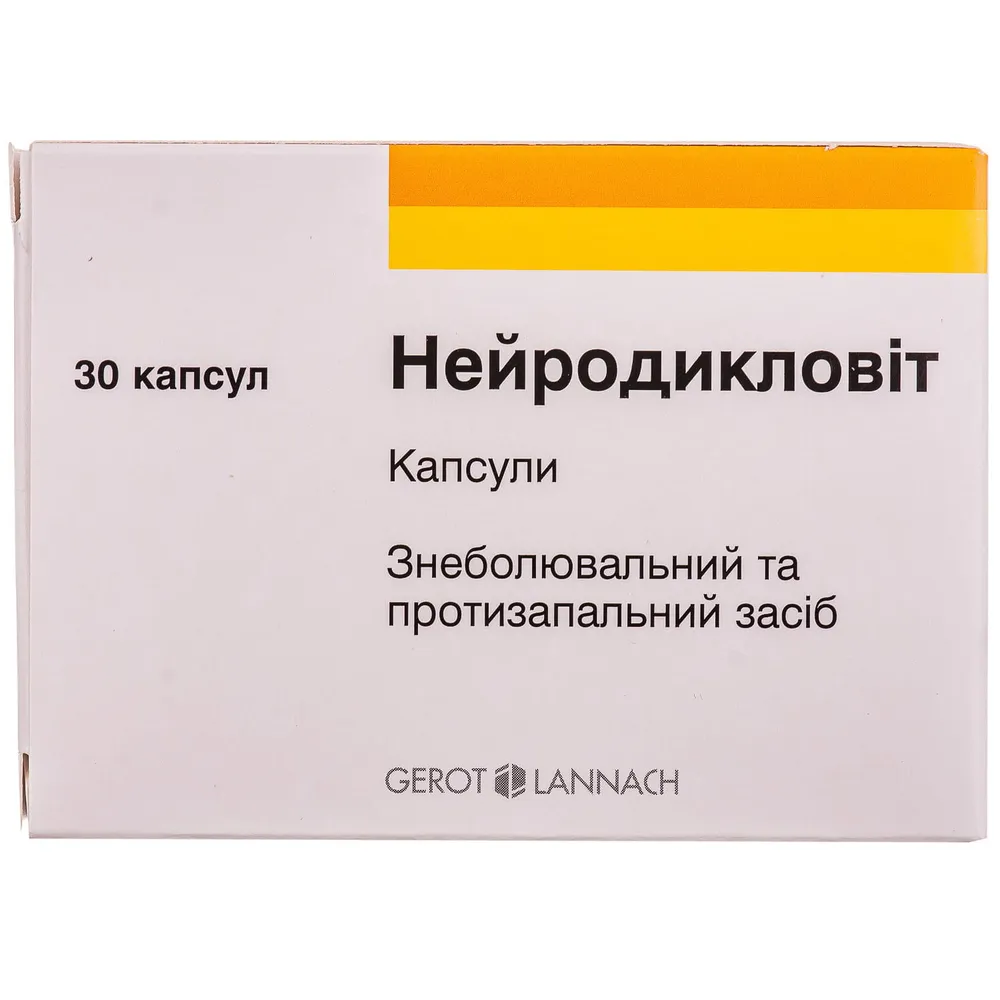
Table of Contents
INSTRUCTIONS FOR MEDICAL USE OF THE MEDICINAL PRODUCT NEURODICLOVIT
Composition:
Active substances: sodium diclofenac, thiamine hydrochloride, pyridoxine hydrochloride, cyanocobalamin;
1 capsule contains: sodium diclofenac 50.0 mg; thiamine hydrochloride (vitamin B1) 50.0 mg;
pyridoxine hydrochloride (vitamin B6) 50.0 mg; cyanocobalamin (vitamin B12) 0.25 mg;
Excipients: povidone; methacrylic acid copolymer (type A) 30% dispersion; triethyl citrate; iron oxide red (E 172); iron oxide yellow (E 172); talc; titanium dioxide; gelatin.
Pharmaceutical form. Capsules.
Main physicochemical properties: hard gelatin capsules of beige color, size № 1, containing a mixture of pink powder and white granules; red-brown cap.
Pharmacotherapeutic group. Diclofenac, combinations. ATC code M01A B55.
Pharmacological properties.
Pharmacodynamics.
Neurodiclovit is a combination of diclofenac and neurotropic vitamins B1, B6, and B12. Like other nonsteroidal anti-inflammatory drugs, diclofenac inhibits the enzyme cyclooxygenase, which converts arachidonic acid into prostaglandins. Diclofenac also inhibits the enzyme lipoxygenase. The analgesic, anti-inflammatory, and antipyretic effects of diclofenac are due to inhibition of prostaglandin synthesis.
Vitamins of group B act as coenzymes in metabolism, particularly in neurology, which positively influences the analgesic effect of sodium diclofenac.
Pharmacokinetics.
After oral administration, diclofenac is well and completely absorbed from the gastrointestinal tract. Bioavailability is independent of food intake. Maximum plasma concentration is reached within 1\–2 hours after administration (faster on an empty stomach than after food intake). The vitamins contained in the drug are absorbed in the intestine via active and passive mechanisms. Their distribution and elimination are similar to those of vitamins taken with food. After oral administration of diclofenac, half the concentration of the drug was detected in plasma compared to that observed after parenteral administration of the same dose. Therapeutic plasma concentration of the drug is approximately 0.7\–2.0 mg/L. Approximately 99% of diclofenac is bound to plasma proteins, primarily albumin.
Approximately 60% of the administered dose of the drug is excreted by the kidneys as active metabolites; less than 1% of diclofenac is excreted unchanged. Approximately 30% of the dose is excreted via bile as metabolites in feces. The half-life of diclofenac in plasma is approximately 2 hours. Total systemic clearance of diclofenac from plasma is nearly 250 mL/min. Renal impairment does not lead to accumulation of the active substance due to increased biliary excretion. Absorption, metabolism, and excretion of the drug are independent of age.
Clinical characteristics.
Indications.
Inflammatory and degenerative forms of rheumatic diseases:
- Chronic polyarthritis;
- Ankylosing spondylitis (Bechterew's disease);
- Osteoarthritis;
- Spondyloarthritis;
- Acute gouty arthritis;
- Periarticular soft tissue rheumatism;
- Neuritis and neuralgias such as cervical syndrome, lumbar pain (lumbago), sciatica.
Contraindications.
- Hypersensitivity to the components of the drug.
- Gastric or duodenal ulcer.
- Porphyria, hemorrhagic diathesis, blood dyscrasias.
- Crohn's disease, ulcerative colitis.
- Severe heart failure.
- History of bronchial asthma, skin reactions, or acute rhinitis provoked by acetylsalicylic acid or other drugs inhibiting prostaglandin synthesis.
- Severe renal or hepatic insufficiency.
- Gastrointestinal bleeding or perforation.
- Erythremia, erythrocytosis, thromboembolism.
- Allergic disorders.
- Congestive heart failure (NYHA II–IV).
- Ischemic heart disease in patients with angina pectoris or history of myocardial infarction.
- Cerebrovascular diseases in patients with history of stroke or transient ischemic attacks.
- Peripheral arterial disease.
- Postoperative pain treatment following coronary artery bypass grafting (or use of cardiopulmonary bypass apparatus).
Interaction with other medicinal products and other forms of interactions.
Concomitant administration of Neurodiklovit and other medicinal products may lead to increased or decreased efficacy.
Increase:
- Plasma levels of lithium and digoxin;
- Risk of gastrointestinal bleeding during concomitant therapy with glucocorticoids;
- Adverse effects of other nonsteroidal anti-inflammatory drugs (NSAIDs);
- Effectiveness of potassium-sparing diuretics (monitor potassium levels);
- Effectiveness of drugs that inhibit platelet aggregation;
- Levels and toxicity of methotrexate. Administration of NSAIDs should be avoided less than 24 hours before or after methotrexate therapy.
Decrease:
- Effectiveness of diclofenac with furosemide and other loop diuretics;
- Effectiveness of diclofenac with antihypertensive agents;
- Mutual reduction in serum concentrations of diclofenac and acetylsalicylic acid;
- Absorption of vitamin B12 when used concomitantly with colchicine, PAS, neomycin, and antidiabetic agents of the biguanide type.
Concomitant use with levodopa is contraindicated, as vitamin B6 may reduce the antiparkinsonian effect of levodopa.
Like other NSAIDs, concomitant use with diuretics or antihypertensive agents (e.g., beta-blockers, calcium channel blockers, angiotensin-converting enzyme inhibitors) may reduce their antihypertensive effect. Therefore, such combinations should be prescribed with caution, and patients (especially elderly) should have periodic monitoring of blood pressure. Patients should maintain adequate fluid intake, and renal function should be monitored periodically after completion of concomitant therapy, particularly when diuretics and ACE inhibitors are used, due to increased risk of nephrotoxicity. Concomitant use of systemic NSAIDs and selective serotonin reuptake inhibitors (SSRIs) may increase the risk of gastrointestinal bleeding.
Concomitant use of diclofenac and antidiabetic agents is possible, with no significant change in the effectiveness of the latter. However, isolated reports describe both hypoglycemia and hyperglycemia in such cases, necessitating dose adjustments of antidiabetic drugs during diclofenac therapy. For this reason, monitoring of blood glucose levels is recommended during treatment. Concomitant use of diclofenac with colestipol or cholestyramine reduces absorption of diclofenac by approximately 30% and 60%, respectively. The drugs should be administered with several hours' interval. Agents that induce enzymes, such as rifampicin, carbamazepine, phenytoin, St. John’s wort (Hypericum perforatum), and others, may theoretically reduce plasma concentrations of diclofenac. The effect of NSAIDs on prostaglandin synthesis in the kidneys may potentiate the nephrotoxicity of cyclosporine. Isolated reports exist of seizures in patients receiving concomitant quinolone derivatives and NSAIDs.
The action of thiamine is inactivated by 5-fluorouracil, as the latter competitively inhibits phosphorylation of thiamine to thiamine pyrophosphate.
Antacids reduce thiamine absorption. Loop diuretics, such as furosemide, which inhibit tubular reabsorption, may during prolonged therapy increase thiamine excretion and thereby reduce thiamine levels.
Concomitant use with pyridoxine antagonists (e.g., isoniazid, hydralazine, penicillamine, or cycloserine) or oral contraceptives may increase the requirement for vitamin B6.
Special precautions for use.
The occurrence of adverse effects may be reduced by using the lowest effective dose for the shortest duration necessary to control symptoms.
The drug should be used with caution in patients with bronchial asthma, hay fever, swelling of the nasal mucosa (nasal polyps), or chronic infectious respiratory diseases.
Appropriate monitoring and consultation are required for patients with a history of elevated arterial pressure and/or heart failure, as fluid retention and edema have been reported during NSAID treatment.
Treatment with diclofenac should be prescribed cautiously after careful consideration in patients with poorly controlled arterial hypertension, heart failure, pre-existing ischemic heart disease, peripheral arterial vascular diseases, and/or cerebrovascular diseases. These factors should also be taken into account before initiating treatment in patients predisposed to cardiovascular diseases (e.g., arterial hypertension, hyperlipidemia, diabetes mellitus, smoking).
Clinical studies and epidemiological data indicate that the use of diclofenac, particularly at high doses (150 mg daily) and over prolonged periods, may be associated with a small increased risk of arterial thrombotic events (myocardial infarction or stroke).
During prolonged treatment with Neirodiklovit, periodic monitoring of peripheral blood parameters, liver function, and kidney function is recommended.
Patients with a history of peptic ulcer disease or dyspeptic symptoms, as well as those with liver, kidney, or heart disease, arterial hypertension, or heart failure, require close medical supervision.
Gastrointestinal ulcers, bleeding, and perforations (which may be fatal) are known to occur with all NSAIDs, including during treatment, either with or without warning symptoms, and particularly in patients with a history of serious gastrointestinal disorders. Generally, such events are most dangerous in elderly patients. In individual cases, if complications develop in patients receiving diclofenac, the drug should be discontinued.
The use of NSAIDs, including diclofenac, is associated with an increased risk of gastrointestinal anastomotic leakage. Careful medical monitoring and caution are recommended when using diclofenac after gastrointestinal surgery.
The patient should inform their physician if they have recently undergone or are planning surgery on the stomach or gastrointestinal tract before taking Neirodiklovit.
Very rarely, severe and even fatal skin reactions, including exfoliative dermatitis, Stevens-Johnson syndrome, and toxic epidermal necrolysis, have been reported with the use of NSAIDs, including diclofenac. The highest risk for these reactions occurs early in therapy, and most cases develop within the first month of treatment. The drug should be discontinued at the first signs of skin rash, mucosal lesions, or any other manifestations of hypersensitivity.
As with other NSAIDs, allergic reactions, including anaphylactic/anaphylactoid reactions, may occur with diclofenac, even in the absence of prior exposure to diclofenac. Hypersensitivity reactions may also progress to Kounis syndrome—a serious allergic reaction that may lead to myocardial infarction. Symptoms may include chest pain associated with an allergic reaction to diclofenac. The patient should immediately inform their physician if they experience chest pain, which may indicate a potentially serious allergic reaction—Kounis syndrome.
Due to its pharmacological properties, diclofenac may mask symptoms typical of infectious-inflammatory diseases.
When vitamin B12 is administered, the clinical picture and laboratory findings in funicular myelosis or pernicious anemia may lose their specificity.
Alcohol and black tea reduce thiamine absorption. Consumption of beverages containing sulfites (e.g., wine) increases thiamine degradation.
The drug should not be used in patients with neoplasms, except in cases associated with megaloblastic anemia and vitamin B12 deficiency.
The drug is contraindicated in angina pectoris.
Diclofenac may be prescribed to patients with significant cardiovascular risk factors (e.g., hypertension, hyperlipidemia, diabetes mellitus, smoking) only after careful clinical evaluation. Since cardiovascular risks with diclofenac may increase with higher doses and longer treatment duration, it should be used at the lowest effective dose and for the shortest possible duration. The need for diclofenac treatment and the patient's response to therapy should be reviewed periodically. Use with caution in patients aged 65 years and older.
Use during pregnancy or breastfeeding.
Starting from the 20th week of pregnancy, the use of Neirodiklovit may cause oligohydramnios due to fetal renal dysfunction. This condition may occur soon after starting treatment and is usually reversible upon discontinuation of therapy. During the first and second trimesters of pregnancy, Neirodiklovit should not be prescribed except in cases of extreme necessity. If Neirodiklovit is used in women attempting to conceive or during the first and second trimesters of pregnancy, the dose should be as low as possible and the duration of treatment as short as possible. Prenatal monitoring for oligohydramnios may be advisable if Neirodiklovit is used for several days starting from the 20th week of pregnancy. Neirodiklovit should be discontinued if oligohydramnios is detected.
During the third trimester, all prostaglandin synthesis inhibitors may cause:
Risks for the fetus:
- Cardio-pulmonary toxicity (with premature closure of the ductus arteriosus and pulmonary hypertension);
- Impaired kidney function (see above);
Risks for the mother at the end of pregnancy and for the newborn:
- Prolonged bleeding time, anti-aggregatory effect, which may occur even at very low doses;
- Inhibition of uterine contractions, leading to delayed or prolonged labor.
Therefore, Neirodiklovit is contraindicated during the third trimester of pregnancy.
Ability to affect the speed of reactions when driving or operating machinery.
Although no negative effect on the ability to drive or operate machinery has been observed, it cannot be ruled out that reaction speed may be impaired due to the undesirable effects of diclofenac on the central nervous system (dizziness, increased fatigue).
Method of Administration and Dosage
Capsules should be swallowed whole with sufficient fluid during meals.
Depending on the severity of the disease, the recommended dose of the drug is 1–3 capsules per day, corresponding to 50–150 mg of diclofenac, respectively.
Adults. The initial dose is 2–3 capsules per day. Maintenance dose: 1 capsule 1–2 times daily. The maximum daily dose should not exceed 3 capsules.
Children aged 14 years and older. Maximum daily dose: 1 capsule twice daily.
The duration of treatment is determined individually by the physician.
Elderly patients. Although the pharmacokinetics of diclofenac is not age-dependent, dosage should be selected with caution in elderly patients.
Children.
Not recommended for children under 14 years of age.
Overdose.
Symptoms of diclofenac overdose and intoxication include an increased frequency of adverse effects on the gastrointestinal tract and central nervous system.
Treatment is symptomatic.
In cases of severe diclofenac poisoning, acute renal failure and hepatic damage may occur.
Vitamin B1 has a wide therapeutic range. No symptoms have been reported after oral administration. Very high doses (over 10 g) may produce curare-like effects, suppressing nerve impulse conduction.
Vitamin B6 exhibits very low toxicity. Prolonged use (more than 6–12 months) at doses exceeding 50 mg of vitamin B6 daily may lead to peripheral sensory neuropathy. Excessive intake of vitamin B6 at doses greater than 1 g per day over several months may result in neurotoxic effects. Neuropathies with ataxia and sensory disturbances, cerebral seizures with ECG changes, and in rare cases hypochromic anemia and seborrheic dermatitis have been reported after administration of more than 2 g per day.
Vitamin B12: After parenteral administration (rarely also after oral administration) in doses exceeding the recommended levels, allergic reactions, eczematous skin disorders, and benign forms of acne have been observed. Long-term use in high doses may lead to impaired liver enzyme activity, chest pain, and hypercoagulability.
Side effects.
Cardiovascular system: heart failure, arterial hypertension, edema, tachycardia, palpitations, chest pain, myocardial infarction, vasculitis, chest pain [Kounis syndrome (frequency unknown)].
Blood and lymphatic system disorders: blood dyscrasias (leukopenia, thrombocytopenia, aplastic anemia, pancytopenia, purpura, agranulocytosis, hemolytic anemia).
Nervous system disorders: headache, nausea, drowsiness, seizures, dizziness, paresthesia, memory impairment, anxiety, tremor, aseptic meningitis, taste disturbances, cerebral circulation disorders, tactile sensation disturbances.
Eye disorders: visual disturbances (blurred vision, diplopia).
Ear and labyrinth disorders: tinnitus, hearing disturbances.
Gastrointestinal system: epigastric pain; anorexia; hiccups; nausea; stomach discomfort; gastrointestinal bleeding; gastrointestinal ulcers accompanied by severe bleeding; perforation and anemia; vomiting; diarrhea; dyspepsia; flatulence; gastritis; colitis (including hemorrhagic colitis and exacerbation of ulcerative colitis or Crohn’s disease), constipation; stomatitis; glossitis; esophageal disorders; increased gastric acidity; diaphragm-like intestinal strictures; pancreatitis.
Renal and urinary system: renal failure, nephrotic syndrome, hematuria, acute renal failure, interstitial nephritis, papillary necrosis, proteinuria.
Skin and subcutaneous tissue disorders: rash, erythema, pruritus, alopecia, various types of erythema, exfoliative dermatitis, photosensitivity reactions.
Immune system disorders: allergic reactions such as bronchospasm, urticaria, anaphylactic/anaphylactoid reactions, Stevens-Johnson syndrome, Lyell’s syndrome (toxic epidermal necrolysis), angioneurotic edema.
Hepatobiliary disorders: hepatitis, including fulminant hepatitis, jaundice, elevated transaminase levels, in isolated cases acute liver failure.
Psychiatric disorders: insomnia, restlessness, irritability, disorientation, depression, nightmares, psychotic disorders, malaise.
General disorders: sodium and fluid retention, peripheral edema, increased sweating, bronchial asthma, pneumonia.
Clinical studies and epidemiological data indicate an increased risk of thrombotic complications (e.g., myocardial infarction or stroke) associated with the use of diclofenac, particularly at high therapeutic doses (150 mg daily) and with prolonged use.
Shelf life. 30 months.
Storage conditions. Store in a dry, light-protected place at a temperature not exceeding 25 °C. Keep out of reach of children.
Packaging. 10 capsules in a blister; 3 or 5 blisters per pack.
Prescription status. Prescription only.
Manufacturer.
G.L. Pharma GmbH, Austria.
Manufacturer's address and place of business.
Schlossplatz 1, 8502 Lannach, Austria / Schlossplatz 1, 8502 Lannach, Austria.