Neomidantan
Ukraine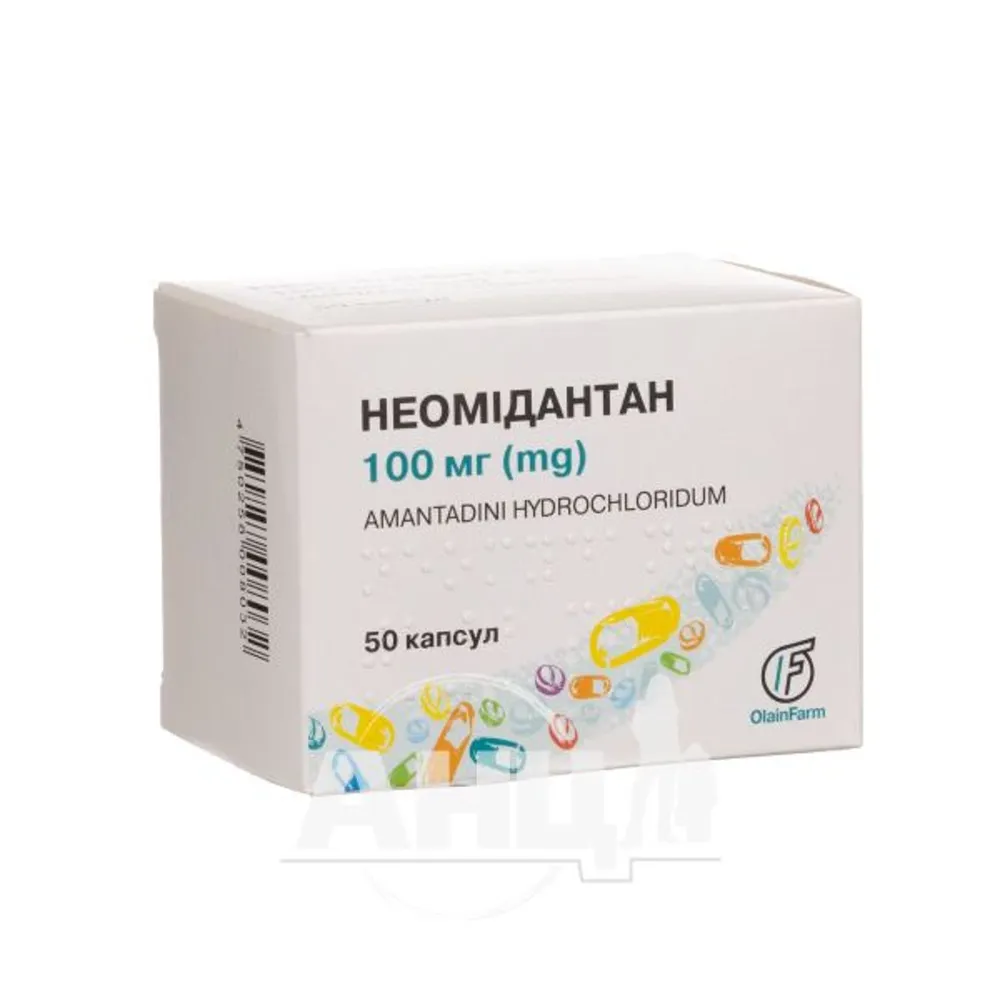
Table of Contents
INSTRUCTIONS FOR MEDICAL USE OF THE MEDICINAL PRODUCT NEOMIDANTAN (NEOMIDANTAN)
Composition:
Active substance: amantadine hydrochloride;
1 capsule contains amantadine hydrochloride 100 mg;
Excipients: lactose monohydrate; potato starch; stearic acid.
Pharmaceutical form. Capsules.
Main physicochemical properties: hard gelatin capsules № 0, white/white, containing white or almost white powder.
Pharmacotherapeutic group.
Dopaminergic agents, adamantane derivatives. ATC code N04B B01.
Pharmacological Properties
Pharmacodynamics
Antiparkinson agent. Neomidantan is believed to act by enhancing the release of dopamine from central neurons and by inhibiting its reuptake into synaptic vesicles. The drug may also exhibit weak anticholinergic activity.
When used as monotherapy or in combination therapy, Neomidantan improves the main symptoms of Parkinson's disease. This effect largely depends on the patient's age and gender, as well as the duration and severity of the disease. Neomidantan demonstrates therapeutic effects on akinesia, rigidity, tremor, and bradyphrenia. Improvement in mood, relaxation of facial muscles, and regulation of excessive sebaceous gland secretion and salivation are often observed. Symptom improvement usually occurs within 24–48 hours, but no later than 1 week after initiation of treatment. The optimal therapeutic effect is achieved within a period ranging from several days to several weeks.
Antiviral agent against influenza A virus. Neomidantan specifically inhibits replication of influenza A virus at low concentrations. According to plaque reduction susceptibility testing, Neomidantan inhibits human influenza A virus, including subtypes H1N1, H2N2, and H3N2, at a concentration of 0.4 µg/mL or less. Neomidantan blocks the activity of the viral M2 protein ion channels of influenza A virus via allosteric inhibition, thereby preventing viral uncoating and suppressing viral replication.
In certain subtypes of avian influenza, an effect on the late stage of replication with impaired virus assembly has been observed.
The antiviral effect becomes evident within 1–2 hours after administration of Neomidantan, whereas the efficacy of influenza vaccination becomes apparent only after 8–14 days.
Pharmacokinetics
Absorption
Amantadine is slowly but completely absorbed. Peak plasma concentrations of approximately 250 ng/mL and 500 ng/mL are reached within 3–4 hours after a single oral dose of 100 mg and 200 mg of amantadine, respectively. After repeated administration of amantadine at doses of 25 mg, 100 mg, or 150 mg twice daily, steady-state plasma concentrations of 110 ng/mL, 302 ng/mL, or 588 ng/mL, respectively, are achieved within 3 days.
Distribution
In vitro, approximately 67% of amantadine is protein-bound in plasma. A significant portion of amantadine binds to erythrocytes. The concentration of amantadine in erythrocytes is 2.66 times higher than in plasma in healthy volunteers.
The apparent volume of distribution of amantadine is 5–10 L/kg, indicating extensive tissue distribution throughout the body. The volume of distribution decreases with increasing dose. Concentrations of amantadine in the lungs, heart, kidneys, liver, and spleen are higher than in blood. Within several hours, amantadine accumulates in the serous secretions of the nasal mucosa.
Amantadine crosses the blood-brain barrier. The half-life of amantadine in brain tissue (6.5 days) is significantly longer than in plasma. The average ratio of amantadine concentration in cerebrospinal fluid to serum is approximately 0.76. Amantadine passes into breast milk and crosses the placental barrier.
Metabolism
Amantadine undergoes minimal metabolism. Eight metabolites of amantadine have been identified. The primary metabolite is the N-acetylated derivative, accounting for 5–15% of the administered dose. The pharmacological activity of metabolites is unknown. The influence of specific acetylators on amantadine metabolism has not yet been established.
Elimination
In healthy young adults, amantadine is eliminated with a mean half-life of 15 hours (range: 10–31 hours).
Total plasma clearance is approximately equal to renal clearance (250 mL/min). Renal clearance of amantadine is significantly higher than creatinine clearance, indicating active tubular secretion of amantadine.
A single dose of amantadine is excreted over 72 hours as follows: 65–85% unchanged, 5–15% as the N-acetylated metabolite in urine, and 1% in feces. After 4–5 days, 90% of the dose is recovered in urine unchanged. Urine pH significantly affects elimination rate. Increased urine pH may lead to a marked reduction in amantadine elimination.
Dose dependency
Amantadine exhibits dose-dependent pharmacokinetics within the dose range of 100 mg to 200 mg. Pharmacokinetics in special patient populations
Elderly patients
Compared to data from healthy young adults, in elderly patients the half-life of amantadine is doubled and renal clearance is reduced. The ratio of amantadine renal clearance to creatinine clearance is lower in elderly patients than in younger individuals. In the elderly, tubular secretion declines more significantly than glomerular filtration.
In elderly patients with impaired renal function, administration of amantadine at a dose of 100 mg/day for 14 days may lead to increased plasma concentrations reaching toxic levels.
Renal impairment
Amantadine is primarily excreted by the kidneys; therefore, accumulation of amantadine may occur in patients with renal impairment, potentially leading to serious adverse reactions. Creatinine clearance less than 40 mL/min × [1.73 m²] results in a three- to fivefold increase in half-life, as well as a fivefold reduction in total and renal clearance. Even in renal failure, amantadine is predominantly eliminated by the kidneys.
Elderly patients or those with renal impairment require dose reduction and individual adjustment based on creatinine clearance values. Plasma concentration of amantadine should not exceed the maximum level of 300 ng/mL.
Hemodialysis
A small amount of amantadine is removed by hemodialysis, likely due to extensive tissue binding. Less than 5% of the dose is eliminated within 4 hours of hemodialysis initiation. The mean half-life during dialysis reaches 24 hours.
Hepatic impairment
The effect of hepatic impairment on the pharmacokinetics of amantadine is unknown. The majority of the administered dose of amantadine is excreted unchanged in urine. Only a small fraction undergoes hepatic metabolism (see section "Pharmacokinetics", "Metabolism").
Food intake
Food intake does not significantly affect the pharmacokinetics of amantadine. Administration of Neomidantan with food may result in a slight delay in absorption of the active substance.
Ethnic influence
Currently, there is no information available regarding the influence of genetic factors on amantadine distribution. Studies evaluating the impact of ethnicity and race on the pharmacokinetic properties of amantadine have not been conducted.
Clinical characteristics.
Indications.
Parkinson's disease.
Parkinson's disease (Paralysis agitans), symptomatic (postencephalitic, cerebrovascular) and drug-induced parkinsonism in adults.
Influenza A virus.
Individual and group prophylaxis in case of risk of infection, treatment at early stages (days 1–2 of illness) in adults and children aged 10 years and older.
Neomidanatan should be taken only under medical supervision.
Contraindications.
- Known hypersensitivity to amantadine or other components of the drug.
- Impaired consciousness and mental confusion.
- Refractory epilepsy, psychoses or delirious syndrome.
- Pregnancy.
Relative contraindications include benign prostatic hyperplasia, closed-angle glaucoma.
Concomitant use of memantine.
Interaction with other medicinal products and other forms of interaction.
Concomitant use of Neomidanatan and anticholinergic agents, dopamine agonists or levodopa may enhance confusion, hallucinations, nightmares, gastrointestinal disorders or other anticholinergic-like adverse effects (see section "Overdose").
Isolated cases of psychotic decompensation have been reported after concomitant use of amantadine and neuroleptics or levodopa.
Concomitant use of Neomidanatan and medicinal products or substances acting on the CNS (e.g., alcohol) may enhance their toxic effects on the CNS. In such cases, careful patient monitoring is recommended (see section "Overdose").
Concomitant use of Neomidanatan and combined diuretics (hydrochlorothiazide and potassium-sparing diuretics) reduces renal clearance of amantadine, leading to increased plasma concentration and toxic effects (confusion, hallucinations, ataxia, and myoclonus).
Special precautions for use.
In patients with organic cerebral psychosyndrome or pre-existing seizure disorders, increased frequency of epileptic seizures or exacerbation of disease symptoms has been reported during treatment with Neomidantan (see sections "Adverse effects" and "Dosage and administration"). The risk decreases with dose reduction. Close monitoring of these patients is required.
Psychiatric adverse reactions such as hallucinations, confusion, and nightmares may occur more frequently in patients with psychiatric disorders.
Cases of suicidal thoughts and behavior have been reported during amantadine therapy. Patients should be monitored for early detection of such symptoms, and appropriate treatment initiated if necessary. Patients (and caregivers) should be advised to seek immediate medical help if any signs of suicidal ideation or behavior occur.
Physicians are advised to prescribe the lowest effective dose of the drug.
Caution should be exercised in patients with severe hepatic impairment, myasthenia gravis, recurrent eczema, peptic ulcer disease, prostatic hyperplasia, or cardiovascular disorders, as well as in patients with a history of these conditions. When combining therapy with anticholinergic agents or levodopa, contraindications for these drugs should be taken into account.
Peripheral edema due to local vascular disturbances may occur during treatment with Neomidantan. This should be considered in patients with a history of heart failure.
Dosage should be carefully adjusted in patients with renal impairment due to the risk of intoxication (see sections "Dosage and administration" and "Overdose").
Partial reduction of therapeutic effect may occur in approximately 20% of patients receiving Neomidantan after 2–8 weeks of treatment.
Additional use of Neomidantan for prophylaxis and treatment of influenza A virus is not advisable and should be avoided due to the risk of overdose.
Hypothermia has been observed in children; therefore, particular caution is required when prescribing the drug for prophylaxis of influenza A virus.
Neomidantan should not be administered to children under 10 years of age. Since the drug has anticholinergic effects and may induce mydriasis, it is contraindicated in patients with untreated angle-closure glaucoma.
Impulse control disorders.
Patients should be regularly monitored for impulse control disorders. Patients and caregivers should be informed about the possibility of behavioral symptoms associated with impulse control disorders. These symptoms include compulsive gambling, increased libido, hypersexuality, compulsive spending or shopping, and excessive or compulsive eating. If such symptoms occur, the dose should be reduced or treatment should be gradually discontinued.
Discontinuation of treatment.
Abrupt discontinuation of Neomidantan may lead to worsening of Parkinson's disease symptoms or development of symptoms resembling neuroleptic malignant syndrome (NMS), as well as catatonia or cognitive disturbances (e.g., confusion, disorientation, deterioration of mental status, or delirium).
There have been isolated reports suggesting a possible association between exacerbation of neuroleptic malignant syndrome or catatonia caused by neuroleptic use and discontinuation of Neomidantan in patients concurrently receiving neuroleptics and Neomidantan. Therefore, amantadine therapy should not be abruptly discontinued.
Resistance.
Resistance to amantadine and rimantadine develops relatively rapidly upon repeated exposure to influenza virus strains both in vitro and in vivo. Amantadine- and rimantadine-resistant influenza A viruses can cause illness even when these active substances are used for treatment. Transmission of drug-resistant viruses may lead to ineffective prophylaxis within households; however, there is no evidence that infections caused by drug-resistant viruses differ in clinical course from those caused by drug-sensitive viruses.
Use during pregnancy or breastfeeding.
Neomidantan is contraindicated in pregnant women and women who may become pregnant. Women of childbearing potential are strongly advised to use effective contraception for at least 5 days after the last dose of Neomidantan.
Neomidantan is excreted in breast milk. Adverse reactions have been reported in breastfed infants. Neomidantan is contraindicated during breastfeeding.
Ability to affect reaction speed when driving or operating machinery.
Patients experiencing central nervous system adverse effects (such as nervousness, impaired concentration, sleep disturbances, dizziness, seizures, confusion, hallucinations, paranoid-type psychosis, or blurred vision) should refrain from driving or operating machinery.
Dosage and Administration
The medication should be taken orally with food, preferably in the first half of the day (to minimize gastrointestinal complaints). The capsule should be swallowed whole with a small amount of water. Parkinson's disease.
Initial dose for 4–7 days (up to a maximum of 15 days): 100 mg once daily (to determine individual response).
Maintenance treatment (usual dose): 100 mg twice daily.
In exceptional cases (if further therapeutic improvement is expected with good tolerability): 100 mg three times daily.
These standard doses are recommended for both previously treated and untreated patients. A lower initial dose helps assess individual response. Usually, after 4–7 days, the usual dose can be initiated. The dosage of 100 mg three times daily may provide additional benefit, but may be associated with increased toxicity. In such cases, the dose should be increased gradually, with intervals of at least one week.
The effect of Neomidan begins within several days; however, after continuous use for several months, the effect may slightly diminish.
To restore therapeutic efficacy, temporary discontinuation of Neomidan may be considered.
Treatment should be discontinued gradually, as abrupt withdrawal, regardless of treatment success, may lead to symptom exacerbation in patients with Parkinson's disease.
Combination therapy in Parkinson's disease
When initiating Neomidan in previously treated patients, previously prescribed medications should be continued. In many cases, the dosage of other antiparkinsonian drugs can be gradually reduced without compromising therapeutic efficacy. However, if adverse effects occur more frequently, the dose should be reduced more rapidly. Previously treated patients who received high doses of anticholinergics or levodopa should receive prolonged initial treatment with low doses of Neomidan for up to 15 days.
Influenza A virus
Children aged 10 years, adolescents, and adults under 65 years:
• 100 mg twice daily
Adults aged 65 years and older:
• See special dosage recommendations
Prophylaxis
Effective prophylaxis and treatment of Influenza A virus have been observed with a daily dose of 100 mg. This dose may be prescribed to patients who are intolerant to a 200 mg daily dose.
For effective prophylaxis, administration should begin as soon as possible upon anticipated exposure to the influenza virus; treatment should continue throughout the entire Influenza A epidemic period, typically about 6 weeks. If Neomidan is used concomitantly with inactivated Influenza A virus vaccine, treatment should be continued for 2 or 3 weeks after vaccination.
Treatment
Influenza treatment should be initiated as early as possible and continued for 4–5 days. When Neomidan is administered within 48 hours of symptom onset, fever and other symptoms are reduced.
Special dosage recommendations for all indications
Dosing and administration for elderly patients (≥ 65 years)
Plasma concentration of amantadine depends on renal function. In elderly patients, compared to younger adults, a tendency toward prolonged elimination half-life and reduced renal clearance may be observed. Therefore, for elderly patients without renal impairment, the recommended maximum daily dose is 100 mg. For patients with renal impairment, the dosing interval should be adjusted (see "Dosage and Administration", "Special dosage recommendations for all indications", "Patients with renal impairment").
Patients with renal impairment
In patients with renal impairment and those undergoing hemodialysis, the elimination half-life of amantadine is significantly prolonged, leading to increased plasma concentrations. After the initial dose on the first day, dosage of Neomidan should be cautiously adjusted in these patients by increasing the dosing interval according to creatinine clearance (see table below).
Initial dose:
- For patients with renal impairment receiving treatment for Influenza A virus, the initial dose of Neomidan is 200 mg on the first day of therapy, followed by dose adjustment according to creatinine clearance (table).
- For patients with renal impairment initiating antiparkinsonian therapy, the initial dose is 100 mg of Neomidan on the first day of therapy, followed by dose adjustment according to creatinine clearance (table).
- Patients with Parkinson's disease who are on maintenance therapy and in whom renal insufficiency is newly diagnosed do not require an initial dose; these patients may immediately receive treatment at a dose adjusted according to creatinine clearance (table).
Dosage according to creatinine clearance
| Creatinine clearance [mL/(min 1.73 m2)] |
Dosing interval (dose 100 mg) |
|
| <15 15–25 25–35 35–75 >75 |
7 days 3 days 2 days 1 day 12 |
For patients undergoing hemodialysis, the usual dose is 100 mg per week, and if necessary and well tolerated, the dose may be increased to 200 mg per week (see sections "Method of administration and dosage," "Special dosage instructions for all indications," "Dosage and administration in elderly patients," and "Special precautions").
Plasma concentration of amantadine should be monitored. Close observation of patients is required (see section "Pharmacokinetics").
If a dose is missed, the recommended dose should be taken as soon as possible, unless it is almost time for the next dose. Never take a double dose. If necessary, consult your doctor.
Children.
The drug is indicated for children aged 10 years and older for prophylaxis and treatment of influenza A virus.
Overdose.
Acute psychosis and neuromuscular disturbances are common symptoms in case of Neomidantan overdose.
Symptoms. Acute psychosis and disorientation, aggressive behavior, blurred vision, hyperventilation, hyperreflexia, motor restlessness, seizures, extrapyramidal symptoms, torsion spasms, mydriasis, dysphagia, confusion, delirium, visual hallucinations, myoclonus, nausea, vomiting, dry mouth, pulmonary edema, respiratory failure, respiratory distress syndrome, hypertension, cardiac arrhythmia, sinus tachycardia, angina attacks. Coma, respiratory arrest, cardiac arrest, and sudden coronary death within several hours after overdose are possible. Renal function impairment may occur, including increased blood urea nitrogen, decreased creatinine clearance, and urinary retention.
Ingestion of Neomidantan in a dose of 1 g or more may result in a fatal outcome.
Treatment. There is no specific antidote. To prevent drug absorption, induce vomiting or perform gastric lavage (if the patient is conscious), administer activated charcoal, and ensure supportive care for vital functions and adequate hydration. Acidification of urine promotes rapid elimination of the drug. Hemodialysis removes only a small amount of the drug. Careful monitoring of blood pressure, heart rate, ECG, respiratory function, and body temperature is recommended to detect and treat promptly the development of arterial hypotension and cardiac arrhythmia, if necessary. To reduce central nervous system symptoms, physostigmine may be administered intravenously to adults at a dose of 1–2 mg, repeated if necessary, but not exceeding 2 mg per hour. In case of urinary retention, catheterization of the urinary bladder is required. Chlorpromazine may be used to manage psychosis.
Adverse Reactions
Adverse reactions usually occur during the first 2–4 days of treatment and disappear within 24–48 hours after discontinuation of the drug.
A direct relationship between dose and frequency of adverse reactions cannot be established. However, increasing the dose increases the frequency of adverse reactions, particularly those affecting the central nervous system (CNS).
Adverse reactions identified during clinical trials, spontaneous reports, and literature sources are listed according to the MedDRA organ system classification. Within each organ system, adverse reactions are listed by frequency, starting with the most common. Within each frequency group, reactions are listed in decreasing order of severity.
Frequency definitions:
very common (≥1/10), common (≥1/100 to <1/10), uncommon (≥1/1,000 to <1/100), rare (≥1/10,000 to <1/1,000), very rare (<1/10,000).
Blood and lymphatic system disorders: rare – leukopenia; frequency not known – leukocytosis.
Metabolism and nutrition disorders: loss of appetite.
Psychiatric disorders: common – depression, anxiety, elevated mood; rare – psychotic disorders.
Nervous system disorders: common – excitement, nervousness, attention disturbance, vertigo, dizziness, headache, insomnia, lethargy, hallucinations, nightmares, ataxia, dysarthria, blurred vision; rare – confusion, disorientation, tremor, dyskinesia, seizures, symptoms resembling neuroleptic malignant syndrome (even without discontinuation of treatment; see "Discontinuation of treatment"); frequency not known – coma, stupor, hypokinesia, hypertension, mania, aggressive behavior, paranoid reactions, involuntary muscle contractions, gait disturbance, paresthesia, ECG changes, and tremor.
Hallucinations, confusion, and nightmares occur more frequently when Neomidantan is used concomitantly with anticholinergic agents or in patients with any psychiatric disorders.
Cases of hypomania and mania have been reported. The occurrence of these adverse reactions is not mentioned in the literature. Cases of delirium, catatonia, hallucinations, confusion, and disorientation have also been reported upon discontinuation of amantadine in patients with Parkinson's disease.
Cardiac disorders: common – palpitations, orthostatic hypotension; rare – arrhythmias, heart failure, including malignant arrhythmia, hypotension, and tachycardia.
Eye disorders: rare – corneal damage, e.g., subepithelial punctate opacities possibly associated with punctate keratitis, corneal epithelial edema, and marked deterioration in visual acuity; mydriasis.
Vascular disorders: common – leg edema.
Gastrointestinal disorders: common – nausea, dry mouth, anorexia, vomiting, constipation; rare – diarrhea, reversible increase in liver enzyme activity, dysphagia.
Skin and subcutaneous tissue disorders: common – Livedo reticularis ("mottled" skin), hyperhidrosis; rare – skin rash, photosensitivity reactions, pruritus.
Renal and urinary disorders: rare – urinary incontinence, urinary retention in patients with prostatic hyperplasia.
Immune system disorders: hypersensitivity reactions due to intolerance to any component of the drug.
Respiratory, thoracic and mediastinal disorders: acute respiratory failure, pulmonary edema, tachypnea.
Impulse control disorders: in patients receiving dopamine agonists, including Neomidantan, symptoms such as pathological gambling, increased libido, hypersexuality, compulsive spending, and compulsive or excessive eating may occur.
Sudden discontinuation of the drug may cause delirium, agitation, mania, hallucinations, paranoid reactions, stupor, fear, depression, and dysarthria.
General disorders: peripheral edema of the lower limbs, hyperthermia, neuroleptic malignant syndrome (see section "Special precautions"), allergic reactions including anaphylactic reactions, fever.
Investigations: increased levels of creatine phosphokinase, blood urea nitrogen, serum creatinine, alkaline phosphatase, lactate dehydrogenase, bilirubin, gamma-glutamyl transferase, serum glutamic-oxaloacetic transaminase, and serum glutamic-pyruvic transaminase.
If any adverse reactions not listed in this instruction occur during treatment, or if any of the mentioned adverse reactions are particularly severe, please consult your physician.
Shelf life: 5 years.
Storage conditions:
Store in a dry, protected from light place at a temperature not exceeding 25°C.
Keep out of reach of children.
Packaging:
10 capsules in a blister pack. 5 blisters in a cardboard box.
Prescription status: Prescription only.
Manufacturer: JSC "Olfa" / Olpha AS.
Manufacturer's address:
Rupnicu iela 5, Olaine, Olaines novads, LV–2114, Latvia.