Neophen belupo plus
Ukraine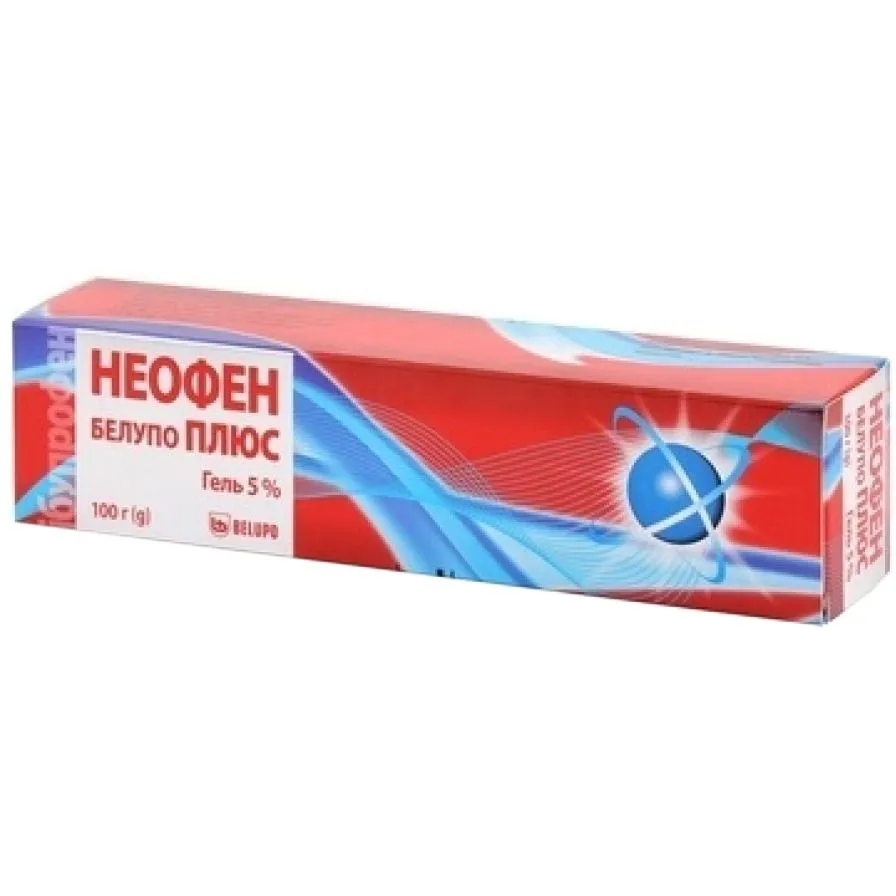
Table of Contents
INSTRUCTIONS FOR MEDICAL USE OF THE MEDICINAL PRODUCT NEOFEN BELUPO PLUS
Composition:
Active substance: ibuprofen;
1 g of gel contains 50 mg of ibuprofen;
Excipients: levomenthol, ethanol 96%, propylene glycol, carbomer 940, diisopropanolamine 85% solution, purified water.
Pharmaceutical form. Gel.
Main physicochemical properties: clear gel with a menthol odour. Upon contact with air, the upper layer becomes cloudy and turns white.
Pharmacotherapeutic group. Non-steroidal anti-inflammatory drugs for topical use. ATC code M02A A13.
Pharmacological properties.
Pharmacodynamics.
The gel is intended for topical application. It contains the active substance – ibuprofen, a phenylpropionic acid derivative. Ibuprofen exerts a pronounced anti-inflammatory and analgesic effect by inhibiting prostaglandin synthesis, which occurs directly at the site of inflammation. Since the medicinal product is a volatile aqueous-alcoholic gel, it produces a soothing and cooling effect at the site of application.
Pharmacokinetics.
After topical application, ibuprofen is rapidly and extensively absorbed through the skin (approximately 22% of the total dose within 48 hours) and reaches the site of inflammation, achieving high therapeutic concentrations in soft tissues, joints, and synovial fluid. The concentration of the active substance in blood plasma remains negligible. Therefore, unwanted systemic effects, except for rare cases of hypersensitivity to ibuprofen, are practically absent.
There are no significant differences in the biotransformation and elimination of ibuprofen following oral or topical administration.
Clinical characteristics.
Indications.
Rheumatic pain, muscle pain, back pain, and pain with swelling in dislocations, sprains, and other sports injuries, as well as neuralgia.
Contraindications.
Hypersensitivity to ibuprofen or to any of the components of the gel; hypersensitivity reactions (e.g., bronchial asthma, rhinitis, angioedema, or urticaria) after taking acetylsalicylic acid or other nonsteroidal anti-inflammatory drugs; peptic ulceration of the gastrointestinal tract; dermatoses; weeping eczema.
Third trimester of pregnancy and lactation. Children under 12 years of age.
The medicinal product should not be applied to damaged skin or open wounds.
Do not use under occlusive dressings.
Interaction with other medicinal products and other forms of interaction.
Nonsteroidal anti-inflammatory drugs may interact with antihypertensive agents and may potentiate the effect of anticoagulants, although the likelihood of such events with topical application of the drug is low. Concomitant use of acetylsalicylic acid or other nonsteroidal anti-inflammatory drugs may lead to an increased frequency of adverse reactions.
The product may reduce the diuretic effect of furosemide.
Special precautions for use
Avoid contact of the gel with eyes, mucous membranes, and damaged skin. If contact occurs, the affected area should be thoroughly rinsed with large amounts of clean water. If skin rash develops, discontinue use of the product immediately and consult a physician.
After applying the gel, hands should be thoroughly washed. In case of accidental ingestion, the patient must seek immediate medical attention at the nearest emergency facility. The gel should not be used under occlusive dressings.
Patients with bronchial asthma, hay fever, chronic lung disease, or hypersensitivity to analgesics and anti-rheumatic drugs have a higher risk of developing asthma attacks, mucosal edema, or urticaria compared to other patients. Systemic absorption of ibuprofen following topical application is lower than with oral administration; therefore, the aforementioned complications may occur only rarely. Use of this product in such patients should be under physician supervision.
Physicians should assess the appropriateness of using this medicinal product in patients with peptic ulcer disease, impaired renal function, history of asthma, and in patients receiving treatment with oral nonsteroidal anti-inflammatory drugs (NSAIDs).
Serious skin adverse reactions (SSARs)
Serious skin adverse reactions (SSARs), including exfoliative dermatitis, erythema multiforme, Stevens–Johnson syndrome (SJS), toxic epidermal necrolysis (TEN), drug reaction with eosinophilia and systemic symptoms (DRESS syndrome), and acute generalized exanthematous pustulosis (AGEP), which may be life-threatening or lead to fatal outcomes, have been reported during ibuprofen use (see section "Adverse reactions"). Most of these reactions occurred within the first month of treatment. If signs or symptoms suggestive of these reactions appear, ibuprofen should be discontinued immediately and alternative therapy considered (if necessary).
Areas of skin treated with the product should not be exposed to prolonged sunlight to avoid photosensitivity reactions.
The excipient propylene glycol may rarely cause skin irritation.
Use during pregnancy or breastfeeding
Clinical data on topical use of ibuprofen during pregnancy are lacking. Even though systemic exposure is lower compared to oral administration, it is unknown whether systemic exposure to ibuprofen achieved after topical application may be harmful to the embryo/fetus. During the first and second trimesters of pregnancy, ibuprofen should not be used unless clearly necessary. If used, the dose should be as low as possible and duration of treatment as short as possible.
During the third trimester of pregnancy, systemic use of prostaglandin synthetase inhibitors, including ibuprofen, may cause cardiovascular and renal toxicity in the fetus. Prolonged bleeding time may occur in both mother and child near term, and labor may be delayed. Therefore, ibuprofen is contraindicated during the last trimester of pregnancy (see section "Contraindications").
Fertility
No effects on fertility were observed during use of the gel.
Ability to affect reaction speed when driving or operating machinery
There are no data regarding the effect of ibuprofen in gel form on the ability to drive a vehicle or operate potentially hazardous machinery.
Method of Administration and Dosage.
Apply externally to adults and children aged 12 years and older. Apply a thin layer of the gel to the affected area of skin using strips 4–10 cm long (corresponding to 50–125 mg of ibuprofen) and gently rub in until completely absorbed. The medication should be applied 3–4 times daily with intervals of at least 4 hours. After each application, hands should be thoroughly washed. The recommended dosage must be observed. Do not apply under occlusive dressings.
The duration of treatment depends on the extent and nature of the lesion and is determined by the physician based on the clinical picture. After 7 days of treatment, the continued need for therapy should be evaluated, especially if symptoms recur or worsen.
Children.
Not recommended for children under 12 years of age.
Overdose.
The likelihood of overdose when using ibuprofen in the form of a topical gel is low. However, in case of overdose, adverse effects associated with systemic ibuprofen use may occur (dyspeptic symptoms: nausea, heartburn, vomiting, flatulence; skin allergic reactions; headache, dizziness; arterial hypotension). If symptoms of overdose occur, discontinue the medication and consult a physician.
In case of exceeding the recommended dose, wash off the gel with water. There is no specific antidote. Correction of the electrolyte balance is indicated.
Side effects.
Skin and subcutaneous tissue disorders: hypersensitivity reactions, which may manifest as skin rashes, urticaria, pruritus, purpura, and Quincke's edema; skin redness, irritation, burning sensation, contact dermatitis, photosensitivity reactions. Severe skin adverse reactions (SSARs) (including erythema multiforme, exfoliative dermatitis, Stevens-Johnson syndrome, and toxic epidermal necrolysis) – very rare. Drug-induced eosinophilia with systemic symptoms (DRESS syndrome) and acute generalized exanthematous pustulosis (AGEP) – frequency unknown.
Respiratory, thoracic and mediastinal disorders: hypersensitivity reactions in the form of bronchial asthma attacks or worsening of asthma, dyspnea, bronchospasm, and dyspnea.
Gastrointestinal disorders: abdominal pain, dyspepsia.
Renal and urinary disorders: impaired renal function in patients with a history of kidney disease.
Immune system disorders: hypersensitivity reactions, including anaphylactic shock, angioneurotic edema, and non-specific allergic reactions.
Reporting of suspected adverse reactions
Reporting suspected adverse reactions after marketing authorization of the medicinal product is of great importance. It allows continuous monitoring of the benefit-risk balance of the medicinal product. Healthcare professionals, as well as patients or their legal representatives, should report all cases of suspected adverse reactions and lack of efficacy through the Automated Information System for Pharmacovigilance at the following link: https://aisf.dec.gov.ua.
Shelf life. 3 years.
Storage conditions.
Store at a temperature not exceeding 25 °C.
Keep out of reach of children.
Packaging.
15 g, 50 g, or 100 g in tubes, 1 tube per cardboard box.
Availability category.
Over-the-counter.
Manufacturer.
Belupo, lijekovi i kozmetika, d.d.
Manufacturer's address and place of business.
Danica 5 Street, 48000 Koprivnica, Croatia.