Nexavar
Ukraine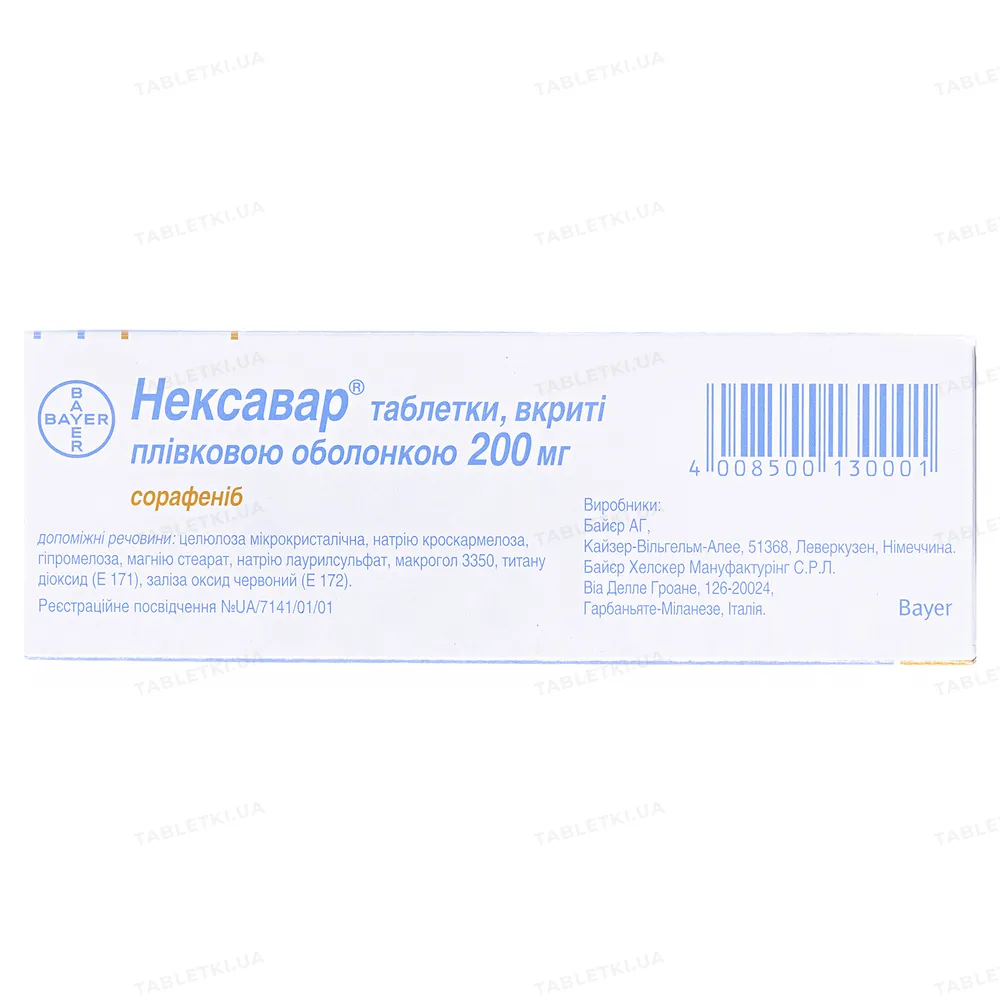
Table of Contents
INSTRUCTIONS FOR MEDICAL USE OF THE MEDICINAL PRODUCT NEXAVAR® (NEXAVAR®)
Composition:
Active substance: sorafenib;
1 tablet contains 274 mg of sorafenib tosylate (corresponding to 200 mg of sorafenib);
Excipients: microcrystalline cellulose, sodium croscarmellose, hypromellose, magnesium stearate, sodium lauryl sulfate, macrogol 3350, titanium dioxide (E 171), iron oxide red (E 172).
Pharmaceutical form. Film-coated tablets.
Main physicochemical properties: round red film-coated tablets, marked on the upper side with "200" and on the lower side with the "Bayer cross" symbol; or round, biconvex, bevel-edged film-coated tablets, red in color, marked on the upper side with "200" and on the lower side with the "Bayer cross" symbol.
Pharmacotherapeutic group. Antineoplastic agent, protein kinase inhibitor.
ATC code L01EX02.
Pharmacological properties.
Pharmacodynamics.
Sorafenib is a multikinase inhibitor that has demonstrated anti-proliferative and anti-angiogenic properties in vitro and in vivo.
Mechanism of action and pharmacodynamic effects
Clinical efficacy
The clinical safety and efficacy of sorafenib were evaluated in patients with hepatocellular carcinoma (HCC), renal cell carcinoma (RCC), and differentiated thyroid carcinoma (DTC).
Hepatocellular carcinoma
Study 3 (study 100554) was an international, multicenter, randomized, double-blind, placebo-controlled Phase III trial involving 602 patients with hepatocellular carcinoma. Demographic data and disease characteristics were comparable between the sorafenib and placebo groups according to the Eastern Cooperative Oncology Group (ECOG) performance status (status 0: 54% vs. 54%; status 1: 38% vs. 39%; status 2: 8% vs. 7%), TNM stage (stage I: <1% vs. <1%; stage II: 10.4% vs. 8.3%; stage III: 37.8% vs. 43.6%; stage IV: 50.8% vs. 46.9%), and Barcelona Clinic Liver Cancer (BCLC) stage (stage B: 18.1% vs. 16.8%; stage C: 81.6% vs. 83.2%; stage D: <1% vs. 0%).
The study was terminated after the pre-specified interim analysis of overall survival (OS) met the efficacy criteria. Results from this study demonstrated a statistically significant improvement in OS with sorafenib compared to placebo (hazard ratio – 0.69; p = 0.00058; see Table 1). Available data from this study on patients with Child-Pugh class B hepatic impairment are limited; only one patient with Child-Pugh class C was enrolled in the study.
Table 1. Results of Study 3 (Study 100554) in hepatocellular carcinoma
| Efficiency parameter |
Sorafenib (N = 299) |
Placebo (N = 303) |
p-value |
HR (95 % CI) |
| Overall survival (OS) (months, median 95 % CI) |
46.3 (40.9; 57.9) |
34.4 (29.4; 39.4) |
0.00058* |
0.69 (0.55; 0.87) |
| Time to tumor progression (TTP) (months, median 95 % CI)** |
24.0 (18.0; 30.0) |
12.3 (11.7; 17.1) |
0.000007 |
0.58 (0.45; 0.74) |
CI – confidence interval.
HR – hazard ratio, sorafenib/placebo.
* Stratified log-rank test (for interim survival analysis, one-sided stopping boundary alpha=0.0077).
** Independent radiological assessment.
In the second (Study 4), an international, multicenter, randomized, double-blind, placebo-controlled Phase III trial involving 226 patients with progressive advanced hepatocellular carcinoma (HCC), the clinical benefits of sorafenib were evaluated. This study, conducted in China, Korea, and Taiwan, confirmed the findings of Study 3 regarding the positive benefit-risk profile of sorafenib (HR [CI]: 0.68; p = 0.01414).
In both studies (3 and 4), statistically significant superiority of sorafenib over placebo in terms of OS was demonstrated based on predefined stratification factors (ECOG status, presence or absence of macroscopic vascular invasion and/or extrahepatic tumor spread). Subgroup analyses suggest that patients with distant metastases at baseline may have derived less pronounced therapeutic benefit.
Renal cell carcinoma
The safety and efficacy of Nexavar® in the treatment of advanced renal cell carcinoma (RCC) were evaluated in two clinical trials:
Study 1 (Study 11213) was a multicenter, randomized, double-blind, placebo-controlled Phase III trial involving 903 patients. Only patients with RCC and low or intermediate risk according to the MSKCC (Memorial Sloan-Kettering Cancer Center) classification were included. Primary endpoints were OS and PFS.
Approximately half of the patients had an ECOG performance status of 0, and half were in the low-risk group according to MSKCC classification. PFS was determined by blinded independent radiological assessment using RECIST (Response Evaluation Criteria in Solid Tumors) criteria. PFS was assessed based on 342 events in 769 patients. The median PFS was 167 days in patients randomized to sorafenib compared to 84 days in the placebo group (HR = 0.44; 95% CI: 0.35–0.55; p < 0.000001). Age, MSKCC prognostic risk group, ECOG status, and prior therapy did not influence treatment effect.
An interim analysis (second interim analysis) of OS was conducted based on 367 deaths in 903 patients. The nominal alpha level for this analysis was 0.0094. Median survival was 19.3 months for patients randomized to sorafenib compared to 15.9 months for those in the placebo group (HR = 0.77; 95% CI: 0.63–0.95; p = 0.015). At the time of this analysis, approximately 200 patients had crossed over from the placebo group to open-label sorafenib.
Study 2 was conducted as a Phase II trial evaluating treatment withdrawal in patients with metastatic malignancies, including renal cell carcinoma. Patients with confirmed disease receiving sorafenib therapy were randomized to placebo or continued sorafenib treatment. Progression-free survival (PFS) in RCC was significantly longer in the sorafenib group (163 days) compared to the placebo group (41 days) (p = 0.0001; HR = 0.29).
Differentiated thyroid cancer
Study 5 (Study 14295) was a multicenter, randomized, double-blind, placebo-controlled Phase III trial involving 417 patients with radioactive iodine (RAI)-refractory locally advanced or metastatic progressive differentiated thyroid cancer (DTC). The primary efficacy endpoint was PFS based on independent radiological assessment using RECIST (Response Evaluation Criteria in Solid Tumors) criteria. Additional efficacy endpoints included OS, tumor response rate, and duration of tumor response. After disease progression, patients had the option to cross over to open-label sorafenib.
All patients had documented progressive disease defined as progression within 14 months of study entry and had RAI-refractory DTC. Refractoriness to RAI therapy was defined by the absence of iodine uptake on scanning, cumulative RAI dose ≥ 22.2 GBq, progression after RAI therapy within 16 months of entry, or after each of two RAI treatments administered 16 months apart.
Baseline demographic and disease characteristics were balanced between the two treatment groups. Metastases were present in the lungs in 86%, lymph nodes in 51%, and bones in 27%. The median cumulative RAI activity administered prior to study entry was 14.8 GBq. In the study population, 56.8% of patients had papillary carcinoma, 25.4% had follicular carcinoma, and 9.6% had poorly differentiated carcinoma.
Median PFS was 10.8 months in the sorafenib group compared to 5.8 months in the placebo group (HR = 0.587; CI: 0.454; 0.758; p < 0.0001). The effect of sorafenib on PFS was independent of geographic region, patient age below or above 60 years, sex, histological subtype, and presence or absence of bone metastases.
According to the OS analysis performed 9 months after completion of data collection for the final PFS analysis, no statistically significant differences in overall survival were observed between the two treatment groups (HR = 0.884; 95% CI: 0.633; 1.236; p = 0.236). Median OS was not reached for sorafenib and was 36.5 months for placebo. 157 (75%) patients randomized to the control group crossed over to open-label sorafenib, and 61 patients (30%) in the sorafenib group initiated open-label treatment.
The mean duration of therapy during the double-blind period was 46 weeks (range 0.3–135) for patients receiving sorafenib and 28 weeks (range 1.7–132) for those receiving placebo.
According to RECIST, no complete responses (CR) were observed. The overall response rate [CR + partial response (PR)] based on independent radiological assessment was higher in the sorafenib group (24 patients; 12.2%) compared to the placebo group (1 patient; 0.5%), one-sided p < 0.0001. The median duration of response was 309 days (95% CI: 226; 505 days) in patients receiving sorafenib who achieved a partial response.
A retrospective subgroup analysis of maximum tumor size indicated a favorable therapeutic effect of sorafenib on PFS compared to placebo in patients with maximum tumor size ≥1.5 cm [HR 0.54 (95% CI: 0.41–0.71)], whereas a numerically lower effect was observed in patients with maximum tumor size <1.5 cm [HR 0.87 (95% CI: 0.40–1.89)].
A retrospective subgroup analysis of thyroid carcinoma symptoms at baseline indicated a favorable therapeutic effect of sorafenib on PFS compared to placebo in patients both with and without symptoms at baseline. The PFS HR was 0.39 (95% CI: 0.21–0.72) for symptomatic patients and 0.60 (95% CI: 0.45–0.81) for asymptomatic patients at baseline.
QT interval prolongation
In a pharmacokinetic study during clinical use, QT/QTc measurements were recorded in 31 patients at baseline (prior to treatment) and after therapy. After one 28-day treatment cycle, at the maximum concentration of sorafenib, QTcB was prolonged by 4±9 ms and QTcF by 9±18 ms compared to placebo at baseline. No QTcB or QTcF >500 ms was observed during ECG monitoring after treatment (see section "Special precautions for use").
Pediatric patients
The European Medicines Agency has deferred the obligation to submit the results of studies in all subgroups of the pediatric population with kidney cancer and renal cell carcinoma (except neuroblastoma, nephroblastomatosis, clear cell sarcoma, mesoblastic nephroma, renal medullary carcinoma, and renal rhabdoid tumor) and hepatocellular carcinoma and intrahepatic biliary tract carcinoma (except hepatoblastoma), as well as differentiated thyroid cancer (for information on pediatric use, see section "Children").
Pharmacokinetic properties
Absorption and bioavailability
After administration of sorafenib tablets, the mean relative bioavailability is 38–49% compared to an oral solution. Absolute bioavailability is unknown.
Following oral administration, peak plasma concentrations of sorafenib are reached approximately 3 hours after dosing. Administration with a high-fat meal reduces absorption by 30% compared to fasting.
Mean Cmax and AUC increase less than proportionally at doses above 400 mg administered orally twice daily. In vitro plasma protein binding is 99.5%.
Repeated administration of sorafenib over 7 days compared to single dosing results in accumulation by 2.5–7 fold. Steady-state plasma concentrations of sorafenib are achieved within 7 days of dosing, with a peak-to-trough ratio of less than 2.
Steady-state concentrations of sorafenib after administration of Nexavar® 400 mg twice daily were evaluated in patients with DTC, RCC, and HCC. The mean steady-state concentration in patients with DTC was 1.8 times higher than in patients with HCC and 2.3 times higher than in patients with RCC. The reason for the increased sorafenib concentration in DTC patients is unknown.
Metabolism and elimination
The elimination half-life of sorafenib is approximately 25–48 hours. Sorafenib is primarily metabolized in the liver via oxidative metabolism involving CYP3A4 and glucuronidation involving UGT1A9. Sorafenib conjugates may be cleaved in the gastrointestinal tract by microorganisms with glucuronidase activity, promoting reabsorption of the unconjugated active substance. Concomitant administration with neomycin indicated an interaction within this process, resulting in a 54% reduction in mean sorafenib bioavailability.
At steady state, approximately 70–85% of circulating sorafenib derivatives in plasma are unchanged sorafenib. Eight metabolites of sorafenib have been identified, five of which were detected in plasma. The main metabolite in plasma, the pyridine N-oxide, showed in vitro activity comparable to sorafenib. At steady state, this metabolite accounts for approximately 9–16% of all circulating metabolites.
After oral administration of a 100 mg sorafenib solution, 96% of the dose was recovered within 14 days, with 77% excreted in feces and 19% in urine as glucuronidated metabolites. Unmodified sorafenib, accounting for 51% of the dose, was found in feces but not in urine, indicating that biliary excretion of unchanged active substance may contribute to sorafenib elimination.
Pharmacokinetics in special populations
Demographic data analysis indicates no need for dose adjustment based on age (up to 65 years) or sex.
Pediatric patients
Pharmacokinetic studies of sorafenib in pediatric patients have not been conducted.
Racial origin
There is no clinically significant difference in pharmacokinetics between Caucasian and Mongoloid populations.
Renal impairment
In four Phase I studies, steady-state exposure to sorafenib was similar in patients with mild or moderate renal impairment and in those with normal renal function. In a clinical pharmacology study (single 400 mg dose of sorafenib), no correlation was observed between sorafenib disposition and renal function in patients with normal renal function or with mild, moderate, or severe renal impairment. Data are lacking for patients requiring dialysis.
Patients with hepatic impairment
In patients with HCC and Child-Pugh class A or B (mild or moderate) hepatic impairment, exposure values were comparable and within the ranges observed in patients without hepatic impairment. The pharmacokinetics (PK) of sorafenib in patients without HCC but with Child-Pugh class A or B hepatic impairment were similar to those in healthy volunteers. No data are available for patients with Child-Pugh class C (severe) hepatic impairment. Sorafenib is predominantly eliminated via the liver; therefore, exposure may be increased in this patient population.
Preclinical safety data
Positive clastogenic results were obtained in an in vitro mammalian cell test system (Chinese Hamster Ovary cells) with metabolic activation. Sorafenib did not show mutagenic effects in the Ames test or in an in vivo test system (Mouse Micronucleus Assay). An intermediate product of sorafenib synthesis, present in the active substance in minor quantities (< 0.15%), showed a positive result in an in vitro bacterial mutagenicity test (Ames test).
Carcinogenicity studies with sorafenib have not been conducted.
Specific preclinical studies on the effect of sorafenib on fertility have not been performed. However, adverse effects on male and female fertility can be expected, as repeated-dose animal studies showed changes in male and female reproductive organs at exposures below the expected clinical exposure (based on AUC values). Typical findings in rats included signs of degeneration and retardation of testes, epididymides, prostate, and seminal vesicles. In female rats, central necrosis of the corpus luteum and impaired follicular development in ovaries were observed. In dogs, testicular degeneration and oligospermia were observed.
Clinical characteristics.
Indications.
Renal cell carcinoma (RCC).
Nexavar**®** is indicated for the treatment of patients with advanced renal cell carcinoma who have previously received treatment with interferon-alpha or interleukin-2, or who are unsuitable candidates for such therapy.
Hepatocellular carcinoma (HCC).
Nexavar**®** is indicated for the treatment of patients with hepatocellular carcinoma.
Differentiated thyroid carcinoma (DTC).
Nexavar**®** is indicated for the treatment of patients with locally recurrent or metastatic, progressive, differentiated thyroid carcinoma (papillary/follicular/Hürthle cell) that is refractory to radioactive iodine treatment.
Contraindications.
Hypersensitivity to sorafenib or to any of the excipients of the medicinal product.
The medicinal product is contraindicated in combination with carboplatin and paclitaxel in patients with squamous cell lung cancer (see section "Special precautions for use").
Interaction with other medicinal products and other forms of interaction.
Enzyme inducers
Administration of rifampicin for 5 days prior to a single dose of sorafenib resulted in a mean reduction of 37% in the AUC of sorafenib. Other inducers of cytochrome CYP3A4 and/or glucuronidation (e.g. products containing St. John’s wort extract, phenytoin, carbamazepine, phenobarbital, and dexamethasone) may also increase the metabolism of sorafenib and consequently reduce sorafenib concentrations.
Inhibitors of cytochrome CYP3A4
Ketoconazole, a potent CYP3A4 inhibitor administered once daily for 7 days to healthy volunteers, did not alter the mean AUC after a single 50 mg dose of sorafenib. These data suggest that clinically significant interactions between sorafenib and CYP3A4 inhibitors are unlikely.
Substrates of CYP2B6, CYP2C8, and CYP2C9
Sorafenib inhibits CYP2B6, CYP2C8, and CYP2C9 in vitro with comparable potency. However, in clinical pharmacokinetic studies, co-administration of sorafenib 400 mg twice daily with cyclophosphamide, a CYP2B6 substrate, or paclitaxel, a CYP2C8 substrate, did not show clinically significant inhibition. These data indicate that sorafenib, when administered at the recommended dose of 400 mg twice daily, is not an in vivo inhibitor of CYP2B6 or CYP2C8.
Additionally, co-administration of sorafenib with warfarin (a CYP2C9 substrate) did not alter mean prothrombin time/international normalized ratio (INR) compared to placebo. Therefore, the risk of clinically significant in vivo inhibition of CYP2C9 substrates by sorafenib is expected to be low. However, regular monitoring of INR is recommended in all patients receiving concomitant therapy with warfarin or phenprocoumon (see section "Special precautions for use").
Substrates of CYP3A4, CYP2D6, and CYP2C19
Concomitant administration of sorafenib with midazolam, dextromethorphan, or omeprazole—substrates of cytochrome CYP3A4, CYP2D6, and CYP2C19, respectively—did not affect exposure to these agents. This indicates that sorafenib is neither an inhibitor nor an inducer of these cytochrome P450 isoenzymes. Therefore, clinically significant interactions between sorafenib and substrates of these enzymes are unlikely.
Substrates of UGT1A1 and UGT1A9
In vitro, sorafenib inhibits glucuronidation by affecting substrates of UGT1A1 and UGT1A9. The clinical significance of these findings is currently unknown (see section "Special precautions for use").
In vitro enzyme induction studies
Activity of CYP1A2 and CYP3A4 was not altered after treatment of cultured human hepatocytes with sorafenib; thus, sorafenib is unlikely to be an inducer of CYP1A2 and CYP3A4.
Substrates of P-glycoprotein
In vitro, sorafenib inhibits the P-glycoprotein transporter. Increased plasma concentrations of P-glycoprotein substrates such as digoxin cannot be excluded when administered concomitantly with sorafenib.
Combination with other antineoplastic agents
During clinical trials, sorafenib was administered concomitantly with various antineoplastic agents, including gemcitabine, cisplatin, oxaliplatin, paclitaxel, carboplatin, capecitabine, doxorubicin, irinotecan, docetaxel, and cyclophosphamide, at standard dosing regimens. Sorafenib has no clinically significant effect on the pharmacokinetics of gemcitabine, cisplatin, carboplatin, oxaliplatin, or cyclophosphamide.
Paclitaxel/carboplatin
- Administration of paclitaxel (225 mg/m²) and carboplatin (AUC = 6) with sorafenib (≤ 400 mg twice daily) and a 3-day dosing interruption of sorafenib (two days before and on the day of paclitaxel/carboplatin administration) did not cause a significant effect on paclitaxel pharmacokinetics.
- Concomitant administration of paclitaxel (225 mg/m² once every three weeks) and carboplatin (AUC = 6) with sorafenib (≤ 400 mg twice daily without interruption in sorafenib dosing) resulted in a 47% increase in sorafenib exposure, a 29% increase in paclitaxel exposure, and a 50% increase in 6-OH paclitaxel exposure. No effect on carboplatin pharmacokinetics was observed.
These data indicate no need for dose adjustment of paclitaxel and carboplatin when co-administered with sorafenib with a 3-day dosing interruption of sorafenib (two days before and on the day of paclitaxel/carboplatin administration). The clinical significance of increased exposure to sorafenib and paclitaxel with continuous sorafenib dosing is unknown.
Capecitabine
Concomitant administration of capecitabine (750–1050 mg/m² twice daily on days 1–14 every 21 days) and sorafenib (200 mg or 400 mg twice daily, continuous long-term administration) did not result in significant changes in sorafenib exposure, but a 15–50% increase in capecitabine exposure and a 0–52% increase in 5-FU exposure were observed. The clinical significance of this minor to moderate increase in capecitabine and 5-FU exposure with concomitant administration of sorafenib is currently unknown.
Doxorubicin/irinotecan
Concomitant administration of sorafenib and doxorubicin resulted in a 21% increase in doxorubicin AUC. When sorafenib was administered concomitantly with irinotecan, whose active metabolite SN-38 is further metabolized via UGT1A1, an increase in SN-38 AUC of 67–120% and an increase in irinotecan AUC of 26–42% was observed. The clinical significance of these observations has not been fully established (see section "Special precautions for use").
Docetaxel
Concomitant administration of docetaxel (75 or 100 mg/m² once every 21 days) with sorafenib (200 or 400 mg twice daily for 19 days of a 21-day cycle, starting on day 2), with a 3-day interruption of sorafenib during docetaxel administration, resulted in a 36–80% increase in docetaxel AUC and a 16–32% increase in maximum plasma concentration (Cmax). Caution is recommended when administering sorafenib concomitantly with docetaxel (see section "Special precautions for use").
Effect of sorafenib on other medicinal products
Neomycin. Concomitant administration of neomycin, a non-systemic antimicrobial agent used for gastrointestinal flora eradication, affects the enterohepatic circulation of sorafenib (see section "Pharmacokinetic properties") and leads to reduced sorafenib exposure. In healthy volunteers receiving a 5-day course of neomycin, mean sorafenib exposure was reduced by 54%. The effect of other antibiotics on sorafenib pharmacokinetics has not been studied, but is likely to depend on their ability to interact with microorganisms possessing glucuronidase activity.
Medicinal products that increase gastric pH
Sorafenib’s aqueous solubility is pH-dependent—higher pH results in lower solubility. However, the proton pump inhibitor omeprazole, administered at a dose of 40 mg once daily for 5 days, did not cause clinically significant changes in the exposure of a single dose of sorafenib. Dose adjustment of Nexavar**®** is not required.
Special precautions for use.
Skin toxic reactions
The most common adverse reactions observed during sorafenib administration were skin reactions in the extremities (hand-foot skin reaction) and rash. In most cases, these were Grade I and II according to the Common Toxicity Criteria (CTC) and occurred primarily within the first six weeks of sorafenib treatment. Local symptomatic therapy may be used to manage skin toxic reactions. If necessary, temporarily interrupt treatment and/or adjust the dose of sorafenib, or discontinue sorafenib therapy in cases of severe or persistent skin reactions (see section "Adverse reactions").
Arterial hypertension
An increased incidence of arterial hypertension has been observed in patients receiving sorafenib therapy. Hypertension was usually mild or moderate in severity, occurred early during treatment, and was manageable with standard antihypertensive medications. Blood pressure should be monitored regularly, and antihypertensive therapy should be initiated if blood pressure increases. In cases of severe or persistent arterial hypertension or hypertensive crisis despite adequate antihypertensive treatment, temporary or permanent discontinuation of sorafenib therapy should be considered (see section "Adverse reactions").
Aneurysms and arterial dissection
The use of VEGF inhibitors in patients with or without arterial hypertension may promote the development of aneurysms and/or arterial dissection. This risk should be carefully considered before initiating Nexavar® treatment in patients with risk factors such as arterial hypertension or a history of aneurysm.
Hypoglycemia
Decreased blood glucose levels have been observed in patients receiving sorafenib therapy, in some cases with clinical symptoms and requiring hospitalization due to loss of consciousness. In cases of symptomatic hypoglycemia, temporary interruption of sorafenib therapy is recommended. In patients with diabetes mellitus, blood glucose levels should be monitored regularly to assess the need for dose adjustments of antidiabetic medications.
Bleeding
An increased incidence of arterial bleeding has been observed in patients receiving sorafenib therapy. In the event of any bleeding requiring medical intervention, temporary interruption of sorafenib therapy should be considered (see section "Adverse reactions").
Myocardial ischemia and/or infarction
In a randomized, double-blind, placebo-controlled trial (Study 1), the incidence of treatment-related myocardial ischemia/infarction was higher in the sorafenib group (4.9%) compared to the placebo group (0.4%). In Study 3, myocardial ischemia/infarction occurred in 2.7% of patients receiving sorafenib compared to 1.3% in the placebo group. Patients with acute coronary syndrome or recent myocardial infarction were excluded from these studies. In the event of myocardial ischemia and/or infarction, temporary or permanent discontinuation of sorafenib therapy should be considered (see section "Adverse reactions").
QT interval prolongation
Sorafenib may cause QT/QTc interval prolongation (see section "Pharmacological properties"), which may increase the risk of ventricular arrhythmias. Sorafenib should be used with caution in patients with prolonged QT interval or those at risk of developing it, such as patients with congenital long QT syndrome, those receiving high cumulative doses of anthracyclines, those taking certain antiarrhythmic drugs or other medicinal products known to prolong the QT interval, and patients with electrolyte imbalances such as hypokalemia, hypocalcemia, or hypomagnesemia. In patients receiving sorafenib, periodic monitoring of plasma electrolyte levels (magnesium, potassium, calcium) is required.
Gastrointestinal perforation
Gastrointestinal perforation, an uncommon adverse reaction, has been reported in less than 1% of patients receiving sorafenib therapy. In some cases, it occurred without evidence of intra-abdominal tumor. Sorafenib therapy should be discontinued if gastrointestinal perforation occurs (see section "Adverse reactions").
Tumor lysis syndrome (TLS)
Cases of TLS, some of which were fatal, have been reported during post-marketing surveillance of patients receiving sorafenib. Risk factors for TLS include high tumor burden, pre-existing chronic renal insufficiency, oliguria, dehydration, hypotension, and acidic urine pH. These patients should be closely monitored and promptly treated as clinically indicated. Prophylactic hydration should also be considered.
Patients with hepatic impairment
Data are lacking in patients with Child-Pugh class C (severe) hepatic impairment. Exposure may be increased in patients with severe hepatic impairment, as sorafenib is primarily eliminated by the liver (see sections "Posology and method of administration" and "Pharmacokinetic properties").
Concomitant use with warfarin
Rare episodes of bleeding or increased international normalized ratio (INR) have been reported in some patients receiving sorafenib concomitantly with warfarin. When sorafenib is used with warfarin, prothrombin time and INR should be monitored regularly, and clinical signs of bleeding should be observed if they occur (see sections "Interaction with other medicinal products and other forms of interaction" and "Adverse reactions").
Wound healing complications
No specific studies have been conducted on the effect of sorafenib on wound healing. Temporary discontinuation of sorafenib therapy is recommended in the event of major surgical procedures. Clinical experience regarding resumption of sorafenib after surgery is limited. Therefore, the decision to resume therapy after major surgery should be based on clinical assessment of the postoperative period.
Elderly patients
Cases of renal failure have been reported. Renal function should be monitored.
Drug interactions
Sorafenib should be used with caution in combination with compounds metabolized/excreted predominantly via UGT1A1 (e.g., irinotecan) or UGT1A9 (see section "Interaction with other medicinal products and other forms of interaction").
Sorafenib should be used with caution in combination with docetaxel (see section "Interaction with other medicinal products and other forms of interaction").
Concomitant administration of neomycin or other antibiotics causing significant disruption of gastrointestinal microbiota may lead to reduced bioavailability of sorafenib (see section "Interaction with other medicinal products and other forms of interaction"). The risk of reduced sorafenib concentration should be considered before initiating antibiotic therapy.
Increased mortality has been observed in patients with squamous cell lung cancer receiving sorafenib in combination with platinum-containing chemotherapy. In two randomized trials of patients with non-small cell lung cancer, in the subgroup of patients with squamous cell lung cancer, overall survival was HR 1.81 (95% CI 1.19; 2.74) when sorafenib was added to carboplatin/paclitaxel and HR 1.22 (95% CI 0.82; 1.80) when added to gemcitabine/cisplatin. There was no predominance of specific causes of death, but increased rates of respiratory failure, bleeding, and infection-related adverse events were observed in patients receiving sorafenib in combination with platinum-containing chemotherapy.
Warnings for specific diseases
Differentiated thyroid cancer (DTC)
Physicians are advised to carefully evaluate the prognosis for each patient, considering the maximum size of pathological lesions (see section "Pharmacological properties"), disease-related symptoms (see section "Pharmacological properties"), and rate of progression before initiating therapy. Evaluation of suspected adverse reactions may require temporary interruption or dose reduction of sorafenib. In a clinical trial (see section "Pharmacological properties"), 37% of patients discontinued treatment and 35% required dose reduction during the first treatment cycle. Dose reduction was partially effective in alleviating adverse reactions. Therefore, re-evaluation of the benefit-risk ratio of sorafenib, considering antitumor activity and tolerability, is recommended.
Bleeding in DTC
Patients with DTC should undergo localized therapy for tracheal, bronchial, and esophageal infiltration prior to starting sorafenib therapy due to the potential risk of bleeding.
Hypocalcemia in DTC
Careful monitoring of serum calcium levels is recommended in patients with DTC receiving sorafenib. In clinical trials, hypocalcemia occurred most frequently and severely in patients with DTC, especially in those with a history of hypoparathyroidism, compared to patients with renal cell carcinoma or hepatocellular carcinoma. Grade III and IV hypocalcemia was observed in 6.8% and 3.4% of DTC patients receiving sorafenib (see section "Adverse reactions"). Severe hypocalcemia should be corrected to prevent complications such as QT interval prolongation or torsade de pointes (see subsection "QT interval prolongation").
Thyroid-stimulating hormone suppression in DTC
In a clinical trial, baseline thyroid-stimulating hormone (TSH) levels were below 0.5 mIU/L in patients receiving sorafenib. Monitoring of TSH levels is recommended in DTC patients receiving sorafenib therapy.
Renal cell carcinoma
Patients with poor prognosis according to the Memorial Sloan Kettering Cancer Center prognostic group were not included in the Phase III clinical trial of renal cell carcinoma (Study 1 in section "Pharmacological properties"), and the benefit-risk ratio of sorafenib in this patient group has not been evaluated.
Excipients
This medicinal product contains less than 1 mmol sodium (23 mg) per milliliter, i.e., essentially "sodium-free".
Use during pregnancy or breastfeeding.
Pregnancy. There are no data on the use of sorafenib in pregnant women. Animal studies have shown reproductive toxicity, including teratogenic effects (see section "Pharmacological properties"). In rat studies, sorafenib and its metabolites crossed the placenta; sorafenib is expected to have harmful effects on the fetus.
Sorafenib should not be used during pregnancy except in cases of clear necessity and after careful assessment of maternal needs and fetal risks.
Women of childbearing potential must be aware of the need to use effective contraception during sorafenib therapy.
Lactation. It is unknown whether sorafenib is excreted in human breast milk. In animal studies, sorafenib and/or its metabolites were excreted in milk. Since sorafenib may adversely affect the growth and development of infants (see section "Pharmacological properties"), discontinuation of breastfeeding should be considered during sorafenib therapy.
Fertility. Animal study results indicate that sorafenib may impair fertility in both women and men (see section "Pharmacological properties").
Contraception
Women. The use of Nexavar® may cause harm to the fetus when administered to pregnant women. Women of childbearing potential must be aware of the need to use effective contraception during therapy and for 6 months after the last dose of Nexavar®.
Men. Based on genotoxicity data and reproductive animal studies, men whose partners are women of childbearing potential or pregnant should be aware of the need to use effective contraception during therapy and for 3 months after the last dose of Nexavar®.
Ability to drive and use machines.
No studies on the effect of sorafenib on the ability to drive or operate machinery have been conducted. No cases of sorafenib affecting driving or operating machinery have been reported.
Method of Administration and Dosage
Treatment should be conducted under the supervision of a physician experienced in anticancer therapy.
Dosage
The recommended daily dose of sorafenib for adults is 400 mg (2 tablets of 200 mg) twice daily (equivalent to a total daily dose of 800 mg).
Treatment should continue for as long as clinical benefit is observed or until severe toxic reactions occur.
Dosage Adjustment
Evaluation of suspected adverse reactions may require temporary interruption of therapy or dose reduction of sorafenib.
If dose reduction is necessary during therapy for HCC and RCC, the dose of Nexavar® can be reduced to 2 tablets of 200 mg of sorafenib once daily (see section "Special Warnings and Precautions for Use").
If dose reduction is required during therapy for DTC, the dose of Nexavar® can be reduced to 600 mg of sorafenib per day administered in divided doses (2 tablets of 200 mg and 1 tablet of 200 mg, administered 12 hours apart).
If further dose reduction is needed, the dose of Nexavar® can be reduced to 400 mg of sorafenib per day administered in divided doses (2 tablets of 200 mg, administered 12 hours apart). If necessary, the dose may be further reduced to 1 tablet of 200 mg daily. After improvement of non-hematological adverse reactions, the dose of Nexavar® may be increased.
Elderly Patients
There is no need for dose adjustment in elderly patients (patients aged 65 years and older).
Renal Impairment
No dose adjustment is required in patients with mild, moderate, or severe renal impairment. Data are lacking for patients requiring dialysis (see section "Pharmacokinetic Properties").
Monitoring of fluid and electrolyte balance is recommended in patients with renal dysfunction.
Hepatic Impairment
No dose adjustment is required in patients with Child–Pugh class A or B (mild or moderate) hepatic impairment. Data are lacking for patients with Child–Pugh class C (severe) hepatic impairment (see sections "Special Warnings and Precautions for Use" and "Pharmacokinetic Properties").
Method of Administration
For oral use.
Sorafenib should be taken without food or with low- to medium-fat meals. If a patient intends to consume a high-fat meal, the sorafenib tablet should be taken at least 1 hour before or 2 hours after the meal. The tablet should be taken with a glass of water.
Children
The safety and efficacy of Nexavar® in children have not been established. Data are lacking.
Overdose
There is no specific antidote for sorafenib overdose.
The highest clinically studied dose of sorafenib was 800 mg twice daily. Adverse reactions observed at this dose were primarily diarrhea and skin reactions. In case of suspected overdose, sorafenib should be discontinued and symptomatic treatment administered as necessary.
Adverse Reactions
The most important serious adverse reactions were myocardial infarction/ischemia, gastrointestinal perforation, drug-induced hepatitis, hemorrhages, and arterial hypertension/hypertensive crisis.
The most common adverse reactions were diarrhea, fatigue, infections, alopecia, palmar-plantar syndrome (corresponds to palmar-plantar erythrodysesthesia according to MedDRA classification), and rash.
Adverse reactions observed during multicenter clinical studies or in the post-marketing period are listed in Table 2 by system organ classes (according to MedDRA classification) and frequency. Frequency is defined as follows: very common (≥1/10), common (≥1/100 to <1/10), uncommon (≥1/1000 to <1/100), rare (≥1/10,000 to <1/1000), and not known (cannot be estimated from available data).
Within each category, adverse reactions are listed in order of decreasing severity.
Table 2. Adverse reactions observed during multicenter clinical studies or in the post-marketing period
| System Organ Classes |
Very common |
Common |
Uncommon |
Rare |
Not known |
| Infections and infestations |
infections |
folliculitis |
|||
| Blood and lymphatic system disorders |
lymphopenia |
leukopenia, neutropenia, anemia, thrombocytopenia |
|||
| Immune system disorders |
hypersensitivity reactions (including skin reactions and urticaria, anaphylactic reactions) |
angioneurotic edema |
|||
| Endocrine disorders |
hypothyroidism |
hyperthyroidism |
|||
| Nutritional and metabolism disorders |
anorexia, hypophosphatemia |
hypocalcemia, hypokalemia, hyponatremia, hypoglycemia |
dehydration |
tumor lysis syndrome |
|
| Psychiatric disorders |
depression |
||||
| Nervous system disorders |
peripheral sensory neuropathy, dysgeusia |
reversible leukoencephalopathy* |
encephalopathy |
||
| Ear and labyrinth disorders |
tinnitus |
||||
| Cardiac disorders |
congestive heart failure*, myocardial ischemia and infarction* |
QT interval prolongation |
|||
| Vascular disorders |
bleeding (including gastrointestinal*, respiratory tract* and intracranial hemorrhage), hypertension |
flushing |
hypertensive crisis* |
arterial aneurysms and dissections |
|
| Respiratory, thoracic and mediastinal disorders |
rhinorrhea, dysphonia |
interstitial lung disease-like conditions* (pneumonitis, radiation pneumonitis, acute respiratory distress, etc.) |
|||
| Gastrointestinal disorders |
diarrhea, nausea, vomiting, constipation |
stomatitis (including dry mouth and glossalgia), dyspepsia, dysphagia, gastroesophageal reflux disease |
pancreatitis, gastritis, gastrointestinal perforation* |
||
| Hepatobiliary disorders |
increased bilirubin levels and jaundice, cholecystitis, cholangitis |
drug-induced hepatitis* |
|||
| Skin and subcutaneous tissue disorders |
dry skin, rash, alopecia, palmar-plantar erythrodysesthesia**, erythema, pruritus |
keratoacanthoma/squamous cell carcinoma of the skin, exfoliative dermatitis, acne, skin desquamation, hyperkeratosis |
eczema, erythema multiforme |
radiation recall reaction, dermatitis, Stevens-Johnson syndrome, leukocytoclastic vasculitis, toxic epidermal necrolysis* |
|
| Musculoskeletal and connective tissue disorders |
arthralgia |
myalgia, muscle spasms |
rhabdomyolysis |
||
| Renal and urinary disorders |
renal failure, proteinuria |
nephrotic syndrome |
|||
| Reproductive system and breast disorders |
erectile dysfunction |
gynecomastia |
|||
| General disorders and administration site conditions |
fatigue, pain (including oral pain, abdominal pain, bone pain, tumor pain and headache), pyrexia |
asthenia, influenza-like illness, mucosal inflammation |
|||
| Investigations |
weight decreased, increased amylase levels, increased lipase levels |
transient increase in transaminase levels |
transient increase in alkaline phosphatase levels, abnormal INR, abnormal prothrombin levels |
* Adverse reactions may have life-threatening or fatal consequences. Such events were observed infrequently or less frequently than infrequent.
** Hand-foot skin reaction corresponds to palmar-plantar erythrodysesthesia syndrome according to MedDRA classification.
° Observed in the post-marketing period.
Description of selected adverse reactions
Congestive heart failure
Congestive heart failure was reported as an adverse reaction in 1.9% of patients receiving sorafenib therapy (N=2276) during clinical trials. In study 11213 (RCC), adverse reactions indicating congestive heart failure were observed in 1.7% of patients receiving sorafenib and in 0.7% of patients receiving placebo. In study 100554 (HCC), such adverse reactions were observed in 0.99% of patients receiving sorafenib and in 1.1% of patients receiving placebo.
Additional information on specific patient groups
During clinical trials, certain adverse reactions such as hand-foot skin reaction, diarrhea, alopecia, weight loss, arterial hypertension, hypocalcemia, and keratoacanthoma/squamous cell skin cancer occurred more frequently in patients with differentiated thyroid carcinoma compared to patients with renal cell carcinoma or hepatocellular carcinoma.
Laboratory test abnormalities in HCC patients (study 3) and RCC patients (study 1)
Elevations in lipase and amylase levels were very common. Grade III and IV amylase elevations (CTCAE) were observed in 11% and 9% of patients in the sorafenib group in study 1 (RCC) and study 3 (HCC), compared to 7% and 9% in the placebo group, respectively. Grade III and IV lipase elevations (CTCAE) were observed in 1% and 2% of patients in the sorafenib group in study 1 and study 3, compared to 3% in the placebo group. Pancreatitis was reported in 2 of 451 patients receiving sorafenib (Grade IV according to CTCAE) in study 1, in 1 of 279 patients receiving sorafenib in study 3 (Grade II according to CTCAE), and in 1 of 451 patients in the placebo group in study 1 (Grade II according to CTCAE).
Hypophosphatemia was a very common disorder, observed in 45% and 35% of patients receiving sorafenib therapy compared to 12% and 11% of placebo recipients in study 1 and study 3, respectively. Grade III hypophosphatemia (1–2 mg/dL) according to CTCAE occurred in 13% of patients in the sorafenib group and 3% in the placebo group in study 1, and in 11% of patients in the sorafenib group and 2% in the placebo group in study 3. No cases of Grade IV hypophosphatemia (<1 mg/dL) according to CTCAE were recorded in either the sorafenib or placebo group in study 1. In study 3, one case was recorded in the placebo group. The mechanism of sorafenib-associated hypophosphatemia is unknown.
Lymphopenia and neutropenia of Grade III or IV according to CTCAE were observed in ≥5% of patients in the sorafenib group.
Hypokalemia was observed in 12% and 26.5% of patients in the sorafenib group compared to 7.5% and 14.8% of placebo recipients in study 1 and study 3, respectively. In most cases, hypokalemia was mild (Grade I and II according to CTCAE). Grade III hypokalemia (6.0–7.0 mg/dL) occurred in 1.1% and 1.8% of patients in the sorafenib group and in 0.2% and 1.1% of patients in the placebo group. Grade IV hypokalemia (<6.0 mg/dL) occurred in 1.1% and 0.4% of patients in the sorafenib group and in 0.5% and 0% of patients in the placebo group in study 1 and study 3, respectively. The mechanism of sorafenib-associated hypokalemia is unknown.
In study 1 and study 3, hypokalemia was observed in 5.4% and 9.5% of patients in the sorafenib group and in 0.7% and 5.9% of patients in the placebo group. In most cases, hypokalemia was mild (Grade I according to CTCAE). Grade III hypokalemia was reported in 1.1% and 0.4% of patients in the sorafenib group and in 0.2% and 0.7% of patients in the placebo group in these studies. There were no reports of Grade IV hypokalemia.
Laboratory test abnormalities in patients with DTC (study 5)
Hypokalemia was observed in 35.7% of patients in the sorafenib group compared to 11.0% of patients receiving placebo. In most cases, hypokalemia was mild. Grade III hypokalemia occurred in 6.8% of patients in the sorafenib group and in 1.9% of patients in the placebo group. Grade IV hypokalemia occurred in 3.4% of patients in the sorafenib group and in 1.0% of patients in the placebo group. Other clinically significant laboratory abnormalities observed in study 5 are presented in Table 3.
Table 3. Laboratory test abnormalities in patients with DTC (study 5)
| Results of laboratory investigations |
Sorafenib N=207 |
Placebo N=209 |
||||
| All grades % |
Grade III* % |
Grade IV* % |
All grades % |
Grade III* % |
Grade IV* % |
|
| Blood and lymphatic system disorders |
||||||
| Anaemia |
30.9 |
0.5 |
0 |
23.4 |
0.5 |
0 |
| Thrombocytopenia |
18.4 |
0 |
0 |
9.6 |
0 |
0 |
| Neutropenia |
19.8 |
0.5 |
0.5 |
12 |
0 |
0 |
| Lymphopenia |
42 |
9.7 |
0.5 |
25.8 |
5.3 |
0 |
| Metabolism and nutrition disorders |
||||||
| Hypokalemia |
17.9 |
1.9 |
0 |
2.4 |
0 |
0 |
| Hypophosphatemia** |
19.3 |
12.6 |
0 |
2.4 |
1.4 |
0 |
| Hepatobiliary disorders |
||||||
| Increased bilirubin levels |
8.7 |
0 |
0 |
4.8 |
0 |
0 |
| Elevated ALT levels |
58.9 |
3.4 |
1.0 |
24.4 |
0 |
0 |
| Elevated AST levels |
53.6 |
1.0 |
1.0 |
14.8 |
0 |
0 |
| Investigations |
||||||
| Elevated amylase levels |
12.6 |
2.4 |
1.4 |
6.2 |
0 |
1.0 |
| Elevated lipase levels |
11.1 |
2.4 |
0 |
2.9 |
0.5 |
0 |
*Common Terminology Criteria for Adverse Events (CTCAE), version 3.0.
** The mechanism of sorafenib-associated hypophosphatemia is unknown.
Reporting suspected adverse reactions
Reporting suspected adverse reactions during the post-marketing phase is very important. It allows ongoing monitoring of the benefit-risk balance of the medicinal product. Healthcare professionals are required to report any suspected adverse reactions.
Shelf life.
3 years.
Storage conditions.
Store at temperatures not exceeding 25 °C in a place inaccessible to children.
Do not use after the expiry date stated on the packaging.
Packaging.
Film-coated tablets, 200 mg. 28 tablets per blister pack. 4 blisters per cardboard box.
Prescription status.
Prescription only.
Manufacturer.
Bayer AG.
Manufacturer's name and address.
Kaiser-Wilhelm-Allee, 51368 Leverkusen, Germany.