Non-infectious allergens food group
Ukraine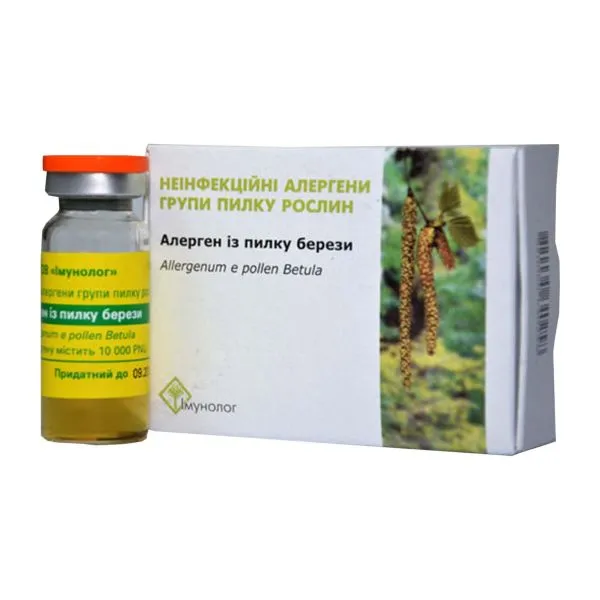
Table of Contents
INSTRUCTION for medical use of the medicinal product Non-infectious food allergens
Composition:
Active substances: food allergens (Allergena alimentaria):
Allergens from cow's milk:
1 ml of solution contains 10,000 PNU of allergen from cow's milk,
1 ml of solution contains 10,000 PNU of allergen from casein of cow's milk,
1 ml of solution contains 10,000 PNU of allergen from beta-lactoglobulin of cow's milk;
Allergens from chicken eggs:
1 ml of solution contains 10,000 PNU of allergen from chicken eggs,
1 ml of solution contains 10,000 PNU of allergen from chicken egg white,
1 ml of solution contains 10,000 PNU of allergen from chicken egg yolk;
Allergens from meat:
1 ml of solution contains 10,000 PNU of allergen from beef,
1 ml of solution contains 10,000 PNU of allergen from pork,
1 ml of solution contains 10,000 PNU of allergen from lamb,
1 ml of solution contains 10,000 PNU of allergen from chicken meat,
1 ml of solution contains 10,000 PNU of allergen from duck meat,
1 ml of solution contains 10,000 PNU of allergen from goose meat,
1 ml of solution contains 10,000 PNU of allergen from turkey meat,
1 ml of solution contains 10,000 PNU of allergen from quail meat,
1 ml of solution contains 10,000 PNU of allergen from rabbit meat;
Allergens from fish:
1 ml of solution contains 10,000 PNU of allergen from cod,
1 ml of solution contains 10,000 PNU of allergen from mackerel,
1 ml of solution contains 10,000 PNU of allergen from hake,
1 ml of solution contains 10,000 PNU of allergen from carp,
1 ml of solution contains 10,000 PNU of allergen from silver carp,
1 ml of solution contains 10,000 PNU of allergen from pollock,
1 ml of solution contains 10,000 PNU of allergen from pike,
1 ml of solution contains 10,000 PNU of allergen from river perch,
1 ml of solution contains 10,000 PNU of allergen from sea perch,
1 ml of solution contains 10,000 PNU of allergen from zander,
1 ml of solution contains 10,000 PNU of allergen from mackerel (Scomber scombrus),
1 ml of solution contains 10,000 PNU of allergen from salmon,
1 ml of solution contains 10,000 PNU of allergen from pink salmon,
1 ml of solution contains 10,000 PNU of allergen from sea trout,
1 ml of solution contains 10,000 PNU of allergen from river trout,
1 ml of solution contains 10,000 PNU of allergen from Atlantic salmon,
1 ml of solution contains 10,000 PNU of allergen from tuna,
1 ml of solution contains 10,000 PNU of allergen from halibut,
1 ml of solution contains 10,000 PNU of allergen from sardine,
1 ml of solution contains 10,000 PNU of allergen from flounder,
1 ml of solution contains 10,000 PNU of allergen from herring,
1 ml of solution contains 10,000 PNU of allergen from Black Sea shrimp,
1 ml of solution contains 10,000 PNU of allergen from Black Sea mussel,
1 ml of solution contains 10,000 PNU of allergen from river crayfish,
1 ml of solution contains 10,000 PNU of allergen from crab,
1 ml of solution contains 10,000 PNU of allergen from squid;
Allergens from flour and cereals:
1 ml of solution contains 10,000 PNU of allergen from rye flour,
1 ml of solution contains 10,000 PNU of allergen from wheat flour,
1 ml of solution contains 10,000 PNU of allergen from corn flour,
1 ml of solution contains 10,000 PNU of allergen from oat flakes,
1 ml of solution contains 10,000 PNU of allergen from buckwheat,
1 ml of solution contains 10,000 PNU of allergen from barley flakes,
1 ml of solution contains 10,000 PNU of allergen from rice flakes,
1 ml of solution contains 10,000 PNU of allergen from millet flakes;
Allergens from vegetables and fruits:
1 ml of solution contains 10,000 PNU of allergen from tomatoes,
1 ml of solution contains 10,000 PNU of allergen from potatoes,
1 ml of solution contains 10,000 PNU of allergen from eggplant,
1 ml of solution contains 10,000 PNU of allergen from watermelon,
1 ml of solution contains 10,000 PNU of allergen from cucumber,
1 ml of solution contains 10,000 PNU of allergen from zucchini,
1 ml of solution contains 10,000 PNU of allergen from pattypan squash,
1 ml of solution contains 10,000 PNU of allergen from beans,
1 ml of solution contains 10,000 PNU of allergen from peas,
1 ml of solution contains 10,000 PNU of allergen from carrots,
1 ml of solution contains 10,000 PNU of allergen from table beet,
1 ml of solution contains 10,000 PNU of allergen from onion,
1 ml of solution contains 10,000 PNU of allergen from leek,
1 ml of solution contains 10,000 PNU of allergen from garlic,
1 ml of solution contains 10,000 PNU of allergen from soy,
1 ml of solution contains 10,000 PNU of allergen from lentils,
1 ml of solution contains 10,000 PNU of allergen from pumpkin,
1 ml of solution contains 10,000 PNU of allergen from cabbage,
1 ml of solution contains 10,000 PNU of allergen from cauliflower,
1 ml of solution contains 10,000 PNU of allergen from garden radish,
1 ml of solution contains 10,000 PNU of allergen from celery,
1 ml of solution contains 10,000 PNU of allergen from parsley,
1 ml of solution contains 10,000 PNU of allergen from dill,
1 ml of solution contains 10,000 PNU of allergen from coriander,
1 ml of solution contains 10,000 PNU of allergen from olives,
1 ml of solution contains 10,000 PNU of allergen from sweet pepper (bell pepper),
1 ml of solution contains 10,000 PNU of allergen from chili pepper,
1 ml of solution contains 10,000 PNU of allergen from fig,
1 ml of solution contains 10,000 PNU of allergen from orange,
1 ml of solution contains 10,000 PNU of allergen from tangerine,
1 ml of solution contains 10,000 PNU of allergen from lemon,
1 ml of solution contains 10,000 PNU of allergen from grapefruit,
1 ml of solution contains 10,000 PNU of allergen from kiwi,
1 ml of solution contains 10,000 PNU of allergen from pineapple,
1 ml of solution contains 10,000 PNU of allergen from coconut,
1 ml of solution contains 10,000 PNU of allergen from apple,
1 ml of solution contains 10,000 PNU of allergen from apricot,
1 ml of solution contains 10,000 PNU of allergen from peach,
1 ml of solution contains 10,000 PNU of allergen from grapes,
1 ml of solution contains 10,000 PNU of allergen from cherry,
1 ml of solution contains 10,000 PNU of allergen from sour cherry,
1 ml of solution contains 10,000 PNU of allergen from raspberry,
1 ml of solution contains 10,000 PNU of allergen from plum,
1 ml of solution contains 10,000 PNU of allergen from pear,
1 ml of solution contains 10,000 PNU of allergen from strawberry,
1 ml of solution contains 10,000 PNU of allergen from blackcurrant,
1 ml of solution contains 10,000 PNU of allergen from gooseberry,
1 ml of solution contains 10,000 PNU of allergen from cranberry,
1 ml of solution contains 10,000 PNU of allergen from melon,
1 ml of solution contains 10,000 PNU of allergen from banana,
1 ml of solution contains 10,000 PNU of allergen from wild strawberry;
Allergens from nuts:
1 ml of solution contains 10,000 PNU of allergen from peanut,
1 ml of solution contains 10,000 PNU of allergen from walnut,
1 ml of solution contains 10,000 PNU of allergen from almond,
1 ml of solution contains 10,000 PNU of allergen from hazelnut;
Other allergens:
1 ml of solution contains 10,000 PNU of allergen from mushrooms (Agaricus bisporus),
1 ml of solution contains 10,000 PNU of allergen from Dutch cheese,
1 ml of solution contains 10,000 PNU of allergen from bay leaf,
1 ml of solution contains 10,000 PNU of allergen from mustard,
1 ml of solution contains 10,000 PNU of allergen from black pepper,
1 ml of solution contains 10,000 PNU of allergen from sesame,
1 ml of solution contains 10,000 PNU of allergen from cocoa,
1 ml of solution contains 10,000 PNU of allergen from coffee,
1 ml of solution contains 10,000 PNU of allergen from black tea,
1 ml of solution contains 10,000 PNU of allergen from green tea;
Excipients: sodium chloride, disodium phosphate dodecahydrate (disodium hydrogen phosphate), potassium dihydrogen phosphate (potassium dihydrogen phosphate), phenol, water for injections.
1 vial contains 5 ml of allergen (10,000 PNU/ml).
Note: 1 PNU (Protein Nitrogen Unit) – an international unit accepted for determining the concentration of protein nitrogen in allergens, equivalent to 0.00001 mg of protein nitrogen.
Pharmaceutical form. Injection solution.
Main physicochemical properties: transparent liquid ranging in color from colorless to dark brown.
Pharmacotherapeutic group. Allergen extracts. Food allergens.
ATC code V01A A08.
Immunological and biological properties.
Pharmacodynamics.
Mechanism of action. The active component of food allergens is a protein-polysaccharide complex, which enables diagnosis of sensitization to a specific allergen in a patient when performing skin and provocation tests. The ability of allergen components to interact with specific IgE class antibodies (reagins) in the patient and to elicit a reaction in a sensitized organism determines the diagnostic potential of the medicinal product.
Pharmacokinetics. Not studied.
The effect of the drug results from the combined action of its protein components, making pharmacokinetic studies unfeasible, as all components cannot be tracked using markers or bioassays. For the same reasons, it is impossible to identify metabolites of the drug.
Clinical characteristics.
Indications.
Specific diagnosis of allergic diseases by detecting sensitization to food allergens.
For diagnostic purposes, the preparations are used to perform skin tests by the prick test method (scarification test and provocation tests may also be conducted).
Contraindications.
To identify contraindications, the physician examines the patient on the day of skin testing.
Contraindications for skin testing with allergens
Age under 1 year for prick test and under 3 years for scarification test; exacerbation of the allergic disease being diagnosed; skin pathology at the test site (e.g., eczema); acute respiratory infections with elevated body temperature; chronic diseases in decompensation stage; active tuberculosis in any location; acute phase of mental disorders; systemic diseases (collagenoses) and oncological diseases.
Pregnancy is a contraindication for skin testing (see section "Use in pregnancy or breastfeeding").
The use of beta-adrenoreceptor antagonists (beta-blockers) is a risk factor for the development of anaphylactic reactions.
Special precautions.
During storage, food allergen solutions may develop a slight precipitate or turbidity, which does not affect the quality of the preparations. Such vials should be shaken thoroughly before use.
Any unused medicinal product or waste material must be disposed of in accordance with local requirements.
Interaction with other medicinal products and other forms of interaction.
The use of antihistamines and glucocorticosteroids affects the reliability of skin testing with allergens (reduces papule size up to complete absence).
The intake of H2 histamine receptor blockers, cromoglycate, corticosteroids in doses up to 15 mg of prednisolone, and derivatives of theophylline preparations does not affect the results of allergy testing. A possible influence exists with topical application of steroid ointments. Beta-blockers may enhance skin reactions.
Allergen testing is not affected by food intake.
Special precautions.
Skin tests are prescribed exclusively by an allergist or pediatric allergist who has experience in the treatment of allergic diseases, has undergone special training, including training in emergency measures for anaphylaxis, and must be performed under his or her supervision in an allergist's office.
Skin tests with allergens are performed only after the physician has obtained written informed consent from the patient!
Indications for skin allergen testing include medical history, clinical and laboratory examination findings.
Skin tests are applied to the inner surface of the forearm at a distance of (30 ± 10) mm from each other, or on the skin of the back. Up to 30 tests may be performed simultaneously if the prick test method is used, or up to 15 if the scarification method is used. Performing skin tests with allergens in children under 1 year of age by the prick method, or in children under 3 years of age by the scarification method, is not recommended. In children, the number of allergen skin tests (by prick test method) should not exceed the numerical value of their age (for scarification – half that number).
Skin tests are performed using allergens containing 10,000 PNU per 1 mL. For patients with a high degree of sensitization, a preparation concentration of 5,000 PNU per 1 mL should be used.
During skin allergen testing, there is a very low probability of systemic allergic reactions and anaphylactic shock in particularly sensitive patients. Therefore, after allergen administration, the patient must remain under the supervision of an allergist for 30 minutes! Every office where skin tests with allergens are performed must have an emergency kit available for immediate treatment of anaphylaxis.
In the event of anaphylactic reactions, administration of the allergen must be immediately stopped and management must follow the protocol for medical assistance in anaphylactic shock in children and adults, approved by the order of the Ministry of Health of Ukraine.
Temporary contraindications for performing skin tests include the use of antihistamines (up to 10 days), systemic glucocorticosteroids (up to 14 days), and topical glucocorticosteroid creams applied to the skin area where testing is to be performed (up to 30 days). Due to the large number of drugs used in the treatment of allergic diseases and the emergence of new medicinal products, these time intervals are approximate and may vary depending on the specific drug used by the patient. Therefore, skin tests with allergens should only be performed after a positive skin reaction to histamine has been restored!
Vaccination
Skin tests with allergens may be performed 10–15 days before vaccination and 1.5–2 months after administration of vaccine preparations.
The medicinal product contains potassium and sodium compounds; however, their content is less than 1 mmol (39 mg)/dose for potassium and 1 mmol (23 mg)/dose for sodium, which allows the product to be considered practically free of potassium and sodium.
Use during pregnancy or breastfeeding.
Pregnancy is a contraindication for skin testing (see section "Contraindications") due to the risk of systemic allergic reactions, which may lead to uterine contractions, and the potential need for administration of adrenaline (epinephrine), which may cause constriction of the umbilical artery.
Ability to influence reaction speed when driving vehicles or operating machinery.
Allergen preparations do not affect the ability to drive vehicles or operate machinery.
Method of Administration and Dosage
Technique for Performing Skin Allergy Tests with Allergens
Skin tests are performed on the inner surface of the forearm or on the skin of the back.
Allergens, allergen diluent (negative control), and 0.01% histamine dihydrochloride solution for skin diagnosis of allergic diseases (positive control) should be applied following aseptic procedures. Apply one drop each of the allergen, allergen diluent, and 0.01% histamine dihydrochloride solution for skin diagnosis of allergic diseases onto the skin disinfected with 70% ethyl alcohol, using sterile dropper caps (see instructions for medical use).
Prick Test. Using sterile disposable lancets for prick testing, individual for each patient and each preparation, puncture the skin through each drop of allergen, allergen diluent, and 0.01% histamine dihydrochloride solution for skin diagnosis of allergic diseases, until the lancet's stopper limits further penetration.
Scarification Test. Using sterile scarifiers, individual for each patient and each preparation, make superficial scratches up to 5 mm long through the drops of allergen, allergen diluent, and 0.01% histamine dihydrochloride solution for skin diagnosis of allergic diseases.
Evaluation of Skin Test Results
Skin test results are evaluated after 15–20 minutes (immediate-type reaction). The skin reaction to histamine must be positive (typically a wheal of 3–5 mm in diameter forms); if there is no reaction to histamine, allergen tests are not valid. The reaction to the allergen diluent must be negative; if positive, the allergen test result is invalid.
Skin Test Evaluation Scheme
| Types of allergic reactions |
Prick test |
Scarification test |
|
| Wheal size, mm |
|||
| Negative |
0 |
0 |
|
| Doubtful |
1–2 |
up to 3 |
|
| Positive |
3–7 |
3–10 |
|
| Strongly positive |
8–12 |
11–15 |
|
| Hyperergic |
13 and larger |
16 and larger |
|
Children.
Skin allergy testing with allergens using the prick method is not recommended in children under 1 year of age, and using the scarification method in children under 3 years of age.
For children, the number of allergen skin tests (using the prick method) should not exceed the numerical value of their age (for scarification method – half that number).
Overdose.
Cases of overdose with allergen preparations during skin testing are unknown.
Adverse Reactions.
If the rules for skin testing are violated (e.g., incorrect administration of the prick test, performing skin tests on infected skin, etc.), reactions at the injection site may occur: pain and itching at the injection site, formation of a papule, swelling, and hyperemia. These reactions usually resolve spontaneously quickly or require application of cold to the injection site. Cases of systemic allergic reactions have also been reported.
Reporting of suspected adverse reactions.
Reporting of adverse reactions after drug registration is of great importance.
This enables continuous monitoring of the benefit-risk balance associated with the use of the medicinal product. Healthcare professionals are required to report any adverse reactions through the national reporting system.
Shelf life.
Allergens – 2 years.
The shelf life of allergens fitted with dropper caps and used for skin testing, stored in a refrigerator, is 1 year, but not exceeding the total shelf life indicated on the vial.
Storage conditions.
Store in a light-protected place at a temperature of 2 to 8 °C. Do not freeze.
Keep out of reach of children.
Packaging.
5 ml of allergen in glass vials.
As a set in a cardboard box containing 1 vial of allergen – 5 ml (10000 PNU/ml), 1 sterile dropper cap.
An instruction for medical use is included in each box.
Prescription status. Prescription only.
Manufacturer.
LLC "Immunolog", Ukraine.
Manufacturer's address and place of business.
5 Dmytro Mayboroda Street, Vinnytsia, Vinnytsia region, 21036, Ukraine.