Nebufluzon®
Ukraine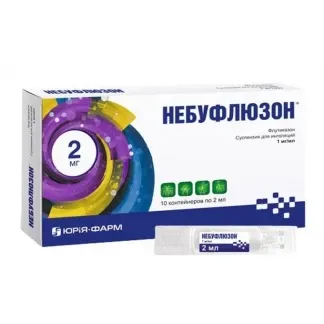
Table of Contents
INSTRUCTIONS FOR MEDICAL USE OF THE MEDICINAL PRODUCT NEBUFLUSON® (NEBUFLUSON)
Composition:
Active substance: fluticasone propionate;
1 ml of suspension contains 1 mg fluticasone propionate;
Excipients: decamethoxin; polysorbate 80; sodium dihydrogen phosphate dihydrate; anhydrous disodium hydrogen phosphate; sodium chloride; water for injections.
Pharmaceutical form. Suspension for inhalation.
Main physicochemical characteristics: white opaque suspension, readily dispersible.
Pharmacotherapeutic group. Antiasthmatic agents for inhalation use. Glucocorticoids. ATC code R03BA05.
Pharmacological Properties.
Pharmacodynamics.
The glucocorticosteroid fluticasone propionate, when administered by inhalation at recommended doses, exerts a potent anti-inflammatory action in the lungs, resulting in reduced asthma symptoms and decreased frequency of asthma attacks.
Pharmacokinetics.
Following inhaled administration, systemic bioavailability of nebulized fluticasone propionate in healthy volunteers is expected to be approximately 8%, compared to 26% when administered via a metered-dose inhaler. Systemic absorption occurs primarily via the respiratory tract, initially rapidly and then over a prolonged period. Any residual inhaled dose remaining in the mouth may be swallowed.
Absolute oral bioavailability is very low (< 1%) due to a combination of incomplete gastrointestinal absorption and extensive first-pass metabolism. 87–100% of an orally administered dose is excreted in feces, with up to 75% excreted as the unchanged parent compound and inactive major metabolite.
Safety data
Toxicological studies revealed only effects typical of potent corticosteroids, but at doses many times higher than those used therapeutically. Studies investigating the effects of the drug on reproductive function and potential teratogenicity revealed no new findings. Fluticasone propionate showed no mutagenic activity in vitro or in vivo. Animal studies demonstrated absence of carcinogenic potential, as well as lack of irritant and sensitizing properties.
Clinical characteristics.
Indications.
Adults and adolescents aged 16 years and older
Prophylactic use in severe asthma in patients requiring high doses of inhaled or oral corticosteroids. For patients currently treated with high doses of oral corticosteroids, to reduce or eliminate the need for oral corticosteroid therapy.
Children and adolescents aged 4 to 16 years
Treatment of asthma exacerbations. Appropriate supportive therapy may be supplemented with the use of a metered-dose aerosol or dry powder inhaler.
Inhaled fluticasone propionate has potent glucocorticoid anti-inflammatory activity in the lungs. It reduces symptoms and asthma exacerbations in patients previously treated only with bronchodilators or in combination with other prophylactic agents. Short symptomatic episodes of exacerbation may generally be relieved with the use of fast-acting bronchodilators, but prolonged exacerbations require additional corticosteroid therapy as early as possible to control inflammation.
Contraindications.
Hypersensitivity to any component of the drug in the patient's history.
Interaction with other medicinal products and other forms of interaction.
Under normal conditions, low plasma concentrations of fluticasone propionate are achieved after inhalation due to extensive first-pass metabolism and high systemic clearance mediated by cytochrome P450 3A4 in the liver and intestine. Therefore, the likelihood of clinically significant drug interactions mediated by fluticasone propionate is very low.
Data from drug interaction studies in healthy volunteers with intranasal fluticasone propionate have shown that ritonavir (a strong inhibitor of cytochrome P450 3A4), at a dose of 100 mcg twice daily, may increase plasma concentrations of fluticasone propionate by hundreds of times, leading to a significant reduction in serum cortisol levels. Information regarding such interaction with inhaled fluticasone propionate is limited, but such an increase in plasma concentration of fluticasone propionate may occur. Cases of Cushing's syndrome and adrenal suppression have also been reported. Concomitant use of fluticasone propionate and ritonavir should be avoided, except when the benefit outweighs the risk of systemic corticosteroid effects.
In a small study conducted in healthy volunteers, the less potent CYP3A inhibitor ketoconazole increased fluticasone propionate concentrations after a single inhalation by up to 150%, resulting in a significant reduction in serum cortisol levels compared to fluticasone propionate alone. Concomitant use with other strong CYP3A inhibitors, such as itraconazole, is also expected to increase systemic fluticasone propionate concentrations and the risk of systemic effects. Caution is advised, and prolonged use of such combinations should be avoided whenever possible.
Concomitant use of fluticasone propionate with other strong CYP3A inhibitors, including cobicistat-containing products, is expected to increase the risk of systemic adverse effects.
Other CYP3A4 inhibitors cause minimal (erythromycin) or slight (ketoconazole) increases in systemic exposure to fluticasone propionate without notable reduction in serum cortisol levels. Such combinations should be avoided unless the expected benefit outweighs the potential increase in risk of systemic corticosteroid side effects; in such cases, patients should be monitored for the development of systemic adverse effects.
Special precautions for use.
Bronchial asthma should be treated according to a stepwise approach, and the patient's condition must be regularly monitored both clinically and by assessing pulmonary function parameters.
Sudden and progressive worsening of asthma control is a potentially life-threatening condition, and the need to increase corticosteroid dosage should be urgently addressed. If such risk arises, the patient should perform daily peak flow measurements.
Nebufluzon is not intended for relief of acute asthma attacks, during which fast-acting, short-duration inhaled bronchodilators must be used. Patients should be advised to always have such medications available. Nebufluzon is indicated for long-term prophylactic treatment.
Nebufluzon is not a substitute for injectable or oral corticosteroids in emergency situations (e.g., severe, life-threatening asthma exacerbation).
Severe asthma requires continuous medical supervision, including monitoring of pulmonary function, due to the risk of acute asthma attacks and even fatal outcomes in such patients.
An increased frequency of use or dosage of short-acting inhaled beta-2 agonists indicates a progressive loss of asthma control. If short-acting bronchodilators become less effective or need to be used more frequently, the patient should consult a physician. In such cases, additional evaluation is required to determine the need for intensified anti-inflammatory therapy (e.g., increasing the dose of inhaled corticosteroids or initiating a course of oral corticosteroids). Standard therapy for severe asthma exacerbation should be administered when appropriate.
There have been isolated reports of elevated blood glucose levels in both patients with diagnosed diabetes mellitus and in those without diabetes (see section "Adverse reactions"). This should be considered when prescribing Nebufluzon to diabetic patients.
As with other inhaled medications, paradoxical bronchospasm with rapidly worsening dyspnea after inhalation may occur. In such cases, Nebufluzon inhalation should be stopped immediately, the patient should be evaluated, and alternative therapy should be initiated if necessary.
Systemic effects may occur with prolonged use of high-dose inhaled corticosteroids, although the likelihood is significantly lower than with oral corticosteroids. Systemic effects may manifest as Cushing's syndrome, Cushingoid features, adrenal suppression, growth retardation in children and adolescents, decreased bone mineralization, and, in rare cases, psychiatric disorders, behavioral changes including psychomotor hyperactivity, sleep disturbances, restlessness, depression, and aggression (mainly in children). Therefore, it is important to regularly review the dose of inhaled corticosteroids and reduce it to the lowest effective dose that maintains adequate asthma symptom control.
Prolonged use of high doses of inhaled corticosteroids may lead to adrenal suppression and acute adrenal crisis. Children under 16 years of age receiving fluticasone doses exceeding approved levels (typically ≥ 1000 mcg/day) are at particular risk. Acute adrenal crisis may be triggered by trauma, surgery, infections, or abrupt dose reduction. Symptoms are often nonspecific and may include anorexia, abdominal pain, weight loss, fatigue, headache, nausea, vomiting, decreased level of consciousness, hypoglycemia, and seizures. Additional systemic corticosteroids may be required during periods of stress or surgical procedures.
Regular monitoring of growth in children undergoing long-term treatment with inhaled corticosteroids is recommended. If growth retardation occurs, therapy should be re-evaluated with the aim of reducing the inhaled corticosteroid dose, if possible, to the lowest dose that maintains effective asthma control. The child should also be referred to a pediatric pulmonologist for further evaluation.
Some patients may exhibit increased sensitivity to inhaled corticosteroids compared to the general population.
The use of inhaled fluticasone propionate should reduce the need for oral corticosteroids. However, patients transitioning from oral corticosteroids to inhaled fluticasone propionate remain at risk of adrenal suppression. The potential for adverse effects persists for some time. Such patients may require evaluation in specialized settings to assess the degree of adrenal impact before certain procedures. Residual adrenal dysfunction should be considered in emergency situations, including surgery and other stress conditions, and appropriate corticosteroid therapy should be considered.
Patients should receive inhaled fluticasone propionate doses appropriate to the severity of their disease. The dosage should be reduced to the lowest effective dose that maintains disease control. Systemic corticosteroids and/or antibiotics may be necessary if adequate disease control is not achieved.
Switching from systemic to inhaled corticosteroid therapy may sometimes unmask allergic conditions previously controlled by systemic steroids, such as allergic rhinitis or eczema. These allergic manifestations should be treated symptomatically with antihistamines and/or topical agents, including locally acting corticosteroids.
As with all inhaled corticosteroids, particular caution is required in patients with active or latent pulmonary tuberculosis.
Treatment with Nebufluzon should not be discontinued abruptly.
Transitioning patients previously treated with oral corticosteroids to inhaled therapy.
Transitioning patients from oral corticosteroids to inhaled Nebufluzon and their subsequent management requires special attention, as recovery of adrenal function suppressed by prolonged systemic corticosteroid therapy may take a long time.
Prolonged use of high doses of inhaled corticosteroids may suppress adrenal function. The adrenal function of such patients should be monitored regularly. Systemic corticosteroid doses should be reduced cautiously (see section "Dosage and administration").
Some patients may experience non-specific worsening of general condition during the transition period, despite stable or even improved respiratory function. They should continue the transition from systemic corticosteroids to inhaled fluticasone propionate unless objective signs of adrenal insufficiency appear.
Patients who have discontinued oral corticosteroids but still have impaired adrenal function should carry a special alert card warning of the need for additional systemic corticosteroids during stressful situations such as acute asthma attacks, respiratory infections, significant intercurrent illnesses, surgery, or trauma.
Ritonavir may significantly increase plasma concentrations of fluticasone propionate. Therefore, concomitant use of fluticasone propionate and ritonavir should be avoided, except when the benefit outweighs the risk of systemic corticosteroid effects. An increased risk of systemic effects of fluticasone propionate also exists when used concomitantly with CYP3A4 inhibitors (see section "Interaction with other medicinal products and other forms of interaction").
Vision disorders
Visual disturbances may occur with both systemic and topical corticosteroid use. If a patient experiences symptoms such as blurred vision or other visual disturbances, they should be referred to an ophthalmologist to evaluate possible causes, including cataract, glaucoma, or rare conditions such as central serous chorioretinopathy, which has been reported after use of systemic and topical corticosteroids.
Use during pregnancy or breastfeeding.
Fertility
There are no data on the effect on human fertility. Animal studies did not show any effect of fluticasone propionate on fertility.
Pregnancy
Human experience with use during pregnancy is limited.
The decision to prescribe the drug during this period should be based on weighing the expected benefit to the mother against the potential risk to the fetus. Results of a retrospective epidemiological study did not show an increased risk of major congenital malformations after exposure to fluticasone propionate during the first trimester of pregnancy compared to other inhaled corticosteroids.
Breastfeeding
It is currently not known whether fluticasone propionate passes into breast milk; however, based on the pharmacological profile of the drug, this is unlikely. The drug may be used during breastfeeding only if the expected benefit to the mother outweighs the potential risk to the infant.
Ability to affect reaction speed when driving or operating machinery.
Any such effect is unlikely.
Method of Administration and Dosage
The medication is intended for inhalation use only.
Nebufluzon should be administered as an aerosol using a jet nebulizer. Since numerous factors affect drug delivery, recommendations provided by the nebulizer manufacturer should be strictly followed.
The use of Nebufluzon with ultrasonic nebulizers is generally not recommended.
Patients should be informed that treatment with inhaled fluticasone propionate is prophylactic in nature and therefore must be used regularly, even in the absence of symptoms.
If short-acting bronchodilators become less effective or need to be used more frequently, patients should consult their physician.
The initial dose should correspond to the severity of the disease. The dosage may be increased until disease control is achieved or decreased to the lowest effective dose that maintains adequate disease control.
Adults and adolescents aged 16 years and older: 0.5–2 mg of the suspension twice daily.
Fluticasone propionate is effective at a dose approximately half that of other inhaled corticosteroids. For example, 100 mcg of fluticasone propionate is roughly equivalent to 200 mcg of beclomethasone dipropionate (chlorofluorocarbon-containing formulation) or budesonide.
There is always a risk of systemic effects when high doses of corticosteroids are used (see sections "Special Considerations" and "Adverse Reactions").
The initial dose of inhaled fluticasone propionate should be based on the severity of the patient's condition.
Dosage should be reduced to the lowest effective dose that maintains adequate disease control.
Children and adolescents aged 4–16 years: 1 mg of the suspension twice daily.
Dosage should be reduced to the lowest effective dose that maintains adequate disease control.
Special Patient Groups
There is no need to adjust the dose in elderly patients or in patients with impaired liver or kidney function.
Switching Patients from Oral Corticosteroids to Inhaled Therapy
Gradual withdrawal of systemic steroids should begin approximately one week after initiating Nebufluzon. Dose reductions should correspond to the maintenance level of systemic steroids and should be made at intervals of at least one week. In general, for maintenance doses of prednisolone (or equivalent) of 10 mg per day or less, the dose should not be reduced by more than 1 mg per day at intervals of at least one week. For maintenance doses exceeding 10 mg of prednisolone per day, larger reductions (more than 1 mg per day) may be permitted at intervals of at least one week, but with particular caution.
Nebufluzon must not be administered by injection.
Use of a mouthpiece is recommended to avoid the development of atrophic skin changes on the face that may occur with prolonged use of a face mask.
When a face mask is used, the facial skin exposed to the medication should be protected with a barrier cream or thoroughly washed after use.
Instructions for Using Nebufluzon
Refer to the manufacturer's instructions for the nebulizer.
Before use, ensure the container contents are well mixed. Holding the container horizontally by the edge with the label, shake several times from the opposite end. Repeat this process several times until the contents are fully mixed. To open the container, twist the cap located at its top.
If necessary, the medication may be diluted with sodium chloride solution. Unused solution from the nebulizer chamber must not be reused and should be discarded.
Children: For use in children aged 4 years and older.
Overdose
Acute overdose with Nebufluzon, when doses exceed those recommended, may result in transient suppression of adrenal gland function. This does not require emergency treatment, as adrenal cortex function typically recovers within a few days, confirmed by measuring plasma cortisol levels.
However, prolonged use of doses higher than recommended may lead to some degree of adrenal suppression; therefore, assessment of adrenal reserve function may be necessary.
In case of overdose, therapy may continue at doses required to control asthma symptoms. Patients receiving doses higher than recommended should be under close medical supervision, and the dose should be gradually reduced (see section "Special Considerations").
Adverse reactions
The adverse reactions listed below are classified by organ systems and frequency of occurrence: very common (≥ 1/10), common (≥ 1/100 and < 1/10), uncommon (≥ 1/1,000 and < 1/100), rare (≥ 1/10,000 and < 1/1,000), very rare (< 1/10,000), and frequency not known (cannot be estimated from available data), including isolated case reports. Data on very common, common, and uncommon adverse reactions are primarily derived from clinical trials. Data on rare and very rare adverse reactions are mainly obtained from spontaneous reports.
Infections and infestations
Very common: oral and pharyngeal candidiasis.
Oral and pharyngeal candidiasis (fungal infection) may occur in some patients. To prevent this, patients should rinse the mouth with water after each inhalation of Nebufluzon via nebulizer. If necessary, topical antifungal therapy may be prescribed throughout the treatment period, while continuing Nebufluzon administration.
Common: pneumonia in patients with COPD (chronic obstructive pulmonary disease).
In clinical trials of patients with COPD receiving fluticasone propionate 500 mcg, an increased incidence of pneumonia was reported. Physicians should remain vigilant for possible pneumonia in COPD patients, as clinical symptoms of pneumonia and COPD exacerbation often overlap.
Rare: esophageal candidiasis.
Immune system disorders
Hypersensitivity reactions with the following manifestations have been reported.
Uncommon: skin hypersensitivity reactions.
Very rare: angioedema (mainly of the face and oropharynx), respiratory symptoms (dyspnoea and/or bronchospasm), and anaphylactic reaction.
Eye disorders
Frequency not known: visual disturbance (blurred vision).
Endocrine system disorders
Systemic effects are possible and very rarely include Cushing's syndrome, Cushingoid features, adrenal suppression, growth retardation in children and adolescents, decreased bone mineralization, cataract, and glaucoma (see section "Special precautions for use").
Metabolism and nutrition disorders
Very rare: hyperglycaemia (see section "Special precautions for use").
Gastrointestinal disorders
Very rare: dyspepsia.
Musculoskeletal and connective tissue disorders
Very rare: arthralgia.
Psychiatric disorders
Very rare: feeling of restlessness, sleep disturbances, behavioural changes including hyperactivity and agitation (mainly in children).
Frequency not known: depression, aggression (mainly in children).
Respiratory, thoracic and mediastinal disorders
Common: hoarseness.
In some patients, inhaled fluticasone propionate may cause hoarseness. Rinsing the mouth with water immediately after inhalation may be beneficial.
Very rare: paradoxical bronchospasm (see section "Special precautions for use").
Frequency not known: epistaxis (nosebleeds).
Skin and subcutaneous tissue disorders
Common: bruising.
Shelf life. 3 years.
Storage conditions.
Store out of reach of children at a temperature not exceeding 25 °C. Avoid freezing and exposure to direct sunlight.
Opened containers should be stored in a refrigerator and used within 12 hours after opening.
Store in an upright position.
Packaging.
2 ml in a single-dose container; 10 containers in a sachet; 1 sachet in a cardboard box.
Prescription category. Prescription only.
Manufacturer.
LLC "Yuria-Pharm".
Manufacturer's address and place of business.
108, Kozbirska St., Cherkasy, Cherkasy region, 18030, Ukraine. Tel.: (044) 281-01-01.