Nebivorld
Ukraine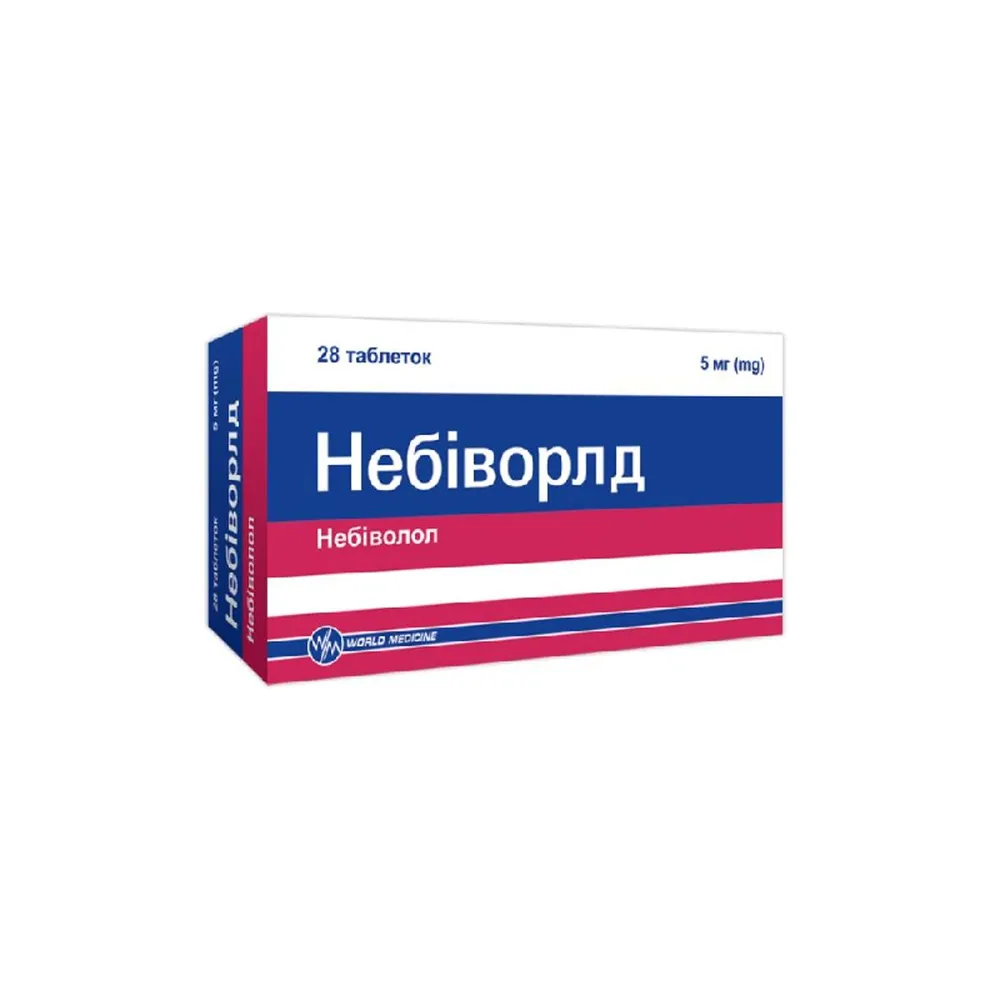
Table of Contents
INSTRUCTION FOR MEDICAL USE OF THE MEDICINAL PRODUCT NEBIWORLD (NEBIWORLD)
Composition:
Active substance: nebivolol;
1 tablet contains nebivolol (in the form of nebivolol hydrochloride) 5 mg;
Excipients: microcrystalline cellulose; lactose monohydrate; maize starch; sodium croscarmellose; hypromellose; colloidal anhydrous silicon dioxide; magnesium stearate.
Pharmaceutical form. Tablets.
Main physical and chemical properties: round, biconvex tablets of white or almost white color with a cross-shaped notch on one side.
Pharmacotherapeutic group.
Selective β-adrenoceptor blockers. ATC code C07AB12.
Pharmacological properties.
Pharmacodynamics.
Nebivolol is a racemate consisting of two enantiomers: SRRR-nebivolol (D-nebivolol) and RSSS-nebivolol (L-nebivolol). It combines two pharmacological actions:
- it is a competitive and selective antagonist of β-adrenergic receptors: this effect is attributed to the SRRR enantiomer (d-enantiomer);
- it has mild vasodilatory properties due to interaction with L-arginine/nitric oxide.
Single and repeated doses of nebivolol reduce heart rate and arterial blood pressure at rest and during exercise in both individuals with normal blood pressure and those with arterial hypertension. The antihypertensive effect is maintained during long-term treatment.
In therapeutic doses, α-adrenergic antagonism is not observed.
During short-term and long-term treatment with nebivolol in patients with arterial hypertension, systemic vascular resistance decreases. Despite reduction in heart rate, the decrease in cardiac output at rest and during exercise is limited due to an increase in stroke volume. The clinical significance of this hemodynamic difference compared to other β-adrenergic receptor blockers has not yet been fully elucidated.
In patients with arterial hypertension, nebivolol enhances the vascular response to acetylcholine (ACh), mediated by nitric oxide; in patients with endothelial dysfunction, this response is reduced.
In vitro and in vivo experiments in animals have shown that nebivolol has no intrinsic sympathomimetic activity.
In vitro and in vivo experiments in animals have shown that nebivolol, at pharmacological doses, has no membrane-stabilizing effect.
In healthy volunteers, nebivolol has no significant effect on tolerance to maximal exercise or endurance.
Pharmacokinetics.
After oral administration, both enantiomers of nebivolol are rapidly absorbed. Food does not affect the absorption of nebivolol; therefore, it can be taken with or without food.
Nebivolol is completely metabolized, partly forming active hydroxymetabolites. The metabolism of nebivolol occurs via aliphatic or aromatic hydroxylation, N-dealkylation, and glucuronidation; in addition, glucuronides of hydroxymetabolites are formed. The metabolism of nebivolol via hydroxylation is subject to genetic oxidative polymorphism dependent on CYP2D6. The oral bioavailability of nebivolol is 12% in individuals with rapid metabolism and nearly complete in individuals with slow metabolism. At steady-state and with the same dose, the maximum plasma concentration of unchanged nebivolol in individuals with slow metabolism is approximately 23 times higher than in those with rapid metabolism. When considering the sum of unchanged nebivolol and its active metabolites, the difference in maximum plasma concentration ranges from 1.3 to 1.4 times. Due to differences in the extent of metabolism, the dose of the drug should always be adjusted according to individual patient needs; therefore, individuals with slow metabolism may require lower doses.
In individuals with rapid metabolism, the elimination half-life values of nebivolol enantiomers average 10 hours. In individuals with slow metabolism, these values are 3–5 times higher. In individuals with rapid metabolism, the concentration of the RSSS-enantiomer is slightly higher than that of the SRRR-enantiomer. This difference is greater in individuals with rapid metabolism.
In individuals with rapid metabolism, the elimination half-life values of the hydroxymetabolites of both enantiomers average 24 hours, while in individuals with slow metabolism, these values are approximately twice as high.
Steady-state plasma levels are achieved within 24 hours in most patients with rapid metabolism, and within several days for hydroxymetabolites.
Plasma concentrations ranging from 1 to 30 mg of nebivolol are proportional to the dose. Age does not affect the pharmacokinetics of nebivolol.
In plasma, both enantiomers are predominantly bound to albumin. Protein binding in plasma is 98.1% for SRRR-nebivolol and 97.9% for RSSS-nebivolol.
Approximately one week after administration, 38% of the dose is excreted in urine and 48% in feces. Renal excretion of unchanged nebivolol is less than 0.5% of the dose.
Clinical characteristics.
Indications.
Essential arterial hypertension.
The medicinal product can be used both as monotherapy and in combination with other antihypertensive agents.
Contraindications.
- Hypersensitivity to the active substance or to any of the excipients of the medicinal product.
- Hepatic insufficiency or impaired liver function.
- Acute heart failure, cardiogenic shock, or episodes of decompensated heart failure requiring intravenous administration of active substances with positive inotropic effect.
- Sinus node dysfunction, including sinoatrial block.
- Second- or third-degree atrioventricular block (without a pacemaker).
- Bronchospasm and history of bronchial asthma.
- Untreated pheochromocytoma.
- Metabolic acidosis.
- Bradycardia (heart rate less than 60 beats/min prior to treatment initiation).
- Arterial hypotension (systolic blood pressure < 90 mm Hg).
- Severe peripheral circulatory impairment.
Interaction with other medicinal products and other forms of interactions.
Pharmacodynamic interactions.
The information below refers to general interactions with β-adrenoreceptor antagonists.
Concomitant use of the following agents with nebivolol is not recommended.
Class I antiarrhythmic agents (quinidine, hydroquinidine, cibenzoline, flecainide, disopyramide, lidocaine, mexiletine, propafenone).
Concomitant use of nebivolol with these agents may enhance their effects on atrioventricular conduction and increase the negative inotropic effect (see section "Special precautions for use").
Calcium antagonists of the verapamil/diltiazem type.
Concomitant use of nebivolol with these agents may have a negative effect on myocardial contractility and atrioventricular conduction. Intravenous administration of verapamil to patients receiving β-blockers may result in severe arterial hypotension and atrioventricular block (see section "Special precautions for use").
Centrally-acting antihypertensive agents (clonidine, guanfacine, moxonidine, methyldopa, rilmenidine).
Concomitant use of nebivolol with these agents may exacerbate heart failure due to reduced sympathetic tone of central origin (decreased heart rate and stroke volume, vasodilation) (see section "Special precautions for use"). Upon abrupt discontinuation, particularly before stopping β-blocker therapy, the risk of increased blood pressure may rise (withdrawal syndrome).
Concomitant use of the following agents with nebivolol requires caution.
Class III antiarrhythmic agents (amiodarone).
Concomitant use of nebivolol with these agents may enhance their effects on atrioventricular conduction.
Halogenated volatile anesthetics.
Concomitant use of nebivolol with these agents may suppress reflex tachycardia and increase the risk of hypotension (see section "Special precautions for use"). As a general rule, abrupt discontinuation of β-blocker therapy should be avoided. The anesthesiologist should be informed about the use of nebivolol.
Insulin and oral antidiabetic agents.
Although nebivolol does not affect plasma glucose levels, concomitant use with these agents may mask certain symptoms of hypoglycemia (palpitations, tachycardia).
Concomitant use of beta-blockers with sulfonylurea derivatives increases the risk of severe hypoglycemia (see section "Special precautions for use").
Baclofen (antispastic agent), amifostine (adjunct in anticancer therapy).
Concomitant use of nebivolol with these agents may cause a significant decrease in blood pressure. Dose adjustment of nebivolol may be required when used concomitantly.
Concomitant use of the following agents with nebivolol requires consideration of possible interactions.
Cardiac glycosides (digitalis group).
Concomitant use of nebivolol with these agents may increase atrioventricular conduction time. Clinical studies have not shown signs of this interaction. Nebivolol does not affect digoxin kinetics.
Calcium antagonists of the dihydropyridine type (amlodipine, felodipine, lacidipine, nifedipine, nicardipine, nimodipine, nitrendipine).
Concomitant use of nebivolol with these agents increases the risk of hypotension, and in patients with heart failure, a worsening of ventricular pump function cannot be excluded.
Antipsychotics, antidepressants (tricyclic antidepressants, barbiturates, and phenothiazine derivatives).
Concomitant use of nebivolol with these agents may increase the hypotensive effect (additive effect).
Nonsteroidal anti-inflammatory drugs (NSAIDs).
NSAIDs do not affect the antihypertensive action of nebivolol.
Sympathomimetics.
Concomitant use of nebivolol with these agents may reduce the hypotensive effect. Active substances with β-adrenergic activity, such as nebivolol, may potentiate the α-adrenergic activity of sympathomimetics that have both α- and β-adrenergic effects (risk of arterial hypertension, severe bradycardia, and heart block).
Pharmacokinetic interactions.
Agents that inhibit the CYP2D6 isoenzyme.
Since the CYP2D6 isoenzyme is involved in the metabolism of nebivolol, concomitant use with agents that inhibit this enzyme (e.g., paroxetine, fluoxetine, thioridazine, quinidine) may increase plasma levels of nebivolol and thereby increase the risk of pronounced bradycardia and adverse reactions.
Cimetidine.
Concomitant use with cimetidine increases plasma levels of nebivolol, but its clinical efficacy remains unchanged.
Ranitidine.
Concomitant use with ranitidine does not affect the pharmacokinetics of nebivolol. Provided that nebivolol is taken with food and the antacid is taken between meals, both medicinal products can be used concomitantly.
Nicardipine.
Concomitant use of nebivolol with nicardipine slightly increases plasma concentrations of both agents without altering clinical efficacy.
Concomitant use of alcohol, furosemide, or hydrochlorothiazide does not affect the pharmacokinetics of nebivolol.
Nebivolol does not affect the pharmacokinetics and pharmacodynamics of warfarin.
Special precautions for use.
Sudden discontinuation of treatment.
Patients with coronary artery disease should not abruptly stop using the medicinal product. Severe exacerbation of angina, myocardial infarction, and ventricular arrhythmias have been reported in patients with coronary heart disease following abrupt discontinuation of β-adrenoblocker therapy. Myocardial infarction and ventricular arrhythmias may occur with or without prior episodes of angina. Patients without pronounced coronary artery disease should also exercise caution and must not interrupt or discontinue therapy with this medicinal product abruptly. As with other β-adrenoblockers, when discontinuing treatment, careful monitoring of the patient's condition is required, and patients should be advised to minimize physical activity. The dose of the medicinal product should be gradually reduced over 1–2 weeks. In case of angina exacerbation or development of acute coronary insufficiency, treatment with the medicinal product should be resumed as quickly as possible, even if only temporarily.
Use during anesthesia and major surgical procedures.
Since discontinuation of β-adrenoblocker therapy increases the risk of myocardial infarction and chest pain, patients already receiving β-adrenoblockers should generally continue treatment during the perioperative period. If continuing the medicinal product during the perioperative period, careful monitoring of the patient is required when using anesthetic agents that depress myocardial function, such as ether, cyclopropane, and trichloroethylene. If β-adrenoblocker therapy is discontinued prior to major surgery, the heart's ability to respond to adrenergic stimuli may be impaired, increasing the risks associated with general anesthesia and surgical procedures.
The β-blocking effects of nebivolol can be counteracted by β-agonists, for example, dobutamine or isoprenaline. However, prolonged severe hypotension may still occur in such patients. Additionally, difficulties in initiating cardiac activity and maintaining heart rhythm have been reported with the use of β-adrenoblockers.
Risk of anaphylactic reactions.
β-adrenoreceptor blockers may increase sensitivity to allergens and the severity of anaphylactic reactions. Patients with a history of severe anaphylactic reactions to various allergens receiving β-adrenoblockers may have more severe reactions to repeated (accidental, diagnostic, or therapeutic) exposure to allergens. In such cases, treatment with adrenaline at usual doses may be ineffective.
Use in patients with cardiovascular diseases.
The medicinal product should generally not be administered to patients with untreated chronic heart failure (CHF) until their condition becomes stable.
Discontinuation of the medicinal product in patients with ischemic heart disease should be gradual, over 1–2 weeks. If necessary, to prevent angina exacerbation, concomitant initiation of replacement therapy is recommended.
β-adrenoreceptor blockers may cause bradycardia. If during treatment the resting pulse decreases to 50–55 beats per minute and/or the patient develops symptoms indicative of bradycardia, dose reduction is recommended.
The medicinal product should be used with caution:
- in patients with peripheral circulatory disorders (Raynaud’s disease or syndrome, intermittent claudication), as exacerbation of these conditions may occur;
- in patients with first-degree atrioventricular block due to the negative effect of β-adrenoreceptor blockers on conduction;
- in patients with Prinzmetal’s angina due to unopposed α-adrenoreceptor-mediated vasoconstriction of coronary arteries: β-adrenoreceptor blockers may increase the frequency and duration of angina attacks.
Use in patients with renal impairment.
In patients with severe renal impairment, the renal clearance of nebivolol is reduced. Nebivolol has not been studied in patients undergoing hemodialysis (see section "Posology and method of administration").
Use in patients with hepatic impairment.
In patients with moderate hepatic impairment, the metabolism of nebivolol is reduced. Nebivolol has not been studied in patients with severe hepatic impairment (see section "Posology and method of administration").
Use in patients with angina and recent acute myocardial infarction.
The use of nebivolol in such patients has not been studied.
Use in patients with chronic obstructive airway diseases.
The medicinal product should be used with caution in such patients, as bronchoconstriction may be exacerbated.
Use in patients with diabetes mellitus and those prone to spontaneous hypoglycemia.
Nebivolol does not affect plasma glucose levels in patients with diabetes mellitus. However, it may mask certain symptoms of hypoglycemia, particularly tachycardia. Non-selective β-adrenoblockers may potentiate insulin-induced hypoglycemia and delay recovery of plasma glucose levels. It is unknown whether such effects are characteristic of nebivolol. Patients with diabetes mellitus and those prone to spontaneous hypoglycemia should be informed about the possibility of such effects.
β-blockers may additionally increase the risk of severe hypoglycemia when used concomitantly with sulfonylurea derivatives. Patients with diabetes mellitus should be advised to carefully monitor blood glucose levels (see section "Interaction with other medicinal products and other forms of interaction").
Use in patients with thyrotoxicosis.
β-adrenoblockers may mask clinical signs of hyperthyroidism, such as tachycardia. Abrupt withdrawal of β-adrenoblockers may lead to exacerbation of hyperthyroidism symptoms or provoke a thyroid storm.
Use in patients with peripheral vascular diseases.
β-adrenoblockers may provoke or exacerbate symptoms of arterial insufficiency in patients with peripheral vascular disease.
Use in patients with a history of psoriasis.
The medicinal product should be administered to such patients only after careful consideration.
Use with other agents.
Concomitant use of nebivolol with calcium antagonists of the verapamil and diltiazem type, antiarrhythmic agents of Class I, and centrally acting antihypertensive agents is generally not recommended (for detailed information, see section "Interaction with other medicinal products and other forms of interaction").
The effect of nebivolol is enhanced by inhibition of the CYP2D6 enzyme (see section "Interaction with other medicinal products and other forms of interaction"). Dose reduction of the medicinal product may be necessary when used concomitantly.
The medicinal product contains lactose and therefore should not be used in patients with hereditary galactose intolerance, lactase deficiency, or glucose-galactose malabsorption syndrome.
The medicinal product contains less than 1 mmol/dose of sodium, i.e., it is practically sodium-free.
Use during pregnancy or breastfeeding.
Pregnancy.
Nebivolol has pharmacological effects that may adversely affect pregnancy and/or the fetus/newborn. In general, β-adrenoblockers reduce placental blood flow, which has been associated with growth retardation, intrauterine death, miscarriage, and preterm delivery. Adverse effects (e.g., hypoglycemia and bradycardia) may occur in the fetus and newborn. If β-adrenoblocker treatment is necessary, β1-selective β-adrenoblockers are preferred.
The medicinal product must not be used during pregnancy unless clearly necessary. If treatment with nebivolol is considered necessary, uteroplacental blood flow and fetal growth should be monitored. If harmful effects on pregnancy or the fetus are detected, alternative treatment should be considered. Newborns require careful monitoring. Symptoms of hypoglycemia and bradycardia are generally expected within the first 3 days.
Breastfeeding period.
Animal studies have shown that nebivolol passes into the milk of nursing animals. It is unknown whether this substance passes into human breast milk. Most β-adrenoblockers, particularly lipophilic compounds such as nebivolol and its active metabolites, pass into breast milk to varying degrees. Therefore, breastfeeding during treatment with this medicinal product is not recommended.
Ability to influence reaction speed when driving vehicles or operating machinery.
Studies on the effect of nebivolol on reaction speed when driving vehicles or operating machinery have not been conducted. Pharmacodynamic studies have shown that nebivolol does not affect psychomotor function. However, dizziness and fatigue may occasionally occur during treatment, which should be taken into account when driving vehicles or operating machinery.
Method of Administration and Dosage.
The medicinal product is intended for oral administration. Tablets can be taken regardless of food intake.
The recommended initial dose is 5 mg once daily; it is advisable to take it at the same time each day. The antihypertensive effect becomes evident within 1–2 weeks of treatment, although optimal response may sometimes be observed only after 4 weeks. If necessary, the dose may be increased at two-week intervals up to a maximum of 40 mg once daily. Administration of higher doses does not provide additional therapeutic benefits.
Combination with other antihypertensive agents.
β-blockers can be used both as monotherapy and in combination with other antihypertensive agents. To date, an additional antihypertensive effect has been observed only with the combination of nebivolol 5 mg and hydrochlorothiazide 12.5–25 mg.
Patients with renal impairment.
For patients with renal insufficiency, the recommended initial dose is 2.5 mg (½ tablet) once daily. If necessary, the daily dose may be increased to 5 mg. There are no data on the use of nebivolol in patients undergoing hemodialysis.
Patients with hepatic impairment.
Data on the use of nebivolol in patients with hepatic insufficiency or impaired liver function are limited. Therefore, the use of this medicinal product is contraindicated in such patients.
Elderly patients.
For patients aged over 65 years, the recommended initial dose is 2.5 mg (½ tablet) once daily. If necessary, the dose may be increased to 5 mg. However, due to limited experience with nebivolol use in patients over 75 years of age, administration of the medicinal product requires caution and careful monitoring in these patients.
Patients with CYP2D6 enzyme polymorphism.
There is no need for dose adjustment in patients who are poor metabolizers of CYP2D6. The clinical effect and safety profile are similar in both poor and extensive metabolizers of CYP2D6.
Children.
The efficacy and safety of nebivolol in children have not been established. The medicinal product is not recommended for use in children.
Overdose.
Symptoms.
The most common signs of nebivolol overdose are bradycardia and hypotension. Cases of heart failure, dizziness, hypoglycemia, fatigue, and vomiting have also been reported. With overdose of β-blockers, bronchospasm and atrioventricular block have also been observed.
The highest known oral dose of nebivolol ingested (together with several 100 mg tablets of acetylsalicylic acid) was 500 mg. Symptoms observed included hyperhidrosis, pallor, depressed consciousness, hypokinesia, hypotension, sinus bradycardia, hypoglycemia, hypokalemia, respiratory depression, and vomiting. The patient recovered.
Treatment.
Nebivolol is highly protein-bound and is not effectively removed by dialysis. In case of overdose, treatment with the medicinal product should be discontinued and supportive and symptomatic therapy should be initiated. In suspected overdose, based on the expected pharmacological effects and recommendations for other β-blockers, the following general measures should be considered.
In bradycardia: intravenous administration of atropine. If there is no response, isoprenaline or another agent with positive chronotropic effect should be administered cautiously. In exceptional cases, transvenous insertion of a pacemaker may be required.
In arterial hypotension: intravenous fluid administration and vasoconstrictor agents. Intravenous glucagon may be beneficial.
In grade II and III atrioventricular block: careful monitoring and infusion of isoprenaline or transvenous insertion of a cardiac pacemaker.
In exacerbation of chronic heart failure: initial treatment with cardiac glycosides and diuretics. In some cases, inotropic agents and vasodilators should be considered.
In bronchospasm: use of bronchodilating agents such as short-acting inhaled β2-adrenergic agonists and/or aminophylline.
In hypoglycemia: intravenous glucose administration. Repeated intravenous doses of glucose or administration of glucagon may be required.
Supportive measures should be continued until the patient's clinical condition stabilizes. The elimination half-life of low doses of nebivolol ranges from 12 to 19 hours.
Adverse Reactions
The most commonly reported adverse reactions during nebivolol use are headache, nausea, and bradycardia.
Adverse reactions are classified according to the following frequency: common (≥ 1/100, < 1/10); uncommon (≥ 1/1000, < 1/100); very rare (≤ 1/10000).
Metabolism and nutrition disorders:
Uncommon – hypercholesterolemia;
Psychiatric disorders:
Common – insomnia; uncommon – nightmares, depression.
Nervous system disorders:
Common – headache, dizziness, paresthesia; very rare – syncope.
Eye disorders:
Uncommon – visual disturbances.
Cardiac disorders:
Uncommon – bradycardia, heart failure, slowing of atrioventricular conduction/AV block.
Vascular disorders:
Uncommon – arterial hypotension, worsening of intermittent claudication.
Respiratory, thoracic and mediastinal disorders:
Common – dyspnea; uncommon – bronchospasm.
Gastrointestinal disorders:
Common – diarrhea, nausea, constipation; uncommon – abdominal pain, dyspepsia, flatulence, vomiting.
Skin and subcutaneous tissue disorders:
Uncommon – rash (including erythematous), pruritus; very rare – worsening of psoriasis.
Reproductive system and breast disorders:
Uncommon – impotence.
General disorders and administration site conditions:
Common – increased fatigue, chest pain, peripheral edema; uncommon – asthenia.
Investigations:
In controlled studies of hypertensive patients, nebivolol use was associated with increased levels of blood urea nitrogen, uric acid, and triglycerides, and decreased levels of high-density lipoprotein cholesterol and blood platelet count.
Post-marketing experience:
During nebivolol use, the following adverse reactions have also been reported: liver function abnormalities (including increased levels of aspartate aminotransferase (AST), alanine aminotransferase (ALT), and bilirubin), acute pulmonary edema, acute renal failure, hypersensitivity (including urticaria, allergic vasculitis, and rarely angioedema), myocardial infarction, psoriasis, Raynaud's phenomenon, peripheral ischemia/claudication, somnolence, thrombocytopenia, various types of rashes and skin disorders, vertigo.
In addition, adverse reactions reported with some β-blockers include hallucinations, psychosis, confusion, cold extremities/cyanosis, Raynaud's syndrome, dry eyes, and ocular-mucocutaneous toxicity of the propranolol type.
Reporting of suspected adverse reactions
Reporting of suspected adverse reactions after marketing authorization is important. It allows continuous monitoring of the benefit-risk balance of the medicinal product. Healthcare professionals are urged to report any suspected adverse reactions via the national pharmacovigilance system.
Shelf life.
3 years.
Storage conditions.
Store at a temperature not exceeding 25 °C in a place inaccessible to children.
Packaging.
14 tablets per blister; 2 or 6 blisters per cardboard box.
Prescription status.
Prescription only.
Manufacturer.
UORLД MEDICIN ILAC SAN. VE TIC. A.S. /
WORLD MEDICINE ILAC SAN. VE TIC. A.S.
Manufacturer's address and place of business.
15 Temmuz Mahallesi Cami Yolu Caddesi No:50 Gunesli Bagcilar/Istanbul, Turkey.
Marketing Authorization Holder.
LLC "WORLD MEDICINE", Ukraine /
WORLD MEDICINE, LLC, Ukraine.