Nebival
Ukraine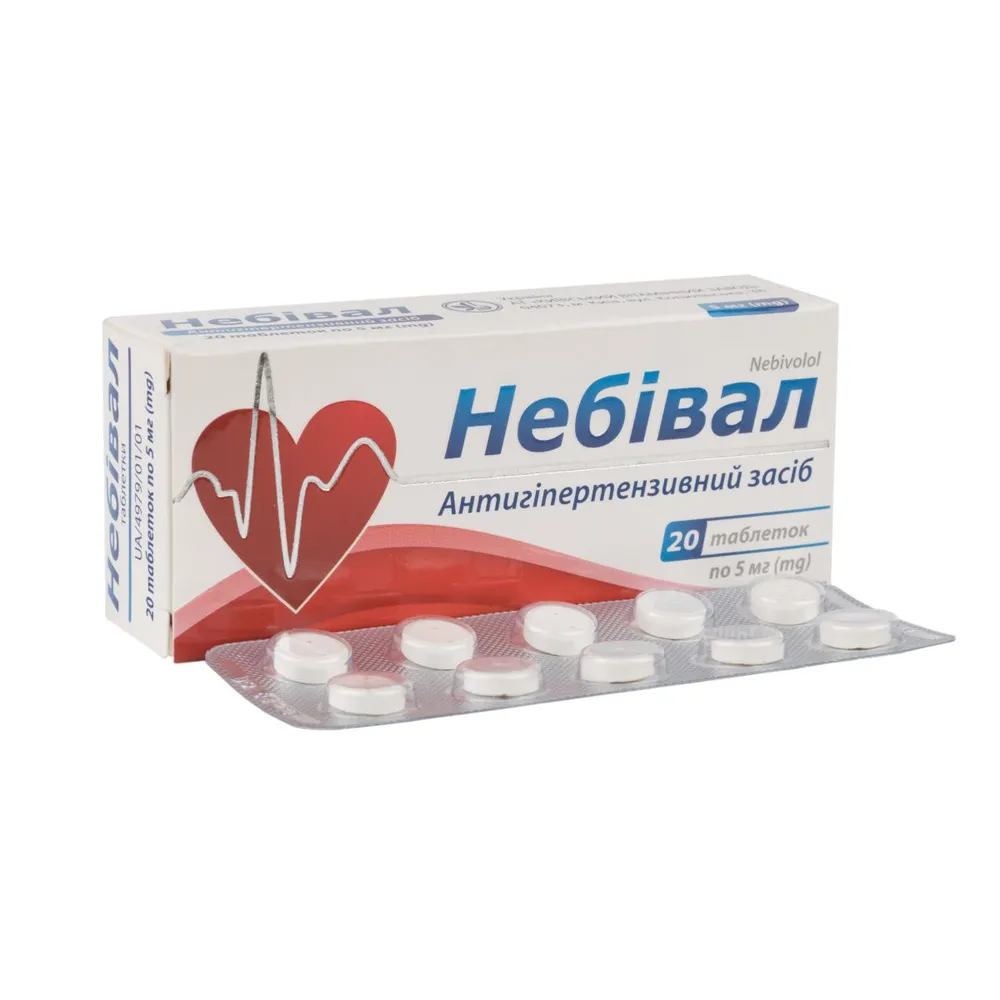
Table of Contents
INSTRUCTIONS FOR MEDICAL USE OF THE MEDICINAL PRODUCT NEBIVAL (NEBIVAL)
Composition:
Active substance: 1 tablet contains nebivolol hydrochloride, equivalent to 5 mg of nebivolol;
Excipients: lactose monohydrate; corn starch; sodium croscarmellose; hypromellose (hydroxypropylmethylcellulose); polysorbate; microcrystalline cellulose; colloidal anhydrous silicon dioxide; magnesium stearate.
Pharmaceutical form. Tablets.
Main physicochemical properties: white or almost white, round-shaped tablets with a flat surface, beveled edges, and two perpendicular intersecting grooves.
Pharmacotherapeutic group. Selective β-adrenoreceptor blockers. ATC code C07AB12.
Pharmacological Properties
Pharmacodynamics
Nebivolol is a racemate consisting of two enantiomers: SRRR-nebivolol (D-nebivolol) and RSSS-nebivolol (L-nebivolol). It combines two pharmacological actions:
- It is a competitive and selective β-receptor antagonist: this effect is attributed to the SRRR-enantiomer (d-enantiomer);
- It has mild vasodilatory properties due to interaction with L-arginine/nitric oxide.
Single and repeated doses of nebivolol reduce heart rate and blood pressure at rest and during exercise in both individuals with normal blood pressure and those with arterial hypertension. The antihypertensive effect is maintained during long-term treatment. At therapeutic doses, α-adrenergic antagonism is not observed. During short-term and long-term treatment with nebivolol in patients with arterial hypertension, systemic vascular resistance is reduced. Despite reduction in heart rate, the decrease in cardiac output at rest and during exercise is limited due to an increase in stroke volume. The clinical significance of this hemodynamic difference compared to other β-adrenoceptor blockers has not yet been fully elucidated. In patients with arterial hypertension, nebivolol enhances the vascular response to acetylcholine (ACh), mediated by nitric oxide; in patients with endothelial dysfunction, this response is diminished.
In mortality-morbidity studies of patients with stable chronic heart failure and reduced left ventricular ejection fraction, nebivolol as a primary medication within standard therapy significantly prolonged the time to death or hospitalization due to cardiovascular disease (primary efficacy endpoint), reducing relative risk. This risk reduction emerged after 6 months of treatment and persisted throughout the treatment period (average duration – 18 months). The effect of nebivolol was independent of age, gender, or left ventricular ejection fraction. In patients treated with nebivolol, a reduction in mortality rates was observed.
In vitro and in vivo experiments in animals showed that nebivolol has no intrinsic sympathomimetic activity. Also, nebivolol at pharmacological doses has no membrane-stabilizing effect.
In healthy volunteers, nebivolol does not significantly affect tolerance to maximal exercise or endurance.
Pharmacokinetics
After oral administration, both enantiomers of nebivolol are rapidly absorbed. Food does not affect the absorption of nebivolol; therefore, it can be taken with or without food.
Nebivolol is completely metabolized, partly forming active hydroxymetabolites. The metabolism of nebivolol occurs via aliphatic or aromatic hydroxylation, N-dealkylation, and glucuronidation; in addition, glucuronides of hydroxymetabolites are formed. The metabolism of nebivolol via hydroxylation is subject to genetic oxidative polymorphism dependent on CYP2D6. The bioavailability of orally administered nebivolol is 12% in individuals with rapid metabolism and is nearly complete in those with slow metabolism. At steady state and with equal dosing, the maximum plasma concentration of unchanged nebivolol in individuals with slow metabolism is approximately 23 times higher than in those with rapid metabolism. However, when considering both unchanged nebivolol and active metabolites, the difference in peak plasma concentrations is only 1.3–1.4 times. Due to differences in the extent of metabolism, the dose of the drug should always be adjusted according to individual patient needs: individuals with slow metabolism may require lower doses.
In individuals with rapid metabolism, the elimination half-life of nebivolol enantiomers averages 10 hours. In individuals with slow metabolism, this value is 3–5 times longer. In individuals with rapid metabolism, the concentration of the RSSS-enantiomer is slightly higher than that of the SRRR-enantiomer. This difference is greater in individuals with rapid metabolism.
In individuals with rapid metabolism, the elimination half-life values of hydroxymetabolites of both enantiomers average 24 hours, while in individuals with slow metabolism, these values are approximately twice as high.
Steady-state plasma levels of nebivolol are achieved within 24 hours in most patients with rapid metabolism, while steady-state levels of hydroxymetabolites are reached over several days.
Plasma concentrations of nebivolol ranging from 1 to 30 mg are dose-proportional. Age does not influence the pharmacokinetics of nebivolol.
In plasma, both enantiomers are predominantly bound to albumin. Plasma protein binding is 98.1% for SRRR-nebivolol and 97.9% for RSSS-nebivolol.
Approximately one week after administration, 38% of the dose is excreted in urine and 48% in feces. Renal excretion of unchanged nebivolol is less than 0.5% of the dose.
Clinical characteristics.
Indications.
Essential arterial hypertension.
Mild to moderate chronic heart failure as an adjunct to standard treatment in patients aged 70 years and older.
Contraindications.
- Hypersensitivity to the active substance or to any of the excipients;
- hepatic insufficiency or hepatic dysfunction;
- acute heart failure, cardiogenic shock, or episodes of heart failure decompensation requiring intravenous administration of agents with positive inotropic effect;
- sinus node dysfunction, including sinoatrial block;
- second- or third-degree atrioventricular (AV) block (without a pacemaker);
- bronchospasm and history of bronchial asthma;
- untreated pheochromocytoma;
- metabolic acidosis;
- bradycardia (heart rate less than 60 beats per minute prior to treatment initiation);
- arterial hypotension (systolic blood pressure less than 90 mm Hg);
- severe peripheral circulatory disorders.
Interaction with other medicinal products and other forms of interaction.
Pharmacodynamic interactions
The information below refers to general interactions with beta-adrenergic blockers.
Concomitant use not recommended:
Class I antiarrhythmic agents (quinidine, hydroquinidine, cibenzoline, flecainide, disopyramide, lidocaine, mexiletine, propafenone): effects on atrioventricular (AV) conduction may be potentiated and negative inotropic effects may be increased (see section "Special precautions for use").
Calcium antagonists of the verapamil/diltiazem type: negative effects on contractility and AV conduction. Intravenous verapamil administration in patients receiving beta-blockers may lead to severe arterial hypotension and atrioventricular (AV) block (see section "Special precautions for use").
Centrally-acting antihypertensive agents (clonidine, guanfacine, moxonidine, methyldopa, rilmenidine): concomitant use of centrally-acting antihypertensive agents may exacerbate heart failure due to reduced central sympathetic tone (decreased heart rate and stroke volume, vasodilation) (see section "Special precautions for use"). Upon abrupt discontinuation, particularly before stopping beta-blocker therapy, the risk of increased blood pressure rises (withdrawal syndrome).
Caution required when used in combination:
Class III antiarrhythmic agents (amiodarone): effects on AV conduction may be enhanced.
Halogenated volatile anesthetics: concomitant use of beta-blockers and anesthetics may suppress reflex tachycardia and increase the risk of hypotension (see section "Special precautions for use"). Abrupt discontinuation of beta-blocker therapy should be avoided. If a patient is taking Nebival, this must be communicated to the anesthesiologist.
Insulin and oral antidiabetic agents: although nebivolol does not affect blood glucose levels, concomitant use may mask certain symptoms of hypoglycemia (palpitations, tachycardia). Concomitant use of beta-blockers with sulfonylurea derivatives increases the risk of severe hypoglycemia (see section "Special precautions for use").
Baclofen (antispastic agent), amifostine (adjunct in anticancer therapy): concomitant use with antihypertensive agents may lead to a significant drop in blood pressure; therefore, the dose of antihypertensive agents should be appropriately adjusted.
Consider when used concomitantly:
Cardiac glycosides (digitalis group): concomitant use may increase AV conduction time. No signs of this interaction were observed in studies. Nebivolol does not affect digoxin kinetics.
Calcium antagonists of the dihydropyridine type (amlodipine, felodipine, lacidipine, nifedipine, nicardipine, nimodipine, nitrendipine): concomitant use increases the risk of hypotension and, in patients with heart failure, may further impair ventricular pump function.
Antipsychotics, antidepressants (tricyclic antidepressants, barbiturates, phenothiazine derivatives): concomitant use may enhance hypotensive effects (additive effect).
Nonsteroidal anti-inflammatory drugs (NSAIDs) do not affect the antihypertensive action of nebivolol.
Sympathomimetics: concomitant use may counteract the antihypertensive effect of beta-blockers. Beta-adrenergic agents may enhance alpha-adrenergic activity of sympathomimetics possessing both alpha- and beta-adrenergic effects (risk of arterial hypertension, severe bradycardia, and heart block).
Pharmacokinetic interactions
Since the CYP2D6 isoenzyme is involved in nebivolol metabolism, concomitant use of medicinal products that inhibit this enzyme (e.g., paroxetine, fluoxetine, thioridazine, quinidine) may increase plasma levels of nebivolol and thereby increase the risk of pronounced bradycardia and adverse reactions.
Concomitant use with cimetidine increases plasma levels of nebivolol but does not alter its clinical efficacy. Concomitant use with ranitidine does not affect nebivolol pharmacokinetics. If Nebival is taken with food and the antacid is taken between meals, both medicinal products may be administered simultaneously.
When nebivolol is used concomitantly with nicardipine, plasma concentrations of both drugs are slightly increased without changes in clinical efficacy.
Concomitant use of alcohol, furosemide, or hydrochlorothiazide does not affect the pharmacokinetics of nebivolol.
Nebivolol does not affect the pharmacokinetics and pharmacodynamics of warfarin.
Special precautions for use.
The warnings listed below generally apply to beta-blockers.
Anesthesia. Maintaining beta-blockade reduces the risk of cardiac rhythm disturbances during induction of anesthesia and intubation. If beta-blockade needs to be discontinued prior to surgery, beta-adrenoreceptor blockers should be stopped at least 24 hours beforehand.
Use of certain anesthetics that cause myocardial depression requires caution. Vagal reactions in the patient can be prevented by intravenous administration of atropine.
Cardiovascular system. Generally, beta-adrenoreceptor blockers should not be administered to patients with untreated chronic heart failure (CHF) until their condition becomes stable.
Beta-blocker therapy should be discontinued gradually in patients with ischemic heart disease, over a period of 1–2 weeks. If necessary, replacement therapy should be initiated simultaneously to prevent exacerbation of angina.
Beta-adrenoreceptor blockers may cause bradycardia. If resting heart rate decreases to 50–55 beats per minute and/or symptoms of bradycardia develop, dose reduction is recommended.
Beta-adrenoreceptor blockers should be used with caution in:
- Patients with peripheral circulatory disorders (Raynaud's disease or syndrome, intermittent claudication), as these conditions may worsen;
- Patients with first-degree atrioventricular block due to the negative effect of beta-adrenoreceptor blockers on conduction;
- Patients with Prinzmetal's angina due to unopposed α-adrenoreceptor-mediated coronary artery vasoconstriction: beta-adrenoreceptor blockers may increase the frequency and duration of angina attacks.
Combination of nebivolol with calcium antagonists of the verapamil and diltiazem type, antiarrhythmic agents of class I, and centrally acting antihypertensive agents is not recommended (see detailed information in section "Interaction with other medicinal products and other forms of interaction").
Metabolism and endocrine system. Nebivolol does not affect blood glucose levels in patients with diabetes mellitus. Nevertheless, caution is required when administering it to such patients, as nebivolol may mask certain symptoms of hypoglycemia (tachycardia, palpitations). Beta-blockers may additionally increase the risk of severe hypoglycemia when used concomitantly with sulfonylurea derivatives. Patients with diabetes mellitus should be advised to carefully monitor blood glucose levels (see section "Interaction with other medicinal products and other forms of interaction").
Respiratory system. Beta-adrenoblockers should be used with caution in patients with chronic obstructive airway diseases, as bronchoconstriction may be exacerbated.
Other. Beta-adrenoreceptor blockers should be prescribed to patients with a history of psoriasis only after careful assessment of the benefit-risk ratio.
Beta-adrenoreceptor blockers may increase sensitivity to allergens and the severity of anaphylactic reactions.
Monitoring of the patient's condition is required at the beginning of treatment with nebivolol for chronic heart failure (see also section "Posology and method of administration").
Treatment should not be abruptly discontinued without urgent need (see also section "Posology and method of administration").
The medicinal product contains lactose and therefore should not be used in patients with hereditary galactose intolerance, lactase deficiency, or glucose-galactose malabsorption syndrome.
Use during pregnancy or breastfeeding.
Pregnancy. Nebivolol has pharmacological effects that may adversely affect pregnancy and/or the fetus/neonate. In general, beta-blockers reduce placental circulation, which has been associated with intrauterine growth retardation, intrauterine death, abortion, and premature delivery. Adverse effects (e.g., hypoglycemia and bradycardia) may occur in the fetus and newborn. If beta-blocker therapy is necessary, β1-selective beta-adrenoblockers are preferred.
Nebivolol should not be used during pregnancy unless clearly needed. If treatment with nebivolol is considered necessary, uteroplacental circulation and fetal growth should be monitored. If harmful effects on pregnancy or the fetus are observed, alternative therapy should be considered. Newborns should be closely monitored. Hypoglycemia and bradycardia are expected to occur within the first three days of life.
Breastfeeding period. Animal studies have shown that nebivolol passes into breast milk. It is unknown whether this substance passes into human breast milk. Most beta-blockers, particularly lipophilic compounds such as nebivolol and its active metabolites, pass into breast milk to varying degrees. Therefore, breastfeeding during nebivolol treatment is not recommended.
Ability to influence reaction speed while driving or operating machinery.
Studies on the effect of nebivolol on reaction speed while driving or operating machinery have not been conducted. Available data suggest that nebivolol does not affect psychomotor function. However, dizziness and fatigue may occasionally occur; therefore, caution should be exercised when driving or operating machinery.
Method of Administration and Dosage.
Administer orally. Tablets may be taken with food.
Arterial Hypertension.
For adult patients, administer 1 tablet of Nebival (5 mg nebivolol) once daily; it is advisable to take it at the same time each day. The antihypertensive effect becomes evident within 1–2 weeks of treatment, although optimal response may sometimes be observed only after 4 weeks.
Combination with other antihypertensive agents.
β-blockers can be used both as monotherapy and in combination with other antihypertensive drugs. To date, an additional antihypertensive effect has been observed only when Nebival (5 mg nebivolol) is combined with 12.5–25 mg hydrochlorothiazide.
Patients with renal impairment.
For patients with renal impairment, the recommended initial dose is 2.5 mg once daily. If necessary, the daily dose may be increased to 5 mg.
Patients with hepatic impairment.
Data on the use of Nebival in patients with hepatic impairment or impaired liver function are limited. Therefore, the use of Nebival in such patients is contraindicated.
Elderly patients.
For patients aged over 65 years, the recommended initial dose is 2.5 mg once daily. If necessary, the dose may be increased to 5 mg. However, due to limited experience with use in patients aged over 75 years, administration requires caution and careful monitoring.
Chronic Heart Failure.
Treatment of chronic heart failure should begin with gradual dose titration until the individual optimal maintenance dose is reached. This medication should be prescribed to patients who have chronic heart failure without episodes of acute decompensation within the past 6 weeks. It is recommended that the prescribing physician has experience in managing chronic heart failure. Patients already receiving cardiovascular medications, including diuretics, digoxin, angiotensin-converting enzyme (ACE) inhibitors, or angiotensin II receptor antagonists, should have been on stable doses of these medications for at least the past 2 weeks before initiating therapy with Nebival.
Initial dose titration should follow the scheme below, maintaining intervals of 1 to 2 weeks and assessing patient tolerance at each step: start with 1.25 mg nebivolol once daily, increase to 2.5 mg once daily, then to 5 mg once daily, and subsequently to 10 mg once daily. The maximum recommended dose is 10 mg nebivolol once daily. At the beginning of treatment and after each dose increase, the patient should remain under the supervision of an experienced physician for at least 2 hours to ensure clinical stability (particularly regarding blood pressure, heart rate, myocardial conduction disturbances, and worsening symptoms of heart failure). The occurrence of adverse effects may prevent reaching the maximum recommended dose. If necessary, the achieved dose may be reduced stepwise or readjusted.
If symptoms of heart failure worsen or the drug is not tolerated during the titration phase, it is recommended to first reduce the dose of nebivolol or, if necessary, discontinue the drug immediately (in cases of severe hypotension, worsening heart failure symptoms with acute pulmonary edema, cardiogenic shock, symptomatic bradycardia, or AV block).
Generally, treatment of stable chronic heart failure with nebivolol is long-term.
Nebivolol therapy should not be discontinued abruptly, as this may lead to a temporary worsening of heart failure. If discontinuation is necessary, the dose should be tapered gradually by halving it every week over a 1-week interval.
Patients with renal impairment.
Since dose titration to the maximum tolerated dose is individualized, dose adjustment is not required in patients with mild to moderate renal impairment. There is no experience with the use of the drug in patients with severe renal impairment (serum creatinine level ≥ 250 µmol/L); therefore, the use of nebivolol in such patients is not recommended.
Patients with hepatic impairment.
Limited data are available on the use of the drug in patients with hepatic impairment. Therefore, the use of Nebival in these patients is contraindicated.
Elderly patients.
Since dose titration to the maximum tolerated dose is individualized, dose adjustment is not required.
Children.
The efficacy and safety of the drug in children and adolescents (under 18 years of age) have not been studied. Data are unavailable. Therefore, use in children and adolescents (under 18 years of age) is not recommended.
Overdose.
Symptoms. Symptoms of β-blocker overdose include bradycardia, hypotension, bronchospasm, and acute heart failure.
Treatment. In case of overdose or development of hypersensitivity reactions, continuous patient monitoring and treatment in an intensive care unit are required. Blood glucose levels should be monitored. Gastric lavage, activated charcoal, and laxatives may prevent further absorption of any drug remaining in the gastrointestinal tract. Mechanical ventilation may also be necessary. For treatment of bradycardia or increased vagal tone, administration of atropine or methylatropine is recommended. Treatment of hypotension and shock should be performed using plasma/plasma substitutes and, if necessary, catecholamines.
β-blocking effects can be reversed by slow intravenous infusion of isoprenaline hydrochloride, starting at 5 µg/min, or dobutamine, starting at 2.5 µg/min, titrated to achieve the desired effect. In resistant cases, isoprenaline may be combined with dopamine. If this is ineffective, intravenous glucagon may be administered at a dose of 50–100 µg/kg. Repeat the injection within one hour if needed, and subsequently, if required, initiate intravenous glucagon infusion at 70 µg/kg/hour. In extreme cases of therapy-resistant bradycardia, a temporary pacemaker may be implanted.
Side effects.
Adverse reactions in arterial hypertension and chronic heart failure are listed separately due to differences in the underlying pathological processes associated with these diseases.
Arterial hypertension.
Immune system disorders: angioedema, hypersensitivity.
Psychiatric disorders: nightmares, depression.
Nervous system disorders: headache, dizziness, paresthesia; syncope.
Eye disorders: visual disturbance.
Cardiac disorders: bradycardia, heart failure, slowed atrioventricular conduction/atrioventricular block; arterial hypotension, worsening of intermittent claudication.
Respiratory, thoracic and mediastinal disorders: dyspnea; bronchospasm.
Gastrointestinal disorders: constipation, nausea, diarrhea; dyspepsia, flatulence, vomiting.
Skin and subcutaneous tissue disorders: pruritus, erythematous skin rash; exacerbation of psoriasis, urticaria.
Reproductive system and breast disorders: impotence.
General disorders and administration site conditions: increased fatigue, edema.
In addition, the following adverse reactions have been reported with some β-blockers: hallucinations, psychosis, confusion, cold extremities/cyanosis, Raynaud's syndrome, dry eyes, and ocular-mucocutaneous toxicity of the practolol type.
Chronic heart failure.
The most commonly reported side effects in patients treated with nebivolol were bradycardia and dizziness.
Adverse reactions potentially related to the drug and considered characteristic and significant during treatment of chronic heart failure include: worsening of heart failure, orthostatic hypotension, nebivolol intolerance, first-degree atrioventricular block, lower limb edema.
Shelf life. 3 years.
Storage conditions.
Store in the original packaging at a temperature not exceeding 25 °C.
Keep out of reach of children.
Packaging.
10 tablets in a blister; 2 blisters per carton.
10 tablets in a blister; 3 blisters per carton.
10 tablets in a blister; 8 blisters per carton.
Prescription category. Prescription only.
Manufacturer. JSC "KYIV VITAMIN PLANT".
Manufacturer's address and location of business activity.
38, Kopilivska Street, Kyiv, 04073, Ukraine.
Web-site: www.vitamin.com.ua