Nebilet® plus 5/12.5
Ukraine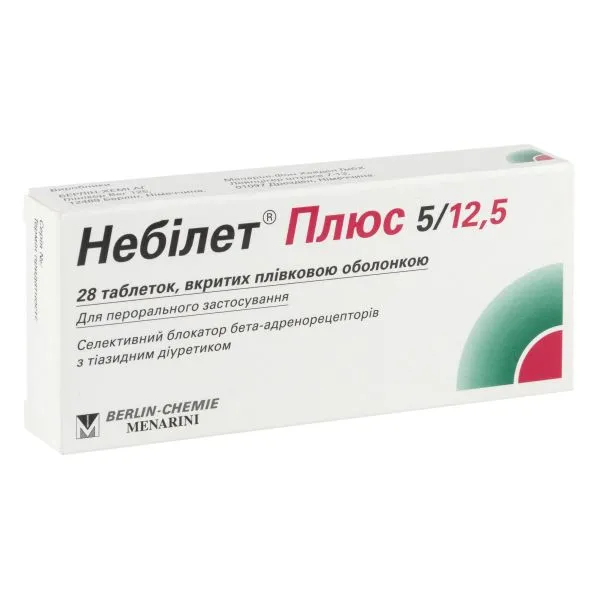
Table of Contents
APPROVED |
Order of the Ministry of Health |
of Ukraine |
|
Registration Certificate |
№ UA/15245/01/01 |
INSTRUCTIONS FOR MEDICAL USE OF THE MEDICINAL PRODUCT NEBILET® PLUS 5/12.5 (NEBILET® PLUS 5/12.5)
Composition:
Active substances: nebivolol, hydrochlorothiazide;
One film-coated tablet contains nebivolol (as nebivolol hydrochloride) 5 mg and hydrochlorothiazide 12.5 mg;
Excipients: polysorbate 80, hypromellose, lactose monohydrate, maize starch, sodium croscarmellose, microcrystalline cellulose, colloidal anhydrous silicon dioxide, magnesium stearate;
Coating: hypromellose, microcrystalline cellulose, macrogol stearate, titanium dioxide (E 171), carmine acid (E 120).
Pharmaceutical form. Film-coated tablets.
Main physicochemical properties: almost pink, round, slightly biconvex film-coated tablets, with "5/12.5" embossed on one side and a score line on the other. The score line is intended solely for breaking the tablet to facilitate swallowing and is not intended for dividing the tablet into equal doses.
Pharmacotherapeutic group.
Selective beta-adrenoreceptor blockers with thiazide diuretics.
ATC code C07B B12.
Pharmacological properties.
Pharmacodynamics.
Nebilet® Plus 5/12.5 is a combination of nebivolol, a selective beta-receptor antagonist, and hydrochlorothiazide, a thiazide diuretic. The combination of these ingredients has an additive antihypertensive effect and reduces arterial pressure to a greater extent than each individual component.
Nebivolol is a racemate consisting of two enantiomers: SRRR-nebivolol (D-nebivolol) and RSSS-nebivolol (L-nebivolol). It combines two pharmacological properties:
- nebivolol is a competitive and selective β1-adrenoceptor blocker: this effect is attributed to the SRRR-enantiomer (D-enantiomer);
- it has mild vasodilating properties due to interaction with L-arginine/nitric oxide.
After single and repeated administration, nebivolol reduces heart rate and arterial pressure at rest and during exercise in both patients with normal arterial pressure and in patients with arterial hypertension. The antihypertensive effect is maintained during long-term treatment.
At therapeutic doses, nebivolol lacks α-adrenergic antagonism.
During short- and long-term treatment with nebivolol in patients with arterial hypertension, systemic vascular resistance decreases. Despite the reduction in heart rate, the decrease in cardiac output at rest and during exercise may be limited due to an increase in stroke volume. The clinical significance of this hemodynamic difference compared to other β1-adrenoceptor blockers has not yet been fully studied.
In patients with arterial hypertension, nebivolol enhances the nitric oxide-mediated vascular response to acetylcholine, which is reduced in patients with endothelial dysfunction.
In vitro and in vivo animal studies have shown that nebivolol has no intrinsic sympathomimetic activity.
In vitro and in vivo animal studies have shown that at pharmacological doses, nebivolol has no membrane-stabilizing activity.
In healthy volunteers, nebivolol does not significantly affect the ability to tolerate maximal physical exertion or endurance.
Hydrochlorothiazide is a thiazide diuretic. Thiazides affect renal tubular mechanisms of electrolyte reabsorption, directly increasing the excretion of sodium and chloride in approximately equal amounts. The diuretic effect of hydrochlorothiazide reduces plasma volume, increases plasma renin activity, and enhances aldosterone secretion, leading to increased urinary loss of potassium and bicarbonate and decreased serum potassium levels. After administration, diuresis begins approximately 2 hours after intake, the peak effect occurs about 4 hours after dosing, and the duration of action lasts approximately 6–12 hours.
Non-melanoma skin cancer (NMSC). Epidemiological data have shown an association between cumulative hydrochlorothiazide dose and the development of NMSC. One study included 71,533 patients with basal cell carcinoma (BCC) and 8,629 patients with squamous cell carcinoma (SCC), compared with 1,430,833 and 172,462 control group participants, respectively. High-dose hydrochlorothiazide use (cumulative ≥ 50,000 mg) was associated with an adjusted odds ratio (OR) of 1.29 (95% confidence interval (CI): 1.23–1.35) for BCC and 3.98 (95% CI: 3.68–4.31) for SCC. A clear dose-response relationship was observed for both BCC and SCC. Another study showed a possible association between lip cancer (SCC) and hydrochlorothiazide: 633 patients with lip cancer were compared with 63,067 control group participants using a risk-adjusted sampling strategy. A dose-response relationship was demonstrated: the adjusted OR was 2.1 (95% CI: 1.7–2.6), increasing to OR 3.9 (3.0–4.9) with high doses (~25,000 mg) and OR 7.7 (5.7–10.5) at the highest cumulative dose (~100,000 mg) (see also section "Special precautions for use").
Pharmacokinetics.
Concomitant administration of nebivolol and hydrochlorothiazide does not affect the bioavailability of either active ingredient. The combined tablet is bioequivalent to the co-administration of the individual components.
Nebivolol.
Absorption.
After oral administration, both enantiomers of nebivolol are rapidly absorbed. Food does not affect the absorption of nebivolol; therefore, nebivolol can be taken independently of meals.
The bioavailability of orally administered nebivolol is on average 12% in patients with rapid metabolism and is nearly complete in patients with slow metabolism. At steady state and at equivalent doses, the peak plasma concentration of unchanged nebivolol is approximately 23 times higher in patients with slow metabolism than in those with rapid metabolism. However, when considering unchanged drug and active metabolites, the difference in peak plasma concentrations is only 1.3–1.4 times. Due to differences in metabolic rate, nebivolol dosing must always be individualized: patients with slow metabolism may require lower doses.
Plasma concentrations ranging from 1 to 30 mg are dose-proportional. Age does not influence the pharmacokinetics of nebivolol.
Distribution.
In plasma, both enantiomers of nebivolol are predominantly bound to albumin. Plasma protein binding is 98.1% for SRRR-nebivolol and 97.9% for RSSS-nebivolol.
Metabolism.
Nebivolol is extensively metabolized, partly into active hydroxymetabolites. Nebivolol undergoes aliphatic and aromatic hydroxylation, N-dealkylation, and glucuronidation; glucuronides of hydroxymetabolites are also formed. The metabolism of nebivolol via aromatic hydroxylation is dependent on the genetic oxidative polymorphism of CYP2D6.
Elimination.
In patients with rapid metabolism, the elimination half-life of nebivolol enantiomers is approximately 10 hours. In patients with slow metabolism, it is 3–5 times longer. In patients with rapid metabolism, plasma levels of the RSSS-enantiomer are slightly higher than those of the SRRR-enantiomer. This difference increases in patients with slow metabolism. In patients with rapid metabolism, the elimination half-life of hydroxymetabolites of both enantiomers averages 24 hours, while in patients with slow metabolism, it is prolonged by almost twice.
Steady-state plasma levels of nebivolol are reached within 24 hours in most patients (with rapid metabolism), while levels of hydroxymetabolites are achieved after several days.
Within one week after administration, 38% of the dose is excreted in urine and 48% in feces. Less than 0.5% of the dose is excreted unchanged in urine.
Hydrochlorothiazide.
Absorption.
Hydrochlorothiazide is well absorbed (65–75%) after oral administration. Plasma concentrations are linearly related to the administered dose. Absorption of hydrochlorothiazide depends on intestinal transit time: it increases when intestinal transit is slow, for example, when taken with food. Plasma half-life varied between 5.6 and 14.8 hours when plasma levels were monitored for at least 24 hours, and peak plasma concentrations were reached within 1–5 hours after dosing.
Distribution.
Hydrochlorothiazide is 68% bound to plasma proteins, with a volume of distribution of 0.83–1.14 L/kg. Hydrochlorothiazide crosses the placenta but does not cross the blood-brain barrier.
Metabolism.
Hydrochlorothiazide undergoes minimal metabolism. Almost all of the drug is excreted unchanged in urine.
Elimination.
Hydrochlorothiazide is primarily excreted by the kidneys. Within 3–6 hours after oral administration, more than 95% of hydrochlorothiazide is found unchanged in urine. In patients with renal impairment, plasma concentrations of hydrochlorothiazide are increased and the elimination half-life is prolonged.
Preclinical safety data.
Preclinical safety data on the combination of nebivolol and hydrochlorothiazide revealed no special hazard for humans, based on conventional studies of pharmacological safety, repeated-dose toxicity, genotoxicity, and carcinogenic potential of the individual components.
Clinical characteristics.
Indications.
Treatment of essential hypertension.
The fixed-dose combination medicinal product Nebilet® Plus 5/12.5 is indicated for patients whose blood pressure is adequately controlled with concomitant administration of 5 mg nebivolol and 12.5 mg hydrochlorothiazide.
Contraindications.
-
Hypersensitivity to the active substances or to any of the excipients listed in the section "Composition";
-
hypersensitivity to other sulfonamide-derived substances (since hydrochlorothiazide is a sulfonamide derivative);
-
hepatic insufficiency or impairment of liver function;
-
anuria, severe renal impairment (creatinine clearance less than 30 mL/min);
-
acute heart failure, cardiogenic shock, or episodes of decompensated heart failure requiring intravenous administration of agents with positive inotropic effect;
-
sinus node dysfunction, including sinoatrial block;
-
second- and third-degree atrioventricular block (without implanted pacemaker);
-
bradycardia (heart rate less than 60 beats per minute prior to treatment initiation);
-
arterial hypotension (systolic blood pressure less than 90 mmHg);
-
severe peripheral circulatory disorders;
-
bronchospasm and history of bronchial asthma;
-
untreated phaeochromocytoma;
-
metabolic acidosis;
-
refractory hypokalaemia, hypercalcaemia, hyponatraemia, and symptomatic hyperuricaemia.
Interaction with other medicinal products and other forms of interaction.
Pharmacodynamic interactions.
Nebivolol.
The interactions listed below apply to beta-adrenergic receptor antagonists in general.
Combinations not recommended.
Class I antiarrhythmic agents (quinidine, hydroquinidine, cibenzoline, flecainide, disopyramide, lidocaine, mexiletine, propafenone). May enhance effects on atrioventricular conduction time and increase negative inotropic effect (see section "Special precautions for use").
Calcium channel blockers of verapamil/diltiazem type. Negative effects on contractility and atrioventricular conduction. Intravenous administration of verapamil to patients receiving beta-blockers may lead to severe hypotension and atrioventricular block (see section "Special precautions for use").
Centrally-acting antihypertensive agents (clonidine, guanfacine, moxonidine, methyldopa, rilmenidine). Concomitant use of centrally-acting antihypertensive agents may worsen heart failure due to reduction in central sympathetic tone (decreased heart rate and cardiac output, vasodilation) (see section "Special precautions for use"). Abrupt withdrawal, particularly prior to discontinuation of beta-blockers, may increase the risk of "rebound" hypertension.
Combinations to be used with caution.
Class III antiarrhythmic agents (amiodarone). May potentiate effects on atrioventricular conduction time.
Volatile halogenated anaesthetics. Concomitant use of beta-adrenergic receptor blockers and anaesthetics may impair reflex tachycardia and increase the risk of arterial hypotension (see section "Special precautions for use"). As a general rule, abrupt discontinuation of beta-blocker therapy should be avoided. The anaesthesiologist must be informed if the patient is receiving Nebilet® Plus 5/12.5.
Insulin and oral antidiabetic agents. Although nebivolol does not affect glucose levels, concomitant use may mask certain symptoms of hypoglycaemia (e.g., palpitations, tachycardia). Concomitant use of beta-blockers with sulfonylurea derivatives may increase the risk of severe hypoglycaemia (see section "Special precautions for use").
Baclofen (antispastic agent), amifostine (adjunct in anticancer therapy). Concomitant use with antihypertensive agents may significantly reduce blood pressure; therefore, the dose of the antihypertensive agent should be adjusted accordingly.
Combinations to be considered.
Digitalis glycosides. Concomitant use may increase atrioventricular conduction time. Clinical trials of nebivolol have not demonstrated any clinical evidence of interaction. Nebivolol does not affect digoxin kinetics.
Calcium antagonists of dihydropyridine type (amlodipine, felodipine, lacidipine, nifedipine, nicardipine, nimodipine, nitrendipine). Concomitant use may increase the risk of arterial hypotension; an increased risk of further deterioration in ventricular pump function in patients with heart failure cannot be excluded.
Antipsychotics, antidepressants (tricyclic agents, barbiturates, and phenothiazines). Concomitant use may enhance the hypotensive effect of beta-blockers (additive effect).
Non-steroidal anti-inflammatory drugs (NSAIDs). Do not affect the blood pressure-lowering effect of nebivolol.
Sympathomimetic agents. Concomitant use may counteract the effects of beta-adrenergic receptor blockers. Beta-adrenergic agents may lead to unopposed alpha-adrenergic activity of sympathomimetics with both alpha- and beta-adrenergic effects (risk of arterial hypertension, severe bradycardia, and heart block).
Hydrochlorothiazide.
Potential interactions related to hydrochlorothiazide.
Concomitant use not recommended.
Lithium. Thiazides reduce renal clearance of lithium; therefore, the risk of lithium toxicity may increase when used concomitantly with hydrochlorothiazide. Hence, use of Nebilet® Plus 5/12.5 in combination with lithium is not recommended. If such combination is considered necessary, careful monitoring of serum lithium levels is recommended.
Medicinal products affecting potassium levels. The potassium-lowering effect of hydrochlorothiazide may be enhanced when used concomitantly with other medicinal products associated with potassium loss and hypokalaemia (e.g., other potassium-wasting diuretics, laxatives, corticosteroids, ACTH, amphotericin, carbenoxolone, sodium penicillin G, or salicylate derivatives). Therefore, such concomitant use is not recommended.
Concomitant use requiring caution.
Non-steroidal anti-inflammatory drugs (NSAIDs). NSAIDs (e.g., acetylsalicylic acid (> 3 g/day), COX-2 inhibitors, and non-selective NSAIDs) may reduce the antihypertensive effect of thiazide diuretics.
Calcium salts. Thiazide diuretics may increase serum calcium levels due to reduced excretion. If calcium supplements are required, serum calcium levels should be monitored and adjusted accordingly.
Digitalis glycosides. Hypokalaemia or hypomagnesaemia induced by thiazides may predispose to digitalis-induced cardiac arrhythmias.
Medicinal products affected by changes in serum potassium levels. Periodic monitoring of serum potassium and ECG is recommended when Nebilet® Plus 5/12.5 is used concomitantly with medicinal products affected by changes in serum potassium levels (e.g., digitalis glycosides and antiarrhythmic agents) and with the following agents that may induce torsades de pointes (ventricular tachycardia) (including certain antiarrhythmics), since hypokalaemia is a predisposing factor for torsades de pointes (ventricular tachycardia):
- Class Ia antiarrhythmics (e.g., quinidine, hydroquinidine, disopyramide);
- Class III antiarrhythmics (e.g., amiodarone, sotalol, dofetilide, ibutilide);
- certain antipsychotics (e.g., thioridazine, chlorpromazine, levomepromazine, trifluoperazine, zuclopenthixol, sulpiride, sultopride, amisulpride, tiapride, pimozide, haloperidol, droperidol);
- others (e.g., bepridil, cisapride, difemanil, intravenous erythromycin, halofantrine, mizolastine, pentamidine, sparfloxacin, terfenadine, intravenous vinca alkaloids).
Non-depolarizing skeletal muscle relaxants (e.g., tubocurarine). Hydrochlorothiazide may potentiate the effect of non-depolarizing skeletal muscle relaxants.
Antidiabetic medicinal products (oral agents and insulin). Thiazide treatment may affect glucose tolerance. Dose adjustment of the antidiabetic agent may be required (see section "Special precautions for use").
Metformin. Metformin should be used with caution due to the risk of lactic acidosis associated with possible renal impairment related to hydrochlorothiazide use.
Beta-blockers and diazoxide. Thiazides may enhance the hyperglycaemic effect of beta-blockers (other than nebivolol) and diazoxide.
Pressor amines (e.g., noradrenaline). The pressor effect may be reduced.
Medicinal products used for treatment of gout (probenecid, sulfinpyrazone, allopurinol). Dose adjustment of uric acid-lowering agents may be necessary, as hydrochlorothiazide may increase serum uric acid levels. Higher doses of probenecid or sulfinpyrazone may be required. Concomitant use of thiazides may increase the frequency of hypersensitivity reactions to allopurinol.
Amantadine. Thiazides may increase the risk of adverse effects induced by amantadine.
Salicylates. In case of high-dose salicylate use, hydrochlorothiazide may enhance their toxic effects on the central nervous system.
Cyclosporine. Concomitant treatment with cyclosporine may increase the risk of hyperuricaemia and gout-like complications.
Iodinated contrast agents. In case of diuretic-induced dehydration, there is an increased risk of acute renal failure, especially with high iodine doses. Rehydration of the patient should be performed prior to administration.
Potential interactions due to both nebivolol and hydrochlorothiazide.
Concomitant use to be considered.
Other antihypertensive agents. Concomitant treatment with other antihypertensive agents may result in additive hypotensive effects or potentiation of their action.
Antipsychotics, tricyclic antidepressants, barbiturates, narcotic drugs, and alcohol. Concomitant use of Nebilet® Plus 5/12.5 with these medicinal products may enhance the hypotensive effect and/or lead to postural hypotension.
Pharmacokinetic interactions.
Nebivolol.
Since the CYP2D6 isoenzyme is involved in the metabolism of nebivolol, concomitant use with substances that inhibit this enzyme, such as paroxetine, fluoxetine, thioridazine, and quinidine, may lead to increased plasma levels of nebivolol, increasing the risk of excessive bradycardia and adverse effects.
Concomitant administration of cimetidine increases plasma levels of nebivolol without changing the clinical effect. Concomitant use of ranitidine does not affect the pharmacokinetics of nebivolol. Nebilet® Plus 5/12.5 may be administered with food, and antacids may be taken between meals.
Combination of nebivolol with nicardipine slightly increases plasma levels of both drugs without changing the clinical effect. Concomitant use of alcohol, furosemide, or hydrochlorothiazide does not affect the pharmacokinetics of nebivolol. Nebivolol does not affect the pharmacokinetics or pharmacodynamics of warfarin.
Hydrochlorothiazide.
Absorption of hydrochlorothiazide is impaired in the presence of anion-exchange resins (e.g., cholestyramine and colestipol resins).
Cytotoxic agents. When hydrochlorothiazide is used concomitantly with cytotoxic agents (e.g., cyclophosphamide, fluorouracil, methotrexate), increased bone marrow toxicity (e.g., development of granulocytopenia) should be expected.
Special precautions for use.
All warnings relating to each component individually, as stated below, should also apply to the fixed-dose combination medicinal product Nebilet® Plus 5/12.5. See also section "Adverse reactions".
Nebivolol.
The warnings and precautions listed below apply to beta-adrenoceptor blockers in general.
Anaesthesia. Maintaining beta-blockade reduces the risk of arrhythmias during induction of anaesthesia and intubation. If beta-blockade is to be discontinued prior to surgery, beta-adrenoceptor blockers should be withdrawn at least 24 hours beforehand.
Caution should be exercised with certain anaesthetics that cause myocardial depression.
Vagal reactions can be prevented by intravenous administration of atropine.
Cardiovascular disorders. In general, beta-adrenoceptor blockers should not be administered to patients with untreated congestive heart failure (CHF), unless their condition has been stabilised.
Patients with ischaemic heart disease should be gradually withdrawn from beta-adrenoceptor blocker therapy over a period of 1–2 weeks. If necessary, replacement therapy should be initiated concomitantly to prevent exacerbation of angina.
Beta-adrenergic receptor antagonists may cause bradycardia: if the pulse rate falls below 50–55 beats/min at rest and/or if the patient experiences symptoms indicative of bradycardia, the dosage should be reduced.
Beta-adrenergic receptor antagonists should be used with caution:
- in patients with peripheral circulatory disorders (Raynaud's disease or intermittent claudication), as these disorders may be exacerbated;
- in patients with first-degree atrioventricular block due to the negative effect of beta-blockers on conduction time;
- in patients with Prinzmetal's angina due to coronary artery spasm resulting from alpha-receptor activation in the background of beta-receptor blockade: beta-adrenoceptor blockers may increase the frequency and duration of angina attacks.
In general, combination of nebivolol with calcium channel blockers of the verapamil and diltiazem type, class I antiarrhythmic agents, and centrally acting antihypertensive agents is not recommended; for detailed information, see section "Interaction with other medicinal products and other forms of interaction".
Metabolic/Endocrine disorders. Nebivolol does not affect glucose levels in diabetics. However, caution is required in diabetic patients, as nebivolol may mask certain symptoms of hypoglycaemia (tachycardia, palpitations).
Beta-blockers, when used concomitantly with sulphonylurea derivatives, may further increase the risk of severe hypoglycaemia. Patients with diabetes should be advised to carefully monitor their blood glucose levels (see section "Interaction with other medicinal products and other forms of interaction").
Beta-adrenoceptor blockers may mask symptoms of tachycardia in hyperthyroidism. Abrupt withdrawal may exacerbate symptoms.
Respiratory disorders. Beta-adrenergic receptor antagonists should be used with caution in patients with chronic obstructive pulmonary disorders, as airway obstruction may worsen.
Other. Beta-adrenergic receptor antagonists should be used only after careful assessment of benefit-risk ratio in patients with a history of psoriasis.
Beta-adrenergic receptor antagonists may increase sensitivity to allergens and the severity of anaphylactic reactions.
Hydrochlorothiazide.
Renal disorders. Optimal benefit from thiazide diuretics can be expected only in the absence of renal impairment. In patients with kidney disease, thiazides may increase azotemia. Cumulative effects of this active substance may occur in patients with impaired renal function. If there is clear progression of renal dysfunction, as indicated by rising non-protein nitrogen levels, therapy should be carefully re-evaluated with regard to discontinuation of the diuretic.
Metabolic and endocrine effects. Thiazide therapy may impair glucose tolerance. Adjustment of insulin or oral hypoglycaemic agent dosage may be required (see section "Interaction with other medicinal products and other forms of interaction"). Latent diabetes mellitus may become apparent during thiazide therapy.
Thiazide diuretic therapy has been associated with increased levels of cholesterol and triglycerides. Thiazide therapy may accelerate hyperuricaemia and/or gout in some patients.
Electrolyte imbalance. Serum electrolytes should be monitored periodically in any patient receiving diuretic therapy.
Thiazides, including hydrochlorothiazide, may cause disturbances in fluid or electrolyte balance (hypokalaemia, hyponatraemia, and hypochloraemic alkalosis). Warning signs of fluid or electrolyte imbalance include dry mouth, thirst, weakness, lethargy, drowsiness, restlessness, muscle pain or cramps, muscle fatigue, hypotension, oliguria, tachycardia, and gastrointestinal disturbances such as nausea or vomiting.
The risk of hypokalaemia is highest in patients with liver cirrhosis, those with rapid diuresis, those with inadequate oral electrolyte intake, and those receiving concomitant therapy with corticosteroids or ACTH (see section "Interaction with other medicinal products and other forms of interaction"). The risk of hypokalaemia is particularly high in patients with QT prolongation syndrome, whether congenital or drug-induced. Hypokalaemia increases the cardiotoxicity of digoxin glycosides and the risk of cardiac arrhythmias. More frequent monitoring of plasma potassium is recommended for patients at risk of hypokalaemia, beginning in the first week of therapy.
Hyponatraemia due to dilution may occur in hot weather in patients prone to oedema. Chloride deficiency is usually mild and generally does not require treatment.
Thiazides may reduce calcium excretion in urine and may cause transient and slight increases in serum calcium in the absence of established disorders of calcium metabolism. Marked hypercalcaemia may be a sign of occult hyperparathyroidism. Thiazide administration should be discontinued before testing parathyroid function.
Thiazides have been shown to increase urinary excretion of magnesium, which may lead to hypomagnesaemia.
Systemic lupus erythematosus. Exacerbation or activation of systemic lupus erythematosus has been reported during thiazide therapy.
Anti-doping test. Hydrochlorothiazide contained in this medicinal product may lead to a positive anti-doping test result.
Other. Hypersensitivity reactions may occur in patients with or without a history of allergy or bronchial asthma.
Photosensitivity reactions have rarely been reported with thiazide diuretics (see section "Adverse reactions"). If photosensitivity reactions occur during treatment, therapy should be discontinued. If re-initiation of treatment is considered necessary, protection of exposed skin from sunlight or artificial UV light is recommended.
Protein-bound iodine. Thiazides may reduce levels of protein-bound iodine without signs of thyroid dysfunction.
Non-melanoma skin cancer (NMSC). In two epidemiological studies based on data from the Danish National Cancer Registry, increasing cumulative doses of hydrochlorothiazide were associated with an increased risk of NMSC (basal cell carcinoma (BCC) and squamous cell carcinoma (SCC)). The photosensitising effects of hydrochlorothiazide may represent a possible mechanism for NMSC development.
Patients taking hydrochlorothiazide should be informed about the risk of NMSC and advised to regularly check their skin for any new lesions and immediately report any suspicious skin changes. To minimise the risk of skin cancer, patients should be advised to take preventive measures such as limiting exposure to sunlight and UV radiation and using appropriate protection when such exposure occurs. Suspicious skin lesions should be promptly evaluated, including histological examination of biopsy specimens. Patients with a history of NMSC may also require reassessment of hydrochlorothiazide use (see also section "Adverse reactions").
Choroidal effusion, acute myopia and secondary angle-closure glaucoma. Medicinal products containing sulfonamide or sulfonamide derivatives may cause an idiosyncratic reaction leading to choroidal effusion with visual field defects, transient myopia, and acute angle-closure glaucoma. Symptoms include sudden onset of decreased visual acuity or eye pain and usually occur within hours or weeks of starting the drug.
Untreated acute angle-closure glaucoma may lead to permanent vision loss. The primary treatment is prompt discontinuation of the medicinal product. If intraocular pressure remains uncontrolled, medical or surgical intervention may be required. Risk factors for acute angle-closure glaucoma may include a history of allergy to sulfonamides or penicillin.
Acute respiratory toxicity. Very rare, severe cases of acute respiratory toxicity, including acute respiratory distress syndrome (ARDS), have been reported after hydrochlorothiazide use. Pulmonary oedema usually develops within minutes or hours after hydrochlorothiazide administration. Initial symptoms include dyspnoea, fever, worsening of lung status, and hypotension. If ARDS is suspected, Nebilet® Plus 5/12.5 should be discontinued and appropriate treatment initiated. Hydrochlorothiazide should not be used in patients who have previously experienced ARDS after taking hydrochlorothiazide.
Combination of nebivolol/hydrochlorothiazide.
In addition to the warnings relating to individual components, the following applies specifically to Nebilet® Plus 5/12.5.
Galactose intolerance, Lapp lactase deficiency, glucose-galactose malabsorption. This medicinal product contains lactose. Patients with rare hereditary problems of galactose intolerance, Lapp lactase deficiency, or glucose-galactose malabsorption should not take this medicinal product.
This medicinal product contains less than 1 mmol sodium (23 mg) per film-coated tablet, i.e., essentially "sodium-free".
Use during pregnancy or breastfeeding.
Pregnancy.
There are insufficient data on the use of Nebilet® Plus 5/12.5 in pregnant women. Animal studies with the two individual components are insufficient to determine the effect of the combination of nebivolol and hydrochlorothiazide on reproductive function (see preclinical safety data).
Nebivolol.
There are insufficient data on the use of nebivolol in pregnant women to identify any potential negative effects. However, nebivolol has pharmacological effects that may pose a risk to pregnancy and/or the foetus/newborn. In general, beta-adrenoceptor blockers reduce placental perfusion, which has been associated with intrauterine growth retardation, intrauterine death, miscarriage, or premature delivery. Adverse effects (e.g., hypoglycaemia and bradycardia) may occur in the foetus/newborn. If beta-adrenoceptor blocker therapy is necessary, selective beta1-adrenoceptor blockers are preferred.
Nebivolol should not be used during pregnancy unless clearly necessary. If treatment with nebivolol is considered necessary, uteroplacental blood flow and foetal growth should be monitored. Alternative therapy should be considered if there is a risk of adverse effects on pregnancy or the foetus. Close monitoring of the newborn is required. Hypoglycaemia and bradycardia should be anticipated during the first 3 days.
Hydrochlorothiazide.
Experience with hydrochlorothiazide use during pregnancy is limited, especially during the first trimester. Animal studies are insufficient.
Hydrochlorothiazide crosses the placenta. Due to its pharmacological mechanism of action, hydrochlorothiazide use during the second and third trimesters may impair fetoplacental perfusion and cause effects in the foetus and newborn such as jaundice, electrolyte imbalance, and thrombocytopenia.
Hydrochlorothiazide should not be used for gestational oedema, gestational hypertension, or late toxemia of pregnancy due to the risk of reduced plasma volume and placental hypoperfusion without beneficial effect on the course of the disease.
Hydrochlorothiazide should not be used for essential hypertension in pregnant women except in rare situations where alternative treatments are not possible.
Breastfeeding.
It is unknown whether nebivolol is excreted in human breast milk. Animal studies have shown that nebivolol is excreted in breast milk. Most beta-blockers, particularly lipophilic compounds such as nebivolol and its active metabolites, pass into breast milk, although to varying degrees.
Hydrochlorothiazide is excreted in human breast milk in small amounts. High doses of thiazides causing intense diuresis may suppress milk production.
Use of Nebilet® Plus 5/12.5 during breastfeeding is not recommended. If Nebilet® Plus 5/12.5 is used during breastfeeding, the dose should be as low as possible.
Ability to influence reaction speed when driving or operating machinery.
Studies on the influence on the ability to drive and operate machinery have not been conducted. However, when driving or operating machinery, it should be considered that dizziness and fatigue may occasionally occur during antihypertensive therapy.
Method of Administration and Dosage.
Dosage regimen.
Adults. Nebilet® Plus 5/12.5 is indicated for patients whose arterial pressure is adequately controlled with combination therapy of 5 mg nebivolol and 12.5 mg hydrochlorothiazide.
The dosage is one tablet (5 mg/12.5 mg) once daily, preferably at the same time each day.
Patients with renal impairment. Nebilet® Plus 5/12.5 is contraindicated in patients with severe renal impairment (see also sections "Contraindications" and "Special precautions").
Patients with hepatic impairment. Experience with the use of the drug in patients with hepatic impairment or impaired liver function is limited; therefore, the use of Nebilet® Plus 5/12.5 in such patients is contraindicated.
Elderly patients. Due to limited experience with the use of the drug in patients aged 75 years and older, caution and careful monitoring are required.
Method of administration.
Oral administration.
The tablets may be taken with food.
Children.
The efficacy and safety of Nebilet® Plus 5/12.5 in children and adolescents (under 18 years of age) have not been studied. Data are unavailable. Therefore, use in children and adolescents is not recommended.
Overdose.
Symptoms.
There is a lack of data regarding nebivolol overdose. Symptoms of beta-blocker overdose include bradycardia, arterial hypotension, bronchospasm, and acute heart failure.
Hydrochlorothiazide overdose may lead to electrolyte depletion (hypokalemia, hypochloremia, hyponatremia) and dehydration due to excessive diuresis. The most common signs and symptoms of hydrochlorothiazide overdose are nausea and drowsiness. Hypokalemia may cause muscle cramps and/or cardiac arrhythmia, particularly when digoxin or certain antiarrhythmic drugs are used concomitantly.
Treatment.
In case of overdose or increased sensitivity, strict monitoring under intensive care conditions is required. Blood glucose levels should be checked. Frequent monitoring of serum electrolytes and creatinine is necessary. Absorption of any remaining drug in the gastrointestinal tract can be prevented by gastric lavage and administration of activated charcoal and a laxative. Mechanical ventilation may be required. Bradycardia or severe vagal reactions should be treated with atropine or methylatropine.
Arterial hypotension and shock should be managed with plasma/plasma substitutes, and if necessary, catecholamines. Electrolyte imbalances should be corrected. The effects of beta-blockers can be counteracted by slow intravenous infusion of isoprenaline hydrochloride, starting at a dose of 5 mcg/min, or dobutamine, starting at 2.5 mcg/min, titrated to achieve the desired effect. In severe, refractory cases, isoprenaline may be combined with dopamine. If this remains ineffective, intravenous administration of 50–100 mcg/kg glucagon may be considered. If necessary, the glucagon injection should be repeated within one hour, followed (if needed) by continuous intravenous infusion of glucagon at 70 mcg/kg/hour. In extremely severe cases of treatment-resistant bradycardia, a temporary cardiac pacemaker may be implanted.
Adverse reactions.
Adverse reactions are listed separately for each active substance.
Nebivolol.
Adverse reactions reported during monotherapy with nebivolol, which in most cases were mild to moderate in severity, are listed in the table below by system organ class and frequency of occurrence.
| System organ class |
Common (≥ 1/100 – < 1/10) |
Uncommon (≥ 1/1000 – ≤ 1/100) |
Very rare (≤ 1/10000) |
Not known |
| Immune system disorders |
Angioneurotic edema, hypersensitivity |
|||
| Psychiatric disorders |
Nightmares, depression |
|||
| Nervous system disorders |
Headache, dizziness, paresthesia |
Syncope |
||
| Eye disorders |
Visual disturbance |
|||
| Cardiac disorders |
Bradycardia, heart failure, slowed AV conduction/AV block |
|||
| Vascular disorders |
Arterial hypotension, worsening of intermittent claudication |
|||
| Respiratory, thoracic and mediastinal disorders |
Dyspnea |
Bronchospasm |
||
| Gastrointestinal disorders |
Constipation, nausea, diarrhea |
Dyspepsia, flatulence, vomiting |
||
| Skin and subcutaneous tissue disorders |
Pruritus, erythematous rash |
Psoriasis exacerbation |
Urticaria |
|
| Reproductive system and breast disorders |
Impotence |
|||
| General disorders and administration site conditions |
Fatigue, edema |
Also reported were the following adverse reactions caused by some beta-adrenoblockers: hallucinations, psychoses, disorientation, cold extremities/cyanosis, Raynaud's syndrome, dry eyes, and ocular mucosal toxicity similar to practolol.
Hydrochlorothiazide.
The following adverse reactions have been reported with hydrochlorothiazide when used as monotherapy.
Benign, malignant and unspecified neoplasms (including cysts and polyps):
Frequency unknown: non-melanoma skin cancer (NMSC) (basal cell carcinoma and squamous cell carcinoma).
NMSC: based on available epidemiological data, a link has been established between cumulative dose of hydrochlorothiazide and NMSC (see also sections "Special precautions" and "Pharmacodynamics").
Blood and lymphatic system disorders: leukopenia, neutropenia, agranulocytosis, thrombocytopenia, aplastic anemia, hemolytic anemia, bone marrow suppression.
Immune system disorders: anaphylactic reaction.
Metabolism and nutrition disorders: anorexia, dehydration, gout, diabetes mellitus, metabolic alkalosis, hyperuricemia, electrolyte imbalance (including hyponatremia, hypokalemia, hypomagnesemia, hypochloremia, hypercalcemia), hyperglycemia, hyperamylasemia.
Psychiatric disorders: apathy, disorientation, depression, nervousness, restlessness, sleep disturbances.
Nervous system disorders: seizures, decreased level of consciousness, coma, headache, dizziness, paresthesia, paresis.
Eye disorders: frequency unknown: choroidal effusion, acute myopia, acute angle-closure glaucoma. Xanthopsia, blurred vision, myopia (exacerbation), decreased tear production.
Ear and labyrinth disorders: vertigo.
Cardiac disorders: cardiac arrhythmias, palpitations.
Vascular disorders: orthostatic hypotension, thrombosis, embolism, shock.
Respiratory, thoracic and mediastinal disorders: respiratory distress syndrome, pneumonia, interstitial lung disease, pulmonary edema.
Frequency "very rare": acute respiratory distress syndrome (ARDS) (see section "Special precautions").
Gastrointestinal disorders: dry mouth, nausea, vomiting, gastric discomfort, diarrhea, constipation, abdominal pain, paralytic ileus, flatulence, sialadenitis, pancreatitis.
Hepatobiliary disorders: cholestatic jaundice, cholecystitis.
Skin and subcutaneous tissue disorders: pruritus, purpura, urticaria, photosensitivity reaction, rash, cutaneous lupus erythematosus, necrotizing vasculitis, toxic epidermal necrolysis.
Musculoskeletal and connective tissue disorders, bone disorders: muscle cramps, myalgia.
Renal and urinary disorders: renal impairment, acute renal failure, interstitial nephritis, glucosuria.
Reproductive system and breast disorders: erectile dysfunction.
General disorders and administration site conditions: asthenia, pyrexia, fatigue, thirst.
Laboratory findings: changes in electrocardiogram, increased blood cholesterol levels, increased blood triglyceride levels.
Reporting suspected adverse reactions.
Reporting of suspected adverse reactions after medicinal product registration is important. It allows continued monitoring of the benefit-risk balance of the medicinal product. Healthcare professionals should report any suspected adverse reactions.
Shelf life.
3 years.
Storage conditions.
No special storage conditions required. Do not use after the expiry date. Keep out of reach of children.
Packaging.
Blister packs containing 14 film-coated tablets; 1 or 2 blisters in a cardboard box.
Prescription status.
Prescription only.
Manufacturer.
BERLIN-CHEMI AG.
Manufacturer's address and place of business.
Glinker Weg 125, 12489 Berlin, Germany.
Manufacturer.
Menarini von Heyden GmbH.
Manufacturer's address and place of business.
Leipziger Strasse 7-13, 01097 Dresden, Germany.
Marketing Authorization Holder.
Menarini International Operations Luxembourg S.A.
Address of Marketing Authorization Holder.
1, Avenue de la Gare, L-1611 Luxembourg, Luxembourg.
Date of last review.