Nasonex® sinus
Ukraine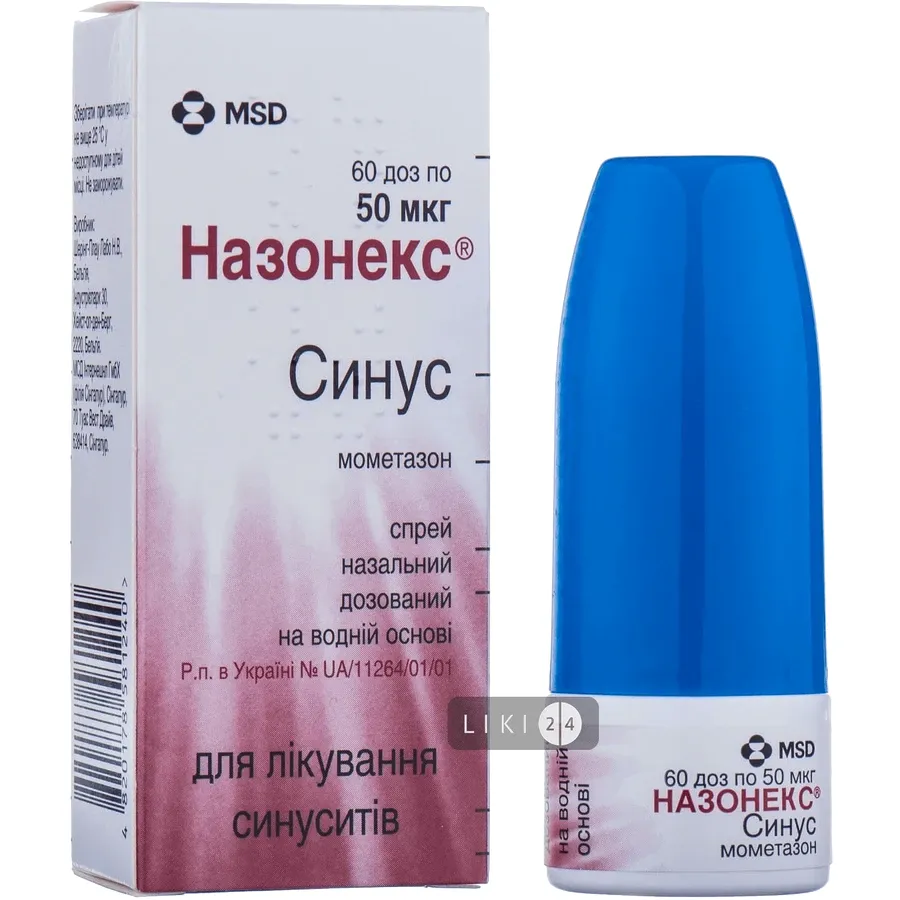
Table of Contents
INSTRUCTIONS FOR MEDICAL USE OF THE MEDICINAL PRODUCT NASENEKS® SINUS (NASONEX® SINUS)
Composition:
Active substance: 1 spray dose contains mometasone furoate monohydrate (micronized) in an amount equivalent to 50 mcg of mometasone furoate (anhydrous);
Excipients: microcrystalline cellulose and sodium carboxymethylcellulose (dispersed cellulose); glycerin; citric acid monohydrate; sodium citrate dihydrate; polysorbate 80; benzalkonium chloride solution; purified water.
Pharmaceutical form. Nasal spray, metered.
Main physicochemical characteristics: white or almost white opaque suspension.
Pharmacotherapeutic group. Anti-inflammatory and other drugs for local use in nasal cavity disorders. Corticosteroids. ATC code R01AD09.
Pharmacological Properties.
Pharmacodynamics.
Mometasone furoate is a synthetic corticosteroid for topical use that exerts a pronounced anti-inflammatory effect. The local anti-inflammatory action of mometasone furoate occurs at doses at which systemic effects do not occur.
The primary mechanism of the anti-inflammatory and antiallergic action of mometasone furoate is related to its ability to suppress the release of mediators of allergic reactions. Mometasone furoate significantly reduces the synthesis/release of leukotrienes from leukocytes of patients suffering from allergic diseases. In cell culture studies, mometasone furoate demonstrated 10-fold greater activity than other steroids, including beclomethasone dipropionate, betamethasone, hydrocortisone, and dexamethasone, in inhibiting the synthesis/release of IL-1, IL-5, IL-6, and TNFα. It is also a potent inhibitor of Th2 cytokine production, specifically IL-4 and IL-5, from human CD4+ T-cells. Mometasone furoate is also 6 times more active than beclomethasone dipropionate and betamethasone in suppressing IL-5 production.
In challenge studies involving antigen application to the nasal mucosa, the aqueous nasal spray Nasonex® Sinus demonstrated high anti-inflammatory activity in both the early and late phases of the allergic response. This was confirmed by a reduction (compared to placebo) in histamine levels and eosinophil activity, as well as a decrease (compared to baseline) in the number of eosinophils, neutrophils, and epithelial cell adhesion proteins.
Pronounced clinical effect within the first 12 hours of using the aqueous nasal spray Nasonex® Sinus was achieved in 28% of patients with seasonal allergic rhinitis. On average (50%), symptom relief occurred within 35.9 hours. In addition, Nasonex® Sinus demonstrated significant efficacy in reducing ocular symptoms (redness, tearing, itching) in patients with seasonal allergic rhinitis.
In clinical studies involving patients with nasal polyps, Nasonex® Sinus demonstrated significant clinical efficacy in relieving nasal congestion, reducing polyp size, and restoring the sense of smell compared to placebo.
In clinical studies involving patients aged 12 years and older, Nasonex® Sinus at a dose of 200 mcg twice daily demonstrated high efficacy in alleviating symptoms of rhinosinusitis compared to placebo. Over a 15-day treatment period, rhinosinusitis symptoms were assessed using a symptom severity scale (MSS – Major Symptom Score) (facial pain, pressure sensation in nasal sinuses, pain on palpation, sinus pain, rhinorrhea, postnasal drip, and nasal congestion). The efficacy of amoxicillin 500 mg three times daily did not significantly differ from placebo in alleviating rhinosinusitis symptoms according to the MSS scale. During the follow-up period after treatment completion, the number of relapses in the Nasonex® Sinus group was low and comparable to the amoxicillin and placebo groups. The duration of treatment for acute rhinosinusitis exceeding 15 days was not evaluated.
Pharmacokinetics.
The bioavailability of mometasone furoate following administration as a nasal spray is <1% in blood plasma (based on data obtained using a sensitive method with a lower limit of quantification of 0.25 pg/mL). Mometasone furoate suspension is very poorly absorbed from the gastrointestinal tract, and any small amount that may be swallowed and absorbed undergoes extensive first-pass metabolism prior to excretion, primarily in the form of metabolites via bile and to a lesser extent via urine.
Clinical characteristics.
Indications.
- Treatment of seasonal or perennial allergic rhinitis in adults and children aged 2 years and older. Prophylactic treatment of moderate to severe allergic rhinitis should be initiated 4 weeks before the anticipated start of pollen season.
- As an adjunctive therapeutic agent in antibiotic treatment of acute episodes of sinusitis in adults (including elderly) and children aged 12 years and older.
- Treatment of symptoms of acute rhinosinusitis without signs of severe bacterial infection in adults and children aged 12 years and older.
- Treatment of nasal polyps and associated symptoms, including nasal congestion and loss of smell, in patients aged 18 years and older.
Contraindications.
Hypersensitivity to the active substance or to any of the excipients.
Interaction with other medicinal products and other forms of interaction.
Concomitant therapy with CYP3A inhibitors, including medicinal products containing cobicistat, is expected to increase the risk of systemic adverse effects. Concomitant use should be avoided unless the benefit outweighs the increased risk of systemic corticosteroid adverse effects; in such cases, patients should be monitored for the occurrence of systemic corticosteroid adverse effects.
In a clinical study, Nasonex® Sinus was administered concomitantly with a non-sedating oral antihistamine (loratadine). The pharmacokinetic parameters and safety profiles of both medicinal products remained unchanged.
Special precautions for use.
The drug should not be used in the presence of untreated local infection involving the nasal mucosa.
Since corticosteroids may impair wound healing, intranasal corticosteroids should not be administered to patients who have recently undergone nasal surgery or have experienced nasal trauma until healing has occurred.
Nasonex® Sinus should be used with caution or not used at all in patients with active or latent tuberculosis of the respiratory tract, as well as in those with untreated fungal, bacterial, systemic viral infections, or herpes simplex infection affecting the eyes.
As with any long-term therapy, patients using the drug for several months or longer should be periodically examined for possible changes in the nasal mucosa. In clinical studies, no signs of atrophy of the nasal mucosa were observed after 12 months of treatment with Nasonex® Sinus; moreover, mometasone furoate contributed to the normalization of the histological appearance of the nasal mucosa.
If a local fungal infection of the nose or throat develops, discontinuation of therapy or appropriate treatment may be required. Persistent irritation of the nasal or pharyngeal mucosa may also be an indication for discontinuing treatment with the drug.
There is no evidence of suppression of the hypothalamic-pituitary-adrenal (HPA) axis with long-term treatment with Nasonex® Sinus. However, prolonged use of intranasal corticosteroids (including Nasonex® Sinus) may affect adrenal cortex function and may cause hypercorticism in corticosteroid-sensitive patients and in certain cases. Patients who are transitioning to treatment with Nasonex® Sinus after prolonged systemic corticosteroid therapy should be closely monitored, as they may develop adrenal insufficiency.
The safety and efficacy of Nasonex® Sinus in the treatment of unilateral polyps, polyps associated with cystic fibrosis, or polyps completely obstructing the nasal cavity have not been studied.
Unilateral polyps, which are unusual and rarely occur, especially if accompanied by ulceration or bleeding, should be investigated further.
Patients receiving corticosteroids may have potentially reduced immune responsiveness and should be warned about the increased risk of infection upon exposure to certain infectious diseases (e.g., varicella, measles), as well as the need to consult a physician if such exposure occurs.
The safety and efficacy of Nasonex® Sinus in the treatment of nasal polyps in children and adolescents under 18 years of age have not been studied.
When switching from systemic corticosteroid therapy to treatment with Nasonex® Sinus, some patients may experience symptoms of corticosteroid withdrawal despite improvement in nasal symptoms. Such patients should be specifically reassured about the appropriateness of continuing treatment with Nasonex® Sinus.
Changing therapy may also unmask allergic conditions that developed earlier but were masked by systemic corticosteroid therapy.
The use of high doses or prolonged use of glucocorticosteroids may cause systemic effects such as growth suppression in children. The long-term effects of intranasal/inhaled steroids in children are not fully understood. In general, physicians should carefully monitor the growth of children receiving long-term glucocorticosteroid therapy. In a study of 49 children who received Nasonex® Sinus for one year at a dose of 100 mcg per day, no growth suppression was observed.
Cases of increased intraocular pressure have been reported after the use of intranasal corticosteroids.
Visual disturbances may occur with the use of both systemic and local corticosteroids (including intranasal, inhaled, and intraocular administration). If symptoms such as blurred vision or other visual disturbances occur, patients should undergo ophthalmological examination to evaluate possible causes, which may include cataract, glaucoma, or rare conditions such as central serous chorioretinopathy, which has been reported after the use of systemic and local corticosteroids.
Acute rhinosinusitis: Patients should be advised to seek immediate medical attention if signs or symptoms of severe bacterial infection occur, such as elevated body temperature, severe unilateral facial pain or toothache, orbital or periorbital swelling/edema, or worsening condition after initial improvement.
The safety and efficacy of Nasonex® Sinus in the treatment of rhinosinusitis symptoms in children under 12 years of age have not been studied.
Use during pregnancy or breastfeeding.
Systemic (subcutaneously administered) corticosteroids have been shown to have teratogenic effects in animals. Clinical studies in pregnant women or women who are breastfeeding have not been conducted.
Corticosteroid drugs should not be used in pregnant women or women who are breastfeeding unless absolutely necessary.
Ability to affect reaction speed when driving or operating machinery.
Unknown.
Method of administration and dosage.
Before using a new bottle of the drug, it must be primed. Priming is performed by approximately 10 actuations of the dosing device, which establishes consistent delivery of the medication, with each actuation releasing approximately 100 mg of suspension containing 50 mcg of mometasone (one dose). If the nasal spray has not been used for 14 days or longer, re-priming is required before the next use by two actuations until a full spray is observed. Do not pierce the nozzle before starting use.
The bottle should be shaken vigorously before each use.
If the nozzle becomes blocked, remove the plastic cap by pressing gently on the white ring, carefully remove the nozzle, rinse it under warm running water, dry it, and reattach it. Do not attempt to clean the nozzle with a needle or other sharp object, as this may damage the dispenser.
Regular cleaning of the nozzle is very important.
Before each use, the nose should be thoroughly cleared of mucus.
Treatment of seasonal or perennial allergic rhinitis: The recommended prophylactic and therapeutic dose for adults (including elderly) and children aged 12 years and older is 2 sprays (50 mcg each) in each nostril once daily (total daily dose – 200 mcg). After achieving therapeutic effect, the maintenance dose should be reduced to 1 spray in each nostril once daily (total daily dose – 100 mcg).
If symptom relief is not achieved with the recommended therapeutic dose, the daily dose may be increased to the maximum: 4 sprays in each nostril once daily (total daily dose – 400 mcg). After symptom relief, dose reduction is recommended.
The drug has demonstrated a clinically significant onset of action within 12 hours after the first dose in some patients with seasonal allergic rhinitis. However, full benefit from treatment may not be achieved within the first 48 hours; therefore, patients should continue regular use to achieve full therapeutic effect.
For children aged 2–11 years, the recommended therapeutic dose is 1 spray (50 mcg) in each nostril once daily (total daily dose – 100 mcg).
Adjunctive treatment of acute sinusitis episodes. The recommended therapeutic dose for adults (including elderly) and children aged 12 years and older is 2 sprays (50 mcg each) in each nostril twice daily (total daily dose – 400 mcg).
If symptom relief is not achieved with the recommended therapeutic dose, the daily dose may be increased to 4 sprays in each nostril twice daily (total daily dose – 800 mcg). After symptom relief, dose reduction is recommended.
Acute rhinosinusitis. The recommended therapeutic dose for adults and children aged 12 years and older is 2 sprays (50 mcg each) in each nostril twice daily (total daily dose – 400 mcg).
Nasal polyps. For patients aged 18 years and older (including elderly), the recommended dose is 2 sprays (50 mcg each) in each nostril twice daily (total daily dose – 400 mcg). After achieving clinical effect, the dose should be reduced to 2 sprays in each nostril once daily (total daily dose – 200 mcg).
Children.
In placebo-controlled clinical studies in children who received Nasonex® Sinus at a daily dose of 100 mcg for one year, no growth suppression was observed.
The safety and efficacy of Nasonex® Sinus in the treatment of nasal polyps in children and adolescents under 18 years of age, rhinosinusitis symptoms in children under 12 years of age, and seasonal or perennial allergic rhinitis in children under 2 years of age have not been studied.
Overdose.
Overdose is unlikely to require any therapy other than observation.
Inhalation or oral ingestion of excessive doses of corticosteroids may lead to suppression of the hypothalamic-pituitary-adrenal (HPA) axis.
Adverse reactions.
Treatment-related adverse reactions observed in clinical studies with Nasonex® Sinus in patients with allergic rhinitis are listed in Table 1.
| Table 1: Treatment-related adverse reactions with Nasonex® Sinus in patients with allergic rhinitis very common (≥ 1/10), common (≥ 1/100, < 1/10), uncommon (≥ 1/1000, <1/100), rare (≥ 1/10000, <1/1000), very rare (<1/10000) |
|
| Respiratory, thoracic and mediastinal disorders: |
|
| Common: |
Nasal bleeding, pharyngitis, nasal burning sensation, nasal irritation, nasal ulcers |
| General disorders and administration site conditions |
|
| Common: |
Headache |
Nasal bleeding stopped spontaneously and was mild, occurring somewhat more frequently than with placebo (5%), but less frequently than with other intranasal corticosteroids studied and used as active control (in some of these, the incidence of nasal bleeding was up to 15%). The incidence of other adverse events was comparable to that observed with placebo.
In children, the incidence of adverse events was comparable to that with placebo, for example, nasal bleeding (6%), headache (3%), nasal irritation (2%), and sneezing (2%).
In patients with nasal polyps, the overall number of adverse events was comparable to that with placebo and similar to the number observed in patients with allergic rhinitis.
Treatment-related adverse reactions observed with Nasonex® Sinus in clinical studies in more than 1% of patients are listed in Table 2.
| Table 2: Treatment-related adverse reactions with Nasonex® Sinus in patients with nasal polyps very common (≥ 1/10), common (≥ 1/100, < 1/10), uncommon (≥ 1/1000, <1/100), rare (≥ 1/10000, <1/1000), very rare (<1/10000) |
|||
| 200 mcg once daily |
200 mcg twice daily |
||
| Respiratory, thoracic and mediastinal disorders: |
|||
| Upper respiratory tract |
|||
| Infections |
common |
uncommon |
|
| Nasal bleeding |
common |
very common |
|
| Gastrointestinal disorders |
|||
| Throat irritation |
- |
common |
|
| General disorders and administration site conditions |
|||
| Headache |
common |
common |
|
After intranasal administration of mometasone furoate, hypersensitivity reactions, including bronchospasm and dyspnea, may occasionally occur. Very rarely, anaphylactic reactions, angioneurotic edema, or disturbances of smell and taste have been reported.
In patients with acute rhinosinusitis, the overall incidence of adverse events was comparable to that with placebo and similar to the incidence observed in patients with other indications. Treatment-related adverse reactions observed in clinical trials in more than 2% of patients are listed in Table 3.
| Table 3: Treatment-related adverse reactions with Nasonex® Sinus in patients with acute rhinosinusitis very common (≥ 1/10), common (≥ 1/100, < 1/10), uncommon (≥ 1/1000, <1/100), rare (≥ 1/10000, <1/1000), very rare (<1/10000) |
|||
| 200 mcg once daily |
200 mcg twice daily |
||
| Respiratory, thoracic and mediastinal disorders: |
|||
| Upper airways |
|||
| Nasal bleeding |
common |
common |
|
| Gastrointestinal disorders |
|||
| Abdominal pain |
common |
common |
|
| Diarrhea |
common |
common |
|
| Nausea |
common |
common |
|
| General disorders and administration site conditions |
|||
| Headache |
common |
common |
|
The most common adverse reaction, nasal bleeding, occurred at approximately the same frequency in the placebo group (2.6%) and in the Nasonex® Sinus group (2.9% and 3.7%, respectively).
Systemic effects of nasal corticosteroids may occur, particularly with prolonged use of high doses.
Cases of glaucoma/increased intraocular pressure have been reported with the use of intranasal corticosteroids.
Blurred vision has been reported.
Shelf life. 3 years.
Storage conditions.
Store at a temperature not exceeding 25°C in a place inaccessible to children. Do not freeze.
Packaging.
10 g (60 doses) of suspension in a polyethylene bottle with a metered pump-spray dispenser, closed with a cap. One bottle per cardboard box.
Prescription status. Prescription only.
Manufacturer.
Organon Heist bv, Belgium.
Manufacturer's address and place of business.
Industriepark 30, 2220, Heist-op-den-Berg, Belgium.