Nazol® kids
Ukraine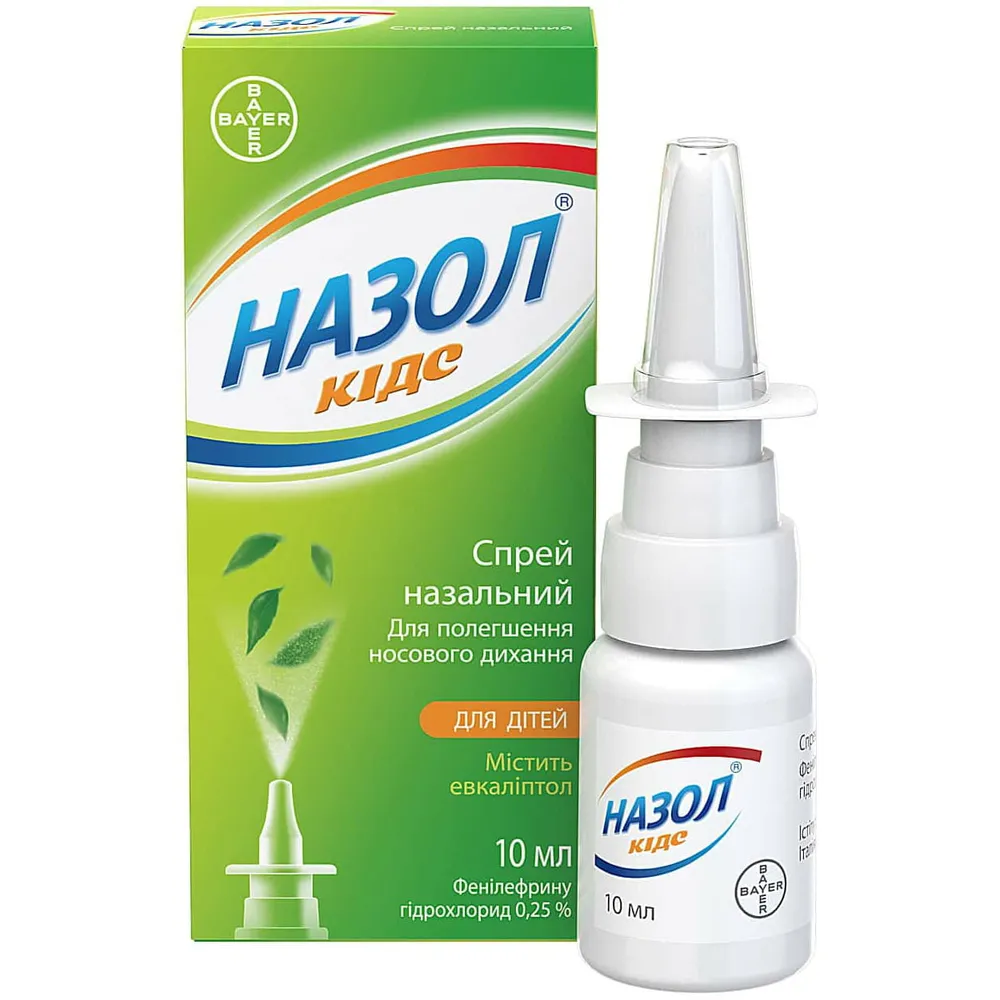
Table of Contents
INSTRUCTION FOR MEDICAL USE OF THE MEDICINAL PRODUCT Nazol® Kids
Composition:
Active ingredient: phenylephrine hydrochloride;
1 ml of the preparation contains 2.5 mg of phenylephrine hydrochloride (0.25 %);
Excipients: eucalyptol, glycerol, benzalkonium chloride, macrogol 1500, sodium hydrogen phosphate dihydrate, potassium dihydrogen phosphate, disodium edetate dihydrate, purified water.
Pharmaceutical form:
Nasal spray.
Main physico-chemical properties:
Clear, colourless or light yellow liquid with a eucalyptus odour.
Pharmacotherapeutic group:
Decongestants and other nasal preparations for local use.
Simple sympathomimetics.
ATC code: R01A A04.
Pharmacological properties
Pharmacodynamics:
Phenylephrine hydrochloride is a synthetic adrenomimetic agent. By stimulating α-adrenergic receptors in blood vessels, it produces a pronounced vasoconstrictive effect. This vasoconstriction reduces blood flow and swelling of the mucous membranes of the nose, paranasal sinuses, and Eustachian tube. As a result, nasal breathing, impaired during influenza, colds, and allergic conditions, is restored.
Pharmacokinetics:
Local vasoconstriction of the nasal and paranasal mucosa occurs within 3–5 minutes after administration into the nasal cavity. The decongestant effect lasts up to 6 hours.
Clinical characteristics
Indications:
Acute rhinitis caused by colds, influenza, allergic conditions, and sinusitis.
Acute otitis media (as an adjunctive treatment).
Contraindications:
Hypersensitivity to any component of the preparation (allergic reactions), severe arterial hypertension, tachysystolic cardiac arrhythmias, acute cardiovascular diseases, decompensated heart failure, conduction disorders, renal failure, thyrotoxicosis, acute pancreatitis, hepatitis, skin and mucous membrane inflammation in the anterior nasal cavity, tendency to form nasal crusts (atrophic rhinitis), conditions following transsphenoidal hypophysectomy;
Concomitant use with monoamine oxidase inhibitors (MAOIs) and within 15 days after discontinuation of MAOI therapy.
Interaction with other medicinal products and other forms of interaction:
Do not use simultaneously with other vasoconstrictive agents (regardless of route of administration) or with antihypertensive drugs (β-adrenoblockers).
Atropine sulfate blocks the reflex bradycardia caused by phenylephrine and increases the vasopressor response to phenylephrine.
Concomitant use of phenylephrine with β-adrenoblockers may lead to arterial hypertension and excessive bradycardia, possibly resulting in cardiac block.
Use with caution when co-administering with thyroid hormones and drugs affecting cardiac conduction (cardiac glycosides, antiarrhythmic agents).
Concomitant use with drugs causing potassium loss (e.g. furosemide-type diuretics) may increase the risk of hypokalemia and reduce arterial sensitivity to vasoactive agents such as phenylephrine.
Simultaneous intake of phenylephrine and other sympathomimetics may lead to additive stimulation of the central nervous system, resulting in nervousness, irritability, insomnia, and possibly seizures.
Additionally, concomitant use of other sympathomimetics with phenylephrine may enhance vasoconstrictive or cardiovascular effects of either agent.
Concomitant use with MAO inhibitors is contraindicated. Treatment with this preparation should not begin earlier than 15 days after discontinuation of MAOI therapy, as pressor effects may be potentiated (see section "Contraindications").
Concomitant use of phenylephrine with linezolid is not recommended.
Special precautions for use:
To avoid spreading infection, individual use of the spray device is recommended.
Persistent nasal congestion after 3 days of use may indicate deviated nasal septum, purulent sinusitis, adenoids, allergic rhinitis, persistent bacterial infection, or other conditions requiring consultation with a specialist and specialized comprehensive treatment.
Use with caution in patients with arterial hypertension, cardiovascular diseases, thyroid disorders (except those listed under "Contraindications"), closed-angle glaucoma, or diabetes mellitus. In such cases, consult a physician before starting treatment.
The medicinal product should be used under adult supervision.
If children under 12 years of age develop nervousness, dizziness, or insomnia, discontinue use and consult a physician.
Use during pregnancy or breastfeeding:
The preparation is not intended for use during pregnancy or breastfeeding.
Effect on ability to drive and operate machinery:
This medicinal product is not expected to affect the ability to drive or operate machinery.
Method and dosage of administration:
Children aged 2 to 6 years: 1–2 spray doses in each nostril, no more frequently than every 6 hours.
Children aged 6 to 12 years: 2–3 spray doses in each nostril, no more frequently than every 4 hours.
The bottle should be held vertically.
The duration of treatment usually does not exceed 3 days.
Use in children:
For use in children aged 2 to 12 years under adult supervision.
Overdose:
Although systemic adverse reactions are generally not observed with local application, overdose—especially with prolonged use—may intensify adverse effects. Possible symptoms include cardiac arrhythmias, increased blood pressure, arterial hypotension, chest pain and discomfort, palpitations, dyspnea, non-cardiogenic pulmonary edema, excitement, seizures, headache, tremor, sleep disturbances, restlessness, anxiety, nervousness, irritability, inappropriate behavior, psychoses with hallucinations, insomnia, weakness, anorexia, nausea, vomiting, oliguria, urinary retention, painful or difficult urination, facial flushing, cold sensation in extremities, paresthesia, pallor, piloerection, excessive sweating, hyperglycemia, hypokalemia, constriction of peripheral and internal organ vessels, reduced blood flow to vital organs, potentially leading to impaired renal perfusion, metabolic acidosis, and increased cardiac workload due to elevated peripheral vascular resistance. Severe vascular constriction is more likely in patients with hypovolemia or severe bradycardia. There is no specific antidote for phenylephrine poisoning. Treatment is symptomatic.
Adverse reactions:
In isolated cases, the following adverse effects may occur:
- At the site of application: irritation at the site of application, sneezing, burning sensation, stinging in the nose.
- Cardiovascular system: facial flushing, cardiac arrhythmias, bradycardia, increased blood pressure.
- Nervous system: dizziness, fear sensation, headache.
- Immune system: allergic reactions, including cross-reactions in patients allergic to other sympathomimetics, manifesting as rashes, itching, urticaria, angioneurotic edema (of hands, face, or throat), chest tightness, difficulty breathing.
When used in doses higher than recommended, symptoms listed in the "Overdose" section may occur.
Shelf life:
2 years.
After opening the bottle: 12 months.
Storage conditions:
Store in the original packaging at a temperature not exceeding 25 °C.
Keep out of reach of children.
Packaging:
10 ml plastic bottle with spray pump, in a cardboard box.
Category of dispensing:
Over-the-counter (without prescription).
Manufacturer:
Istituto De Angeli S.r.l.
Address of manufacturer and location of business activity:
Località Prulli n. 103/c - 50066 Reggello (FI), Italy.