Nazirus sinus respiral
Ukraine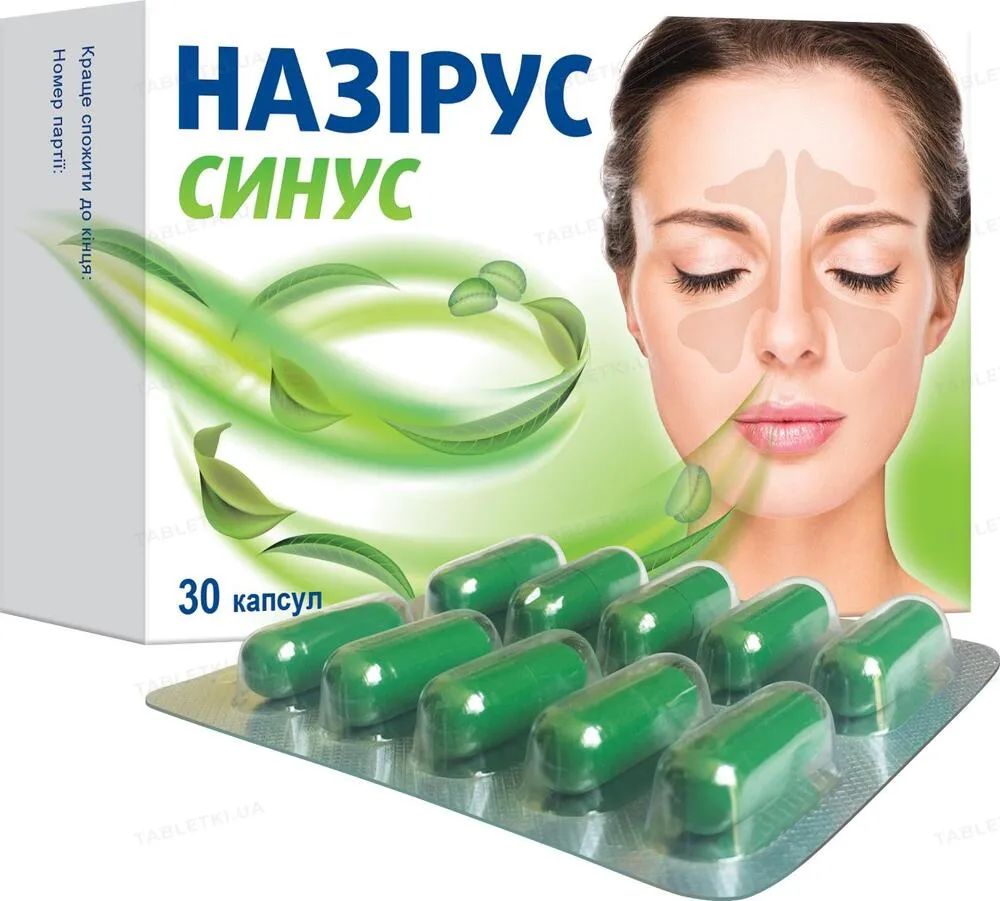
Table of Contents
INSTRUCTIONS FOR MEDICAL USE OF THE MEDICINAL PRODUCT NAZIRUS SINUS RESPIRAL
Composition:
Active substance: Eucalyptus oil (Eucalypti aetheroleum).
One soft enteric-coated capsule contains 200 mg of eucalyptus oil (Eucalypti aetheroleum);
Excipients:
capsule shell: glycerol 85%, non-crystallizing sorbitol solution, succinylated gelatin;
capsule coating: propylene glycol, polysorbate 80, glycerol monostearate 40–55%, methacrylic acid copolymer (1:1) (containing: polysorbate 80 and sodium lauryl sulfate).
Dosage form. Soft enteric-coated capsules.
Main physicochemical properties: soft oval-shaped gelatin capsule with an opaque coating. The capsule contents — clear oil.
Pharmacotherapeutic group. Agents used in cough and colds. Expectorants. ATC code R05CA.
Pharmacological Properties
Pharmacodynamics
Eucalyptus oil, after oral administration, exhibits secretomotor and expectorant effects, facilitating the clearance of the mucous membranes of the upper respiratory tract by enhancing the movement of ciliated epithelial cells. In vitro studies have demonstrated the secretolytic, anti-inflammatory, antibacterial, and anti-obstructive effects of eucalyptus oil. An influence on parameters of pulmonary ventilation (VC, FEV1, FEV1/VC, IVC, PEF, MEF, FVC, RV, RAW, SRAW, ITGV) has been confirmed.
1,8-cineole (eucalyptol), which constitutes more than 70% of eucalyptus oil, has surfactant properties. In patients who orally received capsules containing eucalyptus oil, increased mucus secretion in the upper respiratory tract was observed. Eucalyptus oil, particularly 1,8-cineole, affects the function of ciliated epithelium by enhancing the movement of its cells.
Therefore, the medicinal product may improve clinical symptoms, including improving aeration of the paranasal sinuses and facilitating respiration.
Pharmacokinetics
Absorption
The medicinal product has an enteric coating. When administered correctly, i.e., 15 minutes before meals, the active substance is rapidly released from the capsule in the small intestine. Due to the lipophilic nature of eucalyptus oil, absorption occurs rapidly.
Distribution
Regarding cineole, the main component of eucalyptus oil, only animal studies are available.
In mice, 5 minutes after oral administration of 7–14 mg of 1,8-cineole, the maximum measured concentration in blood was 6.6–16.2 ng/mL.
Biotransformation
There are no data on metabolism in humans. Data on metabolism in mammals that feed on eucalyptus leaves (Trichosurus vulpecula — brush-tailed possum) are available. The main metabolites of eucalyptus oil are: cresol and cumic acid from cymene, mirtene acid and verbenol from pinene, as well as 9-cineolic acid, p-cresol, and 9-hydroxycineole from cineole. The high first-pass metabolism after oral administration results from biotransformation in the liver (particularly hydroxylation and/or conjugation with glucuronic and sulfuric acids).
Elimination
The concentration of 1,8-cineole in plasma decreases rapidly in the initial phase (in peripheral compartments — within several minutes). The second elimination phase proceeds more slowly, with a terminal half-life of 30–45 minutes. After 10 minutes of cineole inhalation, the elimination half-life was 35.8 minutes. Metabolites of 1,8-cineole and its conjugation products with glucuronic acid are primarily excreted renally. Fecal excretion is insignificant. Small unmetabolized amounts are excreted in bile and pass into breast milk. In unmetabolized form, 1,8-cineole may also be excreted via the lungs and skin. Pharmacological studies have shown that within five hours after intravenous administration of 1,8-cineole, 4% of the administered dose is excreted via the lungs.
Clinical characteristics
Indications
- Use in colds and upper respiratory tract infections accompanied by cough, rhinitis, and difficult expectoration of viscous mucus.
- Use as an adjunctive agent in uncomplicated inflammatory diseases of the paranasal sinuses.
Contraindications
Hypersensitivity to eucalyptus oil, its components (1,8-cineole), or to excipients of the medicinal product. Inflammatory diseases of the gastrointestinal tract and biliary passages, severe liver disease. Bronchial asthma, whooping cough, croup, or other respiratory tract diseases associated with marked airway hyperreactivity.
Interaction with other medicinal products and other forms of interaction
Interaction with other medicinal products is unknown.
Since eucalyptus oil has been shown to induce microsomal cytochrome P450 enzyme activity in *in vitro* and *in vivo* tests, it may be presumed that eucalyptus oil could reduce the efficacy and/or plasma concentrations of other medicinal products metabolized by this enzyme.
At present, a possible effect on barbiturates and pyrazolones contained in antiepileptic drugs, as well as in sedatives and analgesics, has been identified.
As interaction studies have not been conducted, therapy should be monitored when eucalyptus oil is used concomitantly with other medicinal products.
Special precautions for use
If dyspnea, fever, bloody or purulent sputum, or purulent nasal discharge occur, or if the symptoms of illness persist for more than a week, a physician should be consulted immediately.
Eucalyptus oil may irritate the gastrointestinal tract, especially in individuals with gastrointestinal inflammation. The use of a pharmaceutical form with an enteric coating reduces the risk of irritant effects of eucalyptus oil compared to a capsule without such a coating.
The medicinal product contains up to 14.77 mg of sorbitol in 1 capsule. If a patient has been diagnosed with intolerance to certain sugars, medical advice should be sought before taking this medicinal product.
Use during pregnancy or breastfeeding
Pregnancy: The safety of using the medicinal product during pregnancy or breastfeeding has not been sufficiently studied. Animal studies have shown that 1,8-cineole (the main component of eucalyptus oil) penetrates placental tissues and reaches fetal blood levels that may induce hepatic enzyme activity.
Breastfeeding: Due to the lipophilic properties of the active ingredient, excretion into breast milk cannot be excluded. However, there are no systematic studies on this subject, particularly regarding possible adverse effects. Essential oils may alter the taste of milk and cause feeding difficulties.
Due to the lack of safety data, the use of the medicinal product during pregnancy or breastfeeding is not recommended.
Fertility: Animal studies have shown no effect on fertility.
Ability to influence reaction rate when driving or operating machinery. Not studied.
Dosage and Administration
Take orally, 15 minutes before a meal. Swallow the capsule whole, without chewing, with a sufficient amount of warm water (200 mL). Patients with a sensitive stomach are advised to take the medication during meals.
For adults and children aged 12 years and older: 1 capsule 2–3 times daily.
The medicinal product should be used for 1 week. If symptoms persist for longer than 1 week, consult a physician.
Children. The medicinal product is indicated for children aged 12 years and older.
Overdose
Symptoms. In case of overdose, gastrointestinal irritation may occur (severe burning epigastric pain, abdominal pain; vomiting, diarrhea); respiratory disturbances (depression or acceleration), dyspnea, bronchospasm. Central nervous system symptoms may also develop (headache, drowsiness, dizziness, miosis, clouding of consciousness, fatigue, limb weakness, drowsiness with speech disturbances, and occasionally seizures). Signs of severe poisoning include shallow, irregular breathing, cardiovascular collapse, and coma. These symptoms may resemble opioid intoxication; however, in case of eucalyptus oil overdose, a characteristic eucalyptus odor is detectable in exhaled air.
A single dose of 30 mL of eucalyptus oil (equivalent to 136 capsules of Nazirus Sinus Respiral) is considered lethal. Fatal cases have been reported following ingestion of 4–5 mL of eucalyptus oil (equivalent to 18–23 capsules of Nazirus Sinus Respiral) in adults and 1.9 g of eucalyptus oil in a 10-year-old child (equivalent to 9–10 capsules of Nazirus Sinus Respiral). In one patient, ingestion of 30 mL of eucalyptus oil resulted in transient cardiac rhythm disturbances; in another case, ingestion of 120–220 mL led to transient kidney injury with anuria, hematuria, and albuminuria. In children, there is no clear correlation between the ingested dose of eucalyptus oil and the symptoms of overdose. A single dose of 2.5 mL of eucalyptus oil caused poisoning in some children, but did not cause overdose in others. Analysis of intoxication cases in infants and young children showed that pure eucalyptus oil did not cause poisoning symptoms after ingestion of 1.7 mL, mild to moderate intoxication symptoms occurred after ingestion of 2–3.5 mL, and severe intoxication symptoms occurred after ingestion of 5–7.5 mL. A 23-month-old child survived after ingestion of 75 mL, due to gastric lavage, activated charcoal administration, and artificial ventilation.
Treatment. No specific antidotes are known. Since the active substance is rapidly eliminated from the body, symptoms resolve quickly and recovery is expected to be prompt. Treatment options for overdose depend on the course and severity of symptoms. Do not induce vomiting due to the risk of aspiration. Large amounts of fluids should be administered (excluding milk and alcoholic beverages, as they enhance absorption).
In case of gastrointestinal symptoms of overdose, administer activated charcoal and sorbitol. If necessary, gastric lavage in children should be performed under general anesthesia following tracheal intubation. In cases of mild consciousness depression, close monitoring of the patient is required. In case of loss of consciousness, perform tracheal intubation, gastric and intestinal lavage, administer activated charcoal, and apply artificial ventilation. For seizures, administer diazepam. Renal function should be monitored.
Side effects
Immune system: Rare (from ≥1/10000 to ≤1/1000): allergic reactions (facial swelling, itching, shortness of breath, cough, difficulty swallowing). If any signs of hypersensitivity reactions occur, discontinue use of the medicinal product immediately; do not re-administer.
Gastrointestinal disorders: Rare (from ≥1/10000 to ≤1/1000): nausea, vomiting, and diarrhea.
If any adverse reactions occur, discontinue use of the product and consult a physician.
Reporting of adverse reactions after the medicinal product has been authorized is highly important. It allows continuous monitoring of the benefit-risk balance of the product. Healthcare and pharmaceutical professionals, as well as patients or their legal representatives, are encouraged to report all suspected adverse reactions and lack of efficacy via the Automated Pharmacovigilance Information System at the following link: https://aisf.dec.gov.ua.
Shelf life. 3 years.
Do not use after the expiry date.
Storage conditions. Store out of reach of children at a temperature not exceeding 25 °C.
Packaging. 15 capsules per blister; 1 or 2 blisters per cardboard box.
Availability. Over-the-counter (without prescription).
Manufacturer. Fitofarm Klenka S.A.
Manufacturer's address and location of operations. Klenka 1, 63-040 Nowe Miasto nad Wartą, Poland.