Navirol
Ukraine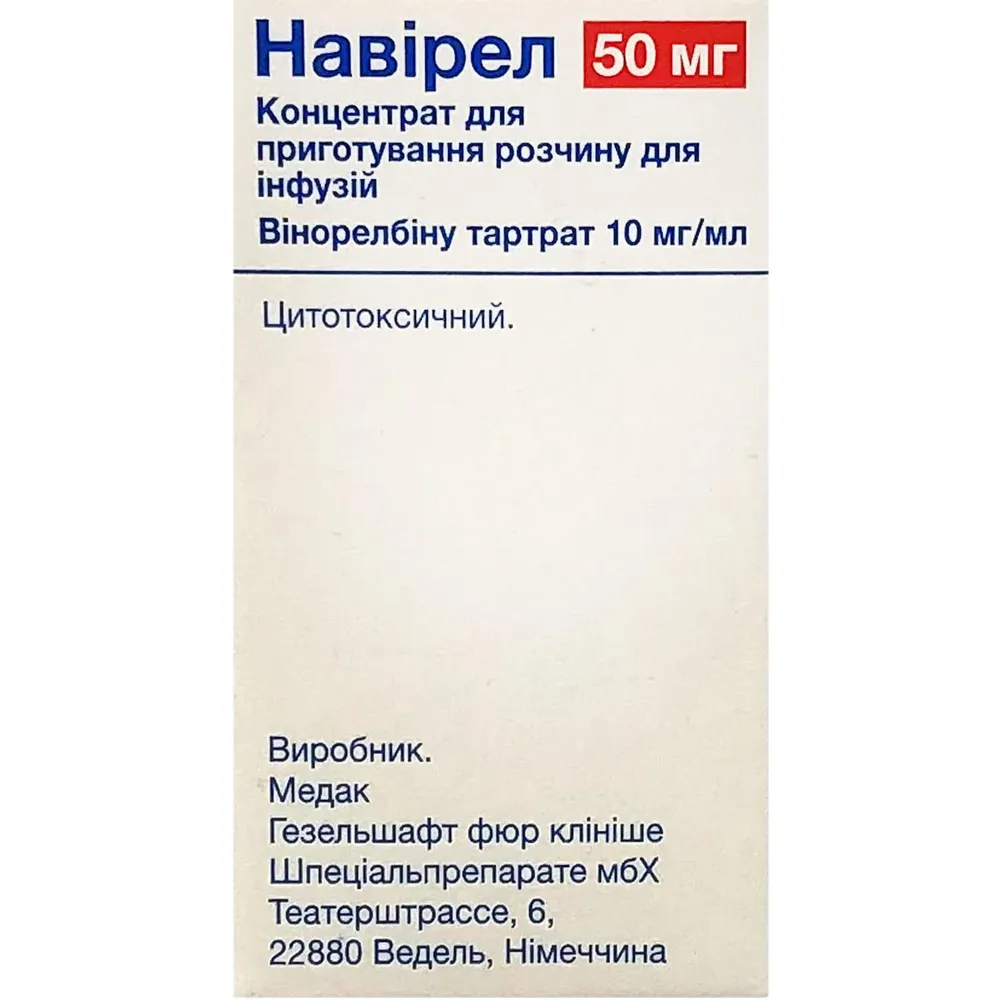
Table of Contents
INSTRUCTIONS FOR MEDICAL USE OF THE MEDICINAL PRODUCT NAVIREL (NAVIREL)
Composition:
Active substance: vinorelbine (as vinorelbine tartrate);
1 ml of concentrate contains vinorelbine (as vinorelbine tartrate) 10 mg;
Excipient: water for injections.
Pharmaceutical form. Concentrate for solution for infusion.
Main physicochemical characteristics: colorless or pale yellow clear solution.
Pharmacotherapeutic group. Antineoplastic and immunomodulating medicinal products, vinca alkaloids. ATC code L01C A04.
Pharmacological properties.
Pharmacodynamics.
Vinorelbine is a substance with antitumor activity belonging to the family of vinca alkaloids. However, unlike all other vinca alkaloids, in vinorelbine the catharanthine residue undergoes structural modification. At the molecular level, vinorelbine affects the dynamic equilibrium of tubulin within the cellular microtubule system.
Mechanism of action.
Vinorelbine interferes with tubulin polymerization and binds predominantly to mitotic microtubules, affecting axonal microtubules only at high concentrations. Tubulin spiralization occurs to a lesser extent compared to vincristine. Vinorelbine arrests mitosis in the G2-M phase, leading to cell death either during interphase or at the subsequent mitosis.
Children.
The safety and efficacy of vinorelbine in children have not been established. Clinical data from two phase II uncontrolled studies using intravenous vinorelbine at doses of 30 to 33.75 mg/m² on D1 and D8 every 3 weeks or once weekly for 6 weeks every 8 weeks in 33 and 46 patients with recurrent solid tumors, including rhabdomyosarcoma, other soft tissue sarcomas, Ewing's sarcoma, liposarcoma, synovial sarcoma, fibrosarcoma, central nervous system tumors, osteosarcoma, and neuroblastoma, did not demonstrate clinically significant drug activity. The toxicity profile was similar to that observed in adult patients.
Pharmacokinetics.
Distribution.
The active component is widely distributed throughout the body, with a volume of distribution ranging from 25.4 to 40.1 L/kg. Penetration of vinorelbine into lung tissue is significant; the tissue-to-plasma concentration ratio in a study using surgical biopsy exceeded 300. Plasma protein binding is moderate (13.5%), whereas binding to platelets is pronounced (78%). Linear pharmacokinetics were observed following intravenous administration of vinorelbine at doses up to 45 mg/m².
Biotransformation.
Vinorelbine is primarily metabolized by the CYP3A4 isoenzyme of the cytochrome P450 system. All metabolites have been identified and found to be inactive, except for 4-O-desacetylvinorelbine, which is the main metabolite in blood.
Elimination.
Following intravenous bolus injection or infusion, the plasma concentration of vinorelbine is characterized by a triphasic elimination curve. The terminal elimination phase reflects a prolonged half-life exceeding 40 hours. Vinorelbine exhibits a high total clearance rate (0.97–1.26 L/h/kg).
Renal excretion is low (< 20% of the dose). Low concentrations of desacetylvinorelbine have been detected in humans, but vinorelbine is primarily excreted unchanged in urine. The elimination of the active substance occurs mainly via the biliary tract and consists of metabolites and predominantly unchanged vinorelbine.
Patients with renal impairment.
The effect of renal dysfunction on the distribution of vinorelbine has not been studied. However, due to the low glomerular filtration rate of renal excretion, there is no need to reduce the dose.
Patients with hepatic impairment.
In patients with liver metastases, changes in mean clearance values of vinorelbine were observed only when more than 75% of the liver was affected.
In 6 oncology patients with moderate hepatic dysfunction (bilirubin levels no more than 2 times the upper limit of normal (ULN) and transaminase levels no more than 5 times ULN), who received vinorelbine at doses up to 25 mg/m² body surface area, and in 8 oncology patients with severe hepatic dysfunction (bilirubin levels more than 2 times ULN and transaminase levels more than 5 times ULN), who received vinorelbine at doses up to 20 mg/m² body surface area, the mean total clearance of vinorelbine was comparable to that in patients with normal liver function. However, these data may not be representative for patients with impaired ability to eliminate the active substance through the liver; therefore, as a precaution, it is recommended to systematically monitor hematological parameters in patients with severe hepatic dysfunction (see sections "Special precautions" and "Dosage and administration").
Elderly patients.
A study of vinorelbine in elderly patients (≥ 70 years) with non-small cell lung cancer conducted by the innovator company demonstrated that age does not affect the pharmacokinetics of vinorelbine. However, since elderly patients are often frail, dose escalation of vinorelbine should be performed with caution.
Clinical characteristics.
Indications.
- As monotherapy for patients with metastatic breast cancer (Stage IV), after ineffective chemotherapy that included anthracyclines or taxanes, or when such chemotherapy is unsuitable for treatment.
- Non-small cell lung cancer, Stage III and IV.
Contraindications.
- Known hypersensitivity to vinorelbine, other vinca alkaloids, or to any component of the medicinal product.
- Neutrophil count < 1500/mm³, severe current or recently treated infection (within the last 2 weeks).
- Platelet count < 100,000/mm³.
- Severe hepatic impairment not related to tumor progression.
- Concomitant use with yellow fever vaccine (see section "Interaction with other medicinal products and other forms of interaction").
- Intrathecal administration of the drug is not permitted.
- The drug is not to be administered to women of childbearing potential who are not using effective contraceptive measures.
- Pregnancy (see section "Use during pregnancy or breastfeeding").
- Breastfeeding (see section "Use during pregnancy or breastfeeding").
Special safety precautions.
It is extremely important to avoid contact of the medicinal product with the eyes: if the drug is sprayed under pressure, there is a risk of severe irritation or even corneal ulceration. In case of contact with the eyes, they must be immediately and thoroughly rinsed with 0.9% sodium chloride solution. After solution preparation, any surface that came into contact with the drug must be wiped, and hands and face must be washed.
Preparation and administration of vinorelbine must be performed only by experienced personnel. Protective goggles, disposable gloves, mask, and protective clothing must be worn. In case of spillage, the solution must be collected and the area wiped.
There is no incompatibility between vinorelbine 10 mg/ml concentrate for infusion solution and neutral glass vials, PVC systems, vinyl acetate systems, or infusion sets with PVC tubing.
Vinorelbine is recommended to be administered by infusion over 6–10 minutes after dilution in 20–50 mL of 9 mg/mL (0.9%) sodium chloride solution for injection or in 5% (w/v) glucose solution for injection. The duration of peripheral infusion should be maintained between 6 and 10 minutes, as the risk of venous irritation increases if the infusion time is prolonged.
After administration of the vinorelbine solution, the vein should be thoroughly flushed with at least 250 mL of 9 mg/mL (0.9%) sodium chloride solution to remove residual drug.
Vinorelbine must be administered intravenously only: it is essential to ensure that the cannula is correctly positioned within the vein before starting vinorelbine infusion. If the drug leaks into surrounding tissues during administration, significant local irritation may occur. In such a case, administration must be stopped, the vein flushed with 9 mg/mL (0.9%) sodium chloride solution, and the remaining dose administered into another vein.
Additionally, published data support the use of hyaluronidase and dry heat in case of extravasation. Consultation with a plastic surgeon is recommended at early signs of necrosis or compartment syndrome, persistent or progressive pain, or failure of conservative management.
Any unused medicinal product must be destroyed according to standard hospital procedures.
Interaction with other medicinal products and other forms of interaction.
Interactions common to all cytotoxic agents.
Due to the increased risk of thrombosis in cancer patients, anticoagulants are frequently prescribed. Given the high intra-individual variability in coagulation capacity during the disease course, as well as the potential interaction between oral anticoagulants and antineoplastic agents, INR (International Normalized Ratio) should be monitored more frequently.
Concomitant use not recommended.
This medicinal product should not be used in combination with live attenuated vaccines due to the potential risk of developing systemic, possibly fatal, disease. This risk is increased in patients with immunodeficiency due to the underlying disease. Inactivated vaccines should be used if available (e.g., against poliomyelitis).
Concomitant use contraindicated.
Administration of the yellow fever vaccine is contraindicated during treatment with vinorelbine. Phenytoin: concomitant use of vinorelbine with phenytoin is not recommended due to the risk of increased seizures resulting from reduced gastrointestinal absorption of phenytoin, as well as the risk of increased toxicity or reduced efficacy of vinorelbine due to enhanced hepatic metabolism induced by phenytoin.
Concomitant use requiring caution.
Cyclosporine, tacrolimus: when vinorelbine is used in combination with cyclosporine or tacrolimus, the possibility of excessive immunosuppression with risk of lymphoproliferation should be considered.
Interactions specific to vinca alkaloids. Concomitant use not recommended.
Itraconazole is not recommended to be co-administered with vinorelbine due to the risk of increased neurotoxic effects resulting from reduced hepatic metabolism.
Concomitant use requiring caution.
Concomitant use of vinca alkaloids and mitomycin C increases the risk of bronchospasm and dyspnea. In individual cases, especially when used in combination with mitomycin, interstitial pneumonia has occurred.
Vinorelbine is a substrate of P-glycoprotein; therefore, its concomitant administration with inhibitors (e.g., verapamil, cyclosporine, quinidine) or inducers of this transport protein may affect vinorelbine concentrations.
Interactions specific to vinorelbine.
When vinorelbine is used in combination with other drugs known to be myelosuppressive, bone marrow suppression may be enhanced.
Since CYP3A4 is primarily involved in vinorelbine metabolism, concomitant use with strong inhibitors of this isoenzyme (e.g., itraconazole, ketoconazole, clarithromycin, erythromycin, ritonavir) may increase vinorelbine blood concentrations, while concomitant use with strong inducers of CYP3A4 (e.g., rifampicin, phenytoin, phenobarbital, carbamazepine, St. John's wort) may reduce vinorelbine blood concentrations.
Combination of vinorelbine with cisplatin (a very common combination) does not affect pharmacokinetic properties. However, the likelihood of granulocytopenia with the combination of vinorelbine and cisplatin is higher than with vinorelbine monotherapy.
In a Phase I clinical study, intravenous administration of vinorelbine with lapatinib was associated with increased incidence of Grade ¾ neutropenia. In this study, the recommended dose of vinorelbine (intravenous) on a three-week schedule was 22.5 mg/m² on Day 1 and Day 8 in combination with a daily dose of lapatinib 1000 mg. This combination should be used with caution.
Special precautions for use.
Vinorelbine should be administered only under the supervision of a physician experienced in the use of anticancer agents.
Vinorelbine must be administered only intravenously after appropriate dilution! Intrathecal administration may be life-threatening! After vinorelbine administration, 0.9% sodium chloride solution must always be administered to flush the vein.
Vinorelbine must be administered intravenously with extreme care. Before starting vinorelbine infusion, it is essential to ensure that the cannula is correctly positioned within the vein.
Extravasation of vinorelbine during intravenous administration may cause severe local irritation. In such a case, the infusion must be stopped immediately, the vein flushed with 0.9% sodium chloride solution, and the remaining dose administered into another vein. Furthermore, published data support the use of hyaluronidase and dry heat in the event of extravasation. Consultation with a plastic surgeon is recommended at early signs of necrosis or compartment syndrome, persistent or progressive pain, or failure of conservative management.
Treatment should begin only after careful assessment of hematological parameters (determination of hemoglobin levels, leukocyte, granulocyte, and platelet counts before each new injection). The main dose-limiting adverse effect of vinorelbine therapy is neutropenia. It is non-cumulative in nature. The lowest neutrophil count is typically observed 7–14 days after drug administration, after which counts rapidly return to normal within 5–7 days. If the neutrophil count is < 1500/mm³ and/or the platelet count is < 100,000/mm³, treatment should be postponed until counts recover, and the patient should be closely monitored. Treatment delay for 1 week occurs in approximately 35% of treatment courses.
If a patient shows signs suggestive of infection, a thorough examination must be performed immediately.
Cases of interstitial lung disease have been reported more frequently among Japanese patients. Therefore, particular attention should be paid to this specific population.
In patients with significant hepatic impairment, dose reduction is required: caution is advised, and close monitoring of hematological parameters is mandatory.
In patients with renal impairment, dose adjustment is not necessary due to the low level of renal excretion.
Vinorelbine should not be administered concomitantly with radiotherapy if the treatment field includes the liver.
Potent inhibitors or inducers of CYP3A4 should be used with caution due to the risk of altered vinorelbine concentrations.
This medicinal product is not recommended for concomitant use with itraconazole (as with all vinca alkaloids) and phenytoin (as with all cytotoxic agents).
This drug is contraindicated in combination with the yellow fever vaccine; its concomitant use with other live attenuated vaccines is not recommended.
To avoid bronchospasm, especially when used concomitantly with mitomycin C, appropriate preventive measures should be taken. Outpatients should be informed that they must consult a physician if dyspnea occurs.
Pulmonary toxicity, including severe acute bronchospasm, interstitial pneumonitis, or acute respiratory distress syndrome (ARDS), has been reported following intravenous administration of vinorelbine (see section "Adverse reactions"). The median time to onset of ARDS after vinorelbine administration was one week (range: 3 to 8 days). Infusion should be stopped immediately if unexplained dyspnea or any signs of pulmonary toxicity develop.
Cases of interstitial lung disease have been reported more frequently among Japanese patients. Therefore, particular attention should be paid to this specific population.
Special precautions are recommended when treating patients with a history of ischemic heart disease.
It is extremely important to avoid contact of the drug with the eyes: if the drug is aerosolized under pressure, there is a risk of severe irritation or even corneal ulceration. In case of contact with the eyes, they must be immediately and thoroughly irrigated with 0.9% sodium chloride solution.
Use during pregnancy or breastfeeding.
There is insufficient data on the use of vinorelbine in pregnant women. Animal studies have shown embryotoxic and teratogenic effects of the drug. Considering the results of animal studies and the pharmacological action of vinorelbine, it is expected that the drug may cause fetal malformations when used during pregnancy.
Vinorelbine is contraindicated during pregnancy. Women must avoid becoming pregnant during treatment with vinorelbine.
In the case of a pregnant patient with life-threatening indications for vinorelbine therapy, a medical assessment of the risk of harmful effects of vinorelbine on the fetus must be performed.
If a woman becomes pregnant during treatment, genetic counseling should be provided.
Women of childbearing potential.
Vinorelbine is contraindicated during pregnancy and has genotoxic potential; therefore, women of childbearing potential must use effective contraception throughout the entire treatment period and for at least 7 months after completion of therapy. In case of pregnancy, the physician must be informed immediately.
Breastfeeding.
It is unknown whether vinorelbine is excreted in human breast milk. Excretion of vinorelbine into breast milk has not been studied in animal models. Since the risk to the nursing infant cannot be excluded, breastfeeding must be discontinued prior to the start of vinorelbine therapy.
Effect on fertility.
Men receiving vinorelbine therapy are advised to avoid fathering a child during treatment and for at least 4 months after completion of therapy.
Since vinorelbine treatment may cause irreversible infertility, men who wish to have children in the future are advised to undergo sperm cryopreservation prior to starting therapy.
Ability to affect reaction speed when driving or operating machinery.
The ability of vinorelbine to affect reaction speed during driving or operating machinery has not been specifically studied. However, based on the pharmacodynamic properties of vinorelbine, it can be concluded that the drug has no effect or only a minor effect on the ability to drive or operate machinery. Nevertheless, patients receiving vinorelbine should exercise caution due to potential adverse effects of the drug.
Method of Administration and Dosage
For intravenous use only after appropriate dilution.
Intrathecal administration of vinorelbine can be life-threatening.
Vinorelbine is usually administered at a dose of 25–30 mg/m² body surface area once weekly. When used in combination with other cytostatic agents, the exact dose of vinorelbine should be determined according to the treatment protocol.
Vinorelbine must be administered by slow bolus infusion (6–10 minutes) after dilution in 20–50 mL of 9 mg/mL (0.9%) sodium chloride solution or 5% dextrose solution. The duration of peripheral infusion should be maintained between 6 and 10 minutes, as the risk of venous irritation increases with prolonged infusion time. After administration of vinorelbine, at least 250 mL of 0.9% sodium chloride solution must always be administered to flush the vein.
The maximum single dose is 35.4 mg/m² body surface area. The maximum cumulative dose per single administration is 60 mg.
Dose Modification
Vinorelbine is primarily metabolized in the liver; only 18.5% of the dose is excreted in urine. There are no prospective studies on the impact of altered active substance metabolism on its pharmacodynamics that could provide recommendations for dose reduction in patients with hepatic or renal impairment.
Patients with Hepatic Impairment
The pharmacokinetic parameters of vinorelbine are not altered in patients with moderate to severe hepatic impairment.
However, for patients with severe hepatic impairment, it is recommended to reduce the dose to 20 mg/m² body surface area and to closely monitor hematological parameters.
Patients with Renal Impairment
Due to minimal renal excretion, there is no pharmacokinetic justification for dose reduction of vinorelbine in patients with impaired renal function.
Geriatric Patients
Clinical experience has not revealed significant differences in response rates among elderly patients, although increased sensitivity in some elderly patients cannot be excluded. Age does not affect the pharmacokinetics of vinorelbine.
Pediatric Patients
The safety and efficacy of vinorelbine in children have not been established; therefore, it is not recommended for use in this age group.
Overdose
Cases of accidental acute overdose in humans may result in bone marrow hypoplasia and may sometimes be accompanied by infection, fever, and paralytic ileus. Supportive treatment, such as blood transfusions, administration of growth factors, or broad-spectrum antibiotic therapy, is usually initiated at the physician’s discretion. No antidote is known.
Since there is no antidote available for intravenous vinorelbine overdose, symptomatic measures must be taken in case of overdose, including:
- continuous monitoring of vital functions and close observation of the patient;
- daily blood count monitoring to promptly determine the need for blood transfusions or growth factors, to detect the need for emergency intervention, and to minimize infection risk;
- prevention or treatment of paralytic ileus;
- monitoring of cardiovascular system and liver function;
- in case of complications due to infection, therapy with broad-spectrum antibiotics may be required.
Adverse Reactions
The most commonly reported adverse reactions include: bone marrow suppression with neutropenia, anemia, neurological disorders, gastrointestinal toxicity manifested by nausea, vomiting, stomatitis, and constipation, transient elevation of liver function biochemical parameters, alopecia, and local phlebitis.
It should be noted that when vinorelbine is used in combination chemotherapy with other antineoplastic medicinal products, the aforementioned adverse reactions may occur more frequently and be more severe than those observed during and after monotherapy. In addition, attention should be paid to additional specific adverse reactions associated with the other medicinal products used.
Frequency of occurrence
Very common (≥ 1/10), common (≥ 1/100 to < 1/10), uncommon (≥ 1/1000 to < 1/100), rare (≥ 1/10000 to < 1/1000), very rare (< 1/10000), not known (cannot be estimated from available data).
Detailed information on adverse reactions: reactions were described using WHO classification (Grade 1 – G I; Grade 2 – G II; Grade 3 – G III; Grade 4 – G IV; Grades 1–4 – G I–IV; Grades 1–2 – G I–II; Grades 3–4 – G III–IV).
| Infections and infestations |
Common: bacterial, viral or fungal infections of various localizations (respiratory system, urinary system, gastrointestinal tract) of mild to moderate severity and usually reversible with appropriate treatment; uncommon: severe sepsis with internal organ failure, septicaemia; very rare: complicated septicaemia, fatal septicaemia; unknown: neutropenic sepsis (with potentially fatal outcome in 1.2% of cases). |
| Blood and lymphatic system disorders |
Very common: bone marrow suppression, predominantly manifested as neutropenia (Grade III: 24.3%, Grade IV: 27.8% with monotherapy), which resolves within 5–7 days and does not accumulate over time; anemia (Grade III–IV: 7.4% with monotherapy); common: thrombocytopenia may occur (Grade III–IV: 2.5%), but severe cases are rare; unknown: febrile neutropenia, pancytopenia. |
| Immune system disorders |
Common: allergic reactions (skin reactions, respiratory tract reactions); unknown: systemic allergic reactions (anaphylaxis, anaphylactic shock, angioneurotic edema, anaphylactoid reactions). |
| Endocrine disorders |
Unknown: syndrome of inappropriate antidiuretic hormone secretion (SIADH). |
| Metabolism and nutrition disorders |
Rare: severe hyponatremia; unknown: anorexia. |
| Nervous system disorders |
Very common: neurological disorders (Grade III: 2.6%; Grade IV: 0.1%), decreased deep tendon reflexes. After prolonged chemotherapy, weakness of the lower limbs has been reported; uncommon: severe paresthesia with sensory and motor symptoms (these reactions are generally reversible); very rare: Guillain-Barré syndrome; unknown: headache, dizziness, ataxia, posterior reversible encephalopathy syndrome. |
| Cardiac disorders |
Rare: ischemic heart disease resembling angina, transient ECG changes, myocardial infarction, sometimes with fatal outcome; very rare: tachycardia, palpitations, and cardiac arrhythmias. unknown: heart failure. |
| Vascular disorders |
Common: arterial hypotension, arterial hypertension, sensation of flushing and coldness in extremities; rare: severe hypotension, collapse. |
| Respiratory, thoracic and mediastinal disorders |
Uncommon: dyspnea, bronchospasm (these reactions may occur during treatment with vinorelbine as well as with other vinca alkaloids); rare: interstitial lung disease, sometimes fatal; very rare: respiratory failure; unknown: cough (Grade I-II), pulmonary artery thromboembolism, acute respiratory distress syndrome, sometimes fatal. |
| Gastrointestinal disorders |
Very common: constipation is the main symptom (Grade III–IV: 2.7%), which rarely progresses and leads to intestinal obstruction during monotherapy (Grade III–IV: 4.1%) and when vinorelbine is combined with other chemotherapeutic agents. Nausea, vomiting (Grade I–II: 30.4%, Grade III–IV: 2.2% with monotherapy; antiemetic therapy may reduce the occurrence of these reactions), stomatitis (Grade I–IV: 15% with monotherapy), esophagitis; common: diarrhea (usually mild or moderate); rare: paralytic ileus; treatment may be resumed after normal intestinal motility is restored, pancreatitis. unknown: gastrointestinal hemorrhage, severe diarrhea, abdominal pain. |
| Hepatobiliary disorders |
Very common: abnormal liver function tests (Grade I–II) without clinical symptoms (elevated total bilirubin levels, elevated alkaline phosphatase levels, elevated aspartate aminotransferase levels in 27.6%, elevated alanine aminotransferase levels in 29.3%). |
| Skin and subcutaneous tissue disorders |
Very common: alopecia, usually mild (Grade III–IV: 4.1% with monotherapy); rare: generalized skin reactions; unknown: palmoplantar erythrodysesthesia, skin hyperpigmentation (serpentine supravenous hyperpigmentation). |
| Musculoskeletal and connective tissue disorders |
Common: myalgia, arthralgia, jaw pain. |
| Renal and urinary system disorders |
Common: elevated creatinine levels. |
| General disorders and administration site reactions |
Very common: asthenia, increased fatigue, fever, pain of various localizations (particularly chest pain and tumor site pain), injection site erythema, burning pain, pigmentation changes, and local phlebitis (Grade III–IV: 3.7% with monotherapy); rare: injection site necrosis (proper catheter placement into the vein and adequate flushing of the vein after bolus injection may reduce the risk of necrosis). unknown: chills (Grade I-II). |
| Investigations |
Unknown: decreased body weight. |
The following additional adverse reactions have been reported for oral vinorelbine formulations: taste disturbances, visual disturbances, insomnia, dysphagia, weight gain, dysuria and other urinary symptoms.
Reporting of adverse reactions
Reporting of suspected adverse reactions after authorization of the medicinal product is important. It allows continued monitoring of the benefit/risk balance of the medicinal product. Healthcare professionals are asked to report any suspected adverse reactions via the national reporting systems.
Shelf life. 3 years.
After dilution: chemical and physical stability has been demonstrated for 24 hours at 2-8 °C and at 25 °C.
From a microbiological point of view, the product should be used immediately. If not used immediately, the user is responsible for the duration and conditions of storage. The storage period should not exceed 24 hours at 2-8 °C, provided that reconstitution was carried out under controlled and validated aseptic conditions.
Storage conditions.
Store in a refrigerator (2-8 ºC). Store in the original packaging to protect from light. Do not freeze. Keep out of the reach of children.
Incompatibilities.
Navirel, 10 mg/mL concentrate for solution for infusion, must not be diluted with alkaline solutions (risk of precipitation) and must not be mixed with other medicinal products except as specified in section "Posology and method of administration".
Packaging. In glass vials with a fluoropolymer-coated rubber stopper and aluminum cap, 1 or 5 mL. One vial in a cardboard box.
Prescription category. Prescription-only.
Manufacturer. Medac Gesellschaft für klinische Spezialpräparate mbH.
Address of manufacturer and place of business.
Theaterstraße 6, 22880 Wedel, Germany.