Sodium oxybutyrate
Ukraine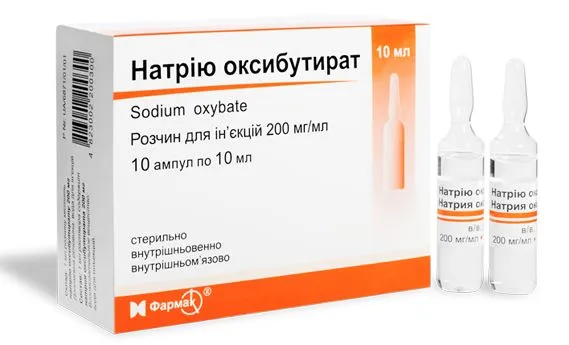
Table of Contents
INSTRUCTIONS FOR MEDICAL USE OF THE MEDICINAL PRODUCT SODIUM OXYBUTYRATE (Natrii oxybutyras)
Composition:
Active substance: sodium oxybutyrate;
1 ml of solution contains 200 mg of sodium oxybutyrate calculated as 100 % substance;
Excipient: water for injections.
Pharmaceutical form. Solution for injection.
Main physicochemical properties: clear, colorless liquid with a weak specific odor.
Pharmacotherapeutic group.
Agents for general anesthesia.
ATC code N01AX11.
Pharmacological Properties.
Pharmacodynamics.
Sodium oxybate is the sodium salt of γ-hydroxybutyric acid (GHB). Chemically and pharmacologically, it is similar to γ-aminobutyric acid (GABA), the primary inhibitory neurotransmitter in the central nervous system. It readily crosses the blood-brain barrier. The drug exhibits some nootropic activity and produces sedative, hypnotic, anesthetic, and central myorelaxant effects. It enhances the analgesic activity of both opioid and non-opioid analgesics and increases the resistance of the organism, including the brain, heart, and retina, to hypoxia, while also stimulating oxidative processes.
Pharmacokinetics.
Pharmacokinetic data are limited. The substance readily penetrates the blood-brain barrier and other histohematic barriers. After intravenous administration, it is eliminated from the blood within 2–3 hours.
Clinical characteristics.
Indications.
Non-inhalation anesthesia, induction and basal anesthesia in surgery, obstetrics, and gynecology.
In psychiatric and neurologic practice – intoxications, traumatic injuries of the central nervous system.
Contraindications.
Hypokalemia, myasthenia, pregnancy toxemia with hypertensive syndrome, hypersensitivity to the components of the drug, severe depression, deficiency of succinic semialdehyde dehydrogenase, pheochromocytoma.
Interaction with other medicinal products and other types of interactions.
When Sodium oxybate is used concomitantly with benzodiazepines, the risk of respiratory center depression increases. When Sodium oxybate is used together with opioid analgesics, barbiturates, muscle relaxants, or drugs that suppress the CNS, the sedative effect is potentiated. Since Sodium oxybate is metabolized by GABA (gamma-aminobutyric acid) - dehydrogenase, there is a potential risk of interaction with drugs that stimulate or inhibit this enzyme (valproate, phenytoin, and ethosuximide). The effect of antidepressants, alcohol, sedative-hypnotics may be enhanced when used concomitantly with Sodium oxybate. The frequency of adverse effects increases when Sodium oxybate is co-administered with tricyclic antidepressants.
Special precautions for use.
Sodium oxybate suppresses the respiratory center. Sodium oxybate should not be administered to patients with porphyria, as porphyrinogenic effects have been observed in animal experiments. During general anesthesia, sodium oxybate should not be used in patients with severe hypertension, bradycardia, impaired cardiac conduction, epilepsy, eclampsia, renal insufficiency, or in cases of alcohol abuse.
Patients with a history of depressive disorders and/or suicidal attempts require continuous monitoring during treatment with sodium oxybate. A low-sodium diet is recommended during treatment for patients with heart failure, moderate to severe hypertension, or moderate to severe renal dysfunction. In patients with impaired liver function, the elimination half-life and systemic exposure time of sodium oxybate may be prolonged. Alcohol consumption during treatment with this medicinal product is strictly prohibited.
Use during pregnancy or breastfeeding.
Sodium oxybate is not recommended during pregnancy, except for obstetrical procedures.
Sodium oxybate is not recommended during breastfeeding, as the drug may exert a sedative effect on the infant.
Ability to influence reaction rate when driving or operating machinery.
During treatment with this medicinal product, patients should refrain from driving vehicles or performing other tasks requiring heightened attention and rapid psychomotor reactions.
Administration and Dosage
Sodium oxybate is administered intravenously, intramuscularly, or orally for anesthesia. For intravenous administration in adults, the dose is 70–120 mg/kg body weight; in weakened patients, the dose is 50–70 mg/kg body weight. The solution should be injected slowly at a rate of 1–2 mL/min. The drug may also be dissolved in 50–100 mL of 5% (40%) glucose solution and administered by intravenous infusion. Patients typically fall asleep 5–7 minutes after the start of administration. In adults, sodium oxybate may also be administered intravenously at a dose of 35–40 mg/kg body weight simultaneously with sodium thiopental (4–6 mg/kg).
For intramuscular administration, sodium oxybate should be given at a dose of 120–150 mg/kg for monotherapy anesthesia or 100 mg/kg in combination with barbiturates (sodium thiopental).
In children, the drug should be administered intravenously at a dose of 100 mg/kg in 30–50 mL of 5% glucose solution over 5–10 minutes.
Prior to anesthesia with sodium oxybate, standard premedication (with promedol, atropine, diprazine, or pipolfen) must be administered. Maintenance of the main anesthesia on the background of baseline anesthesia with sodium oxybate should follow approved protocols.
For therapeutic obstetric anesthesia, the drug is administered intravenously slowly (1–2 mL per minute) at a dose of 50–60 mg/kg in 20 mL of 40% glucose solution over 10–15 minutes, or orally at a dose of 40–80 mg/kg. Sleep or light anesthesia lasts 1.5–3 hours. During transition to obstetric procedures, the drug should be administered intravenously over 10–15 minutes at a dose of 60–70 mg/kg, and on this background, intubation anesthesia should be performed with fractional administration of muscle relaxants.
In cases of pathology and traumatic brain injuries, as well as toxic systemic injuries accompanied by hypoxic brain edema, sodium oxybate is administered intravenously at a dose of 50–100 mg/kg (as part of a comprehensive treatment regimen).
A 5% solution of sodium oxybate may be administered orally, provided that preparation conditions ensure safe application and accurate dosing.
Orally, for anesthesia in adults, a 5% solution is administered at a dose of 100–200 mg/kg, 40–60 minutes before surgery.
In children, the drug is administered orally for induction anesthesia at a dose of 150 mg/kg in 20–30 mL of 5% glucose solution, 40–60 minutes before surgery.
Children. The drug is used in pediatric practice.
Overdose.
Symptoms: arterial hypotension, bradycardia (down to 40–50 beats/min), hypothermia, seizures, ataxia, vomiting, respiratory depression (including possible respiratory arrest), pronounced muscle relaxation with preservation of ocular reflexes, and possible intensification of adverse reactions. Psychomotor agitation may occur during emergence from anesthesia.
Treatment. To counteract these symptoms, artificial ventilation of the lungs (AVL), barbiturates, and neuroleptics are used. Symptomatic therapy should be applied to support respiratory and cardiovascular system functions.
Adverse Reactions.
The most common adverse reactions associated with the use of sodium oxybate are: dizziness, nausea.
Immune system disorders: hypersensitivity.
Metabolism and nutrition disorders: anorexia, decreased appetite.
Psychiatric disorders: depression, cataplexy, unusual dreams, confusion, disorientation, nightmares, sleepwalking, sleep disturbances, insomnia, agitation, suicidal attempts/thoughts, psychosis, paranoia, hallucinations, pathological thoughts, agitation, difficulty falling asleep.
Nervous system disorders: dizziness, vertigo, headache, somnolence, tremor, loss of coordination, attention disturbances, hypoesthesia, paresthesia, dysgeusia, muscle twitching, amnesia, restless legs syndrome, convulsions.
Eye disorders: blurred vision.
Cardiac and vascular disorders: palpitations, hypertension, bradycardia.
Respiratory system disorders: dyspnea, nasal congestion, nasopharyngitis, sinusitis, respiratory depression, apnea.
Gastrointestinal disorders: nausea, vomiting, diarrhea, abdominal pain, fecal incontinence.
Skin and subcutaneous tissue disorders: hyperhidrosis, rash, urticaria.
Musculoskeletal and connective tissue disorders: arthralgia, muscle spasm, back pain.
Renal and urinary disorders: urinary incontinence, nocturia.
Other: asthenia, fatigue, feeling of intoxication, hypokalemia, peripheral edema, weight gain.
Incompatibility.
Unknown.
Shelf life.
4 years.
Do not use the medication after the expiry date stated on the packaging.
Storage conditions.
Store in a protected from light place at a temperature between 15 °C and 25 °C.
Keep out of reach of children.
Packaging.
5 ml or 10 ml in an ampoule. 5 or 10 ampoules per pack.
Prescription category. Prescription only.
Manufacturer.
JSC "Farmak".
Manufacturer's location and address of business activity.
74, Kyrylivska Street, Kyiv, 04080, Ukraine.