Nardin
Ukraine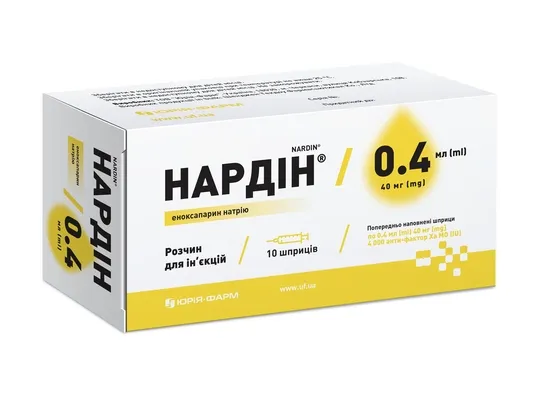
Table of Contents
INSTRUCTIONS FOR MEDICAL USE OF THE MEDICINAL PRODUCT NARDIN®
Composition:
Active substance: enoxaparin sodium;
1 ml of solution contains enoxaparin sodium with anti-Xa activity of 10,000 IU, equivalent to 100 mg of enoxaparin sodium;
2000 anti-Xa IU/0.2 ml, equivalent to 20 mg of enoxaparin sodium;
4000 anti-Xa IU/0.4 ml, equivalent to 40 mg of enoxaparin sodium;
6000 anti-Xa IU/0.6 ml, equivalent to 60 mg of enoxaparin sodium;
8000 anti-Xa IU/0.8 ml, equivalent to 80 mg of enoxaparin sodium;
10,000 anti-Xa IU/1.0 ml, equivalent to 100 mg of enoxaparin sodium;
Excipient: water for injections.
Pharmaceutical form. Solution for injection.
Main physicochemical properties: colorless or slightly yellow clear solution.
Pharmacotherapeutic group.
Antithrombotic agents. Heparin group. Enoxaparin.
ATC code B01AB05.
Pharmacological Properties.
Pharmacodynamics.
Enoxaparin is a low molecular weight heparin (LMWH) in which the antithrombotic and anticoagulant activities of standard heparin are dissociated. It has higher anti-Xa activity than anti-IIa (or antithrombin) activity (the ratio is 3.6).
When administered in prophylactic doses, enoxaparin has no significant effect on aPTT (activated partial thromboplastin time).
When therapeutic doses are administered, aPTT may be prolonged and may exceed the control time by 1.5–2.2 times at peak activity. This prolongation reflects residual antithrombin activity.
Treatment of acute ST-segment elevation myocardial infarction in combination with a thrombolytic agent in patients undergoing subsequent coronary angioplasty, as well as in patients not undergoing this procedure.
In a large-scale, multicenter clinical trial, 20,479 patients with acute ST-segment elevation myocardial infarction who had received fibrinolytic therapy were randomized to receive either enoxaparin as an intravenous bolus injection of 3000 anti-Xa IU, followed immediately by a subcutaneous dose of 100 anti-Xa IU/kg, then subcutaneous injections of 100 anti-Xa IU/kg every 12 hours, or intravenous unfractionated heparin as a bolus injection of 60 IU/kg (maximum 4000 IU) followed by a continuous infusion dosed according to activated partial thromboplastin time. Subcutaneous enoxaparin injections were continued until hospital discharge or for no more than 8 days (in 75% of cases, for at least 6 days). Half of the patients receiving heparin were treated for at least 48 hours (in 89.5% of cases, ≥36 hours). All patients also received acetylsalicylic acid for at least 30 days. The enoxaparin dose for patients aged ≥75 years was adjusted: 0.75 mg/kg (75 anti-Xa IU/kg) administered subcutaneously every 12 hours without an initial intravenous bolus injection.
During the study, 4716 (23%) patients underwent coronary angioplasty while on masked study treatment. Patients did not receive additional doses if less than 8 hours had elapsed between the last subcutaneous enoxaparin injection and balloon inflation, or received an intravenous bolus of enoxaparin 0.3 mg/kg (30 anti-Xa IU/kg) if more than 8 hours had elapsed between the last subcutaneous enoxaparin injection and balloon inflation.
Enoxaparin significantly reduced the incidence of events corresponding to the primary endpoint [combined endpoint including recurrent myocardial infarction and all-cause mortality during the 30-day observation period after enrollment: 9.9% in the enoxaparin group versus 12% in the unfractionated heparin group (relative risk reduction – 17%; p < 0.001)]. The rate of recurrent myocardial infarction was significantly lower in the enoxaparin group (3.4% versus 5%, p < 0.001, relative risk reduction – 31%). Mortality was lower in the enoxaparin group, although the difference between groups was not statistically significant (6.9% versus 7.5%, p = 0.11).
The advantage of enoxaparin regarding the primary endpoint was consistent across all subgroups (age, sex, site of myocardial infarction, diabetes or history of myocardial infarction, type of thrombolytic agent used, and time interval between symptom onset and treatment initiation).
Enoxaparin demonstrated significant superiority over unfractionated heparin in terms of the primary efficacy endpoint both in patients who underwent coronary angioplasty within the 30-day period after enrollment (10.8% versus 13.9%, 23% relative risk reduction) and in patients who did not undergo the procedure (9.7% versus 11.4%, 15% relative risk reduction).
The incidence of major bleeding by day 30 was significantly higher in the enoxaparin group (2.1%) compared to the heparin group (1.4%). The rate of gastrointestinal bleeding was higher in the enoxaparin group (0.5%) than in the heparin group (0.1%), while the rate of intracranial hemorrhage was similar in both groups (0.8% with enoxaparin versus 0.7% with heparin).
An analysis of combined clinical benefit criteria showed a statistically significant advantage (p < 0.0001) of enoxaparin over unfractionated heparin: a 14% relative risk reduction in favor of enoxaparin (11% versus 12.8%) for the combined endpoint of death, recurrent myocardial infarction, and severe bleeding (TIMI criteria) by day 30, and a 17% relative risk reduction (10.1% versus 12.2%) for the combined endpoint of death, recurrent myocardial infarction, and intracranial hemorrhage by day 30.
Pharmacokinetics.
The pharmacokinetic parameters of the drug are assessed by changes over time in anti-Xa and anti-IIa activity in blood plasma when administered within the recommended dose ranges.
Bioavailability. After subcutaneous administration, enoxaparin is rapidly and almost completely absorbed (nearly 100%). Peak plasma activity is observed between 3 and 4 hours after administration.
This peak activity (expressed in anti-Xa IU) is 0.18±0.04 (after 2000 anti-Xa IU), 0.43±0.11 (after 4000 anti-Xa IU), and 1.01±0.14 (after 10000 anti-Xa IU).
After an intravenous bolus injection of 30 mg (0.3 mL; 3000 anti-Xa IU), followed by subcutaneous injections of 1 mg/kg (100 anti-Xa IU/kg) every 12 hours, the initial peak anti-Xa concentration is 1.16 IU/mL (n = 16), and the mean area under the pharmacokinetic curve corresponds to 88% of the steady-state level. Steady state is achieved by day 2 of treatment.
Within the recommended dose range, the pharmacokinetics of enoxaparin are linear. Inter-individual and intra-individual variability is minimal. After repeated subcutaneous administration of 40 mg (0.4 mL; 4000 anti-Xa IU) once daily to healthy volunteers, steady state was reached by day 2, with mean enoxaparin activity approximately 15% higher than that observed after a single dose. Stable levels of enoxaparin activity are highly predictable after single-dose administration. After repeated subcutaneous administration of 1 mg/kg (100 anti-Xa IU/kg) twice daily, steady state was achieved between days 3 and 4, with mean AUC 65% higher than after a single dose, and peak and trough anti-Xa activities of 1.2 and 0.52 anti-Xa IU/mL, respectively. Based on the pharmacokinetic profile of sodium enoxaparin, this difference in achieving steady state is expected across the therapeutic dose range.
Anti-Xa activity in plasma after subcutaneous administration is nearly 10 times lower than anti-IIa activity. Mean peak anti-Xa activity occurs approximately 3–4 hours after subcutaneous injection, reaching 0.13 anti-Xa IU/mL after repeated administration of 1 mg/kg (100 anti-Xa IU/kg) twice daily.
Distribution. The volume of distribution of sodium enoxaparin based on anti-Xa activity is approximately 5 L, nearly corresponding to the volume of circulating blood.
Metabolism. Enoxaparin is metabolized primarily in the liver (via desulfation and depolymerization).
Elimination. After subcutaneous injection, the half-life based on anti-Xa activity of low molecular weight heparins is longer than that of unfractionated heparins.
Elimination of enoxaparin is monophasic, with a half-life of approximately 4 hours after a single subcutaneous dose and nearly 7 hours with repeated dosing. Low molecular weight heparins are characterized by a more rapid decline in plasma anti-IIa activity compared to anti-Xa activity.
Enoxaparin and its metabolites are excreted in urine (non-saturable mechanism) and in bile.
Renal clearance of substances with anti-Xa activity accounts for 10% of the administered dose, and total renal excretion of active and inactive metabolites accounts for 40% of the dose.
Special Risk Groups
Elderly patients. As this age group typically exhibits physiological decline in renal function, elimination is slower. This does not require dosage adjustment or changes in administration regimen for prophylactic treatment. However, it is essential to systematically monitor renal function in patients aged 75 years and older using the Cockcroft formula before initiating treatment with LMWHs.
Patients with mild to moderate renal impairment (creatinine clearance >30 mL/min).
In individual cases, monitoring of anti-Xa activity may be useful to rule out the possibility of overdosing when enoxaparin is used at therapeutic doses.
Clinical characteristics.
Indications.
The medicinal product is indicated for use in adults:
- for the prevention of venous thromboembolic complications in surgical patients with moderate and high risk, especially in patients undergoing orthopedic or general surgical procedures, including surgery for oncological diseases;
- for the prevention of venous thromboembolic complications in medical patients with acute conditions (such as acute heart failure, respiratory failure, severe infections or rheumatic diseases) and reduced mobility, who are at increased risk of venous thromboembolism;
- for the treatment of deep vein thrombosis (DVT) and pulmonary embolism (PE), except in cases of PE where thrombolytic therapy or surgical intervention may be required;
- for the prevention of clot formation in the extracorporeal circulation during hemodialysis;
- in acute coronary syndrome:
- for the treatment of unstable angina and non-ST-segment elevation myocardial infarction (NSTEMI), in combination with oral acetylsalicylic acid;
- for the treatment of acute ST-segment elevation myocardial infarction (STEMI), including in patients planned for pharmacological therapy or subsequent percutaneous coronary intervention (PCI).
Contraindications.
Sodium enoxaparin is contraindicated in patients with the following conditions:
- hypersensitivity to sodium enoxaparin, heparin or its derivatives, including other low molecular weight heparins;
- history of immune-mediated heparin-induced thrombocytopenia (HIT) within the last 100 days in the presence of circulating antibodies (see also section "Special precautions");
- active clinically significant bleeding and conditions with a high risk of bleeding, including recent hemorrhagic stroke, gastrointestinal ulcer, presence of malignant neoplasm with high bleeding risk, recent surgery on the brain, spinal cord or eyes, known or suspected esophageal varices, arteriovenous malformations, vascular aneurysms, or serious congenital abnormalities of intraspinal or intracerebral vessels;
- spinal or epidural anesthesia or locoregional anesthesia if sodium enoxaparin has been used for treatment within the previous 24 hours (see section "Special precautions").
Interaction with other medicinal products and other forms of interaction.
Concomitant use with the following medicinal products is not recommended.
Medicinal products affecting hemostasis (see section "Special precautions"). Some agents affecting hemostasis should be discontinued prior to initiating enoxaparin sodium therapy, except when such agents are absolutely indicated. If such combination is indicated, enoxaparin sodium should be administered with careful clinical and laboratory monitoring.
These include:
- salicylates for systemic use, acetylsalicylic acid at anti-inflammatory doses, and nonsteroidal anti-inflammatory drugs (NSAIDs), including ketorolac;
- other thrombolytics (e.g., alteplase, reteplase, streptokinase, tenecteplase, urokinase) and anticoagulants (see section "Method of administration and dosage").
Medicinal products requiring caution when used concomitantly.
- Other medicinal products affecting hemostasis, such as:
- platelet aggregation inhibitors, including acetylsalicylic acid used at antiplatelet (cardioprotective) doses, clopidogrel, ticlopidine, and glycoprotein IIb/IIIa antagonists indicated in acute coronary syndrome – risk of bleeding;
- dextran 40;
- systemic glucocorticoids.
- Medicinal products that increase serum potassium levels may be prescribed concomitantly with sodium enoxaparin with careful clinical and laboratory monitoring (see sections "Special precautions" and "Side effects").
Special precautions for use.
Enoxaparin sodium cannot be considered as interchangeable (unit for unit) with other low-molecular-weight heparins (LMWHs). These medicinal products differ in their manufacturing processes, molecular weights, specific anti-Xa and anti-IIa activities, units of activity, dosing regimens, and clinical efficacy and safety. These differences result in variations in pharmacokinetics and biological activity (e.g., antithrombin activity, platelet interactions).
Therefore, the instructions for medical use of each medicinal product must be studied and strictly followed.
History of heparin-induced thrombocytopenia (HIT) (>100 days).
Administration of enoxaparin sodium to patients with a history of immune-mediated HIT within the last 100 days in the presence of circulating antibodies is contraindicated (see section "Contraindications"). Circulating antibodies may persist for several years.
Enoxaparin sodium should be used with extreme caution in patients with a history (>100 days) of immune-mediated HIT in the absence of circulating antibodies. The decision to use enoxaparin sodium in such cases should be made only after careful benefit-risk assessment and after considering the possibility of using alternative non-heparin treatments (e.g., danaparoid sodium or lepirudin).
Platelet monitoring.
There is a risk of antibody-mediated HIT during treatment with LMWHs, which typically develops between days 5 and 21 after initiation of enoxaparin sodium therapy.
The risk of HIT is higher in patients undergoing surgical procedures, particularly after cardiac surgery, and in patients with oncological diseases.
Therefore, platelet counts should be determined before starting enoxaparin sodium therapy and regularly monitored during treatment.
If clinical symptoms suggestive of HIT occur (any new episode of arterial and/or venous thromboembolism, any painful skin lesion at the injection site, or any allergic or anaphylactoid reactions during treatment), platelet counts should be determined. Patients should be informed about the possibility of such symptoms and advised to report them to their physician immediately.
In clinical practice, if a confirmed significant decrease in platelet count (30–50% from baseline) is observed, enoxaparin sodium should be discontinued immediately and the patient should be switched to an alternative non-heparin anticoagulant therapy.
Bleeding events.
As with other anticoagulants, bleeding or hemorrhage of any localization may occur. In case of bleeding, the source should be investigated and appropriate treatment initiated.
Enoxaparin sodium, like any other anticoagulant, should be used with caution in conditions that increase the risk of bleeding, such as:
- coagulation disorders;
- history of peptic ulcer;
- recent ischemic stroke;
- severe arterial hypertension;
- recent development of diabetic retinopathy;
- surgery on the nervous system or eyes;
- concomitant use of medicinal products affecting hemostasis (see section "Interaction with other medicinal products and other forms of interaction").
Laboratory tests.
At doses used for prevention of venous thromboembolism, enoxaparin sodium has no significant effect on bleeding time, general coagulation parameters, platelet aggregation, or fibrinogen binding to platelets.
When higher doses are used, activated partial thromboplastin time (aPTT) and activated clotting time (ACT) may increase. Since there is no linear correlation between increases in aPTT and ACT and enhanced antithrombotic activity of enoxaparin sodium, these parameters are unreliable and should not be used for monitoring enoxaparin sodium activity.
Use of the medicinal product during spinal/epidural anesthesia or lumbar puncture.
Spinal/epidural anesthesia or lumbar puncture should not be performed within 24 hours after administration of therapeutic doses of enoxaparin sodium (see also section "Contraindications").
Cases of neuraxial hematomas have been reported with concomitant use of enoxaparin sodium and spinal/epidural anesthesia or spinal puncture, leading to long-term or irreversible paralysis. These events are rare when enoxaparin sodium is used at a dose of 4000 IU (40 mg) once daily or at lower doses. The risk of such events is higher when postoperative continuous epidural catheters are used, with concomitant use of other medicinal products affecting hemostasis (e.g., non-steroidal anti-inflammatory drugs), following traumatic or repeated epidural or spinal procedures, or in patients with a history of spinal surgery or spinal deformities.
To minimize the potential risk of bleeding associated with concomitant use of enoxaparin sodium and procedures involving epidural or spinal anesthesia/analgesia or lumbar puncture, the pharmacokinetic profile of enoxaparin sodium should be considered (see section "Pharmacokinetics"). Insertion or removal of an epidural catheter or performance of lumbar puncture should ideally be performed when the anticoagulant effect of enoxaparin sodium is low; however, the exact time to achieve sufficiently low anticoagulant effect in individual patients is unknown. It should also be noted that elimination of enoxaparin sodium is prolonged in patients with creatinine clearance of 15–30 mL/min (see section "Dosage and administration").
If a physician decides to use anticoagulant therapy during epidural or spinal anesthesia/analgesia or lumbar puncture, careful monitoring of the patient for neurological symptoms such as midline back pain, sensory or motor disturbances (numbness or weakness in lower limbs), or bowel and/or bladder dysfunction is required. Patients should be instructed to immediately report any of these symptoms to their physician. If spinal hematoma is suspected, immediate diagnostic and therapeutic measures should be initiated, including consideration of spinal cord decompression, even though such treatment may not prevent adverse neurological outcomes.
Skin necrosis / cutaneous vasculitis. Cases of skin necrosis and cutaneous vasculitis have been reported during treatment with low-molecular-weight heparins; in such cases, the medicinal product should be discontinued immediately.
Percutaneous coronary interventions. To minimize the risk of bleeding after invasive vascular procedures in the treatment of unstable angina, non-ST-segment elevation myocardial infarction (NSTEMI), and acute ST-segment elevation myocardial infarction (STEMI), recommended intervals between enoxaparin sodium doses must be strictly observed. Achieving hemostasis at the puncture site after percutaneous coronary intervention (PCI) is essential. If a vascular closure device is used, the introducer can be removed immediately after the procedure. If manual compression is used, the introducer should be removed 6 hours after the last intravenous or subcutaneous dose of enoxaparin sodium. If enoxaparin sodium therapy is to be continued, the next scheduled dose should be administered no earlier than 6–8 hours after removal of the introducer. The catheter insertion site should be monitored for early detection of signs of bleeding or hematoma formation.
Acute infective endocarditis. Heparin use in patients with acute infective endocarditis is generally not recommended due to the risk of cerebral hemorrhage. If such use is considered absolutely necessary, the decision should be made only after careful individual benefit-risk assessment.
Mechanical heart valves. The use of enoxaparin sodium for thromboprophylaxis in patients with mechanical heart valves has not been adequately studied. Isolated cases of mechanical heart valve thrombosis have been reported in patients receiving enoxaparin sodium for thromboprophylaxis. The presence of additional risk factors, underlying disease, and insufficient clinical data limit the evaluation of these cases. In some reported cases in pregnant women, valve thrombosis resulted in maternal and fetal death.
Pregnant women with mechanical heart valves. The use of enoxaparin sodium for thromboprophylaxis in pregnant women with mechanical heart valves has not been adequately studied. In a clinical trial where pregnant women with mechanical heart valves received enoxaparin sodium (100 IU/kg (1 mg/kg) twice daily) to reduce thromboembolic risk, two out of eight women developed blood clots leading to valve obstruction and maternal and fetal death. Post-marketing reports have also described valve thrombosis in pregnant women with mechanical heart valves receiving enoxaparin sodium for thromboprophylaxis. Pregnant women with mechanical heart valves may have an increased risk of thromboembolic events.
Elderly patients. When used at prophylactic dose ranges in elderly patients, no increased tendency to bleeding was observed. However, elderly patients (especially those aged 80 years and older) have an increased risk of hemorrhagic complications when therapeutic doses are used. For patients over 75 years of age receiving treatment for ST-segment elevation myocardial infarction (STEMI), careful clinical monitoring is recommended, and dose reduction may be considered (see sections "Dosage and administration" and "Pharmacokinetics").
Renal impairment. In patients with renal impairment, exposure to enoxaparin sodium is increased, raising the risk of bleeding. Careful clinical monitoring is recommended for such patients, and biological monitoring via anti-Xa activity measurement may be considered (see sections "Dosage and administration" and "Pharmacokinetics").
Enoxaparin sodium is not recommended for patients with end-stage renal disease (creatinine clearance <15 mL/min) due to lack of adequate data in this population, except for prevention of clotting in the extracorporeal circuit during hemodialysis.
For patients with severe renal impairment (creatinine clearance 15–30 mL/min), due to significantly increased exposure to enoxaparin sodium, dose adjustment is recommended both for therapeutic and prophylactic use (see section "Dosage and administration").
Dose adjustment is not required for patients with moderate (creatinine clearance 30–50 mL/min) or mild (creatinine clearance 50–80 mL/min) renal impairment.
Hepatic impairment. Enoxaparin sodium should be used with caution in patients with hepatic impairment due to increased bleeding risk. Dose adjustment based on anti-Xa activity monitoring is unreliable in patients with liver cirrhosis and is not recommended (see section "Pharmacokinetics").
Low body weight. Increased exposure to enoxaparin sodium administered at prophylactic doses (without body weight adjustment) has been observed in women with low body weight (<45 kg) and men with low body weight (<57 kg), increasing the risk of bleeding. Therefore, careful clinical monitoring is recommended for these patients (see section "Pharmacokinetics").
Obese patients. Obese patients have an increased risk of thromboembolic events. The safety and efficacy of prophylactic doses of the medicinal product in obese patients (BMI >30 kg/m²) have not been sufficiently studied, and there is currently no consensus on whether dose adjustment is necessary for this patient group. Careful monitoring for possible signs of thromboembolism is required in these patients.
Hyperkalemia. Heparins may suppress aldosterone secretion in the adrenal glands, leading to hyperkalemia (see section "Adverse reactions"), particularly in patients with diabetes mellitus, chronic renal failure, pre-existing metabolic acidosis, or those receiving medicinal products that may increase potassium levels (see section "Interaction with other medicinal products and other forms of interaction"). Plasma potassium levels should be monitored periodically, especially in patients at increased risk of hyperkalemia.
Traceability. Low-molecular-weight heparins are biological medicinal products. To improve traceability, it is recommended that healthcare professionals record the trade name and batch number of the administered product in the patient's medical records.
Use during pregnancy or breastfeeding.
Pregnancy. There is no evidence that enoxaparin crosses the human placental barrier during the second and third trimesters of pregnancy. Data for the first trimester are currently unavailable.
Animal studies have shown no signs of fetotoxicity or teratogenicity. Experimental data in animals indicate minimal placental transfer of enoxaparin.
Enoxaparin sodium should be administered to pregnant women only if clearly needed, as determined by the physician.
Pregnant women receiving enoxaparin sodium should be closely monitored for signs of bleeding or excessive anticoagulant effect, and should be informed about the risk of hemorrhagic events. Overall, available data suggest no evidence of increased risk of bleeding, thrombocytopenia, or osteoporosis in such patients compared to non-pregnant women, except for the risk observed in pregnant women with mechanical heart valves (see section "Special precautions for use").
If epidural anesthesia is planned, discontinuation of enoxaparin sodium therapy is recommended prior to the procedure (see section "Special precautions for use").
Breastfeeding. It is unknown whether enoxaparin is excreted in human breast milk. In rats during lactation, transfer of enoxaparin or its metabolites into milk is very low.
Since oral absorption of enoxaparin sodium is unlikely, it may be used during breastfeeding.
Fertility. Clinical data on the effect of enoxaparin sodium on fertility are currently unavailable. Animal studies did not demonstrate any effect of the medicinal product on fertility.
Effect on ability to drive or operate machinery.
The effect of enoxaparin sodium on the ability to drive or operate machinery is absent or negligible.
Dosage and Administration.
Dosage.
Prophylaxis of venous thromboembolic complications in surgical patients with moderate and high risk. Individual thromboembolic risk in patients can be assessed using a validated risk stratification model (scale).
- For patients with moderate risk of thromboembolic complications, the recommended dose of sodium enoxaparin is 2000 IU (20 mg) once daily administered by subcutaneous (s.c.) injection. Preoperative initiation (approximately 2 hours before surgery) of sodium enoxaparin at a dose of 2000 IU (20 mg) has been shown to be effective and safe in surgical procedures associated with moderate risk.
In patients at moderate risk, prophylactic treatment with sodium enoxaparin should continue for a period of at least 7–10 days, regardless of recovery status (e.g., mobility). Prophylaxis should be continued until the patient no longer exhibits significantly reduced mobility.
- For patients with high risk of thromboembolic complications, the recommended dose of sodium enoxaparin is 4000 IU (40 mg) once daily, preferably administered by subcutaneous (s.c.) injection 12 hours before surgery. If prophylactic administration of sodium enoxaparin needs to begin more than 12 hours before surgery (e.g., a high-risk patient awaiting delayed orthopedic surgery), the last injection should be administered no later than 12 hours before surgery, and prophylactic treatment should be resumed 12 hours after surgery.
- For patients undergoing major orthopedic surgery, extended thromboprophylaxis is recommended — up to 5 weeks.
- For patients at high risk of venous thromboembolism (VTE) undergoing abdominal or pelvic surgery for oncological diseases, extended thromboprophylaxis is recommended — up to 4 weeks.
Prophylaxis of venous thromboembolism in medical patients. The recommended dose of sodium enoxaparin is 4000 IU (40 mg) once daily administered by s.c. injection.
- Prophylactic treatment with sodium enoxaparin should last at least 6–14 days, depending on recovery status (e.g., mobility). The benefit of treatment beyond 14 days has not yet been established.
Treatment of deep vein thrombosis (DVT) and pulmonary embolism (PE). Sodium enoxaparin should be administered s.c. as a single daily injection of 150 IU/kg (1.5 mg/kg) or as two daily injections of 100 IU/kg (1 mg/kg) twice daily.
The dosing regimen should be selected by the physician based on individual assessment, including evaluation of thromboembolic risk and bleeding risk. The regimen of 150 IU/kg (1.5 mg/kg) once daily is recommended for uncomplicated patients at low risk of recurrent VTE. The regimen of 100 IU/kg (1 mg/kg) twice daily should be prescribed to all other patients, such as those with obesity, symptomatic PE, cancer, recurrent VTE, or proximal venous thrombosis (iliac vein).
Sodium enoxaparin is typically administered for an average of 10 days. If necessary, oral anticoagulants should be initiated (see "Transition from sodium enoxaparin to oral anticoagulants" at the end of this section).
Prophylaxis of thrombus formation during hemodialysis. The recommended dose of sodium enoxaparin is 100 IU/kg (1 mg/kg). For patients at high risk of bleeding complications, the dose should be reduced to 50 IU/kg (0.5 mg/kg) with dual vascular access or to 75 IU/kg (0.75 mg/kg) with single vascular access.
During hemodialysis, sodium enoxaparin should be administered into the arterial limb of the circuit at the beginning of the dialysis session. This dose is generally sufficient for a 4-hour dialysis session. However, if fibrin rings appear, for example during prolonged sessions, an additional dose of 50–100 IU/kg (0.5–1 mg/kg) may be administered.
There are no data on the use of sodium enoxaparin in patients for prophylaxis or treatment during hemodialysis sessions.
Acute coronary syndrome: treatment of unstable angina and non-ST-segment elevation myocardial infarction (NSTEMI), and acute ST-segment elevation myocardial infarction (STEMI).
- For treatment of unstable angina and NSTEMI, the recommended dose of sodium enoxaparin is 100 IU/kg (1 mg/kg) administered every 12 hours by s.c. injection, in combination with antiplatelet therapy. Treatment should be initiated for at least 2 days and continued until clinical stabilization of the patient. The usual duration of treatment is 2–8 days.
- All uncomplicated patients should receive oral acetylsalicylic acid, with an initial loading dose of 150–300 mg (for patients not previously on acetylsalicylic acid) followed by a maintenance dose of 75–325 mg/day long-term, regardless of treatment strategy.
- For treatment of acute STEMI, the recommended dose of sodium enoxaparin is a single intravenous (i.v.) bolus of 3000 IU (30 mg) plus a s.c. dose of 100 IU/kg (1 mg/kg), followed by s.c. administration of 100 IU/kg (1 mg/kg) every 12 hours (maximum 10000 IU [100 mg] for each of the first two s.c. doses). Concomitant antiplatelet therapy, such as oral acetylsalicylic acid (75–325 mg once daily), should be administered unless contraindicated. The recommended duration of treatment is 8 days or until hospital discharge, whichever occurs earlier. When used in combination with thrombolytic therapy (fibrin-specific or non-fibrin-specific), sodium enoxaparin should be administered between 15 minutes before and 30 minutes after the initiation of fibrinolytic therapy.
- Dosage specifics for patients aged ≥75 years are provided below ("Elderly patients").
- For patients undergoing PCI, if the last s.c. dose of sodium enoxaparin was administered less than 8 hours before balloon inflation, no additional dose is required. If the last s.c. dose was administered more than 8 hours before balloon inflation, an i.v. bolus of 30 IU/kg (0.3 mg/kg) of sodium enoxaparin should be administered.
Pediatric patients. The safety and efficacy of sodium enoxaparin in pediatric patients have not been established.
Elderly patients. For all indications except ST-segment elevation myocardial infarction (STEMI), dose adjustment in elderly patients is not required, unless renal impairment is present (see below "Renal impairment" and section "Special precautions").
For treatment of STEMI in elderly patients (≥75 years), the initial i.v. bolus dose should not be administered. Treatment should begin with a s.c. dose of 75 IU/kg (0.75 mg/kg) every 12 hours (maximum 7500 IU [75 mg] for each of the first two s.c. doses), followed by continued s.c. administration of 75 IU/kg (0.75 mg/kg). Dosage specifics for elderly patients with renal impairment are described below in the subsection "Renal impairment" and section "Special precautions".
Hepatic impairment. Limited data are currently available on the use of the drug in patients with hepatic impairment (see sections "Pharmacodynamics" and "Pharmacokinetics"); therefore, caution should be exercised in this patient population (see section "Special precautions").
Renal impairment (see sections "Special precautions" and "Pharmacokinetics").
Severe renal impairment. Sodium enoxaparin is not recommended for patients with end-stage renal disease (creatinine clearance <15 mL/min) due to lack of adequate data in this population, except for prophylaxis of thrombus formation in the extracorporeal circuit during hemodialysis.
Table 1.
Dosing for patients with severe renal impairment (creatinine clearance 15–30 mL/min)
| Indications |
Dosing regimen |
| Prevention of venous thromboembolic complications |
2000 IU (20 mg) s.c. once daily |
| Treatment of VTE and PE |
100 IU/kg (1 mg/kg) body weight s.c. once daily |
| Treatment of unstable angina and NSTEMI |
100 IU/kg (1 mg/kg) body weight s.c. once daily |
| Treatment of acute STEMI (in patients under 75 years of age) Treatment of acute STEMI (in patients over 75 years of age) |
1 × 3000 IU (30 mg) i.v. bolus plus 100 IU/kg (1 mg/kg) body weight s.c., then 100 IU/kg (1 mg/kg) body weight s.c. every 24 hours Without initial i.v. bolus: 100 IU/kg (1 mg/kg) body weight s.c., then 100 IU/kg (1 mg/kg) body weight s.c. every 24 hours |
The recommended dose adjustment does not apply to the use of the drug for hemodialysis.
- Mild and moderate renal impairment. Although dose adjustment is not required for patients with mild (creatinine clearance 50–80 mL/min) and moderate (creatinine clearance 30–50 mL/min) renal impairment, careful clinical monitoring of their condition is necessary.
Administration method. Nardín® must not be administered intramuscularly.
For the prevention of venous thromboembolic complications following surgery, treatment of DVT and PE, and treatment of unstable angina and NSTEMI, enoxaparin sodium should be administered via subcutaneous (s.c.) injection.
- For the treatment of acute STEMI, the drug should be initiated with a single intravenous (i.v.) bolus injection followed immediately by s.c. administration.
- For the prevention of thrombus formation in the extracorporeal circulation during hemodialysis, the drug should be administered into the arterial line of the dialysis circuit.
Technique of s.c. injection.
Administration of the drug is best performed with the patient lying down. Enoxaparin sodium is administered by deep subcutaneous injection.
To avoid loss of medication when using prefilled syringes, air bubbles should not be expelled from the syringe before injection. If dose adjustment according to patient body weight is required, graduated prefilled syringes should be used, allowing the appropriate volume to be obtained by removing the excess before injection. It should be noted that in some cases an exact dose may not be achievable due to the syringe’s graduation markings, and in such cases the volume should be rounded to the nearest graduation mark.
The injection should be alternated between the left and right anterolateral or posterolateral abdominal walls.
The needle should be inserted vertically along its full length into a skin fold gently held between the thumb and index finger. The skin fold should be held throughout the injection. The injection site should not be massaged after administration.
The safety mechanism of the prefilled syringe with a needle protection system is activated at the end of the injection.
If the patient is self-administering the drug, they should be advised to follow the instructions for self-administration of Nardín® from the prefilled syringe.
Intravenous (bolus) injection [only when the drug is indicated for acute ST-segment elevation myocardial infarction (STEMI)].
For the treatment of acute STEMI, administration should begin with a single i.v. bolus injection, followed immediately by s.c. administration.
For i.v. injection, either a multidose vial or a prefilled syringe may be used.
Enoxaparin sodium should be administered through an i.v. infusion system. It must not be mixed or co-administered with other medicinal products. To avoid potential mixing of enoxaparin sodium with other drugs, the selected i.v. access should be flushed with an adequate amount of 0.9% sodium chloride solution or glucose solution before and after the i.v. bolus of enoxaparin sodium to clear the administration port of other drugs. Enoxaparin sodium can be safely administered with 0.9% sodium chloride solution or 5% glucose solution.
Initial bolus 3000 IU (30 mg). To administer the initial bolus of 3000 IU (30 mg) using a graduated prefilled syringe, the excess volume should be expelled so that only 3000 IU (30 mg) remains in the syringe. The 3000 IU (30 mg) dose can then be administered directly i.v.
Additional bolus for patients undergoing PCI. An additional i.v. bolus of 30 IU/kg (0.3 mg/kg) is required if the last s.c. dose was administered more than 8 hours before balloon inflation.
To ensure accurate administration of such a small volume, it is recommended to dilute the drug to a concentration of 300 IU/mL (3 mg/mL).
Draw the required volume of the diluted solution into a syringe for administration via the i.v. infusion system.
After dilution, the volume to be administered can be calculated using the following formula: [Volume of diluted solution (mL) = Patient’s body weight (kg) × 0.1] — or by using Table 2. Dilution should be performed immediately before drug administration.
Table 2.
Volume to be administered through the i.v. infusion system after dilution of the drug to a concentration of 300 IU (3 mg)/mL.
| Body weight |
Required dose 30 IU/kg (0.3 mg/kg) |
Volume to be administered after dilution of the medicinal product to a final concentration of 300 IU (3 mg)/ml |
|
| kg |
IU |
mg |
ml |
| 45 |
1350 |
13.5 |
4.5 |
| 50 |
1500 |
15 |
5 |
| 55 |
1650 |
16.5 |
5.5 |
| 60 |
1800 |
18 |
6 |
| 65 |
1950 |
19.5 |
6.5 |
| 70 |
2100 |
21 |
7 |
| 75 |
2250 |
22.5 |
7.5 |
| 80 |
2400 |
24 |
8 |
| 85 |
2550 |
25.5 |
8.5 |
| 90 |
2700 |
27 |
9 |
| 95 |
2850 |
28.5 |
9.5 |
| 100 |
3000 |
30 |
10 |
| 105 |
3150 |
31.5 |
10.5 |
| 110 |
3300 |
33 |
11 |
| 115 |
3450 |
34.5 |
11.5 |
| 120 |
3600 |
36 |
12 |
| 125 |
3750 |
37.5 |
12.5 |
| 130 |
3900 |
39 |
13 |
| 135 |
4050 |
40.5 |
13.5 |
| 140 |
4200 |
42 |
14 |
| 145 |
4350 |
43.5 |
14.5 |
| 150 |
4500 |
45 |
15 |
Administration into the arterial segment of the dialysis circuit. The drug is administered into the arterial line of the dialysis circuit to prevent clot formation in the extracorporeal blood circuit during hemodialysis.
Transition from sodium enoxaparin to oral anticoagulants.
Transition from sodium enoxaparin to vitamin K antagonists (VKAs). Close clinical and laboratory monitoring [prothrombin time expressed as international normalized ratio (INR)] is required to monitor the effect of VKAs.
Since it takes time for VKAs to reach their maximum effect, administration of sodium enoxaparin at a constant dose should be continued until INR values remain within the target therapeutic range for the respective indication, confirmed by two consecutive measurements.
In patients currently receiving VKAs, VKAs should be discontinued and the first dose of sodium enoxaparin should be administered when the INR decreases to a level below the therapeutic range.
Transition from sodium enoxaparin to direct oral anticoagulants (DOACs) and vice versa. In patients currently receiving sodium enoxaparin, sodium enoxaparin should be discontinued and DOAC therapy initiated 0–2 hours (depending on the medical instructions for each DOAC) before the next scheduled dose of sodium enoxaparin.
In patients currently receiving DOACs, the first dose of sodium enoxaparin should be administered at the time when the next DOAC dose would have been due.
Use of the drug in spinal/epidural anesthesia or lumbar puncture. If the physician considers anticoagulant use necessary during spinal/epidural anesthesia/analgesia or lumbar puncture, careful neurological monitoring is recommended due to the risk of neuroaxial hematoma (see section "Special precautions").
Prophylactic dose administration. A minimum interval of at least 12 hours should elapse between the last prophylactic subcutaneous injection of sodium enoxaparin and the insertion of a needle or catheter.
For procedures involving prolonged access, a similar interval of at least 12 hours should be maintained before catheter removal.
In patients with creatinine clearance of 15–30 mL/min, it may be advisable to double the time interval before performing the puncture or inserting/removing the catheter to at least 24 hours.
The initial administration of sodium enoxaparin 2000 IU (20 mg) two hours before surgery does not apply when performing neuroaxial anesthesia.
Therapeutic dose administration. A minimum interval of at least 24 hours should elapse between the last therapeutic dose of sodium enoxaparin and the insertion of a needle or catheter (see also section "Contraindications").
For procedures involving prolonged access, a similar interval of at least 24 hours should be maintained before catheter removal.
In patients with creatinine clearance of 15–30 mL/min, it may be advisable to double the time interval before performing the puncture or inserting/removing the catheter to at least 48 hours.
Patients receiving the drug according to a twice-daily regimen (i.e., 75 IU/kg [0.75 mg/kg] twice daily or 100 IU/kg [1 mg/kg] twice daily) should skip the second dose of sodium enoxaparin to ensure an adequate time interval before catheter insertion or removal.
At these time points, anti-Xa activity of the drug is still detectable, and adherence to these time intervals does not guarantee prevention of neuroaxial hematoma.
Therefore, sodium enoxaparin should not be administered for at least 4 hours after spinal/epidural puncture or catheter removal. This time interval should be based on a benefit-risk assessment considering both thrombosis risk and bleeding risk associated with the procedure and the patient's individual risk factors.
Instructions for self-administration of Nardine® prefilled syringes
- Wash hands with soap and water. Dry them thoroughly.
- Select an injection site in the right or left abdominal area. This site should be at least 5 centimeters away from the navel (toward the sides). The injection site should be rotated, alternating between the right and left sides of the abdomen, depending on the side used for the previous injection.
- Clean the injection site with an alcohol swab.
- Carefully remove the cap from the needle attached to the prefilled syringe containing Nardine®. Discard the cap. The syringe is prefilled and ready for use. DO NOT press the plunger before injection to expel air bubbles, as this may result in loss of medication. After removing the cap, avoid contact of the needle with any surface to maintain sterility.
- Hold the syringe in your hand like a pencil. With the index and thumb of the other hand, gently pinch the cleaned abdominal skin to form a skin fold. It is essential to maintain the skin fold throughout the entire injection.
- Hold the syringe so that the needle points downward (perpendicular at a 90° angle). Insert the needle fully into the skin fold.
- Press the syringe plunger with your finger. Continue to hold the skin fold throughout the injection.
- Remove the needle by pulling it straight out in the reverse direction. You may now release the skin fold. Immediately dispose of the syringe in the nearest sharps container.
To avoid bruising, do not rub the injection site after drug administration.
Children.
The safety and efficacy of sodium enoxaparin in pediatric patients have not yet been established.
Overdose.
Symptoms. Accidental overdose of sodium enoxaparin via intravenous, extracorporeal, or subcutaneous administration may lead to hemorrhagic complications. Oral ingestion, even of high doses, is unlikely to result in significant absorption of sodium enoxaparin.
Treatment. The anticoagulant effects of the drug can be largely neutralized by slow intravenous administration of protamine. The dose of protamine depends on the administered dose of sodium enoxaparin:
- 1 mg of protamine neutralizes the anticoagulant effect of 100 IU (1 mg) of sodium enoxaparin if sodium enoxaparin was administered within the previous 8 hours.
- An infusion of protamine at a dose of 0.5 mg per 100 IU (1 mg) of sodium enoxaparin may be used if sodium enoxaparin was administered more than 8 hours prior to protamine administration or if a second dose of protamine is required.
- Administration of protamine may not be necessary more than 12 hours after sodium enoxaparin injection.
However, even with high doses of protamine, the anti-Xa activity of sodium enoxaparin is never completely neutralized (maximum approximately 60%) (see medical instructions for protamine salts).
Adverse reactions.
The effect of sodium enoxaparin was studied in clinical trials involving more than 15,000 patients. Among them were 1,776 patients at increased risk of thromboembolic complications who received the drug for prophylaxis of deep vein thrombosis after orthopedic or abdominal surgery, 1,169 patients with acute medical conditions and very limited mobility who received the drug for prophylaxis of deep vein thrombosis, 559 patients who received the drug for treatment of deep vein thrombosis with or without pulmonary embolism, 1,578 patients who received the drug for treatment of unstable angina and non-Q-wave myocardial infarction, and 10,176 patients who received the drug for treatment of acute ST-segment elevation myocardial infarction. Dosing regimens of sodium enoxaparin in these clinical trials varied depending on the indication. The dose of sodium enoxaparin for prophylaxis of deep vein thrombosis after surgery or in patients with acute medical conditions and very limited mobility was 4000 IU (40 mg) subcutaneously once daily. For treatment of deep vein thrombosis with or without pulmonary embolism, patients received sodium enoxaparin either at a dose of 100 IU/kg (1 mg/kg) subcutaneously every 12 hours, or 150 IU/kg (1.5 mg/kg) subcutaneously once daily. In clinical trials where the drug was used for treatment of unstable angina and non-Q-wave myocardial infarction, the dose was 100 IU/kg (1 mg/kg) subcutaneously every 12 hours. In the clinical trial where the drug was used for treatment of acute ST-segment elevation myocardial infarction, the dosing regimen of sodium enoxaparin included an intravenous bolus of 3000 IU (30 mg), followed by subcutaneous administration of the drug at a dose of 100 IU/kg (1 mg/kg) every 12 hours.
In clinical trials, the most frequently reported adverse reactions were hemorrhagic events, thrombocytopenia, and thrombocytosis (see sections "Special precautions" and "Description of selected adverse reactions" below).
Other adverse reactions observed in clinical trials and reported during post-marketing use (* indicates adverse reactions reported during post-marketing use) are described in detail below.
Frequency is defined as follows: very common (≥ 1/10); common (≥ 1/100 to < 1/10); uncommon (≥ 1/1000 to < 1/100); rare (≥ 1/10000 to < 1/1000); very rare (< 1/10000); frequency not known (cannot be estimated from available data). Within each organ system, adverse reactions are listed in order of decreasing severity.
Disorders of the blood and lymphatic system.
Common: hemorrhagic events, hemorrhagic anemia*, thrombocytopenia, thrombocytosis.
Rare: eosinophilia*.
Rare: cases of immune-mediated thrombocytopenia with thrombosis; in some of these cases, thrombosis was complicated by organ infarction or limb ischemia (see section "Special precautions").
Disorders of the immune system.
Common: allergic reaction.
Rare: anaphylactic/anaphylactoid reactions, including shock*.
Disorders of the nervous system.
Common: headache*.
Vascular disorders.
Rare: spinal hematoma* (or neuraxial hematoma). These reactions led to neurological disorders of varying severity, including permanent or irreversible paralysis (see section "Special precautions").
Hepatobiliary disorders.
Very common: elevated liver enzymes (primarily transaminases more than 3 times the upper limit of normal).
Uncommon: hepatocellular liver injury*.
Rare: cholestatic liver injury*.
Skin and subcutaneous tissue disorders.
Common: urticaria, pruritus, erythema.
Uncommon: bullous dermatitis.
Rare: alopecia*, skin vasculitis*, skin necrosis*, which typically occurs at the injection site (these manifestations are usually preceded by purpura or erythematous, infiltrated, and painful plaques). Injection site nodules* (inflammatory nodules representing non-cystic "pockets" of enoxaparin). These nodules resolve within several days and do not require discontinuation of the drug.
Musculoskeletal and connective tissue disorders.
Rare: osteoporosis* after prolonged therapy (longer than 3 months).
General disorders and administration site reactions.
Common: injection site hematoma, injection site pain, other injection site reactions (e.g., swelling, bruising, hypersensitivity, inflammation, induration, pain, or other reactions).
Uncommon: local irritation, skin necrosis at injection site.
Investigations.
Rare: hyperkalemia* (see sections "Special precautions" and "Interaction with other medicinal products and other forms of interaction").
Description of selected adverse reactions.
Hemorrhagic events. Serious hemorrhagic events were observed and recorded in no more than 4.2% of patients (surgical patients). Some of these cases were fatal. In surgical patients, hemorrhagic complications were considered serious if the hemorrhagic event caused a significant clinical condition, or if it was associated with a hemoglobin decrease ≥ 2 g/dL or required transfusion of 2 or more standard units of blood products. Retroperitoneal and intracranial hemorrhages were always considered serious.
As with other anticoagulants, hemorrhagic events may occur in the presence of concomitant risk factors such as: organic lesions with a risk of bleeding, invasive procedures, or concomitant use of medicinal products affecting hemostasis (see sections "Special precautions" and "Interaction with other medicinal products and other forms of interaction").
Table 3.
| Body System |
Prophylaxis in surgical patients |
Prophylaxis in medical patients |
Treatment in patients with DVT, with or without PE |
Treatment in patients with unstable angina and NSTEMI (myocardial infarction without Q wave) |
Treatment in patients with acute STEMI |
| Blood and lymphatic system disorders |
Very common: hemorrhagic manifestationsα Rare: retroperitoneal hemorrhage |
Common: hemorrhagic manifestationsα |
Very common: hemorrhagic manifestationsα Uncommon: intracranial hemorrhage, retroperitoneal hemorrhage |
Common: hemorrhagic manifestationsα Rare: retroperitoneal hemorrhage |
Common: hemorrhagic manifestationsα Uncommon: intracranial hemorrhage, retroperitoneal hemorrhage |
α Such as hematoma, ecchymosis (except that observed at the injection site), wound hematoma, hematuria, epistaxis, and gastrointestinal hemorrhage.
Table 4.
Thrombocytopenia and thrombocytosis
| Body system |
Prophylaxis in surgical patients |
Prophylaxis in medical patients |
Treatment in patients with DVT with or without PE |
Treatment in patients with unstable angina and NSTEMI (myocardial infarction) without Q wave |
Treatment in patients with acute STEMI |
| Blood and lymphatic system disorders |
Very common: thrombocytosisβ Common: thrombocytopenia |
Uncommon: thrombocytopenia |
Very common: thrombocytosisβ Common: thrombocytopenia |
Uncommon: thrombocytopenia |
Common: thrombocytosisβ, thrombocytopenia Very rare: immune-mediated thrombocytopenia |
β Increase in platelet count > 400 G/L.
Paediatric population. The safety and efficacy of sodium enoxaparin in children have not been established to date (see section "Dosage and administration").
Reporting of suspected adverse reactions. Reporting suspected adverse reactions after authorization of the medicinal product is important. It allows the continued monitoring of the benefit-risk balance of the medicinal product. Healthcare professionals should report any suspected adverse reactions via the national pharmacovigilance system.
Shelf life. 3 years (from the date of manufacture of the in bulk form).
Storage conditions.
Store in the original packaging at a temperature not exceeding 25 °C. Keep out of the reach of children. Do not freeze.
Incompatibilities.
Subcutaneous injection. Do not mix with other medicinal products.
Intravenous (bolus) injection (exclusively for the treatment of acute ST-segment elevation myocardial infarction). Sodium enoxaparin can be safely administered with 0.9% sodium chloride solution (physiological saline) or 5% glucose solution (see section "Dosage and administration").
Packaging.
Injection solution, 0.2 mL (20 mg), 0.4 mL (40 mg), 0.6 mL (60 mg), 0.8 mL (80 mg), or 1.0 mL (100 mg) in a pre-filled syringe. Two syringes per blister.
For 0.2 mL (20 mg) and 0.4 mL (40 mg): 1, 5, or 25 blisters per cardboard box.
For 0.6 mL (60 mg) and 0.8 mL (80 mg): 1 or 5 blisters per cardboard box.
For 1.0 mL (100 mg): 1 blister per cardboard box.
Prescription status. Prescription only.
Manufacturer.
LLC "Yuria-Pharm" (packaging of the in bulk form produced by Shenzhen Techdow Pharmaceutical Co. Ltd, China).
Manufacturer's address.
108, Kobzarska Street, Cherkasy, Cherkasy Oblast, 18030, Ukraine.
Tel.: (044) 281-01-01.
www.uf.ua