Naloxone-zn
Ukraine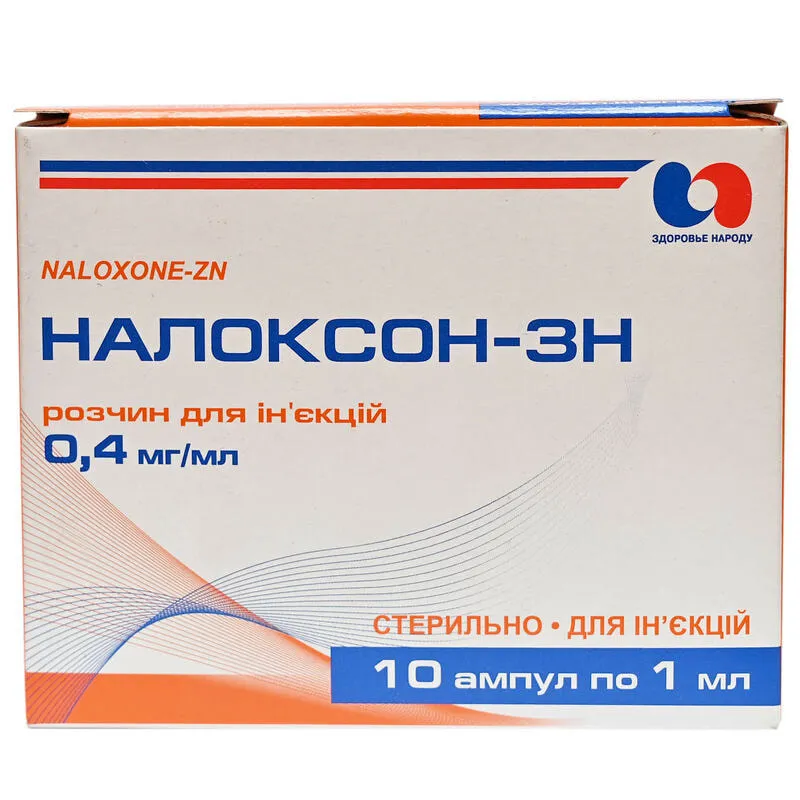
Table of Contents
INSTRUCTIONS FOR MEDICAL USE OF THE MEDICINAL PRODUCT NALOXONE-ZN (NALOXONE-ZN)
Composition:
Active substance: naloxone;
1 ml of solution contains 0.4 mg of naloxone hydrochloride dihydrate calculated as 100% substance;
Excipients: sodium chloride, hydrochloric acid diluted, water for injections.
Pharmaceutical form. Injection solution.
Main physicochemical properties: clear, colorless liquid.
Pharmacotherapeutic group.
Antidotes. ATC code V03AB15.
Pharmacological Properties.
Pharmacodynamics.
Naloxone is a competitive antagonist of opioid receptors and belongs to the group of so-called "pure" opioid receptor antagonists. It primarily blocks μ-receptors and, due to its high affinity for these receptors, displaces opioid analgesics from their binding sites, thereby reversing the symptoms of opioid overdose and counteracting the effects of both endogenous opioid peptides and exogenous opioid analgesics; it has a lesser effect on other opioid receptors.
Administration of naloxone prevents, reduces, or abolishes (depending on dose and timing) the effects of opioid analgesics, restores respiration, decreases sedative effects and euphoria, and attenuates hypotensive effects.
Naloxone reverses the effects of a wide range of narcotic agents, both agonists and agonist-antagonists of opioid receptors: morphine, apomorphine, heroin, codeine, dihydrocodeine, promedol (meperidine), methadone, pentazocine, fentanyl, and buprenorphine.
The drug eliminates central and peripheral toxic symptoms: respiratory depression, miosis, delayed gastric emptying, dysphoria, coma and convulsions, as well as the analgesic effect of narcotic analgesics; in addition, it counteracts the toxic effects of high doses of alcohol.
Naloxone is also effective in respiratory dysfunction caused by mixed intoxications involving opioids in combination with barbiturates, benzodiazepines, and alcohol.
Naloxone may precipitate withdrawal syndrome in patients dependent on opioids.
The drug has no analgesic activity, does not cause dysphoria or psychomimetic symptoms, and does not lead to tolerance or drug dependence.
Pharmacokinetics.
After intravenous administration, the effect of the drug begins within 0.5–2 minutes, with a duration of action of 20–40 minutes. After intramuscular or subcutaneous administration, the effect occurs within 2–3 minutes, with a duration of action of 2.5–3 hours. The mean half-life is 1–1.5 hours; in newborns, it is longer, approximately 3 hours. Naloxone is metabolized in the liver to form glucuronides. Metabolites are excreted in the urine. The influence of hepatic and renal insufficiency has not been studied. Naloxone crosses the blood-brain and placental barriers.
Clinical characteristics.
Indications.
Opioid overdose. For reversal of opioid-induced respiratory depression; for restoration of respiration in newborns following administration of opioid analgesics to the mother; as a diagnostic agent in patients suspected of opioid dependence.
Contraindications.
Hypersensitivity to the components of the medicinal product.
Interaction with other medicinal products and other forms of interactions.
Naloxone-ZN reverses the analgesic effect of opioid analgesics.
In patients with opioid dependence, administration of naloxone hydrochloride may precipitate severe withdrawal symptoms (hypertension, cardiac arrhythmia, pulmonary edema, cardiac arrest). The drug reduces the effects of tramadol and buprenorphine, but its effect is short-lived. This effect is considered to result from the biphasic "dose–response" curve of buprenorphine, with reduced analgesia at high doses.
When used concomitantly, Naloxone-ZN may reduce the antihypertensive effect of clonidine.
When standard doses of the drug are administered, effects of barbiturates and tranquilizers are not reversed.
Information regarding interaction with alcohol is inconsistent. In patients with multi-drug intoxication due to opioids combined with sedatives or alcohol, depending on the cause of intoxication, a less rapid reversal of some effects of multi-intoxication may occur after administration of naloxone hydrochloride.
Incompatible with medicinal solutions containing bisulfites. Pharmaceutically compatible with 0.9% sodium chloride solution, 5% dextrose solution, and sterile water for injection.
Special precautions for use
Naloxone is not effective in respiratory depression caused by non-opioid drugs.
The duration of action of some opioid analgesics may exceed that of Naloxone-Zn; therefore, patients must remain under continuous medical supervision in settings where artificial ventilation and other resuscitation measures can be provided.
The drug should be administered very cautiously to patients with opioid dependence, as withdrawal symptoms may occur. Cases of hypertension, cardiac arrhythmias, pulmonary edema, and cardiac arrest have been reported. This also applies to newborns whose mothers were opioid-dependent.
Naloxone hydrochloride may cause hypotension, hypertension, ventricular tachycardia, fibrillation, and pulmonary edema. These adverse effects have been observed most frequently in postoperative patients with pre-existing cardiovascular disorders or those receiving medications known to cause similar cardiovascular side effects. Although no direct causal relationships have been established, caution should be exercised when administering Naloxone-Zn to patients with heart disease or to patients receiving cardiotoxic substances that may cause ventricular tachycardia, fibrillation, or cardiac arrest (e.g., cocaine, methamphetamine, tricyclic antidepressants, calcium channel blockers, β-blockers, digoxin).
Animal studies have shown impaired fertility and absence of teratogenic effects.
Use during pregnancy or breastfeeding.
Animal studies have revealed reproductive toxicity. The potential risk to humans is unknown.
This drug should be administered during pregnancy only if the expected benefit to the mother outweighs the potential risk to the fetus. Naloxone hydrochloride may precipitate withdrawal symptoms in newborn infants.
It is unknown whether naloxone is excreted in human breast milk. Therefore, if administration of the drug is necessary, breastfeeding should be discontinued or avoided for 24 hours after administration of the medicinal product.
Ability to affect reaction rate when driving or operating machinery.
During administration of Naloxone-Zn, driving vehicles and operating machinery is prohibited.
Method of Administration and Dosage
Naloxone-ZN should be administered intravenously as a bolus (injection), intravenously by infusion (drip), or intramuscularly. The dose is determined individually by a physician for each patient. Intramuscular injections should be administered only when intravenous administration is not feasible.
In acute cases, intravenous administration is preferred, as it ensures the fastest therapeutic effect. When administered intramuscularly, the effect of the drug appears later but lasts longer (compared to intravenous administration).
The duration of naloxone's action depends on the administered dose, route of administration, and ranges from 45 minutes to 4 hours.
Since the effects of certain opioids (e.g., dextropropoxyphene, dihydrocodeine, methadone) last longer than those of naloxone, patients must remain under continuous observation, and repeated doses of the drug may be administered only if necessary.
Complete or partial reversal of opioid-induced respiratory depression.
Adults
The physician determines the dose individually to normalize respiratory function while maintaining adequate analgesia. An intravenous injection of naloxone at a dose of 0.1–0.2 mg (approximately 1.5–3 mcg per kg of body weight) is usually sufficient. If necessary, additional doses of 0.1 mg may be administered at 2-minute intervals until complete restoration of respiration and consciousness. Additional doses may be required after 1–2 hours—depending on the type of action (short-acting or long-acting) of the opioid antagonist, the amount administered, and the duration and method of administration.
Alternatively, Naloxone-ZN may be administered as an intravenous infusion. The duration of action of some opioids exceeds that of a single bolus intravenous dose of naloxone. Therefore, if respiratory depression is caused by such substances or suspected, naloxone should be administered as a continuous intravenous infusion. The infusion rate should be adjusted according to the patient’s condition and response to intravenous bolus and infusion. Continuous intravenous infusion should be considered, and measures to support respiration should be taken if necessary.
Children
The initial dose of naloxone is 0.01–0.02 mg per kg of body weight administered intravenously over 2–3 minutes until complete restoration of respiration and consciousness. Additional doses may be administered at 1–2 hour intervals depending on the patient’s response, the dose, and the duration of action of the opioid used.
Acute opioid overdose
Adults
The initial dose is 0.4–2 mg intravenously. If respiration does not improve, administration should be repeated after 2–3 minutes. Naloxone-ZN may also be administered intramuscularly (initial dose: 0.4–2 mg) if intravenous administration is not possible. If the patient’s condition does not improve after administration of a total of 10 mg of naloxone, it can be concluded that respiratory depression is caused by factors or drugs other than opioids.
Children
The recommended initial dose is 0.1 mg per kg of body weight administered intravenously. If the desired effect is not achieved, an additional dose of 0.1 mg per kg of body weight may be administered as an injection. Intravenous infusion may be indicated depending on the patient’s condition. If intravenous administration is not possible, Naloxone-ZN should be administered intramuscularly at an initial dose of 0.01 mg per kg of body weight, divided into several injections.
Respiratory resuscitation in newborns whose mothers received opioids
The usual dose is 0.01 mg per kg of body weight administered intravenously. If respiratory function does not improve after this dose, administration may be repeated after 2–3 minutes. If intravenous administration is not possible, Naloxone-ZN should be administered intramuscularly at an initial dose of 0.01 mg per kg of body weight.
Elderly patients
Naloxone-ZN should be used with caution in elderly patients with cardiovascular diseases or in patients who have received cardiac medications. Potential adverse effects of Naloxone-ZN, such as tachycardia and ventricular fibrillation in postoperative patients, should be considered.
Solution dilution
For intravenous infusion, Naloxone-ZN should be diluted with 0.9% sodium chloride solution or 5% glucose solution. The contents of 5 ampoules (2 mg) should be diluted in 500 mL of one of the specified diluents to obtain a final concentration of 4 mcg/mL.
Before administration and after dilution, the solution should be inspected for clarity. Only clear, colorless solutions without visible particles should be used.
Children.
Use in pediatric practice according to the indications and doses specified in the instructions.
Overdose.
Symptoms: nausea, vomiting, arterial hypertension, ventricular tachycardia, ventricular fibrillation, cardiac arrest, pulmonary edema.
Treatment: symptomatic.
To prevent overdose, the recommended doses of the drug must be strictly followed.
Adverse Reactions
Various adverse reactions may occur with rapid administration of Naloxone-ZN.
Gastrointestinal system: nausea, vomiting, diarrhea, dry mouth.
Cardiovascular system: arrhythmia, bradycardia, tachycardia, hypotension, arterial hypertension, ventricular fibrillation, cardiac arrest, asystole.
Central nervous system: tremor, seizures, dizziness, headache, tension, hyperventilation.
Psychiatric disorders: behavioral changes including aggressive behavior, nervousness, restlessness, excitement, irritability.
Allergic reactions: rhinitis, dyspnea, skin rash, pruritus, urticaria, erythema multiforme, angioneurotic edema, anaphylactic shock.
Other: increased sweating, postoperative pain, injection site reactions including vascular wall irritation (with intravenous administration), local irritation and inflammation (with intramuscular administration).
Use of Naloxone-ZN in doses higher than recommended may cause return of pain in the postoperative period, excitation, arterial hypotension or hypertension, ventricular tachycardia, ventricular fibrillation, pulmonary edema, dyspnea.
Withdrawal syndrome in patients with opioid dependence: diffuse pain, diarrhea, hyperthermia, rhinorrhea, sneezing, increased sweating, nausea, vomiting, anxiety, fatigue, irritability, tremor, epigastric cramps, tachycardia, hypertension, yawning, weakness; in newborns – seizures, diarrhea, hyperthermia, continuous crying, hyperreflexia, sneezing, tremor, unusual irritability, vomiting.
Administration of Naloxone-ZN in therapeutic doses in patients who do not have opioids in their system usually does not cause adverse effects.
Shelf life.
3 years.
Storage conditions.
Store in the original packaging at a temperature not exceeding 25 °C.
Keep out of reach of children.
Incompatibility.
The drug is incompatible with solutions of medicinal products containing bisulfites, metabisulfites, long-chain or high-molecular-weight anions, and solutions with alkaline pH. Should not be mixed with other medicinal products.
The drug is intended for individual use only.
Packaging.
1 ml in an ampoule; 10 ampoules per box.
1 ml in an ampoule; 5 ampoules per blister; 2 blisters per box.
1 ml in an ampoule; 10 ampoules per blister; 1 blister per box.
Prescription status.
Prescription only.
Manufacturer.
Limited Liability Company "Kharkiv Pharmaceutical Enterprise "Zdorov'ya Narodu".
Manufacturer's address and location of business activity.
41 Kulikovska Street, Kharkiv, Kharkiv Region, 61002, Ukraine.