Nalgezin®
Ukraine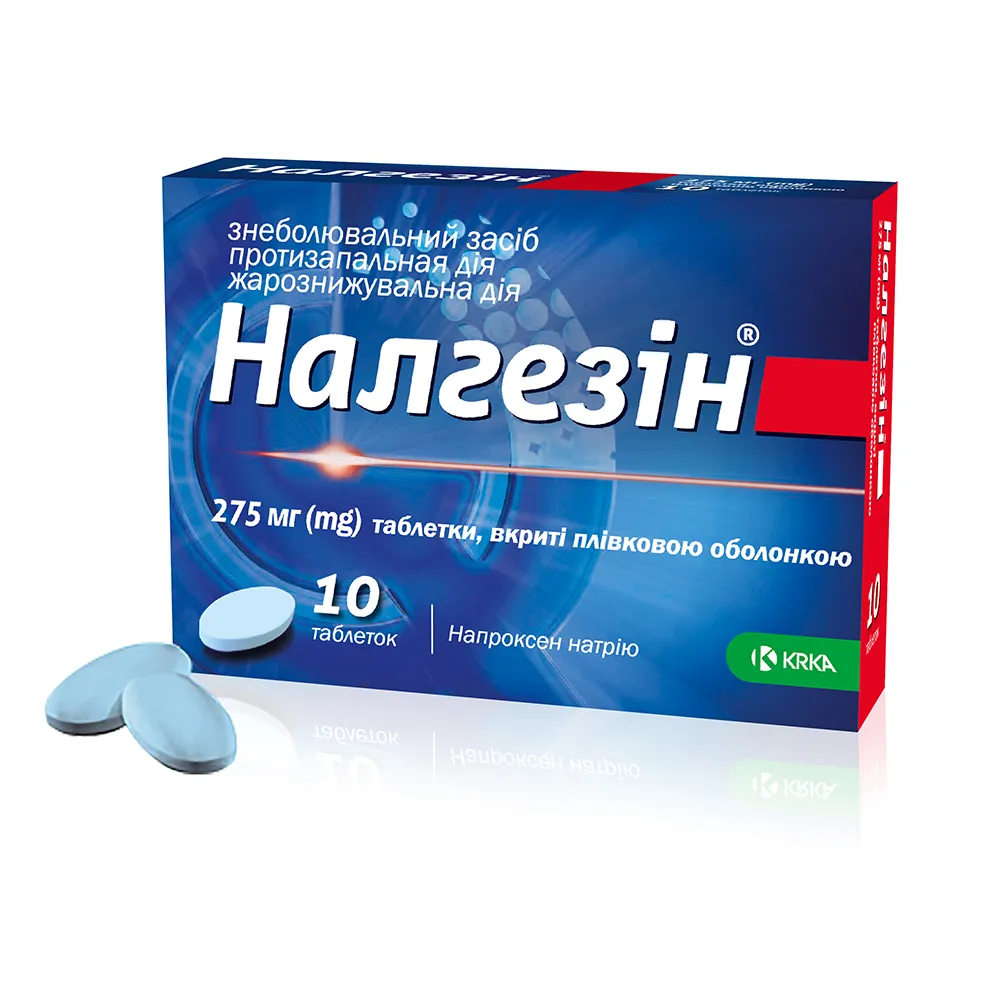
Table of Contents
INSTRUCTION FOR MEDICAL USE OF THE MEDICINAL PRODUCT Nalgesin® (Nalgesin®)
Composition:
Active substance: sodium naproxen;
One film-coated tablet contains 275 mg of sodium naproxen;
Excipients: povidone, microcrystalline cellulose, talc, magnesium stearate, hypromellose, titanium dioxide (E 171), macrogol, indigocarmine (E 132), purified water.
Pharmaceutical form. Film-coated tablets.
Main physicochemical characteristics: oval, slightly biconvex film-coated tablets of blue color.
Pharmacotherapeutic group. Nonsteroidal anti-inflammatory and antirheumatic agents. Propionic acid derivatives. Naproxen. ATC code M01AE02.
Pharmacological Properties
Pharmacodynamics
Naproxen sodium is a nonsteroidal anti-inflammatory drug. It exerts analgesic, anti-inflammatory, and antipyretic effects. The mechanism of action is based on inhibition of cyclooxygenase, an enzyme involved in prostaglandin synthesis. As a result, levels of prostaglandins in various body fluids and tissues are reduced.
Pharmacokinetics
After oral administration, naproxen sodium undergoes hydrolysis in the acidic gastric juice. Micro-particles of naproxen are released, which then dissolve very rapidly in the small intestine. This leads to faster and more complete absorption of naproxen.
Maximum plasma concentration is reached within 1–2 hours after administration. Plasma levels of naproxen increase proportionally with dose sizes up to 500 mg. At higher doses, the increase is less proportional. Approximately 99% of naproxen is bound to plasma albumin at drug concentrations up to 50 mcg/mL.
Approximately 70% of naproxen is excreted unchanged and about 30% as the inactive metabolite 6-O-desmethyl-naproxen. Approximately 95% of the drug is excreted in urine and 5% in feces. The biological half-life of naproxen does not depend on plasma concentration or dose and ranges from 12 to 15 hours.
Clinical characteristics.
Indications.
Nalgesin**®** is indicated:
- for dental and headache;
- for muscle, joint, and back pain;
- for migraine prevention and relief;
- for menstrual pain.
Contraindications.
Hypersensitivity to sodium naproxen or to any excipient.
Hypersensitivity to salicylates and other nonsteroidal anti-inflammatory drugs (NSAIDs), manifested as bronchial asthma, urticaria, or rhinitis.
Acute phase or recurrence of gastric or duodenal ulcer, gastrointestinal bleeding.
Severe impairment of liver or kidney function.
Heart failure.
Pregnancy and breastfeeding.
Age under 16 years.
Interaction with other medicinal products and other forms of interaction.
Concomitant use of acetylsalicylic acid and other nonsteroidal anti-inflammatory drugs is not recommended due to the high risk of adverse reactions.
Clinical pharmacodynamic data indicate that concomitant use of naproxen for more than one consecutive day may suppress the effect of low-dose acetylsalicylic acid on platelet activity, and this suppression may persist for several days after discontinuation of naproxen therapy. The clinical significance of this interaction is unknown.
Concomitant administration with antacids or cholestyramine, as well as with food, may slow the absorption of naproxen, but does not affect the total amount of active substance absorbed. Concomitant administration with food may delay naproxen absorption, but does not affect its extent.
Concomitant use with cardiac glycosides may lead to exacerbation of heart failure, decreased glomerular filtration rate, and increased blood levels of cardiac glycosides.
Naproxen should not be used within 8–12 days after mifepristone administration due to its potential to reduce the effects of the latter.
Concomitant use of naproxen with corticosteroids should be done with caution due to an increased risk of gastrointestinal ulcers and bleeding.
Sodium naproxen may reduce platelet aggregation and prolong bleeding time; this should be considered when determining bleeding time and during concomitant anticoagulant therapy.
Concomitant use of naproxen-containing products is not recommended due to the presence of the same active substance, namely naproxen.
Animal studies indicate a potential for seizures induced by quinolone antibiotics. Patients taking quinolones have an increased risk of developing seizures.
Since naproxen is almost completely protein-bound, it should be used with caution when coadministered with hydantoin derivatives and sulfonylurea derivatives.
Naproxen may reduce the natriuretic effect of furosemide.
Naproxen may reduce the efficacy of antihypertensive agents.
Concomitant use of lithium and sodium naproxen increases plasma lithium concentrations.
Like other NSAIDs, naproxen may reduce the antihypertensive effect of propranolol and other beta-blockers and increase the risk of renal failure in patients concurrently receiving ACE inhibitors.
Naproxen reduces tubular secretion of methotrexate; therefore, methotrexate toxicity may increase during concomitant use.
Concomitant use of probenecid prolongs the biological half-life of naproxen and increases its plasma concentration.
Concomitant use of cyclosporine may increase the risk of impaired kidney function.
In vitro studies have shown that concomitant administration of sodium naproxen and zidovudine increases zidovudine plasma concentrations.
Special precautions for use.
The incidence of adverse reactions can be minimized by using the lowest effective dose and reducing the duration of Nalgezin® treatment.
In patients with infectious diseases, the anti-inflammatory and antipyretic effects of naproxen should be considered, as they may mask the signs of such conditions.
Naproxen and its metabolites are primarily excreted by the kidneys via glomerular filtration. Therefore, sodium naproxen should be administered with extreme caution in patients with impaired renal function. Creatinine clearance should be determined in patients with renal insufficiency and monitored throughout treatment. Naproxen is not recommended if creatinine clearance is less than 20 mL/min (0.33 mL/s).
Particular caution is advised in patients with hepatic dysfunction. In chronic alcoholic cirrhosis, and possibly in other forms of cirrhosis, the total plasma concentration of sodium naproxen is decreased, while the concentration of unbound sodium naproxen in plasma is increased. The use of the lowest effective doses is recommended.
Physicians should closely monitor patients with epilepsy or porphyria who are taking naproxen.
Elderly patients should receive Nalgezin® at the lowest effective doses.
Patients with gastrointestinal disorders, especially ulcerative colitis or Crohn’s disease (including in the past), who are taking sodium naproxen, require careful medical supervision due to the potential for recurrence or exacerbation of the disease. Serious gastrointestinal adverse events may occur even in the absence of prior gastrointestinal problems.
As with other nonsteroidal anti-inflammatory drugs (NSAIDs), the cumulative frequency of serious adverse events, including gastrointestinal bleeding and perforation, increases linearly with the duration of treatment. Higher doses of naproxen may also increase the risk of adverse effects.
With prolonged use, continuous monitoring is necessary to detect adverse reactions. Elderly and debilitated patients are more prone to gastrointestinal ulceration, bleeding, and serious adverse reactions. Bronchospasm may develop in individuals with a history of bronchial asthma, allergic diseases, or previous episodes of bronchospasm. Laboratory tests of liver function may show abnormalities. Naproxen reduces platelet aggregation and prolongs bleeding time. This should be considered when assessing bleeding time. Peripheral edema may occur during naproxen use, with a higher risk in patients with impaired cardiac function. Patients with coagulation disorders and those taking drugs affecting hemostasis require special monitoring. Concurrent use with anticoagulants increases the risk of bleeding.
Stevens-Johnson syndrome (SJS), toxic epidermal necrolysis (TEN), and drug reaction with eosinophilia and systemic symptoms (DRESS) have been reported and may be life-threatening or fatal, associated with naproxen therapy. If signs or symptoms suggestive of these reactions occur, Nalgezin should be discontinued immediately. If a patient develops SJS, TEN, or DRESS during Nalgezin treatment, re-administration of Nalgezin is contraindicated and treatment must be permanently discontinued.
Anaphylactoid (anaphylactic) reactions may occur in individuals both with and without a history of hypersensitivity reactions to aspirin, other NSAIDs, or products containing naproxen. Anaphylactoid reactions may also occur in patients with a history of angioedema, bronchospasm, asthma, rhinitis, or nasal polyps. Some of these reactions, such as anaphylactic shock, may be fatal.
When reducing or discontinuing corticosteroid therapy during naproxen treatment, corticosteroid dosage should be tapered gradually and under close medical supervision to detect any adverse reactions, including adrenal insufficiency and exacerbation of arthritis symptoms.
Rarely, ocular disorders such as papillitis, retrobulbar neuritis, and optic nerve head swelling have been observed during NSAID therapy, including naproxen, although a causal relationship has not been established. Therefore, patients who develop visual disturbances during naproxen treatment should undergo ophthalmologic evaluation.
Before initiating naproxen therapy, a medical history should be obtained to identify any history of hypertension and/or heart failure with fluid retention and edema associated with NSAID use.
Clinical trials and epidemiological data suggest that the risk of arterial thrombosis may increase with the use of certain NSAIDs (particularly at high doses and over prolonged periods). According to these data, naproxen use (1000 mg daily) is associated with lower risks, but risks cannot be entirely excluded.
There are insufficient data on the use of low doses of sodium naproxen, such as 275 mg, to draw conclusions regarding thrombotic risk.
For patients with uncontrolled hypertension, congestive heart failure, ischemic heart disease, peripheral arterial disease, and/or cerebrovascular disease, the necessity of naproxen use should be carefully considered. For individuals with risk factors for cardiovascular events (e.g., hypertension, hyperlipidemia, diabetes, smoking), the need for naproxen should also be carefully evaluated before initiating long-term therapy.
Naproxen, like other cyclooxygenase synthesis inhibitors, may affect fertility. Women attempting to conceive and/or experiencing fertility problems should discontinue naproxen use.
Important information about certain ingredients in Nalgezin®
The medicinal product contains 1.09 mmol (25.097 mg) of sodium per dose. This should be taken into account for patients on a low-sodium diet.
Use during pregnancy or breastfeeding.
Nalgezin® is contraindicated during pregnancy. From the 20th week of gestation, Nalgezin® use may cause oligohydramnios due to fetal renal dysfunction. This disorder may occur soon after starting treatment and is usually reversible upon discontinuation. Prenatal monitoring for oligohydramnios and arterial duct constriction may be advisable after exposure to Nalgezin® for several days starting from the 20th gestational week. Nalgezin® treatment should be discontinued if oligohydramnios or arterial duct constriction is detected.
If Nalgezin® use is necessary during lactation, breastfeeding must be discontinued.
Ability to affect reaction speed when driving or operating machinery.
During Nalgezin® use, some patients may experience somnolence, dizziness, vertigo, visual disturbances, insomnia, or depression, which may impair reaction speed when driving vehicles or operating machinery.
Method of Administration and Dosage
Tablets should be swallowed whole with a glass of water. Treatment should be initiated at the lowest recommended dose.
Adults and children aged 16 years and older
Toothache, headache, muscle, joint, and back pain
The recommended dose is 2 tablets (550 mg) twice daily, but not more than 4 tablets (1100 mg) per day. Except for severe pain (excluding skeletal muscle disorders), when the dose may be increased up to 5 tablets per day (1375 mg).
Migraine
At the first signs of an attack, the recommended initial dose is 3 tablets (825 mg). If necessary, 1 tablet (275 mg) or 2 tablets (550 mg) may be taken additionally, but not earlier than 30 minutes after the initial dose. The daily dose must not exceed 5 tablets (1375 mg).
Menstrual pain
The recommended initial dose is 2 tablets (550 mg). If necessary, 1 tablet (275 mg) may be taken every 6–8 hours. The maximum dose is 5 tablets (1375 mg) on the first day of treatment and 4 tablets (1100 mg) on subsequent days.
The duration of treatment for pain relief should not exceed 10 days. If symptoms persist, consult a physician.
Elderly patients
Nalgezin® should be used at the lowest effective doses.
Patients over 65 years of age should take tablets no more frequently than every 12 hours, if necessary.
Patients with renal impairment
Nalgezin® should be used at the lowest effective doses.
Patients with hepatic impairment
Nalgezin® should be used at the lowest effective doses.
The risk of adverse reactions can be minimized by using the lowest effective dose and reducing the duration of Nalgezin® treatment.
Children
Nalgezin® is contraindicated in children under 16 years of age.
Overdose
After accidental or intentional ingestion of a large amount of sodium naproxen, symptoms may include abdominal pain, nausea, vomiting, dizziness, tinnitus, irritability; in more severe cases, vomiting with blood, melena, impaired consciousness, respiratory disorders, seizures, and renal failure may occur. Treatment includes gastric lavage, activated charcoal, antacids, H2-receptor antagonists, proton pump inhibitors, misoprostol, and other forms of symptomatic therapy.
Adverse reactions.
Blood and lymphatic system disorders: eosinophilia, granulocytopenia, leukopenia, thrombocytopenia, agranulocytosis, aplastic anemia, hemolytic anemia.
Immune system disorders: hypersensitivity reaction, anaphylactic reactions, angioedema.
Psychiatric disorders: seizures, abnormal dreams.
Nervous system disorders: headache, vertigo, dizziness, somnolence, depression, sleep disturbances, inability to concentrate, insomnia, weakness, aseptic meningitis, cognitive disorders.
Eye disorders: visual disturbances, corneal clouding, papillitis, retrobulbar neuritis, optic disc edema.
Patients who develop visual disturbances during naproxen treatment should undergo ophthalmological examination.
Ear and labyrinth disorders: tinnitus, hearing disturbances, hearing deterioration.
Cardiac disorders: edema, palpitations, congestive heart failure.
Vascular disorders: vasculitis.
Respiratory, thoracic and mediastinal disorders: dyspnea, eosinophilic pneumonia, asthma, pulmonary edema.
Metabolism and nutrition disorders: hyperkalemia, hypokalemia.
Gastrointestinal disorders: constipation, abdominal pain, nausea, dyspepsia, diarrhea, stomatitis, gastrointestinal bleeding and/or gastric perforation, vomiting with blood, melena, vomiting, ulcerative stomatitis, colitis, esophagitis, pancreatitis, formation of peptic ulcers.
Hepatobiliary disorders: increased liver enzyme levels, jaundice, hepatitis.
Musculoskeletal and connective tissue disorders: muscle pain, muscle weakness.
Renal and urinary disorders: glomerulonephritis, hematuria, interstitial nephritis, nephrotic syndrome, renal dysfunction, renal failure, renal papillary necrosis.
Reproductive system and breast disorders: female infertility.
Skin and subcutaneous tissue disorders: pruritus, skin rash, bruising, purpura, alopecia, photosensitive dermatitis, nodular erythema, discoid lupus erythematosus, pustules, systemic lupus erythematosus, epidermal necrolysis, Stevens-Johnson syndrome, erythema multiforme, drug reactions with eosinophilia and systemic symptoms (DRESS) (see "Special precautions for use"), fixed drug eruption.
General disorders and administration site conditions: thirst, sweating, menstrual disorders, hyperthermia (chills and fever).
Laboratory and diagnostic test findings: increased creatinine levels.
Edema, hypertension, and heart failure have been reported with NSAID use.
Based on clinical trials and epidemiological data, it is believed that increased risk of arterial thrombosis (e.g., myocardial infarction or stroke) may be associated with the use of certain NSAIDs (particularly at high doses and over prolonged periods).
Treatment should be discontinued if severe adverse reactions occur.
Reporting of suspected adverse reactions
Reporting suspected adverse reactions after a medicinal product is authorized is important. It allows continued monitoring of the benefit-risk balance of the medicinal product. Healthcare professionals and patients, or their legal representatives, should report any suspected adverse reactions and lack of efficacy of the medicinal product via the Automated Information System for Pharmacovigilance at the following link: https://aisf.dec.gov.ua.
Shelf life.
5 years.
Storage conditions.
No special storage conditions are required for this medicinal product. Keep the blister in the outer packaging to protect from light. Store in a place inaccessible to children.
Packaging.
10 tablets in a blister; 1 or 2 blisters in a cardboard box.
Authorization category.
Over-the-counter (without prescription).
Manufacturer.
KRKA, d.d., Novo mesto / KRKA, d.d., Novo mesto.
Manufacturer's address and place of business.
Smarjeska cesta 6, 8501 Novo mesto, Slovenia / Smarjeska cesta 6, 8501 Novo mesto, Slovenia.