Nalbuphine
Ukraine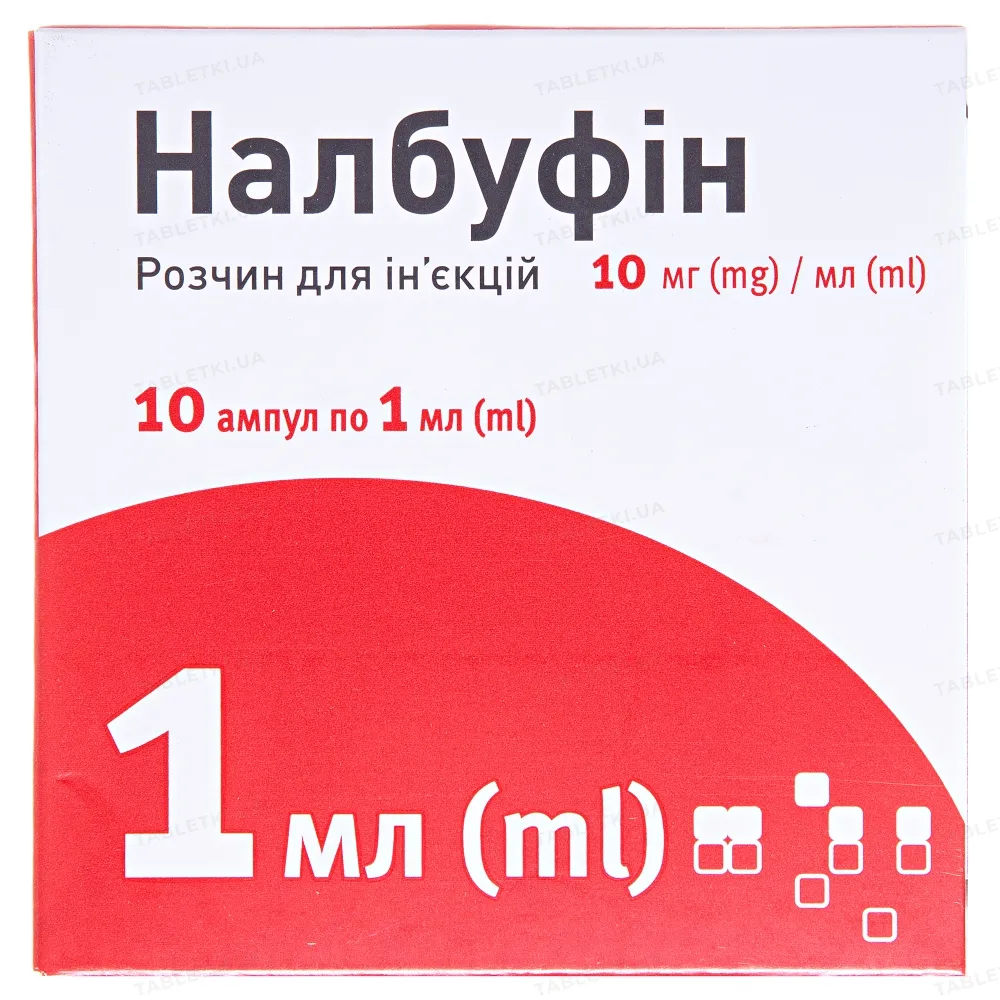
Table of Contents
INSTRUCTION FOR MEDICAL USE OF THE MEDICINAL PRODUCT NALBUPHINE (NALBUPHIN)
Composition:
Active substance: nalbuphine;
1 ml of solution contains 10 mg of nalbuphine hydrochloride;
Excipients: sodium citrate, citric acid anhydrous, sodium chloride, water for injections.
Pharmaceutical form. Injection solution.
Main physicochemical properties: clear, colorless or almost colorless solution.
Pharmacotherapeutic group. Analgesics. Opioids. Morphinan derivatives.
ATC code N02AF02.
Pharmacological Properties
Pharmacodynamics
Nalbuphine is an opioid analgesic belonging to the group of opioid receptor agonist-antagonists. It acts as a kappa-receptor agonist and a mu-receptor antagonist, disrupting interneuronal transmission of pain impulses at various levels of the central nervous system (CNS) by affecting higher regions of the brain. It suppresses conditioned reflexes, exerts a sedative effect, causes dysphoria, miosis, and stimulates the vomiting center. Compared to morphine, meperidine (pethidine), and fentanyl, nalbuphine has a lesser effect on respiratory depression and gastrointestinal motility. Administration of nalbuphine does not lead to significant changes in cardiovascular parameters or gastrointestinal motility. Nalbuphine has not demonstrated spasmogenic effects on smooth muscle. When administered at therapeutic doses, respiratory depression is moderate and does not increase beyond a dose of 0.3 mg/kg (ceiling effect). It does not affect hemodynamics. The risk of developing tolerance and opioid dependence with controlled use is significantly lower than with pure opioid agonists. After intravenous administration, the effect develops within a few minutes; after intramuscular administration, within 10–15 minutes. Maximum effect is achieved within 30–60 minutes, and duration of action is 3–6 hours.
Pharmacokinetics
The drug provides rapid analgesia. Time to reach maximum plasma concentration after intramuscular administration is 0.5–1 hour. It is metabolized in the liver. It is excreted in the form of metabolites via bile, and to a minor extent via urine. It crosses the placental barrier and may cause respiratory depression in the newborn during labor. It is excreted into breast milk. Elimination half-life is 2.5–3 hours.
Clinical characteristics.
Indications.
Pain of moderate to severe intensity; as an adjunct in anesthesia to reduce pain during pre- and postoperative periods, and for analgesia during labor.
Contraindications.
Hypersensitivity to nalbuphine hydrochloride or to any of the excipients of the medicinal product.
Respiratory depression or marked CNS depression, increased intracranial pressure, head injury, acute alcohol intoxication, alcohol psychosis, hepatic or renal impairment.
Concomitant use of the drug with pure morphine-mimetic agonists is not recommended.
The drug should not be used without appropriate diagnostic evaluation in cases of acute abdominal syndrome, as nalbuphine may mask its clinical manifestations.
Nalbuphine should not be administered to breastfeeding women (except during labor).
Special precautions.
Nalbuphine should be administered as an adjunct to general anesthesia only by a specially trained specialist. Emergency resuscitation equipment must be readily available in case of respiratory depression, including naloxone, intubation equipment, and artificial ventilation devices.
Interaction with other medicinal products and other forms of interaction.
The drug should be used with caution and in reduced doses when administered concomitantly with anesthetics, hypnotics, anxiolytics, antidepressants, and neuroleptics, to prevent excessive CNS and respiratory center depression. Alcohol also enhances the CNS depressant effect of nalbuphine. The drug should not be used concomitantly with other opioid analgesics due to the risk of reduced analgesic effect and potential precipitation of withdrawal syndrome in opioid-dependent patients.
Combination with phenothiazine derivatives and penicillin preparations may increase nausea and vomiting.
Contraindicated combination
Alfentanil, codeine, dextropropoxyphene, dihydrocodeine, fentanyl, methadone, morphine, oxycodone, pethidine, sufentanil, tramadol – reduced analgesic effect due to receptor blockade, with risk of withdrawal syndrome.
Not recommended combination
Alcohol – increased sedative effect of morphine-type analgesics. Impaired attention may be hazardous when driving or operating machinery. Consumption of alcoholic beverages and use of medicinal products containing ethanol should be avoided.
Use with caution
With antitussives or benzodiazepine substitution therapy, barbiturates – increased risk of respiratory depression, which may be fatal in case of overdose; with morphine-type analgesics, anxiolytics, sedative antidepressants (amitriptyline, doxepin, mianserin, mirtazapine, trimipramine), H1 antihistamines, hypnotics, centrally acting antihypertensives, neuroleptics, thalidomide, antidiarrheal agents (loperamide), baclofen – enhanced CNS depression. Medicinal products with anticholinergic activity and antidiarrheal agents, including loperamide, increase the risk of constipation up to intestinal obstruction, urinary retention, and CNS depression. Enhances the hypotensive effect of antihypertensive agents, including ganglion blockers and diuretics. Reduces the efficacy of metoclopramide. Use with caution in combination with MAO inhibitors due to possible excitation or inhibition leading to hypertensive or hypotensive crises (initially, to assess interaction effect, the dose should be reduced to ¼ of the recommended dose).
Special precautions for use.
Nalbuphine contains: 0.16 mmol (or 3.67 mg) of sodium per 10 mg dose of the medicinal product and 0.32 mmol (or 7.34 mg) of sodium per 20 mg dose, i.e. it is nearly sodium-free.
The drug should not be used without appropriate diagnosis in cases of acute abdominal syndrome, as Nalbuphine may mask its clinical manifestations.
Nalbuphine has a moderate potential to cause respiratory depression; therefore, its use may provoke the development of respiratory insufficiency.
In patients with drug addiction, the drug may precipitate an acute withdrawal episode.
Physical and psychological dependence may occur during prolonged use in combination with other morphine derivatives. Abrupt discontinuation after prolonged use may lead to withdrawal syndrome.
Nalbuphine is not recommended for outpatient use due to the risk of daytime drowsiness.
Nalbuphine should be used with caution in women with cervical dilation of 4 cm. In such cases, intravenous administration should be avoided.
The drug should be used with caution in the presence of the following factors: advanced age, cachexia, hepatic and renal insufficiency, respiratory insufficiency (including chronic obstructive pulmonary disease, uraemia), preterm labour and probable fetal immaturity, cholelithiasis, severe inflammatory bowel diseases, bronchial asthma, arrhythmia, arterial hypertension, hypothyroidism, prostate hyperplasia, urethral stenosis, suicide risk, emotional lability, and weakened patient condition.
Since the drug is metabolized in the liver and excreted by the kidneys, careful consideration should be given to the necessity of administering nalbuphine to patients with hepatic and/or renal insufficiency. If use is necessary, the dosage should be reduced and the patient’s condition should be closely monitored.
When using nalbuphine in patients scheduled for surgical intervention due to hepatobiliary pathology, the high risk of developing sphincter of Oddi spasm should be taken into account.
Withdrawal symptoms (abstinence syndrome) may develop in patients with opioid dependence when nalbuphine is administered. In such cases, intravenous morphine should be administered slowly, with gradual dose escalation until pain relief is achieved. If the patient has previously received morphine, meperidine, codeine, or another opioid analgesic with similar duration of action prior to nalbuphine administration, initially only 25% of the required nalbuphine dose should be administered, and the patient should be closely observed for possible onset of withdrawal symptoms (abdominal cramps, nausea, vomiting, lacrimation, rhinorrhea, anxiety, restlessness, hyperthermia, or piloerection). If withdrawal symptoms do not occur, the nalbuphine dose should be gradually increased at the recommended time intervals until the desired level of analgesia is achieved.
Use during pregnancy or breastfeeding.
Due to lack of studies, the drug should not be used during pregnancy or breastfeeding.
Pregnancy
Animal studies have not revealed any signs of teratogenic effects. Given the absence of teratogenic effects in animals, congenital malformations in humans are not expected. Currently, substances responsible for developmental abnormalities in humans have shown teratogenic effects in two animal species in properly conducted animal studies.
In clinical practice, there is currently insufficient reliable data to assess the potential malformative effect of nalbuphine when used during the first trimester of pregnancy.
Therefore, as a precautionary measure, nalbuphine should preferably not be used during pregnancy.
As with any morphine-type medicinal product, prolonged use in pregnant women, especially towards the end of pregnancy, regardless of dose, may lead to neonatal withdrawal syndrome. Administration of high doses of the drug to the mother near the end of pregnancy, even with short-term treatment, may result in respiratory depression in the newborn.
When nalbuphine is used during labour, respiratory depression (even delayed) has been observed in newborns. Therefore, the maximum dose should not exceed 20 mg for intramuscular administration. Monitoring of newborns, particularly respiratory function, should be considered.
Nalbuphine use should be avoided during high-risk pregnancies, particularly in cases of preterm labour or twin delivery.
Breastfeeding period
Nalbuphine passes into breast milk; several cases of hypotonia and respiratory arrest in infants have been reported following maternal use of morphine derivatives in doses exceeding therapeutic levels.
Therefore, breastfeeding is contraindicated during prolonged use of this medicinal product.
However, breastfeeding may be possible within the context of using the drug in obstetric practice.
Ability to influence reaction speed when driving or operating machinery.
During treatment, patients should refrain from driving or operating machinery.
Dosage and administration.
The dosage depends on the patient's body weight. Care should be taken to avoid dosing errors due to confusion between milligrams (mg) and milliliters (mL), which may lead to accidental overdose (see table below).
Nalbuphine is intended for intravenous and intramuscular administration.
The recommended dose for adult patients with a body weight of 70 kg is 0.1–0.3 mg/kg of nalbuphine hydrochloride, equivalent to 10–20 mg. The maximum single dose for adults should not exceed 20 mg.
The single dose should be administered as needed every 3–6 hours; the maximum daily dose is 160 mg. The dose should be adjusted according to the intensity of pain and the patient's physical condition.
Dosage table for adult patients
| Dose per administration |
Maximum single dose |
Maximum volume per administration |
Maximum daily dose |
Maximum volume of daily dose |
| 0.1–0.3 mg/kg |
20 mg |
2 ml** |
160 mg |
16 ml** |
** The information provided refers to the drug in the form of an injection solution 10 mg/mL.
In myocardial infarction, 20 mg of the drug administered slowly intravenously is often sufficient. If there is no clear positive dynamics in pain syndrome, repeat 20 mg after 30 minutes.
When using Nalbuphine as an adjunct for anesthesia, higher doses are required than for analgesia.
For premedication: 100–200 mcg/kg body weight. For intravenous anesthesia: for induction – 0.3–1 mg/kg over 10–15 minutes, for maintenance – 250–500 mcg/kg intravenously slowly every 30 minutes.
For pain relief during labor, the drug should be administered at a dose of 20 mg intramuscularly.
The drug should be prescribed with caution to elderly patients, those with general exhaustion, or impaired respiratory function. In such cases, treatment should begin with the minimum effective doses due to the increased risk of adverse reactions.
Children.
Not used.
Overdose.
In overdose, the following may occur: respiratory depression, Cheyne-Stokes respiration; drowsiness, dysphoria, altered consciousness up to coma; pallor, hypothermia, miosis; decreased arterial pressure, cardiovascular insufficiency; seizures; rhabdomyolysis progressing to renal failure.
Treatment of overdose includes:
- in the early stage, for conscious patients – oral activated charcoal;
- supportive therapy (oxygen, intravenous fluid replacement, vasopressors);
- intravenous administration of naloxone (specific antidote).
Adverse Reactions
Adverse reactions may occur during the use of the medicinal product.
In patients treated with Nalbuphine, somnolence is the most commonly observed reaction.
Nervous system disorders:
dizziness, general weakness, headache, sedation, diplopia, excitement, tearfulness, hostility, nightmares, tinnitus, paresthesia, feelings of unreality, seizures, muscle rigidity, tremor, involuntary muscle contractions, increased intracranial pressure.
Psychiatric disorders:
drug dependence, psychomimetic reactions, neurotic reactions, somnolence,
depression, confusion, dysphoria, speech disturbances, mood changes, restlessness, nervousness (irritability), hallucinations, euphoria.
The potential for physical and psychological dependence, as well as tolerance during prolonged treatment, is similar to that of other morphine derivatives.
Eye disorders:
blurred or impaired vision, miosis.
Cardiovascular system disorders:
increased or decreased arterial pressure, orthostatic hypotension, bradycardia, tachycardia, palpitations.
Gastrointestinal disorders:
dry mouth, abdominal cramps, colic, constipation, dyspepsia, bitter taste,
anorexia; gastrointestinal tract irritation symptoms; in inflammatory bowel diseases – paralytic ileus and toxic megacolon (constipation, flatulence, nausea, gastralgia, vomiting).
Hepatobiliary disorders:
liver function test abnormalities, biliary tract spasm.
General disorders and administration site reactions:
hypothermia, injection site reactions including pain, swelling, redness, burning sensation, warmth sensation, hot flushes, increased sweating.
Immune system disorders:
anaphylactic reactions, shock, respiratory distress syndrome, angioneurotic edema (Quincke's edema), facial swelling, sneezing, bronchospasm, pulmonary edema, skin rashes.
Respiratory system disorders:
respiratory depression, reduced minute volume of respiration, dyspnea, asthmatic attacks.
Renal and urinary system disorders:
antidiuretic effect, urinary tract spasm.
Reproductive system and breast disorders:
decreased libido or potency.
Skin and subcutaneous tissue disorders:
increased skin moisture, pruritus, urticaria, sensation of heat; scleral icterus and skin jaundice.
Other:
reduced diuresis, frequent urges to urinate; hepatotoxicity (dark urine, pale stools); drug dependence, withdrawal syndrome (spasmodic abdominal pain, nausea, vomiting, rhinorrhea, lacrimation, weakness, anxiety, elevated body temperature).
When used in obstetric practice – respiratory depression in newborns, which may be prolonged or associated with circulatory delay.
Reporting of suspected adverse reactions
Reporting suspected adverse reactions after medicinal product authorization is important. It allows continuous monitoring of the benefit/risk balance of the medicinal product. Healthcare professionals should report any suspected adverse reactions via the national reporting system.
Shelf life. 2 years.
Storage conditions.
Store at a temperature not exceeding 30 °C. Keep out of reach of children.
Incompatibility.
Should not be mixed in the same syringe with other injectable solutions.
Nalbuphine is compatible with 0.9% sodium chloride solution, 5% glucose solution, and Hartmann's solution.
Packaging.
1 ml or 2 ml in an ampoule, 5 ampoules in a blister pack, 1 or 2 blisters per cardboard box;
1 ml or 2 ml in a pre-filled syringe with needle in a cartridge, 1 or 10 cartridges per cardboard box.
Prescription category.
Prescription only.
Manufacturer.
LLC "Yuria-Pharm".
Manufacturer's address and location of its business activity.
108 Kobzarska Street, Cherkasy, Cherkasy region, 18030, Ukraine. Tel.: (044) 281-01-01.