Nadroparin-farmex
Ukraine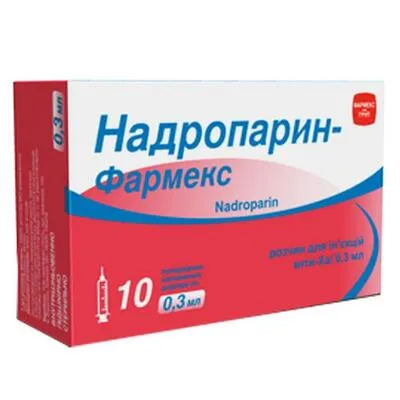
Table of Contents
INSTRUCTIONS FOR MEDICAL USE OF THE MEDICINAL PRODUCT NADROPARIN-PHARMEX (NADROPARIN-PHARMEX)
Composition:
Active substance: nadroparin calcium;
1 ml of solution contains 9500 IU anti-Xa of nadroparin calcium;
1 pre-filled syringe of 0.3 ml contains 2850 IU anti-Xa of nadroparin calcium;
1 pre-filled syringe of 0.4 ml contains 3800 IU anti-Xa of nadroparin calcium;
1 pre-filled syringe of 0.6 ml contains 5700 IU anti-Xa of nadroparin calcium;
1 pre-filled syringe of 0.8 ml contains 7600 IU anti-Xa of nadroparin calcium;
Excipients: calcium hydroxide solution and/or hydrochloric acid diluted, water for injections.
Pharmaceutical form. Solution for injection.
Main physicochemical properties: clear or slightly opalescent, colorless or yellowish solution.
Pharmacotherapeutic group.
Antithrombotic agents. Heparin group. Nadroparin. ATC code B01A B06.
Pharmacological Properties
Pharmacodynamics
Nadroparin is a low-molecular-weight heparin (LMWH) developed by depolymerization of standard heparin. It is a glycosaminoglycan with an average molecular weight of 4300 daltons. Nadroparin exhibits a high degree of binding to the plasma protein antithrombin III. This affinity results in accelerated inhibition of Factor Xa, which is the main contributor to the high antithrombotic activity of nadroparin. Other mechanisms of nadroparin's antithrombotic activity include stimulation of the tissue factor pathway inhibitor, activation of fibrinolysis via direct release of tissue plasminogen activator from endothelial cells, and modification of haemorheological parameters (reduction in blood viscosity and increased fluidity of platelet and granulocyte membranes). Nadroparin has a high ratio of anti-Xa to anti-IIa (antithrombin) activity. The ratio of these activity levels for nadroparin ranges from 2.5 to 4. It exerts immediate and prolonged antithrombotic effects. Compared to unfractionated heparin, nadroparin has less impact on platelet function and aggregation and minimal effect on primary haemostasis. At prophylactic doses, nadroparin does not significantly affect activated partial thromboplastin time (aPTT). At therapeutic doses, nadroparin may prolong aPTT by 1.4 times compared to the control value. This prolongation reflects the residual antithrombin activity of nadroparin.
Pharmacokinetics
Pharmacokinetic properties are determined by measuring plasma anti-Factor Xa activity.
Bioavailability
After subcutaneous administration, absorption is rapid and nearly complete (approximately 100%). The maximum plasma activity level is observed between 3 and 4 hours post-administration when nadroparin is given twice daily. When nadroparin is administered once daily, the peak occurs between 4 and 6 hours after injection.
Metabolism
Metabolism occurs predominantly in the liver (desulfation, polymerization).
Distribution
After subcutaneous administration, the elimination half-life of anti-Xa activity of low-molecular-weight heparins is longer than that of unfractionated heparins, averaging approximately 3–4 hours. In contrast, anti-IIa activity declines more rapidly in plasma than anti-Xa activity of low-molecular-weight heparins.
Elimination
Elimination occurs primarily via renal excretion, with minimal metabolism.
After subcutaneous administration, the elimination half-life is approximately 3.5 hours. However, anti-Xa activity persists for at least 18 hours after injection of nadroparin at a dose of 1900 anti-Xa IU.
Risk Groups
Elderly Patients
In elderly individuals, renal function is physiologically reduced, leading to slower drug elimination. This does not affect dosing or administration regimen for prophylactic therapy, provided renal function remains within acceptable limits, i.e., when impairment is mild. Before initiating LMWH therapy in patients over 75 years of age, renal function should be systematically assessed using the Cockcroft-Gault formula (see section "Special Warnings and Precautions for Use"). The potential for renal impairment in this patient group should be considered, and the dose of the drug adjusted accordingly.
Renal Impairment
Pharmacokinetic studies of nadroparin following intravenous administration in patients with varying degrees of renal impairment have demonstrated a correlation between nadroparin clearance and creatinine clearance (CrCl).
In patients with moderate renal impairment (CrCl 36–43 mL/min), the mean area under the concentration-time curve (AUC) and elimination half-life increased by 52% and 39%, respectively, compared to healthy volunteers. In these patients, mean plasma clearance of nadroparin decreased to 63% of normal. A wide individual variability was observed.
In patients with severe renal impairment (CrCl 10–20 mL/min), AUC and elimination half-life increased by 95% and 112%, respectively, compared to healthy volunteers. Plasma clearance in patients with severe renal impairment decreased to 50% compared to patients with normal renal function.
Clinical characteristics.
Indications.
Treatment of unstable angina and acute myocardial infarction without pathological Q wave on ECG, in combination with acetylsalicylic acid.
Contraindications.
Nadroparin is contraindicated in the following cases:
- Hypersensitivity to nadroparin calcium or to any other component of the medicinal product, or to heparin, or to other low-molecular-weight heparins;
- History of severe heparin-induced thrombocytopenia (HIT) type II caused by unfractionated or low-molecular-weight heparin, or any other thrombocytopenia associated with the use of nadroparin;
- Episodes of bleeding or predisposition to bleeding related to coagulation disorders (disseminated intravascular coagulation may be an exception to this rule if not related to heparin therapy);
- Organic lesions with risk of bleeding (e.g., active peptic ulcer);
- Acute hemorrhagic stroke;
- Severe renal impairment (defined as creatinine clearance < 30 mL/min according to the Cockcroft–Gault formula) when administered in therapeutic doses for treatment of deep vein thrombosis, thromboembolic events, unstable angina, and myocardial infarction without pathological Q wave, except when used during hemodialysis;
- Epidural or spinal anesthesia when low-molecular-weight heparin (LMWH) is used for treatment;
- Diabetic or hemorrhagic retinopathy;
- Acute infective endocarditis (except for certain emboligenic cardiopathies);
- Use in pediatric patients (under 18 years of age).
In therapeutic doses, this medicinal product is generally not recommended in the following cases:
- Acute phase of extensive ischemic stroke, with or without impaired consciousness; if the stroke is of embolic origin, administration of the drug should be delayed for 72 hours; however, the efficacy of LMWH in therapeutic doses has not been established to date, regardless of the cause, extent of lesion, or clinical severity of ischemic stroke;
- Use of nadroparin is generally not recommended in patients with mild or moderate renal impairment; however, if its use is considered necessary in these cases, the following should be considered:
- If the physician considers dose reduction appropriate for patients with mild to moderate renal impairment, taking into account individual risk factors for bleeding and thromboembolic complications (creatinine clearance ≥ 30 mL/min and < 50 mL/min), the dose should be reduced by 25–33%;
- Dose reduction is not required for patients with mild renal impairment (creatinine clearance ≥ 50 mL/min).
Additionally, this medicinal product in therapeutic doses is generally not recommended for any patients, regardless of age, in combination with the following medicinal products (see section "Interaction with other medicinal products and other forms of interaction"):
- Acetylsalicylic acid at doses used for analgesia, antipyresis, and anti-inflammatory purposes;
- Non-steroidal anti-inflammatory drugs (NSAIDs) (systemic administration);
- Dextran 40 (parenteral administration).
In prophylactic doses, nadroparin is generally not recommended in the following cases:
- Severe renal impairment (creatinine clearance < 30 mL/min according to the Cockcroft–Gault formula); however, if its use is considered necessary in this situation, and if, considering individual risk factors for bleeding or thromboembolic complications, dose reduction is deemed appropriate by the treating physician, the dose should be reduced by 25–33% (see sections "Special precautions for use" and "Method of administration and dosage");
- Intracranial hemorrhage – within the first 24 hours.
Additionally, this medicinal product in prophylactic doses is generally not recommended for patients over 65 years of age in combination with the following medicinal products (see section "Interaction with other medicinal products and other forms of interaction"):
- Acetylsalicylic acid at doses used for analgesia, antipyresis, and anti-inflammatory purposes;
- NSAIDs (systemic administration);
- Dextran 40 (parenteral administration).
Interaction with other medicinal products and other forms of interaction.
Some medicinal products and classes of drugs increase the risk of hyperkalemia: potassium salts, potassium-sparing diuretics, angiotensin-converting enzyme inhibitors, angiotensin II receptor blockers, NSAIDs, heparins (low-molecular-weight or unfractionated), cyclosporine and tacrolimus, trimethoprim.
Development of hyperkalemia may depend on the presence of concomitant risk factors.
This risk increases when used in combination with the medicinal products listed above.
Combinations not recommended
Use of LMWH in therapeutic doses in patients under 65 years of age and use of LMWH at any dose in elderly patients (> 65 years)
When combined with acetylsalicylic acid at analgesic doses, other salicylates, anti-inflammatory agents (NSAIDs and systemic glucocorticoids), and antiplatelet agents (abciximab, acetylsalicylic acid at antiplatelet doses for cardiovascular and neurological indications, beraprost, clopidogrel, eptifibatide, iloprost, ticlopidine, tirofiban), there is an increased risk of bleeding (due to platelet function inhibition and gastrointestinal mucosal injury caused by salicylates and NSAIDs).
In such cases, analgesics and antipyretics not containing salicylates (e.g., paracetamol) may be used.
In clinical trials treating unstable angina or myocardial infarction without pathological Q wave, nadroparin was administered in combination with aspirin at doses up to 325 mg per day. If combinations with NSAIDs cannot be avoided, careful clinical monitoring is recommended.
When combined with dextran 40 (parenteral), there is an increased risk of bleeding (due to platelet function inhibition by dextran 40).
Combinations requiring precautions during use
Nadroparin should be used with caution in patients receiving oral anticoagulants, as this combination leads to potentiation of anticoagulant effect.
When replacing heparin with an oral anticoagulant, clinical monitoring should be intensified and nadroparin therapy should be continued until the INR (International Normalized Ratio) is stabilized at the target value.
Combinations to be considered with caution
Concomitant use of medicinal products affecting hemostasis at different levels increases the risk of bleeding. Therefore, regardless of patient age, the risk of combining prophylactic-dose LMWH with oral anticoagulants, antiplatelet agents (abciximab, NSAIDs, acetylsalicylic acid at any dose, clopidogrel, eptifibatide, iloprost, ticlopidine, tirofiban), and thrombolytic agents should be evaluated through clinical and, if possible, biological monitoring.
Nitroglycerin
Intravenous administration of nitroglycerin may suppress the anticoagulant effect of heparin, which cannot be excluded for nadroparin.
Special precautions for use
Although the concentration of various drugs containing LMWH is expressed in anti-Xa international units, their efficacy is not limited solely to anti-Xa activity. Therefore, it is dangerous to substitute one LMWH for another LMWH or another type of synthetic polysaccharide using the same dosing regimen, as each of these medicinal products has a specific administration schedule validated in dedicated clinical studies. Thus, additional safety measures and specific instructions for use must be followed for each medicinal product.
Bleeding risk
It is extremely important to adhere strictly to the recommended treatment regimen (dosing schedule and duration of treatment). Otherwise, bleeding may occur, particularly in patients with risk factors (advanced age, renal impairment, etc.).
Specifically, severe bleeding has been observed:
- in elderly patients, especially due to age-related decline in renal function;
- in patients with impaired renal function;
- in patients with body weight less than 40 kg;
- when treatment duration exceeds the recommended average duration (10 days);
- when recommended therapeutic parameters (including treatment duration and dose adjustment according to body weight) are not followed;
- when used concomitantly with medicinal products that increase bleeding risk (see section "Interaction with other medicinal products and other forms of interaction").
Special monitoring is mandatory for all elderly patients and/or those with impaired renal function, as well as for treatment durations exceeding 10 days.
Measurement of anti-Xa activity may be used in some cases to detect accumulation (see "Biological monitoring").
Heparin-induced thrombocytopenia (HIT) risk
Due to the risk of heparin-induced thrombocytopenia (HIT), platelet counts should be monitored regularly throughout the entire course of treatment with the drug.
Isolated cases of thrombocytopenia, sometimes severe, have been reported, which may be accompanied by arterial or venous thrombosis.
This diagnosis should be considered if any of the following factors are present:
- thrombocytopenia;
- any significant decrease in platelet count (by 30% to 50% compared to baseline) and/or platelet count < 150,000/mm³ (or 150 × 10⁹/L);
- development of thrombosis during treatment (phlebitis, pulmonary embolism, acute limb ischemia, or even myocardial infarction or ischemic stroke);
- worsening of pre-existing thrombosis during treatment;
- disseminated intravascular coagulation.
In such cases, HIT is highly likely, and platelet count should be checked immediately. Treatment with nadroparin should be discontinued.
Use in children
Due to insufficient data, the use of LMWH in children is not recommended.
Renal function
Nadroparin is primarily eliminated via the kidneys, leading to increased nadroparin exposure in patients with impaired renal function. Patients with impaired renal function have an increased risk of bleeding and therefore require careful treatment.
The decision on whether dose reduction is necessary in patients with creatinine clearance between 30 and 50 mL/min should be based on the physician's clinical assessment of the individual patient's bleeding risk versus thromboembolic risk.
Renal function should be assessed before initiating LMWH therapy, especially in patients over 75 years of age, by calculating creatinine clearance (CrCl) using the Cockcroft-Gault formula with the patient's current body weight.
For men: CrCl = (140 – age) × body weight / (0.814 × serum creatinine), where age is in years, body weight in kilograms, and serum creatinine in µmol/L.
For women, multiply the result by 0.85. If creatinine is expressed in mg/dL, multiply the result by 8.8.
LMWH therapy is contraindicated for treatment in cases of severe renal impairment (CrCl < 30 mL/min) (see section "Contraindications").
Biological monitoring
Monitoring platelet count in patients receiving LMWH who are at risk of developing HIT (or HIT type II)
To optimally detect HIT, monitoring should be performed as follows:
- In surgical procedures or recent trauma (within the last 3 months): due to HIT frequency > 0.1% or even > 1%, systematic biological monitoring of all patients is required, regardless of whether the drug is used for prophylaxis or treatment. This includes platelet count monitoring:
- before initiation of LMWH therapy or no later than 24 hours after starting treatment;
- then twice weekly for one month (the period of highest risk);
- then once weekly until the end of treatment in prolonged therapy.
- In the absence of recent surgery or trauma (within the last 3 months): systematic biological monitoring is required both for prophylaxis and treatment, following the same instructions as for surgical procedures and trauma (see above), in patients:
- with a history of unfractionated heparin or LMWH use within the last 6 months, considering HIT frequency > 0.1% or even > 1%;
- with significant comorbidities, considering the potential severity of HIT in these patients.
In other cases, considering the lower frequency of HIT (< 0.1%), the frequency of platelet count monitoring may be reduced to:
- one platelet count measurement at the beginning of treatment or no later than 24 hours after treatment initiation;
- platelet count measurement if any clinical signs suggestive of HIT occur (any new arterial and/or venous thromboembolic events, any painful skin lesions at the injection site, any allergic or anaphylactoid reactions during treatment); patients should be informed about the possibility of such events and advised to contact their physician if necessary;
- HIT should be suspected if platelet count is < 150,000/mm³ (or 150 × 10⁹/L) and/or if the relative decrease in platelet count is approximately 50% or even 30% from baseline;
- dose reduction is not required in patients with mild renal impairment (CrCl ≥ 50 mL/min).
The effects of HIT are likely immunological in nature and are typically reported between the 5th and 21st day of treatment when heparin is used for the first time (with peak incidence around day 10). However, it may occur earlier if there is a history of heparin-associated thrombocytopenia, and isolated cases have been reported after day 21.
If necessary, nadroparin therapy may be considered in patients with a history of thrombocytopenia (except HIT type II) occurring during heparin (unfractionated or low molecular weight) use. In such cases, careful clinical observation and platelet count assessment at least once daily are required. If thrombocytopenia occurs, treatment should be discontinued immediately.
In cases of thrombocytopenia during heparin use (both standard and low molecular weight), replacement with antithrombotic agents of another class should be considered. If such an antithrombotic agent is unavailable, replacement with another LMWH may be considered if heparin use is necessary. In such cases, platelet count should be checked no less than once daily, and treatment should be discontinued as soon as possible, as cases of persistent initial thrombocytopenia after drug substitution have been described.
Therefore, careful patient history regarding any previous episodes should be obtained before initiating treatment.
Manifestation of HIT is always an emergency and requires specialized care.
Any significant decrease in platelet count (by 30% to 50% from baseline) should be considered a warning sign that the count may reach a critical level. If decreased platelet count is detected, the following measures must be taken:
- Immediately determine platelet count.
- Discontinue heparin therapy, if decreased platelet count is confirmed and continues to decline according to test results and no other obvious causes are present.
A blood sample should be placed in a citrate tube for in vitro platelet aggregation and immunological testing. However, in such situations, emergency measures required are not based on results of in vitro platelet aggregation or immunological tests, as such tests are routinely performed only in specialized laboratories and results may be available only after several hours at best. Nevertheless, such tests should be performed to assist in diagnosing this complication, as continuing heparin therapy increases the risk of thrombosis.
- Initiate prevention or treatment of thrombotic complications of HIT.
If continuation of anticoagulant therapy is considered necessary, heparin should be replaced with an antithrombotic agent of another class – danaparoid sodium or lepirudin – administered at prophylactic or therapeutic doses as appropriate.
If heparin is replaced with a vitamin K antagonist (VKA), the latter should only be initiated after platelet count normalization, otherwise there is a risk of worsening thrombotic effect.
Replacing heparin with VKA
- Clinical and biological monitoring (prothrombin time expressed as INR) should be intensified to monitor VKA effect.
- Due to the latent period before full VKA effect develops, heparin should be continued at equivalent doses for as long as necessary to maintain INR, confirmed by two consecutive tests, within the target range.
Anti-Xa activity assay
Most clinical studies confirming the efficacy of LMWH were conducted using weight-adjusted dosing without specific laboratory monitoring; therefore, the usefulness of biological monitoring as a control method for assessing LMWH efficacy has not been established. However, laboratory monitoring based on anti-Xa activity determination may be useful for monitoring bleeding risk in certain clinical situations, often associated with increased risk of overdose.
These situations typically occur with therapeutic indications for LMWH use at appropriate doses, as well as in cases of:
- mild to moderate renal impairment (creatinine clearance calculated using the Cockcroft-Gault formula approximately 30–60 mL/min): unlike unfractionated heparin, LMWH is primarily eliminated by the kidneys; therefore, any renal impairment may lead to relative overdose; however, therapeutic-dose LMWH is contraindicated in severe renal impairment;
- body weight differing from normal (low weight or even cachexia, obesity);
- unexplained bleeding.
Conversely, laboratory monitoring is not recommended when prophylactic doses are used, provided LMWH treatment complies with recommended therapeutic parameters (especially treatment duration), and during hemodialysis.
To detect possible accumulation after repeated administration, blood samples should be taken at peak drug activity (based on available data), i.e.:
- approximately 4 hours after the 3rd dose if the drug is administered subcutaneously twice daily;
- approximately 4 hours after the 2nd dose if the drug is administered subcutaneously once daily.
Repeat anti-Xa activity testing to measure heparin blood levels (e.g., every 2–3 days) should be considered on a case-by-case basis depending on prior test results and potential dose adjustments of LMWH.
Each LMWH and each treatment regimen provides different levels of anti-Xa activity.
For example, for nadroparin, according to available data, mean values (± standard deviation) of activity observed 4 hours after administration:
- with a single dose of 83 IU/kg administered twice daily – 1.01 ± 0.18 IU,
- with a single dose of 166 IU/kg administered once daily – 1.34 ± 0.15 IU.
These mean values were obtained in clinical studies using chromogenic (amidolytic) assay for anti-Xa activity determination.
Activated partial thromboplastin time (aPTT)
Some LMWHs may cause a moderate prolongation of aPTT. Since this effect has no proven clinical significance, any monitoring based on this test is ineffective.
Spinal/epidural anesthesia with prophylactic use of LMWH
As with other anticoagulants, rare cases of spinal hematomas leading to permanent or irreversible paralysis have been reported with LMWH use during spinal or epidural anesthesia.
The risk of spinal or epidural hematomas appears higher with placement of epidural catheters or concomitant use of other medicinal products affecting hemostasis, such as NSAIDs, antiplatelet agents, or other anticoagulants. Risk is also increased with repeated lumbar punctures and traumatic lumbar puncture.
Therefore, the decision to combine neuraxial blockade with anticoagulant therapy should be made after careful assessment of individual benefit/risk ratio in the following cases:
- in patients already receiving anticoagulants, the benefit of neuraxial blockade should be carefully weighed against the risk;
- in patients with planned non-emergency surgical procedures requiring neuraxial blockade, the benefit of anticoagulant therapy should be carefully weighed against the risk.
If preoperative LMWH therapy is necessary (due to prolonged bed rest, trauma) and a careful assessment of the benefit of locoregional spinal or epidural anesthesia or lumbar puncture has been performed, an interval of at least 12 hours between the last nadroparin injection and catheter or needle insertion/removal for spinal or epidural anesthesia should be observed for prophylactic doses, and 24 hours for therapeutic doses, considering drug characteristics and patient risk profile.
Longer intervals may be considered for patients with impaired renal function.
In almost all cases, prophylactic LMWH therapy can be initiated 6–8 hours after procedure completion or catheter removal, under close neurological monitoring.
Re-administration of nadroparin should be delayed until completion of the surgical procedure.
Patients should be monitored frequently for symptoms of neurological deficit, such as back pain, sensory or motor disturbances (numbness or weakness in legs), or bowel and/or bladder dysfunction. In case of neurological deficit, emergency treatment is required.
Medical staff should be trained to recognize these symptoms. Patients should be warned to report immediately any of these symptoms to their physician.
In case of suspected spinal hematoma, emergency diagnosis and treatment, including spinal cord decompression, should be initiated.
In case of significant or obvious bleeding during catheter insertion before starting or resuming heparin therapy, a careful benefit/risk assessment should be performed.
Increased attention is required when other medicinal products affecting hemostasis (i.e., NSAIDs, aspirin) are used concomitantly.
Situations associated with certain risk
Monitoring should be intensified during treatment in the following cases due to increased bleeding risk:
- hepatic impairment;
- severe arterial hypertension;
- gastrointestinal ulcers or any other organic lesions with bleeding tendency in history;
- choroidal-retinal vascular diseases;
- postoperative period after brain or spinal cord, or eye surgery;
- hyperkalemia;
- lumbar puncture should be carefully considered due to the risk of intraspinal bleeding. If possible, lumbar puncture should be postponed.
Hyperkalemia
Heparin may suppress aldosterone secretion and lead to hyperkalemia. This has been observed primarily in patients with elevated blood potassium levels and in patients with risk factors (diabetes mellitus, chronic renal failure, pre-existing metabolic acidosis, or treatment with drugs that may increase potassium levels, e.g., angiotensin-converting enzyme inhibitors and NSAIDs).
The risk of hyperkalemia increases with longer treatment duration but is usually reversible. Potassium levels should be monitored in patients with risk factors during prolonged therapy.
Salicylates, NSAIDs, and platelet aggregation inhibitors
Concomitant use of acetylsalicylic acid, other salicylates, non-steroidal anti-inflammatory drugs, and platelet aggregation inhibitors is not recommended for prevention or treatment of venous thromboembolic complications or for prevention of blood clotting during hemodialysis, as they may increase bleeding risk. If such combination use cannot be avoided, careful clinical monitoring and laboratory parameter control should be performed. In clinical trials for treatment of unstable angina and non-Q-wave myocardial infarction, nadroparin was used in combination with acetylsalicylic acid at a dose of 325 mg/day.
Skin necrosis
Very rare cases of skin necrosis have been reported. These were preceded by purpura or infiltrated painful erythematous lesions, with or without general symptoms. In such cases, treatment should be discontinued immediately.
Latex allergy
The protective cap on the needle of the pre-filled syringe contains latex rubber, which may cause severe allergic reactions in individuals sensitive to latex.
Use during pregnancy or breastfeeding
Pregnancy
Animal studies have not shown teratogenic or fetotoxic effects of nadroparin.
Prophylactic use in the first trimester of pregnancy and treatment
Currently, clinical data are insufficient to assess the potential teratogenic or fetotoxic effect of nadroparin when used at prophylactic doses during the first trimester of pregnancy, or at therapeutic doses throughout pregnancy.
Therefore, as a precautionary measure, prophylactic doses of nadroparin should not be used during the first trimester of pregnancy, and therapeutic doses should not be used throughout pregnancy.
Prophylactic use in the second and third trimesters of pregnancy
Currently, in limited clinical experience with nadroparin use in a limited number of pregnant patients (second and third trimesters), no evidence of specific developmental abnormalities or fetotoxic effects has been observed. However, further studies are needed to evaluate the consequences of drug exposure under the conditions mentioned above.
Therefore, the use of nadroparin at prophylactic doses during the second and third trimesters of pregnancy should not be considered except when therapeutic benefit outweighs potential risk.
If epidural anesthesia is planned, prophylactic heparin use should be temporarily discontinued, if possible, at least 12 hours before anesthesia.
Breastfeeding
Data on nadroparin excretion in breast milk are limited. However, gastrointestinal absorption of nadroparin in the newborn is theoretically unlikely; therefore, nadroparin treatment is not contraindicated during breastfeeding.
Fertility
There are no clinical studies on the effect of nadroparin on fertility.
Ability to influence reaction speed when driving vehicles or operating machinery
There are no data on the effect of nadroparin on the ability to drive vehicles or operate machinery.
Administration and Dosage
Particular attention should be paid to the specific dosage recommendations for each individual low molecular weight heparin product, since different units of measurement (units or milligrams) are used to define doses of these agents. Therefore, nadroparin should not be used as a substitute for another low molecular weight heparin during a course of treatment.
Special caution and adherence to specific administration instructions are required for each formulation of nadroparin.
Nadroparin-Farmex is not intended for intramuscular administration.
Due to the risk of heparin-induced thrombocytopenia (HIT), platelet counts must be monitored during treatment with nadroparin.
Subcutaneous Injection Technique
The air bubble in the syringe should not be expelled prior to injection.
Nadroparin is administered by subcutaneous injection, preferably while the patient is lying down. The drug should be injected into the subcutaneous tissue of the anterior-lateral and posterior-lateral abdominal walls, alternating between the right and left sides.
The needle should be inserted completely perpendicularly (not at an angle) into a skin fold held between the thumb and index finger of the person administering the injection. The skin fold should be held throughout the injection.
Treatment of unstable angina and non-Q-wave myocardial infarction
Nadroparin is recommended to be administered subcutaneously twice daily (every 12 hours) in combination with aspirin (recommended dose: 75–325 mg orally after a minimum initial loading dose of 160 mg).
The initial dose should be given as an intravenous bolus injection; subsequent doses should be administered subcutaneously. Dose calculation is based on the patient’s body weight at a dose of 86 anti-Xa IU/kg.
The recommended duration of treatment is approximately 6 days, until clinical stabilization of the patient. Dose calculation based on body weight is provided in the table (see Table 1).
Table 1
| Body weight (kg) |
Volume of Nadroparin-Farmex per injection |
|
| Initial intravenous bolus injection |
Subcutaneous injections (every 12 hours) |
|
| < 50 50–59 60–69 70–79 80–89 90–99 ≥ 100 |
0.4 ml 0.5 ml 0.6 ml 0.7 ml 0.8 ml 0.9 ml 1.0 ml |
0.4 ml 0.5 ml 0.6 ml 0.7 ml 0.8 ml 0.9 ml 1.0 ml |
If thrombolytic therapy is required and there are no clinical data on the concomitant use of nadroparin and thrombolytics, it is recommended to interrupt nadroparin treatment and manage the patient according to the standard protocol.
Special patient groups
Renal impairment
Dose adjustment is not required in patients with mild renal impairment (creatinine clearance ≥ 50 mL/min).
Moderate and severe renal impairment are associated with increased nadroparin exposure. In these patients, the risk of thromboembolic events and bleeding is increased.
If the physician considers dose reduction appropriate in patients with moderate renal impairment (creatinine clearance ≥ 30 mL/min and < 50 mL/min), taking into account individual risk factors for bleeding and thromboembolic complications, the dose should be reduced by 25–33%.
Nadroparin is contraindicated in patients with severe renal impairment.
Hepatic impairment
Studies in patients with hepatic impairment have not been conducted.
Children
Nadroparin-Farmex is not recommended for use in children due to insufficient data on safety and efficacy.
Overdose
Accidental overdose following subcutaneous administration of high doses of LMWH may lead to hemorrhagic complications. Platelet count and other coagulation parameters should be assessed. Minor bleeding episodes rarely require specific treatment; usually, reducing or delaying the next dose of nadroparin is sufficient.
In cases of severe bleeding, protamine sulfate may be indicated, considering the following:
- protamine largely neutralizes the anticoagulant effect of nadroparin, but some anti-Xa activity remains;
- the effectiveness of protamine is considerably lower compared to its effect in unfractionated heparin overdose;
- before administering protamine sulfate, the benefit-risk ratio should be carefully evaluated, considering its adverse effects (including anaphylactic shock).
In such cases, neutralization is achieved by slow intravenous injection of protamine (sulfate or hydrochloride).
The required dose of protamine depends on:
- the amount of heparin administered (100 antiheparin units of protamine neutralize the activity of 100 IU anti-Xa of LMWH);
- the time elapsed since heparin injection, based on which the antidote dose may be reduced.
Complete neutralization of anti-Xa activity, however, is not possible.
Furthermore, due to the pharmacokinetics of LMWH absorption, such neutralization may be transient; therefore, the total calculated dose of protamine should be divided into several injections (2 to 4) administered over 24 hours.
Oral ingestion of LMWH, even in large amounts (such cases have not been reported), is theoretically not expected to cause severe consequences due to very low gastrointestinal absorption.
Side effects
The adverse reactions listed below are classified by system organ class and frequency of occurrence. The following frequency classification is used: very common (≥ 1/10), common (≥ 1/100 to < 1/10), uncommon (≥ 1/1,000 to < 1/100), rare (≥ 1/10,000 to < 1/1,000), very rare (< 1/10,000), not known (cannot be estimated from the available data).
Blood and lymphatic system
Very common: bleeding at various sites, occurring predominantly in the presence of:
- concomitant risk factors such as organic lesions with a tendency to bleed, certain drug combinations (see sections "Contraindications" and "Interaction with other medicinal products and other forms of interaction"), advanced age, renal impairment, low body weight;
- failure to comply with the recommended treatment regimen, especially regarding duration of treatment and doses calculated based on patient body weight (see section "Special warnings and precautions for use").
Intraspinal hematomas may occur during administration of LMWHs in connection with spinal anesthesia, analgesia, or epidural anesthesia.
Rare:
- thrombocytopenia; two types of thrombocytopenia are observed:
- Type I is more frequent – moderate decrease in platelet count > 100,000/mm³, occurring early (within first 5 days of treatment) and not requiring discontinuation of the drug;
- rare cases of severe immune-mediated heparin-induced thrombocytopenia (HIT) Type II, sometimes complicated by venous or arterial thrombosis; its frequency has not yet been established (see section "Special warnings and precautions for use");
- thrombocytosis (asymptomatic and reversible increase in platelet count).
Very rare: hyper-eosinophilia, isolated or associated with skin reactions, reversible upon discontinuation of treatment.
Immune system
Very rare: immediate-type allergic reactions (including skin reactions, angioedema, bronchospasm, and even anaphylactic shock), which in some cases may require discontinuation of treatment.
Nervous system
Not known: headache, migraine.
Metabolism and nutrition disorders
Very rare: reversible hyperkalemia associated with heparin-induced suppression of aldosterone, mainly in patients with risk factors (see section "Special warnings and precautions for use").
Hepatobiliary system
Common: increased transaminase levels, usually reversible.
Reproductive system and breast
Very rare: priapism.
Skin and subcutaneous tissue
Rare: rash, urticaria, erythema, pruritus.
Very rare: skin necrosis, mainly at the injection site.
Musculoskeletal and connective tissue
Osteoporosis risk cannot be excluded, as it may occur during prolonged treatment with unfractionated heparins.
General disorders and administration site conditions
Very common: hematoma at the injection site.
These reactions may be intensified if proper injection technique is not followed or if injection materials not meeting requirements are used.
In some cases, firm nodules may appear, reflecting an inflammatory process and not indicating heparin encapsulation. These nodules usually disappear within a few days and do not require discontinuation of treatment.
Common: reactions at the injection site (including inflammation, pruritus, erythema).
Less frequently reported are also Type IV hypersensitivity reactions and delayed-type hypersensitivity reactions, manifesting as contact eczema.
Rare: calcinosis at the injection site.
Calcinosis occurs more frequently in patients with altered calcium-phosphate levels, for example, in cases of chronic renal failure.
Very rare: skin necrosis at the injection site.
Such reactions may be preceded by purpura or painful infiltrated erythematous plaques. Treatment should be discontinued immediately.
Reporting of suspected adverse reactions
After marketing authorization of the medicinal product, it is very important to report suspected adverse reactions that may be related to its use. This enables continuous monitoring of the benefit-risk balance of the medicinal product. Healthcare professionals should report any suspected adverse reactions via the national reporting system.
Shelf life. 2 years.
Storage conditions.
Store in the original packaging at a temperature not exceeding 25 °C.
Do not freeze.
Keep out of reach and sight of children.
Incompatibilities.
Do not mix with other medicinal products.
Packaging.
0.3 ml, 0.4 ml, 0.6 ml, or 0.8 ml of the medicinal product in pre-filled syringes, 2 pre-filled syringes per contour pack or blister, 5 contour packs or blisters per cardboard box; 5 pre-filled syringes per contour pack or blister, 2 contour packs or blisters per cardboard box; 1 pre-filled syringe per contour pack or blister, 1 contour pack or blister per cardboard box.
Prescription category. Prescription only.
Manufacturer.
LLC "FARMEKS GROUP".
Manufacturer's address and place of business.
100 Shevchenka St., Boryspil, Kyiv Oblast, Ukraine, 08301.