Multigrip nasal phito
Ukraine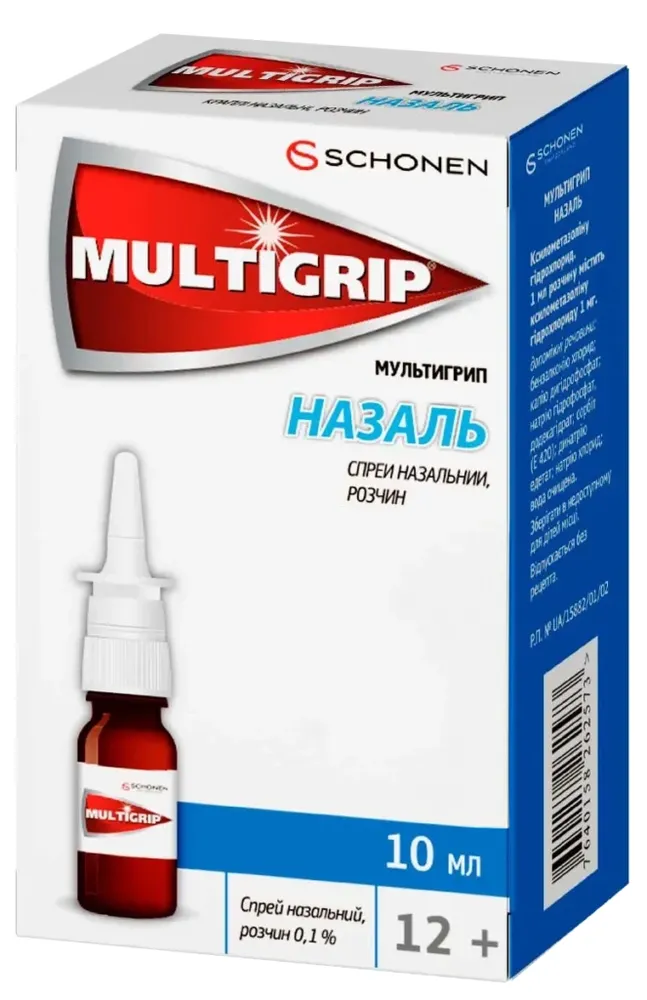
|
INSTRUCTION for medical use of the medicinal product MULTIGRIP® NASAL PHYTO (MULTIGRIP® NASAL PHYTO) Composition: Active substance: xylometazoline hydrochloride; 1 ml of solution contains xylometazoline hydrochloride 1 mg; Excipients: benzalkonium chloride; potassium dihydrogen phosphate; sodium hydrogen phosphate dodecahydrate; sorbitol (E 420); disodium edetate; sodium chloride; polyethylene glycolated hydrogenated castor oil; eucalyptol; levomenthol; purified water. Pharmaceutical form. Nasal spray, solution. Basic physicochemical properties: clear, colorless liquid with a specific odor. Pharmacotherapeutic group. Preparations used in diseases of the nasal cavity. Sympathomimetics, simple preparations. ATC code R01A A07. Pharmacological properties. Pharmacodynamics. Xylometazoline is a sympathomimetic agent (an imidazole derivative) acting on α-adrenergic receptors of the nasal mucosa. After nasal administration, xylometazoline causes vasoconstriction, thereby reducing swelling of the nasal mucosa and nasopharynx. The effect of the drug begins within 2 minutes after application and lasts up to 12 hours. The medicinal product is well tolerated, including by patients with sensitive mucosa. The drug does not impair mucociliary function. Laboratory test results have shown that xylometazoline reduces the infectious activity of human rhinovirus associated with the common cold. Pharmacokinetics. After nasal administration, the amount of absorbed substance may be sufficient to produce systemic effects, for example on the central nervous and cardiovascular systems. No metabolites or excretion pathways have been identified. Clinical characteristics. Indications. For use in adults and children aged 12 years and older:
Contraindications.
Special precautions . Like other sympathomimetics, xylometazoline should be used with caution in patients who experience strong reactions to adrenergic drugs, such as insomnia, dizziness, tremor, cardiac arrhythmias, or high blood pressure. Repeated use of xylometazoline may lead to tachyphylaxis and drug-induced rhinitis. Repeated and/or prolonged instillations may result in systemic absorption of xylometazoline in amounts sufficient to cause systemic adverse reactions. Xylometazoline should be used with caution in patients with cardiovascular disorders, arterial hypertension, pheochromocytoma, metabolic disorders (e.g., hyperthyroidism, diabetes mellitus), benign prostatic hyperplasia, history of stroke or presence of stroke risk factors (use of vasoconstrictive agents, history of seizures, urinary retention due to urethral or prostatic disorders related to direct action of sympathomimetic agents). Decongestant sympathomimetics may cause reactive hyperemia of the nasal mucosa, especially after prolonged treatment or use of high doses. Repeated or chronic use of this drug may lead to a "rebound" congestion syndrome and narrowing of the upper airways. This may manifest as chronic hyperemia of the nasal mucosa (and later lead to atrophic rhinitis). In moderate cases, administration of the drug into one nasal passage may be paused or avoided in both nasal passages until symptom intensity decreases, to partially preserve nasal passage patency. Prolonged treatment with xylometazoline may cause drug-induced rhinitis and swelling of the nasal mucosa with symptoms resembling the common cold. The medicinal product contains benzalkonium chloride, an irritant substance, and polyethylene glycolated castor oil. These may cause undesirable skin reactions. The medicinal product contains sorbitol; therefore, it should not be used by patients with rare hereditary fructose intolerance. Patients with QT interval prolongation syndrome who receive xylometazoline are at increased risk of serious ventricular arrhythmias. Interaction with other medicinal products and other types of interactions. Monoamine oxidase inhibitors (MAOIs). Xylometazoline may potentiate the effect of monoamine oxidase inhibitors and induce a hypertensive crisis. Xylometazoline is not recommended for patients taking or who have taken MAOIs within the last two weeks. Tricyclic and tetracyclic antidepressants. Concurrent use of tricyclic or tetracyclic antidepressants and sympathomimetic drugs may enhance the sympathomimetic effect of xylometazoline; therefore, concomitant use is not recommended. Xylometazoline may affect the action of certain antihypertensive agents, such as β-blockers. Special instructions. The bottle should be used by only one person to avoid microbial spread via the spray nozzle. Use during pregnancy or breastfeeding. The medicinal product should not be used during pregnancy due to its potential vasoconstrictive effect. Evidence of adverse effects on infants is lacking. However, it is unknown whether xylometazoline is excreted in breast milk; therefore, caution is required, and Multigrip Nasal Phyto should be used during breastfeeding only under medical supervision. Fertility. Adequate data on the effect of Multigrip Nasal Phyto on fertility are lacking. Since systemic exposure to xylometazoline hydrochloride is very low, the likelihood of an effect on fertility is extremely small. Ability to influence reaction speed when driving or operating machinery. Multigrip Nasal Phyto has a negligible effect on the ability to drive or operate machinery, although there is a risk of adverse effects that may affect psychomotor reaction speed. Method of administration and dosage. Adults and children aged 12 years and older. Recommended dose: 1 spray into each nostril 3 times daily. The last dose should be administered immediately before bedtime. Each spray delivers 81 mcg of xylometazoline hydrochloride. The product should not be used for more than 5 consecutive days unless otherwise advised by a physician. Children. Multigrip Nasal Phyto nasal spray, solution, is contraindicated in children under 12 years of age. Overdose. Excessive local use of xylometazoline hydrochloride or accidental ingestion may lead to sympatholytic effects, including central nervous system depression (e.g., drowsiness, coma), severe dizziness, profuse sweating, significant decrease in body temperature, pallor, headache, tachycardia, bradycardia, arterial hypertension, respiratory depression, miosis, seizures, ataxia, restlessness. Elevated blood pressure may be followed by hypotension. Gastrointestinal symptoms such as nausea and vomiting may also occur. Young children are more sensitive to toxicity than adults. Severe symptoms after accidental use have not been observed, but in newborns (2 weeks old), administration of 1 drop of 0.1% solution into each nostril may lead to coma. All patients suspected of overdose should receive appropriate supportive measures and, if necessary, immediate symptomatic treatment under medical supervision. Medical care should include observation of the patient for several hours. There is no specific antidote; atropine may be used in case of bradycardia. In cases of severe overdose with cardiac arrest, resuscitation measures should continue for at least 1 hour. Adverse reactions. Adverse effects are classified by frequency as follows: very common (≥ 1/10), common (≥ 1/100 and < 1/10), uncommon (≥ 1/1,000 and < 1/100), rare (≥ 1/10,000 and < 1/1,000), very rare (< 1/10,000), frequency not known (cannot be estimated from available data). Immune system disorders: very rare: hypersensitivity reactions, including angioedema, rash, itching. Nervous system disorders: common: headache. Eye disorders: very rare: transient visual disturbances. Cardiac disorders: very rare: irregular or rapid heartbeat, hypertension, arrhythmia. Respiratory, thoracic and mediastinal disorders: common: dryness or discomfort of the nasal mucosa, burning sensation, drug-induced rhinitis. uncommon: epistaxis. Gastrointestinal disorders: common: nausea. General disorders and administration site conditions: common: burning sensation at site of application. Reporting suspected adverse reactions Reporting suspected adverse reactions during the post-marketing period is important. This allows ongoing monitoring of the benefit-risk balance of the medicinal product. Healthcare professionals are obliged to report any suspected adverse reactions via the national pharmacovigilance system. Expiry date. 2 years. After opening, the product is suitable for use within 30 days. Storage conditions. Store in the original packaging protected from light at a temperature not exceeding 25 °C. Keep out of reach of children. Packaging. 10 ml of solution in a brown glass bottle with a spray pump, 1 bottle per cardboard box. Classification of release. Over-the-counter. Manufacturer. Biofarm S.A., Romania Manufacturer's address and location of its operations. Str. Logofetului Teutu no. 99, Sector 3, postal code 031212, Bucharest, Romania |