Mozifer
Ukraine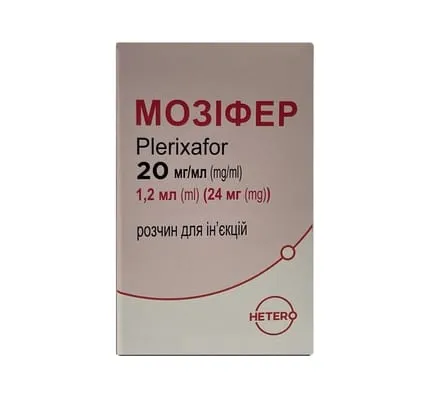
Table of Contents
INSTRUCTION FOR MEDICAL USE OF THE MEDICINAL PRODUCT MOZIFER (MOZIFER)
Composition:
Active substance: plerixafor;
1 ml of solution contains 20 mg of plerixafor;
1 vial contains 24 mg of plerixafor in 1.2 ml of solution;
Excipients: sodium chloride, sodium hydroxide*, hydrochloric acid*, water for injections.
* – used for pH adjustment
Pharmaceutical form. Solution for injection.
Main physicochemical properties: clear solution, colorless to pale yellow.
Pharmacotherapeutic group. Other immunostimulants. Plerixafor.
ATC code L03AX16.
Pharmacological Properties.
Mechanism of Action
Plerixafor is a bicyclam derivative and a selective, reversible antagonist of the CXCR4 chemokine receptor, blocking its interaction with its cognate ligand, stromal cell-derived factor-1alpha (SDF-1alpha), also known as CXCL12. The leukocytosis and increased number of circulating hematopoietic progenitor cells induced by plerixafor are believed to result from disruption of the CXCR4–cognate ligand interaction, leading to the release of both mature and pluripotent cells into systemic circulation. CD34+ cells mobilized by plerixafor are functional and capable of engraftment, with long-term population-reconstituting potential.
Pharmacodynamics
In pharmacodynamic studies in healthy volunteers receiving plerixafor alone, peak mobilization of CD34+ cells occurred within 6–9 hours after drug administration. In pharmacodynamic evaluations conducted in both healthy volunteers and patients using a mobilization regimen that included granulocyte colony-stimulating factor (G-CSF) and plerixafor at the same doses, a more prolonged increase in CD34+ cells in peripheral blood was observed, lasting from 4 to 18 hours after administration, with peak levels observed between 10 and 14 hours.
A study comparing the pharmacokinetics and pharmacodynamics of plerixafor at doses of 0.24 mg/kg body weight or 20 mg was conducted in patients with non-Hodgkin’s lymphoma (N = 61, patient body weight ≤ 70 kg) receiving plerixafor at these doses. The fixed dose of 20 mg demonstrated 1.43-fold higher systemic exposure (AUC0–10h) compared to the 0.24 mg/kg dose and a higher response rate in achieving the target threshold of ≥5×10⁶ CD34+ cells/kg. The median time to achieve ≥5×10⁶ CD34+ cells/kg was 3 days in both treatment groups, and the safety profiles were similar between groups. A body weight of 83 kg was selected as the cutoff point for transitioning from fixed to weight-based dosing (83 kg × 0.24 mg/kg = 19.92 mg).
Clinical Efficacy and Safety
In two placebo-controlled clinical studies involving patients with non-Hodgkin’s lymphoma or multiple myeloma (AMD3100-3101 and AMD3100-3102, respectively), the increase in CD34+ cell counts (cells/μL) within 24 hours prior to the first apheresis was evaluated (Table 1). During the evaluated 24-hour period, the first dose of plerixafor (0.24 mg/kg) or placebo was administered 10–11 hours before apheresis.
Increase in CD34+ cells in peripheral blood following administration of plerixafor in combination with granulocyte colony-stimulating factor (G-CSF)
Table 1.
| Study |
Plerixafor + G-CSF |
Placebo + G-CSF |
||
| Median |
Mean (SD) |
Median |
Mean (SD) |
|
| AMD3100-3101 |
5.0 |
6.1 (5.4) |
1.4 |
1.9 (1.5) |
| AMD3100-3102 |
4.8 |
6.4 (6.8) |
1.7 |
2.4 (7.3) |
Children
The efficacy and safety of plerixafor were evaluated in an open-label, multicenter, controlled clinical trial in patients aged 1 to 18 years with lymphoma or solid tumors who were candidates for autologous transplantation.
Patients with leukemia, persistent high levels of bone marrow involvement, or prior stem cell transplantation were excluded. Patients (45 children aged 1 to 18 years) were randomized into two groups in a 2:1 ratio. The first group received plerixafor at a dose of 0.24 mg/kg body weight plus standard mobilization (G-CSF with or without chemotherapy), while the control group received standard mobilization only. The primary analysis showed that at least a doubling of CD34+ cell counts in peripheral blood, measured from the morning before the first apheresis to the morning of apheresis day, occurred in 80% of patients in the plerixafor group compared to 28.6% in the control group (p = 0.0019).
The median baseline level of CD34+ cells in peripheral blood was 15 cells/μL in the plerixafor group versus 35 cells/μL in the control group. The median increase in CD34+ cell count from baseline on the day of apheresis was 3.2-fold in the plerixafor group and 1.4-fold in the control group.
Pharmacokinetics
The pharmacokinetics of plerixafor were studied in patients with lymphoma and multiple myeloma receiving the clinical dose (0.24 mg/kg body weight) following prior treatment with G-CSF (10 μg/kg body weight once daily for up to 4 consecutive days).
Absorption
Plerixafor is rapidly absorbed after subcutaneous administration, with peak plasma concentration (Cmax) reached within approximately 30–60 minutes (tmax). After subcutaneous administration of plerixafor at a dose of 0.24 mg/kg body weight, following 4 consecutive days of prior G-CSF treatment, the Cmax and mean area under the plasma concentration-time curve (AUC0–24) were 887 ± 217 ng/mL and 4337 ± 922 ng·h/mL, respectively.
Distribution
Plerixafor is moderately bound to human plasma proteins (up to 58%). The apparent volume of distribution of plerixafor in humans is 0.3 L/kg, indicating that the drug is extensively distributed into the extravascular space but is not confined to it.
Metabolism
In vitro studies showed that plerixafor was not metabolized in human liver microsomes or primary human hepatocytes. In vitro studies also demonstrated that plerixafor does not inhibit the major CYP450 metabolizing isoenzymes (1A2, 2A6, 2B6, 2C8, 2C9, 2C19, 2D6, 2E1, and 3A4/5). In vitro studies using human hepatocytes showed that plerixafor does not induce CYP1A2, CYP2B6, or CYP3A4 isoenzymes. These findings suggest that the potential for P450-mediated drug interactions with plerixafor is low.
Elimination
The primary route of elimination of plerixafor is via the kidneys. After administration of plerixafor at a dose of 0.24 mg/kg body weight to healthy volunteers with normal renal function, approximately 70% of the administered dose was excreted unchanged in urine within the first 24 hours. The elimination half-life (T1/2) from plasma is 3–5 hours. In vitro studies using MDCKII and MDCKII-MDR1 cell models indicate that plerixafor is neither a substrate nor an inhibitor of P-glycoprotein.
Special patient populations
Patients with renal impairment
In patients with varying degrees of renal impairment, the clearance of plerixafor after a single dose (0.24 mg/kg body weight) was reduced, with a positive correlation observed with creatinine clearance (CrCl). Mean AUC0–24 values for plerixafor in subjects with mild (CrCl 51–80 mL/min), moderate (CrCl 31–50 mL/min), and severe (CrCl ≤30 mL/min) renal impairment were 5410, 6780, and 6990 ng·h/mL, respectively, exceeding the drug exposure observed with normal renal function (5070 ng·h/mL). Renal impairment did not affect Cmax.
Sex
Population analysis did not reveal differences in plerixafor pharmacokinetics between males and females.
Elderly patients
Population analysis did not reveal age-related differences in plerixafor pharmacokinetics.
Children
Pharmacokinetics of plerixafor were evaluated in 48 pediatric patients (aged 1 to 18 years inclusive) with solid tumors, using doses of 0.16, 0.24, and 0.32 mg/kg body weight in combination with standard mobilization (G-CSF with or without chemotherapy).
Using population pharmacokinetic modeling and dosing scaled similarly to adults based on μg/kg, data showed increased plerixafor exposure with increasing body weight in children. At the same body weight-based dosing regimen of 240 μg/kg, the mean plerixafor exposure (AUC0–24h) was lower in children aged 2 to <6 years (1410 ng·h/mL), 6 to <12 years (2318 ng·h/mL), and 12 to <18 years (2981 ng·h/mL) compared to adults (4337 ng·h/mL). Based on population pharmacokinetic modeling, the mean plerixafor exposure (AUC0–24h) in children aged 2 to <6 years (1905 ng·h/mL), 6 to <12 years (3063 ng·h/mL), and 12 to <18 years (4015 ng·h/mL) receiving 320 μg/kg approached the exposure observed in adults receiving 240 μg/kg.
Clinical characteristics.
Indications.
Adults
For enhancing the mobilization of hematopoietic stem cells into the peripheral blood for collection and subsequent autologous transplantation, in combination with granulocyte colony-stimulating factor (G-CSF), in adult patients with lymphoma or multiple myeloma who have poor mobilization efficiency.
Children aged 1 to 18 years
For enhancing the mobilization of hematopoietic stem cells into the peripheral blood for collection and subsequent autologous transplantation, in combination with G-CSF, in children with lymphoma or solid malignant tumors:
- prophylactically, when the number of circulating stem cells on the day scheduled for collection following mobilization with G-CSF (with or without chemotherapy) is expected to be low,
or
- for patients who previously failed to collect an adequate number of hematopoietic stem cells.
Contraindications.
Hypersensitivity to the active substance or to any of the excipients of the medicinal product.
Interaction with other medicinal products and other forms of interaction.
No studies investigating interactions of this medicinal product have been conducted. In vitro tests showed that plerixafor is not metabolized by cytochrome P450 isoenzymes, nor does it inhibit or induce their activity. According to in vitro studies, plerixafor is neither a substrate nor an inhibitor of P-glycoprotein.
The addition of rituximab to the "mobilization regimen" (plerixafor and G-CSF) in clinical studies involving patients with non-Hodgkin’s lymphoma did not affect patient safety or CD34+ cell concentration.
Special precautions for use.
Possible mobilization of tumor cells in patients with lymphoma and multiple myeloma.
When plerixafor is used in combination with G-CSF (for mobilization of hematopoietic stem cells in patients with lymphoma or multiple myeloma), tumor cells may be released from the bone marrow and subsequently collected during leukapheresis. Study results have shown that, in cases where tumor cells are mobilized, the number of mobilized tumor cells does not increase with the use of plerixafor in combination with G-CSF compared to G-CSF alone.
Mobilization of tumor cells in patients with leukemia.
Plerixafor and G-CSF have been administered in patients with acute myeloid and plasma cell leukemia within an expanded access program. In some cases, an increase in circulating leukemic cells was observed. Plerixafor, when used to mobilize hematopoietic stem cells, may cause mobilization of tumor cells, leading to their presence in the apheresis product. Therefore, plerixafor is not recommended for use in leukemia patients for the mobilization and subsequent collection of hematopoietic stem cells.
Hematological effects
Leukocytosis. Mozobil, when administered in combination with G-CSF, increases not only the population of hematopoietic stem cells but also the number of circulating leukocytes. White blood cell counts should be monitored during treatment with Mozobil. Careful consideration should be given to each case of Mozobil administration in patients whose peripheral blood neutrophil count exceeds 50 x 109 cells/L.
Thrombocytopenia. Thrombocytopenia is a known complication of apheresis and has been observed in patients receiving Mozobil. Platelet counts should be monitored in all patients receiving Mozobil who are scheduled for apheresis.
Allergic reactions
Mild to moderate allergic reactions such as urticaria, periorbital edema, dyspnea, or hypoxia (see section "Adverse reactions") have resolved spontaneously or were managed with appropriate therapy (e.g., antihistamines, glucocorticoids, hydration, oxygen therapy). Serious hypersensitivity reactions, including anaphylactic reactions—some of which were life-threatening with clinically significant hypotension and shock—have been reported in patients receiving plerixafor. Patients should be observed during and for at least 30 minutes after each administration of Mozobil. The potential risk of allergic reactions requires appropriate preventive measures.
Vasovagal reactions
Vasovagal reactions, orthostatic hypotension, and/or syncope may occur following subcutaneous injections of the drug (see section "Adverse reactions"). Due to the potential for such reactions, appropriate precautions should be taken.
Splenomegaly
In preclinical studies, an increase in absolute and relative spleen weight associated with extramedullary hematopoiesis was observed after prolonged (2–4 weeks), daily administration of plerixafor in rats (subcutaneous injections; dose exceeding the recommended human dose by 4 times).
Cases of splenomegaly and/or non-traumatic splenic rupture have been reported with concomitant use of plerixafor and G-CSF. This should be considered in patients receiving Mozobil in combination with G-CSF who present with left upper quadrant pain and/or shoulder or scapular pain.
Sodium
Each dose of Mozobil contains less than 1 mmol of sodium (23 mg), i.e., essentially "sodium-free."
Use during pregnancy or breastfeeding.
Women of childbearing potential
Women of reproductive potential should use effective contraception during treatment.
Pregnancy
There is insufficient data on the use of plerixafor in pregnant women. Animal studies have shown teratogenic effects of the drug. Patients should be informed that the use of plerixafor during pregnancy may result in congenital malformations. Mozobil may be used during pregnancy only if the potential benefit justifies the potential risk to the fetus.
Breastfeeding
There are no data on the excretion of plerixafor into human milk; therefore, a risk to the infant cannot be excluded. Breastfeeding should be discontinued during treatment with Mozobil.
Fertility
The effect of plerixafor on fertility in men and women is unknown.
Ability to influence the speed of reactions when driving or operating machinery.
Plerixafor may affect the ability to drive or operate machinery. Since dizziness, fatigue, and vasovagal reactions have been observed in some patients, caution should be exercised when driving or engaging in other potentially hazardous activities.
Method of Administration and Dosage
Treatment with the drug Mozifer should be prescribed and conducted by a qualified oncologist and/or hematologist. Mobilization and apheresis of cells should be performed in collaboration with an oncology-hematology center with sufficient experience in this field, where proper monitoring of hematopoietic progenitor cell levels is possible.
Age 60 years or older and/or prior myelosuppressive chemotherapy and/or extensive prior chemotherapy and/or peak circulating stem cell count of less than 20 stem cells/microliter have been identified as predictors of poor mobilization.
Doses
The recommended daily dose of plerixafor administered subcutaneously is as follows:
Adults:
- Fixed dose of 20 mg or 0.24 mg/kg body weight for patients with body weight ≤ 83 kg;
- 0.24 mg/kg body weight for patients with body weight > 83 kg.
Children aged 1 to 18 years:
- 0.24 mg/kg body weight.
Each vial of Mozifer contains 1.2 ml of aqueous solution of plerixafor for injection with a concentration of 20 mg/ml (one vial contains 24 mg of plerixafor).
The syringe for drawing up plerixafor should be selected according to the patient's body weight.
For patients with low body weight, up to 45 kg, 1 ml syringes for infants may be used. Such a syringe has the smallest graduation of 0.01 ml and is therefore suitable for administering plerixafor at a dose of 240 mcg/kg to pediatric patients with body weight of at least 9 kg. For patients with body weight above 45 kg, a 1 ml or 2 ml syringe with graduations allowing measurement of volume up to 0.1 ml may be used.
The drug should be administered subcutaneously 6–11 hours before the start of apheresis, following four days of prior G-CSF therapy. In clinical studies, plerixafor was typically used for 2–4 consecutive days (up to 7 days of continuous use).
To calculate the required volume of Mozifer for administration, the patient’s body weight at the time of treatment should be used, which must be determined within one week prior to the first dose of Mozifer.
In clinical studies, the dose of plerixafor was calculated based on the patient’s body weight at the time of treatment, up to 175% of ideal body weight. The dose and use of plerixafor in patients whose body weight exceeds 175% of ideal body weight have not been studied.
Ideal body weight can be calculated using the following formulas:
Men (kg):
50 + 2.3 × ([Height (cm) × 0.394] - 60);
Women (kg):
45.5 + 2.3 × ([Height (cm) × 0.394] - 60).
Based on data showing increased exposure with increasing body weight, the dose of Mozifer should not exceed 40 mg per day.
Recommended Concomitant Medications
In pivotal clinical studies of plerixafor, all patients received G-CSF at a dose of 10 mcg/kg body weight, administered in the morning for four consecutive days prior to the first dose of plerixafor, and then each morning until apheresis.
Use in Special Patient Populations
Patients with Renal Impairment
If creatinine clearance (CrCl) is 20–50 ml/min, the dose of plerixafor should be reduced by one-third to 0.16 mg/kg body weight/day (see section "Pharmacokinetics").
Clinical data on the use of the adjusted dose of the drug are limited. Available clinical experience with plerixafor does not allow recommendations for dosing when CrCl < 20 ml/min or in patients undergoing hemodialysis.
Given that drug exposure increases with increasing body weight, the dose of plerixafor should not exceed 27 mg/day when CrCl ≤ 50 ml/min.
Elderly Patients (over 65 years of age)
In patients with normal renal function, dose adjustment is not required. When CrCl ≤ 50 ml/min, dose modification is recommended (see above subsection "Patients with Renal Impairment"). It should be noted that the likelihood of decreased renal function increases with age; therefore, the dose should be selected cautiously in elderly patients.
Method of Administration
The drug should be administered subcutaneously. One vial of Mozifer is intended for single use only.
Before administration, the vial should be inspected. The solution must not be used if particulate matter is present or if there are changes in solution color. Mozifer is a sterile, preservative-free preparation; therefore, aseptic techniques must be followed when drawing the contents of the vial into a syringe for subcutaneous injection.
Compatibility studies of Mozifer with other drugs have not been conducted; therefore, it should not be mixed with other drugs in the same syringe.
Any unused portion of the drug remaining after administration of the required dose must be discarded.
Children
The safety and efficacy of plerixafor in children (aged 1 to less than 18 years) were evaluated in an open-label, multicenter, controlled clinical study (see section "Pharmacological Properties"). The safety profile in this study was similar to that observed in adults.
Overdose
No cases of overdose have been reported. Given the limited data on use of doses exceeding the recommended dose (up to 0.48 mg/kg), it may be expected that the frequency of gastrointestinal disorders, vasovagal reactions, orthostatic hypotension, and/or syncope may increase.
Adverse Reactions
Safety data on the use of plerixafor in combination with G-CSF in patients with lymphoma and multiple myeloma were obtained from two placebo-controlled (Phase III) studies involving 301 patients and 10 uncontrolled (Phase II) studies involving 242 patients. Patients received plerixafor at a dose of 0.24 mg/kg body weight/day administered subcutaneously. The duration of treatment in these studies ranged from 1 to 7 consecutive days (median – 2 days).
In two Phase III studies involving patients with non-Hodgkin’s lymphoma and multiple myeloma (AMD3100-3101 and AMD3100-3102, respectively), 301 patients received treatment with plerixafor in combination with G-CSF, and 292 patients received placebo plus G-CSF. The daily dose of G-CSF was 10 mcg/kg body weight administered in the morning for 4 consecutive days prior to the first injection of plerixafor or placebo, and continued each morning until completion of apheresis.
The adverse reactions listed below were observed more frequently in the group receiving plerixafor and G-CSF than in the placebo and G-CSF group. The frequency of treatment-related adverse reactions was ≥1% among patients receiving plerixafor during hematopoietic stem cell mobilization and apheresis, as well as prior to chemotherapy/ myeloablative therapy in preparation for transplantation.
No significant difference in the frequency of adverse reactions between treatment groups was observed during 12 months after transplantation when chemotherapy/ablation was used as part of the transplant conditioning regimen.
The following are adverse reactions observed more frequently in the plerixafor group than in the placebo group, associated with the use of plerixafor during mobilization and apheresis in Phase III studies.
Adverse reactions are listed by system organ class and frequency of occurrence. Frequency is defined according to the following criteria: very common (≥1/10), common (≥1/100 to <1/10), uncommon (≥1/1000 to <1/100), rare (≥1/10,000 to <1/1000), very rare (<1/10,000), frequency not known (cannot be estimated from available data).
Blood and lymphatic system disorders
Not known: splenomegaly and non-traumatic splenic rupture (see section "Special precautions").
Immune system disorders
Uncommon: allergic reactions, anaphylactic reactions, including anaphylactic shock (see section "Special precautions").
Psychiatric disorders
Common: insomnia.
Uncommon: abnormal dreams, nightmares.
Nervous system disorders
Common: headache, dizziness.
Gastrointestinal disorders
Very common: diarrhea, nausea.
Common: flatulence, abdominal pain, vomiting, bloating, dry mouth, epigastric discomfort, constipation, dyspepsia, oral mucosa hypoaesthesia.
Skin and subcutaneous tissue disorders
Common: hyperhidrosis, erythema.
Musculoskeletal and connective tissue disorders
Common: arthralgia, musculoskeletal pain.
General disorders and administration site conditions
Very common: injection site reactions.
Common: fatigue, malaise.
Adverse reactions in patients with lymphoma and multiple myeloma who received plerixafor in controlled Phase III and uncontrolled studies, including Phase II studies where plerixafor was used as monotherapy for hematopoietic stem cell mobilization, were similar. In patients with lymphoma and multiple myeloma, the frequency of adverse reactions did not differ according to underlying disease, age, or sex.
Allergic reactions
Allergic reactions included one or more of the following adverse events: urticaria, periorbital edema, dyspnea, or hypoxia. These reactions were mild to moderate in severity and occurred within approximately 30 minutes after administration of plerixafor.
Myocardial infarction
In clinical studies, 7 out of 679 oncology patients experienced myocardial infarction after stem cell mobilization with plerixafor and G-CSF. All cases of myocardial infarction occurred at least 14 days after the last dose of plerixafor. Additionally, two female patients enrolled in an expanded access program experienced myocardial infarction after stem cell mobilization with plerixafor and G-CSF. One case occurred 4 days after the last dose of plerixafor. The lack of temporal association in 8 out of 9 patients and the risk profile of participants who experienced myocardial infarction do not support considering plerixafor as an independent risk factor for myocardial infarction in patients receiving G-CSF.
Hyperleukocytosis
In Phase III studies, an increase in white blood cell count to ≥100×10⁹/L on the day before apheresis or on any apheresis day was observed in 7% of patients receiving plerixafor and in 1% of patients receiving placebo. No complications or clinical manifestations related to leukocytosis were reported.
Vasovagal reactions
Vasovagal reactions (orthostatic hypotension and/or syncope) occurred in less than 1% of participants in clinical studies (oncology patients and healthy volunteers) who received plerixafor at doses ≤0.24 mg/kg body weight. In most cases, these reactions occurred within 1 hour after administration of plerixafor.
Gastrointestinal disorders
In clinical studies of plerixafor in oncology patients, serious gastrointestinal disorders (including diarrhea, nausea, vomiting, abdominal pain) were rarely reported.
Paresthesia
Paresthesia is commonly observed in oncology patients after autologous transplantation due to multiple medical procedures. In placebo-controlled Phase III clinical trials, the frequency of paresthesia was 20.6% and 21.2% in the plerixafor and placebo groups, respectively.
Elderly patients
24% of participants in the two placebo-controlled clinical studies of plerixafor were aged 65 years or older. No significant differences in the frequency of adverse reactions were observed in the elderly subgroup compared to younger patients.
Shelf life. 2 years.
Shelf life after first opening of the container.
From a microbiological standpoint, the medicinal product should be used immediately. If not used immediately, the user is responsible for the storage conditions and duration prior to use.
Storage conditions. Store in the original packaging at a temperature not exceeding 25 °C, in a place inaccessible to children.
Incompatibilities.
Compatibility studies of Mozifer with other medicinal products have not been conducted; therefore, it should not be mixed with other medicinal products in the same syringe.
Packaging. 1.2 mL (24 mg) in a vial. 1 vial in a cardboard box.
Prescription status. Prescription only.
Manufacturer. Hetero Labs Limited, India.
Manufacturer’s address and location of its operations.
Unit-VI, TSIIC, Formulation SEZ, Sy No. 410 & 411, Polepally Village, Jadcherla Mandal, Mahaboobnagar-District, Telangana, Pin-509301, India.