Moxetero
Ukraine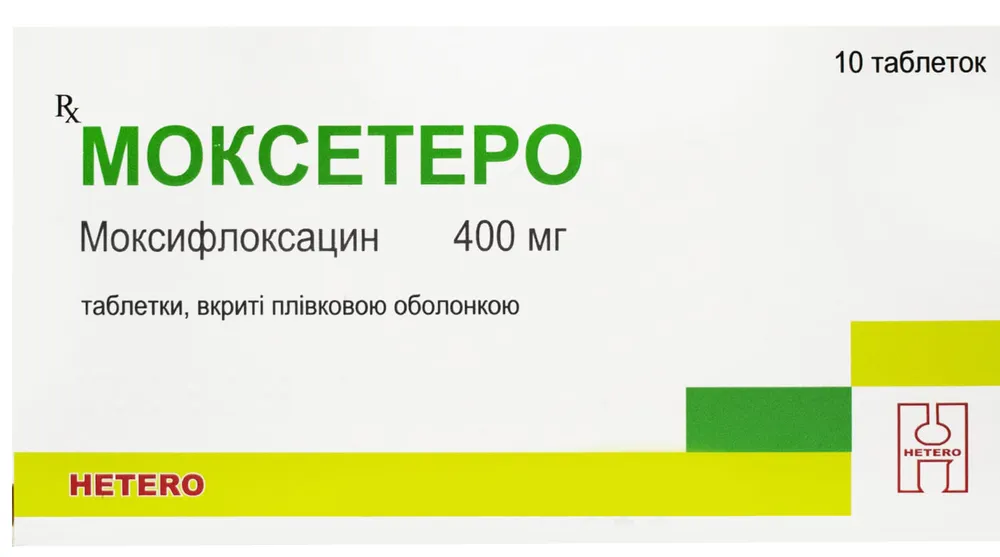
Table of Contents
INSTRUCTIONS FOR MEDICAL USE OF THE MEDICINAL PRODUCT MOXETERO (MOXETERO)
Composition:
Active substance: moxifloxacin;
1 tablet contains moxifloxacin hydrochloride equivalent to 400 mg of moxifloxacin;
Excipients: microcrystalline cellulose, sodium croscarmellose, colloidal anhydrous silicon dioxide, povidone, magnesium stearate, Opadry Pink 03B34285 (hypromellose (E 464), macrogol, titanium dioxide (E 171), iron oxide red (E 172), iron oxide yellow (E 172)).
Pharmaceutical form. Film-coated tablets.
Main physicochemical properties: film-coated tablets, pink in color, capsule-shaped, biconvex, with the inscription "80" on one side and "I" on the other.
Pharmacotherapeutic group. Antimicrobial agents for systemic use. Antibacterial agents of the quinolone group. ATC code J01MA14.
Pharmacological properties.
Pharmacodynamics.
Mechanism of action
Moxifloxacin is an 8-methoxyfluoroquinolone agent with a broad spectrum of bactericidal activity. In vitro, moxifloxacin is active against many Gram-positive and Gram-negative microorganisms.
Moxifloxacin has been shown to be effective against bacteria resistant to β-lactam and macrolide agents.
The bactericidal effect of moxifloxacin is due to inhibition of both type II topoisomerases (DNA gyrase and topoisomerase IV), which are essential for replication, transcription, and repair of bacterial DNA.
The C8-methoxy substituent is believed to enhance activity and reduce selection of resistant mutants among Gram-positive bacteria compared to the C8-H substituent. The presence of a bulky dicycloamine substituent at position C-7 prevents active efflux associated with the norA or pmrA genes identified in some Gram-positive bacteria.
Moxifloxacin exhibits concentration-dependent bactericidal activity. Minimal bactericidal concentrations (MBC) typically correspond to minimal inhibitory concentrations (MIC).
Effect on intestinal flora in humans
In two studies involving healthy volunteers, the following changes in intestinal flora were observed after oral administration of moxifloxacin. The numbers of E. coli, Bacillus spp., Enterococcus, and Klebsiella spp., as well as anaerobes such as Bacteroides vulgatus, Bifidobacterium spp., Eubacterium, and Peptostreptococcus, were reduced. An increase in the number of Bacteroides fragilis was observed. The counts of the above-mentioned microorganisms returned to normal within two weeks.
Resistance
Resistance mechanisms that inactivate penicillins, cephalosporins, aminoglycosides, macrolides, and tetracyclines do not affect the antibacterial efficacy of moxifloxacin. Other resistance mechanisms, such as permeability barriers (common in Pseudomonas aeruginosa) and efflux mechanisms, may influence susceptibility to moxifloxacin.
Development of resistance to moxifloxacin in vitro has been observed as a gradual process involving point mutations in both type II topoisomerases, DNA gyrase and topoisomerase IV. Moxifloxacin is a weak substrate for active efflux mechanisms in Gram-positive microorganisms.
Cross-resistance with other fluoroquinolones may occur. However, since moxifloxacin inhibits both type II topoisomerases (DNA gyrase and topoisomerase IV) with similar potency in certain Gram-positive bacteria, these bacteria may be resistant to other quinolones but remain susceptible to moxifloxacin.
Clinical breakpoints
Table 1
Clinical MICs and disk diffusion breakpoints for moxifloxacin (01.01.2012) according to EUCAST (European Committee on Antimicrobial Susceptibility Testing)
| Microorganism |
Susceptible |
Resistant |
| Staphylococcus spp. |
≤ 0.5 mg/l ≥ 24 mm |
> 1 mg/l < 21 mm |
| S. pneumoniae |
≤ 0.5 mg/l ≥ 22 mm |
> 0.5 mg/l < 22 mm |
| Streptococcus, groups A, B, C, G |
≤ 0.5 mg/l ≥ 18 mm |
> 1 mg/l < 15 mm |
| H. influenzae |
≤ 0.5 mg/l ≥ 25 mm |
> 0.5 mg/l < 25 mm |
| M. catarrhalis |
≤ 0.5 mg/l ≥ 23 mm |
> 0.5 mg/l < 23 mm |
| Enterobacteriaceae |
≤ 0.5 mg/l ≥ 20 mm |
> 1 mg/l < 17 mm |
| Quality control ranges, non-species related* |
≤ 0.5 mg/l |
> 1 mg/l |
* The breakpoints not specific to species were established primarily based on pharmacokinetic/pharmacodynamic data and do not depend on the distribution of MICs of specific species. These data are applied only to species for which no species-specific breakpoints have been defined, and are not used for species where interpretive criteria are yet to be determined.
Microbiological susceptibility
The frequency of acquired resistance may vary depending on the geographical region and over time for specific microorganisms. It is desirable to have access to local information on microbial resistance, especially when treating severe infections.
When necessary, consultation with an expert in antibiotic resistance should be sought if local resistance prevalence is so high that the efficacy of a particular medicinal product against at least some infectious pathogens remains questionable.
Susceptible species
Aerobic Gram-positive microorganisms
Gardnerella vaginalis
Staphylococcus aureus * (methicillin-susceptible)
Streptococcus agalactiae (Group B)
Streptococcus milleri group* (S. anginosus, S. constellatus and S. intermedius)
Streptococcus pneumoniae *
Streptococcus pyogenes * (Group A)
Streptococcus viridans group (S. viridans, S. mutans, S. mitis, S. sanguinis, S. salivarius, S. thermophilus)
Aerobic Gram-negative microorganisms
Acinetobacter baumannii
Haemophilus influenzae *
Haemophilus parainfluenzae *
Legionella pneumophila
Moraxella (Branhamella) catarrhalis *
Anaerobic microorganisms
Fusobacterium spp.
Prevotella spp.
Other microorganisms
Chlamydophila (Chlamydia) pneumoniae *
Chlamydia trachomatis*
Coxiella burnetii
Mycoplasma genitalium
Mycoplasma hominis
Mycoplasma pneumoniae *
Species with possible acquired resistance
Aerobic Gram-positive microorganisms
Enterococcus faecalis*
Enterococcus faecium*
Staphylococcus aureus (methicillin-resistant)+
Aerobic Gram-negative microorganisms
Enterobacter cloacae*
Escherichia coli*#
Klebsiella pneumoniae*#
Klebsiella oxytoca
Neisseria gonorrhoeae*+
Proteus mirabilis*
Anaerobic microorganisms
Bacteroides fragilis*
Peptostreptococcus spp.*
Resistant species
Aerobic Gram-negative microorganisms
Pseudomonas aeruginosa
* Adequate activity against susceptible strains has been demonstrated during clinical trials within approved clinical indications.
Strains producing ESBLs are usually resistant to fluoroquinolones.
- Resistance rate > 50% in one or more countries.
Pharmacokinetics.
Absorption and bioavailability
After oral administration, moxifloxacin is rapidly and almost completely absorbed. Absolute bioavailability is approximately 91%.
Over the dose range of 50–800 mg as single doses and at doses of 600 mg daily for 10 days, pharmacokinetics are linear. Steady state is achieved within three days. Following an oral dose of 400 mg, maximum plasma concentration (Cmax) is reached within 0.5–4 hours and amounts to 3.1 mg/L. Peak and trough plasma concentrations at steady state (400 mg once daily) are 3.2 and 0.6 mg/L, respectively.
Distribution
Moxifloxacin rapidly distributes into the extravascular space. After administration of a 400 mg dose, the area under the plasma concentration-time curve (AUC) is 35 µg·h/mL. The volume of distribution at steady state is 2 L/kg. As determined in in vitro and ex vivo experiments, protein binding in blood is approximately 40–42% and is independent of drug concentration.
Table 2
Peak concentration (geometric mean) after single oral dose of 400 mg moxifloxacin.
| Tissue |
Concentration |
Local level – plasma level |
| Plasma |
3.1 mg/L |
|
| Saliva |
3.6 mg/L |
0.75 – 1.3 |
| Vesicle contents |
1.61 mg/L |
1.71 |
| Bronchial mucosa |
5.4 mg/kg |
1.7 – 2.1 |
| Alveolar macrophages |
56.7 mg/kg |
18.6 – 70.0 |
| Epithelial lining fluid |
20.7 mg/L |
5 – 7 |
| Maxillary sinus |
7.5 mg/kg |
2.0 |
| Ethmoid sinuses |
8.2 mg/kg |
2.1 |
| Nasal polyps |
9.1 mg/kg |
2.6 |
| Interstitial fluid |
1.02 mg/L |
0.8 – 1.42,3 |
| Female genital organs* |
10.24 mg/kg |
1.724 |
* intravenous administration of a single 400 mg dose
1 10 hours after administration;
2 free concentration;
3 from 3 hours to 36 hours after dose administration;
4 at the end of infusion.
Metabolism
Moxifloxacin undergoes phase II biotransformation and is excreted via the kidneys as well as in feces/bile, both in unchanged form and as inactive sulfate conjugates (M1) and glucuronides (M2). M1 and M2 are metabolites relevant in humans; both are microbiologically inactive. In vitro studies and phase I clinical trials showed no metabolic pharmacokinetic interactions with other drugs involved in phase I biotransformation mediated by cytochrome P450 enzymes. There is no evidence of oxidative metabolism.
Elimination
The elimination half-life of the drug is approximately 12 hours. The mean total clearance after administration of 400 mg ranges from 179 to 246 mL/min. Renal clearance is approximately 24–53 mL/min, indicating partial tubular reabsorption of the drug from the kidneys. After a 400 mg dose, urinary excretion (approximately 19% – unchanged drug, approximately 2.5% – M1, and approximately 14% – M2) and fecal excretion (approximately 25% – unchanged drug, approximately 36% – M1, and no excretion as M2) together accounted for approximately 96%. Concomitant administration of ranitidine and probenecid does not alter the renal clearance of the drug.
Pharmacokinetics in different patient groups
Elderly patients and patients with low body weight
Higher plasma concentrations of the drug were observed in healthy volunteers with low body weight (particularly in women) and in healthy elderly volunteers.
Renal impairment
No significant changes in moxifloxacin pharmacokinetics have been observed in patients with impaired renal function (including patients with creatinine clearance > 20 mL/min/1.73 m²). As renal function declines, the concentration of metabolite M2 (glucuronide) increases up to 2.5-fold (in patients with creatinine clearance < 30 mL/min/1.73 m²).
Hepatic impairment
Based on pharmacokinetic data from studies involving patients with hepatic insufficiency (Child-Pugh class A–C), it is not possible to determine whether there is a difference compared to healthy volunteers. Impaired liver function was associated with higher plasma exposure of M1, while exposure to the parent drug was comparable to that in healthy volunteers. There is insufficient clinical experience with moxifloxacin for the treatment of patients with hepatic impairment.
Clinical characteristics.
Indications.
Treatment of the following bacterial infections caused by microorganisms sensitive to the drug in patients aged 18 years and older.
For the following indications, moxifloxacin should be used only when use of other antibacterial agents normally recommended for treatment of such infections is considered inappropriate:
- Acute bacterial sinusitis (diagnosed with high probability).
- Acute exacerbation of chronic obstructive pulmonary disease, including bronchitis (diagnosed with high probability).
For the following indications, moxifloxacin should be prescribed only when use of other antibacterial agents normally recommended for initial treatment of the following infections is inappropriate, or when such treatment has been ineffective:
- Community-acquired pneumonia, excluding community-acquired pneumonia with severe course.
- Moderate to severe inflammatory diseases of the pelvic organs (including infection of the upper genital tract in women, such as salpingitis and endometritis), not associated with tubo-ovarian abscess or pelvic abscesses. The tablet form of Moxetero is not recommended for use as monotherapy in moderate to severe inflammatory diseases of the pelvic organs, but may be used in combination with other appropriate antibacterial agents (e.g., cephalosporins) due to increasing resistance of moxifloxacin to Neisseria gonorrhoeae (except for moxifloxacin-resistant strains of N. gonorrhoeae).
The tablet form of Moxetero may be used to complete a treatment course in which initial parenteral therapy with moxifloxacin was effective and indicated for the following conditions:
‒ community-acquired pneumonia;
‒ complicated skin and soft tissue infections.
The tablet form of Moxetero is not recommended for initial treatment of any skin and soft tissue infections or in cases of severe community-acquired pneumonia.
Attention should be paid to official guidelines on appropriate use of antibacterial agents.
Contraindications.
‒ Known hypersensitivity to moxifloxacin or to other quinolones or to any of the excipients of the drug.
‒ Age under 18 years.
‒ Pregnancy or breastfeeding (see section "Use in pregnancy or lactation").
‒ History of tendon disorders related to treatment with quinolones.
During clinical studies, changes in cardiac electrophysiology, manifested as QT interval prolongation, were observed after administration of moxifloxacin. Therefore, for safety reasons, the drug is contraindicated in patients with:
- congenital or diagnosed acquired QT interval prolongation;
- electrolyte imbalances, particularly uncorrected hypokalemia;
- clinically significant bradycardia;
- clinically significant heart failure with reduced left ventricular ejection fraction;
- history of symptomatic arrhythmia.
The drug should not be used concomitantly with other drugs that prolong the QT interval (see section "Interaction with other medicinal products and other forms of interaction").
Due to limited clinical data, the drug is also contraindicated in patients with hepatic impairment (Child-Pugh class C) and in patients with elevated transaminase levels (more than 5 times the upper limit of normal).
Interaction with other medicinal products and other forms of interaction.
An additive effect of moxifloxacin and other medicinal products that may cause QT interval prolongation cannot be excluded. This interaction may lead to an increased risk of ventricular arrhythmias, including torsade de pointes. Therefore, the use of moxifloxacin in combination with any of the following medicinal products is contraindicated (see also section "Contraindications"):
‒ class IA antiarrhythmic agents (e.g., quinidine, hydroquinidine, disopyramide);
‒ class III antiarrhythmic agents (e.g., amiodarone, sotalol, dofetilide, ibutilide);
‒ antipsychotic agents (e.g., phenothiazines, pimozide, sertindole, haloperidol, sulpiride);
‒ tricyclic antidepressants;
‒ certain antimicrobial agents (sildenafil, sparfloxacin, intravenous erythromycin, pentamidine, antimalarials such as halofantrine);
‒ certain antihistamines (terfenadine, astemizole, mizolastine);
‒ others (cisapride, vinca alkaloids IV, bepridil, difemalil).
Moxifloxacin should be prescribed with caution in patients taking drugs that may reduce potassium levels (e.g., loop and thiazide diuretics, enemas and laxatives (at high doses), corticosteroids, amphotericin B), or drugs whose action is associated with clinically significant bradycardia.
An interval of approximately 6 hours should be maintained between administration of products containing bivalent or trivalent cations (such as antacids containing magnesium or aluminum, didanosine tablets, sucralfate, and medicinal products containing iron or zinc) and moxifloxacin.
Concomitant oral administration of activated charcoal and moxifloxacin at a dose of 400 mg reduces systemic bioavailability of the drug by more than 80% due to inhibition of its absorption. Therefore, concomitant use of these two agents is not recommended (except in cases of overdose; see also section "Overdose").
After repeated administration of moxifloxacin in healthy volunteers, an increase in digoxin Cmax of approximately 30% at steady state was observed, without affecting AUC. Therefore, no special precautions are required when digoxin is co-administered.
In studies involving diabetic volunteers, concomitant oral administration of moxifloxacin and glyburide resulted in a decrease in peak glyburide concentration of approximately 21%. The combination of glyburide with moxifloxacin may theoretically lead to mild, short-term hyperglycemia. However, the pharmacokinetic changes observed did not result in changes in pharmacodynamic parameters (blood glucose level, insulin level). Thus, no clinically relevant interaction between moxifloxacin and glyburide has been identified.
In patients receiving oral anticoagulants in combination with antibacterial agents, including fluoroquinolones, macrolides, tetracyclines, cotrimoxazole, and certain cephalosporins, numerous cases of increased anticoagulant activity have been reported. Risk factors include infectious diseases (and associated inflammatory processes), age, and the patient's general condition. Due to these circumstances, it is difficult to determine whether the infection or the treatment causes deviations in the international normalized ratio (INR). As a precaution, more frequent monitoring of INR may be advisable. If necessary, appropriate dose adjustment of the oral anticoagulant should be performed.
For the following substances, absence of clinically significant interaction with moxifloxacin has been demonstrated: ranitidine, calcium supplements, theophylline, oral contraceptives, cyclosporine, itraconazole, morphine administered parenterally, probenecid. In vitro studies of human cytochrome P450 enzymes confirmed the above. Given these results, metabolic interaction via cytochrome P450 enzymes is unlikely.
Absorption of moxifloxacin is not affected by food intake (including dairy products). Therefore, moxifloxacin can be administered independently of food intake.
Special precautions for use
Moxifloxacin should be avoided in patients who have previously experienced serious adverse reactions to drugs containing quinolone or fluoroquinolone (see section "Adverse reactions"). Treatment with moxifloxacin in these patients should be initiated only if no alternative treatment options are available and after careful assessment of the benefit-risk ratio (see also section "Contraindications").
Hypersensitivity and allergic reactions to fluoroquinolones, including moxifloxacin, have been reported after the first dose. Anaphylactic reactions may progress to life-threatening anaphylactic shock, even after the first administration. In such cases, the drug should be discontinued immediately and appropriate therapy (e.g., anti-shock treatment) initiated.
Prolongation of the QT interval on electrocardiogram (ECG) has been observed in some patients receiving moxifloxacin. Analysis of ECG data from clinical trials showed that QTc prolongation with moxifloxacin was 6 ms ± 26 ms; 1.4% compared to baseline.
Since women generally have a longer QT interval than men, they may be more susceptible to drugs that prolong the QT interval. Elderly patients may also be more sensitive to drug-related effects on the QT interval.
Patients receiving moxifloxacin should use with caution other medicinal products that may lead to decreased potassium levels (see sections "Contraindications" and "Interaction with other medicinal products and other forms of interaction").
Moxifloxacin should be used with caution in patients with ongoing proarrhythmic conditions (particularly elderly patients and younger women), such as acute myocardial ischaemia or QT interval prolongation, as this may increase the risk of ventricular arrhythmias, including torsade de pointes and cardiac arrest (see section "Contraindications"). The degree of QT interval prolongation may increase with increasing drug concentration. Therefore, the recommended dose should not be exceeded.
The benefit of moxifloxacin treatment should be carefully considered, especially in cases of mild infections, in accordance with the information provided in the section "Special precautions for use".
If arrhythmia symptoms occur during treatment, therapy should be discontinued and an ECG performed.
Cases of fulminant hepatitis, potentially leading to liver failure (including fatal outcomes), have been reported with moxifloxacin use (see section "Adverse reactions"). Patients should be advised to consult a physician before continuing treatment if symptoms of fulminant hepatitis develop, such as jaundice-associated asthenia, rapidly progressing fatigue, dark urine, bleeding tendency, or hepatic encephalopathy.
In case of symptoms indicating liver dysfunction, liver function tests/investigations should be performed.
Severe skin adverse reactions
Severe skin adverse reactions (SCARs), including toxic epidermal necrolysis (TEN; also known as Lyell's syndrome), Stevens-Johnson syndrome (SJS), acute generalized exanthematous pustulosis (AGEP), and drug reaction with eosinophilia and systemic symptoms (DRESS), have been reported and may be life-threatening or fatal (see section "Adverse reactions"). Prior to prescribing, patients should be informed about the signs and symptoms of severe skin reactions and monitored closely. If signs or symptoms suggestive of these reactions occur, moxifloxacin should be discontinued immediately, and alternative therapy considered. If a patient develops a serious reaction such as SJS, TEN, AGEP, or DRESS to moxifloxacin, re-administration of moxifloxacin is absolutely contraindicated.
Quinolones are known to provoke seizures. Moxifloxacin should be used with caution in patients with central nervous system (CNS) disorders or other risk factors that may precipitate seizures or lower the seizure threshold. If seizures occur, moxifloxacin should be discontinued and appropriate measures taken.
Sensory or sensorimotor polyneuropathy, leading to paraesthesia, hypoaesthesia, dysesthesia, or weakness, has been reported in patients receiving quinolones, including moxifloxacin. If symptoms of neuropathy such as pain, burning, tingling, numbness, or weakness develop, patients receiving moxifloxacin should inform their physician before continuing treatment to prevent potentially irreversible damage (see section "Adverse reactions").
Psychiatric reactions may occur even after the first dose of quinolones, including moxifloxacin. In rare cases, depression or psychotic reactions have led to suicidal ideation and self-harming behaviours, including suicide attempts (see section "Adverse reactions"). If such reactions occur, moxifloxacin should be discontinued and appropriate measures taken. Moxifloxacin should be prescribed with caution in patients with a history of psychosis or psychiatric disorders.
Antibiotic-associated diarrhoea (AAD) and antibiotic-associated colitis (AAC), including pseudomembranous colitis and Clostridium difficile-associated diarrhoea, have been reported with broad-spectrum antibiotics, including moxifloxacin. The severity ranges from mild diarrhoea to fatal colitis. It is important to consider this diagnosis in patients who develop severe diarrhoea during or after moxifloxacin treatment. If AAD or AAC is suspected or confirmed, antibacterial therapy, including moxifloxacin, should be discontinued and appropriate therapeutic measures initiated immediately. In addition, appropriate hygiene and infection control measures should be implemented to reduce the risk of transmission. Antiperistaltic agents are contraindicated in patients with severe diarrhoea.
Moxifloxacin should be used with caution in patients with myasthenia gravis due to the potential for symptom exacerbation.
Tendinitis and tendon rupture (particularly of the Achilles tendon), sometimes bilateral, may occur during treatment with quinolones, including moxifloxacin, even within the first 48 hours of therapy. Cases have also been reported several months after discontinuation of treatment. The risk of tendinitis and tendon rupture is increased during therapy with quinolones, including moxifloxacin, particularly in elderly patients, patients with renal impairment, organ transplant recipients, and patients receiving concomitant corticosteroids. Therefore, concomitant use of corticosteroids should be avoided.
At the first signs of tendinitis (e.g., painful swelling, inflammation), patients should discontinue moxifloxacin, rest the affected limb(s), and seek immediate medical attention for appropriate management (e.g., splinting) of the affected tendon (see sections "Contraindications" and "Adverse reactions"). Corticosteroids should not be used if signs of tendinopathy appear.
Aortic aneurysm and dissection, and cardiac valve regurgitation/insufficiency
Epidemiological studies have reported an increased risk of aortic aneurysm and dissection, particularly in elderly patients, and of aortic and mitral valve regurgitation following fluoroquinolone use. Cases of aortic aneurysm and dissection, sometimes complicated by rupture (including fatal cases), and of regurgitation/insufficiency of any cardiac valve have been reported in patients receiving fluoroquinolones (see section "Adverse reactions").
Therefore, fluoroquinolones should be used only after careful benefit-risk assessment and consideration of alternative therapeutic options in patients with a positive family history of aneurysm or congenital heart valve defect, or in patients with existing diagnosis of aneurysm and/or aortic dissection, or heart valve disease, or in the presence of other risk factors or predisposing conditions:
- for both aortic aneurysm/dissection and cardiac valve regurgitation/insufficiency (e.g., connective tissue disorders such as Marfan syndrome or Ehlers-Danlos syndrome, Turner syndrome, Behçet’s disease, hypertension, rheumatoid arthritis), or additionally
- for aortic aneurysm and dissection (e.g., vascular disorders such as Takayasu arteritis or giant cell arteritis, known atherosclerosis, or Sjögren’s syndrome), or additionally
- for cardiac valve regurgitation/insufficiency (e.g., infective endocarditis).
The risk of aortic aneurysm, dissection, and rupture may be increased in patients receiving concomitant systemic corticosteroids.
Patients should seek immediate medical attention in case of sudden abdominal, chest, or back pain.
Patients should be advised to seek immediate medical help if acute dyspnoea, new palpitations, or development of abdominal or lower limb oedema occurs.
Moxifloxacin should be used with caution in elderly patients with renal impairment who are unable to maintain adequate fluid intake, as dehydration may increase the risk of renal failure.
If visual disturbances or other ocular effects occur, immediate consultation with an ophthalmologist is required (see sections "Ability to influence reaction rate when driving or operating machinery" and "Adverse reactions").
As with all fluoroquinolones, disturbances in blood glucose levels, both hypoglycaemia and hyperglycaemia, have been reported during moxifloxacin therapy. Dysglycaemia occurred predominantly in elderly patients and diabetic patients receiving concomitant oral hypoglycaemic agents (e.g., sulfonylureas) or insulin with moxifloxacin. Diabetic patients are advised to closely monitor blood glucose levels (see section "Adverse reactions").
Prevention of photosensitivity reactions
Photosensitivity reactions have been reported with quinolone use. However, studies indicate that moxifloxacin has a lower risk of photosensitivity. Nevertheless, patients should be advised to avoid both ultraviolet radiation and prolonged and/or intense sunlight exposure during moxifloxacin therapy (see section "Adverse reactions").
Patients with a personal or family history of glucose-6-phosphate dehydrogenase (G6PD) deficiency may be prone to haemolytic reactions during quinolone therapy. Therefore, moxifloxacin should be used with caution in such patients.
Moxetar® 400 mg film-coated tablets are not recommended for patients with complicated pelvic inflammatory disease (e.g., associated with tubo-ovarian abscess or pelvic abscess) who require intravenous therapy.
Pelvic inflammatory disease may be caused by Neisseria gonorrhoeae resistant to fluoroquinolones. Therefore, empirical use of moxifloxacin in such cases should be combined with another appropriate antibiotic (e.g., a cephalosporin) if resistance to moxifloxacin cannot be fully excluded.
If there is no clinical improvement after 3 days of treatment, the therapy should be re-evaluated.
Moxifloxacin causes cartilage damage in young animals; therefore, its use in children and adolescents (under 18 years of age) is contraindicated.
Moxifloxacin is not recommended for the treatment of infections caused by methicillin-resistant Staphylococcus aureus (MRSA). In suspected or confirmed MRSA infections, appropriate antibacterial therapy should be initiated.
The clinical efficacy of intravenous moxifloxacin in the treatment of severe infections associated with burns, fasciitis, and diabetic foot infections complicated by osteomyelitis has not been established.
Moxifloxacin treatment may interfere with culture-based detection of Mycobacterium spp. due to suppression of microbial growth, potentially leading to false-negative results in samples from patients currently receiving moxifloxacin.
Animal studies did not show impairment of fertility.
Very rare cases of long-lasting (months or years), disabling, and potentially irreversible serious adverse reactions affecting various, sometimes multiple, body systems (musculoskeletal, nervous, psychiatric, and sensory systems) have been reported in patients receiving quinolones and fluoroquinolones, regardless of age or pre-existing risk factors. Moxifloxacin should be discontinued immediately at the first sign or symptom of any serious adverse reaction, and patients should be advised to consult a physician.
The product contains less than 1 mmol (23 mg)/dose of sodium, i.e., essentially "sodium-free".
Use during pregnancy or breastfeeding
Pregnancy
The safety of moxifloxacin use during pregnancy has not been established. Animal studies indicate reproductive toxicity. The potential risk to humans is not known.
Due to the risk of harmful effects of fluoroquinolones on weight-bearing joints in immature animals and reversible joint damage described in children treated with some fluoroquinolones, moxifloxacin must not be administered to pregnant women (see section "Contraindications").
Period of breastfeeding
Moxifloxacin, like other quinolones, causes damage to joint cartilage in young animals. A small amount of moxifloxacin may pass into breast milk. There are no data on the use of moxifloxacin during lactation in women.
Therefore, moxifloxacin is contraindicated in women who are breastfeeding (see section "Contraindications").
Fertility
Animal studies did not reveal any effect on fertility.
Ability to influence reaction rate when driving or operating machinery
Studies on the effect of moxifloxacin on the ability to drive or operate machinery have not been conducted. However, fluoroquinolones, including moxifloxacin, may impair the ability to drive or operate machinery due to CNS effects (dizziness, acute transient visual loss, or acute brief loss of consciousness). Patients should be advised to monitor their response to moxifloxacin before driving or operating machinery.
Method of Administration and Dosage
Adults
It is recommended to take 1 tablet (400 mg) of moxifloxacin once daily.
The tablets should be swallowed whole with sufficient amount of water. The drug can be taken regardless of food intake.
Duration of Therapy
The duration of treatment with Moxetero tablets depends on the type of infection and is as follows:
- Exacerbation of chronic obstructive pulmonary disease, including bronchitis – 5–10 days;
- Community-acquired pneumonia – 10 days;
- Acute bacterial sinusitis – 7 days;
- Moderate to severe pelvic inflammatory disease – 14 days.
According to clinical studies, the treatment duration with Moxetero tablets was up to 14 days.
Sequential (intravenous/oral) Therapy
During studies on sequential therapy, most patients switched from intravenous to oral administration of moxifloxacin within 4 days (for community-acquired pneumonia) or 6 days (for complicated skin and soft tissue infections). The recommended total duration of treatment with Moxetero tablets and infusion solution is 7–14 days for community-acquired pneumonia and 7–21 days for complicated skin and soft tissue infections.
The specified dose (400 mg once daily) and duration of treatment for each indication should not be exceeded.
Elderly Patients / Patients with Low Body Weight
Dose adjustment in elderly patients or patients with low body weight is not required.
Hepatic Impairment
Dose adjustment is not required in patients with hepatic impairment.
Renal Impairment
Dose adjustment is not required in patients with mild to moderate renal impairment (including creatinine clearance < 30 mL/min/1.73 m²), as well as in patients undergoing continuous hemodialysis or long-term ambulatory peritoneal dialysis.
Children
Moxetero is contraindicated in children (under 18 years of age). The efficacy and safety of moxifloxacin in children have not been established.
Overdose
In case of accidental overdose, no specific measures are recommended. In the event of overdose, management should be based on the clinical presentation and include symptomatic and supportive therapy, as well as ECG monitoring due to the potential for QT interval prolongation.
Concomitant administration of activated charcoal with a 400 mg oral dose of moxifloxacin results in a reduction of systemic availability by more than 80%. In cases of oral overdose, early administration of activated charcoal during the initial absorption phase may effectively prevent increased systemic exposure to moxifloxacin.
Adverse reactions
Listed below are adverse reactions observed from studies with moxifloxacin 400 mg (oral and sequential therapy) and their frequency. Adverse reactions listed in the "common" column occurred at a frequency of less than 3%, except for nausea and diarrhea.
Within each category, adverse reactions are listed in order of decreasing severity. Frequency is defined as follows: common (≥ 1/100, < 1/10), uncommon (≥ 1/1000, < 1/100), rare (≥ 1/10000, < 1/1000), very rare (< 1/10000), frequency not known (cannot be estimated from the available data).
Table 3
| System organ classes/frequency |
Adverse reactions |
| Infectious complications |
|
| Common |
Superinfection due to bacterial or fungal resistance, e.g. oral or vaginal candidiasis |
| Blood and lymphatic system disorders |
|
| Uncommon |
Anemia, leukopenia, neutropenia, thrombocytopenia, thrombocytosis, eosinophilia, prolonged prothrombin time/increased INR |
| Very rare |
Increased prothrombin level/decreased INR, agranulocytosis, pancytopenia |
| Immune system disorders |
|
| Uncommon |
Allergic reactions (see section "Special warnings and precautions for use") |
| Rare |
Anaphylaxis, including rare cases of shock (life-threatening) (see section "Special warnings and precautions for use"), angioedema/allergic edema, including laryngeal edema (potentially life-threatening) (see section "Special warnings and precautions for use") |
| Endocrine system disorders |
|
| Very rare |
Syndrome of inappropriate antidiuretic hormone secretion (SIADH) |
| Metabolism and nutrition disorders |
|
| Uncommon |
Hyperlipidemia |
| Rare |
Hyperglycemia, hyperuricemia |
| Very rare |
Hypoglycemia, hypoglycemic coma |
| Psychiatric disorders* |
|
| Uncommon |
Anxiety reactions, increased psychomotor activity/agitation |
| Rare |
Mood lability, depression (in rare cases with possible self-harm such as suicidal ideation/thoughts or suicide attempts) (see section "Special warnings and precautions for use"), hallucinations, delirium |
| Very rare |
Depersonalization, psychotic reactions (with possible self-harm such as suicidal ideation/thoughts or suicide attempts) (see section "Special warnings and precautions for use") |
| Nervous system disorders* |
|
| Common |
Headache, dizziness |
| Uncommon |
Paraesthesia/dysesthesia, taste disturbances (including ageusia in rare cases), confusion and disorientation, sleep disorders (mainly insomnia), tremor, vertigo, somnolence |
| Rare |
Hypoesthesia, smell disturbances (including loss of smell), pathological dreams, coordination disorders (including gait disturbance due to dizziness or vertigo), seizures with various clinical manifestations (including grand mal seizures) (see section "Special warnings and precautions for use"), attention disturbances, speech disorders, amnesia, peripheral neuropathy and polyneuropathy |
| Very rare |
Hyperesthesia |
| Eye disorders* |
|
| Uncommon |
Visual disturbances, including diplopia and blurred vision (especially during CNS reactions) (see section "Special warnings and precautions for use") |
| Rare |
Photophobia |
| Very rare |
Transient visual loss (especially during CNS reactions) (see section "Special warnings and precautions for use"), uveitis and bilateral iris transillumination (see section "Special warnings and precautions for use") |
| Ear and labyrinth disorders* |
|
| Rare |
Tinnitus; hearing disturbances, including deafness (usually reversible) |
| Cardiac disorders** |
|
| Common |
QT interval prolongation in patients with hypokalemia (see sections "Contraindications" and "Special warnings and precautions for use") |
| Uncommon |
QT interval prolongation (see section "Special warnings and precautions for use"), palpitations, tachycardia, atrial fibrillation, angina pectoris |
| Rare |
Ventricular tachyarrhythmia, syncope (i.e. acute and transient loss of consciousness) |
| Very rare |
Non-specific arrhythmia, torsade de pointes ventricular tachycardia (torsade de pointes) (see section "Special warnings and precautions for use"), cardiac arrest (see section "Special warnings and precautions for use") |
| Vascular disorders** |
|
| Uncommon |
Vasodilation |
| Rare |
Arterial hypertension, arterial hypotension |
| Very rare |
Vasculitis |
| Respiratory, thoracic and mediastinal disorders |
|
| Uncommon |
Dyspnea (including asthmatic condition) |
| Gastrointestinal disorders |
|
| Common |
Nausea, vomiting, abdominal pain, diarrhea |
| Uncommon |
Decreased appetite and reduced food intake, constipation, dyspepsia, flatulence, gastritis, increased amylase levels |
| Rare |
Dysphagia; stomatitis; colitis associated with antibiotic use (including pseudomembranous colitis, in rare cases associated with life-threatening complications) (see section "Special warnings and precautions for use") |
| Hepatobiliary disorders |
|
| Common |
Elevated transaminase levels |
| Uncommon |
Liver function abnormalities (including elevated LDH (lactate dehydrogenase)), elevated bilirubin levels, elevated GGT (gamma-glutamyl transferase), elevated alkaline phosphatase in blood |
| Rare |
Jaundice, hepatitis (mainly cholestatic) |
| Very rare |
Fulminant hepatitis, potentially leading to life-threatening liver failure (including fatal outcomes) (see section "Special warnings and precautions for use") |
| Skin and subcutaneous tissue disorders |
|
| Uncommon |
Itching, rash, urticaria, dry skin |
| Very rare |
Bullous skin reactions such as Stevens-Johnson syndrome or toxic epidermal necrolysis (potentially life-threatening) (see section "Special warnings and precautions for use") |
| Frequency unknown |
Acute generalized exanthematous pustulosis (AGEP). |
| Musculoskeletal and connective tissue disorders* |
|
| Uncommon |
Arthralgia, myalgia |
| Rare |
Tendinitis (see section "Special warnings and precautions for use"), muscle twitching, muscle cramps, muscle weakness |
| Very rare |
Tendon rupture (see section "Special warnings and precautions for use"), arthritis, muscle rigidity, exacerbation of symptoms of myasthenia gravis (see section "Special warnings and precautions for use") |
| Frequency unknown |
Rhabdomyolysis |
| Renal and urinary disorders |
|
| Uncommon |
Dehydration |
| Rare |
Renal function impairment (including increased blood urea nitrogen and plasma creatinine), renal failure (see section "Special warnings and precautions for use") |
| General disorders* |
|
| Uncommon |
General weakness (mainly asthenia or fatigue), pain sensation (including back pain, chest pain, limb pain, pelvic pain), hyperhidrosis |
| Rare |
Edema |
There have been very rare cases of such adverse reactions reported after treatment with other fluoroquinolones, which may also occur during moxifloxacin treatment: increased intracranial pressure (including pseudotumor cerebri), hypernatraemia, hypercalcaemia, haemolytic anaemia.
* Very rare cases of prolonged (up to months or years), disabling and potentially irreversible serious adverse drug reactions affecting multiple, sometimes several, organ systems and sensory organs (including such reactions as tendinitis, tendon rupture, arthralgia, limb pain, gait disturbance; in some cases neuropathy associated with paraesthesia, depression, fatigue, memory impairment, sleep disorders, and disturbances of hearing, vision, taste and smell; anxiety, suicidal thoughts, panic attacks, neuralgia, and attention disturbances) have been associated with the use of quinolones and fluoroquinolones, regardless of pre-existing risk factors (see section "Special precautions for use").
** Cases of aneurysms and aortic dissections, sometimes complicated by rupture (including fatal cases), and regurgitation/insufficiency of any cardiac valve have been reported in patients receiving fluoroquinolones (see section "Special precautions for use").
Shelf life. 3 years.
Storage conditions. Store in the original packaging at a temperature not exceeding 25 °C, in a place inaccessible to children.
Packaging. 10 tablets in a blister; 1 blister per cardboard box.
Prescription status. Prescription only.
Manufacturer. Hetero Labs Limited.
Manufacturer's address and location of its operations.
Unit-V, Block V and V-A, TSIIC - Formulation SEZ, S. Nos 439, 440, 441 & 458, Polepally Village, Jadcherla Mandal, Telangana State, 509301, India.