Modafinil-ncs
Ukraine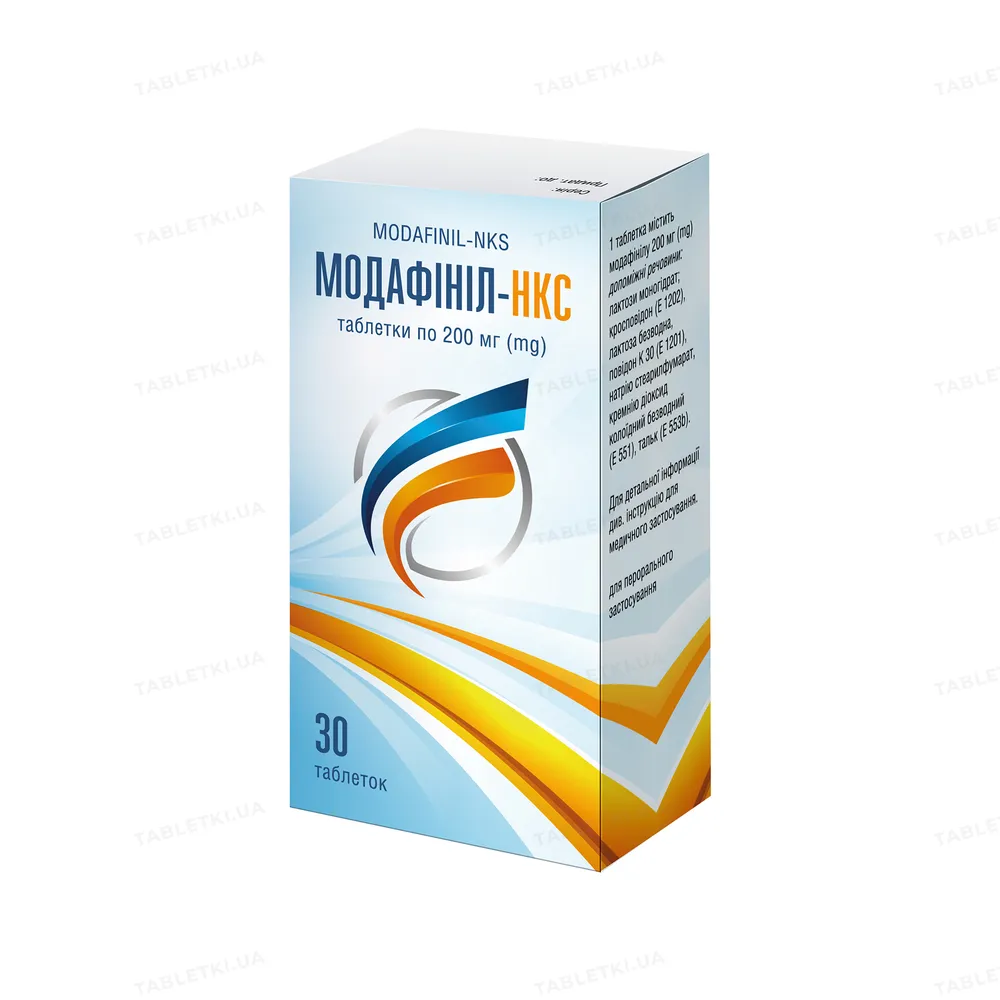
Table of Contents
INSTRUCTION FOR MEDICAL USE OF THE MEDICINAL PRODUCT MODAFINIL-NKS
Composition:
Active substance: modafinil;
1 tablet contains 200 mg of modafinil;
Excipients: monohydrate lactose; crospovidone (E 1202), anhydrous lactose, povidone K 30 (E 1201), sodium stearyl fumarate, colloidal anhydrous silicon dioxide (E 551), talc (E 553b).
Pharmaceutical form. Tablets.
Main physicochemical properties: tablets from white to almost white, oval-shaped, with embossing «200».
Pharmacotherapeutic group. Drugs acting on the nervous system. Psychoanaleptics. Psychostimulants, drugs used in attention deficit hyperactivity disorder, and nootropic agents. Central-acting sympathomimetics. Modafinil.
ATC code N06BA07.
Pharmacological Properties
Pharmacodynamics
Modafinil promotes wakefulness. The exact mechanism of action is not yet known.
Modafinil shows minimal interaction with receptors involved in regulating sleep/wake states (e.g., adenosine, benzodiazepine, dopamine, GABA, histamine, melatonin, norepinephrine, orexin, and serotonin receptors). Modafinil does not inhibit adenylate cyclase, catechol-O-methyltransferase, glutamate decarboxylase, MAO-A or B, nitric oxide synthase, phosphodiesterases II–VI, or tyrosine hydroxylase.
Modafinil is an indirect agonist of dopaminergic receptors. In vitro and in vivo studies indicate that modafinil binds to the dopamine transporter and inhibits dopamine reuptake. The wakefulness-promoting effect of modafinil is attenuated by D1/D2 receptor antagonists, suggesting its indirect dopaminergic action. Modafinil is not a direct agonist of α1-adrenergic receptors; however, it binds to the norepinephrine transporter and inhibits norepinephrine reuptake, although this interaction is weaker than that with the dopamine transporter. Although modafinil-induced wakefulness may be reduced by the α1-adrenergic receptor antagonist prazosin, modafinil is inactive in other α1-adrenergic-sensitive analytical systems (e.g., vas deferens).
Unlike classical psychomotor stimulants, modafinil primarily affects brain regions regulating arousal, sleep, activity, and attention. In humans, modafinil restores and/or improves the level and duration of wakefulness and attention during the day in a dose-dependent manner. Administration of modafinil induces electrophysiological changes indicating increased wakefulness and improved objective measures of sustained wakefulness.
Pharmacokinetics
Modafinil is a racemic compound; the enantiomers have different pharmacokinetics, with the elimination half-life (t1/2) of the R-isomer being approximately three times longer than that of the S-isomer in adults.
Absorption
Modafinil is well absorbed, with peak plasma concentrations reached approximately 2 to 4 hours after administration. Food does not affect the overall bioavailability of modafinil, although absorption (tmax) may be delayed by approximately one hour when the drug is taken with food.
Distribution
Modafinil is moderately bound to plasma proteins (approximately 60%), primarily to albumin, suggesting a low risk of interaction with drugs that are highly protein-bound.
Metabolism
Modafinil is metabolized in the liver. The primary metabolite (40–50% of the dose), modafinil acid, is pharmacologically inactive.
Excretion
Elimination of modafinil and its metabolites occurs primarily via the kidneys, with a small portion excreted unchanged (<10% of the dose).
The effective elimination half-life of modafinil after multiple doses is approximately 15 hours.
Linearity/Non-linearity
The pharmacokinetic properties of modafinil are linear and time-independent. Systemic exposure increases proportionally with dosage in the range of 200–600 mg.
Renal Impairment
Severe chronic renal impairment (creatinine clearance up to 20 mL/min) did not significantly affect the pharmacokinetics of modafinil at a dose of 200 mg; however, exposure to modafinil acid increased ninefold. There is insufficient data to determine the safety and efficacy of modafinil in patients with renal impairment.
Hepatic Impairment
In patients with liver cirrhosis, oral clearance of modafinil was reduced by approximately 60%, and steady-state concentrations were twice as high compared to healthy subjects. Therefore, the dose of modafinil should be reduced by half in patients with severe hepatic impairment.
Geriatric Patients
Data on the use of modafinil in elderly patients are limited. Due to the potential for reduced clearance and increased systemic exposure, patients aged 65 years and older should begin treatment with a dose of 100 mg per day.
Clinical characteristics.
Indications.
Treatment of excessive sleepiness in adults associated with narcolepsy, with or without cataplexy.
Excessive sleepiness is defined as difficulty maintaining wakefulness and increased propensity to fall asleep in inappropriate situations.
Contraindications.
- Hypersensitivity to modafinil or to any other component of the medicinal product.
- Uncontrolled moderate or severe arterial hypertension.
- Cardiac arrhythmia.
Interaction with other medicinal products and other forms of interaction.
Modafinil may enhance its own metabolism by inducing CYP3A4/5 enzyme activity; however, this effect is moderate and is unlikely to have significant clinical consequences.
Anticonvulsants. Concomitant use of potent CYP enzyme inducers such as carbamazepine and phenobarbital may reduce plasma levels of modafinil. Due to possible inhibition of CYP2C19 by modafinil and suppression of CYP2C9, the clearance of phenytoin may be reduced when modafinil is used concomitantly. Patients should be monitored for signs of phenytoin toxicity, and repeated measurements of plasma phenytoin levels may be advisable at the initiation or after discontinuation of modafinil treatment.
Steroid contraceptives. The efficacy of steroid contraceptives may be reduced due to induction of CYP3A4/5 by modafinil. Alternative or additional contraceptive methods are recommended for patients taking modafinil. Adequate contraception should continue for two months after discontinuation of modafinil.
Antidepressants. Some tricyclic antidepressants and selective serotonin reuptake inhibitors are largely metabolized by CYP2D6. In patients with CYP2D6 deficiency (approximately 10% of the Caucasian population), an alternative metabolic pathway involving CYP2C19 usually becomes more important. Since modafinil may inhibit CYP2C19, such patients may require lower doses of antidepressants.
Anticoagulants. Due to possible inhibition of CYP2C9 by modafinil, the clearance of warfarin may be reduced when modafinil is used concomitantly. The prothrombin time should be monitored regularly during the first two months of modafinil treatment and after any change in modafinil dosage.
Other medicinal products. Substances that are predominantly eliminated via CYP2C19 metabolism, such as diazepam, propranolol, and omeprazole, may have reduced clearance when used concomitantly with modafinil, and dose reduction may be necessary. In addition, in vitro induction of CYP1A2, CYP2B6, and CYP3A4/5 activity has been observed in human hepatocytes; if this occurs in vivo, it could reduce blood levels of drugs metabolized by these enzymes, thereby potentially reducing their therapeutic efficacy.
Clinical interaction study results suggest that the greatest effect may occur on CYP3A4/5 substrates that undergo significant presystemic elimination, particularly via CYP3A enzymes in the gastrointestinal tract. Examples include cyclosporine, HIV protease inhibitors, buspirone, triazolam, midazolam, and most calcium channel blockers and statins. A case report described a 50% reduction in cyclosporine concentration in a patient receiving cyclosporine after initiation of concomitant modafinil therapy.
Special precautions for use.
Diagnosis of sleep disorders
Modafinil should be used only in patients who have undergone a full evaluation of their excessive sleepiness and in whom a diagnosis of narcolepsy has been established according to ICSD diagnostic criteria. Such an assessment usually includes, in addition to patient history, laboratory sleep measurements and exclusion of other possible causes of observed hypersomnia.
Serious skin rashes, including Stevens-Johnson syndrome, toxic epidermal necrolysis, and drug rash with eosinophilia and systemic symptoms
Serious rashes requiring hospitalization and discontinuation of treatment have been reported with modafinil use within 1–5 weeks after initiation of therapy. Isolated cases have also been reported after prolonged treatment (e.g., 3 months). Modafinil should be discontinued at the first sign of rash and must not be restarted (see section "Adverse reactions").
Based on worldwide post-marketing experience, rare cases of severe or life-threatening skin rashes, including Stevens-Johnson syndrome, toxic epidermal necrolysis, and drug rash with eosinophilia and systemic symptoms (DRESS), have been observed in both adults and children.
Multisystem hypersensitivity reactions
Multisystem hypersensitivity reactions, including at least one fatal case, temporally associated with modafinil use, have been reported during post-marketing surveillance.
Despite the limited number of reports, multisystem hypersensitivity reactions may lead to hospitalization or be life-threatening. No predictive factors for the risk or severity of modafinil-related multisystem hypersensitivity reactions are known. Signs and symptoms of this disorder are variable, but patients usually, although not exclusively, present with fever and rash associated with involvement of other organ systems. Other concomitant manifestations include myocarditis, hepatitis, abnormal liver function test results, hematological disorders (e.g., eosinophilia, leukopenia, thrombocytopenia), pruritus, and asthenia.
Because multisystem hypersensitivity reactions may present with various manifestations, other symptoms and signs of this disorder not listed here may occur.
Modafinil should be discontinued if multisystem hypersensitivity reactions are suspected.
Psychiatric disorders
Patients should be monitored for the emergence or worsening of psychiatric disorders (see below and section "Adverse reactions") at each dose adjustment and regularly during treatment. If psychiatric disorders develop during modafinil treatment, modafinil should be discontinued and not restarted in the future. Modafinil should be prescribed with caution to patients with a history of psychiatric disorders, including psychosis, depression, mania, severe anxiety, agitation, insomnia, or substance abuse (see below).
Anxiety
Modafinil has been associated with the emergence or worsening of anxiety. Patients with severe anxiety should receive modafinil treatment only in a specialized setting.
Suicidal behavior
Suicidal behavior (including suicide attempts and suicidal thoughts) has been reported in patients receiving modafinil. Patients receiving modafinil should be closely monitored for the emergence or worsening of suicidal behavior. If suicidal symptoms develop in connection with modafinil, treatment should be discontinued.
Psychotic or manic symptoms
Modafinil is associated with the emergence or worsening of psychotic or manic symptoms (including hallucinations, delusions, agitation, or mania). Patients receiving modafinil should be closely monitored for the emergence or worsening of psychotic or manic symptoms. If psychotic or manic symptoms occur, discontinuation of modafinil may be required.
Bipolar disorders
Caution should be exercised when prescribing modafinil to patients with comorbid bipolar disorder due to concerns about potential induction of mixed/manic episodes in such patients.
Aggressive or hostile behavior
Emergence or worsening of aggressive or hostile behavior may be caused by modafinil treatment. Patients receiving modafinil should be closely monitored for the emergence or worsening of aggressive or hostile behavior. Discontinuation of modafinil may be required if such symptoms occur.
Cardiovascular risks
An ECG is recommended for all patients prior to starting modafinil therapy. Patients with abnormalities should undergo additional specialist evaluation and treatment before considering modafinil therapy.
Blood pressure and heart rate should be monitored regularly in patients receiving modafinil. Modafinil should be discontinued in patients who develop arrhythmia or moderate to severe arterial hypertension, and should not be restarted until the condition has been adequately evaluated and treated.
Modafinil tablets are not recommended for patients with a history of left ventricular hypertrophy or cor pulmonale, and for patients with mitral valve prolapse who experienced mitral valve prolapse syndrome during previous use of CNS stimulants. This syndrome may manifest with ischemic ECG changes, chest pain, or arrhythmia.
Insomnia
Since modafinil causes wakefulness, caution should be exercised regarding signs of insomnia.
Sleep hygiene
Patients should be informed that modafinil is not a substitute for sleep, and proper sleep hygiene should be maintained. Measures to ensure proper sleep hygiene may include reviewing caffeine intake.
Patients (women) using steroid contraceptives
Sexually active women of reproductive age should use a contraceptive method prior to taking modafinil. Since the effectiveness of steroid contraceptives may be reduced when used with modafinil, alternative or additional contraceptive methods are recommended during modafinil treatment and for two months after discontinuation of modafinil (also see section "Interaction with other medicinal products and other forms of interaction" regarding potential interaction with steroid contraceptives).
Abuse, misuse, off-label use, and dependence
Studies with modafinil have demonstrated potential for dependence; the possibility of dependence with long-term use cannot be completely ruled out. Modafinil should be prescribed with caution to patients with a history of psychiatric disorders (see above), alcohol, drug, or substance abuse.
Excipients
Lactose intolerance
Patients with rare hereditary problems of galactose intolerance, total lactase deficiency, or glucose-galactose malabsorption should not take this medicine.
Sodium
This medicine contains less than 1 mmol sodium (23 mg) per dose, i.e., essentially "sodium-free".
Use during pregnancy or breastfeeding.
Pregnancy
Based on limited experience from the pregnancy registry and spontaneous reports, there is a suspicion that modafinil may cause congenital malformations when used during pregnancy.
Animal studies have shown reproductive toxicity (see section "Pharmacological properties").
The medicine should not be used during pregnancy.
Women of childbearing potential must use effective contraception.
Since modafinil may reduce the effectiveness of hormonal contraception, alternative additional contraceptive methods should be used (see sections "Interaction with other medicinal products and other forms of interaction" and "Special precautions for use").
Lactation
Available pharmacodynamic/toxicological data in animals have shown excretion of modafinil/metabolites into milk (see section "Pharmacological properties" for details).
The medicine should not be used during breastfeeding.
Fertility
Data on fertility are lacking.
Ability to affect reaction speed when driving or operating machinery.
Patients with abnormal levels of sleepiness who are taking modafinil should be informed that their level of wakefulness may not return to normal. Patients with excessive sleepiness, including those taking modafinil, should be frequently assessed for their level of sleepiness and, if necessary, advised to avoid driving or any other potentially hazardous activities. Adverse effects such as blurred vision or dizziness may also affect the ability to drive (see section "Adverse reactions").
Method of Administration and Dosage
Treatment should be initiated by a physician or under the supervision of a physician with appropriate expertise in diagnosing the underlying disorder of narcolepsy (see section "Indications").
The diagnosis of narcolepsy should be established according to the International Classification of Sleep Disorders (ICSD-2).
Patient monitoring and clinical assessment of the need for treatment should be performed on a periodic basis.
Dosing
The recommended initial daily dose is 200 mg. The total daily dose may be taken as a single dose in the morning or in two divided doses, one in the morning and one at midday, based on physician evaluation and patient response.
Doses up to 400 mg, divided into one or two doses, may be used in patients with an inadequate response to the initial 200 mg dose of modafinil.
Long-term Use
Physicians prescribing modafinil for prolonged periods should periodically re-evaluate the continued need for long-term therapy in individual patients, as the long-term efficacy of modafinil (> 9 weeks) has not been established.
Renal Impairment
There is insufficient information to determine the safety and efficacy of dosing in patients with renal impairment (see section "Pharmacological Properties").
Hepatic Impairment
In patients with severe hepatic insufficiency, the dose of modafinil should be reduced by half (see section "Pharmacological Properties").
Elderly Patients
Data on the use of modafinil in elderly patients are limited. Due to the potential for decreased clearance and increased systemic exposure in patients aged 65 years and older, therapy should be initiated with a dose of 100 mg per day.
Method of Administration
For oral use. Tablets should be swallowed whole.
Children
Modafinil should not be used in children under 18 years of age due to safety concerns and unproven efficacy.
Overdose
Symptoms
Death has occurred as a result of overdose with modafinil alone or in combination with other drugs. Symptoms most commonly reported with modafinil overdose, alone or in combination with other drugs, include insomnia; central nervous system (CNS) symptoms such as restlessness, disorientation, confusion, motor agitation, anxiety, excitement, and hallucinations; gastrointestinal symptoms such as nausea and diarrhea; and cardiovascular symptoms such as tachycardia, bradycardia, hypertension, and chest pain.
Treatment
Induced emesis or gastric lavage should be considered.
Hospitalization is recommended, along with observation of the patient's psychomotor status and cardiovascular monitoring, until symptoms resolve.
Side effects
The adverse reactions listed below have been reported during clinical trials and/or post-marketing experience. The frequency of adverse reactions considered at least possibly related to treatment in clinical studies involving modafinil was as follows: very common (≥ 1/10), common (≥ 1/100 to < 1/10), uncommon (≥ 1/1,000 to < 1/100), rare (≥ 1/10,000 to < 1/1,000), unknown (cannot be estimated from available data).
The most commonly reported adverse reaction is headache, occurring in approximately 21% of patients, usually mild or moderate in intensity, dose-dependent, and resolving within a few days.
Infections and infestations
Uncommon: pharyngitis, sinusitis.
Blood and lymphatic system disorders
Uncommon: eosinophilia, leukopenia.
Immune system disorders
Uncommon: mild allergic reactions (e.g., symptoms of hay fever).
Unknown: angioedema, urticaria. Hypersensitivity reactions (characterized by symptoms such as fever, rash, lymphadenopathy, and signs of concurrent organ involvement), anaphylaxis.
Metabolism and nutrition disorders
Common: decreased appetite.
Uncommon: hypercholesterolemia, hyperglycemia, diabetes mellitus, increased appetite.
Psychiatric disorders
Common: nervousness, insomnia, anxiety, depression, thinking abnormalities, confusion, irritability.
Uncommon: sleep disorders, emotional lability, decreased libido, hostility, depersonalization, personality disorders, pathological dreams, agitation, aggression, suicidal ideation, psychomotor hyperactivity.
Rare: hallucinations, mania, psychosis.
Unknown: delirium.
Nervous system disorders
Very common: headache.
Common: dizziness, somnolence, paraesthesia.
Uncommon: dyskinesia, hypertension, hyperkinesia, amnesia, migraine, tremor, vertigo, CNS stimulation, hypoesthesia, coordination difficulties, speech disorders, taste distortion.
Eye disorders
Common: blurred vision.
Uncommon: visual disturbances, dry eyes.
Cardiac disorders
Common: tachycardia, palpitations.
Uncommon: extrasystoles, arrhythmia, bradycardia.
Vascular disorders
Common: vasodilation.
Uncommon: hypertension, hypotension.
Respiratory, thoracic and mediastinal disorders
Uncommon: dyspnea, aggravated cough, asthma, epistaxis, rhinitis.
Gastrointestinal disorders
Common: abdominal pain, nausea, dry mouth, diarrhea, dyspepsia, constipation.
Uncommon: flatulence, reflux, vomiting, dysphagia, glossitis, oral ulcers.
Skin and subcutaneous tissue disorders
Uncommon: increased sweating, rash, acne, pruritus.
Unknown: serious skin reactions including erythema multiforme, Stevens-Johnson syndrome, toxic epidermal necrolysis, and drug reaction with eosinophilia and systemic symptoms (DRESS).
Musculoskeletal, connective tissue and bone disorders
Uncommon: back pain, neck pain, myalgia, myasthenia, leg cramps, arthralgia, twitching.
Renal and urinary disorders
Uncommon: urinary abnormalities, frequent urination.
Reproductive system and breast disorders
Uncommon: menstrual irregularities.
General disorders and administration site conditions
Common: asthenia, chest pain.
Uncommon: peripheral edema, thirst.
Investigations
Common: abnormal liver function tests; dose-dependent increases in alkaline phosphatase and gamma-glutamyl transferase levels have been observed.
Uncommon: abnormal ECG findings, weight gain, weight loss.
Reporting suspected adverse reactions
Reporting of suspected adverse reactions after authorization of the medicinal product is important. It allows continued monitoring of the benefit-risk balance of the medicinal product. Healthcare professionals, pharmacists, patients, and their legal representatives are encouraged to report any suspected adverse reactions and lack of efficacy via the automated pharmacovigilance information system at: https://aisf.dec.gov.ua.
Shelf life
3 years.
Storage conditions
The medicinal product does not require special storage conditions. Keep out of reach of children.
Packaging
10 tablets in a blister; 3 blisters in a cardboard box.
Prescription status
Prescription-only.
Manufacturer
Chanel Medical Limited Company.
Manufacturer's address
Dublin Road, Lochrea, H62 FH90, Ireland.
Marketing authorization holder
LLC "NKS-PHARM".
Address of the marketing authorization holder
01103, Kyiv, Mykhaila Boichuka St., 6, office 103, Ukraine.