Mirena
Ukraine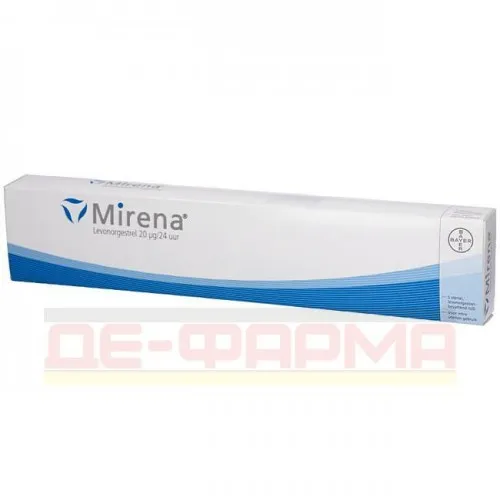
Table of Contents
INSTRUCTIONS FOR MEDICAL USE OF THE MEDICINAL PRODUCT MIRENA (MIRENA)
Composition:
Active substance: levonorgestrel;
1 intrauterine system contains 52 mg of levonorgestrel (20 µg/24 h);
Excipients: polydimethylsiloxane elastomer, polyethylene, barium sulfate, colloidal anhydrous silicon dioxide, iron oxide (E 172).
Pharmaceutical form. Intrauterine system with levonorgestrel.
Main physicochemical properties: intrauterine system with levonorgestrel and inserter (insertion device).
The intrauterine drug delivery system (IUS) consists of a hormone-elastomer matrix reservoir located on a T-shaped polyethylene body. The core of the reservoir consists of 50% levonorgestrel and 50% polydimethylsiloxane elastomer, covered with a polydimethylsiloxane membrane. A loop is located at one end of the T-shaped body, and two arms of white or almost white color at the other end. Two brown removal threads are attached to the loop. There should be no visually detectable particles on the surface of the system.
The insertion device consists of an insertion tube, plunger, flange, body, and slider.
Pharmacotherapeutic group. Local contraceptive.
Intrauterine contraceptive.
ATC code G02BA03.
Pharmacological properties.
Pharmacodynamics.
Levonorgestrel is a progestogen with antiestrogenic activity, widely used in gynecology as the progestogenic component in oral contraceptives, in hormone replacement therapy, or alone for contraception in progestogen-only pills, as well as in subdermal implants. When using the Mirena IUS, levonorgestrel is released directly into the uterine cavity. This allows very low doses to be used, since the hormone is delivered directly to the target organ. Therefore, plasma concentrations of levonorgestrel are lower than those achieved with many other contraceptive methods.
The Mirena system is characterized primarily by the local progestogenic action within the uterine cavity. The high concentration of levonorgestrel in the endometrium reduces the expression of estrogen and progesterone receptors in the endometrium, resulting in a pronounced antiproliferative effect, rendering the endometrium insensitive to the effects of estrogens. During use of the Mirena system, morphological changes in the endometrium and a mild local foreign body reaction occur. Cervical mucus thickens, preventing sperm penetration through the cervical canal. The local environment of the uterus and fallopian tubes impairs sperm motility and function, thereby preventing fertilization. In some women, ovulation is suppressed.
The contraceptive efficacy of the Mirena intrauterine system was studied in 5 large clinical trials involving 3,330 women. The contraceptive efficacy of Mirena used for periods longer than 5 years was evaluated in 362 women in a clinical study, of whom 221 women completed an 8-year study. During years 6–8 of Mirena use, the Pearl Index was 0.28 [95% CI (0.03; 1.00)]. Information on the contraceptive efficacy of Mirena is summarized in Table 1.
Table 1. Cumulative failure rate (%) and Pearl Index
| Years |
Total failure rate (%)* (95% confidence interval) |
Pearl Index (95% confidence interval) |
| Contraceptive efficacy over 1–5 years (N = 3330, pooled data from contraceptive efficacy studies up to 5 years) |
||
| 1st year |
0.20 (0.09; 0.46) |
0.21 (0.08; 0.45) |
| 1–5 years |
0.71 (0.37; 1.33) |
|
| Contraceptive efficacy over years 6–8 (N = 362, Mirena extended use study) |
||
| 6th year |
0.29 (0.04; 2.05) |
0.34 (0.01; 1.88) |
| 7th year |
0.40 (0.01; 2.25) |
|
| 8th year |
0.00 (0.00; 1.90) |
|
| 6–8 years |
0.68 (0.17; 2.71) |
0.28 (0.03; 1.00) |
* Kaplan–Meier method.
The reported failure rate also includes pregnancies resulting from unexpected expulsions and perforations. Similar contraceptive efficacy was observed in a large post-marketing study involving more than 17,000 women using the Mirena system. Since the Mirena system does not require daily compliance, the pregnancy rate with typical use is similar to the rate observed in controlled clinical trials (perfect use).
In terms of drug tolerability assessed by the number of women continuing use, the Mirena system (used as a contraceptive method) showed comparable tolerability to copper intrauterine devices. After the first year of use, approximately 80% of women continued using the system.
Use of the Mirena intrauterine system does not affect future fertility. Fertility returns to the same level as in women who do not use contraception after removal of the system. Pregnancy occurs within 12 months after removal in approximately 80% of women wishing to conceive.
The menstrual pattern is a result of the direct effect of levonorgestrel on the endometrium and is not regulated by ovarian function. There is no clear difference in follicular development, ovulation, or production of estradiol and progesterone among women with different menstrual bleeding patterns. During initial suppression of endometrial proliferation in the early phase of use, bleeding may increase during the first few months. Subsequently, endometrial suppression leads to a reduction in duration and volume of menstrual bleeding during use of the Mirena system. Minor bleeding often progresses to oligomenorrhea or amenorrhea. Even in women experiencing amenorrhea while using the Mirena system, ovarian function remains normal and estradiol levels are maintained.
The Mirena IUD was specifically designed for women requiring long-term, effective contraception. The Mirena system can also be successfully used in the treatment of idiopathic menorrhagia. In women with menorrhagia, blood loss during menstrual bleeding decreased by 62–94% during the first three months of system use and by 71–95% during six months of use. Use of the Mirena system demonstrated comparable efficacy in reducing menstrual blood loss over two years compared to endometrial ablation or resection. Treatment of menorrhagia caused by submucosal leiomyomas may be less effective. Due to reduced menstruation, hemoglobin levels in the blood increase. Mirena also alleviates dysmenorrhea, similar to oral contraceptives.
The efficacy of the Mirena system in treating menorrhagia and in providing local progestogen use in conjunction with estrogen replacement therapy is due to the action of levonorgestrel on the endometrium, preventing endometrial proliferation. During a 12-month study, no cases of endometrial hyperplasia were reported. Prevention of proliferation was equally effective whether estrogen was administered orally, transdermally, or subcutaneously. The total systemic release of levonorgestrel from the Mirena system is sufficient to prevent endometrial proliferation for up to 5 years.
The efficacy of the Mirena system in preventing endometrial hyperplasia during long-term estrogen therapy was equally high whether estrogen was administered orally or transdermally. The incidence of hyperplasia during estrogen monotherapy is 20%. In clinical studies of the Mirena system involving 634 perimenopausal and postmenopausal women over observation periods of 1 to 5 years, no cases of endometrial hyperplasia were recorded.
Pharmacokinetics.
Levonorgestrel is released into the uterine cavity and acts locally. The expected in vivo release rate of levonorgestrel at various time intervals is presented in Table 2.
Table 2. Expected in vivo release rate of levonorgestrel for the Mirena IUD
| Time |
Expected in vivo release rate (micrograms/24 hours) |
| 24 days after administration |
21 |
| 60 days after administration |
21 |
| 1 year after administration |
19 |
| 3 years after administration |
14 |
| 5 years after administration |
11 |
| 8 years after administration |
7 |
| Mean value over 1 year |
20 |
| Mean value over 3 years |
18 |
| Mean value over 5 years |
15 |
| Mean value over 8 years |
13 |
Absorption. After insertion of the system, levonorgestrel immediately begins to be released into the uterine cavity, as determined by measurement of serum concentrations. The released levonorgestrel is fully systemically available.
Following insertion of the Mirena system, levonorgestrel can be detected in blood serum/plasma within 1 hour. Maximum concentration of 180 ng/L (coefficient of variation, CV 38.3%) is reached within 2 weeks after insertion. As the release rate decreases, the serum/plasma concentration of levonorgestrel (geometric mean) declines steadily, as shown in Table 3.
Table 3. Total plasma concentration of levonorgestrel
| Time |
Plasma levonorgestrel total concentrations (ng/L) (geometric mean % CV) |
| 24 days after administration |
175 (37.6) |
| 2 months after administration |
169 (37.1) |
| 1 year after administration |
159 (37.4) |
| 3 years after administration |
139 (37.8) |
| 5 years after administration |
123 (38.2) |
| 8 years after administration |
100 (39.9) |
The pronounced local effect of the drug in the uterine cavity results in a high concentration gradient (endometrium/myometrium concentration ratio exceeding 100-fold), as well as low serum concentrations of levonorgestrel (endometrium/serum concentration ratio > 1000-fold). Due to the low plasma concentration of the drug, the systemic progestogenic effect is minimal.
Distribution. The pharmacokinetics of levonorgestrel have been extensively studied and described in the scientific literature. After oral administration, levonorgestrel is rapidly and completely absorbed, with an absolute bioavailability of approximately 90%. Levonorgestrel binds non-specifically to serum albumin and specifically to sex hormone-binding globulin (SHBG). Less than 2% of the total serum concentration of levonorgestrel is present in the free (unbound) steroid form. Levonorgestrel binds to SHBG with high affinity. Therefore, changes in SHBG concentration in serum lead to an increase (with higher SHBG concentration) or decrease (with lower SHBG concentration) in the total serum concentration of levonorgestrel. SHBG concentration decreases on average by 20% during the first two months after insertion of the Mirena system and remains stable thereafter, with a slight increase at the end of the 8th year of use. The mean volume of distribution for levonorgestrel is approximately 106 L.
Body weight and serum SHBG concentrations influence the systemic concentration of levonorgestrel; thus, low body weight and/or high SHBG levels result in higher levonorgestrel concentrations. In women of reproductive age with low body weight (37–55 kg), the mean serum concentration of levonorgestrel is approximately 1.5 times higher.
In postmenopausal women using the Mirena system in combination with non-oral estrogen therapy, the mean serum concentration of levonorgestrel decreases from 257 pg/mL at 12 months of treatment (25th–75th percentile: 186–326 pg/mL) to 149 pg/mL (122–180 pg/mL) at 60 months. When the Mirena system is used in combination with oral estrogen therapy, serum levonorgestrel concentration increases at 12 months to 478 pg/mL (341–655 pg/mL) due to induction of SHBG by oral estrogen therapy.
Biological transformation. Levonorgestrel undergoes extensive metabolism. The most important metabolic pathways involve reduction of the Δ4-3-keto group and hydroxylation at positions 2α, 1β, and 16β, followed by conjugation. CYP3A4 is also involved in the oxidative metabolism of levonorgestrel. Available in vitro data indicate that this oxidative pathway is of lesser significance for levonorgestrel compared to reduction and conjugation.
Elimination. The total plasma clearance of levonorgestrel is approximately 1 mL/min/kg. Only trace amounts of unchanged levonorgestrel are excreted. Metabolites are excreted in equal amounts in feces and urine. The elimination half-life is approximately one day.
Linearity/Non-linearity.
The pharmacokinetics of levonorgestrel depend on SHBG concentration, which in turn is influenced by estrogens and androgens. A decrease in SHBG levels leads to a reduction in the total serum concentration of levonorgestrel, indicating non-linear pharmacokinetics of levonorgestrel over time. Since the Mirena system exerts primarily a local effect, no impact on its efficacy is expected.
Clinical characteristics.
Indications.
Contraception;
idiopathic menorrhagia;
hypermenorrhea;
dysmenorrhea;
local progestogen therapy during estrogen replacement treatment.
Contraindications.
- Pregnancy or suspected pregnancy;
- progestogen-dependent tumors, e.g., breast cancer;
- acute or recurrent pelvic inflammatory disease;
- cervicitis;
- infectious disease of the lower genital tract;
- postpartum endometritis;
- infected miscarriage or abortion within the past 3 months;
- conditions associated with increased susceptibility to infectious diseases;
- cervical dysplasia;
- confirmed or suspected malignant neoplasms of the cervix or uterus;
- uterine bleeding of unknown cause;
- congenital or acquired uterine pathology, including leiomyoma, if causing deformation of the uterine cavity;
- acute stage liver disease or liver tumors;
- hypersensitivity to the active substance or to any of the excipients of the product.
Interaction with other medicinal products and other forms of interaction.
Interactions are possible when used concomitantly with agents that induce hepatic enzymes and may lead to increased clearance of sex hormones.
Active substances that increase levonorgestrel clearance, e.g.: phenytoin, barbiturates, primidone, carbamazepine, rifampicin, and possibly oxcarbazepine, topiramate, felbamate, griseofulvin, and herbal preparations containing St. John's wort extract (Hypericum perforatum).
The effect of these medicinal products on the contraceptive efficacy of the Mirena system is unknown; however, it is considered to be negligible due to the predominantly local mechanism of action of the product.
Active substances with variable effects on levonorgestrel clearance, e.g.: when used concomitantly with sex hormones, a large number of HIV protease inhibitors and non-nucleoside reverse transcriptase inhibitors may either increase or decrease plasma concentrations of estrogens or progestins.
Active substances that decrease levonorgestrel clearance (enzyme inhibitors): concomitant use of strong and moderate CYP3A4 inhibitors, such as azole antifungals (e.g., fluconazole, itraconazole, ketoconazole, voriconazole), verapamil, macrolides (e.g., clarithromycin, erythromycin), diltiazem, and grapefruit juice, may increase progestin plasma concentrations.
Special safety precautions.
Instructions for use
The Mirena system must be inserted by a physician under aseptic conditions.
The Mirena system is supplied in a sterile pouch, which should be opened immediately before insertion. Do not resterilize or reuse. For single use only.
When handling the system outside its packaging, aseptic precautions must be observed. If the protective packaging layer is damaged, the intrauterine system must not be used and should be disposed of as medical waste.
Do not insert after the expiry date. For timing of insertion, see section "Method of administration and dosage".
Special precautions for use.
A Mirena system may be used only after consultation with an appropriate specialist if any of the following conditions or disorders are present. If such symptoms occur for the first time, removal of the system should be considered:
- migraine, particularly focal migraine associated with asymmetric visual disturbances or other symptoms suggestive of transient cerebral ischemia;
- unusually severe headache;
- jaundice;
- marked increase in blood pressure;
- severe cardiovascular disorders, such as stroke or myocardial infarction;
- acute venous thromboembolism.
In the event of symptoms indicating retinal thrombosis, such as unexplained partial or complete loss of vision, proptosis or diplopia, optic disc edema, or retinal vascular lesions, appropriate diagnostic and therapeutic measures should be initiated immediately.
There is no consensus regarding the possible role of varicose veins and superficial thrombophlebitis in the development of thromboembolism. The Mirena system may be used cautiously in women with congenital heart disease or valvular heart defects if there is a risk of developing infective endocarditis.
Low doses of levonorgestrel may affect glucose tolerance; therefore, blood glucose levels should be monitored in diabetic patients using the Mirena system. However, dosage adjustments of antidiabetic therapy are generally not required in women with diabetes who use the Mirena system.
Irregular bleeding may mask symptoms and signs of endometrial polyps or endometrial cancer; in such cases, diagnostic evaluation should be considered.
The Mirena system is not a first-line method for postmenopausal women with marked uterine atrophy.
When the Mirena system is used concomitantly with estrogen as part of hormone replacement therapy, safety data regarding estrogens should also be taken into account.
Medical examination/consultation.
Prior to insertion, the woman should be informed about the efficacy, risks (including risk signs described in the product’s medical instructions), and side effects associated with the use of the Mirena system. A physical examination of the patient, including pelvic organs and breasts, and a cervical cytology smear should be performed if the last smear was taken more than three months ago. Pregnancy and sexually transmitted infections should be ruled out, and any genital tract infections should be treated if necessary. The position and size of the uterine cavity should be determined. It is important to place the Mirena system in the fundal region of the uterus to ensure uniform progestogenic effect on the entire endometrial surface, prevent expulsion, and achieve maximum efficacy. Therefore, the instructions for insertion must be carefully followed (see section "Dosage and administration"). Since the insertion technique for this system differs from that of other intrauterine contraceptive devices, special attention should be paid to mastering the correct insertion technique. Insertion and removal of the system may cause transient pain and bleeding. The procedure may provoke dizziness as a vasovagal reaction or trigger an epileptic seizure in patients with epilepsy. If complications related to insertion and/or severe pain are anticipated, insertion of a system with a smaller insertion tube diameter should be considered.
The woman should undergo a follow-up examination 4–12 weeks after insertion and subsequently be examined annually or more frequently if clinically indicated.
The Mirena system must not be used as a postcoital contraceptive.
During the first months of use, irregular bleeding/spotting is common; therefore, endometrial pathology should be excluded before insertion of the Mirena system. If a woman continues to use the Mirena system as hormone replacement therapy after contraception is no longer needed, endometrial pathology should be ruled out in case of abnormal bleeding following estrogen replacement therapy. Appropriate diagnostic measures should also be taken if irregular bleeding develops during prolonged use of the system.
Oligomenorrhea and amenorrhea.
Oligomenorrhea develops gradually in 57% of women of reproductive age during the first year of use, and amenorrhea occurs in 16%. By the end of the eighth year of use, oligomenorrhea and amenorrhea were observed in 26% and 34% of women, respectively. If a woman does not have a menstrual period within six weeks after her last menstruation, pregnancy should be ruled out and the position of the system should be checked. If no other signs of pregnancy are present, there is no need to repeat a pregnancy test in women with amenorrhea.
Due to the pronounced local effect of levonorgestrel on the endometrium, the endometrium does not respond to estrogens, and thus endometrial proliferation does not occur. The duration and intensity of menstrual bleeding are reduced. When comparing women with different patterns of menstrual bleeding, no clear differences were observed in follicular development, ovulation, or production of estradiol or progesterone. During the first three and six months of use, menstrual blood loss in women who had menorrhagia decreased by 62–94% and 71–95%, respectively. As a result of reduced menstrual bleeding, hemoglobin levels increase.
When local progestogen therapy is used in combination with estrogen therapy, amenorrhea develops gradually in most women during the first year. During the first three months of use, irregular menstrual bleeding and spotting are relatively common.
Pelvic infections.
The insertion tube prevents contamination of the system with microorganisms during insertion, and the insertion device is also designed to minimize the risk of infection. Based on experience with copper-containing intrauterine systems, the incidence of pelvic infections is highest during the first month of use and decreases thereafter. The risk of pelvic inflammatory disease is highest in young women and increases if the woman or her partner has multiple sexual partners. Pelvic infections may lead to serious consequences, affect fertility, and increase the risk of ectopic pregnancy. As with other gynecological or surgical procedures, severe infections or sepsis (including Group A streptococcal sepsis) may occur, although the likelihood of such complications is extremely low.
If a woman experiences recurrent endometritis or pelvic infection, or acute infection unresponsive to treatment within a few days, the Mirena system should be removed (see section "Contraindications"). Results of some studies indicate that the incidence of pelvic infections is lower among users of the Mirena system compared to users of copper-containing intrauterine systems.
Bacteriological investigations and close monitoring of the patient are necessary even in the presence of mild symptoms of infection.
Expulsion.
In clinical trials of the Mirena system for contraception, the expulsion rate was low (< 4% of insertions) and within the same range as with other IUDs or intrauterine devices. The system may spontaneously be expelled from the uterine cavity without the woman noticing, resulting in reduced contraceptive efficacy. Symptoms of partial or complete expulsion of the Mirena intrauterine system may include bleeding and pain. Since Mirena reduces the amount of menstrual flow, increased bleeding may be a sign of expulsion.
The risk of expulsion is increased in:
- women with a history of heavy menstrual bleeding (including women using the Mirena system to treat heavy uterine bleeding);
- women with a body mass index (BMI) above normal at the time of insertion; this risk increases progressively with increasing BMI.
Women should be counseled about possible signs of expulsion, how to check for the presence of the Mirena system threads, and advised to contact their physician if the threads cannot be felt. Barrier contraceptives (e.g., condoms) should be used until correct placement of the Mirena system is confirmed.
Partial expulsion of the Mirena system may reduce its effectiveness.
A partially expelled Mirena system should be removed. A new Mirena system may be inserted at the same time. A new system may be inserted immediately after removal, provided pregnancy is excluded.
Perforation.
In rare cases, most often during insertion, an intrauterine contraceptive may penetrate or perforate the uterine wall or cervix, although this may remain undetected for some time. A system located outside the uterus has reduced contraceptive efficacy and must be removed. Surgical intervention may be required.
In a prospective, comparative, non-interventional cohort study among users of intrauterine devices (N = 61,448 women), the rate of perforations during the 1-year observation period was 1.3 (95% confidence interval: 1.1–1.6) per 1000 insertions in the entire cohort; 1.4 (95% confidence interval: 1.1–1.8) per 1000 insertions in the Mirena IUD group and 1.1 (95% confidence interval: 0.7–1.6) per 1000 insertions in the copper-containing intrauterine device cohort.
Study data indicate that both insertion during lactation and insertion within 36 weeks postpartum are associated with an increased risk of perforation (see Table 4). Both risk factors were independent of the type of intrauterine device inserted.
Table 4. Perforation rates per 1000 insertions during the 1-year cohort study, stratified by breastfeeding at the time of insertion and timing of insertion after childbirth.
| Time of administration |
Breastfeeding during administration |
Absence of breastfeeding during administration |
| ≤ 36 weeks after delivery |
5.6 (95% CI: 3.9–7.9; n = 6047 administrations) |
1.7 (95% CI: 0.8–3.1; n = 5927 administrations) |
| > 36 weeks after delivery |
1.6 (95% CI: 0.0–9.1; n = 608 administrations) |
0.7 (95% CI: 0.5–1.1; n = 41910 administrations) |
When the observation period was extended to 5 years in a subgroup of this study (n = 39009 women using Mirena IUS or copper intrauterine devices; data were available for 73% of these women throughout the entire 5-year observation period), the incidence of perforations detected at any time during the 5-year period was 2.0 (95% CI: 1.6–2.5) per 1000 insertions. Insertion during breastfeeding and within 36 weeks after childbirth were confirmed as risk factors also in the 5-year observation subgroup.
The risk of perforation may be increased in women with a fixed retroversion of the uterus.
A follow-up examination should be performed after insertion according to the information provided in the section "Medical examination/consultation", which may be adapted based on clinical indications in women with risk factors for perforation.
Breast cancer.
A meta-analysis of data from 54 epidemiological studies indicates a slight increase in relative risk (RR = 1.24) of developing breast cancer in women using combined oral contraceptives (COCs), predominantly formulations containing a combination of estrogen and progestogen. The risk gradually disappears within 10 years after discontinuation of COC use. Since breast cancer is rare in women under 40 years of age, the number of cases among women currently or recently using COCs is small compared to the overall risk of developing breast cancer. The risk of developing breast cancer in women using progestogen-only oral contraceptives is likely similar to that in women using COCs. However, conclusions regarding progestogen-only preparations are based on data from much smaller populations of women and are therefore less conclusive than those for COCs. These studies do not provide evidence of a causal relationship. The observed increase in risk may be due to earlier diagnosis of breast cancer in users of oral contraceptives, the biological effect of such contraceptives, or a combination of these two factors. Breast cancer diagnosed in women who have ever used COCs tends to be less clinically advanced compared to breast cancer in women who have never used COCs.
The risk of breast cancer increases in postmenopausal women using systemic hormone replacement therapy (tablets or skin-applied preparations). The risk is higher in women using a combination of estrogen and progestogen than in those taking estrogen-only preparations. Information regarding the estrogen-containing preparation used in therapy should also be carefully reviewed.
Ectopic pregnancy.
Ectopic pregnancy should be considered in the presence of lower abdominal pain, particularly in the absence of menstruation, or if bleeding occurs in a woman with a history of amenorrhea. Women with previous ectopic pregnancies, tubal surgery, or pelvic inflammatory disease are at increased risk of ectopic pregnancy.
The absolute risk of ectopic pregnancy in women using the Mirena system is lower because the overall likelihood of pregnancy is lower in women using Mirena compared to women not using any contraceptive method. In a prospective non-interventional cohort study with a 1-year observation period, the pregnancy rate in women using the Mirena IUS was 0.02%. In clinical trials, the absolute incidence of ectopic pregnancy in women using the Mirena IUS was approximately 0.1% per year. This rate is lower than that in women not using contraception at all (0.3–0.5% per year). However, if a woman becomes pregnant with a Mirena system in place, the relative risk of ectopic pregnancy is increased.
Missing threads
If the removal threads are visually absent at the cervical os during examination, pregnancy should be ruled out. The threads may have retracted into the uterus or cervix and may reappear during the next menstruation. If pregnancy has been excluded, the threads can be retrieved from the cervical canal using an appropriate instrument. If the threads cannot be located, perforation or expulsion should be considered. To confirm correct placement of the system, ultrasound examination may be used. If ultrasound examination is not available or does not yield definitive results, radiographic imaging may be used to determine the location of the Mirena system.
Ovarian cysts
Since the contraceptive effect of the Mirena system is primarily due to the local action of the progestin, ovulatory cycles with follicular rupture usually proceed normally in women of reproductive age. Occasionally, follicular atresia is delayed, and follicular development may continue. Such enlarged follicles cannot be clinically distinguished from ovarian cysts. Ovarian cysts were diagnosed in approximately 7% of women using the Mirena system. Most of these follicles are asymptomatic, although some may be associated with pelvic pain or dyspareunia.
In most cases, ovarian cysts resolve spontaneously within 2–3 months of observation. If this does not occur, regular ultrasound examinations or other diagnostic/therapeutic procedures are recommended. In rare cases, surgical intervention may be required.
Psychiatric disorders
Depressed mood and depression may occur during use of hormonal contraceptives (see section "Adverse reactions"). Depression can be a serious condition and is a risk factor for suicidal behavior and suicide. Women should be advised to consult a healthcare provider if they experience mood changes or symptoms of depression, including shortly after starting use.
Precautions during removal
Excessive force or the use of sharp instruments during removal may cause the system to break (see section "Method of administration and dosage"). Therefore, after removal, the Mirena system should be inspected to ensure complete removal.
Use during pregnancy or breastfeeding.
Pregnancy
Use of the Mirena system is contraindicated during pregnancy or if pregnancy is suspected (see section "Contraindications").
If a woman becomes pregnant with the Mirena system in place, the system should be removed as soon as possible, as any intrauterine contraceptive left in the uterus during pregnancy increases the risk of miscarriage and preterm delivery. Removal of the Mirena system may lead to spontaneous abortion. If a woman wishes to continue the pregnancy and cannot have the system removed, she should be informed about the risk to the fetus and possible consequences of preterm delivery. Such a pregnancy requires careful monitoring. Ectopic pregnancy should be ruled out. The physician should advise the woman to report any symptoms that may be related to pregnancy complications, such as severe abdominal pain with fever.
Furthermore, a possible increased risk of virilizing effects on the female fetus due to intrauterine exposure to levonorgestrel cannot be excluded. Isolated cases of masculinization of external genitalia in female fetuses have been reported following local exposure to levonorgestrel during pregnancy with a hormonal IUD in situ.
Lactation
The daily dose and plasma concentration of levonorgestrel are lower with use of the Mirena system than with many other hormonal contraceptive methods, but levonorgestrel has been detected in breast milk. Approximately 0.1% of the dose of levonorgestrel passes into the infant's body during breastfeeding. Hormonal contraceptives are not recommended as first-line methods during lactation, but progestogen-only preparations are preferred after non-hormonal methods. No harmful effects on the growth and development of the child have been observed when the system is used starting six weeks after childbirth. Progestogen-only methods have demonstrated no effect on the quantity or quality of breast milk.
Fertility
After removal of the Mirena system, a woman's fertility returns.
Ability to influence reaction speed when driving or operating machinery.
Studies on the effect of the drug on the ability to drive or operate machinery have not been conducted.
Method of Administration and Dosage
Mirena system is inserted into the uterine cavity. The system is effective for 8 years when used for contraception, and for 5 years when used for the indications idiopathic menorrhagia, hypermenorrhea, dysmenorrhea, and local progestogenic therapy during estrogen replacement treatment. For determining the time of removal/replacement of the system, see section "Removal/Replacement".
Insertion
It is recommended that the Mirena system be inserted only by a physician experienced in intrauterine device insertion or who has received training in device insertion.
Prior to insertion, the patient should be thoroughly examined to identify any contraindications to IUD insertion. Pregnancy must be excluded before insertion. The possibility of ovulation and conception should be considered before using this medicinal product. Mirena is not intended for use as a postcoital contraceptive (see section "Contraindications" and "Medical Examination/Consultation" in section "Special Warnings and Precautions for Use").
Table 5. Timing of Mirena system insertion in women of reproductive age
| Initiation of Mirena use |
|
| Postpartum insertion |
Postpartum insertion should be delayed until complete uterine involution is achieved, but not earlier than 6 weeks after delivery. If involution is proceeding too slowly, insertion should be considered at 12 weeks after delivery. |
| Insertion after first-trimester abortion |
Mirena may be inserted immediately after a first-trimester abortion. In this case, no additional contraception is required. |
| Replacement of Mirena |
Mirena may be replaced with a new system at any time during the menstrual cycle. In this case, no additional contraception is required. |
| Switching from another contraceptive method (e.g., combined hormonal contraceptives, implants) |
|
In case of difficulties during insertion and/or unusual pain or bleeding during or after insertion, a physical examination and ultrasound should be performed immediately to exclude perforation.
The woman should have a follow-up examination 4–12 weeks after insertion to check the presence of the threads and correct positioning of the system. Physical examination alone (thread check) may be insufficient to exclude partial perforation.
Mirena system cannot be used as a postcoital contraceptive.
Use for treatment of idiopathic menorrhagia/hypermenorrhea and dysmenorrhea.
The Mirena system is inserted into the uterine cavity within seven days from the start of menstruation. Replacement of the Mirena system with a new system may be performed at any time during the menstrual cycle.
Use of the Mirena system for endometrial protection during estrogen replacement therapy.
For women using the Mirena system as part of hormone replacement therapy, it may be used in combination with oral or transdermal estrogen-containing preparations. Since bleeding or spotting during the first months of treatment is common, an endometrial biopsy should be performed prior to insertion of the Mirena system to assess endometrial status. If a woman continues to use the Mirena system as part of hormone replacement therapy when contraception is no longer needed, an endometrial biopsy should only be performed if bleeding occurs after initiation of estrogen therapy or develops later during treatment. Mirena may be inserted in women with amenorrhea on any day or during the last days of menstruation or withdrawal bleeding.
During treatment of menorrhagia and during local progestogen therapy in combination with estrogen replacement therapy, the Mirena system releases sufficient amounts of levonorgestrel over 5 years to prevent endometrial proliferation. When replacing the Mirena system with a new one, the new system may be inserted immediately into the uterine cavity.
Removal/replacement
Contraception: when used for contraceptive purposes, the Mirena system must be removed or replaced with a new system eight years after insertion.
Continuation of contraceptive use after removal of the previous system
- If the woman wishes to continue using the same contraceptive method, a new system may be inserted immediately after removal of the previous one.
- If the patient does not wish to continue using the same contraceptive method, but pregnancy is not desired, women of reproductive age should have the system removed within seven days from the beginning of menstruation, provided regular menstrual cycles are maintained. If the system is removed in the middle of the menstrual cycle, or if the woman does not have regular menstrual bleeding and has had sexual intercourse within the week prior to removal, she is at risk of becoming pregnant. To ensure contraceptive protection, a barrier method of contraception (condoms) should be used starting at least 7 days before removal of the system. After removal, a new contraceptive method should be initiated immediately (follow instructions for use of the new contraceptive method).
Idiopathic menorrhagia/hypermenorrhea and dysmenorrhea: if symptoms of idiopathic menorrhagia/hypermenorrhea or dysmenorrhea recur, the Mirena system should be removed or replaced with a new system. If no recurrence of symptoms has occurred within five years, continued use of the Mirena system may be considered. The Mirena system must be removed or replaced with a new system no later than eight years after insertion.
Local progestogen therapy during estrogen replacement therapy: the Mirena system must be removed or replaced with a new system five years after insertion.
The Mirena system should be removed carefully by gently pulling the threads with a surgical forceps. Excessive force or sharp instruments during removal may cause the system to break.
After removal, the Mirena system should be examined to confirm complete removal. In rare cases during difficult removals, the hormone-containing cylinder has been reported to pass along the horizontal arms, hiding them inside. This does not require further intervention if the entire system has been confirmed as removed. Knots on the horizontal arms usually prevent complete separation of the hormone cylinder from the T-shaped frame. If the threads are not visible but the system is located within the uterine cavity, it may be removed using a narrow tenaculum. This may require cervical dilation or other measures. Insertion or removal of the system may be associated with brief pain and bleeding. The procedure may provoke a vasovagal reaction or seizure in women with epilepsy.
Instructions for handling and use of the system
The Mirena system is supplied in a sterile package that must not be opened until the system is ready for insertion. Handle each device using aseptic technique. If the integrity of the package seal is broken, the system must not be used.
Instructions for insertion of the levonorgestrel-releasing intrauterine system Mirena (20 μg/24 hours)
-
Perform a gynecological examination to identify contraindications to the use of the Mirena system and to exclude pregnancy (see section "Contraindications" and subsection "Medical examination/consultation" in section "Special instructions for use").
-
Insert a vaginal speculum to visualize the cervix and thoroughly clean the cervix and vagina with an appropriate antiseptic solution.
-
If necessary, assistance from an assistant may be used.
-
Grasp the upper lip of the cervix with a tenaculum. In case of a retroflexed uterus, grasp the lower lip of the cervix with the tenaculum. In practice, the cervical canal straightens when the tenaculum is gently pulled. The tenaculum remains in place throughout the insertion procedure to maintain slight traction on the cervix, counteracting the pushing force during insertion.
Carefully advance a sound through the uterine cavity to the fundus to determine the direction of the cervical canal and the depth of the uterine cavity (based on sounding results) and to exclude uterine pathologies (e.g., uterine septum, submucosal fibroids) or the presence of a retained intrauterine contraceptive device. If the cervical canal is too narrow, dilation is recommended; analgesics or a paracervical block may be used.
Insertion
- First, fully open the sterile package (Fig. 1). After this, use sterile equipment and gloves.
Fig. 1
|
Fig. 2 |
IMPORTANT! Do not pull the slider down, as this may cause premature release of the Mirena system. Once released, the system cannot be reloaded into the device.
|
Fig. 3 |
|
|
Fig. 4 |
|
IMPORTANT! Do not push the insertion device too hard. If necessary, dilate the cervical canal.
|
Fig. 5 |
|
Fig. 6 |
|
Fig. 7 |
IMPORTANT! If there is suspicion that the system is incorrectly positioned, its placement should be verified (e.g., by ultrasound examination). Remove the system if it is malpositioned within the uterine cavity.
The removed system must not be reinserted.
| Removal/replacement Mirena can be removed by gently pulling on the threads with forceps (Fig. 8). A new Mirena can be inserted immediately after removal of the old one. After removal, Mirena should be examined to confirm that it has been completely removed. |
Fig. 8 |
Mirena is supplied with a patient card inserted in the cardboard box. Fill out the patient card and give it to the patient after insertion of the system.
Children.
The drug is not indicated for use before menarche.
Overdose.
Not applicable.
Adverse reactions
Subjective adverse effects may occur during the first months after insertion of the system and usually diminish over time. In addition to the adverse reactions mentioned in the section "Special precautions for use", the following adverse reactions have been observed in women using the Mirena system.
Very common adverse reactions (observed in more than 10% of women) include uterine/vaginal bleeding (including spotting), oligomenorrhea, amenorrhea, and slight increase in follicles.
In women of reproductive age, the number of days with spotting per month gradually decreases from nine to four days during the first six months of use. In 20% of women, prolonged bleeding (more than eight days) was observed during the first month of use. In many women, menstrual duration subsequently shortens, and after three months of use, prolonged bleeding was observed in only 3% of women. During clinical studies, amenorrhea lasting at least three months was observed in 17% of women within the first year of using the system. By the end of the eighth year of Mirena use, prolonged and irregular bleeding was observed in 3% and 10% of women, respectively, amenorrhea in 34%, and infrequent bleeding in 26% of women.
When the Mirena system is used as a local progestogenic therapy in combination with estrogen replacement therapy, spotting and irregular bleeding are commonly observed in most women during the first months of treatment. Bleeding and spotting gradually decrease, and in almost 40% of women completely cease during the last three months of the first year of system use. Menstrual disturbances occur more frequently in perimenopausal women than in postmenopausal women.
The detection rate of benign ovarian cysts depends on the diagnostic method used. Benign ovarian cysts were diagnosed as an adverse reaction in 7% of women using the system. In most cases, follicular enlargement is asymptomatic and resolves spontaneously within three months.
Table 6 presents summarized data on adverse reactions by MedDRA organ system classes. The frequencies are based on clinical study data.
Table 6. Adverse reactions
| BODY SYSTEM ORGAN |
Very common (≥1/10) |
Common (≥1/100, <1/10) |
Uncommon (≥1/1000, <1/100) |
Rare (≥1/10000, <1/1000) |
| Psychiatric disorders |
Depressed mood/depression, nervousness, decreased libido |
|||
| Nervous system disorders |
Headache |
Migraine |
||
| Vascular disorders |
Dizziness |
|||
| Gastrointestinal disorders |
Abdominal pain, nausea |
Abdominal distension |
||
| Skin and subcutaneous tissue disorders |
Acne |
Alopecia, hirsutism, pruritus, eczema, chloasma/hyperpigmentation of the skin |
Rash, urticaria |
|
| Reproductive system and breast disorders |
Benign ovarian cysts, uterine/vaginal bleeding including spotting, oligomenorrhea, amenorrhea |
Pelvic pain, dysmenorrhea, genital discharge, vulvovaginitis, breast tenderness, breast pain, IUD expulsion |
Uterine perforation*, pelvic inflammatory disease, endometritis, cervicitis/cytological smear normal, Class II |
|
| General disorders and administration site conditions |
Edema |
|||
| Investigations |
Weight gain |
The most appropriate MedDRA terms were used to describe specific adverse reactions and associated conditions.
* This frequency is based on data from a prospective non-interventional cohort study, which showed that breastfeeding at the time of device insertion and insertion within 36 weeks postpartum are independent risk factors for perforation (see section "Special precautions"). The frequency of perforations was "uncommon" in clinical trials with Mirena IUS, which excluded breastfeeding women.
A separate study involving 362 women using Mirena for more than 5 years showed a similar adverse reaction profile during years 6–8.
Infections. Cases of sepsis (including sepsis caused by Group A Streptococcus) have been reported after insertion of intrauterine contraceptives (see section "Special precautions").
Pregnancy, puerperium and perinatal period. If a woman with an intrauterine system becomes pregnant, there is an increased relative risk of ectopic pregnancy (see section "Special precautions").
Reproductive system and breast. Cases of breast cancer have also been reported in association with the use of IUS (frequency unknown; see section "Special precautions").
Reporting of suspected adverse reactions.
Reporting suspected adverse reactions after authorization of the medicinal product is important. It allows continued monitoring of the benefit/risk balance of the drug. Healthcare professionals should report any suspected adverse reactions.
Shelf life.
3 years.
Storage conditions.
Store at temperatures not exceeding +30 °C, in a dry place protected from direct sunlight. Keep out of reach of children.
Packaging.
The insertion device is sealed in an individual blister, one side of which has an easily removable lid. The intrauterine system and the insertion device are packaged together in a sterile, sealed pouch labeled in Ukrainian, which is placed into a cardboard box together with the instructions for medical use and the patient card, both labeled in Ukrainian.
Prescription status.
Prescription only.
Manufacturer.
Bayer Oy, Finland / Bayer Oy, Finland.
Manufacturer's name and address.
Pansiontie 47, 20210, Turku, Finland / Pansiontie 47, 20210, Turku, Finland.